
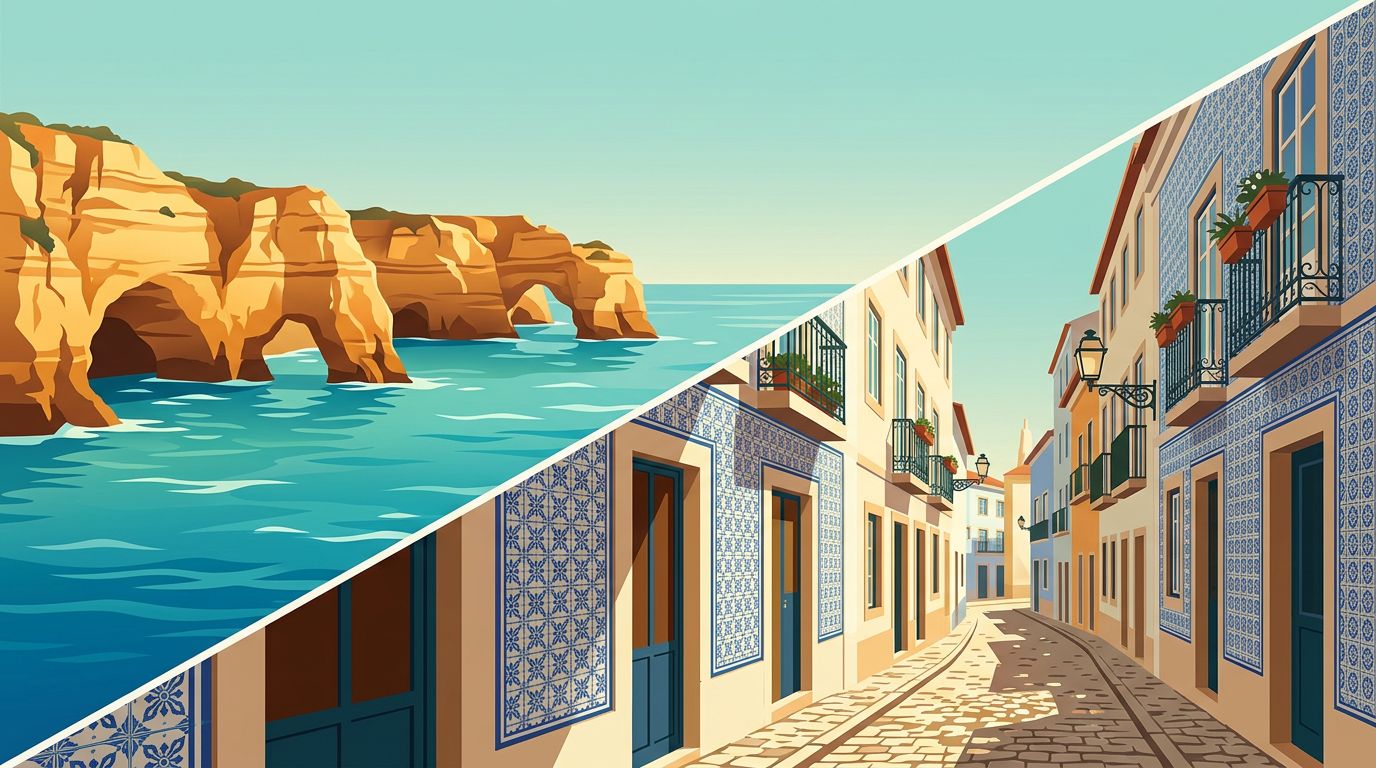
Portugal gives you two very different frames in one trip: cliffs shaped by wind and city streets lined with blue azulejos that catch light like enamel.
That mix is why so many Portugal photo spots work for both landscape lovers and street shooters. You can watch waves hit a rock arch at dawn, then walk into a narrow lane full of tile and shadow after lunch.
If your goal is a photo route that feels varied without wasting time, start here.
The Algarve cliffs that fill a frame
The Algarve is where many first-time visitors point their cameras, and for good reason. The coast near Lagos gives you stacked golden rock, sea caves, and sharp ledges that hold light well at sunrise and sunset.
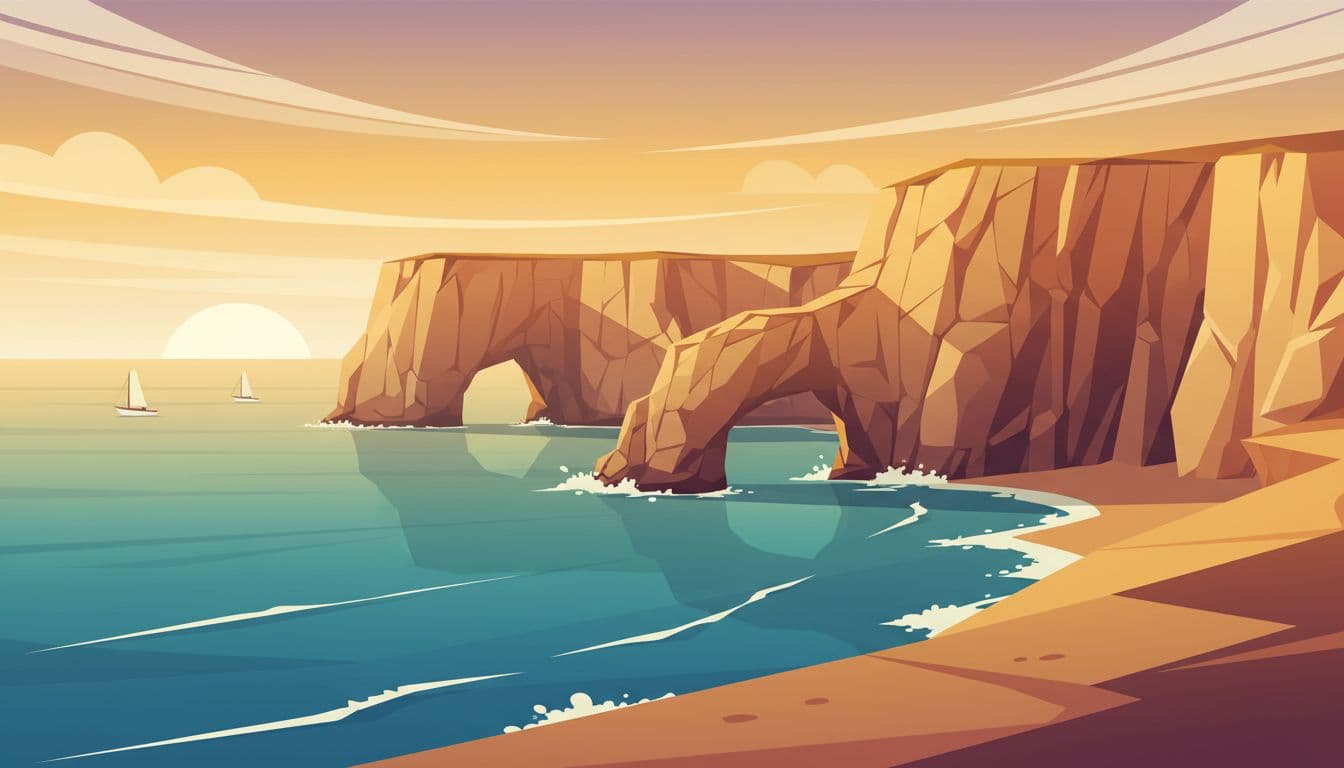
Ponta da Piedade is the obvious headline, but it works because the scene keeps changing as you move a few steps. One angle gives you arches, another gives you a layered cliff wall, and another gives you a clean sweep of water that helps the rock stand out.
Go early. Stay low. Mind the tide.
Praia da Marinha is the place for a wider, calmer frame. The cliffs open out there, so your shot can breathe instead of feeling boxed in. Praia do Camilo is tighter and more dramatic, with the stairway adding a human line through all that stone.
For a broader look at the coast, a guide to Portugal’s Atlantic Coast photography maps out more stops worth threading into the same route.
A long lens helps here, but don’t ignore a wider one. At Ponta da Piedade, the light turns the rock into warm layers, and the sea below can shift from glass to steel in a few minutes, so the best shots come when you keep moving along the edge instead of locking yourself into one view.
Arrifana is a strong late-day stop if you want a rougher mood. The cliffs feel higher, the water looks darker, and the scene feels less polished. That’s a good thing.
Nazaré and the rough Atlantic edge
Nazaré changes the mood fast. It feels less like a beach stop and more like a place where the ocean has room to show off.
On one visit, a fisherman in a red cap told me to wait by the railing for one more set. Ten minutes later, a single wave broke far below the fort, and the spray caught the light like torn silk.

Photo by Daria Voronkov
That is the kind of moment Nazaré gives you. The cliffs are not as sculpted as the Algarve, but the scale is bigger, and the air often feels alive with wind and salt.
This is where a fast shutter matters. The waves can break in sudden white bursts, and the foreground often matters less than the whole sweep of the coast. If you want drama without a packed viewpoint, Cabo Sardão is another strong Atlantic stop further south, with raw rock and open space.
Bring a cloth. The spray gets everywhere.
If your route already includes Lisbon, Nazaré fits well as a day stop or an overnight between coast and city. It also pairs well with the broader west coast, which keeps the trip from feeling too tidy.
Lisbon streets where azulejos take over
Lisbon gives you the opposite kind of energy. The cliffs disappear, and the city starts stacking color, tile, and steep streets into one frame after another.
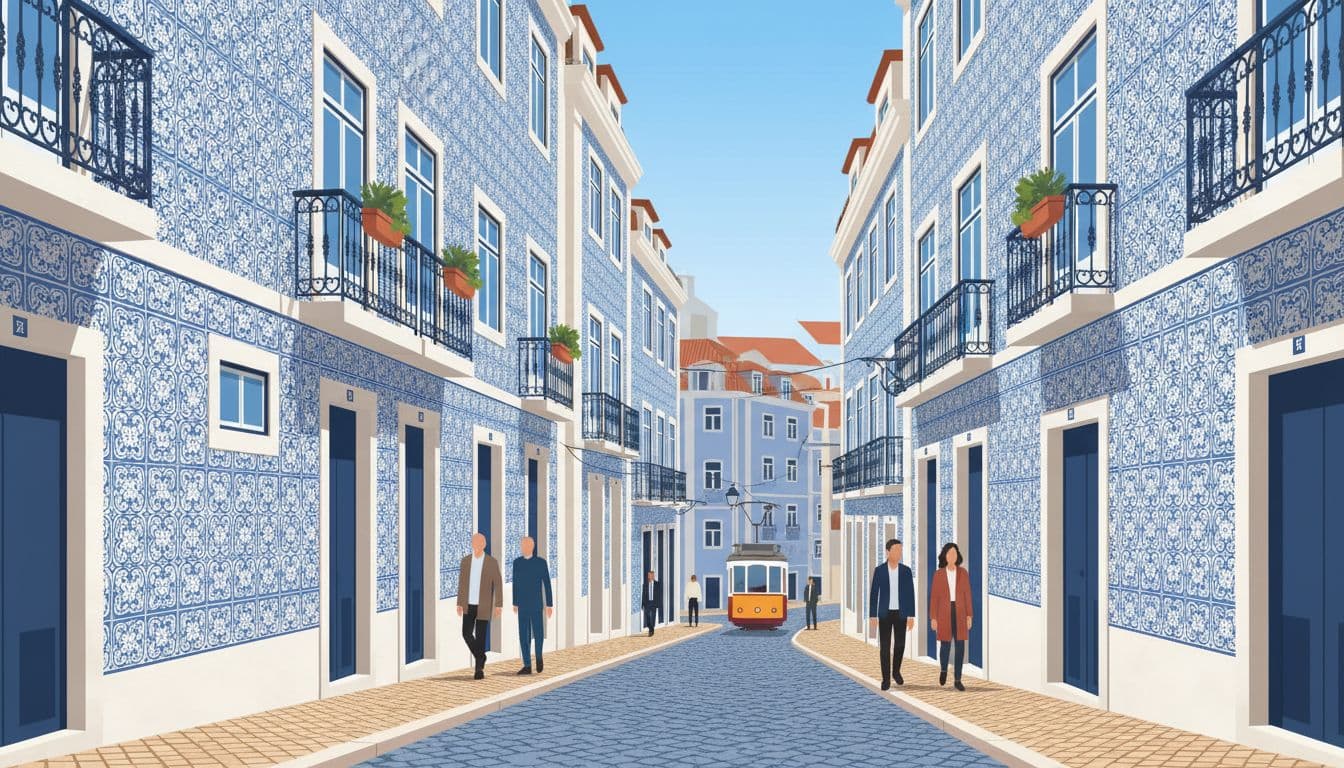
Alfama is the classic choice, but the quieter lanes in Graça and Mouraria often work better. The best shots are rarely on the main drag. They come from side streets where the walls lean close, laundry hangs overhead, and a patch of sun hits one facade while the next stays cool.
Blue walls, iron balconies, and tiled stairways.
Morning only.
That short window matters. Early light keeps the colors clean, and the streets are still calm enough that you can frame a doorway without three people walking into it. Later in the day, shadows get harder and the tiles lose some of their sheen.
A 35mm or similar focal length works well here because it lets you include the street shape without flattening it. You want the little details too, the chipped paint, the brass handles, the old numbers by the door. Those details make Lisbon feel alive instead of staged.
Walk uphill.
Porto and Aveiro for quieter tile shots
Porto is moodier than Lisbon, and that helps. The city has more edge, more depth, and more stone mixed into the streets, so the azulejo details stand out against heavier walls and darker corners.
Start near the Sé and then move into the lanes below it. The farther you get from the busiest waterfront views, the better the street scenes become. Miragaia, Ribeira back streets, and the lanes above the river can give you strong tile facades without the same crowd pressure you find at the postcard spots.
Aveiro feels lighter. It is smaller, flatter, and easier to walk, which makes it useful when you want cleaner compositions and less uphill strain. The tiled buildings there work well with canals and reflections, so you can shoot a facade, then turn and catch its color in the water.
Porto climbs.
Aveiro softens.
That contrast matters if you care about variety. Porto gives you darker stone and stronger shadows. Aveiro gives you open light and easier pacing. Together, they make a nice middle stretch between Lisbon’s urban energy and the coast.
How to plan a route around light and weather
A simple route keeps the trip calm. That matters when you’re chasing both cliffs and tile, because weather, tide, and crowd flow can all change what you get in the frame.
| Area | Best subject | Best light | Why it works |
|---|---|---|---|
| Algarve | Ponta da Piedade, Praia da Marinha, Camilo | Sunrise, late sunset | Warm cliffs, clear water, strong shapes |
| Nazaré | Fort views, wave sets, cliff edges | Early morning, storm light | Bigger surf and open horizons |
| Lisbon | Alfama, Graça, Mouraria | Morning | Tile facades stay clean and quiet |
| Porto | Sé area, Miragaia, back lanes | Morning, blue hour | Deep shadows and dense street texture |
| Aveiro | Old center, canal edges | Late morning | Bright facades and easy walking |
The simple rule is to group the coast days first, then move into the cities while you still have energy for stairs and early starts. If you only have four days, start near Lagos, move north when the forecast shows swell, then finish in Lisbon or Porto, because that order cuts backtracking and leaves you with the gentlest light for the tile streets.
If you want more places to plug into the same route, this round-up of beautiful places in Portugal is useful for adding one or two extra days.
Check tide charts first. Carry a polarizer. Watch wet stone.
Those three habits save time on the coast and keep the street scenes from looking flat. They also make your day feel less rushed, which matters more than people think.
Conclusion
The contrast is the point. A cliff at sunrise and a tiled alley after breakfast can live in the same day if you keep your route loose and your timing sharp.
Portugal rewards early starts, patient walking, and a camera that can handle both spray and shadow. Start with the coast, then let the streets pull you inward.
If you only pick one frame to begin with, make it Ponta da Piedade just after sunrise, when the rock turns gold and the water still holds the dark blue of morning.
