
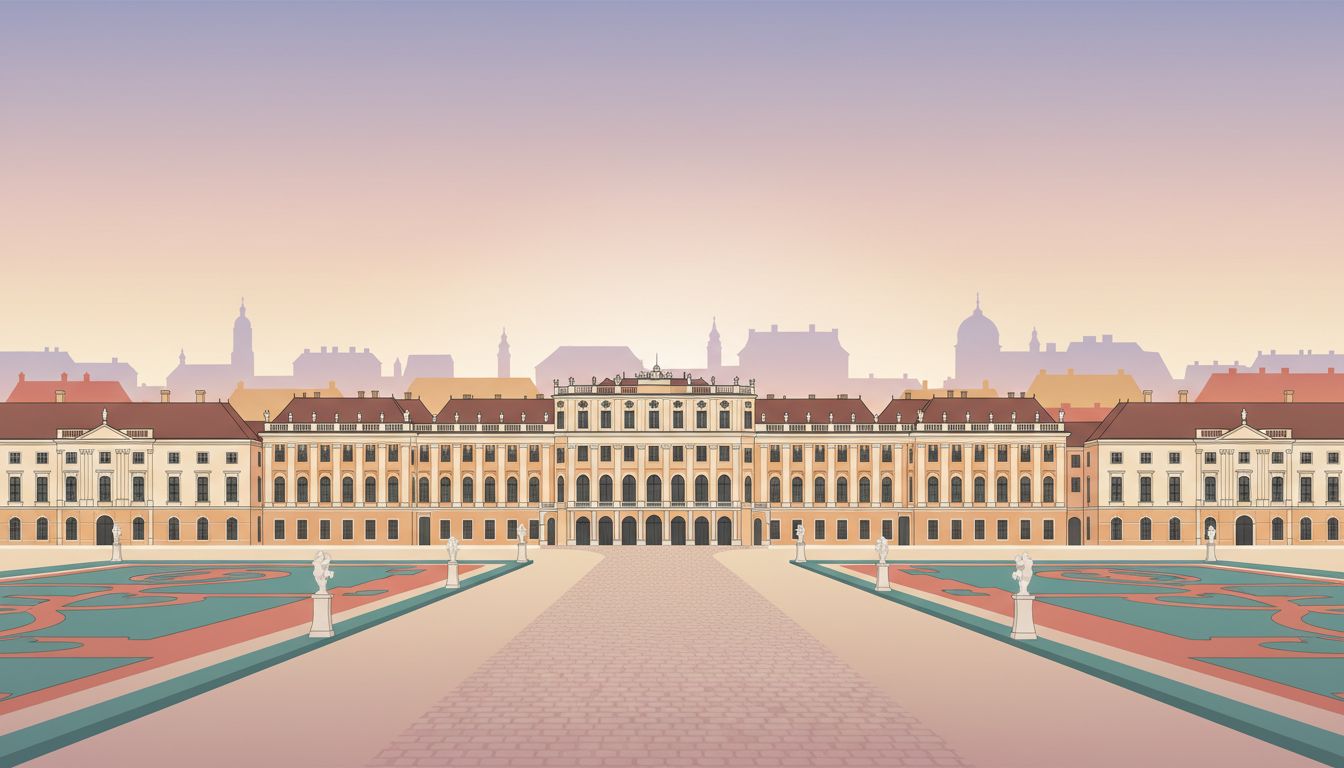
Vienna doesn’t make you hunt for beauty. It places it in front of you, in palace fronts, carved streets, and rooftop lines that catch the sky at sunset.
The trick is choosing the right angle, then showing up when the crowds are still asleep. If you want Vienna photo spots that work for a camera and a phone, these are the places that give you clean frames without wasting your day.
Start with the palaces, then move into the streets, and finish above the rooftops.
Palaces That Capture History
Schönbrunn is the easiest place to start because the composition does half the work for you. The Great Parterre gives you a long, symmetrical foreground, while the Gloriette hill turns the palace into a postcard-scale scene.
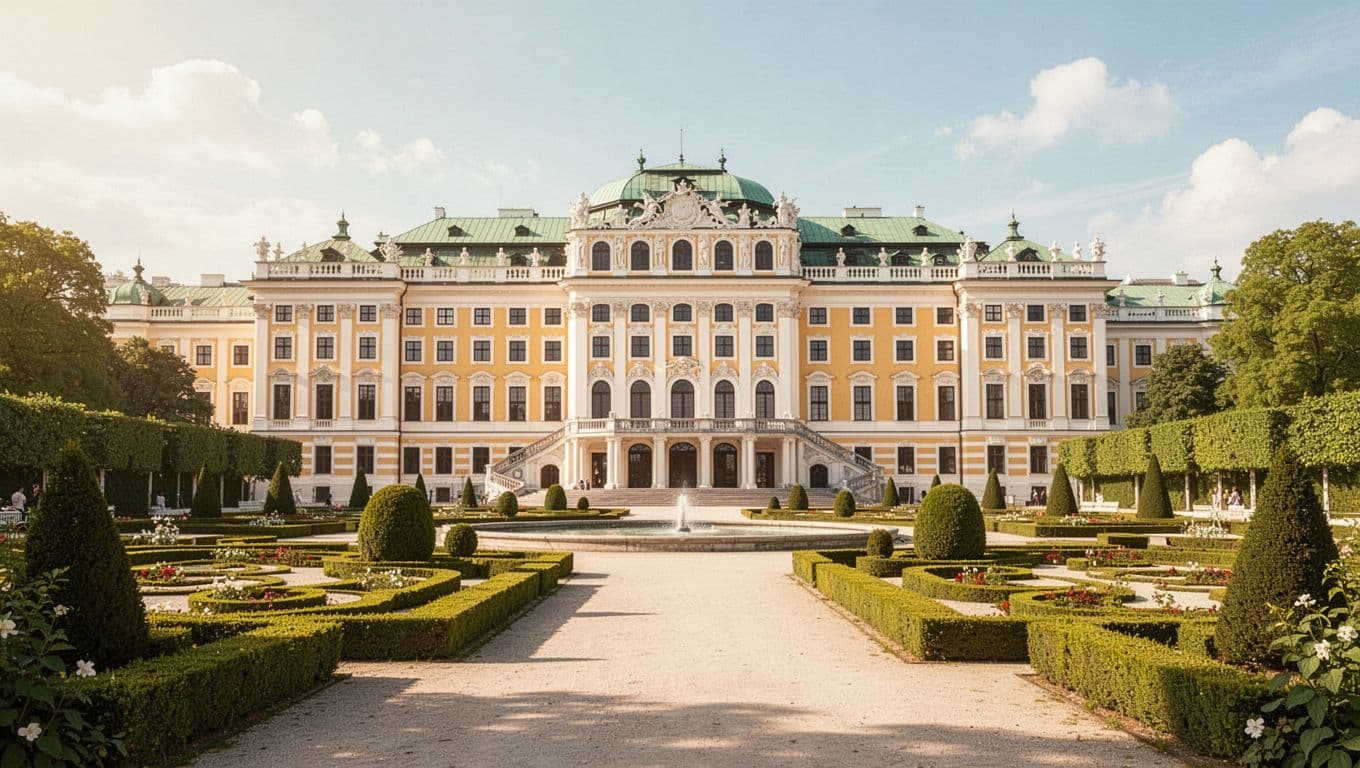
On a recent morning, I reached the grounds before the first tour group. A gardener was still moving along the path, the fountains were quiet, and the facade looked almost soft under the first light. That kind of calm is rare here.
Go early.
Bring a wide lens.
Stay on the paths.
If you want one shot that looks polished without trying too hard, stand low, let the water, hedges, and facade stack in layers, and wait until the sky clears enough for the stone to hold its shape.
Belvedere feels different. Its upper terraces are sharper and more formal, which works well if you want architecture with a little edge. The official Belvedere Palace guide helps if you want to plan around opening times and the gardens. If you want a frame that feels clean without effort, this is one of the strongest palace views in the city.
Sunrise buys you space, not just light.
Streets Full of Character
Vienna’s streets are where the city relaxes. Graben and Kohlmarkt give you polished facades, while Spittelberggasse and the lanes near Judenplatz feel warmer and more lived-in. A useful local overview of Vienna photo spots can help you map the main streets, but the best frames still come from walking slowly and watching for reflections, doorways, and tram lines.
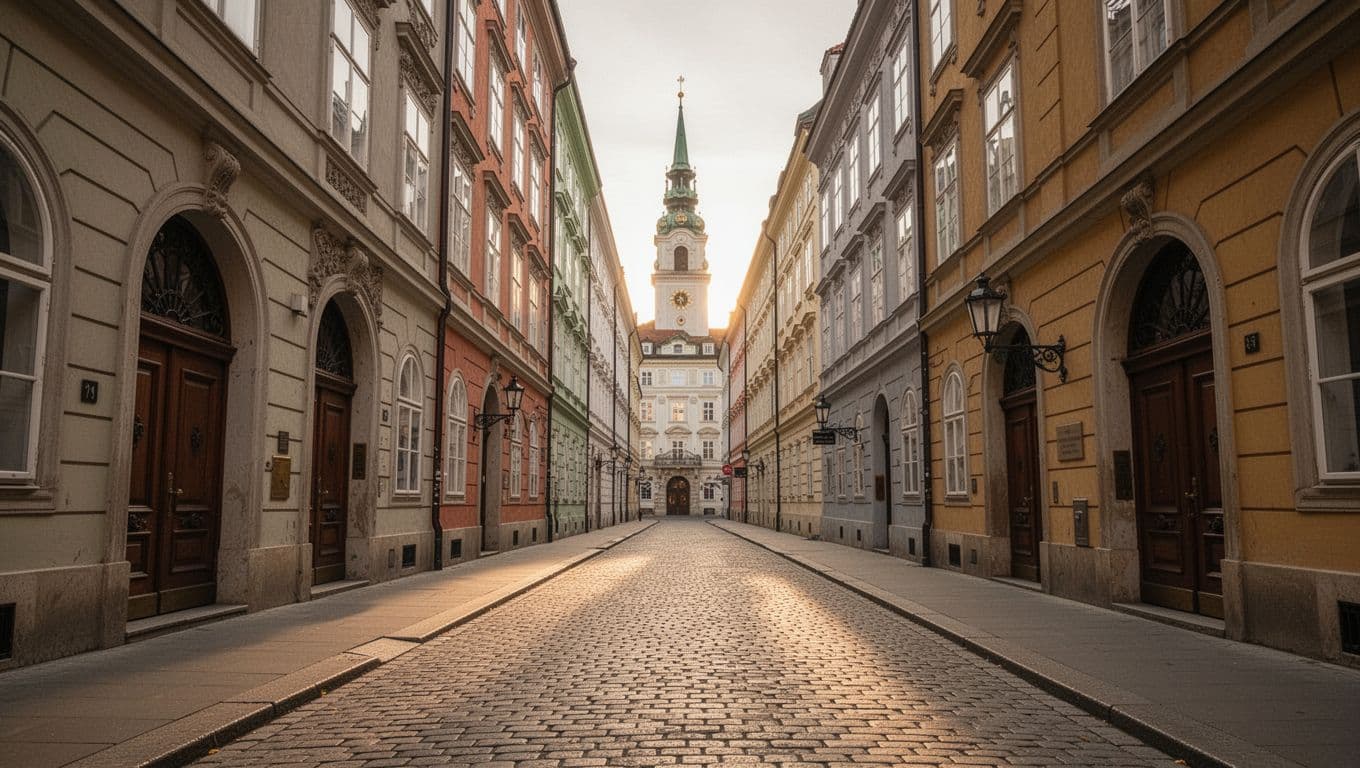
I once stood on Spittelberggasse after a light rain and watched a violinist step out of a doorway. He played one short song, a woman crossed with an umbrella, and the wet cobbles turned into a mirror. That single minute gave me three usable frames.
Cobblestones after rain.
Keep your camera ready.
Wait for gaps.
Don’t block the sidewalk.
Naschmarkt is another strong choice if you want color and movement instead of formal architecture. The stalls change all day, so you can shoot spice piles, hands at work, and small bursts of motion without forcing the scene. For a broader walk through the city, the local Vienna photographer guide is handy, especially if you like to pair streets with facades.
Rooftop Views That Soar
Rooftops give Vienna breathing room. They pull the skyline apart so you can see church spires, tiled roofs, and the old grid of streets below. For a clean, public viewpoint, the MQ Libelle rooftop terrace is a smart stop because it gives you height without making the shot feel remote.
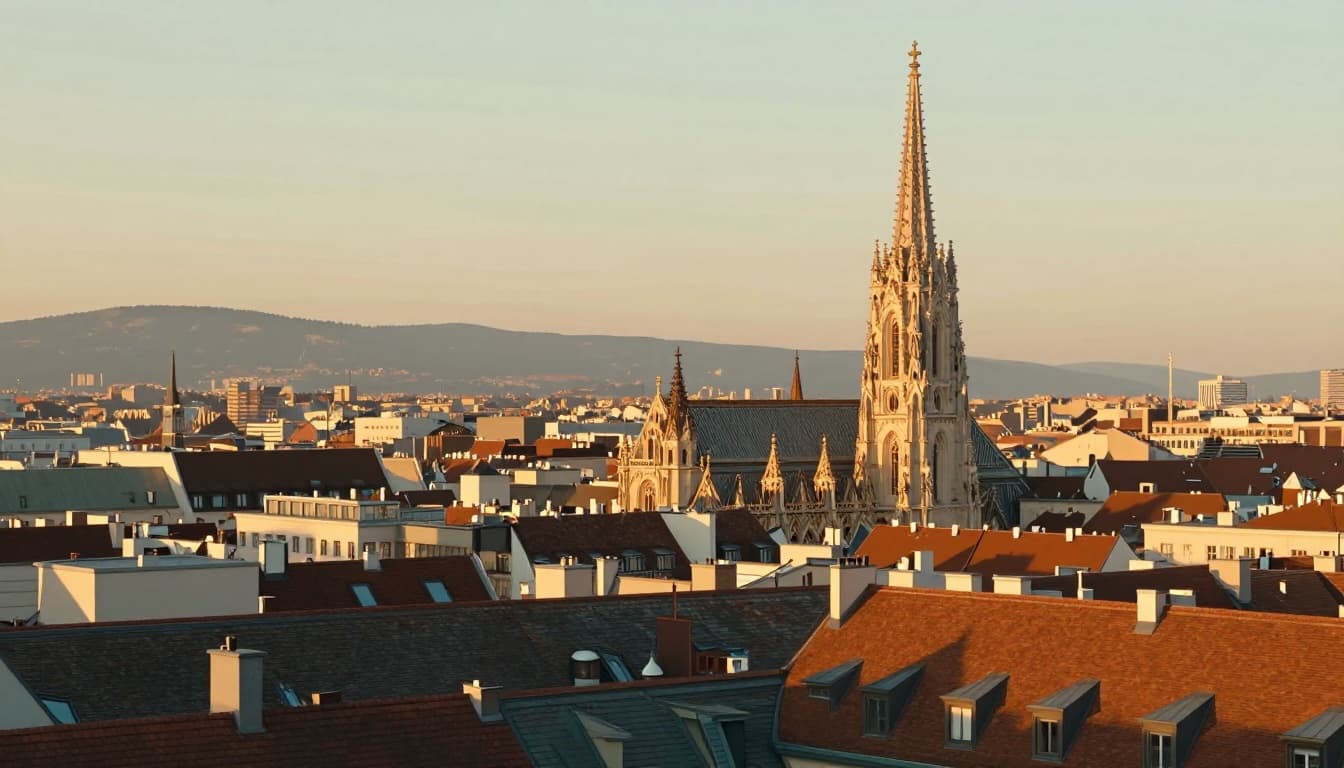
If you want a classic city marker, St. Stephen’s Cathedral is hard to beat. Climbing the 343 steps of the South Tower is worth it when you want the roof tiles, towers, and distant hills in one frame. At sunset, the city lights begin to spark across the center, and the whole view feels wider than the map suggests.
Rooftops work best when the skyline has one anchor.
Go late.
Stay patient.
Watch the horizon.
If you want to compare a few rooftop and hill options in one trip, the best views in Vienna roundup is useful for planning without overpacking your day.
Timing and Photo Manners
The light matters more than the gear. Palaces look best at sunrise, churches often look better at golden hour, and interiors usually reward soft, overcast light.
- Use a wide-angle lens for facades and courtyards.
- Carry a compact tripod if you want night shots.
- Arrive before 7:30 AM for the quietest palace frames in summer.
- Keep flash off in interiors and museums.
- Step aside quickly when people need the path.
Crowds move.
Your shot can wait.
One small habit helps everywhere in Vienna, keep your bag close and your setup simple. The faster you move, the less you interrupt the scene, and the more natural your photos will feel.
Conclusion
Vienna rewards patience more than speed. The strongest frames usually come when you arrive early, keep your angle simple, and let the city’s lines do the work.
If you only have one sunrise, spend it at Schönbrunn’s Great Parterre. Stand near the center path, face the palace, and watch the light shift across the yellow facade.
