
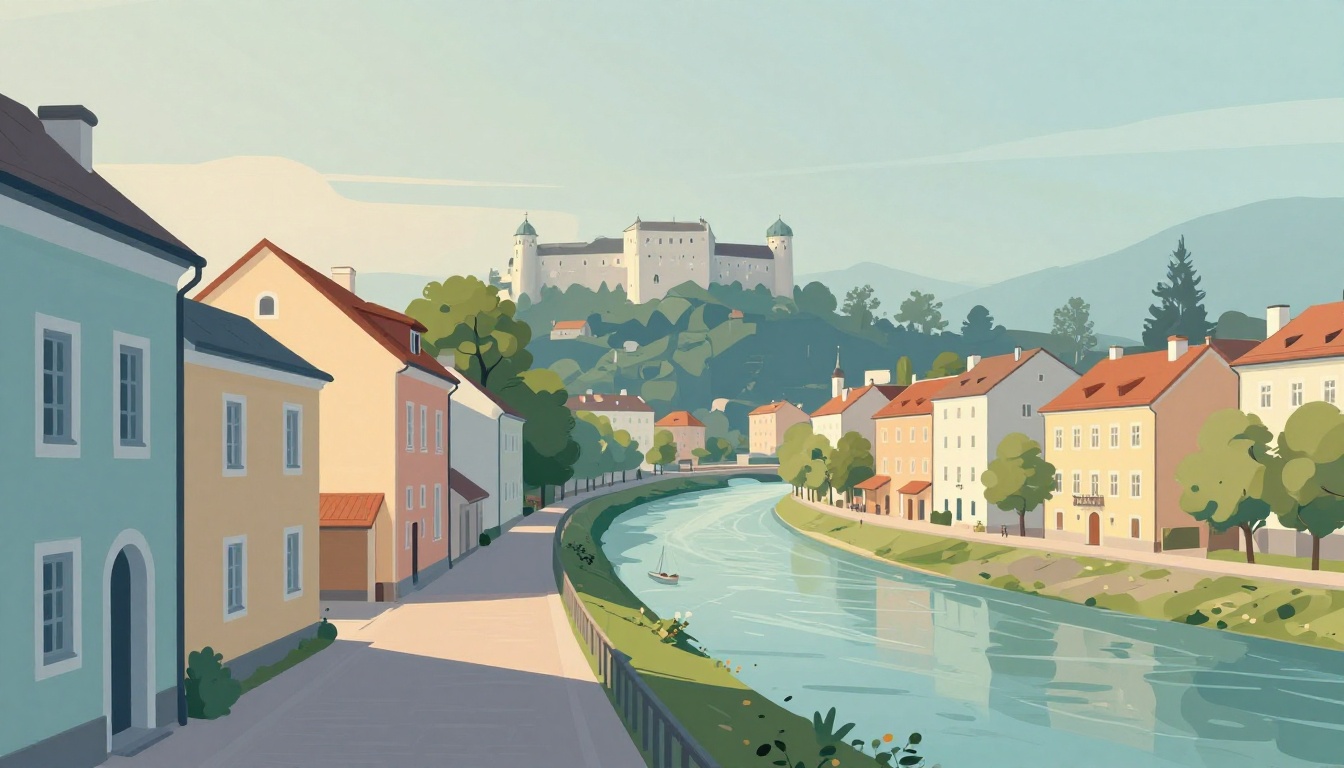
Salzburg is one of Europe’s most photogenic cities, but the best photos don’t all come from the same packed viewpoints. If you want best photo spots in Salzburg that feel less copied and more like your own, it helps to step past the usual circuit. The city’s famous icons still earn their place, yet they no longer have a lock on the most striking frames. A side terrace, a bend in the river, or a hill path at the right hour can give you something far more personal.
This guide is for travelers who want fresh angles, lighter crowds, and images that don’t look like everyone else’s. So, it skips the standard stops, including Mirabell Gardens, Getreidegasse, Mozart’s Birthplace, Salzburg Cathedral, and the classic fortress viewpoints. Instead, you’ll find a mix of hidden terraces, river angles, quiet streets, and hill paths, including spots like Humboldt Terrace, Richterhohe, and Mullner Steg that offer a calmer view of the city. Start with the places that open Salzburg up from a new angle, then let the old favorites wait.
Hidden hill viewpoints that give you a fresher Salzburg skyline
If you want Salzburg from above without joining the usual photo queue, these hill viewpoints are a smart move. Each one opens the city in a different way, with more air in the frame and less clutter at the railing.
What makes these spots special is the feel as much as the view. You get cleaner lines, broader city shapes, and a skyline that looks less familiar, which is exactly what helps your photos stand apart.
Humboldtterrasse for wide city views without the heavy crowds
Humboldtterrasse is one of the easiest ways to get a broad, balanced Salzburg skyline without fighting for space. Set near Klausentor on the Mönchsberg side, this terrace looks out over the Salzach, the Old Town roofs, and, on a clear day, the Alps beyond. The frame feels open and calm, with enough distance to let the city breathe.
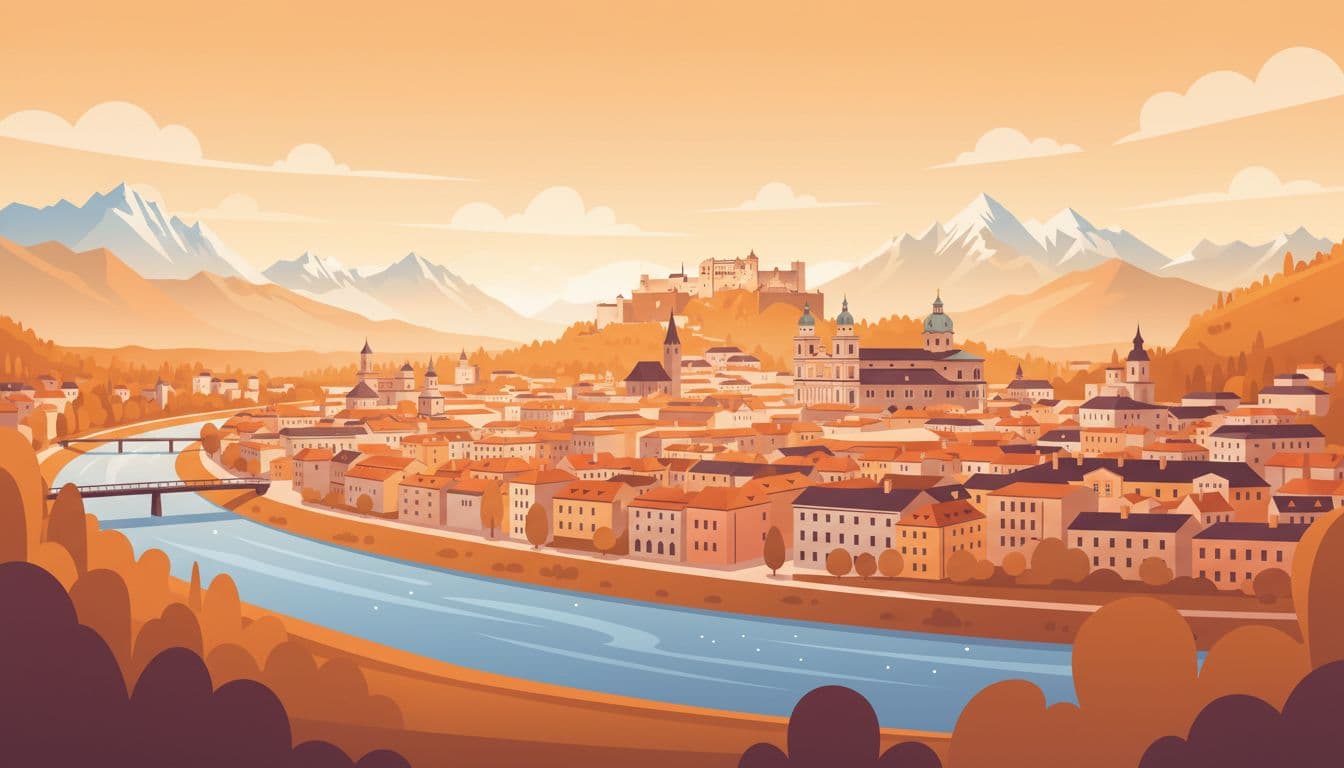
It’s a short uphill walk from the center, so it asks for just a little effort and pays you back fast. Sunrise works beautifully here because the city wakes up in soft light, while sunset adds warm color across the rooftops and mountain edge. If you want a quiet platform with a clean skyline frame, this is one of the best picks in town.
Because the terrace stays under many visitors’ radar, you can often shoot without a row of phones in front of you. For quick route context, this Humboldt Terrace walking guide helps if you’re piecing it into a city walk.
Humboldtterrasse is best for photographers who want width, shape, and skyline clarity, not a tight landmark close-up.
Winkler Terrace on Monchsberg for layered shots of the river and fortress
Winkler Terrace gives you one of those views that feels almost theatrical. You stand near the cliff edge, high above the city, and the scene stacks itself for you, Old Town below, the Salzach cutting through the middle, and Hohensalzburg Fortress rising above it all. Few places in Salzburg layer the city this neatly into one frame.
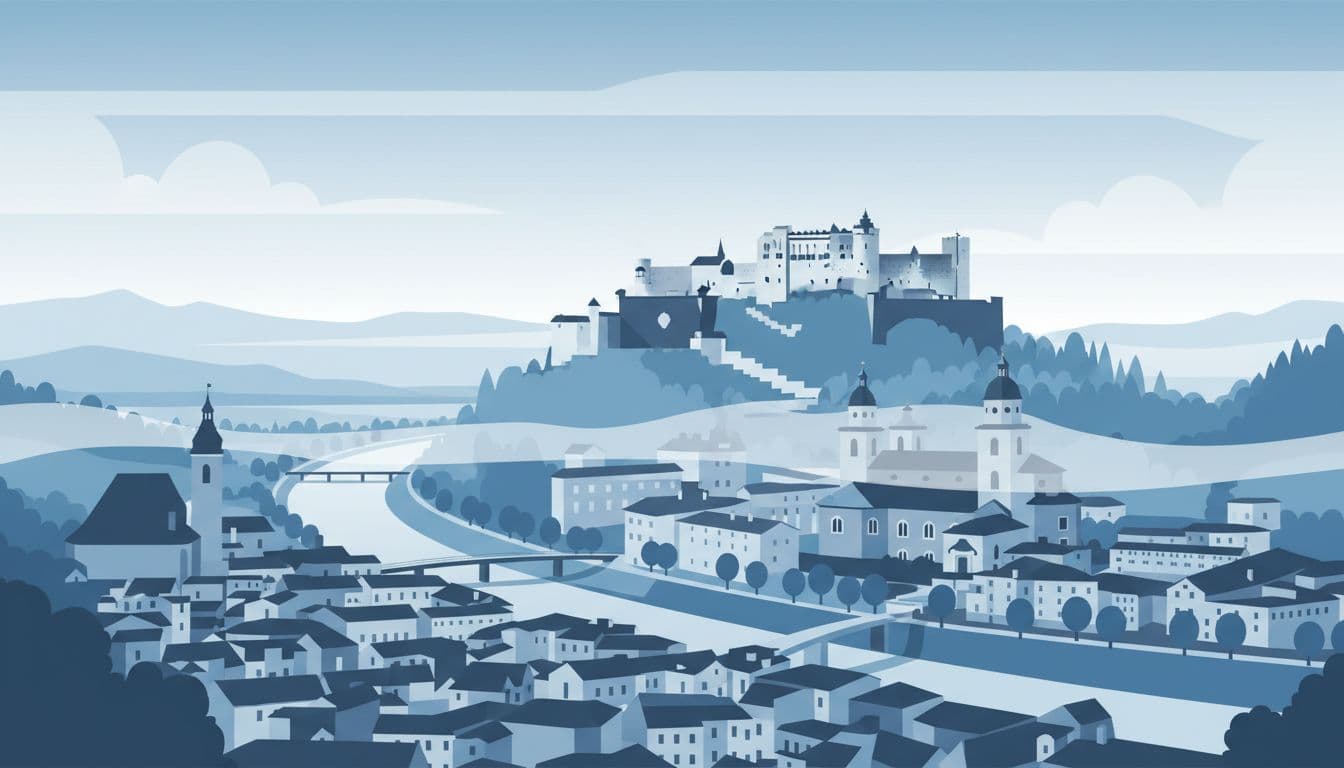
The strong sense of height is part of the appeal. Your photos get depth right away, almost like the city folds downward in layers. Early morning is especially good here because mist can hang over the river and soften the lower streets, while the fortress stays crisp above it.
Access is simple, either by the Mönchsberg elevator or by hiking up if you’d rather earn the view. Recent 2026 visitor notes also point to improved safety rails, which make the terrace feel more approachable without taking away the drama. For a closer sense of the angle and layout, this Mönchsberg views overview is useful before you go.
Hettwer Bastei for blue-hour photos and a quieter city panorama
Hettwer Bastei is one of the best photo spots in Salzburg if you like the city just as day slips into night. From here, the bends of the river, the rooflines, and the lit windows start to glow together, which gives your photos more mood than midday ever can. The view is broad rather than tight, so it works well for skyline shots with a little breathing room.
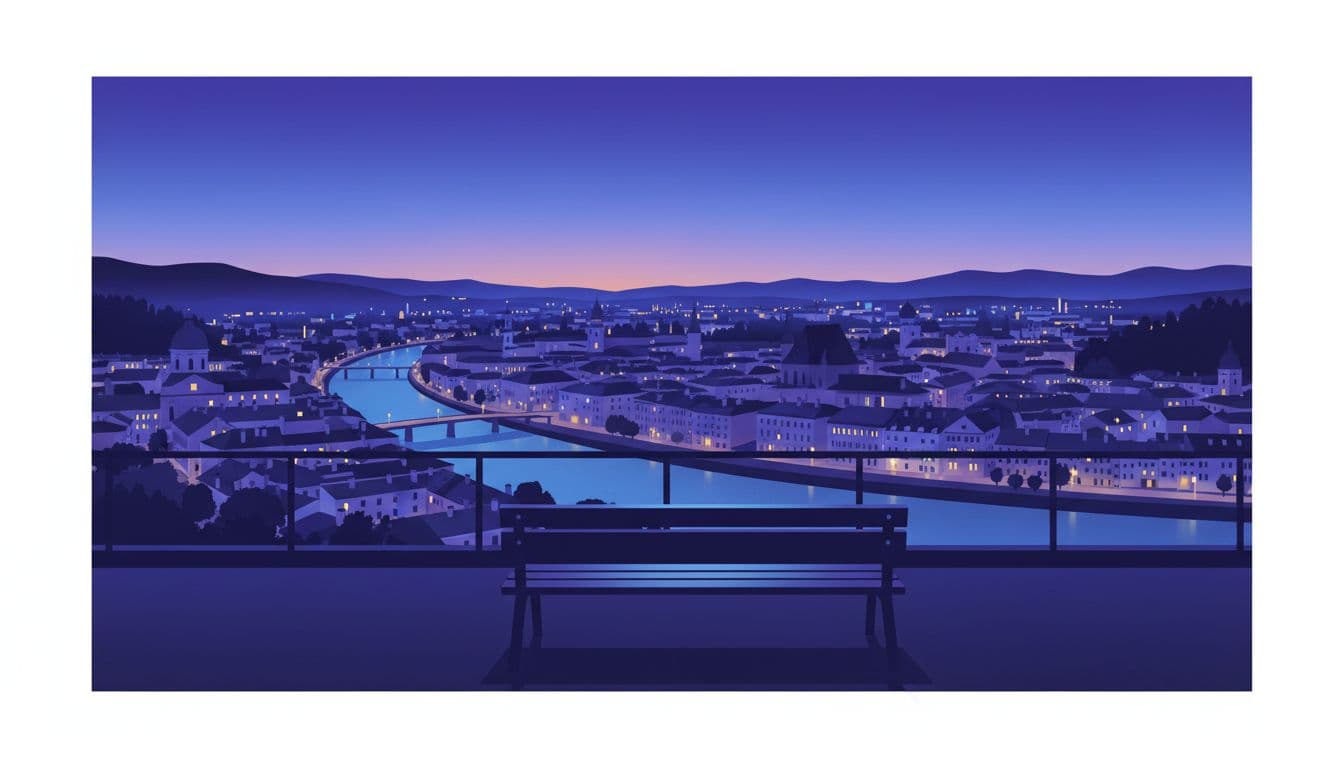
The climb is steeper, and that’s worth knowing before you head up with camera gear. Still, if you don’t mind a short uphill walk, the payoff is a calmer panorama than many of the better-known overlooks. Benches now make it easier to stay put and watch the light shift, which matters at blue hour when the best frame can arrive ten minutes later than you expect.
This bastion suits travelers who are patient with changing light and want a quieter perch above the city. If you want a preview of the angle, this Hettwer Bastei overview gives a helpful sense of the panorama and approach.
Riverside and bridge photo spots that capture Salzburg with more life
Once you drop down from the hills and get closer to the Salzach, Salzburg starts to feel less staged and more alive. The river adds motion, loose reflections, passing bikes, and small daily moments that turn a clean city view into a real scene.
These lower angles work well because they mix architecture with life. You still get domes, towers, and rooftops, but now the frame has rhythm, weather, and people moving through it.
Mullnersteg Bridge for reflections, rooftops, and easy framing
Mullnersteg is one of the easiest places in Salzburg to make a simple frame look strong. The bridge sits at a useful height, so you can line up the Salzach, the roofline, and the Old Town skyline without much effort. For many travelers, that’s the sweet spot, broad enough to feel open, but still close enough to keep detail.
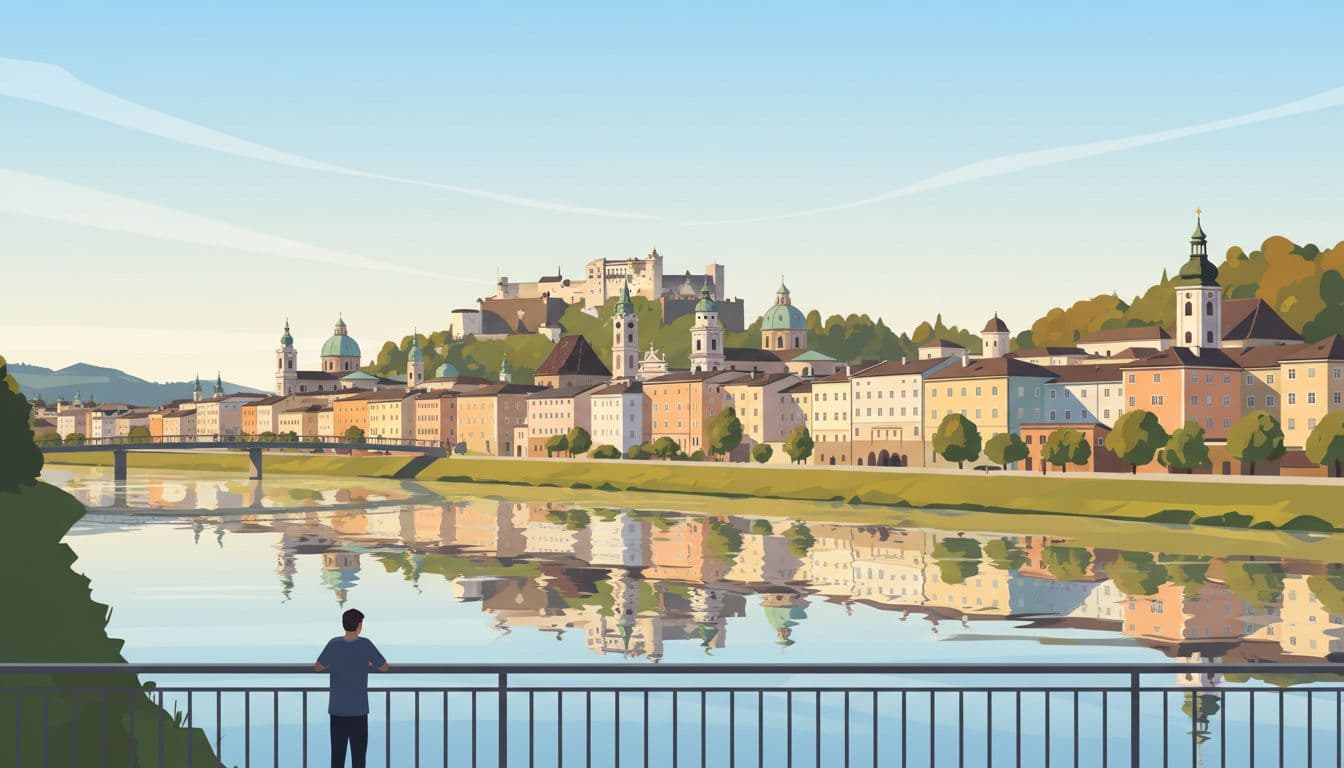
Midday can work better here than you’d expect. When the sun is high, bright water reflections flicker across the river and give the scene extra lift, especially if you want crisp color and a more graphic look. A few steps left or right can also clean up the frame fast, which is why this bridge is so friendly for casual shooters and phone cameras.
Evening changes the mood. The light softens, rooftops warm up, and the water loses some sparkle but gains depth. If you want a calmer image with a little more feeling, that later window often delivers more character than a perfectly bright shot. For a quick visual preview of the angle, this Mullner Steg bridge overview helps.
Mullnersteg works best when you keep the composition loose and let the river do part of the work.
Steingasse for old lamps, stone walls, and a moodier side of Salzburg
Steingasse gives you a very different Salzburg. Instead of a broad skyline, you get a narrow lane with worn stone, old lamps, archways, and cobblestones that catch low light in a soft glow. It feels older, quieter, and a little more secret, which is exactly why photos here stand apart.
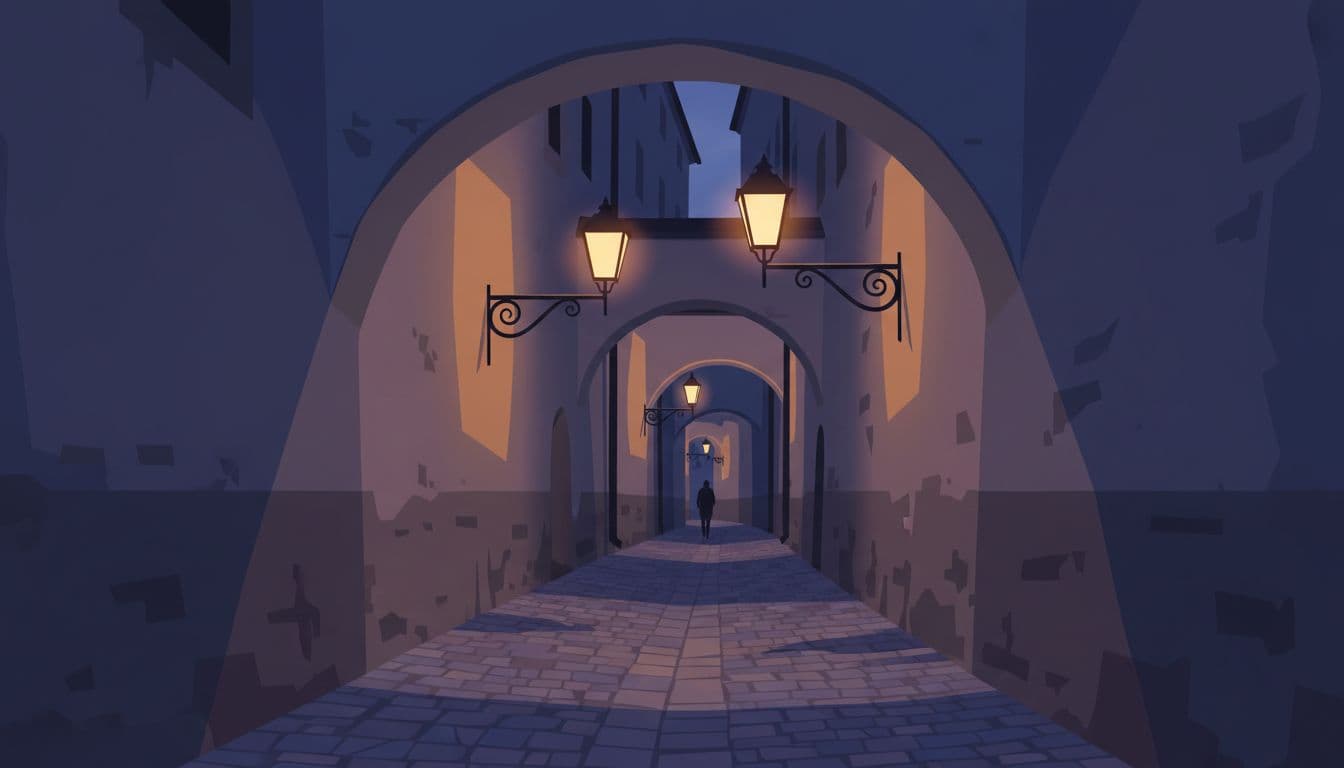
Evening is the best time to walk it with a camera. The lamps switch on, the lane gets gentler contrast, and the right bank feels far less busy than the center across the river. Because the street narrows and bends, almost every few steps hand you another frame, a doorway, a shadow line, or an arch pulling your eye forward.
This is a great place for detail shots, portraits, and street photos with texture. A face against the stone wall, shoes on wet cobbles, or a figure under a lamp can say more than another fortress view. If you want Salzburg images that don’t look lifted from the same postcard rack, Steingasse is one of the smartest detours. You can get a feel for the street before you go in this Steingasse overview.
Riverbank walks near the Salzach for candid city scenes
The river paths are where Salzburg starts moving inside the frame. Along quieter stretches of the Salzach, you can layer church domes, riverside houses, moored boats, cyclists, and walkers into one image without forcing it. That mix gives your photos more depth because the foreground keeps changing while the skyline stays steady.
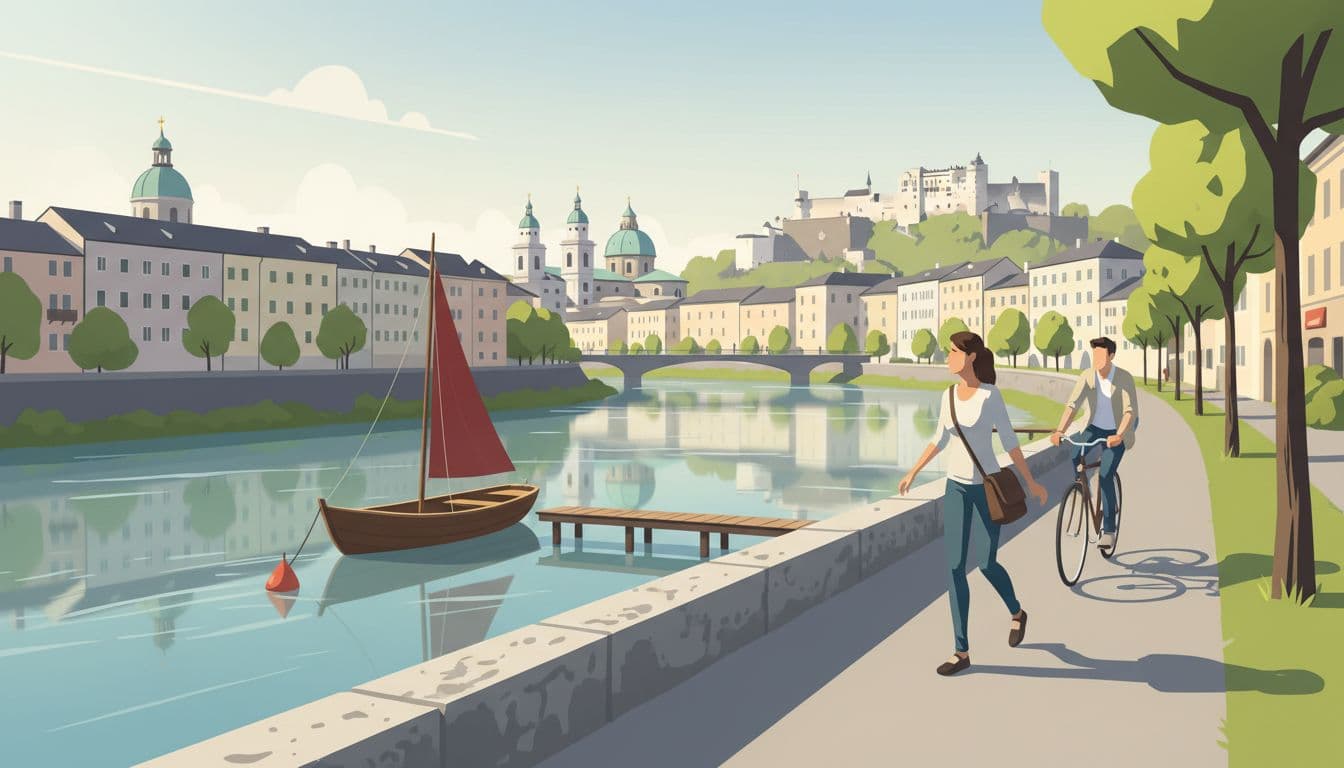
The best approach is to walk slowly and watch the edges of the scene. A bike entering the frame, ripples behind a boat, or someone pausing by the railing can turn a pretty view into a lived-in one. In other words, the riverbank is less about a single landmark and more about timing.
These paths also help if you like natural leading lines. The curve of the embankment pulls the eye forward, while trees, benches, and house fronts add layers without clutter. For a quick sense of the setting, these Salzach river bank photos show how well the embankment holds both skyline and street life in one frame.
Quiet corners on Monchsberg and Kapuzinerberg that photographers love
Some of Salzburg’s best frames come after a short uphill walk and a little patience. These corners on Monchsberg and Kapuzinerberg trade big crowds for leaves, stone, and slower light. If you want nature, city texture, and less noise in the frame, this is where the city starts to feel more personal.
Bring sturdy shoes, because the paths can be steep, uneven, or slick after rain. Weather also shifts fast on the hills. A clear hour can turn misty, and that often helps the photos.
Basteiweg on Kapuzinerberg for fortress views framed by trees
Basteiweg feels more like a hidden hillside passage than a standard viewpoint. The path winds through woods, past old walls and rough stone edges, so the whole walk carries a faint medieval mood. You don’t get the city all at once. Instead, the fortress appears in pieces, through bare branches, between leaves, and in small openings that make you slow down.
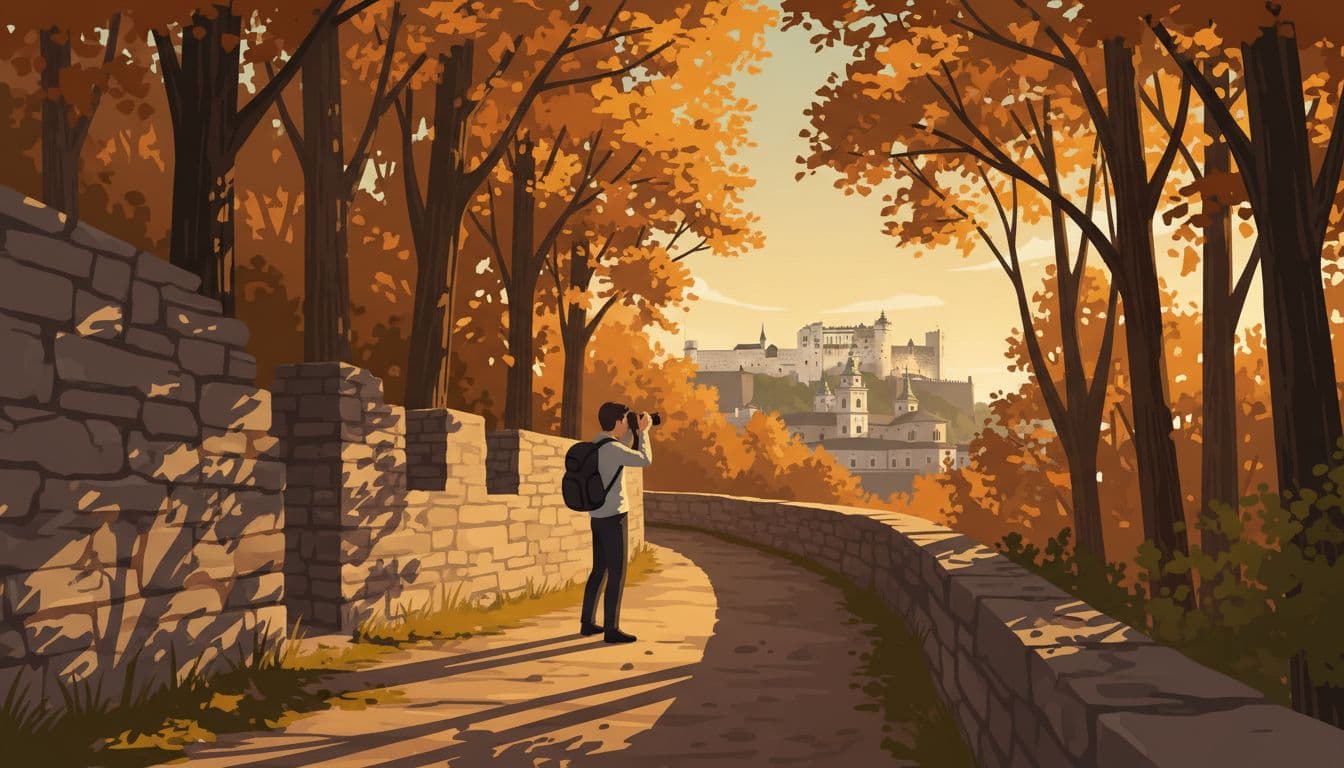
That is the charm. Basteiweg is not the place for a clean, wide skyline shot. It works better when you want the fortress to feel half-found, almost tucked into the hillside like a secret. Branches act like a natural frame, while the old stone beside the trail adds grit and age.
Late afternoon is the best time to be here. The light slips low through the trees, shadows stretch across the path, and the fortress picks up warm color without losing its weight. On cooler days, especially with thin cloud or light fog, the whole scene gets a darker, richer mood.
Because the trail stays more natural, good footwear matters. If you’d like a preview of the route’s feel, this Basteiweg photo gallery shows the wooded character well.
Basteiweg is strongest when you frame through the hillside, not over it.
The Monchsberg stupa for peaceful photos with a different mood
The stupa on Monchsberg gives Salzburg a very different face. Instead of domes, squares, and baroque facades, you get a calm white form set among trees and open air. That contrast is what makes it memorable. In one stop, your Salzburg photo set shifts from historic city to still woodland.
Morning is best here, especially at dawn. Soft light smooths the scene, and light fog can drift between the trees, which makes the stupa feel even more serene. The mood is gentle rather than dramatic. You are not chasing a grand skyline. You are photographing quiet space.
This spot works well for travelers who want something unexpected. It suits detail-focused shooting, simple compositions, and portraits with room to breathe. A person walking near the stupa, wrapped in early light, can say more than another busy Old Town frame.
It’s also a good reset if the city center feels packed. The paths are usually easy to follow, though damp ground and fallen leaves can get slippery. For basic visitor details, the official Mönchsberg stupa page is useful before you go.
Richterhohe for artful angles and sunset color
Richterhohe is one of the best Monchsberg stops for photographers who like to compose rather than simply document. The setting mixes fortress views, city layers, stone structures, and nearby art elements, so your frame can feel more shaped and less obvious. It rewards people who enjoy lines, contrast, and a bit of experimentation.
Sunset is the strongest time here. Warm light catches the fortress walls, roofs soften below, and the sky often adds color behind the harder stone forms. Because Richterhohe is only a short walk from the Monchsberg elevator, it is easy to time your visit for that late-day window without committing to a long uphill hike with gear.
The area also suits tighter crops. You can use walls, railings, and sculptural details to break up the city view and keep the image from feeling too postcard-like. That matters if you want Salzburg photos with more personality.
As of 2026, this part of Monchsberg still feels fresh because the surrounding walk and nearby exhibits can give you new framing options from one visit to the next. In other words, even repeat visitors can leave with different shots. For a quick look at the setting, this Richterhohe overview helps you picture the angles before you go.
Hidden local favorites for portraits, flowers, and softer city scenes
Some of Salzburg’s best photo spots don’t chase the biggest skyline. They give you something gentler instead, softer light, old stone, flower color, and corners that feel made for couples, solo travelers, and anyone who likes detail over drama. If you want images with more mood and less sameness, these lesser-known stops are worth your time.
Rosenhugel for flower-framed photos with a fortress backdrop
Rosenhugel gives you a calmer angle near the more visited Mirabell area, and that change matters. The setting feels lighter and more intimate, especially in late spring when roses start to bloom and the fortress sits behind them like a painted backdrop. This is where portraits come alive because the frame has color, depth, and a softer city feel.
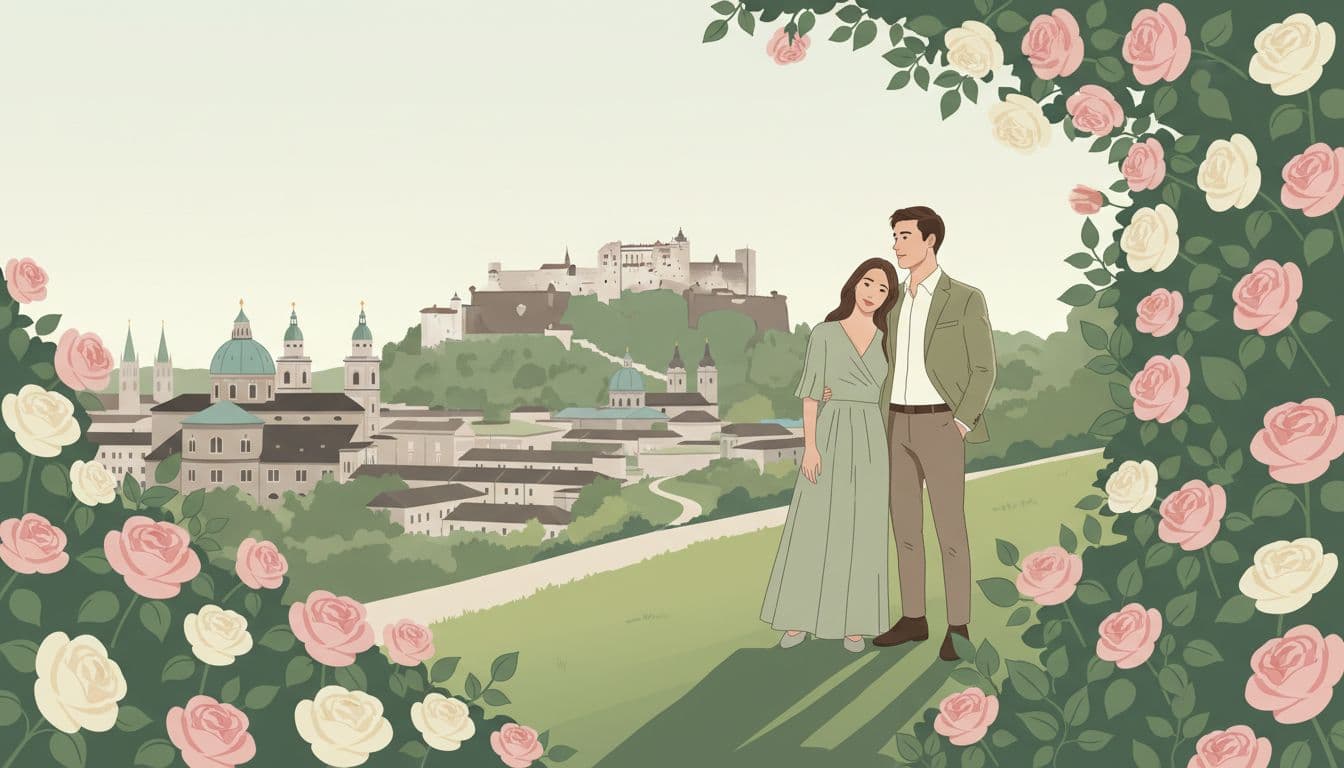
For romantic travel photos, it works far better than the standard garden shot because the view feels less expected. If you want a quick sense of the angle around this area, this Mirabell viewpoints guide helps with nearby orientation.
Stift Nonnberg viewpoint for warm light and a more timeless feel
The area around Stift Nonnberg has a peaceful, lifted feel that suits slower, more atmospheric photos. Old stone walls, worn paths, rooftops, and green slopes all sit in the same frame, so your shots feel layered without looking busy. Golden hour is the sweet spot, when the warm light settles on the abbey area and turns the whole hillside richer.
The climb is short but steep, especially if you take the stair route, so good shoes help. Current visitor info also notes that the abbey is free to visit, with public access daily, though you should stay respectful around worship spaces and avoid flash or interior photos where restricted. For planning, see this Stift Nonnberg photo view.
Krautwachter House for a fairy-tale look below the fortress
Krautwachter House is one of Salzburg’s most charming hidden corners, especially in spring and summer when the flowers and green valley setting soften everything around it. The little house has a cottage feel, tucked below the fortress in a way that looks almost storybook. If you like scenes with character, this place gives you far more charm than scale.
This stop is best for travelers who love fairy-tale detail, not grand panoramas. A portrait here can feel warm and personal, while wider shots pick up the hill, blooms, and old-world mood in one frame. For background on the house itself, this SalzburgWiki entry gives helpful context before you go.
How to plan your Salzburg photo walk so the light, crowds, and route all work
A good Salzburg photo walk is less about doing more, and more about arriving at the right spot at the right time. If you match your route to the light, the city opens up in stages, first soft and pale, then warm, then glowing.
The best times of day for each kind of Salzburg photo
Use the hour to match the mood you want. That simple shift saves steps and improves your shots.
- For terraces and fog, go at sunrise. Humboldtterrasse and Winkler Terrace are strongest when the roofs are still dim and the air feels thin. In April, sunrise is roughly 5:25 to 5:50 AM, so aim to arrive 20 minutes early.
- For wooded paths, choose late afternoon. Basteiweg and the greener hill paths get warmer light and softer contrast then.
- For city lights and skyline glow, hold out for blue hour at Hettwer Bastei, when windows and river reflections start to shine.
- For historic streets, shoot in the evening. Steingasse looks best once the lamps come on and foot traffic eases.
A smart half-day route that links several hidden Salzburg photo spots
If you’re staying in the center, start early and keep the route gentle. Begin at Humboldtterrasse, then continue across to a short Monchsberg walk for Winkler Terrace or Richterhohe. After that, head back down toward Mullnersteg for river frames, then finish in Steingasse as the light fades.
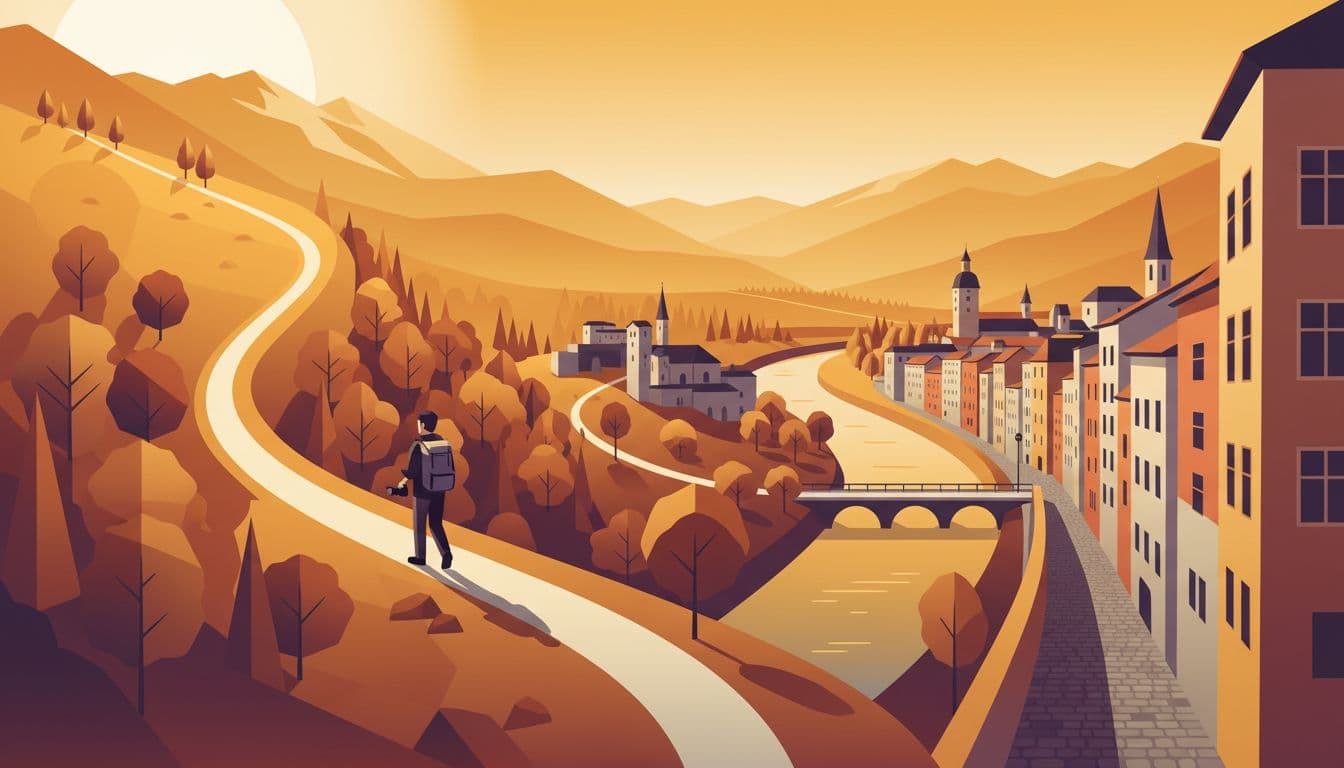
This order works because it follows the light instead of fighting it. For extra planning help, this Monchsberg walking guide helps you judge pace and access.
Simple photo tips for respectful shooting in quiet local areas
Salzburg’s quieter corners stay special because people treat them with care. Keep that in mind, especially on hill paths and older lanes.
Stay on marked paths, keep your voice low near homes and churches, and don’t stop in the middle of narrow streets. If you’re flying a drone, check current Austrian and Salzburg area rules first, because city and airport restrictions are strict. A beautiful frame isn’t worth blocking a doorway or breaking the calm.
Conclusion
Salzburg looks different when you stop chasing the same famous frame. The best photos often come from a slower walk, a small climb, or a pause beside the river, where timing and perspective matter more than the city’s best-known postcard view.
So, mix one or two hidden viewpoints with quieter streets and riverside stops. Pair a terrace like Humboldtterrasse or Richterhohe with Steingasse, Mullnersteg, or a calm stretch of the Salzach, and your gallery will feel less copied, more lived-in, and much more your own.
Most of all, let curiosity set the route. Salzburg still rewards people who wander, look twice, and give the light time to change. In a city this photographed, there is still room for surprise, and still plenty of space to find your own angle.
