
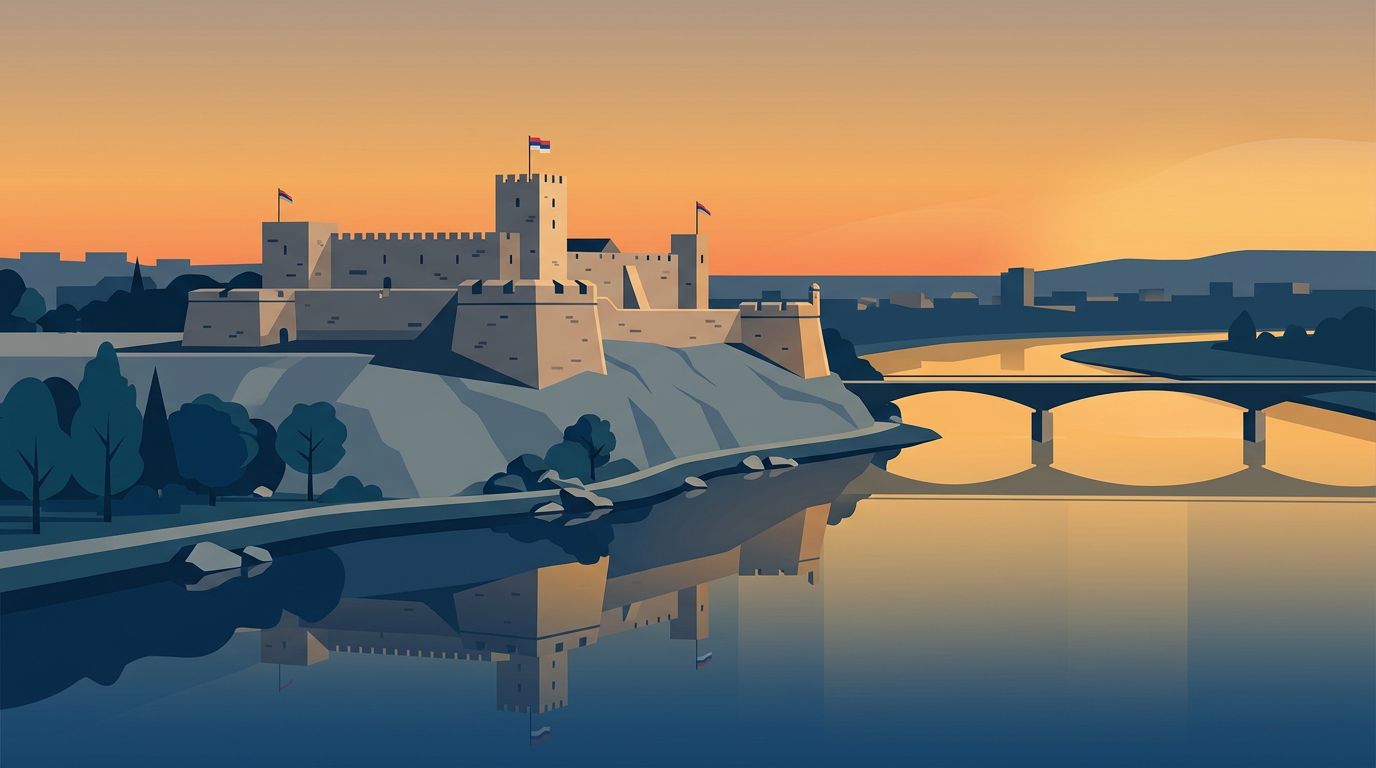
Some of the strongest Serbia photo spots in the Balkans sit where stone walls meet moving water. That mix gives you scale, reflection, and a clean edge that makes a fortress feel larger than the frame.
If you want photos that look dramatic without a hard hike, Serbia is kind. Several of its best photography spots sit beside rivers, so you can move fast, wait for better light, and still leave with frames that feel calm and finished.
Start with the river first. The walls will follow.
Key Takeaways
- Serbia’s strongest photo spots pair fortress stone walls with river edges for scale, reflections, and clean frames—no hard hikes needed.
- Belgrade Fortress delivers the clearest confluence shot at sunset from west walls, with Pobednik anchoring the Sava-Danube meet.
- Golubac Fortress rises postcard-dramatic from the Danube; early morning catches cliff scale and smooth water.
- Quieter gems like Gardoš Tower, Niš Fortress, and Smederevo offer layered atmospheres—sunset color on rooftops, city bridges, long walls.
- Shoot mornings for empty paths, sunsets for warm stone, blue hour for lights; stack with city walks for full routes.
Belgrade Fortress: the clearest river-and-wall frame
Belgrade Fortress is the easiest place to understand why fortress views work so well in Serbia. The Sava River and Danube River meet below you, the Stari Grad skyline sits in the distance, and the high walls give your frame a strong top edge.
For site details, the Belgrade Fortress page at VISIT Belgrade is the cleanest starting point. It helps when you want to plan around the Kalemegdan Park paths, the upper town, or the river edge without guessing.
The west walls are the money spot for sunset views. That side catches warm light, while the Sava River below picks up color and movement, with Branko’s Bridge framing the Sava riverside promenade. The Pobednik monument also gives you a simple anchor, which keeps a wide frame from feeling empty.
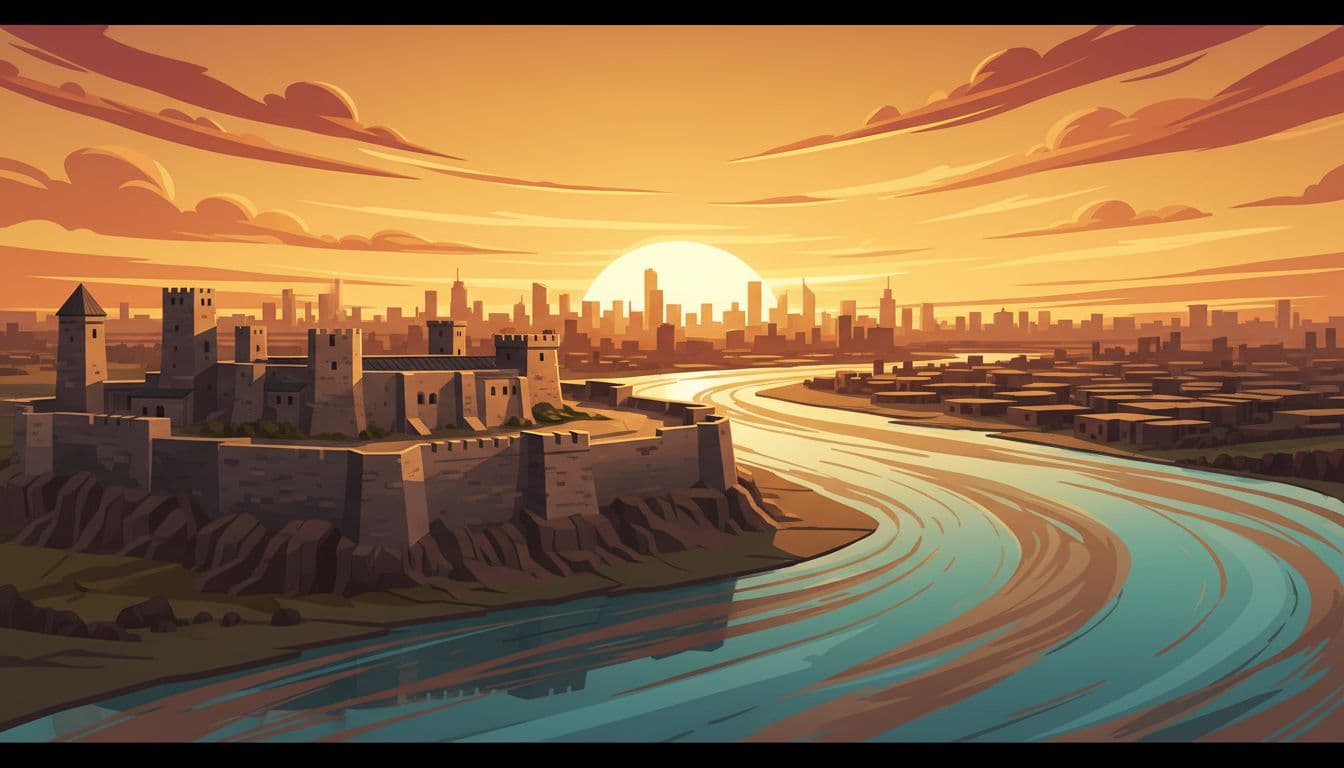
One October evening at Kalemegdan Park, a couple waited beside the west wall until a blue ferry crossed the Sava. They took three frames, then stayed for the wake, which spread the sunset into a thin orange ribbon.
Go early if you want empty paths. Stay late if you want city glow.
Gardoš Tower gives Zemun a softer skyline
Gardoš Tower is smaller than Belgrade Fortress, and that is the point. You climb a short hill, then the Danube River opens out below red-roofed architecture and narrow streets that feel older and quieter than the capital center, capturing Zemun’s unique suburban atmosphere.
Short climb. Big payoff.
The view works because it has layers. You get the tower, the old Zemun lanes, and the curve of the Danube River in one sweep. That makes it one of the best Serbia photo spots for people who like atmosphere more than scale.
Morning is calm here, but sunset has more color. The rooftops catch warm light, and the Danube River turns into a smooth band behind them. If you shoot wide, keep some cobblestone or a railing in the foreground, because it gives the image a human size that pure skyline shots can lose.
The narrow lanes around the tower, Zemun’s hidden gems, also reward slower walking. Turn a corner, and the scene changes. Step a few meters higher, and the Danube River appears again, wider and brighter.
Golubac Fortress sits on the Danube like a postcard
Golubac is the fortress most travelers remember, renowned in the Balkans for its medieval preservation. It rises dramatically straight from the river edge, and the towering cliff setting emphasizes its impressive scale before you even press the shutter.
The Tourist Organisation of Serbia’s Golubac Fortress page is useful for access details and the history behind the site. That matters here, because the view is only part of the experience, and the layout helps you choose whether to shoot from the road, the water edge, or the main approach.
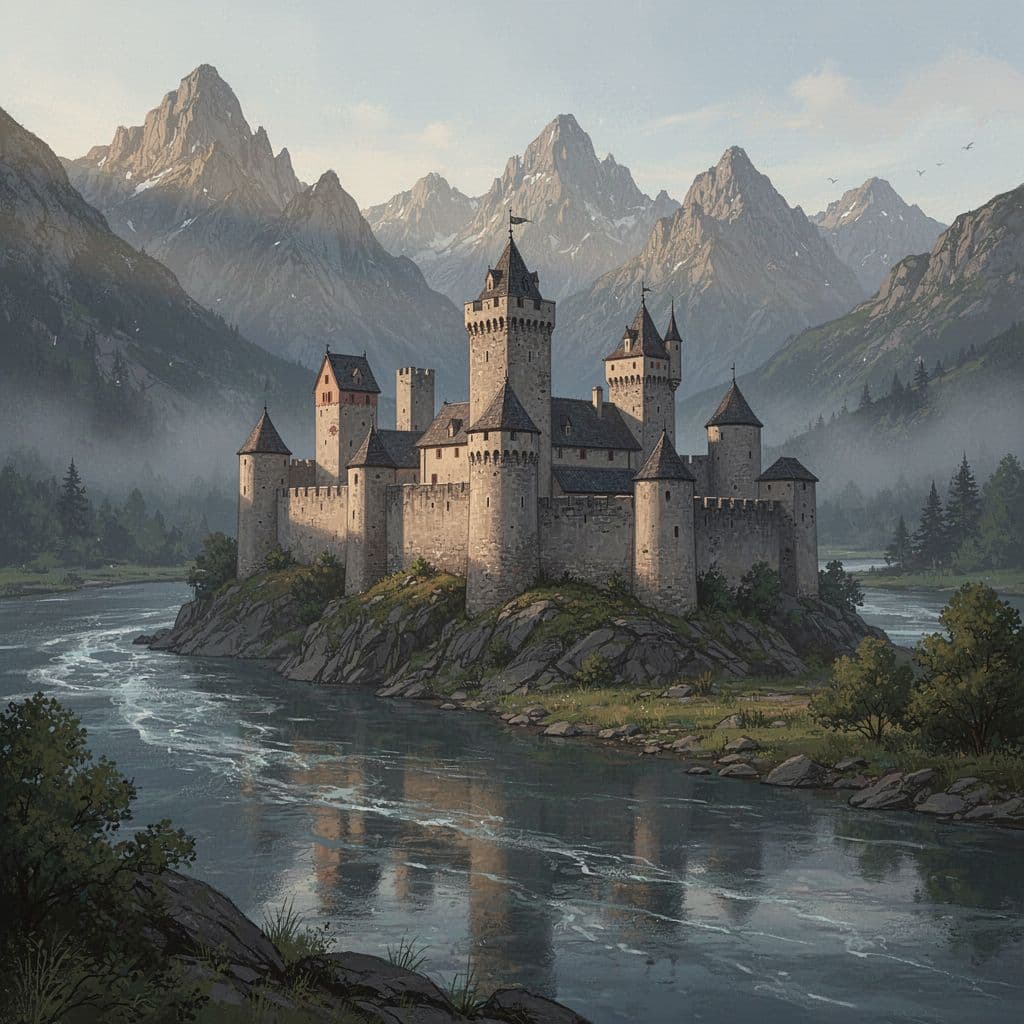
Because the fortress drops straight to the Danube River, you can shoot the walls, the river bend, and the dark rock line in one frame without leaning on extra editing or a huge lens. The roadside pull-off before the gate is one of the top photography spots for the broadest view, while the closer paths work better when you want texture in the stone.
Best light arrives early. The stone keeps its shape longer, and the water looks smoother before the day gets busy. If the sky is clear, wait for a little haze over the river. It softens the far bank and makes the fortress pop harder.
Golubac feels best when you give it time. Rush it, and you get a nice picture. Stay longer, and you get a real scene.
Niš Fortress works when you want a city stop with water
Niš Fortress is a useful stop and one of Serbia’s hidden gems when you want a fortress frame without leaving the city flow. Less crowded than spots in the capital, it offers a relaxed urban vibe. The Nišava River gives the site a softer edge, and the walls sit close enough to the water to create a neat line in the photo.
For a practical map of that angle, PhotoHound’s Niš Fortress photo spot is handy because it shows the entrance side and the river side in one place. That saves time when you are trying to move quickly between stops.
The renovated bridge toward the fortress is one of the better framing tools here. Its striking architecture, paired with the fortress walls, puts people into the scene, which gives the walls scale and keeps the image from feeling flat. If you like reflections, aim for a still morning or a blue-hour return after sunset.
This stop is also easier to mix with food, coffee, or a longer city walk. That matters on a road trip, because not every photo stop needs to eat half a day.
Smederevo Fortress gives you space, sky, and slower reflections
Smederevo is less dramatic at first glance, which is why it’s one of Serbia’s top photography spots for patient shooters. The walls stretch wide along the Danube River, the river edge is calmer, and the Jezava confluence gives you cleaner space for reflective shots, especially in the morning.
The Smederevo Fortress guide has good context on the layout and the quieter river side. That helps if you want to understand where the walls open up and where the strongest exterior views sit.
Bring a zoom lens. The long walls can look flat from too close, but a tighter frame lets the towers stack up against the sky and the riverbank. Cloud cover helps here too, because it keeps the stone tones even and the sky from washing out the scene.
Smederevo is also good for patience. There is room to wait, room to step back, and room to let the light change without feeling rushed.
A simple route for a day of fortress photos
Three small rules help you capture these Instagram spots.
- Morning, for empty paths.
- Sunset, for warm stone.
- Blue hour, for city lights.
If you want to build a longer route through the White City, include stops at Republic Square, Knez Mihailova Street, and Old Town. Pair your fortress visits with nearby must-see sites like the Temple of Saint Sava, St. Mark’s Church, and the Orthodox Cathedral. For a vertical contrast to the river views, add the Avala Tower. Locationscout’s Serbia photo spots can help you compare other viewpoints with the fortress stops. It is a useful way to stack one scenic place against another before you commit to a drive.
| Spot | Best light | What to frame | Why it works |
|---|---|---|---|
| Belgrade Fortress | Sunset | Pobednik, confluence, skyline | Two rivers meet here |
| Gardoš Tower | Late afternoon | Danube, rooftops, old lanes | Smaller frame, cleaner lines |
| Golubac Fortress | Early morning | Towers, cliff, river bend | Strongest drama in the country |
| Niš Fortress | Morning or blue hour | Walls, bridge, Nišava | Easy city stop with water |
| Smederevo Fortress | Morning | Long walls, Jezava side | Open sky and calmer water |
Use the table as a rough order, not a rule. Light changes the mood faster than any map does, and the same fortress can look calm at dawn and sharp at dusk. After Smederevo, head to Novi Sad as your next stop.
One more thing. Go early. After a long day of shooting, unwind in Skadarlija or Dorcol with some burek.
Frequently Asked Questions
What makes Belgrade Fortress the top Serbia photo spot?
Belgrade Fortress frames the Sava and Danube confluence below high walls, with Stari Grad skyline in the distance. West walls catch sunset glow on the river and Branko’s Bridge, while Pobednik anchors wide shots. Go early for empty paths or late for city lights.
When is the best light for Golubac Fortress photos?
Early morning keeps stone texture sharp and water smooth before crowds. Clear skies with river haze make towers pop against cliffs. Roadside pull-offs give the broadest Danube bend view.
Do these fortress spots require long hikes?
No—most sit riverside for quick access. Belgrade and Niš blend into city walks; Gardoš needs a short hill climb; Golubac and Smederevo have easy exterior approaches. Focus on waiting for light over trekking.
How to plan a full day of Serbia fortress photos?
Follow the table: Belgrade at sunset, Gardoš late afternoon, Golubac morning, Niš blue hour, Smederevo open skies. Pair with Republic Square or Skadarlija; use VISIT Belgrade and PhotoHound links for paths. Light trumps maps—adapt as it shifts.
Why choose Gardoš Tower over bigger fortresses?
It trades scale for Zemun’s softer layers: red roofs, narrow lanes, Danube curve. Sunset warms rooftops; foreground railings add human scale. Perfect for atmospheric shots without capital crowds.
Conclusion
The best fortress photos in Serbia happen when stone and water feel balanced. If one element takes over, the frame gets heavy. When both are present, the scene opens up.
The White City gives you the famous confluence. Golubac gives you the cliff drama. Niš, Gardoš, and Smederevo add quieter frames that reward patience and a slower walk.
Once you’ve captured these timeless stone-and-water scenes, contrast them with vibrant street art in the city center. For those done with fortresses, explore the Vracar district or Nikola Tesla Museum as nearby cultural alternatives. If you only have one evening, start near the Victor Monument and wait for the first ferry wake.
