
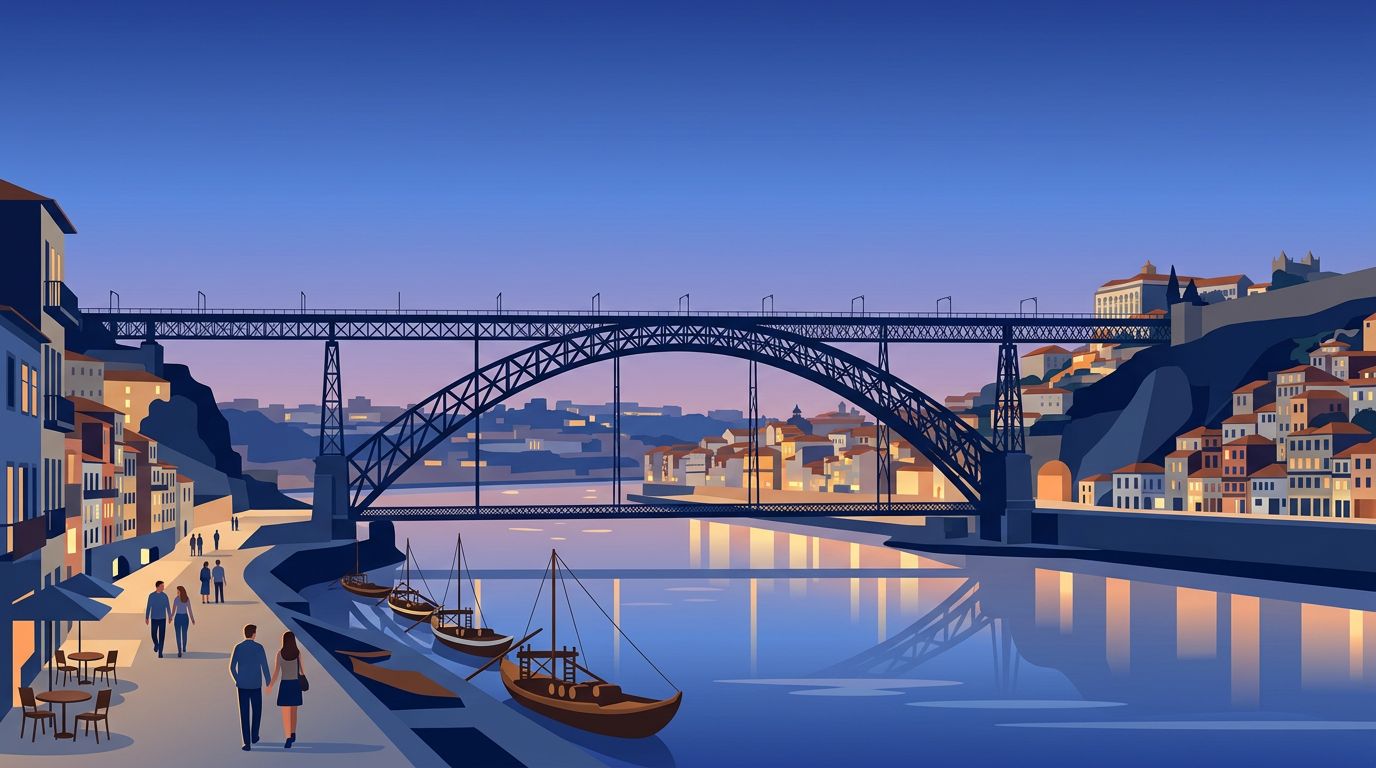
The prettiest light in Porto often arrives after people start packing up. Blue hour is brief, and around Ribeira it can turn a busy riverfront into something calmer, cooler, and far more photogenic.
If you want sharp bridge silhouettes, glowing windows, and clean reflections on the Douro, timing matters more than gear. The trick is knowing where to stand before the sky slips from gold to cobalt.
Key Takeaways
- In early July 2026, Porto’s evening blue hour runs about 21:31 to 21:44.
- Ribeira looks strongest from the Gaia side, where the facades and bridge align cleanly.
- The upper viewpoints near Jardim do Morro and Serra do Pilar give the broadest bridge views.
- Arrive during golden hour, then stay after sunset when the city lights catch up.
- A tripod helps, but careful handheld shooting still works.
When Porto’s blue hour actually happens
For Porto blue hour photography, the schedule is tighter than many first-time visitors expect. On July 5, 2026, sunset is around 21:10, and the evening blue hour falls from 21:31 to 21:44 local time, based on current Porto sun data. About 13 minutes. That short window is why you should be in position well before the sky turns deep blue.
This matters even more in Ribeira, because the scene changes in layers. First the warm sunset drains away, then the river darkens, then the windows and bridge lights start to glow strongly enough to balance the sky. Because of that sequence, the best frame often happens later than your instincts say it will, especially if you like reflections.
A simple timing plan helps:
| Light window | Early July reference | What it gives you |
|---|---|---|
| Golden hour | 20:29 to 21:31 | Warm facades, scouting time, easier focusing |
| Evening blue hour | 21:31 to 21:44 | Deep sky, lit bridge, stronger river reflections |
| Morning blue hour | 05:33 to 05:46 | Quiet streets, softer traffic, lamps still on |
Later in July, sunset shifts a bit later, so don’t copy one day’s numbers for the whole month without checking again. July is also warm and mostly dry in Porto, which helps, but a few clouds can improve your frames because they hold color longer than a blank sky.
The strongest Porto twilight shots usually happen after sunset, not at sunset.
One more practical note: public transport gets busy after dark, so don’t plan a rushed exit the second the light peaks. Stay a little longer. The last five minutes can be the richest.
Where Ribeira gives you the cleanest frame
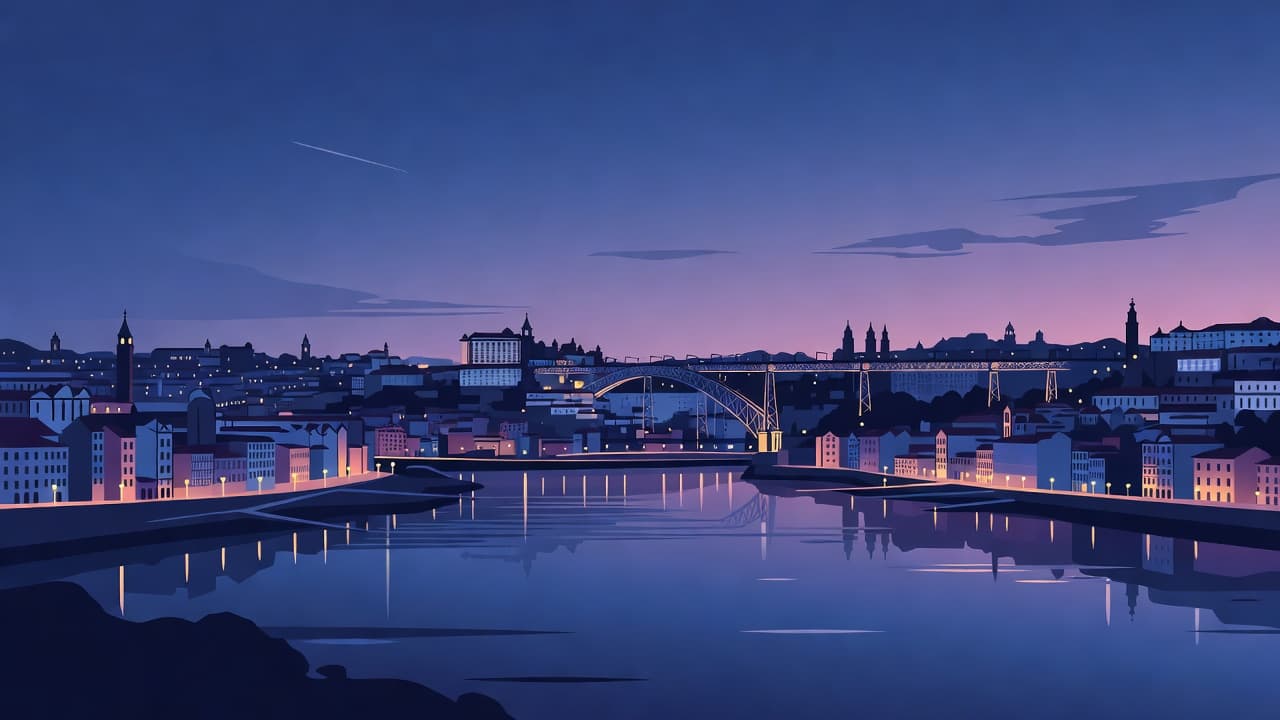
Ribeira itself is lively, textured, and often crowded, but the cleanest photographs of Ribeira usually come from across the river in Vila Nova de Gaia. From the Gaia quay, near Avenida de Diogo Leite, you can frame the stacked houses, the waterfront arc, and the lower arch of Dom Luis I Bridge in one sweep. That angle is hard to beat.
On the Porto side, Cais da Ribeira gives you intimacy instead of symmetry. You can work close to the buildings, include moored rabelo boats, and use cafe lights as foreground points. Still, your compositions will feel busier, and people move through the frame constantly. If you want the postcard view, cross the river.
Last July, a couple on the Gaia side folded their tripod at 21:28 because the sky had gone flat. By 21:35, the bridge lamps had warmed up, a tour boat dragged a bright gold streak across the Douro, and they were laughing while setting the tripod back up. Porto does that. It rewards patience.
For a wider scouting list before you commit to one riverbank, this Porto photography spot guide is useful for comparing riverside angles.
A few choices make Ribeira frames stronger:
- Stand far enough back on the Gaia quay to separate the facades from the bridge arch.
- Keep some water in the foreground, because the reflections carry the shot after sunset.
- Wait for a boat wake to settle if you want mirror-like water, or shoot during the wake for streaked light and motion.
- Watch the edge of your frame, because lamp posts and passing heads sneak in fast.
If you’re after a more cinematic image, shoot slightly longer, around 50mm to 85mm full-frame equivalent, and compress the colorful houses against the bridge. If you prefer scale, go wider and keep the Douro prominent, because the river becomes the dark stage that makes the city lights pop.
Bridge views that still work after the crowds arrive
The Dom Luis I Bridge gives you two different blue-hour stories. The lower level is about structure, lamps, and river life. The upper level is about shape, height, and the slow handoff between sky and city. Both work, but they don’t feel the same.
For the classic broad view, head to Jardim do Morro on the Gaia side before sunset, then shift slightly toward the bridge or continue up to the Serra do Pilar area if you want more separation between the arch and the buildings below. From there, you can fit the bridge, Ribeira, and the curve of the Douro into one frame, while the tram lines and rooftops add extra geometry without swallowing the scene.
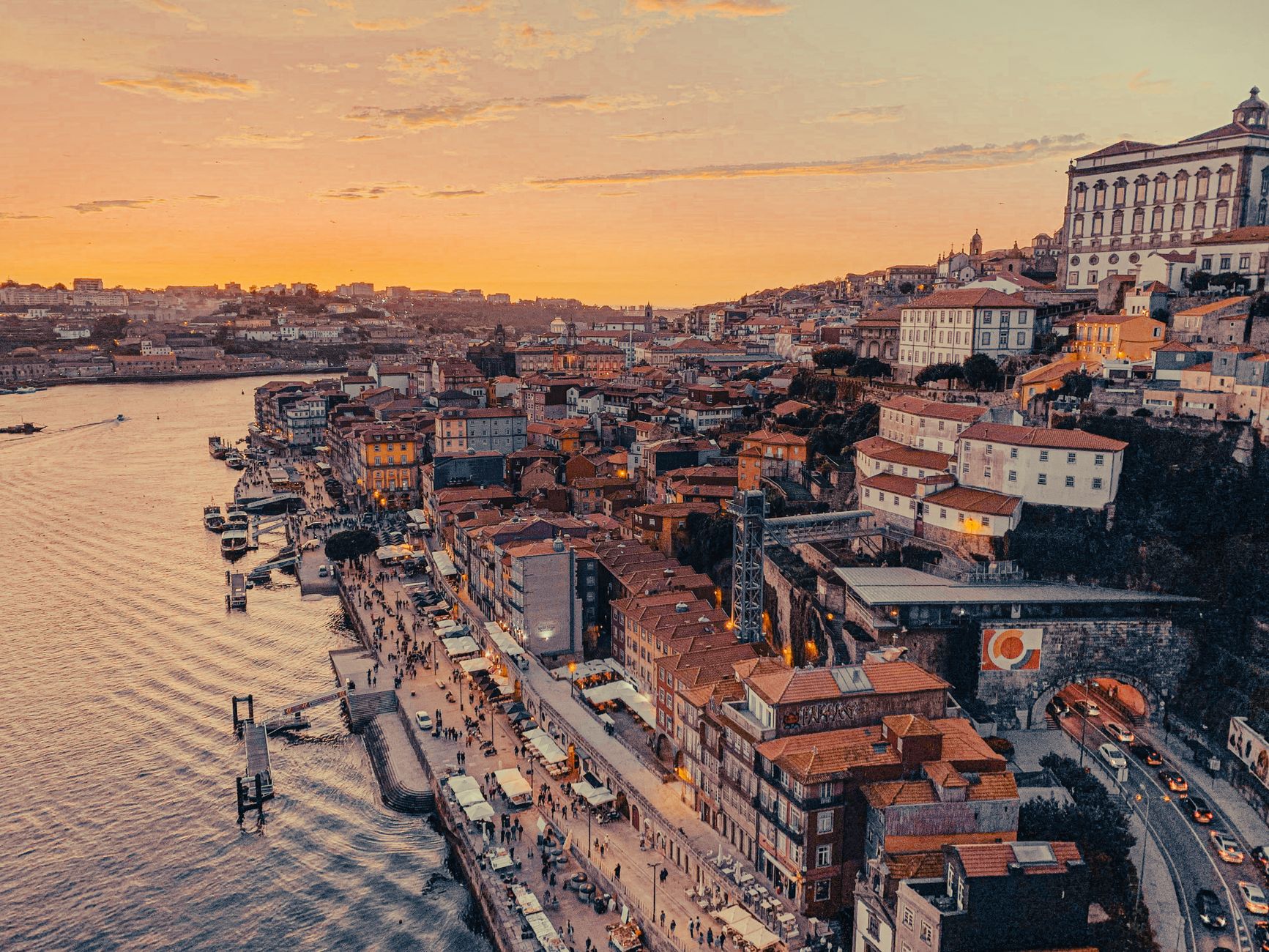
Photo by Marcos Túlio
The upper deck itself can be rewarding, especially if you like leading lines and human scale, but it gets crowded. A full-size tripod there can feel clumsy when pedestrians are streaming past and the bridge vibrates under footsteps and metro movement, so a compact tripod or a firm rail-supported stance often works better.
Meanwhile, if you want another comparison of named Porto viewpoints around Ponte Luis I and nearby streets, The Wandering Lens guide to Porto photo locations helps when you’re planning a short city break.
Light direction also matters. From Jardim do Morro, the facades of Ribeira begin warm and then cool quickly, while the bridge lamps turn into clear anchor points as the sky darkens. From the Porto side, near the upper-deck access, you get stronger layers of rooftops and less of the waterfront curve. Neither is wrong. Your choice depends on whether you want the bridge to lead the eye or dominate the frame.
Crowds thin fast. That’s the gift of waiting.
Settings and field tips for the Douro at twilight
Blue hour around Ribeira asks for discipline more than exotic gear. The scene holds bright lamps, dark water, and a sky that loses light by the minute, so your settings need to protect highlights while keeping shadow noise under control.
If you’re using a camera and tripod, start around ISO 100 to 200, f/5.6 to f/8, and a shutter speed between half a second and four seconds, then adjust for the brightness of the lamps and boats. If you’re handholding, push ISO higher, keep stabilization on, and look for moments when people stop moving in your foreground. Phone shooters can do well too, especially from the Gaia quay, where you can brace on the wall and let night mode stack the frame.
A few habits make a big difference. Shoot in RAW if your camera allows it, because mixed light along the river can trick auto white balance. Focus before the light drops too far, since contrast gets weaker at 21:35 than it was at 21:15. Also, check your histogram instead of trusting the screen, which often makes the image look brighter than it is.
One exposure rarely nails everything when bridge lamps flare hard against a dark river, and if you bracket two or three frames a stop apart you give yourself much cleaner options later without pushing shadows into mush.
Watch your feet, too. The riverside stones can be slick, and backpacks become hazards when quays fill up. Keep your setup compact. Porto at blue hour is beautiful, but it doesn’t slow down for photographers.
Final Frame
Blue hour in Porto is short, but it feels generous if you arrive early and stay late. The orange facades, the iron bridge, and the Douro never brighten at the same speed, so the strongest image often appears in that brief overlap when everything finally balances.
If you only remember one place, make it the Gaia quay below the bridge and hold your spot a few minutes past sunset. On an early July evening, the light can still be building at 21:40, with the river turning navy under the lamps.
