
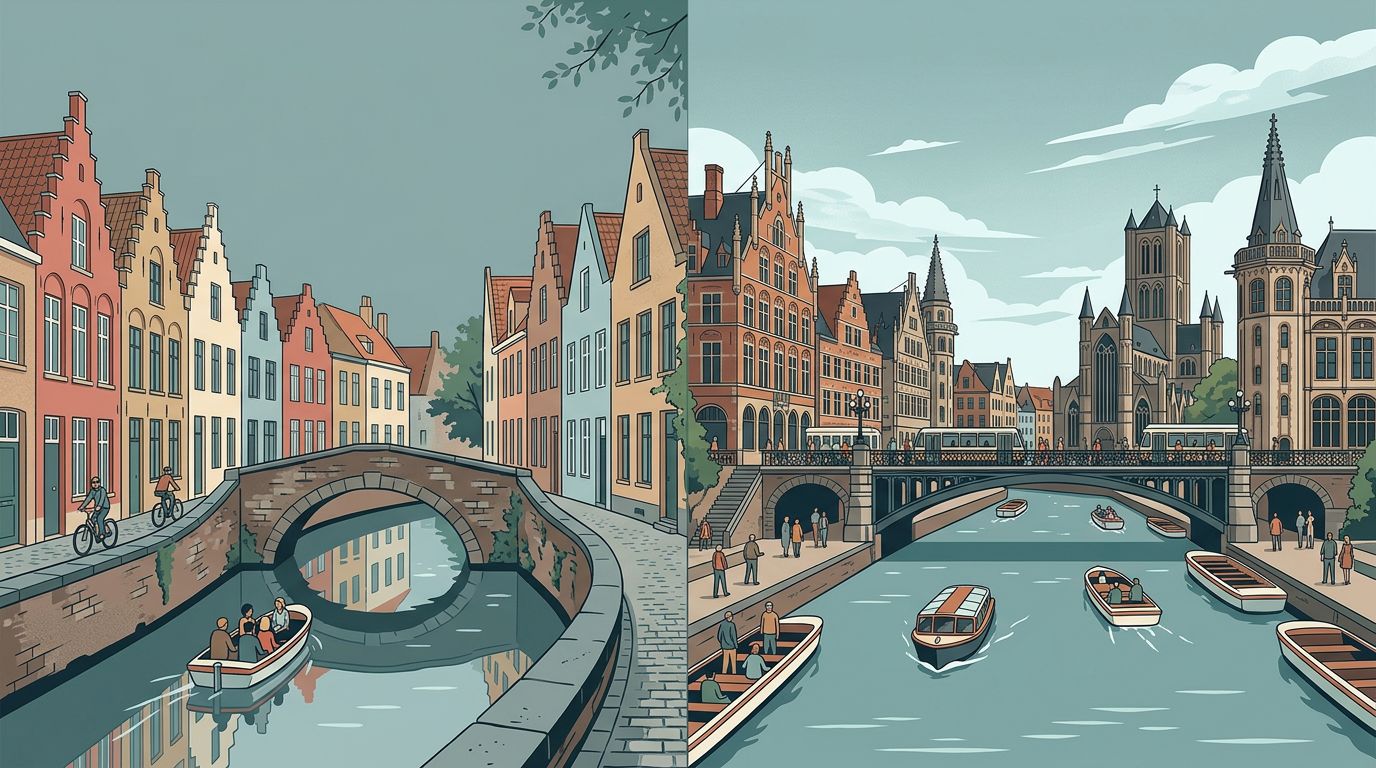
Pick the wrong city, and your memory card fills with scenes you didn’t travel for. In the Bruges vs Ghent choice for canal photography, the difference isn’t small, because each city gives your camera a different kind of story.
If you want the classic canal shot with medieval facades, low stone bridges, and reflections that look polished before you even open Lightroom, Bruges usually gives it to you faster. If you want broader views, bolder contrast, and more room for timing and movement, Ghent often gives you more. The better pick depends on what kind of frame you chase.
How the two cities look through a lens
The first surprise is how different these places feel once you raise the camera. Bruges looks compact and curated, with narrow canals, neat rooflines, and bridges that close the frame for you. Ghent feels looser and larger, with wider water, taller buildings, and more layers competing inside the composition.
Bruges is compressed. Scale matters. So does rhythm.
In Bruges, you can walk a few minutes and find another finished-looking scene. Water bends around brick houses, trees soften the edges, and the skyline rarely gets messy. That makes the city friendly for fast wins, especially if you’re on a short city break or shooting social content that needs immediate visual charm. Almost too tidy.
Ghent asks for more patience, yet it pays you back with broader water, taller architecture, tram lines, cyclists, and changing light that can turn a good canal photo into something with real tension and scale. The canal views feel less like ornaments and more like working city spaces, which means your images can hold more life.
One rainy evening at Saint Michael’s Bridge, a cyclist crossed the wet stones just as the clouds opened enough to catch blue hour reflections under the facades of Graslei. That frame worked because Ghent rewards waiting for motion, not only for stillness.
Bruges gives you polished scenes quickly, while Ghent gives you scenes that grow stronger the longer you stay.
That difference shapes almost every practical choice, from lens selection to shooting time.
Why Bruges wins the classic canal shot
Bruges is the easier city to love at first click. The canals sit close to the streets, the buildings hold together in the frame, and even a short walk can produce half a dozen strong angles without much planning. If your goal is postcard-level beauty with minimal visual cleanup, Bruges usually wins.
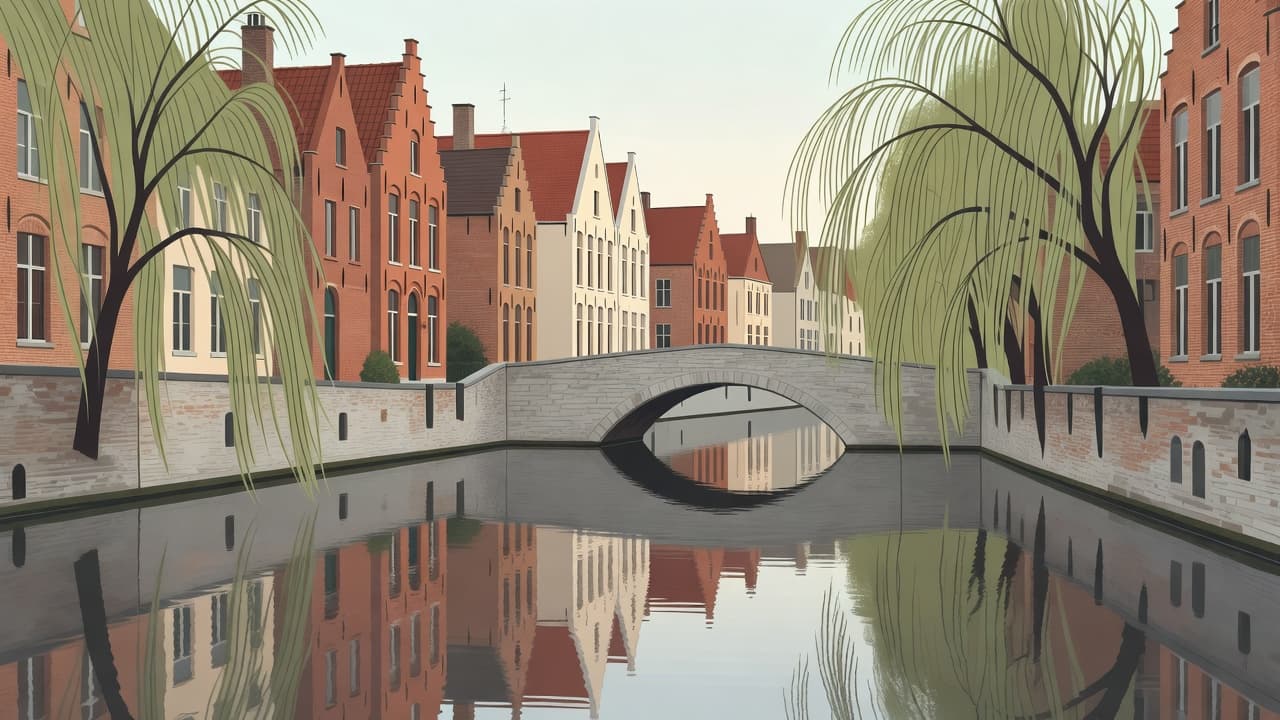
Start with Groenerei, one of the most photogenic stretches in town. The water is narrow enough for rich reflections, and the overhanging trees soften hard lines in bright weather. This look at Groenerei and nearby canals shows why photographers keep returning there. Early morning works best, because the water is calmer and foot traffic is lighter.
Rozenhoedkaai is the obvious stop, and for good reason. It gives you the stacked Bruges look, canal, stepped gables, tower, and boats, in one clean composition. However, the shot is famous, so you won’t get much solitude. If you want a quieter frame, move toward Bonifacius Bridge or the canal edges near Dijver, where tighter compositions feel more personal and less expected.
Bruges also favors normal and short telephoto focal lengths. A 35mm or 50mm lens feels natural here because the city is already compact. You don’t need to exaggerate space to make the canals look good. Instead, you can isolate reflections, brick textures, and bridge curves without fighting clutter.
The trade-off is variety. After an hour or two, Bruges can start repeating itself if you’re hunting fresh compositions rather than the city’s greatest hits. That’s not a flaw. It’s a clue. Bruges is strongest when you want romance, still water, and frames that arrive almost complete.
Why Ghent gives you more room to experiment
Ghent takes longer to read, and that’s part of its appeal. The canals don’t always present a neat scene in one glance. Yet once the lines click, the city opens up with bigger geometry, stronger contrast, and more depth between foreground and skyline.
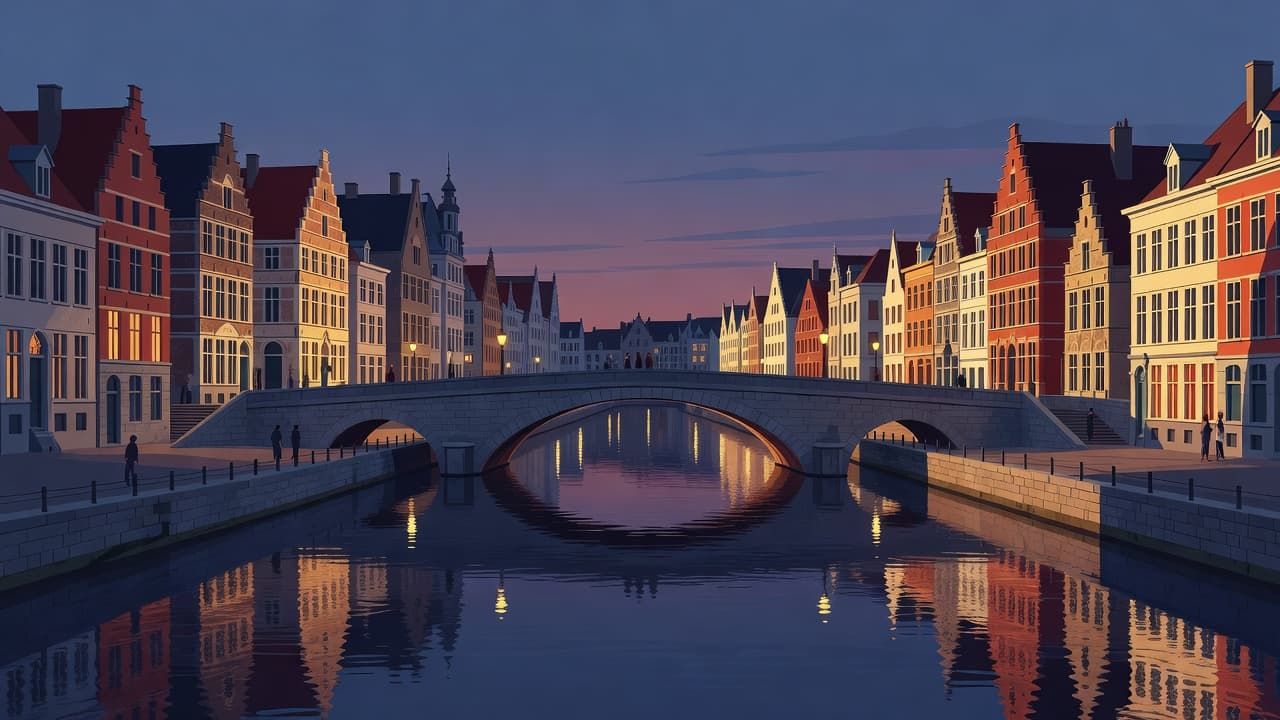
Saint Michael’s Bridge is the anchor point. From the center, you can frame the Leie, the guild houses of Graslei and Korenlei, and several towers rising behind them. That view is so strong that many photographers treat it as the city’s signature angle, and this practical Ghent photography guide makes a solid case for starting there. Go at blue hour if you can. Blue hour changes everything.
Ghent also works better with wide-angle lenses. A 24mm or 28mm helps when you’re trying to include water, facades, bridge railings, and vertical landmarks without stepping backward into traffic. Meanwhile, the city gives you more scope for layered scenes, because the canals are broader and the background architecture sits farther away.
Movement matters more here. Boats, bikes, pedestrians, tram lights, and changing weather can all improve a frame instead of ruining it. In Bruges, you often wait for people to leave. In Ghent, you often wait for the right person to enter.
Still, Ghent asks more from you. Some angles look flat in harsh midday light, and a few canal stretches need patient scouting before they deliver anything memorable. Yet that extra work can be the point. If Bruges feels like a finished painting, Ghent feels like a sketchbook with better surprises.
Light, crowds, lenses, and walking time
Practical choices often decide this debate faster than taste does. A photographer with one free morning and a 50mm lens may leave Bruges happier. A photographer with half a day, a wide-angle lens, and a love of evening light may prefer Ghent.
This quick comparison helps if you’re choosing one city for a short trip:
| Factor | Bruges | Ghent |
|---|---|---|
| Best first impression | Immediate, polished canal scenes | Broader, more layered city views |
| Best light | Dawn and soft overcast | Blue hour and post-rain evenings |
| Easiest lens | 35mm to 50mm | 24mm to 35mm |
| Crowd pressure | Higher at famous viewpoints | Lower at icons, but more traffic |
| Style of image | Romantic and still | Dynamic and urban |
| Best for | Classic postcard photography | Creative canal compositions |
The table hides one important truth, though. Timing matters more than city choice. Bruges looks best before the day fully wakes up, because the narrow canals hold reflections and the busiest corners stay manageable for a short window. Ghent looks best when light starts to bounce off wet stone, windows glow, and the water carries deeper color.
Walking style matters too. Bruges rewards slow wandering with frequent stops, because strong scenes are packed close together. Ghent works better if you commit to a route, for example Saint Michael’s Bridge, Graslei, Korenlei, then out toward quieter canal edges where the crowds thin and the compositions open.
If you’re shooting for social media, Bruges gives you cleaner vertical crops with less effort. If you’re shooting for prints, portfolios, or editorial work, Ghent usually offers more shape and atmosphere inside a wider frame.
Pick the city that fits your eye
Choose Bruges if you want canal photos that feel finished almost immediately. Choose Ghent if you enjoy building a frame, waiting for movement, and letting the city add a little friction to the picture.
Most travelers don’t need a winner for all situations. They need the right match for the next shoot, the lens in the bag, and the hour of day they can actually spare.
If tomorrow gives you one free session before breakfast, would you rather stand on Groenerei at 7:15 a.m., or wait on Saint Michael’s Bridge for the first lights to hit the water?
