

If you want the classic Dutch frame, start with water and rotors. The best Netherlands photo spots often come down to one simple mix, a calm canal, a low horizon, and a windmill that catches the light.
That sounds easy until you stand there with crowds, bikes, and shifting weather. The good news is that a few places keep giving you strong shots even when the day gets busy.
Here are the spots that repay early alarms and patient feet.
Kinderdijk for the classic windmill scene
Kinderdijk is the place most travelers picture first. Nineteen historic windmills line the water, and the long paths make it easy to work the scene from different heights. For more planning detail, the Kinderdijk windmills guide is a solid starting point.
At sunrise, the canals act like mirrors, and the low sun brings out the edges of the blades, the grass, and the narrow ditches in a way that feels almost drawn by hand. If the wind stays calm, the whole place looks slower than it really is.
One October morning, a pair of cyclists stopped beside a canal just long enough for a boat wake to fade. The reflection came back in one sheet of water, then broke apart again. That tiny pause made the frame.
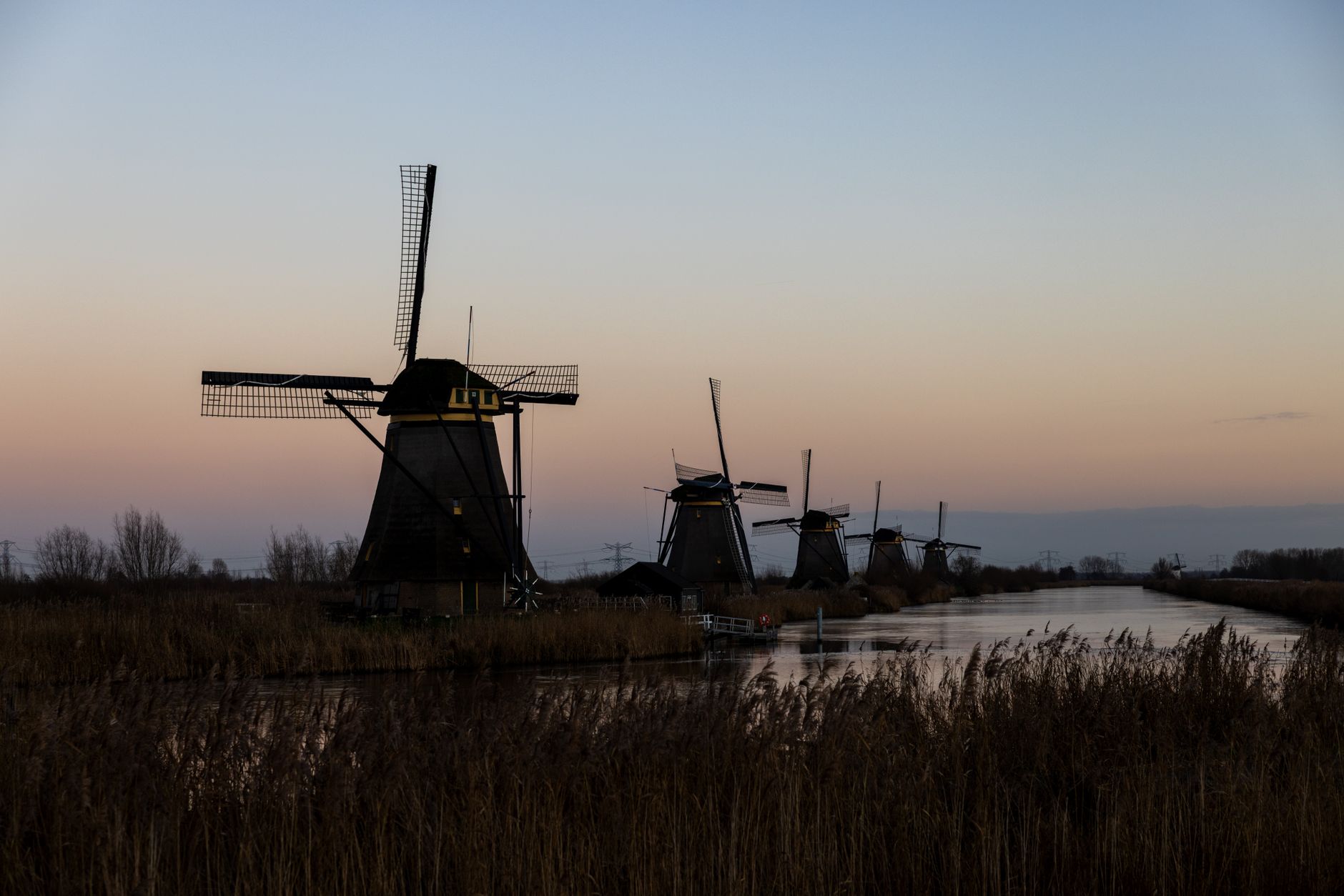
Photo by Bráulio jardim
Come before the buses. Walk the dike. Shoot low. Wait for the water to settle.
A longer lens helps if you want one mill and one bridge. A wider lens works better when you want the whole line of windmills and open sky.
Zaanse Schans for easy, close-up Dutch scenes
Zaanse Schans is easier to shoot than its fame suggests. You get windmills, green wooden houses, footpaths, and water in one small area, so you can change angles fast when the light shifts.

That tight layout matters. Because the area is compact, you can build a full set of images in a short visit, starting with wide frames of the mills and then moving in for doorways, fences, and canal edges that add scale. The Zaanse Schans and Zaandam day trip piece is useful if you want a simple route.
The green houses matter. So do the bridges. Side light gives the mill sails more shape, and a cloudy sky keeps the white clouds from fighting the scene.
Arrive early. Stay a little longer. Crowds build fast.
If the main path feels crowded, step toward the water and look back. Small shifts here make a big difference.
Amsterdam canal views that hold up after dark
Amsterdam gives you the most variety. The canal belt has famous bridges, narrow house fronts, and water that picks up light after sunset, so the same block can change every half hour.

Blue hour. That’s when the canal water starts to look like polished slate, and every lamp feels warmer than it should. The Seven Bridges view on Reguliersgracht is popular for a reason, because the repeating arches make a clean line through the frame and the warm lamps turn the water into a strip of gold.
Torensluis works better when you want one strong bridge and fewer moving parts. Damrak is busier, but the canal houses make a bold front-on shot if you like symmetry. Prinsengracht and Herengracht reward longer walks, especially when you want quiet corners instead of one famous point.
Stay after sunset. The glow lasts. Watch cyclists.
On clear nights, the reflections can get sharp enough to double the bridges. On damp nights, the streetlights spread softly and the whole canal feels calmer.
Quieter canal towns when you want fewer people
Some of the best photo spots in the Netherlands are the ones people skip because they sit outside the famous route. Giethoorn is the obvious example, with small bridges, low boats, and thatched roofs close to the water. If you want a cleaner plan, the Giethoorn day trip for photographers guide gives a good starting point.
Early morning is when it shines, because the canals are still, the walkways are empty, and each bridge gives you a different layer of reeds, water, and rooflines without much visual clutter. A soft sky helps, too. It keeps the tones gentle.
No rush. Keep moving slowly. The best frames here often come after you think you’ve seen the obvious ones.
A narrow bridge can hide a stronger view just beyond it. One small turn often opens the canal, the boat, and the roofline in a single frame.
How to make these places photograph well
Light does most of the work in this kind of trip, but your choices still matter. A wide-angle lens helps in tight streets, while a mid-zoom is better when you want one windmill or one bridge without extra clutter at the edge.
Cloudy days often help more than sunny ones, because the softer light keeps the water from blowing out and gives the paint on old houses and windmills a smoother tone. On bright days, look for shadows and reflections instead of shooting straight into the glare.
Tripods help. So does a cloth for mist. Check the wind before sunrise.
Keep an eye on the waterline, not just the skyline. A small shift in position can line up a bridge arch, a sail, or a reflection in a way that makes the whole frame feel cleaner. If a scene feels busy, step left and try again.
The best places also reward timing more than gear. Come early, move slowly, and give each location a few extra minutes before you move on.
Conclusion
The strongest frames in the Netherlands are often the quiet ones. A canal that goes still, a windmill blade caught in soft light, a bridge lamp before the streets fill up, those are the moments that stay with you.
Plan for early starts and slow walks. Then leave space for luck, because the best shot at Kinderdijk can arrive a minute after a boat wake fades.
Would you rather wait for that reflection, or chase the first light on Reguliersgracht?
