
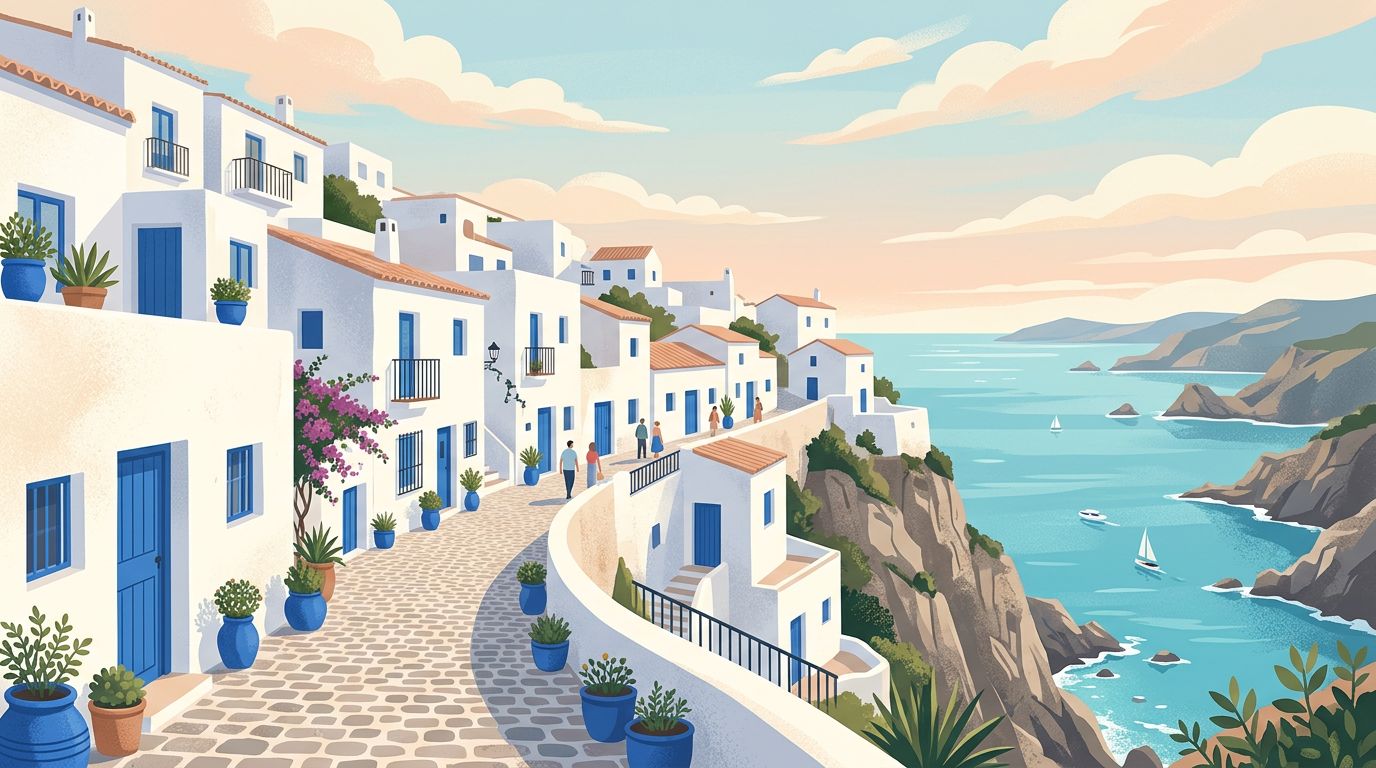
Spain photo spots get more interesting when white walls meet open water or a sheer drop. That mix gives you shape, contrast, and a sense of place in one frame.
The best scenes are rarely complicated. A narrow lane, a cliff edge, or a hilltop town can do more for your camera than a long list of landmarks. If you want images that feel clean and memorable, Spain has plenty of them.
White villages that give you clean frames
Frigiliana is one of the easiest places to love with a camera. Its lanes climb and twist, so every corner gives you a new composition, and the white paint does the heavy lifting when the light is kind.
On my first morning there, a bakery owner rolled up a metal shutter just as the sun hit a staircase lined with blue pots. That small moment changed the whole street. Suddenly, the scene had motion, color, and a human scale that made the photo feel lived in.
Vejer de la Frontera has a different mood. It sits high, so the views open fast, and the town feels lighter than the tighter hill towns. Arcos de la Frontera leans even more into drama, with steep streets that drop hard toward the edge. Olvera adds a castle and a rocky perch, which gives your frame a strong anchor.
If you want a wider list of places to compare, this roundup of white villages in Spain is a useful companion.
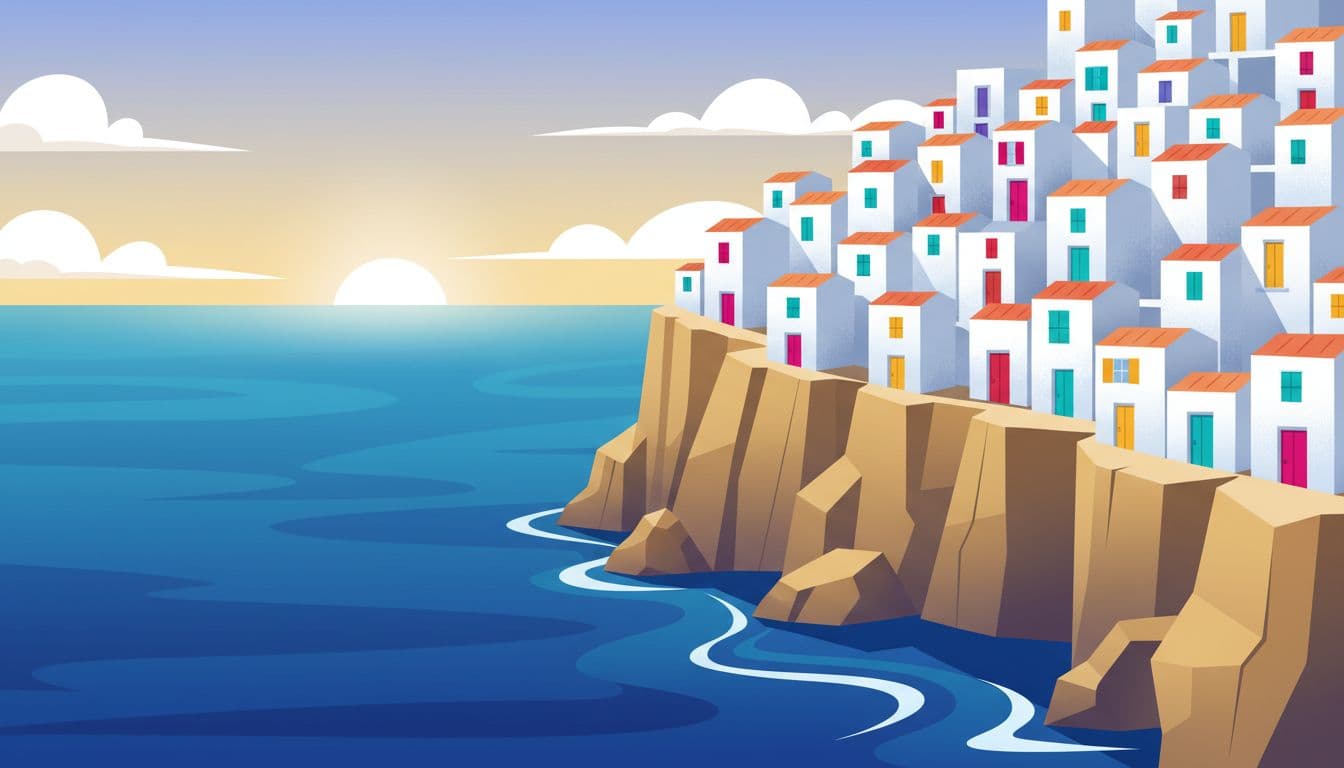
Blue pots help. So do open shutters. A single doorway can carry the whole photo.
White walls need shadow lines.
That line matters more than most people think. Without shadow, the buildings can look flat, especially under hard midday sun. With shadow, the walls start to show shape.
For more visual inspiration, a quick look at white village photos from the Costa del Sol shows how much Frigiliana and Mijas can change across the day.
Sea cliffs that add scale and drama
Ronda is the clearest example of why cliffs work so well in Spain. The gorge cuts the town in two, the bridge spans the gap, and the whole place feels built for wide framing. You can shoot it from above, from across the valley, or from a lower viewpoint that lets the rock fill most of the image.
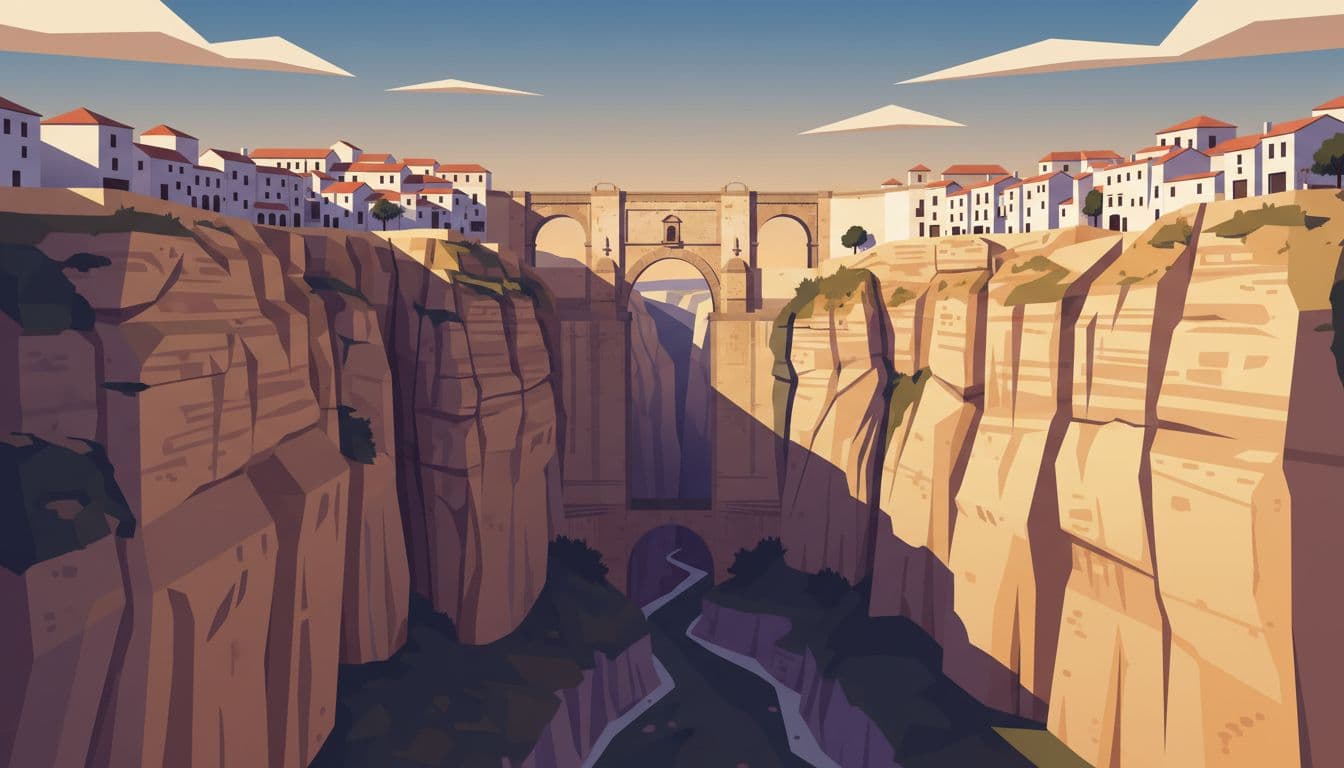
Cliff photos work when you leave room around the subject, because the drop, the light, and the empty space do more work than any filter ever will. Ronda does this better than most places because the scale is obvious the second you step up to the edge.
The Cádiz coast near Vejer de la Frontera gives you another kind of cliff shot. The land feels close to the Atlantic, so you get wind, brightness, and open sky instead of the tight, rocky drama of inland canyons. That makes the view feel lighter. It also gives you more room to play with horizon placement.
Mojácar is useful if you want a white village with sea-side appeal. It sits in that sweet spot where you can photograph white streets and still keep the coast in the story. Mijas works in a similar way, especially if you want whitewashed lanes with coastal views nearby.
The key here is simple. Let the cliff breathe. Leave some sky. Leave some rock. A photo of Spain’s coast feels stronger when the frame isn’t packed edge to edge.
The best light for white walls and blue water
Light changes everything in these places. White buildings can glow or glare, and cliffs can look layered or washed out. The same street can feel calm in the morning and harsh by noon.
Early light is your friend in white villages. It gives the walls shape without flattening the details, and it keeps the lanes quieter before the day fills up. Late afternoon works well on sea cliffs, because the low sun gives the rocks texture and turns the water a deeper shade.
Go early. Sunrise wins here. Bring water.
If you shoot at midday, move into shade and look for details instead of big scenes. Doorways, stairs, balconies, and flower pots hold up better than a broad sunlit square. That is where a good Spain photo spot turns into a good photo.
A small rule helps a lot: keep the brightest part of the frame under control. If the sky burns out, step back and include more land. If the buildings look too flat, wait for a passing cloud or shift to a street with deeper shadow.
How to frame the scene so it feels alive
The strongest photos from these places usually have one clear subject and one strong line. A staircase can pull the eye upward. A cliff edge can lead straight to the horizon. A balcony can frame a village like a stage.
Look for contrast in shape, not just color. White houses against dark rock work well. Curved lanes against straight walls work too. Even a simple doorway can add depth if you place it in the foreground and let the village fill the background.
This is where Spain photo spots become easier to use than people expect. You don’t need a huge scene every time. One wall, one window, one strip of sky can be enough if the light is right.
Try changing your height before changing your lens. A lower angle can make stairs feel steeper. A higher angle can make rooftops line up in a neat pattern. If you only shoot from eye level, you miss half the story.
One more detail helps in white villages. Include people sparingly. A person walking through a narrow lane can show scale, but too many people can flatten the mood. One figure near a blue door or a sunlit arch is often enough.
Planning a route without wasting daylight
If you want to build a trip around these scenes, cluster your stops by region. Frigiliana and Mijas work well for a Costa del Sol base. Ronda fits a day focused on dramatic interior views. Vejer de la Frontera, Arcos, and Olvera make sense when you want hill towns with bigger shapes and stronger cliffs.
Do not try to chase every famous town in one trip. You will spend more time driving than shooting. It is better to stay near two or three photo stops and return to the same area at different times of day.
Stay local. Save energy. Move early.
That pace also gives you room for weather changes. A windy coast morning may push you inland. A hazy afternoon may make the white villages look better than the cliffs. Spain rewards flexibility, and the best shots often come when you leave space in the plan.
If you want a broader shortlist before you set your route, keep that white villages in Spain roundup open on your phone. It helps when you need one more stop between a cliff view and a village lane.
Conclusion
The strongest Spain photo spots in this theme are the ones that give you a clean subject and a clear mood. White villages bring order, brightness, and small details. Sea cliffs bring height, wind, and space.
If you choose one village and one cliff, you already have two very different frames from the same trip. One will give you stairs, shutters, and white walls. The other will give you stone, distance, and a hard edge against the sky.
Would you rather frame the white stair in Frigiliana at 7 a.m. or the stone rim above Ronda’s gorge at sunset?
