
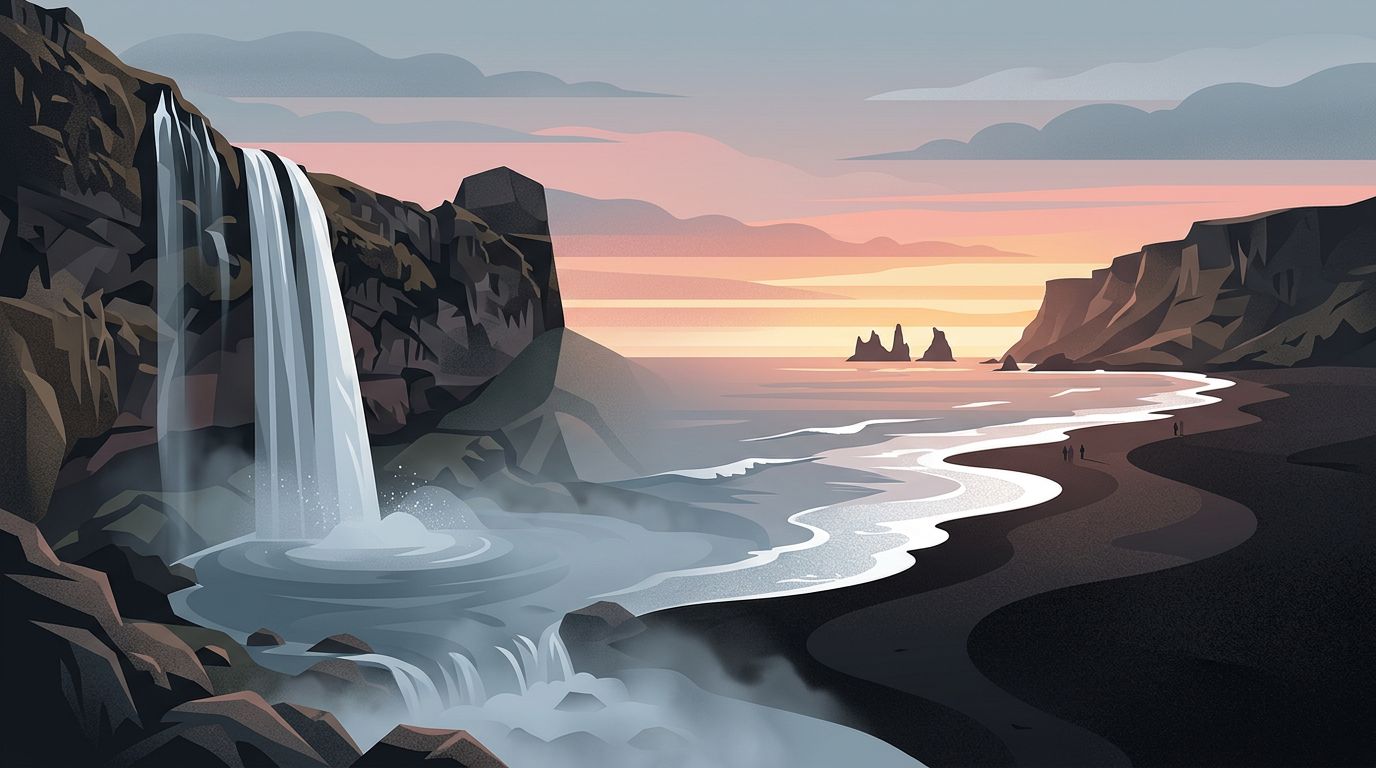
Iceland gives you two strong subjects on one road, waterfalls that hit with force and black sand beaches that feel almost lunar at dawn. If you want the best Iceland photo spots for both, the south coast is where the trip starts to make sense.
The trick is timing. The same place can look flat at noon and electric at sunrise, so the real job is picking the right hour for each stop. Go where the weather works for the scene, not the map.
Why the South Coast Gives You the Best Mix
The south coast packs the classic subjects close together, so you can move from mist to surf without losing a full day to driving. If you want a route that ties the stops together cleanly, the Iceland South Coast itinerary gives you a useful backbone, because most of the main Iceland photo spots for this theme sit within the same stretch of road, and that matters when weather turns fast.
Cloud cover helps here. So does wind. Gray skies keep waterfalls bright, while a low ceiling makes the cliffs feel closer and the sea look heavier. That kind of weather can look dull in town, yet it is often perfect for dramatic travel frames.
Most people rush this part of the country. That’s a mistake. The road rewards slower stops, and the best frames often happen when you wait for the light to change by a few minutes.
Go early. The parking lots are calmer. Rain helps. It darkens the basalt and makes the water pop.
Waterfalls That Always Earn a Stop
Waterfalls reward wide-angle lenses and patient feet. They also punish rushed framing. The first view is rarely the strongest one, because a step to the side can separate the water from the crowd and give the whole frame breathing room.
Gullfoss gives you layers. Skógafoss gives you scale. Both work best when you let the mist stay in the frame instead of treating it like a problem. A bit of spray often gives the scene more depth than a clean blue sky.
Gullfoss and Skógafoss
At Gullfoss, aim for the canyon walls as much as the falls. A wider composition lets the white water sit inside the rock lines instead of floating on its own, which is why a 24mm view often works better than a tight shot. On a gray day, the contrast between water and stone gets stronger, and the whole scene feels more grounded.
At Skógafoss, back up farther than feels comfortable. Then back up again. The curtain is huge, and a longer focal length can compress the scene in a way that keeps the water tower-like and the frame simple. Bring a cloth. Spray is constant.
A photographer at Skógafoss once waited 25 minutes at 6:20 a.m. for the spray to thin. When a rainbow finally broke through, she made three frames and kept the first. That single moment turned an ordinary stop into the photo on her wall.
Spray is part of the shot.
Go early.
Bring a cloth.
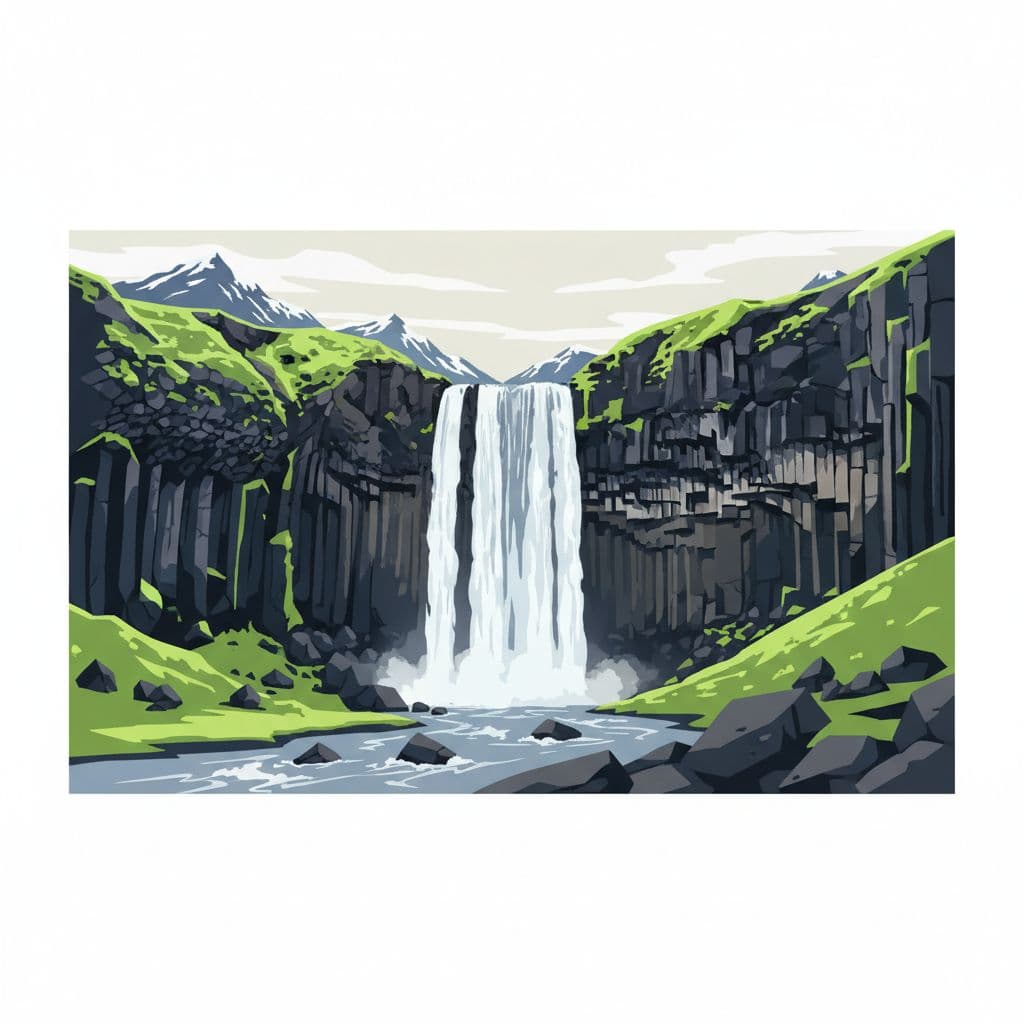
Seljalandsfoss, Kvernufoss, and Svartifoss
Seljalandsfoss is famous because you can walk behind it, but the best frame often comes from a slight angle, where the water hangs like a moving curtain and the cave adds a dark edge to the shot. The path behind the falls works best with a fast shutter and a lens cloth close by.
Kvernufoss sits nearby and feels calmer. Worth the detour. The short walk filters out casual visitors, and the falls sit in a narrow bowl that makes the water feel close. Svartifoss changes the mood again, because the basalt columns create a natural frame that looks almost carved, and that geometry gives the falls a different kind of strength.
If you want fewer people in frame, Kvernufoss is a strong choice. If you want lines and shape, Svartifoss is the one that stays in your head long after the drive ends.
Black Sand Beaches Where the Horizon Does the Work
Reynisfjara is the place where the coast starts to feel raw. The black sand, the basalt stacks, and the white water line create strong contrast, but the sea deserves more attention than the skyline. Watch the surf. Stay back. Then watch again.
Sneaker waves are real here, so the safest photos usually come from a little farther up the beach than you planned. The higher ground at Dyrhólaey changes the whole frame, because it lets you show the curve of the coast, the cliffs, and the spray without putting the wave at your feet. The sea wins.
For a quick visual reference, the South Iceland in Photos set shows how Reynisfjara, Vík, and the nearby headlands often appear in the same run. The beach around Vík also gives you room to work when the wind is too strong at the main cove.
A wide lens helps here. So does patience. Reynisfjara works best when you stop treating it like a postcard and start treating it like a moving scene, because the waves, clouds, and basalt stacks change the frame every few minutes, sometimes every few seconds.
A Practical Route for Light, Weather, and Gear
If you only have one or two days, start with the waterfalls and leave the coast for the better light. Seljalandsfoss and Skógafoss work well early, when mist is lower and visitor traffic is still light. Reynisfjara and Dyrhólaey often look better later, when the sky picks up texture and the black sand reflects more of it.
Pack light, but pack smart. A wide lens helps at every stop. A mid-range zoom gives you options when a waterfall feels too big for one frame. A microfiber cloth matters more than a second body, because spray can blur a front element in minutes.
- A wide lens.
- A mid-range zoom.
- A microfiber cloth.
- Boots with grip.
Tripods help at dawn, but keep them low on windy cliffs. Keep your steps short on wet rock. Use parking areas as your first scout, not your final frame, because a better angle is often just a few minutes away on foot.
If the forecast looks rough, keep going. Low clouds can make the falls feel larger, and a dull sky can turn into the kind of clean backdrop that makes basalt and white water stand out.
Conclusion
The strongest waterfall and beach photos in Iceland come from timing and patience. The light shifts fast, the weather changes the scene, and that change is what gives the coast its edge.
Leave a little room in the day for waiting. Leave a little room for one extra pull-off too. A rainbow at Skógafoss, a dark wave line at Reynisfjara, or a clean basalt edge at Svartifoss can change the whole frame.
Keep a microfiber cloth in your pocket and watch the surf at Reynisfjara for the exact moment the waves flatten. Would you rather catch the first light on Skógafoss or wait for the tide to pull back at Reynisfjara?
