
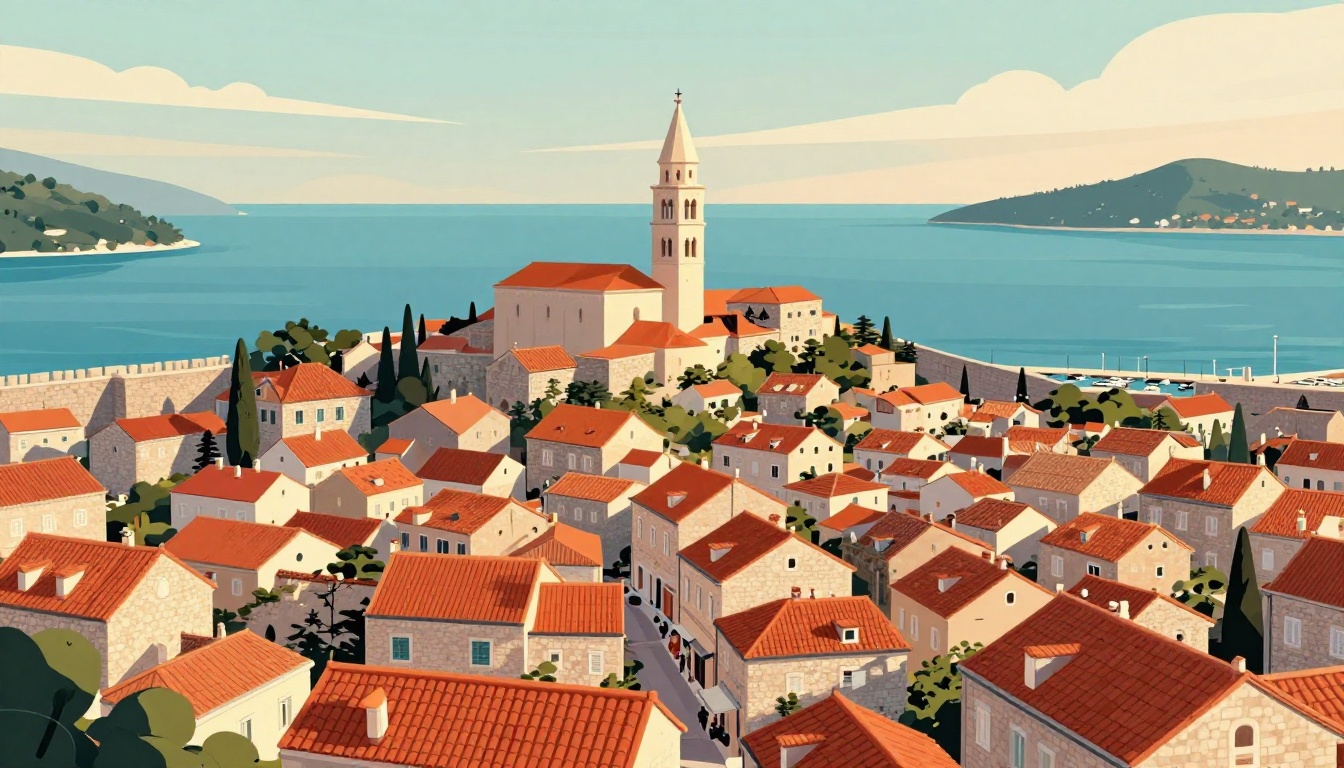
Red roofs spill down to stone lanes, church towers catch the sun, and blue water wraps around the edges of Croatia’s old towns. It’s a dream for photographers, but the best shot usually isn’t where the crowd stops. For the strongest old town views in Croatia, you need the right height, the right street corner, and the right light.
That’s the challenge in places like Dubrovnik, Split, Rovinj, Zadar, Hvar, and Korcula. Each town has dozens of pretty angles, yet only a handful give you the full scene, rooftops, harbor, walls, and sea in one frame. Go at the wrong hour, and you’ll get flat light, harsh shadows, or packed lanes that drain the mood from the photo.
This guide keeps it practical, so you can plan fast and shoot well. You’ll find the viewpoints that are worth the climb, the street-level scenes that still feel alive, the best times for soft light, and the crowd windows that make a big difference. Start with the spots that give you the clearest old town view, then build the rest of your route around them.
Dubrovnik has Croatia’s most famous old town views, and a few spots stand above the rest
Dubrovnik is the place most travelers picture first, and for good reason. The old town looks almost unreal from above, with red roofs packed inside pale stone walls and the Adriatic wrapping around the edges like blue glass.
If you want the strongest photos, focus on a few proven angles instead of chasing every lookout. In Dubrovnik, the best shots come from height, side views, and a few streets where the city slows down enough to show its texture.
Walk the City Walls for the classic red-roof view over the whole old town
The city walls are still the top pick for a full old town photo because they give you the whole scene in one sweep. From up there, you can frame the sea, rooftops, church domes, bell towers, and layered stone streets all at once, which is hard to match anywhere else in Croatia.
The western side near Fort Bokar is especially strong. That stretch gives you a wide look across the rooftops, and the angle feels balanced instead of flat. You see how tightly the old town folds into itself, with lanes stacked behind one another like stone ribbons.
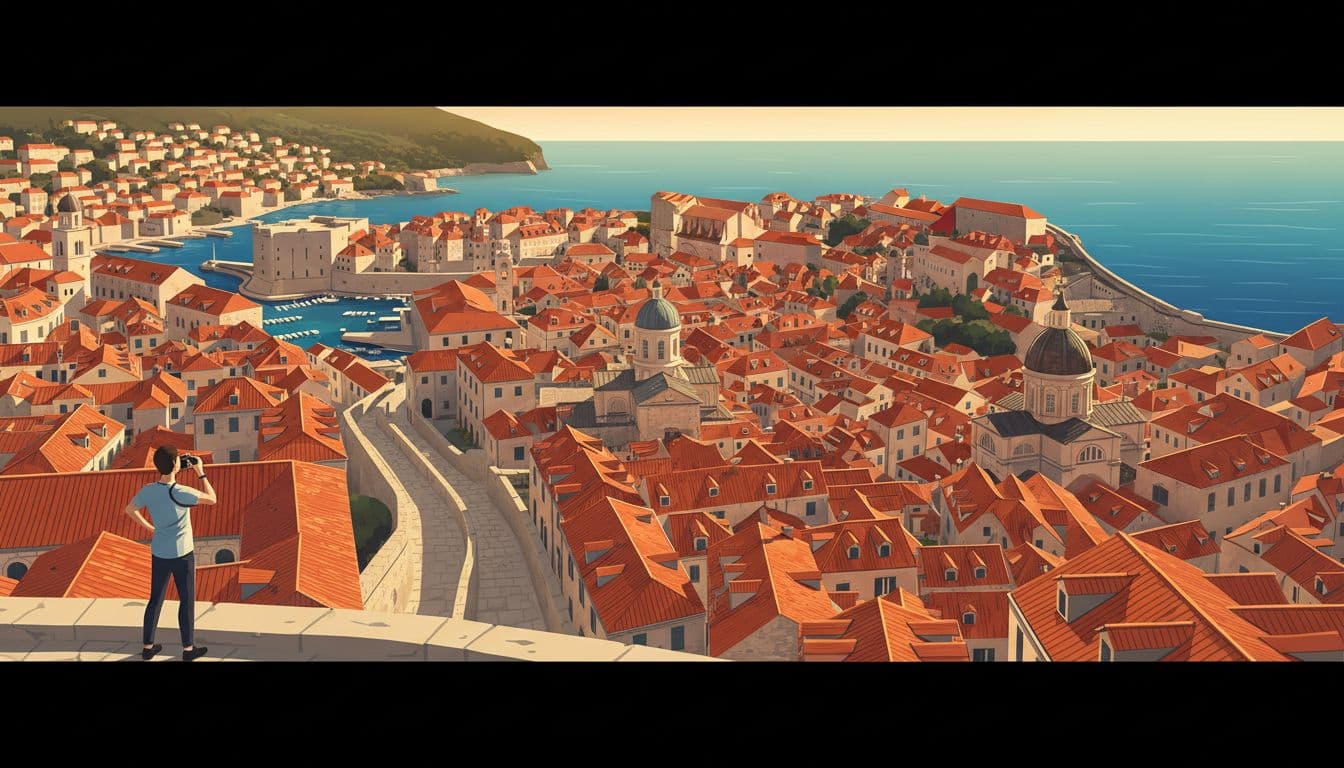
Because this is Dubrovnik’s most famous walk, it gets busy fast. Early entry helps a lot, especially on weekday mornings. Recent travel reports also point to 7 to 9 AM as the cleanest window for lighter crowds and softer light. If you want official background on the site itself, see Dubrovnik’s walled old town overview.
A wide lens works best here. It lets you hold the walls, roofs, and sea in one frame without backing yourself into a corner.
Go up Mount Srd for the big postcard shot at sunset or blue hour
Mount Srd gives you Dubrovnik’s most dramatic overlook. From the top, the old town sits between the sea and the hills like a small stone ship, and that contrast is what makes the image feel so striking.
You can reach it by cable car or by hiking. The easy option is obvious, but the result is the same: a full panorama that turns the city walls into a neat outline against the coast. For route details and what to expect on foot, this Mount Srd hike guide is useful.
Sunset is beautiful here, and so is blue hour just after. The sky softens, the sea darkens, and the roofs keep a bit of warmth before the city lights begin to glow. Still, crowds gather for that exact show, so arrive early if you want rail space or a clean tripod spot.
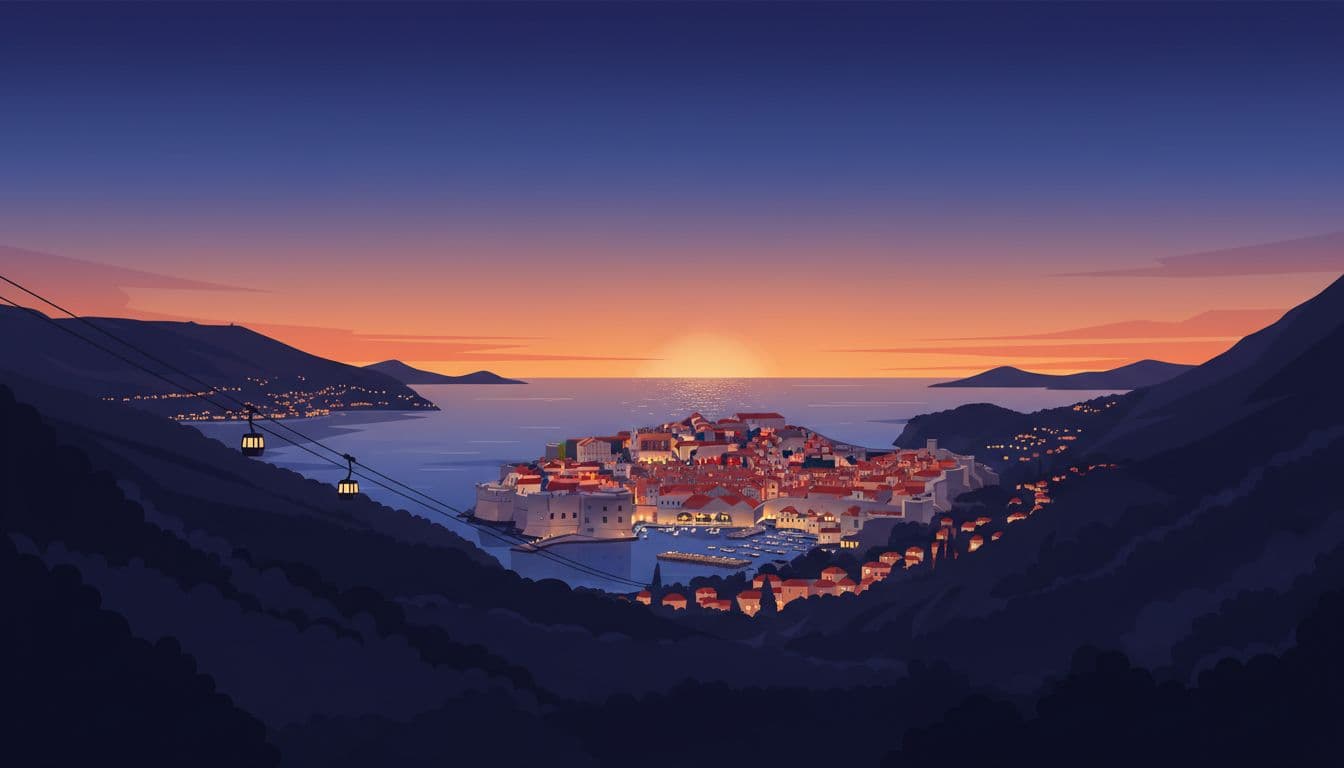
Stay a little longer than most people do. Once the sun drops, the lights in the old town start to sparkle, and the frame shifts from bright postcard to something richer and more cinematic.
Use Fort Lovrijenac and the Ploce side for angles many visitors miss
Fort Lovrijenac gives you a strong side profile of Dubrovnik that feels bolder than the standard rooftop view. From here, the walls look longer, the cliffs look steeper, and the sea adds more weight to the frame. You can read more about the terraces and viewpoints at Fort Lovrijenac.
On the other side, the Ploce area changes the composition again. Near Ploce Gate, the harbor, boats, and outer walls help frame the city in a way that feels more open. The pedestrian bridge and the road outside Ploce are both useful spots, especially if you want a layered view without squeezing into the busiest entry area.
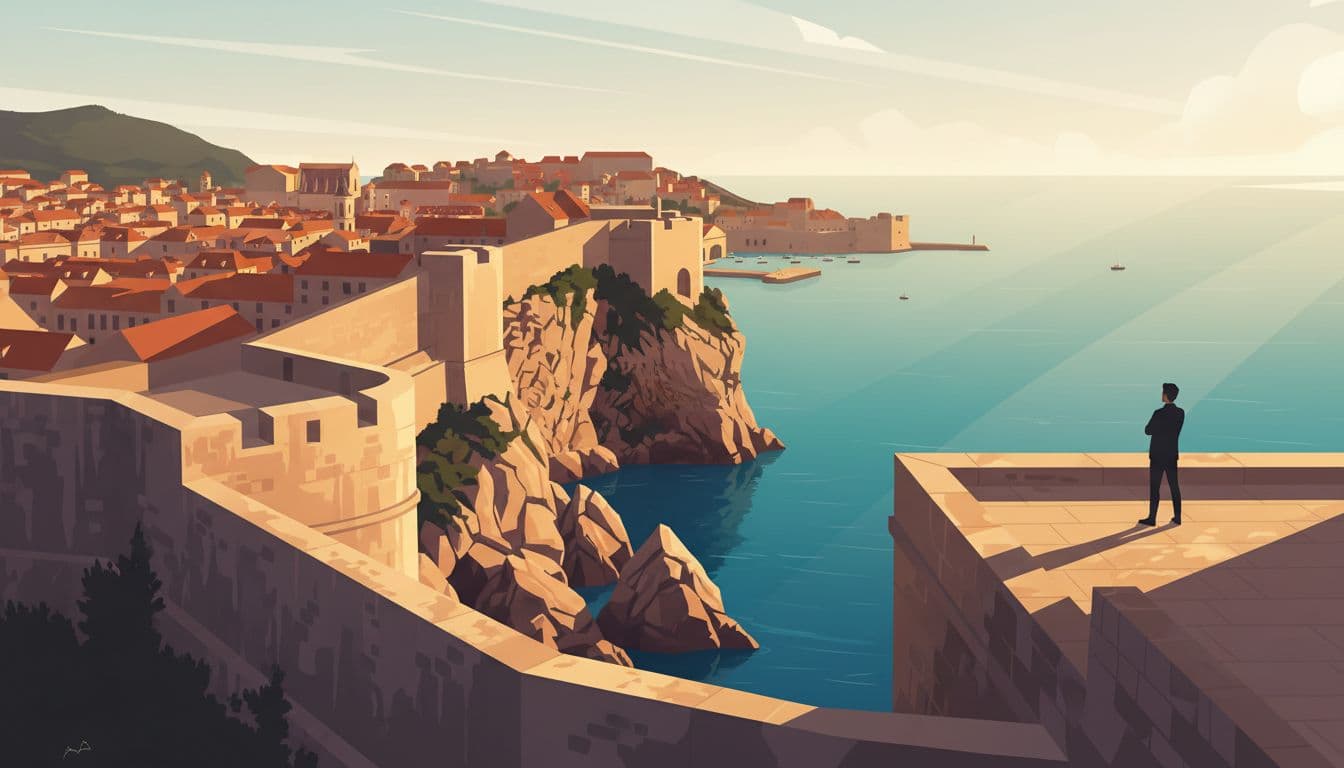
These spots often feel less packed than Pile Gate, which makes them easier for patient framing. That’s a big help when you want clean edges and fewer people drifting through the shot.
Step into Stradun and the back lanes for street photos with more life and detail
After the big overlooks, go back down and work closer. Stradun gives you polished stone underfoot, long lines of buildings, and a cleaner sense of scale. Early morning is best here because the main street is calmer, and the smooth pavement catches light without a crowd filling every gap.
Later in the day, the back lanes become more interesting. Narrow alleys hold shadow and contrast, while slices of sun fall between buildings and light up shutters, stairways, and worn walls. That’s where Dubrovnik starts to feel less like a postcard and more like a lived-in set.
Look for the small details that give the city its pulse:
- Laundry hanging between stone facades
- Cats resting on warm steps
- Dark green shutters against pale walls
- Staircases that pull the eye uphill
Those frames won’t show the whole old town, but they often say more.
Split and Rovinj offer two very different old town scenes, both worth your best lens
Split and Rovinj both reward photographers, but they speak in different tones. Split is broad, bright, and busy by the water. Rovinj feels tighter and more romantic, with pastel walls and a hilltop skyline that looks made for a postcard. Put them together, and you get two strong takes on Croatia’s old-town beauty.
In Split, shoot from the western harbor for a full view of the old town and waterfront
For a wider photo of Split, the western harbor is one of the clearest spots you can use. From here, the scene opens up at once: Diocletian’s Palace, the palm-lined Riva, the boats, and the long waterfront all sit in one frame. That mix gives Split its energy, and it reads better from a little distance than from inside the old core.
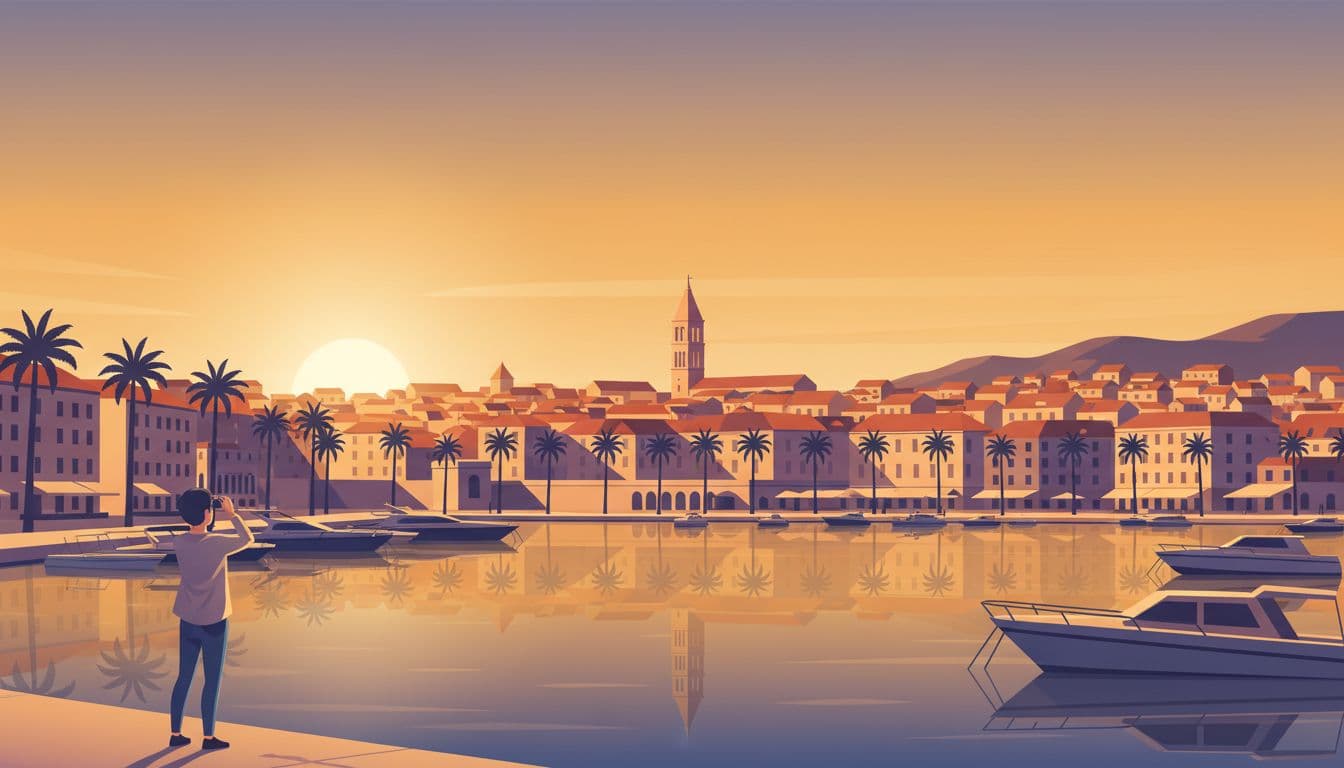
Go at sunrise or sunset if you can. Warm light softens the stone, lifts the color in the boats, and keeps shadows from getting too hard. Midday flattens the waterfront and makes the palace edge look harsher than it is. For extra location context, this Split photography guide helps map the main angles.
The palace itself is different. It’s better for detail, texture, and street scenes than for a big skyline-style view.
Inside Diocletian’s Palace, look for arches, courtyards, and narrow lanes
Once you’re inside the palace, stop chasing the full outline and work close. This is where Split turns from open harbor city to stone maze. Arches frame your shot, courtyards catch soft light, and narrow lanes pull the eye forward like threads through old rock.
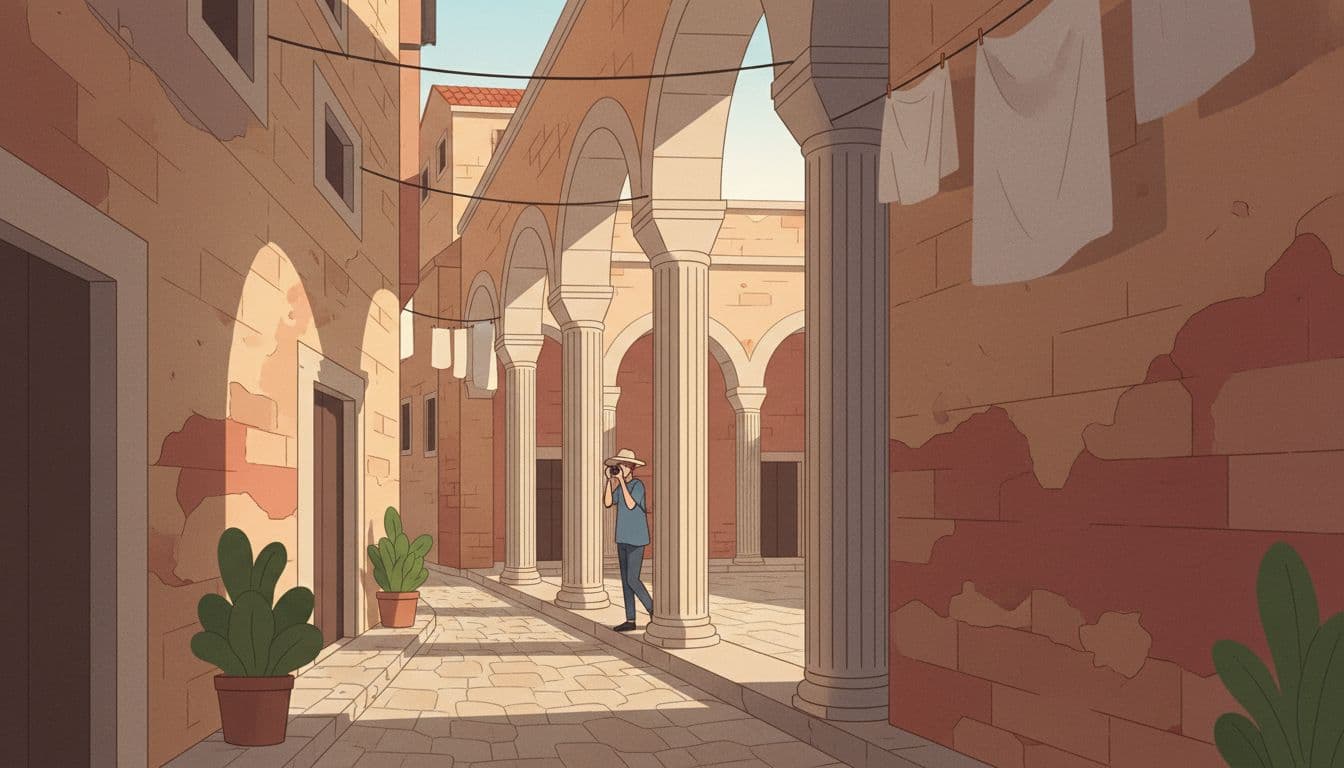
Aim for street-level composition here. Use worn walls, polished stone, old shutters, and bits of daily life to show that this isn’t just a Roman site. People still live, shop, and move through it. That contrast is the point. If the main paths feel packed, step a little farther off the busiest corners. The quieter passages often give you the best textures and cleaner lines.
In Rovinj, climb near St. Euphemia Church for rooftops, water, and the bell tower
Rovinj’s best high view is near St. Euphemia Church, where the town gathers below you in a tight drop toward the sea. From that hill, pastel facades and stone roofs stack together in a way that feels softer than Split. The bell tower anchors the frame, while the Adriatic opens behind it and around it.
Both sunrise and sunset work well here. Morning keeps the lanes quieter and the colors gentle. Evening brings warmer tones and more glow on the water. The climb is short, but it does include stairs, so bring only what you want to carry uphill. For background on the church and its setting, see St. Euphemia’s Church.
Stay by the waterfront in Rovinj for low-angle shots of the old town rising from the sea
At the waterfront, Rovinj changes again. The harbor edge and promenade give you a low-angle old town view where the buildings seem to rise straight from the water. That angle makes the bell tower more dramatic because it leads the eye upward, above the roofs and into the sky.
This is also where small details help. Reflections soften the scene, moored boats add shape in the foreground, and evening color wraps the facades in a pale gold wash. Stay until the light drops a little. Rovinj often looks best when the day starts to cool and the harbor turns still enough to mirror the town.
Zadar, Hvar, and Korcula reward photographers who want old town views with fewer crowds
If Dubrovnik and Split feel like the headliners, these three are the strong supporting cast. They have fewer famous photo points, yes, but that’s part of the appeal. You get beautiful old town scenes, more room to breathe, and a better shot at clean frames without fighting a wall of phones.
In Zadar, start along the waterfront for walls, towers, and open sea beside the old town
Zadar works best from the edge, where the old town meets the water. Along the waterfront, you can frame stone walls, church towers, and open sea in one simple view, and that balance gives the town a calm, airy look. It feels less theatrical than Dubrovnik, but often more relaxed to shoot.
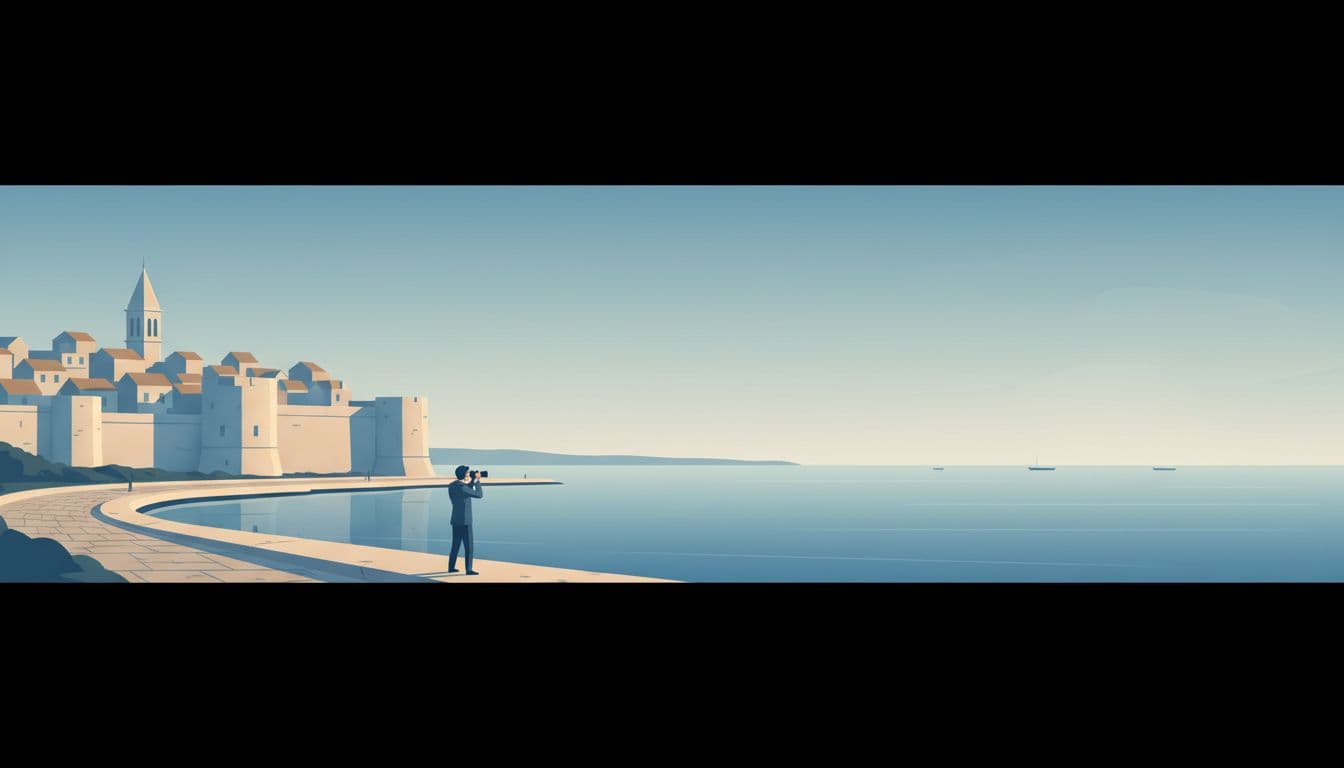
Go early if you can. Morning light is softer, the paths are calmer, and the sea often looks smoother, which helps the whole frame settle down. For a few location ideas around the old town edge, this quick guide to Zadar photo spots is a handy starting point.
In Hvar, look across the harbor to frame the old town with boats and hillside light
Hvar’s prettiest old town views usually come from across the harbor or a little above it, not from deep inside the lanes. From that distance, the town reads as a whole scene: pale facades, clustered roofs, moored boats, and light sliding down the hillside behind them. The harbor gives the photo its rhythm.
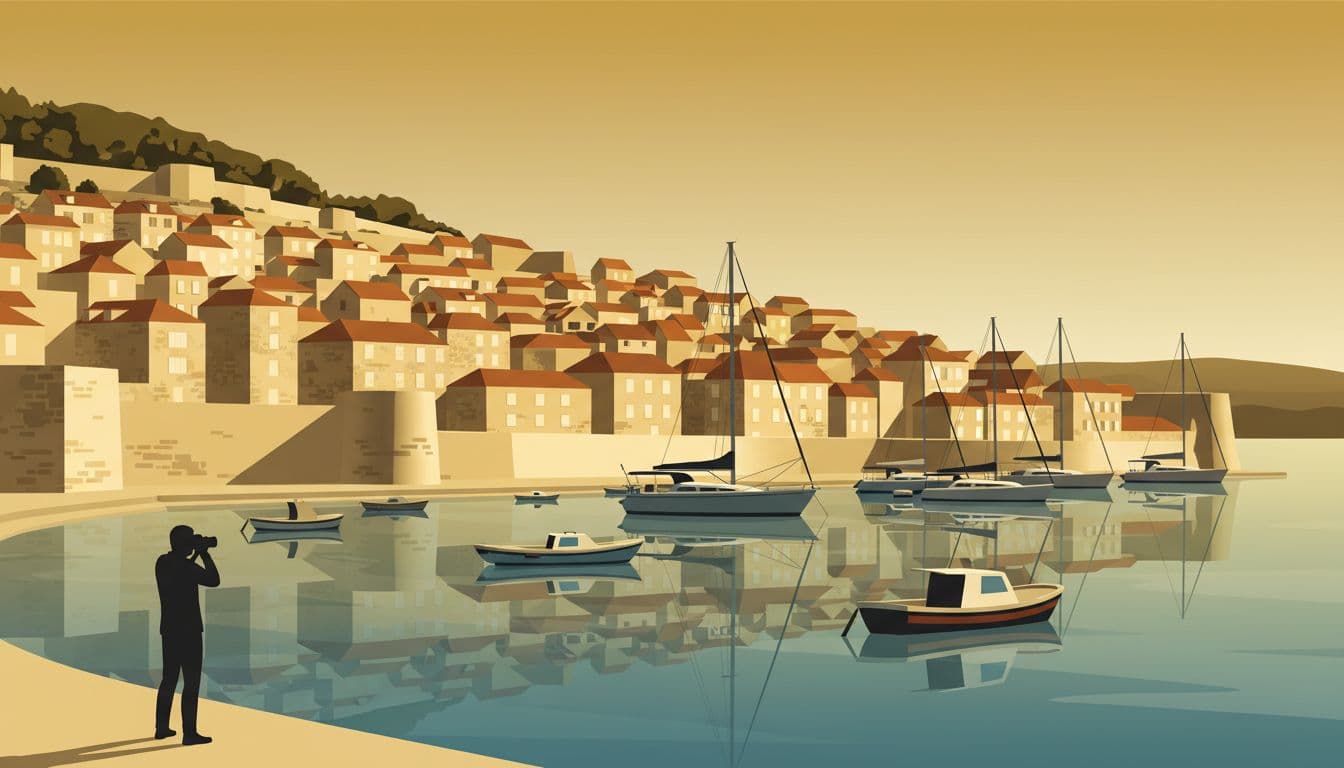
Because Hvar gets busy in summer, shoulder season is a smart move. Late May, early June, September, and early October usually mean fewer people and cleaner compositions, based on recent Croatia travel timing guidance. Morning often works well here, especially for harbor views, and this Hvar Town Harbour photo note lines up with that. You may not get a huge list of famous lookout points, but the core angle is strong enough to carry the stop.
In Hvar, distance helps. Step back from the lanes, and the town starts to make sense in the frame.
In Korcula, use the harbor side to capture the walled old town from the water’s edge
Korcula is compact, walled, and easy to read in a photo. From the harbor side and ferry area, the old town rises in a tight stone mass, with towers, roofs, and walls stacked close together. That shape gives you one of the clearest small-town silhouettes on the coast.
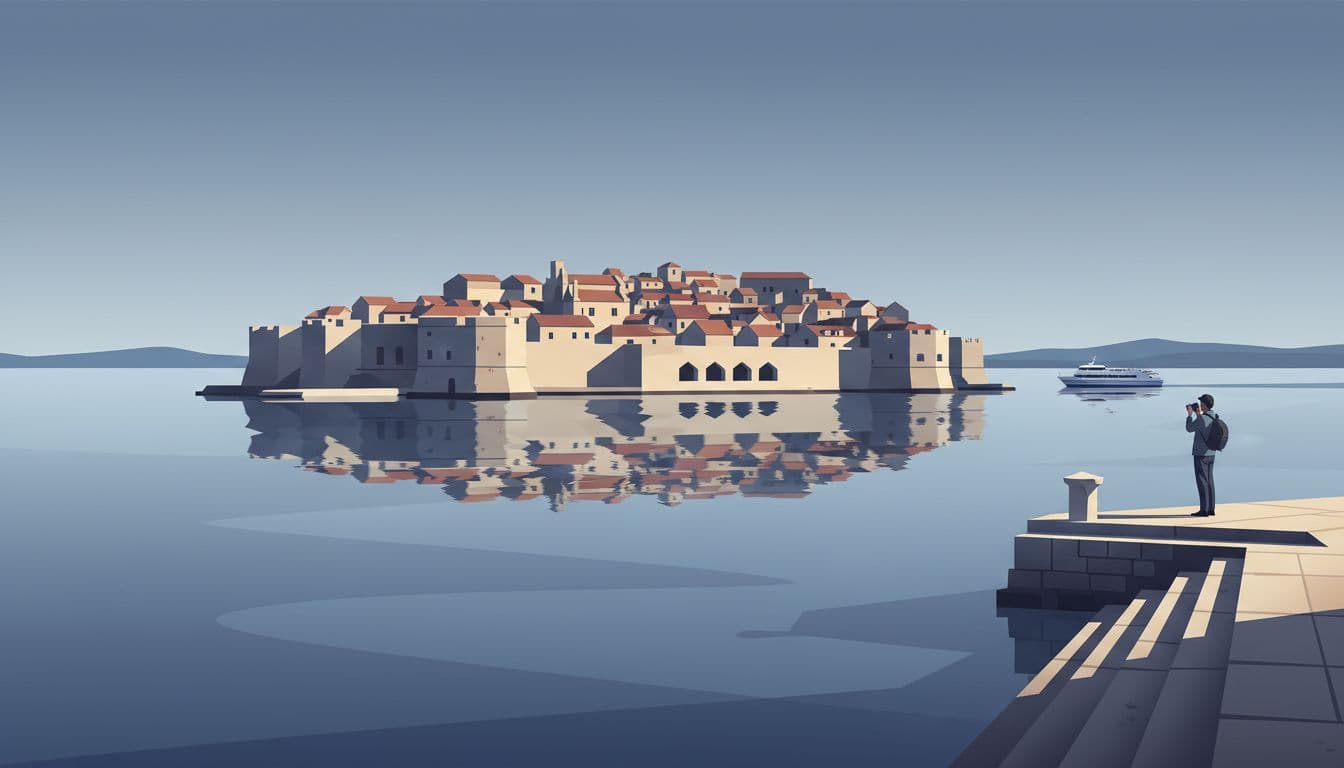
Off-peak months feel much calmer here, which helps both your photos and your pace. You can wait for ferries to clear, watch the light shift on the walls, and move without rush. Some of the better angles ask for a few steps or a short climb, but the payoff is worth it. For more background on the town itself, Korcula’s old town overview is useful, and this Korcula guide from Condé Nast Traveler captures why it feels like a quieter alternative to Croatia’s biggest names.
How to get better old town photos in Croatia without carrying a full pro setup
You don’t need a heavy camera bag to come home with strong old town photos in Croatia. In places like Dubrovnik, Split, and Rovinj, light and timing matter more than extra gear. A phone, a small camera, and a bit of patience often beat a backpack full of lenses.
Choose the right time of day because stone streets and sea light change fast
Croatian old towns shift by the hour. At sunrise, stone looks softer, the sea is calmer, and the streets still feel half asleep. That’s when Dubrovnik’s walls and harbor glow without the hard glare that comes later. Recent timing notes also put summer sunrise windows very early, around 5:00 to 6:30 AM in Dubrovnik, with similar patterns in Split and Rovinj, so an early start pays off fast.
Golden hour is best when you want warmth on rooftops, walls, and harbor edges. In Split, that late light helps the waterfront and palace stone feel richer instead of flat. In Rovinj, evening works especially well because the hilltop town catches warm color just before the sky cools.
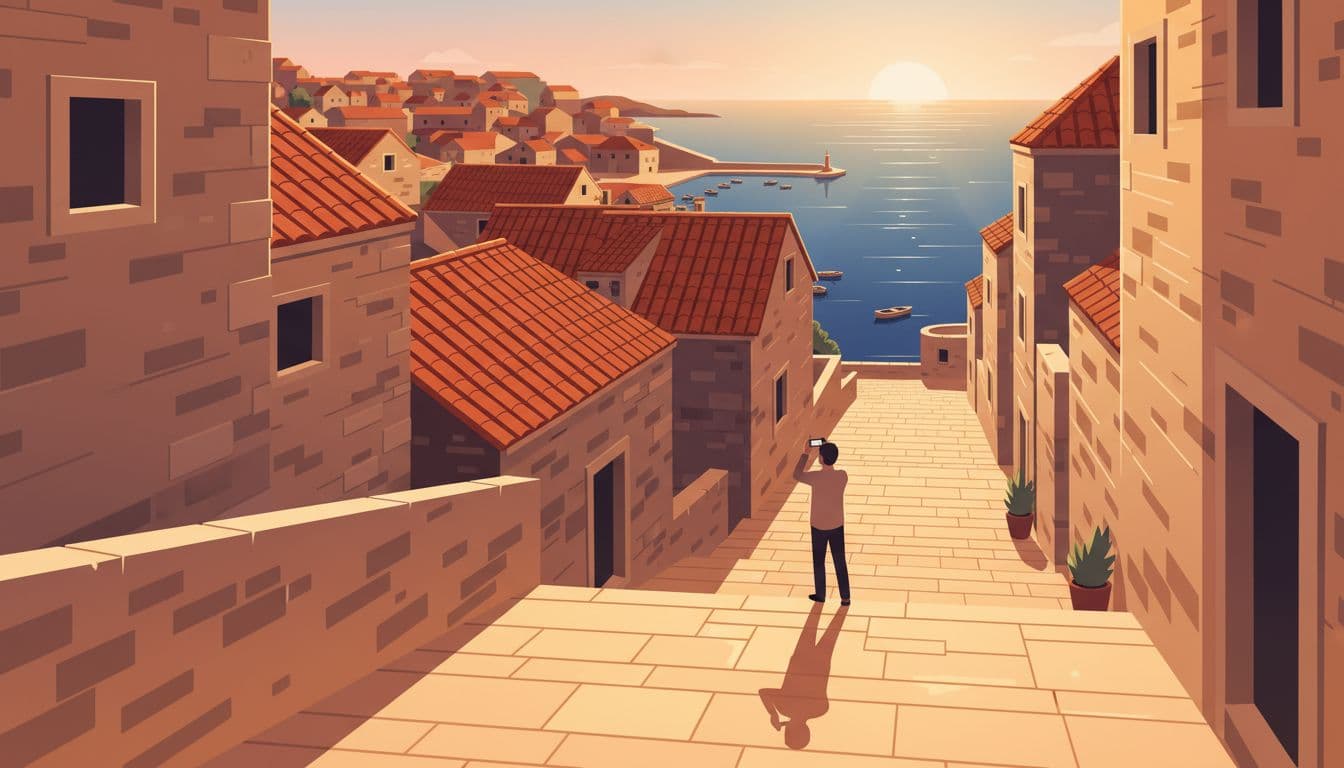
Blue hour is the sweet spot for harbors and wide views. After sunset, Dubrovnik looks almost lacquered, with cool sky above and warm lights below. For more on that look, see Dubrovnik blue hour photography and National Geographic’s Dubrovnik golden hour feature.
Midday still has a place. In tight alleys, harsh contrast can add mood, especially in Split’s stone lanes or Dubrovnik’s back streets, where bright slices of sun cut across deep shade.
Pack light, wear good shoes, and plan for stairs, walls, and slick stone
Croatian old towns are walkable, but they aren’t gentle on tired feet or bulky bags. You’ll deal with stairs, slopes, walls, and polished stone that can get slick, especially near the sea or after rain. A small setup keeps you faster and safer.
Bring only what helps you shoot more, not what slows you down:
- A phone or small camera with a wide lens
- One extra battery
- An empty memory card
- A bottle of water
- Grip-friendly shoes with solid soles
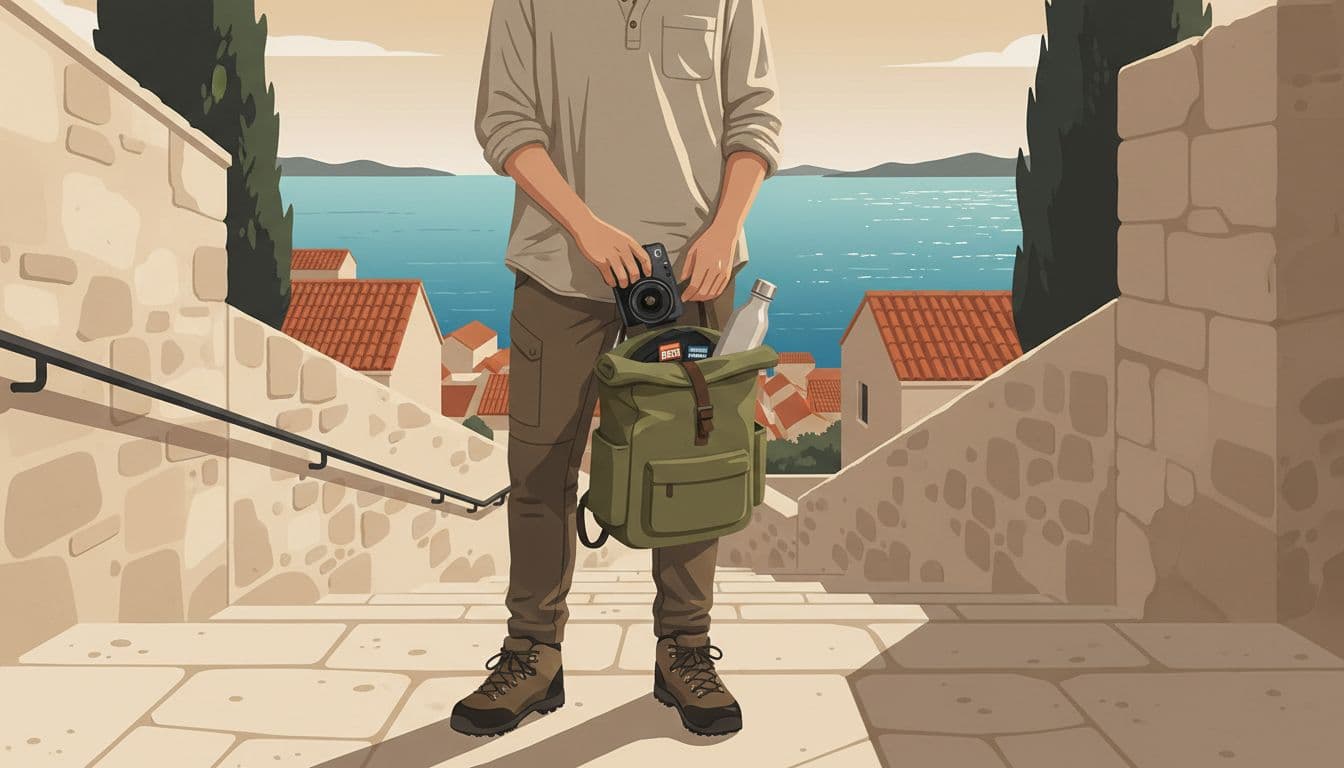
That’s enough for most travelers. In Dubrovnik and Rovinj, you’ll climb more than you expect, and a heavy setup starts to feel like a suitcase full of bricks by noon.
Use simple framing tricks to make old towns look less crowded and more alive
Good framing can hide a crowd without pretending the town is empty. Shoot through a gate, arch, or narrow lane, and the edges of the scene do the cleanup for you. In Rovinj, a stone doorway can turn a busy street into a neat frame for shutters, steps, and sea.
You can also use boats, harbor walls, or low parapets in the foreground. That works well in Split and Dubrovnik, where the waterline helps separate your subject from the crowd. Then wait a few seconds for a gap in foot traffic. One clean moment is often all you need.
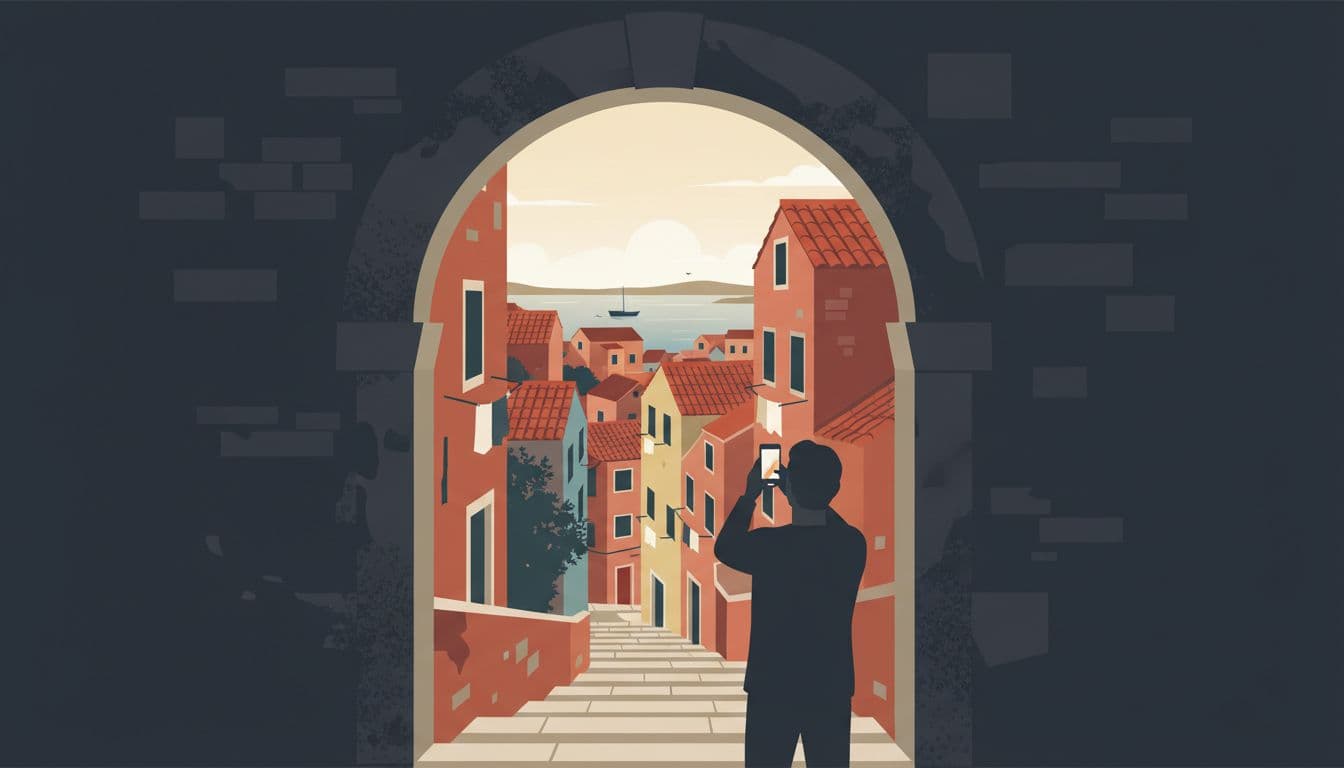
Mix your shots, too. Take one wide view, then move in for shutters, laundry, stair lines, or a patch of worn stone catching light. Phone users can do this easily by stepping closer instead of zooming. For angle ideas, Rovinj photo spots and this Dubrovnik photography guide are useful references.
Conclusion
The best photo spot in Croatia depends on the mood you want to bring home. Choose Dubrovnik for drama and those classic wall-and-sea frames, Split for living history in bright stone, and Rovinj for soft romance above the water.
If you want more breathing room, head to Zadar, Hvar, or Korcula. Their old towns still shine, but the pace is gentler, and that often shows in the photo. I still remember waiting five extra minutes on a quiet harbor edge in Korcula, and the scene changed the moment a ferry cleared and the light warmed the walls.
Most of all, go early, stay a little late, and let the light do the hard work. Croatia’s old towns don’t need much help, just patience, good footing, and the right hour.
