
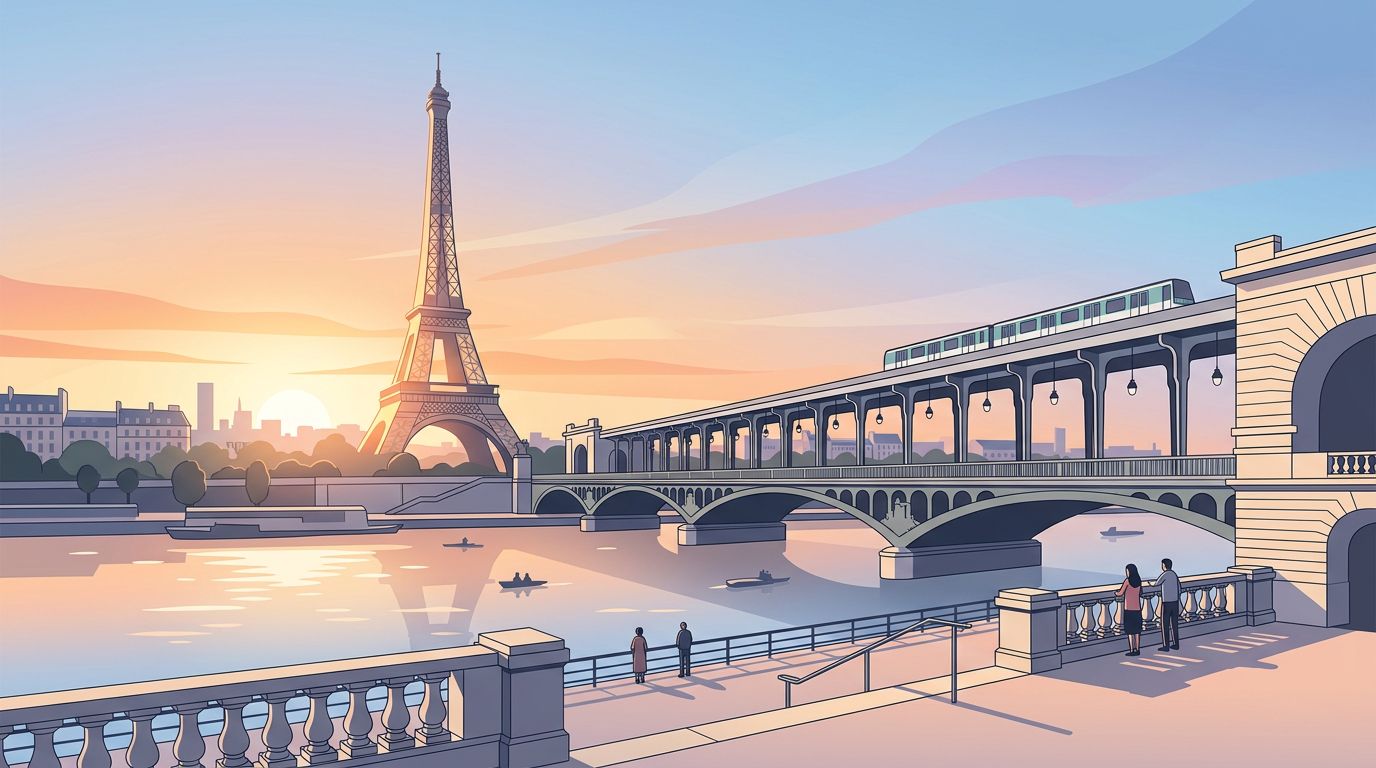
Finding the best Eiffel Tower photo spots at sunrise allows you to capture the landmark when it is not competing with the rest of Paris. The streets are quieter, the Seine holds a pale morning glow, and even the most familiar viewpoints feel personal for a few fleeting minutes. Capturing your sunrise photos during this golden window provides a unique perspective of the Iron Lady that most visitors never experience.
The catch is timing. A late arrival means dealing with tour buses, harsh light, and fellow photographers already filling the obvious angles. Setting an early alarm is the only way to avoid crowds, allowing you to secure your shot with a well-planned route and a little patience with the weather.
Key Takeaways
- Arrive 35 to 50 minutes before sunrise for blue-hour frames and a calm setup.
- Place du Trocadéro provides the classic wide view of the landmark, while the Bir-Hakeim Bridge adds strong metal lines to your composition.
- The Seine riverbanks offer softer compositions with water reflections and less visual clutter.
- Use a tripod only when it improves your frame, not as a reason to block a narrow path.
- Check Paris sunrise weather forecasts the night before, especially after rain or on hazy summer mornings, to ensure the best conditions for your sunrise photos.
Time Your Shoot Before the Sun Appears
Sunrise is not a single moment. The most flexible light begins before the sun crosses the horizon, when the sky turns cobalt and Paris street lamps still glow. This blue hour window is widely considered the best time to visit for those seeking a dramatic silhouette, and it is the window every professional photographer prioritizes to capture the tower against a moody, colorful sky.
Plan to reach your first location at least 40 minutes before sunrise. That gives you time to walk the area, decide on a composition, and shoot while the sky changes. On clear mornings, the warm light can appear fast. Low clouds may delay it, but they can also add texture behind the tower.
Use the official RATP journey planner the evening before. Early Metro and bus schedules change by line and day. If your accommodation is nearby, walking is often more reliable than waiting for the first train.
The best frame may arrive before the sun itself, when the tower is dark against a blue-pink sky.
Bring a small microfiber cloth and a lightweight tripod for travel. Morning moisture settles on phone lenses and filters near the river, and stable gear ensures your long exposures remain sharp. Also pack a warm layer between October and April. Standing still while waiting for light feels colder than the forecast suggests.
One February morning, I reached Trocadero while the pavement was still wet from overnight rain. A thin break in the clouds lit the tower for less than two minutes, while the wet stone caught a faint golden reflection. The image worked because of the pavement, not because the sky became perfectly clear. If you are hoping to capture stunning sunrise photos in Paris, remembering to stay patient even when the conditions seem unpredictable is the most important part of the process.
Place du Trocadéro for the Classic Eiffel Tower Sunrise View
Place du Trocadéro remains the most requested Eiffel Tower sunrise location because it gives you the full monument, the gardens, and the open sky in one frame. The elevated terrace opposite the tower also works well for a phone camera, as you do not need an extreme wide angle lens to fit everything into your composition.
Start near the central terrace by Palais de Chaillot. Face southwest toward the tower, then move gradually toward either edge if other photographers gather around the middle. The symmetrical view is appealing, but a slight shift can add trees, stone balustrades, or a leading line from the steps.
The Palais de Chaillot area can feel exposed in strong wind. Secure a lightweight tripod and avoid placing bags where they create an obstacle. While the broad esplanade is one of the most popular Instagrammable places in the city, the steps and paths narrow quickly.
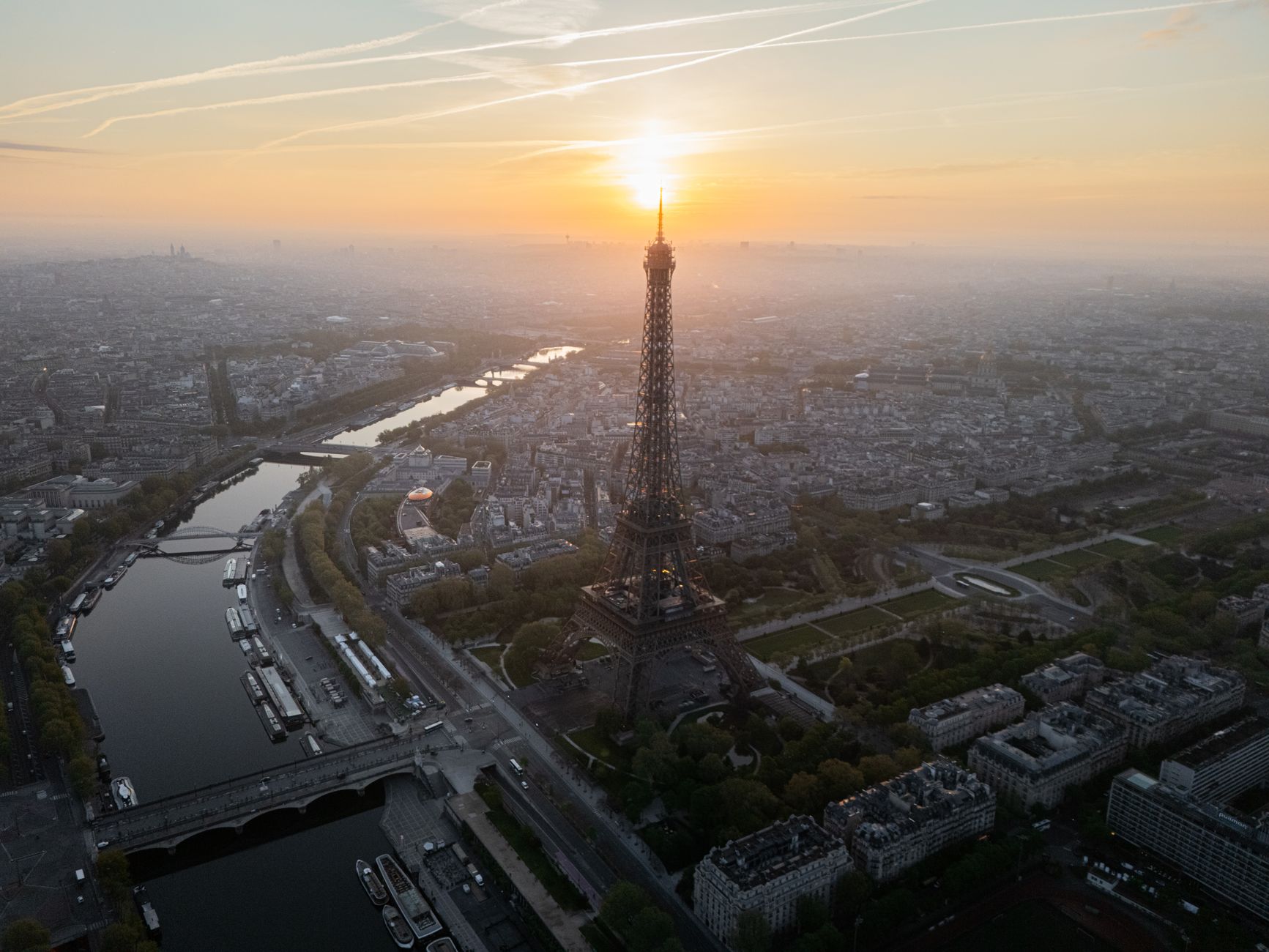
Photo by Archie McNicol
For a cleaner foreground, walk down into the Trocadéro Gardens after your first wide shots. The fountains are usually off at dawn, so do not rely on a water feature. Instead, use the paths and clipped greenery to guide attention toward the tower.
This spot has one drawback. It is rarely empty. Sunrise reduces the crowds, but people capturing engagement photos, runners, and other photographers often arrive early. Work quickly when the space opens, then move on rather than waiting for a flawless empty terrace.
Bir-Hakeim Bridge and Port de la Conference
The Bir-Hakeim Bridge creates a completely different image. Its repeating iron columns pull the eye toward the Eiffel Tower, which appears between the bridge structure at the eastern end. This display of industrial Parisian architecture feels more graphic and less postcard-like than other spots.
Stand on the pedestrian walkway of the upper bridge level, then use the columns as leading lines to frame your shot. A 35mm or 50mm equivalent lens helps compress the lines without making the tower look distant. With a smartphone, use the standard lens rather than the ultra-wide option if possible, as ultra-wide lenses can bend the vertical beams at the edges.
No tripod is required at first. Handheld shots work well while the sky still has enough brightness.
The bridge carries Metro Line 6 above you, so vibration is part of the setting. Wait for trains to pass before using slow shutter speeds. If you want a long exposure, rest your camera on a stable surface only where it does not create a safety issue. If you want an alternative nearby, take a short walk to the Avenue de Camoëns, which offers another sophisticated, graphic viewpoint of the tower.
Afterward, follow the right bank toward Port de la Conference. This riverside stretch gives you a lower viewpoint, with the tower rising behind the Seine and Pont d’Iena. Morning light often catches the water before it reaches the streets, which makes this a strong place for reflections.
A longer focal length helps here. The tower looks larger across the river, while boats and bridge arches create layers that a wide lens can flatten. Keep a close eye on your horizon line, as a tilted river is hard to ignore.
Pont d’Iena and the Seine Banks
Pont d’Iéna sits directly between Trocadero and the Eiffel Tower. At sunrise, it provides a direct, centered view of the landmark. The bridge’s lamps, stone details, and the occasional early cyclist offer a sense of scale without crowding the frame.
Stand near the middle for a symmetrical composition. You can also walk toward the tower and look back toward Trocadero for a reverse perspective, which is particularly effective when soft colors settle behind the Palais de Chaillot. While many photographers also head toward the Pont Alexandre III to capture the ornate architecture of the city, this short stretch near the tower can yield two distinct sets of images in less than 20 minutes.
For a more open river scene, head down to the pedestrian paths along the Seine. The tower’s shape appears through trees, bridge railings, and moored boats. These details make your photos feel rooted in the Parisian landscape rather than detached from it. If you have time later in the day, a Seine River cruise provides a different perspective of the monuments, though the riverbank paths remain the superior choice for capturing the sunrise.
The Seine riverbanks can be slippery after rain. Wear shoes with good grip, keep your bag zipped, and avoid stepping onto boat ramps or restricted areas to get a lower angle. A photograph is never worth the risk of a fall into cold water.
Clouds matter here. Broken clouds may turn peach or rose near sunrise, while an unbroken gray ceiling often calls for black and white shots. In that case, prioritize the tower’s silhouette and the bridge geometry instead of waiting for colors that might not appear.
Champs de Mars for Space Around the Tower
The Champs de Mars is the ideal location to photograph the Eiffel Tower as part of a larger landscape. The wide lawn stretches toward the monument, giving your image more breathing room than you might find at the Trocadero or the nearby bridges. It also works well for portraits, where a person can stand far enough away to ensure the tower remains a prominent feature in the background.
Enter from the Ecole Militaire end if you want the tower perfectly framed along the central lawn. Morning dew often makes the grass shine after a clear night, adding a vibrant texture to your foreground. However, please respect all barriers and maintenance work. Paris protects its public green spaces, and roped off sections are quite common.
While exploring this area, you should head to the nearby Rue de l’Université. This iconic side street is famous for providing one of the most intimate and striking angles of the tower. For those interested in capturing local character, Rue Saint-Dominique offers beautiful street views, and you can even spot the tower looming over the classic terrace of Le Recrutement Café. These spots on Rue de l’Université are perfect for framing the ironwork against the morning sky.
Move closer to the tower base if you prefer a steeper perspective. Looking upward from the gardens emphasizes the intricate ironwork, especially when the first warm light touches one side of the structure. A vertical frame suits this view, while a wide horizontal frame works better from the far end of the park.
This location feels less enclosed than the bridges. That openness helps when the sky is filled with color, but it can leave a flat gray morning looking empty. In dull conditions, use the nearby architectural details or transition your shoot to the surrounding streets for a more textured composition.
Camera Settings and a Route That Works
A simple route prevents rushed decisions during your Paris photoshoot. Begin at Trocadero during blue hour to capture the sparkling lights, then head toward Avenue de Camoëns for a more intimate perspective. Walk down through the gardens, cross Pont d’Iena, and finish at the Seine or Champ de Mars as the sun rises. While this guide focuses on ground level, remember that rooftop views offer a unique vantage point if you are staying in a high rise hotel. This route keeps the tower in view while the light shifts across the river, providing a starkly different experience compared to evening sunset views.
For most mirrorless cameras and DSLRs, begin with aperture priority at f/8 and ISO 100. Watch the shutter speed. If it drops below what you can handhold, increase ISO modestly or use support. For people moving through the frame, a faster shutter speed keeps the result intentional.
Phone photographers should tap the brightest part of the sky, then lower exposure slightly before taking the photo. This protects the color around the tower. Shoot in your phone’s RAW format if available, but don’t let editing replace careful framing.
Consider these quick choices as the light changes:
- During blue hour, use a tripod for clean detail at low ISO and longer exposures.
- At first light, expose for the sky so the tower retains a crisp silhouette.
- After sunrise, turn toward side angles, because direct frontal light can flatten the monument.
- With a portrait subject, place them away from the exact center and leave enough sky above the tower.
Keep your gear close. Paris is safer when you stay aware, especially near quiet river paths before daybreak. A cross-body bag, a phone battery, and an offline map remove most small worries.
Frequently Asked Questions
Which time of year is best for Eiffel Tower sunrise photography?
Each season offers a different atmosphere, but the shoulder months of April, May, and September often provide the most consistent morning light. Winter mornings are excellent for moody, misty shots, while summer sunrises require a very early start to capture the scene before the crowds arrive.
Do I need a professional camera to get high-quality sunrise photos?
Absolutely not. Modern smartphones are highly capable of capturing stunning images, especially if you shoot in RAW format and use manual exposure settings to preserve the sky’s color. Focus on composition and finding unique angles rather than relying solely on expensive equipment.
Is a tripod allowed at all of these locations?
Yes, you can use a tripod in public spaces, but be mindful of pedestrian traffic and local regulations. Always prioritize public access and avoid setting up gear in narrow walkways or stairs where you might obstruct runners or commuters.
What should I do if the weather forecast predicts clouds?
Do not cancel your shoot, as overcast skies can produce a beautiful soft light that avoids the harsh shadows of a clear day. Gray conditions are perfect for capturing dramatic silhouettes or high-contrast black and white photos of the ironwork.
Final Light at the Tower
The strongest sunrise images come from matching your location to the morning light. Clear skies favor the broad vista at Trocadero, while scattered clouds often suit the structural lines at Bir-Hakeim or the moody atmosphere along the riverbanks.
Arrive well before the color starts, take your first frame quickly, and then keep moving. While the Iron Lady will stay put, the beautiful light reflecting off the wet stones of Pont d’Iena can vanish before your morning coffee cools. By staying mobile and exploring these different Eiffel Tower photo spots, you ensure that you capture the best possible imagery during those fleeting golden moments.
