
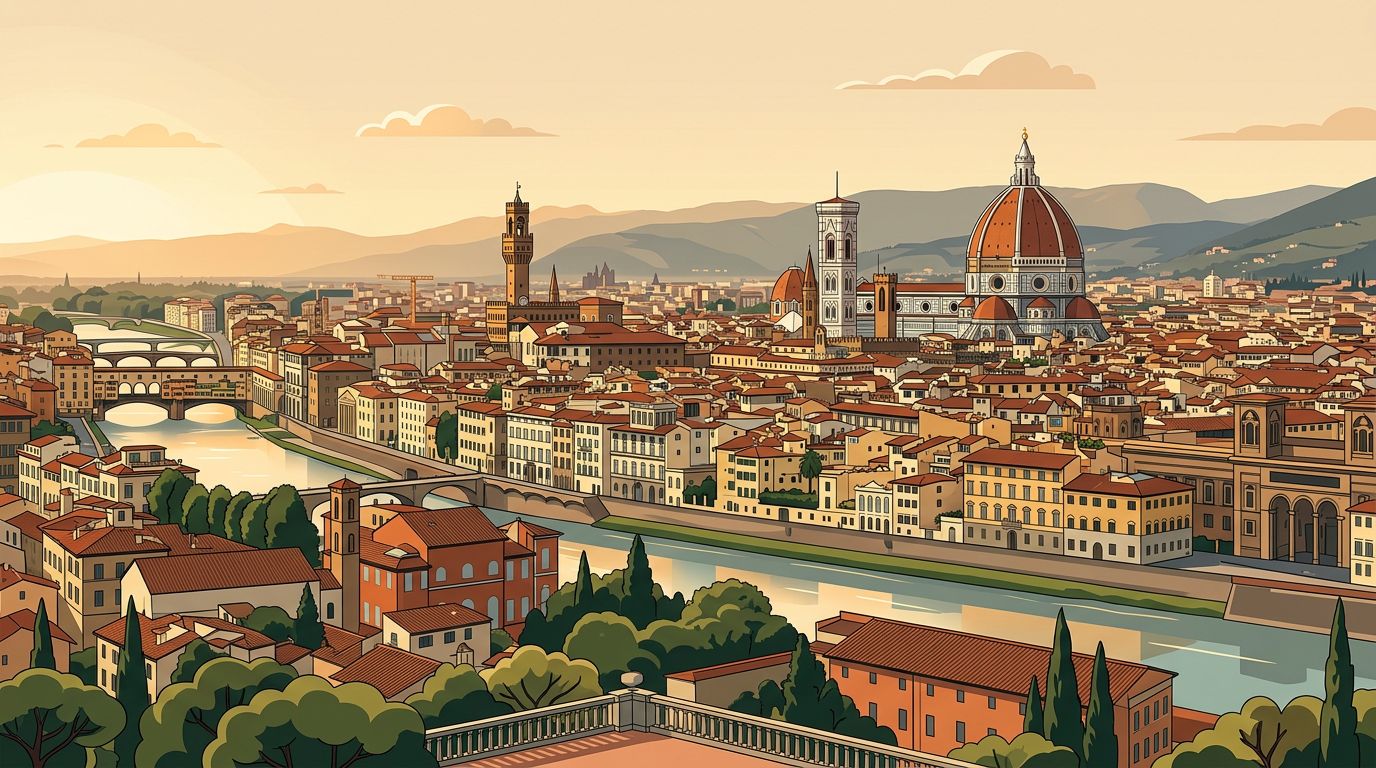
Florence rewards those who look up, then step back. The iconic dome of the Cathedral of Santa Maria del Fiore rises above the terracotta roofs and winding alleys of the city, while the Arno River offers reflections, silhouettes, and a procession of historic bridges that define the heart of Tuscany.
The hard part is finding a frame without a bus stop, a packed pavement, or someone else’s phone in it. These Florence photo spots give you strong Duomo angles and memorable Arno views at different times of day.
Light changes everything here. Start with the views that fit your schedule and walking pace.
Key Takeaways
Discovering the best views in Florence requires a mix of planning and spontaneous exploration. Here are the essential tips for your photography trip:
- Piazzale Michelangelo provides the broadest skyline view, featuring the Duomo, Palazzo Vecchio, and the Arno River all in one iconic frame.
- Via dei Serragli and Via della Ninna offer street-level compositions of the Duomo that provide much more character than the crowded main square.
- Ponte Santa Trinita serves as the classic vantage point to photograph the Ponte Vecchio at sunset.
- Shooting during the blue hour softens the harsh textures of the stone and adds a beautiful glow from the bridge lights reflecting in the river.
- Use a longer focal length to isolate the details of the dome, then switch to a wide lens for expansive river scenes.
- Capturing the best Instagram spots often comes down to patience and timing, so take your time to wait for the light to hit the architecture just right.
Duomo Photo Spots Beyond Piazza del Duomo
Piazza del Duomo is unavoidable, and it can still produce excellent photos. However, the close-up view is difficult at midday because the square fills quickly and the marble facade sits in uneven light.
Consider arriving at sunrise, as this is the best time to capture the Cathedral of Santa Maria del Fiore without the interference of massive tour groups. Stand near the northeast corner of the Baptistery and shoot toward the cathedral. This angle lets you include the iconic Brunelleschi’s Dome, the intricate detail of Giotto’s Bell Tower, and the Baptistery’s striped marble without trying to force every detail into one image.
For a low-angle study of the cupola, move to Via dei Servi. The street points directly toward the cathedral, with tall Renaissance buildings creating a clean corridor around the dome. Practicing street photography here allows you to use a 50mm or 85mm lens to compress the buildings, which makes the cupola feel larger and more imposing.
The view changes as you walk farther from the square. Near Piazza Santissima Annunziata, the dome appears beyond the arcade and open square. The foreground is calmer, and the columns give you useful lines to guide the eye toward the cathedral.

Photo by Henry MacDougall
Late afternoon over Florence, the Duomo near center frame.
Catch the dome from Via della Ninna
Via della Ninna is a short lane beside the Uffizi, yet it gives one of Florence’s more surprising vertical compositions. Look north between the building walls and the cathedral appears at the end of the narrow passage.
The street works well when the sky has thin clouds. Keep the camera level, then use the walls as a symmetrical frame. A person walking through the lane can add scale, although you should wait for someone in neutral clothing rather than a bright logo-heavy shirt.
This is also a useful place when rain has passed. Damp paving stones catch a faint reflection of the distant dome. The scene feels intimate rather than grand.
Use the Boboli Gardens for a quieter skyline
The Boboli Gardens rise behind Pitti Palace on the south side of the Arno. Several paths and terraces look across Florence’s rooftops toward the Cathedral of Santa Maria del Fiore, although trees may partly obscure the view depending on the season.
Climb the paths in the Boboli Gardens gradually instead of racing to the first terrace. Openings in the greenery can frame the dome with cypress branches or stone balustrades. A telephoto lens helps isolate the cathedral above the crowded roofs.
The garden’s formal geometry can also give your images a different mood. Florence’s monuments often look monumental in wide city views, but a distant dome behind clipped hedges feels more private. Crowds arrive early, so weekday mornings are much calmer.
Keep the sun behind or beside you for facade detail. Shoot toward the light when you want the dome as a clean silhouette.
Piazzale Michelangelo and San Miniato al Monte
Piazzale Michelangelo serves as the ultimate big-screen vista for the city. From this famous viewpoint, you can capture the Duomo, Palazzo Vecchio, Ponte Vecchio, the Arno, and the rolling hills beyond. Because the panoramic view is so expansive, it works best with a wide lens, roughly 24mm to 35mm on a full-frame camera.
Sunset in Florence pulls a massive crowd, often well before the sky turns warm. Arrive at least 45 minutes before sunset if you want a place along the main terrace wall. The location faces northwest, so the late light washes over the Florence skyline rather than dropping directly behind the Duomo.
For a less crowded frame, walk uphill to the Basilica of San Miniato al Monte. The climb is short but steep. From the church steps and nearby cemetery walls, the city spreads below you with more elevation and fewer elbows in the foreground. This secondary viewpoint offers a quieter perspective on the landscape.
A particular view from this hill works after rain, when the distant ridges appear sharper and the terracotta roofs look darker. One November evening, the low clouds broke over the Arno just after sunset, leaving a pale band behind the dome while the first city lights appeared below. That brief gap lasted less than ten minutes.
Blue hour is kinder for photography here. The sky retains deep color, bridge lamps begin to glow, and the pale marble of the Duomo separates beautifully from the surrounding buildings.
If you carry a tripod, keep it compact and use it thoughtfully. The terrace at Piazzale Michelangelo gets busy, and a tripod placed across a walking route creates trouble for everyone. A small support against the stone wall is often enough for a steady low-light shot.
Arno Bridge Views That Earn the Walk
Ponte Vecchio gets most of the attention, but it looks strongest when photographed from another bridge. Its shop-lined form is distinctive, and the Arno River gives the composition a natural foreground that makes it one of the most sought-after Instagram spots in the city.
Ponte Santa Trinita is the first stop for many photographers, for good reason. Face east toward Ponte Vecchio. The bridge’s three low arches create a calm foreground, while the iconic structure sits neatly beneath the hill and the Vasari Corridor route.
At sunset, the west-facing side of Ponte Vecchio catches warm light. Later, the river reflects its lit shop windows in broken streaks. Use a shutter speed around 1/10 second handheld only if your camera stabilization is reliable. Otherwise, brace your elbows on the bridge parapet and take several frames.
Ponte alle Grazie offers more space and a wider view west. Stand near its center, then frame the bridge with the Duomo rising farther back. That alignment is harder to make work than the Santa Trinita view, because the cathedral is small in the frame. A 70mm to 200mm lens solves the problem.
On the north bank, the stretch between Lungarno degli Archibusieri and the Uffizi Gallery has attractive angles toward the river. The long facade gives a strong leading line, especially in morning shade. Meanwhile, the bridges sit in brighter light across the water. If you are walking from the Uffizi toward the bridges, take a quick detour through the historic Piazza della Signoria to capture the city’s architectural depth before reaching the waterfront.
Walk below the bridges for different perspectives
The riverbanks change the scale of the scene. Descend to the waterside paths where access is open, then photograph the underside of Ponte Santa Trinita or Ponte alle Grazie. These angles emphasize the arches and reduce the visual clutter of people on the bridge.
Watch your footing. Stone near the river can be slick after rain, and low light makes uneven edges harder to see.
The landmark itself is better for details than for its own portrait. Photograph its shuttered shopfronts before opening hours, the tight passageway, or a framed glimpse of the water through gaps between pedestrians. The center of the bridge can feel congested, especially in the afternoon.
Florence’s relationship with the river carries weight beyond the postcard view. On 4 November 1966, the Arno flooded the city and damaged homes, shops, libraries, and artworks. Looking at the water from a bridge, it is easy to forget how high it rose through the historic center.
Plan Your Light Around the River
Sunrise is best for a quieter Ponte Vecchio and softer light on the south bank buildings. The river is often smoother before midday winds pick up, which helps reflections hold their shape. Mastering this early light is a fundamental skill for travel photography enthusiasts looking to avoid the afternoon crowds.
By late afternoon, head for Ponte Santa Trinita or Piazzale Michelangelo to witness a classic sunset in Florence. The warmer light falls across the city, and the bridges begin to stand out against the water. Alternatively, visiting a local rooftop bar can provide similar lighting advantages and a unique vantage point, though you should protect your highlights when photographing the Duomo marble facade to avoid bleaching the pale stone.
This quick guide helps match locations to the kind of image you want.
| Location | Strongest time | Main subject | Useful lens |
|---|---|---|---|
| Via dei Servi | Early morning | Duomo street view | 50mm or 85mm |
| Piazzale Michelangelo | Sunset to blue hour | Full Florence skyline | 24mm to 35mm |
| Ponte Santa Trinita | Sunset | Ponte Vecchio | 35mm to 85mm |
| Ponte alle Grazie | Late afternoon | Bridges with Duomo | 70mm to 200mm |
| San Miniato al Monte | Blue hour | Elevated city view | 35mm to 70mm |
A single location can look entirely different in changing weather. Thin clouds add structure to an empty sky, while mist after rain can soften the distant hills without hiding the dome.
Small Choices That Make Florence Photos Stronger
Look for a foreground before pressing the shutter. A bicycle, a stone wall, or the curve of an arch can give the Duomo and bridges a sense of depth. Avoid placing the cathedral dead center in every frame.
People belong in Florence photographs, but timing matters. When incorporating street photography into your travel shots, wait for a small gap on the bridges rather than trying to erase crowds from every scene. One person leaning on the parapet can make the river feel lived in and provide a sense of scale.
Keep verticals straight around the Duomo. Tall buildings like the Arnolfo Tower tilt quickly when you point a wide lens upward. Step back when possible, or correct perspective later with restraint. Over-correcting makes the dome look oddly stretched.
For phone photographers, use the standard lens instead of ultra-wide whenever you can. The ultra-wide camera often used for popular Instagram spots makes the Duomo seem farther away and curves the building edges. A simple two-times zoom view often gives a more natural result.
Frequently Asked Questions
What is the best time of day for photography in Florence?
Sunrise is ideal for capturing the city’s landmarks without the interference of massive tour groups, while the blue hour provides a beautiful glow as street lamps and bridge lights turn on. Midday light can be harsh and unforgiving, often creating uneven shadows on the Duomo’s marble facade.
Can I use a tripod at popular spots like Piazzale Michelangelo?
While you can use a tripod, you must be very thoughtful due to heavy foot traffic. A small, compact support used against the stone wall is usually acceptable, but avoid blocking walking paths or creating hazards for other visitors.
Which lens focal lengths are most useful for Florence?
A mix is best, but a 35mm or 50mm prime is excellent for street-level architectural shots. You will also want a telephoto lens, such as a 70-200mm, to compress the skyline and isolate the details of the Duomo from further distances across the city.
Should I avoid the Piazza del Duomo for photos?
You do not need to avoid it, but it is challenging during peak hours. If you visit, arrive at sunrise to secure a clear view of the cathedral and Baptistery before the crowds arrive and the lighting becomes too direct.
Let Florence Set the Pace
The strongest Florence photos usually come after you stop chasing every famous pin on a map. Pick one skyline viewpoint, one bridge, and one side street, then return when the light changes.
A dawn frame on Via dei Servi and a blue-hour view from Ponte Santa Trinita show two completely different Florences. Among all the Florence photo spots you might explore, leave room for the unplanned scene, especially when the Arno River turns copper beneath the lamps of Ponte Vecchio. By slowing down and letting the city guide your lens, you will discover the best views in Florence.
