
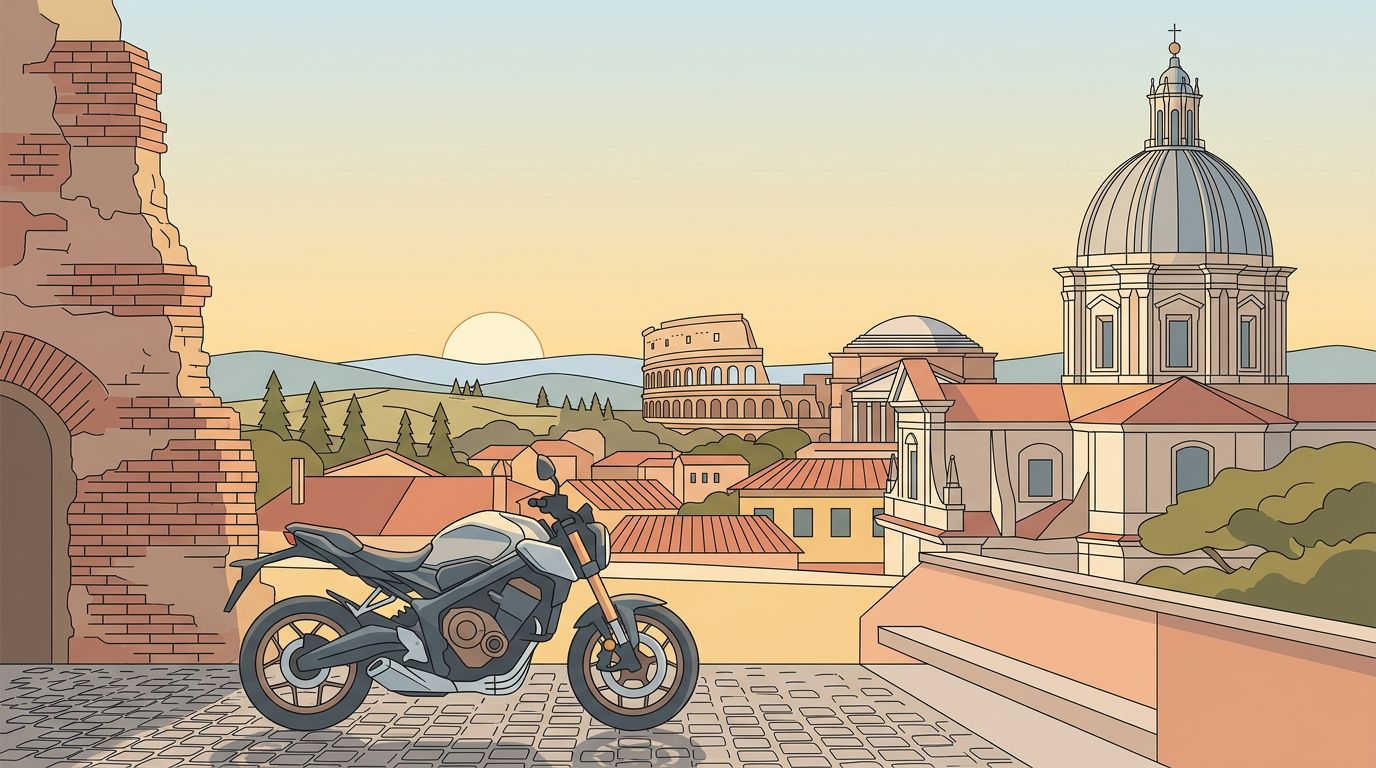
Rome rewards photographers who slow down. A single street in the Eternal City can hold a broken imperial wall, a Baroque dome, and a motorbike cutting through the frame.
The most memorable Rome photography spots are not always the famous viewpoints. Often, the strongest image comes from arriving early, stepping a few meters off the main route, and letting the city’s complex layers of historic architecture line up in front of your lens.
Start with the light, then choose your ruins and domes.
Key Takeaways
- Arrive around sunrise to capture the Colosseum, Roman Forum, Trevi Fountain, and the exterior of the Pantheon while you avoid crowds and enjoy the soft morning light.
- Visit the Spanish Steps early in the morning to photograph the iconic architecture before the city wakes up and the area fills with people.
- Use hills and terraces to place domes above tiled rooftops and umbrella pines.
- Shoot the Roman Forum from several elevations, because ground-level views can feel crowded.
- Bring a small lens cloth, since Rome’s pale stone and fountains show every water spot.
- Stay alert near traffic, especially around Piazza Venezia and Via dei Fori Imperiali.
Plan Your Rome Photo Walk Around the Light
Rome’s stone changes color all day. In early morning, travertine looks warm and textured. By midday, harsh sunlight can flatten reliefs, erase detail in white facades, and create deep shadows beneath arches.
For ruins, early morning light usually works best. The Colosseum’s eastern side catches sun early, while the western face becomes more interesting later in the day. The Roman Forum often looks strongest when sunlight enters at an angle and reveals the uneven ground, columns, and broken capitals.
Clouds help. A lightly overcast sky softens contrast and gives ruins a more even exposure. However, Rome’s domes can disappear against a flat white sky. When clouds build, look for compositions that place a dome against darker patches of sky.
This quick guide can help you match places to the time of day.
| Time of day | Strong locations | What to photograph |
|---|---|---|
| Sunrise | Colosseum, Trevi Fountain, Pantheon | Empty streets, warm stone, quiet piazzas |
| Late morning | Roman Forum, Palatine Hill | Columns, arches, textured ruins |
| Late afternoon | Gianicolo, Orange Garden, Ponte Sant’Angelo | Domes, rooftops, long shadows |
| Blue hour | St. Peter’s Square, Castel Sant’Angelo, Capitoline Hill | Night photography, lit facades, street lamps, reflections |
The broadest views often improve late in the day. As the sun moves toward sunset, rooftops gain shape and the domes rise above a softer haze, making this the perfect time to capture stunning rooftop views.
Rome photographs better when you choose one subject and let the city provide the layers around it.
Check the forecast before leaving your hotel. A clear day suits high viewpoints, while a wet morning gives you reflective cobblestones near the Pantheon and Piazza Navona.
Photographing the Colosseum and Roman Forum
The Colosseum is hard to photograph badly, yet it is easy to photograph predictably. Most visitors stop along the pavement beside Piazza del Colosseo to capture these ancient ruins, pointing their cameras toward the outer arches to create a frame full of people, buses, and barriers.
Instead, walk around it.
The view near the Colle Oppio park side gives you more trees and fewer road signs. Morning light can catch the curved exterior while foliage breaks up the massive oval shape. A longer lens helps compress the arches and removes some of the modern city around the monument.
For a wider scene, use the raised section along Via Nicola Salvi. This vantage point lets you place the Colosseum below the road line and leave enough sky for a dramatic cloud pattern. Keep your camera level, as using a wide angle lens can turn the building’s arches into a strange curve if you tilt too far upward.

Photo by C1 Superstar
A detail shot often feels more personal than the full facade. Isolate repeating arches, weathered brick, or a single dark opening against bright stone. The surfaces of the Colosseum are full of scratches, holes, and repair lines. Those marks carry more character than a perfect postcard angle.
Use Via dei Fori Imperiali for scale
Via dei Fori Imperiali runs between Piazza Venezia and the Colosseum. It offers broad sightlines, but traffic and crowds can make it awkward. Shoot early, then use the long road as a leading line toward the Colosseum.
Stand near the Forum side rather than in the center of the avenue. This keeps your composition safer and gives you room to wait for gaps in the crowd. A person on a bicycle or a small scooter can add movement without overwhelming the architecture.
The Roman Forum asks for patience. Its ruins sit below modern street level, so a ground-level shot can look busy and flat. Start at the viewpoints along Via dei Fori Imperiali, then move toward the Capitoline Hill side for a higher perspective.
One October Tuesday, I waited near the railing above the Forum while a tour group moved on. For less than a minute, the Basilica of Maxentius, a patch of grass, and the Arch of Septimius Severus appeared without heads or raised phones. That brief opening made the frame.
Use a moderate telephoto lens for the Forum. It can pull columns and arches closer together, making the scene feel dense with history. A wide lens works when you have a strong foreground, such as a broken column drum or a stone path.
For scale, a lone passerby.
Find Higher Angles on the Palatine and Capitoline Hills
Rome’s hills solve a common photography problem: how to show ancient ruins as part of a living city. The Palatine Hill overlooks the Forum, while the Capitoline area gives you cleaner, more architectural angles that highlight the city’s historic architecture.
The Palatine Hill is especially useful for photographers who want vegetation in the frame. Cypress trees, pines, rough stone walls, and distant church domes create a softer version of imperial Rome. Look down toward the Forum, but also turn around. Some of the quieter paths reveal fragments of brick arches framed by leaves.
Because the site covers uneven ground, wear shoes with grip. Polished stone steps can become slippery after rain, and loose gravel can make tripod use frustrating. A compact tripod is easier to manage than a full-height model in crowded archaeological areas.
On the Capitoline side, the terrace behind the Capitoline Museums offers a classic Forum view. These elevated perspectives are among the most sought-after Rome photography spots for capturing the transition from day to night as the ancient stones begin to glow. The perspective feels more ordered than the Palatine views, with temples and columns set beneath the broad skyline. Go just after opening or close to sunset when the light softens.
The statue-filled square designed by Michelangelo is also worth photographing, although the real opportunity lies beyond it. Move toward the railings and look for the dome of Santi Luca e Martina rising among the Forum ruins. It is a frame that mixes imperial Rome with later Christian Rome without forcing either subject to dominate.
The Pantheon, Piazza Navona, and Narrow-Street Domes
The Pantheon gives you two different photographic experiences. Outside, its portico and fountain dominate Piazza della Rotonda. Inside, the coffered dome and oculus pull every eye upward.
Arrive early for exterior photos to beat the crowds at popular landmarks like the Trevi Fountain nearby. By midmorning, delivery carts, cafe tables, and dense groups often fill the square. Those elements can add life, but they make clean symmetry difficult. Stand back near the fountain and use it as a foreground anchor, then keep the columns vertical.
A low angle can make the fountain feel too large. Instead, crouch only slightly and use the water basin as a curved line leading toward the portico. If the stone is wet after rain, capture a reflection with the Pantheon sitting upside down in a shallow puddle.
Inside, expose for the bright oculus rather than the darker floor. The room will look darker in your image, but the opening in the dome will retain shape and detail. Handheld shooting is usually easier with image stabilization and a higher ISO than with a tripod.
Piazza Navona has a different mood. Its fountains, church facade, and elongated shape work well with a 35mm or 50mm lens. The dome of Sant’Agnese in Agone rises behind the square, especially when you shoot from the fountain’s edge toward the church. If you have extra time in your itinerary, take a quick walk over to the Spanish Steps to capture the beautiful early morning light hitting the travertine stone.
Then follow the smaller streets. Via degli Orsini, Via del Governo Vecchio, and lanes around Campo de’ Fiori often reveal partial dome views above shutters, laundry, and ochre walls. These are some of Rome’s most satisfying photography spots because the city feels inhabited rather than arranged for visitors.
Keep looking up. Domes appear suddenly.
Rome Dome Views From Terraces and Gardens
Rome’s skyline has no single tall center. Domes, bell towers, and umbrella pines break the horizon in every direction. That makes elevated viewpoints essential for photographers chasing the classic layered city view.
The terrace at the Orange Garden, officially Parco Savello, is one of the strongest places for capturing the dome of St. Peter’s Basilica. It offers one of the best rooftop views of the city, where the dome rises in the distance beyond rooftops and trees, while the garden walls add warm texture near sunset. The view can get busy, so move away from the central railing and search for a quieter opening.
Nearby, the famous keyhole at the Priory of the Knights of Malta creates a narrow, carefully framed glimpse of St. Peter’s Basilica. It is fun, but queues can become long. Treat it as a quick side photograph, not the main event of your evening.
For a much wider panorama, climb to the Gianicolo Hill. The terrace near Piazzale Garibaldi looks across central Rome, where dozens of domes appear above the buildings. Bring a lens longer than 50mm if you want individual dome studies. A wide lens is better for the full rooftop sweep.
The Gianicolo is strongest close to sunset and during blue hour. At that time, windows catch the remaining light while church domes separate from the darker city below. Use a tripod only if you can keep it out of pedestrian paths.
St. Peter’s Basilica deserves both distant and close views. Across the Tiber, Ponte Sant’Angelo gives you a strong alignment with Castel Sant’Angelo in the foreground and the basilica behind it. In the evening, the river’s movement can soften with a longer exposure.
For a less obvious composition, photograph the dome through the bridge statues or between the bare branches of riverside trees in winter. Framing devices give the familiar dome a sense of place.
Photographing St. Peter’s Basilica Without the Usual Crowds
St. Peter’s Square is vast, but it can feel cramped in a photograph. Located in the heart of Vatican City, St. Peter’s Basilica features curved colonnades that are powerful, yet they need room to breathe. A wide lens helps, although you should avoid placing the basilica too close to the edge of the frame.
Start near the centerline of the obelisk for symmetry. Then walk to either side and let the colonnades curve inward toward the dome. The columns create strong rhythm, especially in soft morning light when shadows fall across the paving stones.
Security lines and visitors are part of the square’s daily reality. To help you avoid crowds and keep your shots clean, use people with purpose instead of waiting for an empty scene. A figure crossing the square can show scale, while a small group beneath the colonnade adds depth.
The view from the dome is worth the climb if you want roof level photos. Look down toward the square’s oval shape, then turn toward the skyline of the Eternal City. The Vatican roofs, distant Gianicolo, and tightly packed streets create a different Rome from the grand facade below.
Because the dome stairway narrows near the top, travel light. A small camera body, one lens, spare battery, and microfiber cloth are enough. Large backpacks become a burden in the stairwell and on the crowded viewing area.
Avoid changing lenses in windy conditions. Dust, pollen, and tiny grit can blow across the terrace. If you bring a second lens, swap it only after stepping into a sheltered corner.
Make Ancient Rome Photos Feel Less Like Postcards
A recognizable monument does not need a conventional frame. Rome gives you endless ways to add foreground, shadow, or human scale without hiding the main subject.
Look for contrasts. A polished Vespa mirror may catch the Colosseum, or a waiter carrying espresso might cross a Pantheon view. A child holding a balloon can become a small burst of color against pale travertine. These moments happen quickly, so keep your camera ready.
Use doorways and arches as natural frames. The Arch of Titus can frame the Roman Forum, while the arcades around Piazza San Pietro can frame parts of the basilica. When photographing the Colosseum or the Pantheon, avoid placing the subject dead center every time. A slight offset often leaves room for the geometry around it.
Black-and-white processing suits many ruins because it pulls attention toward stone texture and shape. However, don’t remove color automatically. Rome’s warm walls, blue evening skies, green pines, and terracotta roofs are part of its visual identity.
When the midday sun becomes severe, move indoors or photograph details. The Capitoline Museums, the Vatican Museums, and the Pantheon offer relief from hard light. Inside the Vatican Museums, look for sculptural hands, mosaic floors, coffer patterns, and artistic shafts of window light.
A few practical habits keep the day moving:
- Carry water, a portable battery, and a lens cloth in a small bag.
- Keep a 24mm to 70mm zoom on the camera for fast street-to-architecture changes.
- Set your camera to highlight warning mode when shooting bright stone to preserve details in historic architecture.
- Respect barriers, worshippers, and staff instructions at churches and archaeological sites.
- Save a few favorite locations for a second visit when the weather changes.
Phone photographers can use the same approach. Turn on grid lines, tap to expose for the brightest part of the stone, and shoot several frames as people move through the scene. A phone’s wide lens can exaggerate foreground objects, so keep fountains, columns, or cobbles close only when they improve the image.
A One-Day Route for Ruins and Dome Photography
To capture the most essential Rome photography spots, begin your day at the Colosseum near sunrise. Walking along Via dei Fori Imperiali while the golden morning light hits the ancient stone ruins is a highlight of any trip. From there, head toward the Capitoline Hill to capture the expanse of the Roman Forum from above.
By midday, make your way to the Pantheon. The walk through the heart of the city provides endless opportunities for street level dome photography near Piazza Navona and Campo de’ Fiori. Before the light fades, head across the river into Trastevere. Wandering through its narrow, ivy-covered streets offers a classic atmosphere that is perfect for candid shots.
Spend the late afternoon at the Orange Garden or Gianicolo Hill, both of which are premier locations for framing St. Peter’s dome. While the Orange Garden offers a more intimate setting, Gianicolo provides a sweeping view of the entire cityscape. Finally, conclude your walk near Ponte Sant’Angelo or St. Peter’s Square at sunset, when the city lights begin to glow against the darkening sky.
This route covers the most iconic landmarks without treating the city as a simple checklist. Always leave room for spontaneous detours. A quiet alleyway, a sudden rain shower, or a lone open window can often lead to the most memorable image of your trip.
Frequently Asked Questions
What is the best time of day to avoid crowds at popular Rome photography spots?
Arriving at sunrise is the most effective way to capture iconic landmarks like the Trevi Fountain and the Colosseum without heavy foot traffic. The soft morning light also creates a warmer, more flattering tone on the ancient stone facades compared to the harsh glare of midday.
Do I need a tripod to photograph ruins and domes in Rome?
A compact tripod is helpful for long exposures at blue hour or for interior shots where light is limited. However, keep in mind that many crowded areas and historical sites have space restrictions, so a lightweight, flexible model is usually easier to manage than a full-size setup.
How can I make my photos of famous ruins look unique?
Move away from the standard tourist vantage points to find foreground elements like arched doorways, pine trees, or street life that add depth to your composition. Focusing on smaller architectural details—such as weathered brick patterns or specific carvings—often results in a more personal and artistic image than a wide-angle postcard shot.
Final Frame
The strongest Rome photography spots reward patience more than speed. Get close enough to study the weathered stone, then step back far enough to let a sweeping dome rise behind it. These layers of historic architecture are precisely what make the Eternal City so unique.
Return to one location when the light changes throughout the day. A crowded noon view may become a quiet blue-hour frame after dinner, offering a completely different perspective.
At sunset, the dome of St. Peter’s Basilica turns a pale, glowing gold above the dark green pines of the Gianicolo. Capture these moments, and you will leave with a personal collection that truly honors the beauty of the Eternal City.
