
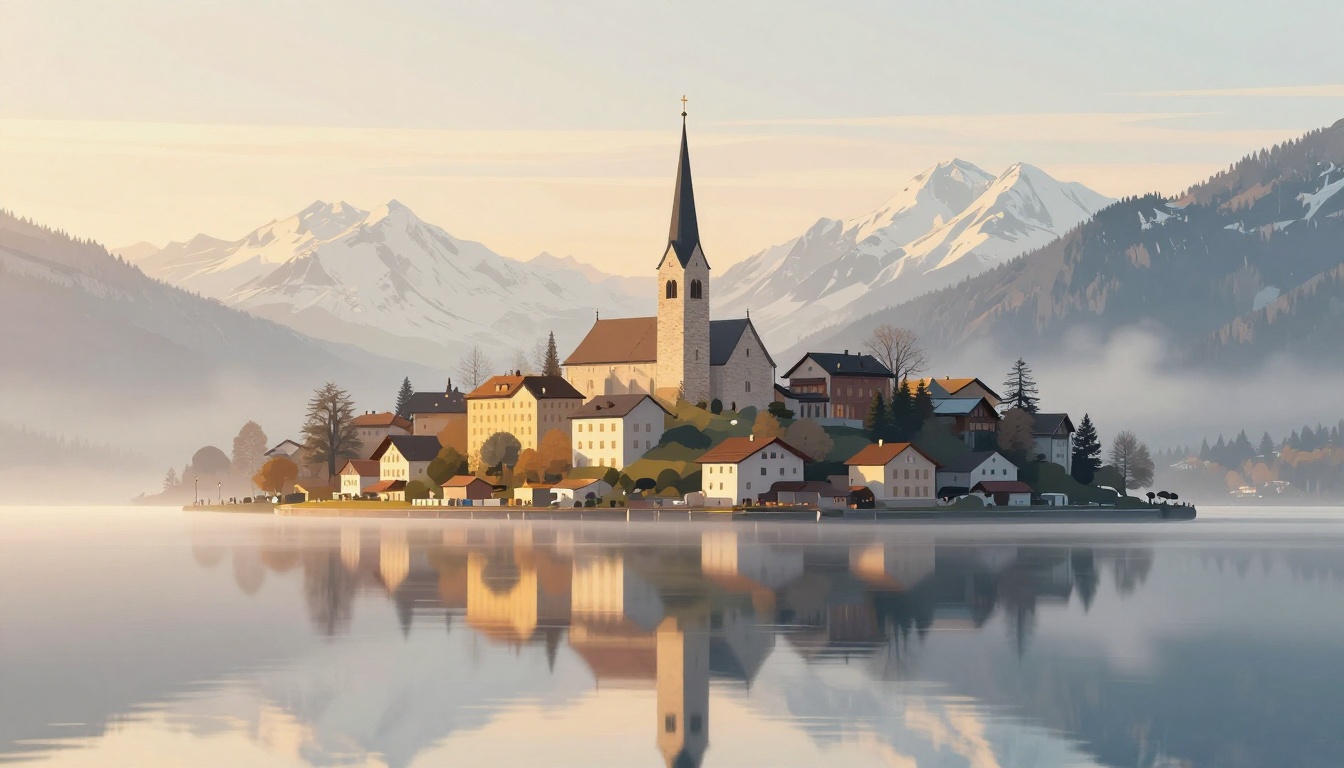
Morning mist lifts off a still lake, church spires rise above storybook lanes, palace facades catch a soft gold glow, and sharp Alpine peaks cut into a pale blue sky. That mix is why Austria photo spots feel so rich, you can frame mirror-like water at dawn, a baroque square by noon, and a mountain ridge at sunset, all in one trip. If you’re trying to choose where to shoot first, the hard part isn’t finding beauty, it’s sorting famous icons from places that fit your style, the season, and the pace you want.
This guide focuses on the best photo spots in Austria for landscape, village, and city photography, with clear notes on when to go and what makes each place worth your time. You’ll find big names like Hallstatt, but also a few less crowded picks such as Zell am See, Hohenwerfen Castle, and Formarin Lake, so you can plan for quiet sunrise reflections, old-town details, or grand urban views in Vienna and Salzburg. With that in mind, start with the places that match your light, your route, and the kind of images you want to bring home.
Classic Austrian views that look amazing in almost any portfolio
Some Austrian photo spots stay famous for a reason. They give you clean lines, layered depth, and that rare mix of nature and village detail in one frame. If you want images that look strong in almost any portfolio, start with places where water, peaks, and architecture work together without much effort.
Hallstatt, the lakeside postcard that earns the hype
Hallstatt is the classic Austrian lake view people picture first, and on camera it still feels earned. From the shore, you get calm water, steep mountains, church spires, and old wooden houses packed into one tight scene. At dawn, the lake often turns into glass, so reflections double the shape of the village and make the frame feel fuller.
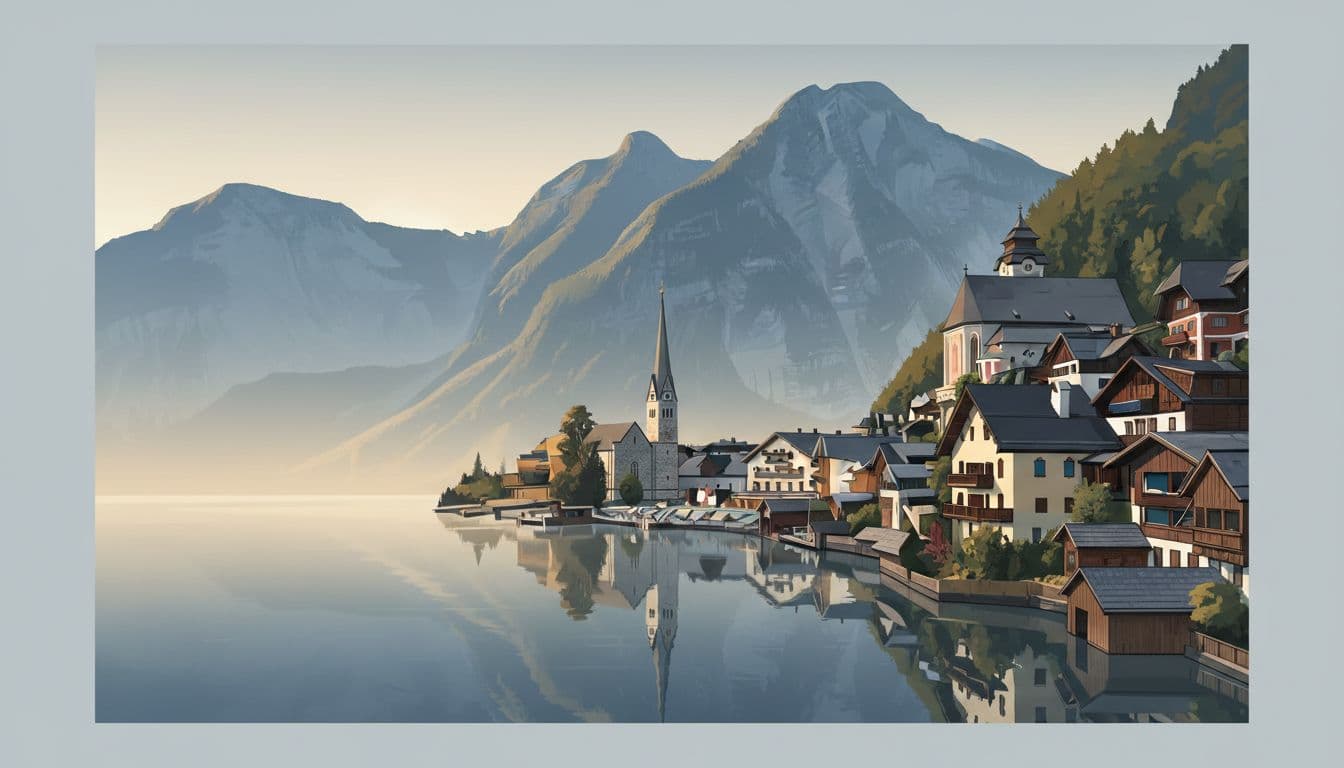
Summer and early fall are especially strong because the light is soft, the lake is active, and the hills still look rich and green. Winter also works well, especially at blue hour, when snow, cool sky tones, and warm village lights turn the shoreline into something almost unreal. For timing, early arrival matters more here than almost anywhere else in Austria, because crowds build fast and can clog the best angles.
For a wider composition, shoot from the ferry side or look for one of the best Hallstatt viewpoints. If you want the classic frame with breathing room, those spots give the church tower, lake edge, and mountain wall enough space to shine. You can also browse a broader Hallstatt travel guide if you want to pair photo plans with logistics.
In Hallstatt, the difference between 6:30 a.m. and 9:00 a.m. can be the difference between a calm mirror and a crowded boardwalk.
Schiederweiher, a still lake with clean mountain reflections
Schiederweiher has a simpler look, and that’s exactly why it photographs so well. The water is clear, the paths are easy, and the peaks rise behind the lake with very little visual clutter. When the surface is still, the mountains reflect with such clean symmetry that even a casual shot can look polished.
This spot also feels more relaxed than many alpine viewpoints. You don’t need a hard hike or a big plan to get a strong image, so it’s a good choice for families, first-time visitors, and photographers who want mountain scenery without a long climb. The easy access means you can take your time, walk the paths, and adjust your angle until the reflection lines up just right.
Summer gives you green banks, bright water, and a fresh, open feel. Winter changes the mood completely, with snow at the edges and a sharper, quieter mountain backdrop. If you want a sense of the setting before you go, the Austria in USA feature on Schiederweiher offers a quick overview of why this lake has become such a favorite.
St. Gilgen and Wolfgangsee for soft light and lake-town charm
St. Gilgen and Wolfgangsee have a warmer, gentler mood on camera. Boats drift across the lake, chalets sit close to the water, and mountains wrap the whole scene in a soft frame. As a result, photos here often feel romantic without trying too hard, especially in early morning or late-day summer light.
This area works well if you want more than a pure landscape. You can mix scenery with village life, then shift from waterfront details to wider mountain views in a short walk. That makes it a smart stop for travel photos, because your gallery can include moored boats, flower-box facades, lakeside streets, and broad scenic frames from the same town. The St. Gilgen overview from Salzburg gives a quick sense of the setting.
For the biggest view, head up to Zwolferhorn by cable car. From above, Wolfgangsee opens out in a long blue curve, with towns and slopes set around it like pieces in a painted scene. If your portfolio needs images that feel both scenic and lived-in, St. Gilgen gives you that blend with very little effort.
Mountain and lake photo spots for dramatic Alpine scenery
If you want more scale and less village charm, this is where Austria starts to flex. These spots trade neat postcard balance for hard rock walls, electric water color, high trails, and big empty space. Some are easy to reach, others ask more from your legs, so it helps to match the location to your energy, timing, and light.
Hintersteiner See, where the water almost glows blue
Hintersteiner See looks almost edited, even when it isn’t. The lake holds a bright blue tone that can feel lit from within, especially in summer, when the sun brings out the strongest color. Along the shore, dark forest edges meet clear water, and above them, the steep rock walls of the Wilder Kaiser rise fast and sharp.
For photos, the mood changes with your position. At lake level, shoreline shots work best when you want clean color, tree reflections, and that vivid band of blue near the edge. Higher up, the scene opens and the lake becomes a jewel set beneath the cliffs. If you want route ideas and vantage points, the Wilder Kaiser lake page and these Hintersteiner See viewpoints on Komoot are useful for planning.
Morning gives you calmer water and fewer people. Still, summer is the sweet spot if your goal is pure color. That’s when the blue feels strongest, and the contrast between water, fir trees, and limestone has the most punch on camera.
Formarinsee for bold color and wild mountain contrast
Formarinsee has a louder visual style. The lake sits bright blue below the Red Wall cliffs, and that pairing reads beautifully in photos because the scene is built on contrast. You get cool water, warm rock, and rough mountain texture in one frame, so the image already feels layered before you even adjust your composition.
Summer is the best time to catch it in full form, when the lake color is clear and the access is more reliable. Midday light can actually help here, which isn’t true at every alpine lake. Because the blue water and pale cliffs hold their shape well under stronger sun, the scene stays crisp instead of washing out.
Access takes a little planning. Some travelers use the road approach, while others make it part of a hike, and that choice changes your timing. The Lech route guide to Formarinsee is worth checking first, especially if you’re trying to line up transport, a toll road, or a longer walk. If you like landscape shots with clean color separation and a raw mountain backdrop, this one earns its place fast.
Wildseeloderhaus, a high alpine scene worth the climb
Wildseeloderhaus feels more intimate, but the setting is still dramatic. The hut sits above a small mountain lake, with peaks rising behind it and, in early summer, flower-filled slopes spilling into the foreground. In June, Alpenrosen can add rich pinks and reds to the frame, which softens the rocky terrain and gives your shots more life.
This is one of those places where the foreground matters. A low angle can pull in blooms, grasses, and the edge of the lake, while the hut anchors the middle of the image. Later in the day, the light gets warmer and the whole basin starts to glow. Sunset from the hut area is especially strong because the scene keeps its depth even as the light drops.
This spot is better for hikers than casual stop-and-shoot travelers. An overnight stay makes the most sense, since it gives you evening light, early calm, and more time to work the area without rushing. You can check the Wildseeloderhaus site or the trail overview from Austrian Hiking Villages before you go.
Wildseeloderhaus is less about a single famous frame and more about staying long enough to catch the mountain changing color.
Wilder Kaiser and Kellerjochhutte for big ridge lines and valley views
These two are a good pair for photographers who want height, depth, and rough mountain texture. Wilder Kaiser gives you jagged ridge lines and a huge sense of stone pressing into the sky. Kellerjochhutte adds wide valley views, higher trail drama, and a more exposed mountain feel.
At Wilder Kaiser, sunrise can be the real prize. The valley often holds soft mist while the first light hits the upper rock, which creates separation between foreground, middle distance, and peak. That layered look is gold for landscape work because the frame feels deeper right away. If you’re scouting angles, this Wilder Kaiser photo spot guide can help.
Summer also brings wildflowers into the lower meadows and trail edges, which helps balance the hard stone with softer detail. Higher trails give the best sweep, especially when you want ridges rolling away into the distance. Kellerjochhutte is the steeper option, though, and it’s better for fit hikers who don’t mind earning the shot. If that sounds like you, the payoff is strong: broad valley views, more open sky, and images that feel larger than life without looking crowded.
Austria’s most photogenic cities, from royal streets to mountain-backed skylines
Austria’s cities give you a different kind of beauty. The lakes may steal the postcards, but the streets, domes, rooftops, and palace gardens often give you the sharper frame. Better still, many of these spots are easy to reach by train or local transit, so you can move from grand facades to hilltop views without wasting the light.
Salzburg, where baroque rooftops meet hilltop views
Salzburg feels warm on camera. Its Old Town streets glow in shades of cream, peach, and soft gold, and that color makes even simple street scenes look polished. As you walk through the center, church domes rise above narrow lanes, while Hohensalzburg Fortress hangs over the city like a stone backdrop built for wide shots.
Mirabell Gardens is one of the easiest places to start because the lines are clean and the fortress view lands right where you want it. If you want help picking your angle, this Mirabell Gardens viewpoint guide is useful before you go. Spring brings flower beds and fresh color, summer gives you long evening light, and fall adds deeper tones with fewer people in frame.
For the biggest payoff, head upward. Rooftop panoramas and fortress viewpoints pull the domes, river, and tiled roofs into one layered scene. Golden hour is the sweet spot, because Salzburg’s warm palette starts to glow instead of simply sit there.
Vienna, elegant palaces and clean lines for classic city shots
Vienna is made for photographers who like order. Schonbrunn Palace, the Hofburg, formal gardens, fountains, and long gravel paths all give you symmetry that feels almost too neat to be real. If Salzburg is painterly, Vienna is precise.
The best frames usually come from the palace grounds, where clipped hedges and wide axes pull your eye straight through the scene. The Great Parterre at Schonbrunn is especially good if you like balance, repeating shapes, and detail that stays clean even in a busy season. Spring blooms soften the stone, while shoulder season light in May and September tends to be gentler and easier to work with.
Vienna is also simple to shoot logistically. Transit is fast, clear, and reliable, so you can move between palace grounds, grand streets, and older imperial corners with very little friction. That matters when you’re chasing light, especially in a city where structure is half the picture.
Innsbruck, colorful streets under snowy peaks
Innsbruck gives you one of Austria’s strongest contrasts. At street level, pastel buildings, arcades, and old facades bring color and pattern. Above them, the Nordkette mountains rise hard and high, often with snow still clinging to the upper slopes. The city looks like it was placed at the foot of a theater set, except the backdrop is real.
Winter sharpens that contrast, because white peaks make the town colors pop. In summer, the slopes turn green, and the whole scene feels lighter and broader. You can stay low for street shots and tight urban detail, then go high for wide frames. The Nordkette cable car platform makes that shift easy, which is a gift if you want both city texture and a full panorama in the same afternoon.
Because everything sits so close together, Innsbruck works well even on a short stop. A few blocks can give you arches, river views, and mountain lines all at once.
Hohenwerfen Castle and Kitzbuhel for old-world atmosphere
If you want built scenery outside the biggest cities, these two add mood fast. Hohenwerfen Castle is all about placement. The fortress sits above the valley with mountains framing it on both sides, and in fall, misty mornings can turn the whole scene soft and cinematic. You don’t come here for street life. You come for stone, cloud, and that storybook tension between castle walls and alpine scale. The official Hohenwerfen photo and discovery page can help you picture the grounds before you arrive.
Kitzbuhel shifts the mood. Its colorful streets feel cozy instead of dramatic, and winter lights add warmth that plays well against snow and dusk-blue skies. By day, the facades and painted buildings give you easy street compositions. By evening, the town starts to glow, and the mood turns almost theatrical. Together, Hohenwerfen and Kitzbuhel give you range, one stern and mist-wrapped, the other bright and festive.
How to pick the right season, time of day, and route for better photos in Austria
Austria changes fast with the calendar, and that shift can make or break a photo stop. The same lake can feel glassy and empty in October, then packed and noisy in August. If you match season, light, and access, you’ll get stronger images with less stress, and often better prices too.
Best seasons for lakes, cities, and alpine trails
Spring is a smart pick for Vienna and Salzburg, especially in April. Palace gardens wake up, trees bloom, and city light stays soft. Streets also feel calmer than summer, so you can shoot facades, courtyards, and viewpoints without a river of people in the frame.
Higher mountain areas are a different story. In April, trails can still hold snow, mud, or ice, and some routes stay cold or risky well into the month. For current alpine plans, check forecasts and local conditions before you go, especially if you’re heading above the towns.
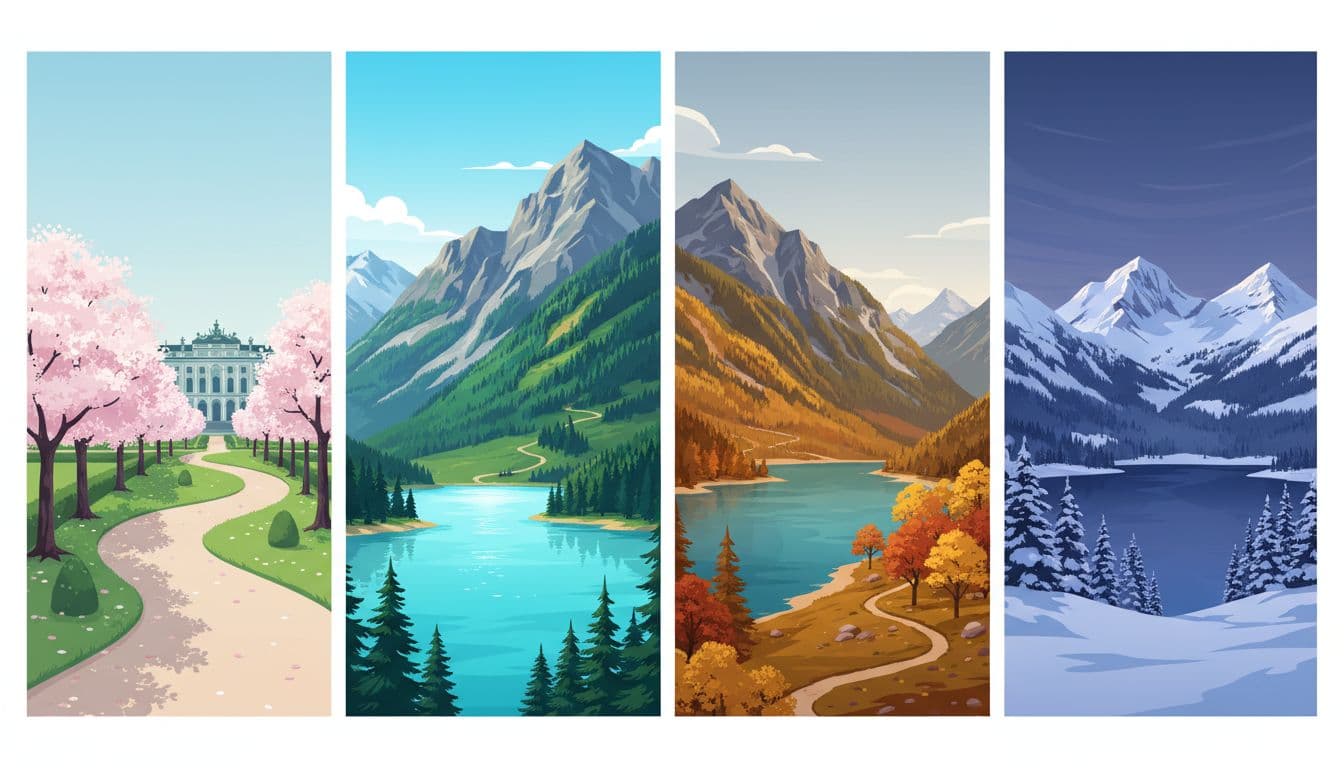
Summer is best for lakes and high hikes. By late June and early July, water levels look full, meadows turn lush, and most alpine access improves. Still, July and August bring the biggest crowds, so shoulder-season weeks often give you better value and more breathing room.
Fall is the sweet spot for many photographers. Lakes stay beautiful, forests turn gold, and villages feel less rushed. Around Hallstatt, late October often brings strong color and quieter mornings, which is why many travelers aim for autumn instead of peak summer. This fall guide to Hallstatt gives a helpful month-by-month sense of timing.
Winter trades color for mood, and that mood is excellent. Snow, low sun, and blue hour make places like Hallstatt, Innsbruck, and Kitzbuhel feel almost lit from within. Just keep in mind that higher roads and trails may have limited access.
Light, crowds, and access can change the shot
For Hallstatt and many Austrian lakes, sunrise is your best friend. Water is usually calmer, streets are quieter, and the whole scene feels cleaner. If you want mirror-like reflections, early morning matters more than almost anything else. This Hallstatt photography guide lines up well with that approach.
Golden hour flatters city rooftops and castles because warm light softens stone and adds shape. Salzburg’s domes, Vienna’s palaces, and Hohenwerfen’s walls all look richer when the sun sits low. Midday, on the other hand, can still work well at bright alpine lakes like Formarinsee, where vivid water and pale rock hold detail even under stronger sun.
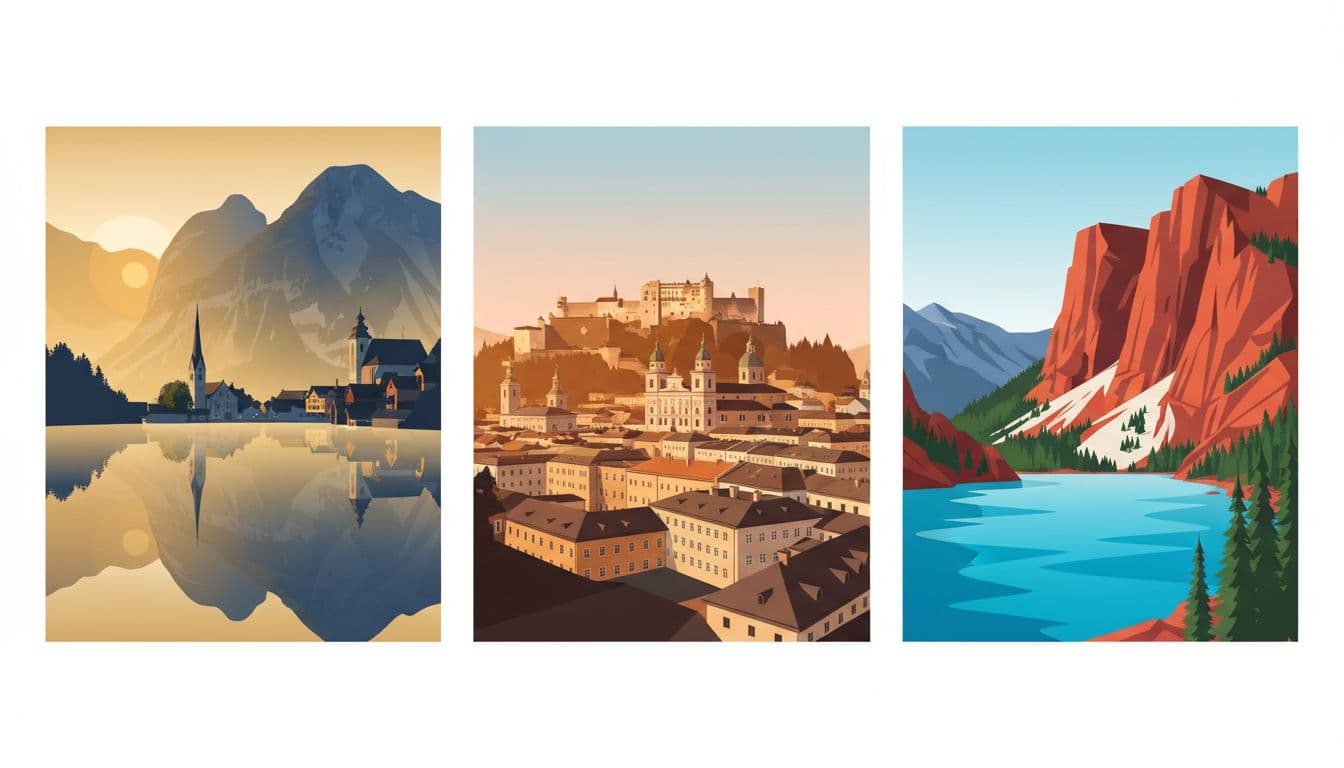
Route planning matters just as much as light. In summer and around holidays, book trains ahead so you don’t lose a prime shooting window to sold-out seats or awkward connections. Before any mountain outing, check the weather again, because Alpine conditions can flip in hours. And once you’re on the trail, stay on marked paths. Austria’s best views often sit beside fragile ground, steep drops, or fast-changing terrain.
Conclusion
Austria rewards photographers who pick places by mood, not just fame. If you want reflections, start with Hallstatt or Schiederweiher. If city lines and grand facades matter more, Salzburg and Vienna give you the cleanest frames. For bigger drama, head to Wilder Kaiser or Wildseeloderhaus, where the views feel steeper, wider, and harder to forget.
The best choice comes down to the photos you want to bring home. Some spots shine at dawn, some glow late, and some depend on season and trail access more than anything else.
Plan around light first, then season, then route, and Austria will give you far better images than any rushed checklist ever could.
