
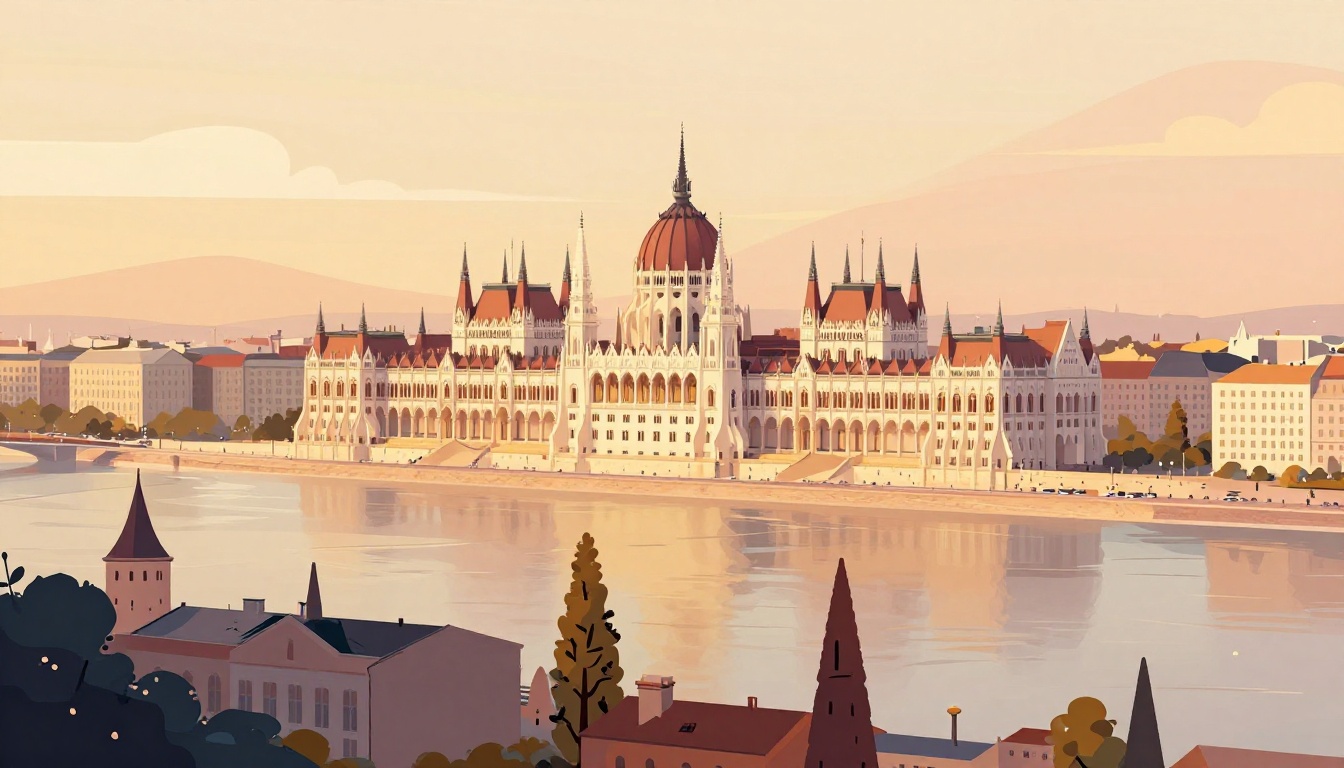
Golden hour in Budapest can feel almost staged, the Danube flashing with warm light while the city opens on both sides, with the Buda hills rising to one side and Pest’s grand landmarks glowing on the other. If you want the best photo spots in Budapest, picking the right place matters, but so does showing up when the light is right.
That’s where many photo guides fall short. You don’t need a random list of overlooks, you need the spots that give you strong Danube views, clean bridge lines, sharp Parliament shots, and a Budapest skyline that holds up in your camera roll. Some are famous for a reason, like Fisherman’s Bastion or Gellert Hill, while others give you quieter angles with less crowd and more space to shoot.
This guide points you to both, so you can find the views that match your style, whether you want wide river scenes, city lights, or a classic frame of Budapest at sunset. First, start with the viewpoints that give you the strongest mix of river, skyline, and landmark detail.
Start with the classic Budapest viewpoints that give you the full picture
If you want the best Danube and skyline views in Budapest, start with the city’s big panoramic hitters. These are the places that put the river, bridges, hills, and landmark facades into one clean frame. They are popular for good reason, and each gives you a slightly different version of the same grand scene.
Fisherman’s Bastion for postcard views of Parliament and the Danube
Fisherman’s Bastion is the classic shot, and it earns that status fast. The pale stone towers, arched walkways, and carved terraces feel almost unreal, especially when the Parliament rises across the Danube like a set piece. From here, the river curves through the city, and Pest opens wide in front of you.
The lower terraces are free to enter, which makes this one of the easiest must-shoot spots in Budapest. Some upper terraces and towers may charge during daytime hours, so it’s smart to check current access if you want the higher angle. For practical details, Budapest.net’s Fisherman’s Bastion guide is a helpful reference.
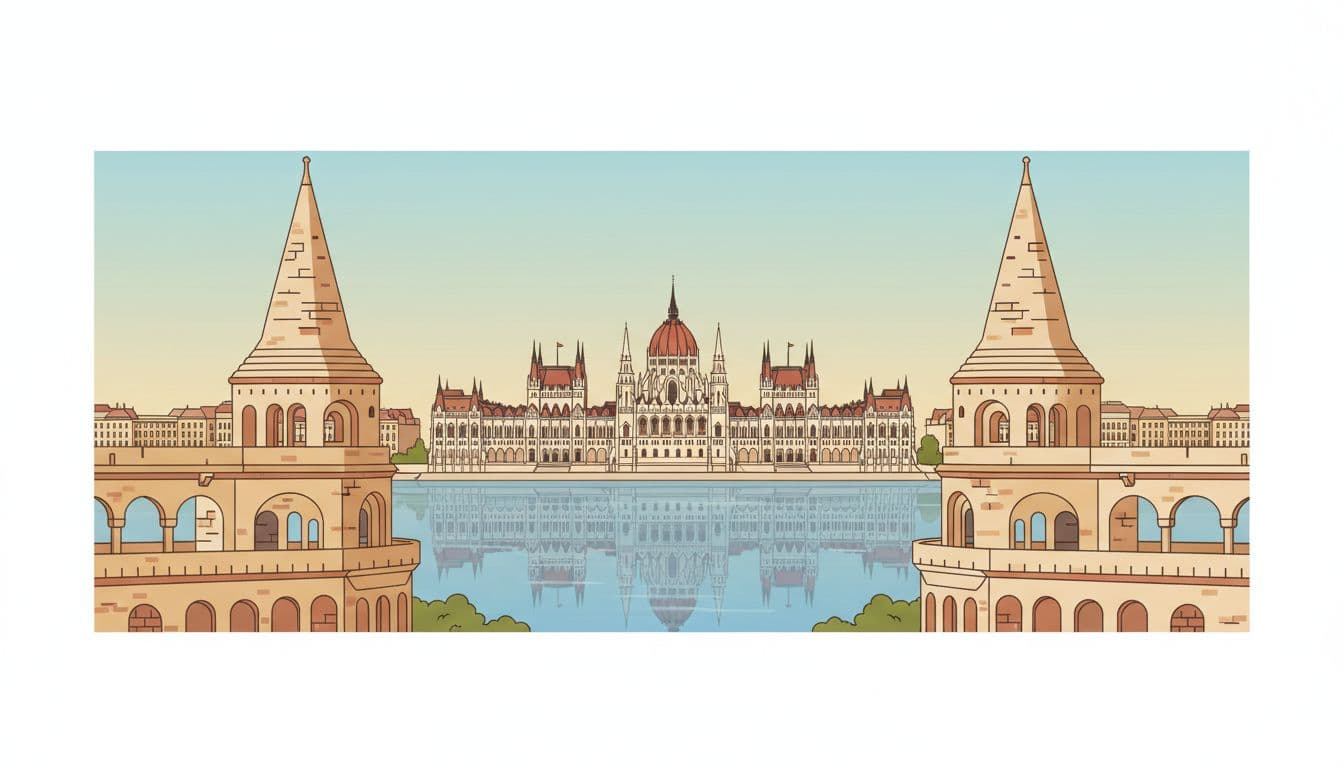
Early morning is your best bet for space and clean compositions. Sunset also works beautifully because the warm light softens the stone and gives Parliament a rich glow. Shoot both ways if you can: go wide for the full skyline, then move in close and frame the city through the arches for a stronger, more layered photo.
Buda Castle terraces for broad skyline shots with bridges in frame
Buda Castle’s terraces give you a broader, more open sweep than Fisherman’s Bastion. From different edges of the complex, you can pull the Danube, Chain Bridge, Parliament, and Gellert Hill into one frame. The view feels less enclosed, which helps when you want bridge lines and river curves to lead the eye.
Getting here is easy. You can walk up, take a bus, or ride the Buda Castle Funicular if you want a quick climb with a view on the way. Once you’re up, don’t settle for the first overlook. The terrace levels change your angle more than you’d expect, so moving a little higher or lower can clean up the frame.
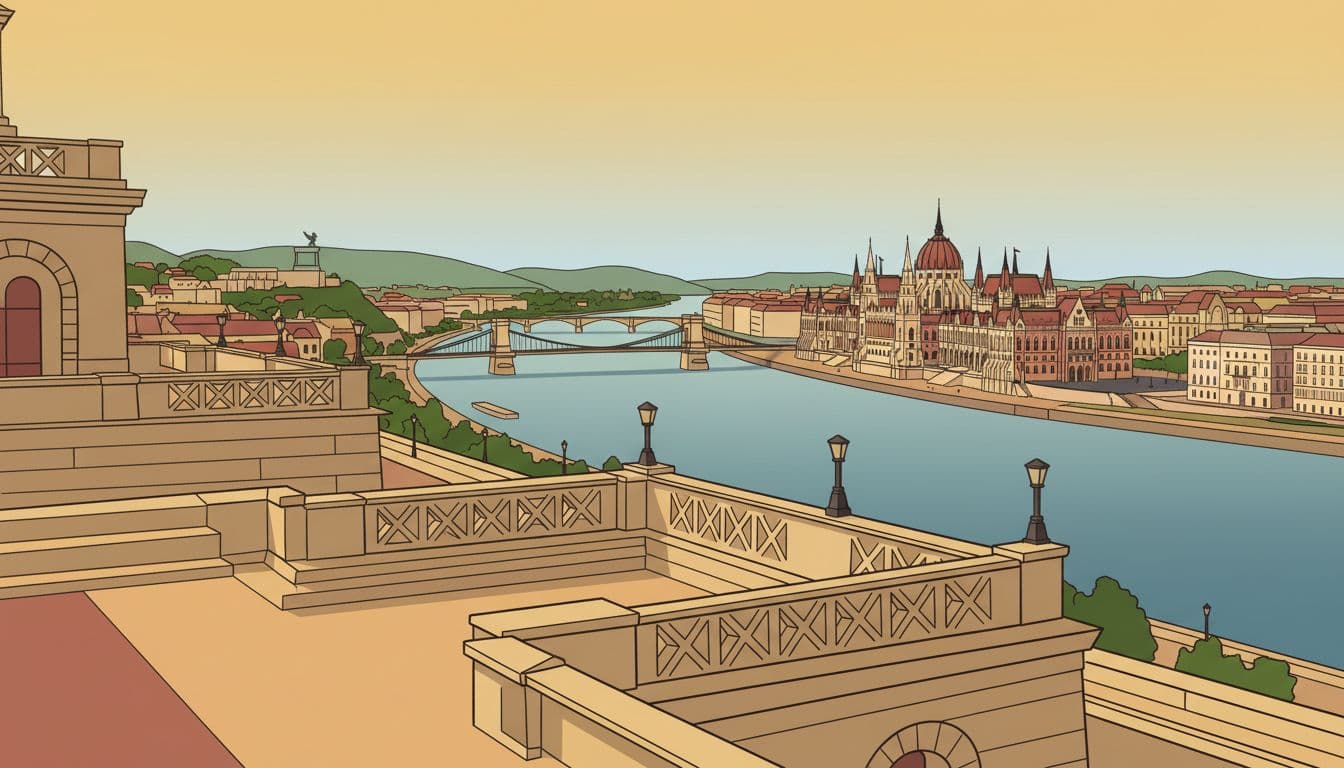
Dawn and dusk are the sweet spots here. You’ll get softer light, fewer people, and more detail in the skyline. Because the terraces are spread out, this is also one of the better places to experiment instead of taking just one obvious shot.
Gellert Hill for the highest-impact city panorama
If you want one viewpoint that pulls almost everything together, head to Gellert Hill. This is one of Budapest’s strongest all-in-one skyline views, with the Danube, major bridges, Parliament, Buda Castle, and broad stretches of Pest visible at once. The city looks huge from up here, but still readable.
The catch is the climb. Expect a 20 to 30 minute uphill walk, depending on your route and pace. That effort pays off, though, and side trails often give you quieter angles than the main lookout. If you want route ideas, Budapest Connection’s Gellert Hill guide is useful.
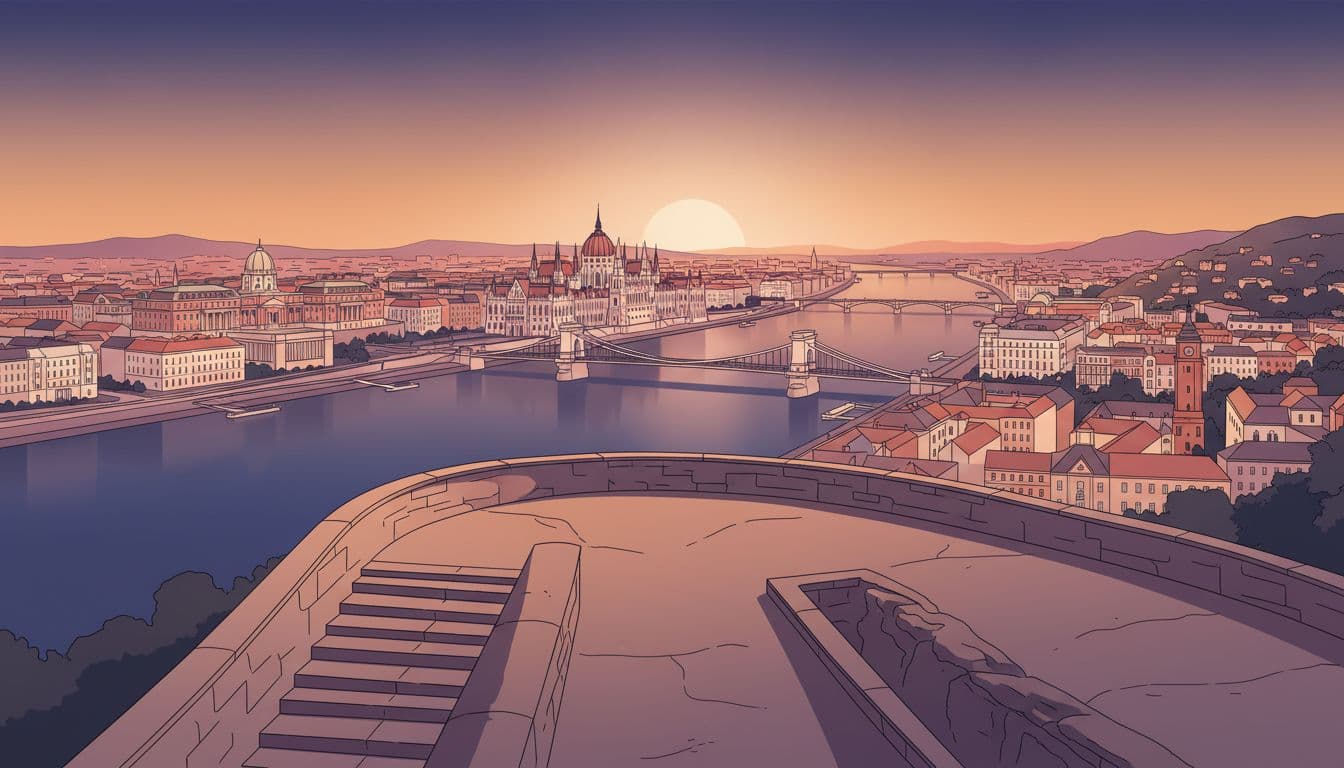
Sunset is the main event here because the whole city warms up at once. Still, weather matters more on this hill than at lower viewpoints. Haze can flatten distant detail, so clear days give you the sharpest long-range shots. If the air looks heavy, focus more on the river and bridge patterns than far-off building detail.
Head to the riverbanks for sharp views of Parliament, bridges, and reflections
After the big hilltop panoramas, it makes sense to come back down to the Danube. At river level, Budapest feels closer and more alive. You get cleaner landmark detail, stronger reflections, and easier access, all without the uphill walk.
These spots work best when you want classic Budapest photos with less effort. The water becomes part of the frame, boats add motion, and the buildings feel grand instead of distant.
Batthyany ter for the cleanest full view of the Hungarian Parliament
If you want the classic full-face Parliament shot, Batthyany ter is one of the safest bets in the city. From this Buda-side position, the whole facade opens across the river in one clean sweep. There is no awkward side angle, no tight crop, just the building laid out clearly against the water and sky. Even Lonely Planet’s Batthyany ter guide points to it as a prime photo stop.
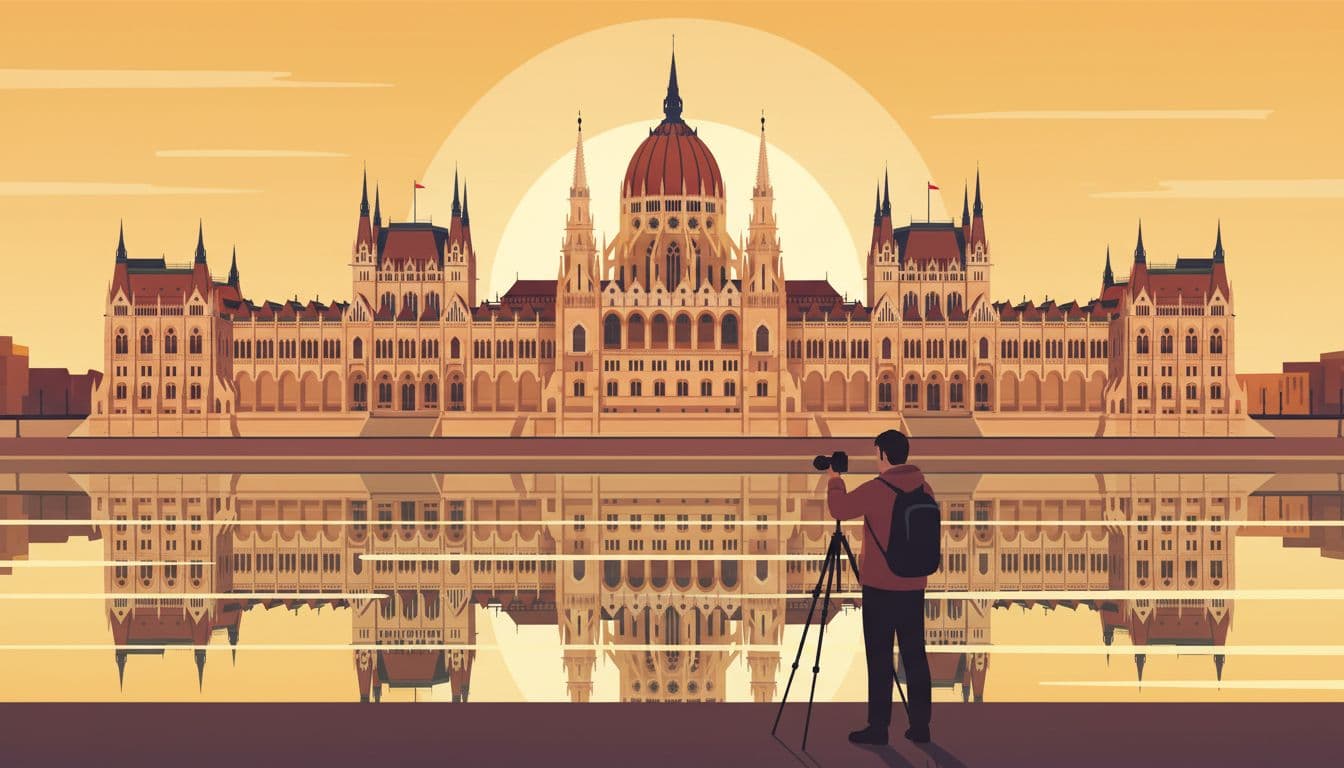
Sunrise is especially good here because the light is soft and the river often looks smoother. As a result, reflections become sharper and the scene feels calm instead of crowded. Blue hour is just as strong, since Parliament lights up and the glow stretches across the Danube like a ribbon of gold.
Bring a tripod if you want the best version of this shot. Current photo advice for Budapest’s riverbanks also favors blue hour and long exposures, especially when you want smoother water and brighter building lights. If you’re shooting in daylight, an ND filter can help tame boat traffic and soften the river surface.
The Buda promenade near Novotel Danube for simple, steady river shots
A little south of Batthyany ter, the Buda promenade near Novotel Danube gives you more breathing room. This stretch feels easier and less rushed, which matters when you’re trying to line up a careful shot. You can step back, adjust your frame, and wait for a boat to pass without people pressing in around you.
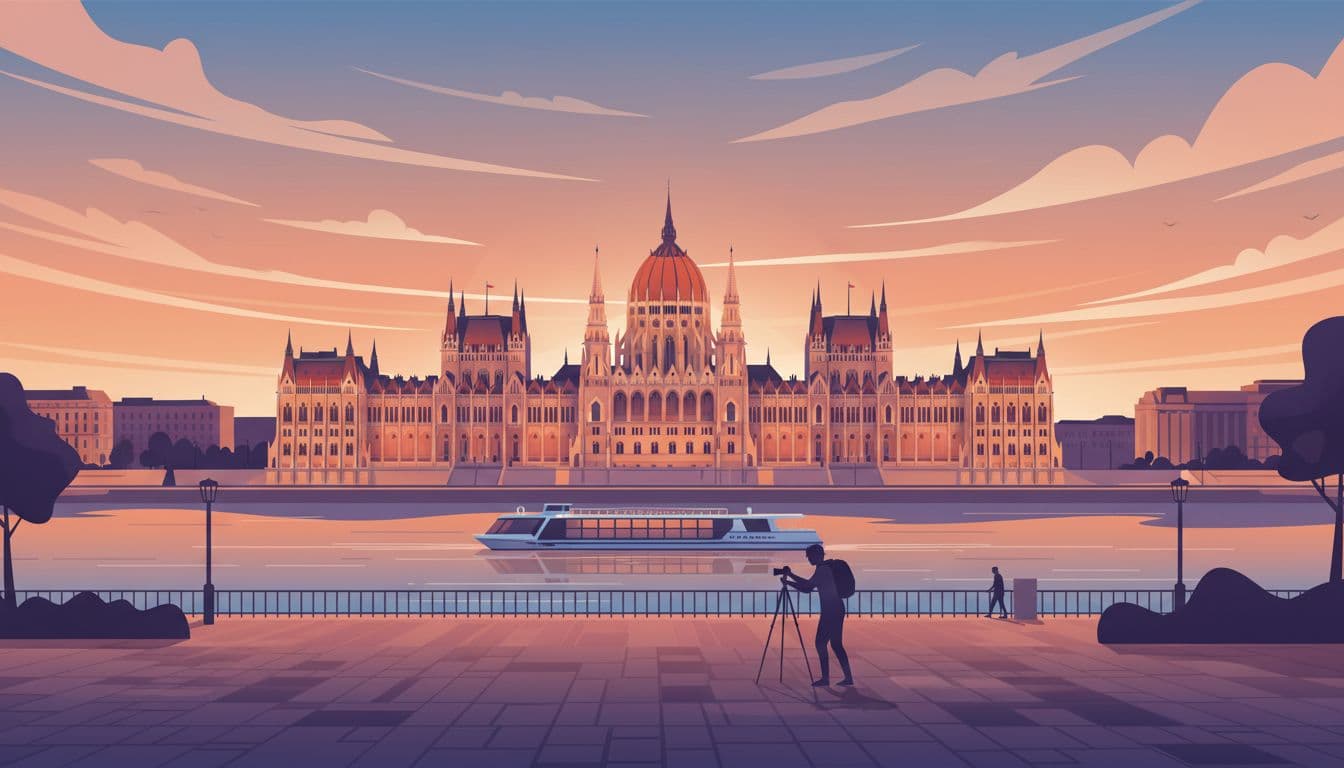
This is a smart place for tripod shots because the walkway is wider and the shooting positions feel cleaner. Instead of competing for one famous mark on the pavement, you can move along the riverbank and fine-tune the balance between Parliament, open water, and river traffic. Sunset works well here, since warm color spreads across the Danube and passing boats add just enough life to the frame.
It also helps if you like a calmer workflow. Batthyany ter is the icon, but this promenade often feels more comfortable. That extra space can be the difference between a rushed snapshot and a photo you actually want to keep.
Chain Bridge for strong lines, night lights, and river energy
Chain Bridge is more than a subject in the distance, it’s one of the best places to shoot from directly. Once you’re on the bridge, the cables, lamps, and stone details create strong lines that pull your eye through the frame. Look one way and you get Buda Castle rising above the hill. Look the other and the Danube opens into a long run of city lights.
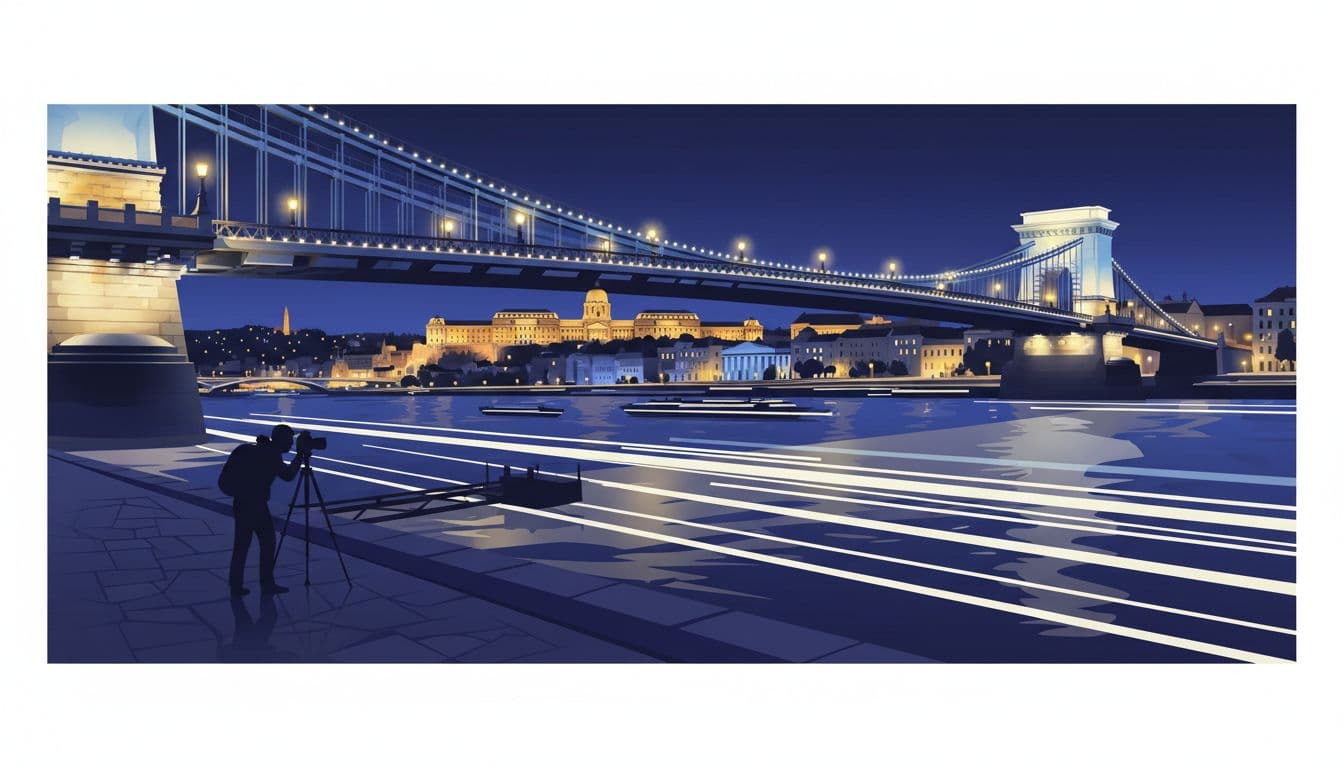
Night is when this spot really wakes up. The bridge lighting has looked especially strong since the recent renovation, and after dark you can catch light trails, glowing lamps, and lit architecture in one frame. For a quick primer on evening views, this Chain Bridge night overview is a useful reference.
For more dramatic angles, move to the Pest side or the area under the bridge near the pier. Down there, the structure feels larger, the lines get steeper, and the whole scene picks up more motion from traffic and boats. If Batthyany ter is the clean portrait, Chain Bridge is the city in motion.
Mix famous landmarks with a few quieter angles for more original photos
Budapest’s best views are easy to find, but the best photos often come from stepping a little to the side. A famous lookout gives you the headline shot. A nearby lane, trail, or boat deck gives that same skyline more texture, more mood, and less of the same image everyone else takes home.
Walk the Castle District streets for framed views and textured foregrounds
Around Fisherman’s Bastion and Buda Castle, don’t stop at the main terrace. Keep walking. The cobbled lanes, worn stone walls, iron gates, and church details near Matthias Church can turn a clean skyline shot into something with story and depth.
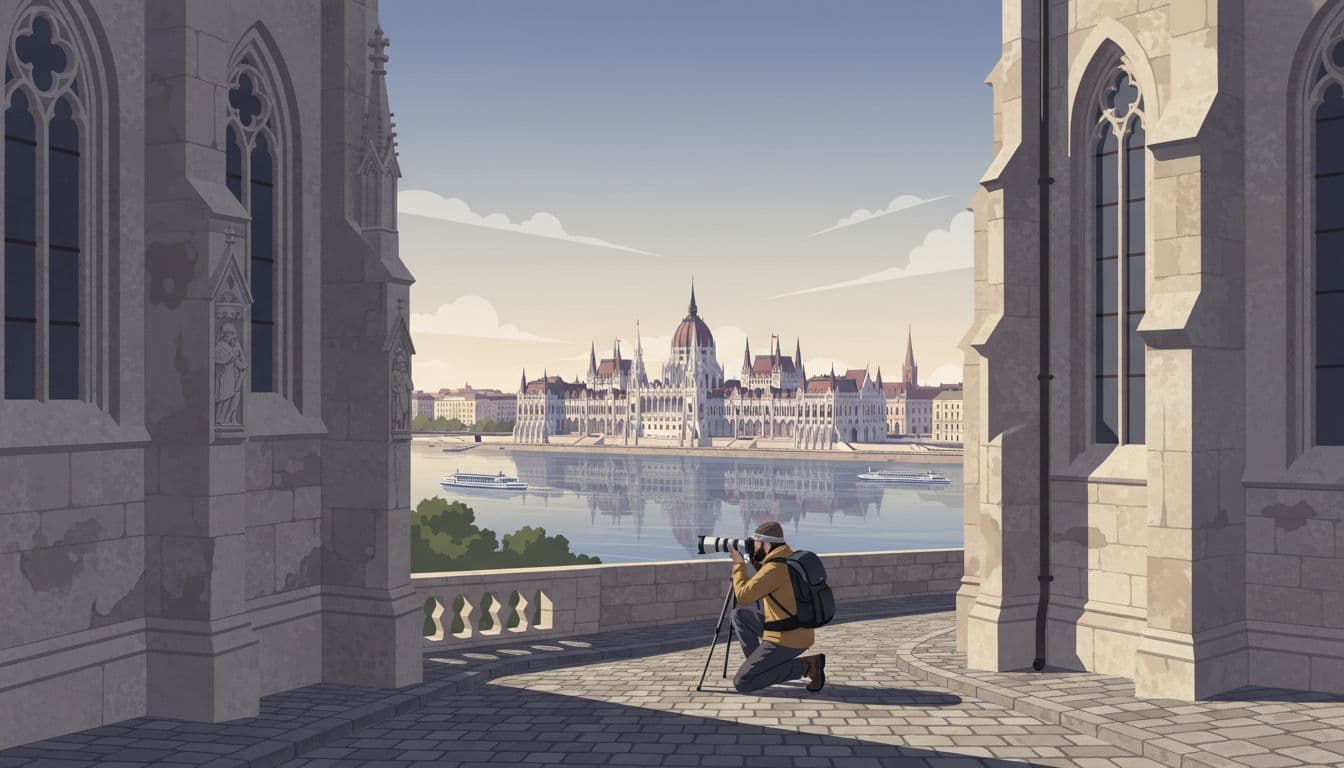
Early morning is your best window here because the streets are calmer and the light is softer. That quiet makes a difference. You can line up Parliament through an arch, let an old wall fill one side of the frame, or use church stonework to anchor the front of the shot while the Danube and Pest skyline sit beyond it.
A few simple framing moves work well in this area:
- Shoot through arches, gates, or narrow lanes instead of standing in the open.
- Let foreground texture matter, especially cobbles, carved stone, and weathered walls.
- Move a few steps left or right until the skyline sits neatly between vertical elements.
For extra ideas on routes and angles, this Budapest photography guide is a useful companion, and this Matthias Church and Fisherman’s Bastion overview helps you picture the area. The goal isn’t to hide the river view. It’s to give it a frame that feels like Budapest, not just a postcard.
Use side paths on Gellert Hill to escape the busiest lookout points
Gellert Hill’s main viewpoint is famous for a reason, but it also fills up fast near sunset. If you want a cleaner frame, take one of the side paths before you settle. Even a short detour can open a different angle over the Danube, with bridges sliding into view between trees, railings, or rocky edges.
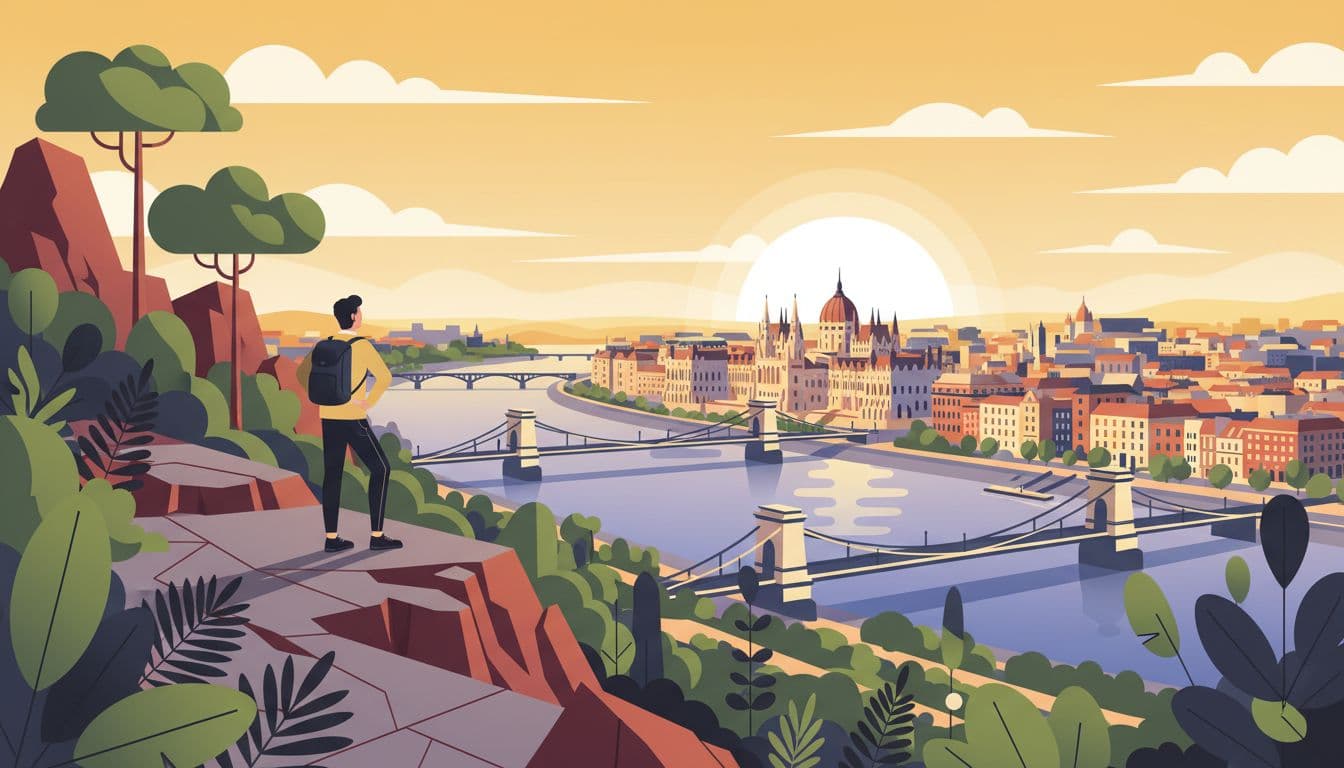
Go up early if you can, or scout in late afternoon before the sunset rush. That extra time helps you find a perch with fewer elbows in the frame. It also lets you check your footing, which matters because some paths are uneven, rocky, or dusty in dry weather.
A quieter side path often gives you a better photo than the busiest top platform.
If you want route ideas, Budapest Connection’s Gellert Hill guide is practical, and this recent Gellert Hill overview covers current access and viewpoint basics. Bring steady shoes, keep your bag close, and don’t wait until the sky turns pink to start looking.
Try a Danube cruise if you want skyline photos from the water
For a bonus angle, get on the river. A Danube cruise changes the whole feel of Budapest photos because the skyline rises straight from the water. Parliament, Chain Bridge, and the lit banks look broader, brighter, and more cinematic from deck level, especially at sunset and blue hour.
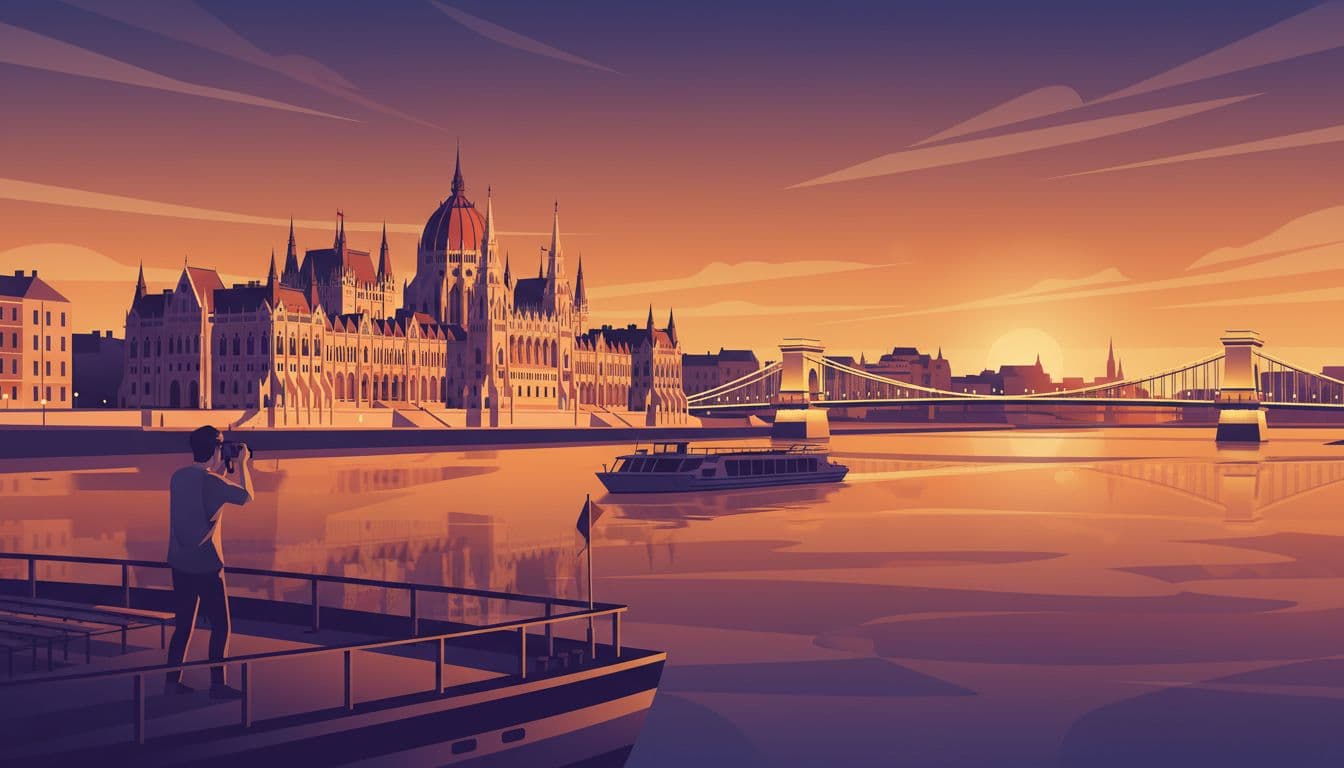
This option works best when you want atmosphere more than perfect stability. The trade-off is simple: the angles are excellent, but the boat moves. For that reason, casual shooters usually do well with burst shots and quick reframing, while camera users should keep shutter speeds high if they want crisp bridge lines.
Try to stand near the middle of the deck, where motion feels a bit gentler. Then watch for three strong moments: Parliament glowing on the Pest side, Chain Bridge as you pass under or beside it, and river reflections once the lights come on. If you’re comparing options, this cruise sights guide and this Danube cruise overview can help you pick the right trip.
Plan your shoot around light, timing, and crowds so the view looks its best
Budapest can give you a postcard frame in one minute and a flat, busy shot in the next. The difference usually comes down to when you arrive, where you stand, and how much gear you carry. A little planning goes a long way here, especially when you’re shooting the Danube, Parliament, and the bridges.
Choose sunrise, golden hour, or blue hour based on the landmark you want
Light changes the city more than people expect. If you want Parliament to look crisp and calm, head to the Buda side at sunrise, especially around Batthyany ter or the nearby promenade. The sun rises behind the building, so the facade catches soft early light and the river often looks smoother.
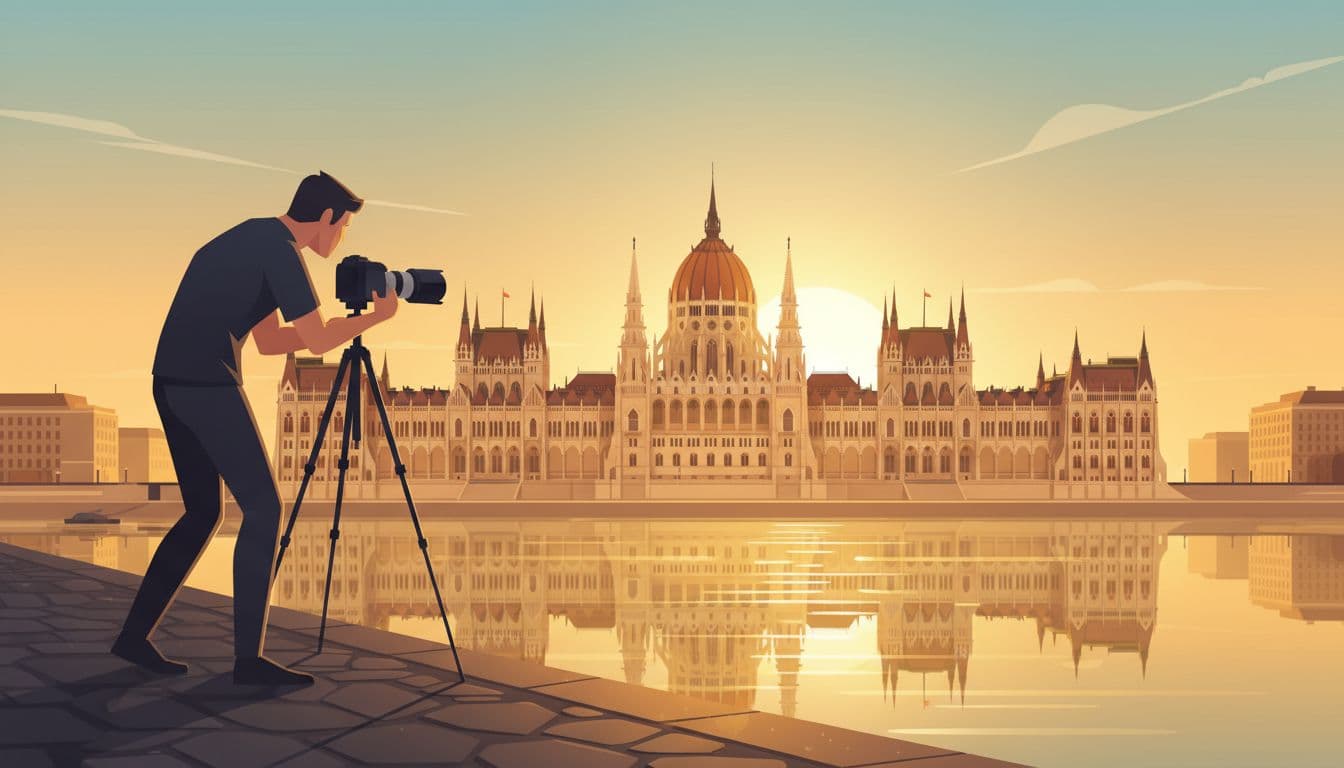
For elevated lookouts like Buda Castle terraces or Gellert Hill, golden hour is usually the sweet spot. The low sun adds shape to rooftops, warms the stone, and gives the river a softer shine. That broad skyline feels richer then, not washed out.
Blue hour is the time for bridge lights and reflections. Chain Bridge, Parliament, and the riverbanks all wake up after sunset, when the sky turns deep blue and the city lights turn gold. If you want current timing, a Budapest golden hour guide helps you check the day’s window before you go.
Get there at least 30 minutes early, because the best light often starts before the obvious moment.
Pack light, but bring the few tools that help most
You don’t need a heavy bag to shoot Budapest well. In fact, the lighter you travel, the easier it is to move between riverbanks, steps, and terraces.
A few basics make the biggest difference:
- A wide lens, or your phone’s wide mode, helps fit in Parliament, the Danube, and the bridge lines.
- A small tripod is worth carrying for blue hour and night shots.
- A lens cloth matters more than people think, because river mist, fingerprints, and dust can soften the image fast.
- An ND filter can help in daylight if you want smoother water and softer boat streaks.
If you’re shooting with a phone, don’t feel under-equipped. A strong composition still beats fancy gear. This iPhone Parliament workflow is a good reminder that simple setups can still produce great Budapest skyline photos.
Make crowded places work for you instead of against you
The busiest photo spots can still work in your favor. First, arrive early. Fisherman’s Bastion at sunrise feels very different from Fisherman’s Bastion an hour later, when tour groups start filling the terraces.
Then move a few minutes away from the main platform. A side arch, a lower stair, or a quieter stretch of railing often gives you a cleaner frame. Architecture helps, too. Railings, arches, and stone openings can turn a busy view into a photo with depth and shape.
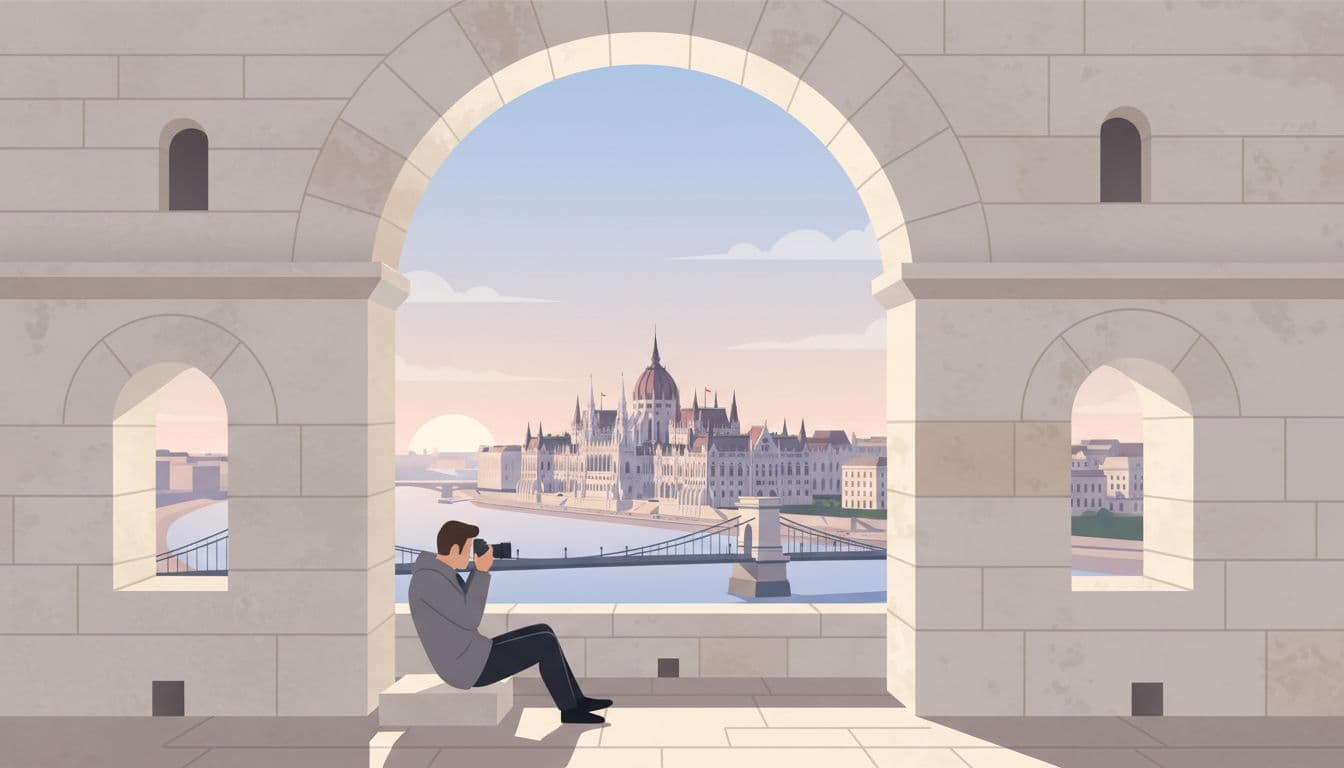
Also, wait for the river to do some of the work. A passing boat can add motion, scale, and a bright reflection trail. For spot-specific ideas, this Fisherman’s Bastion photo guide shows how small position changes can improve the frame.
Just keep basic courtesy in mind. These are public viewpoints, not private sets, so don’t block stairways, don’t spread gear across walkways, and take your shot without turning the spot into a traffic jam.
Conclusion
Budapest doesn’t have one perfect photo spot, because the city changes its face with your vantage point. Fisherman’s Bastion gives you the classic skyline frame, Batthyany ter gives you the clean Parliament shot, and Chain Bridge comes alive after dark, when the lamps and river turn the city into lines of gold.
So the best choice depends on the mood you want, broad and cinematic from the hills, or close and crisp along the Danube. That’s why the strongest plan is simple: pick one morning spot and one evening spot on the same day, then let the light show you two different Budapests.
