
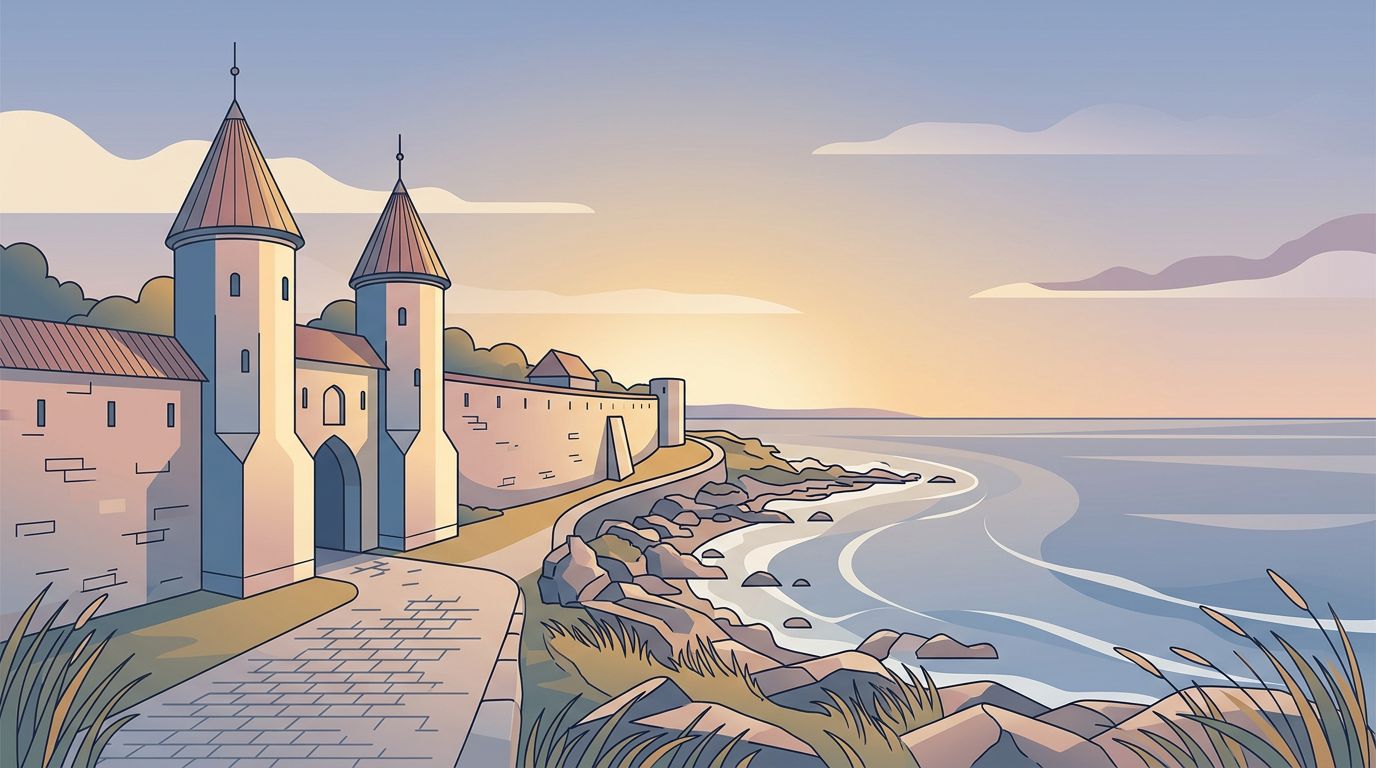
Estonia photo spots work best when you pair old stone with open water. In one day, you can shoot medieval walls in Tallinn and finish on a windy coast with no crowds in sight.
If you want photos that feel clean, varied, and easy to shoot, Estonia gives you that mix without long detours. The trick is knowing where the walls face the light and where the shoreline gives you space.
Start in Tallinn, then push toward the coast.
Tallinn’s Old Town Walls and Towers
Tallinn gives you the strongest first frame. About 1.85 km of the city wall still survives, along with 26 towers, so the scene feels complete before you even lift your camera. The medieval town wall is not just a backdrop. It is the subject.
Viru Gate is the easiest place to begin. Its twin towers make a natural entrance shot, and the street around them changes through the day as flower stalls, walkers, and taxis move in and out of the frame. Go early. The walls hold the light.
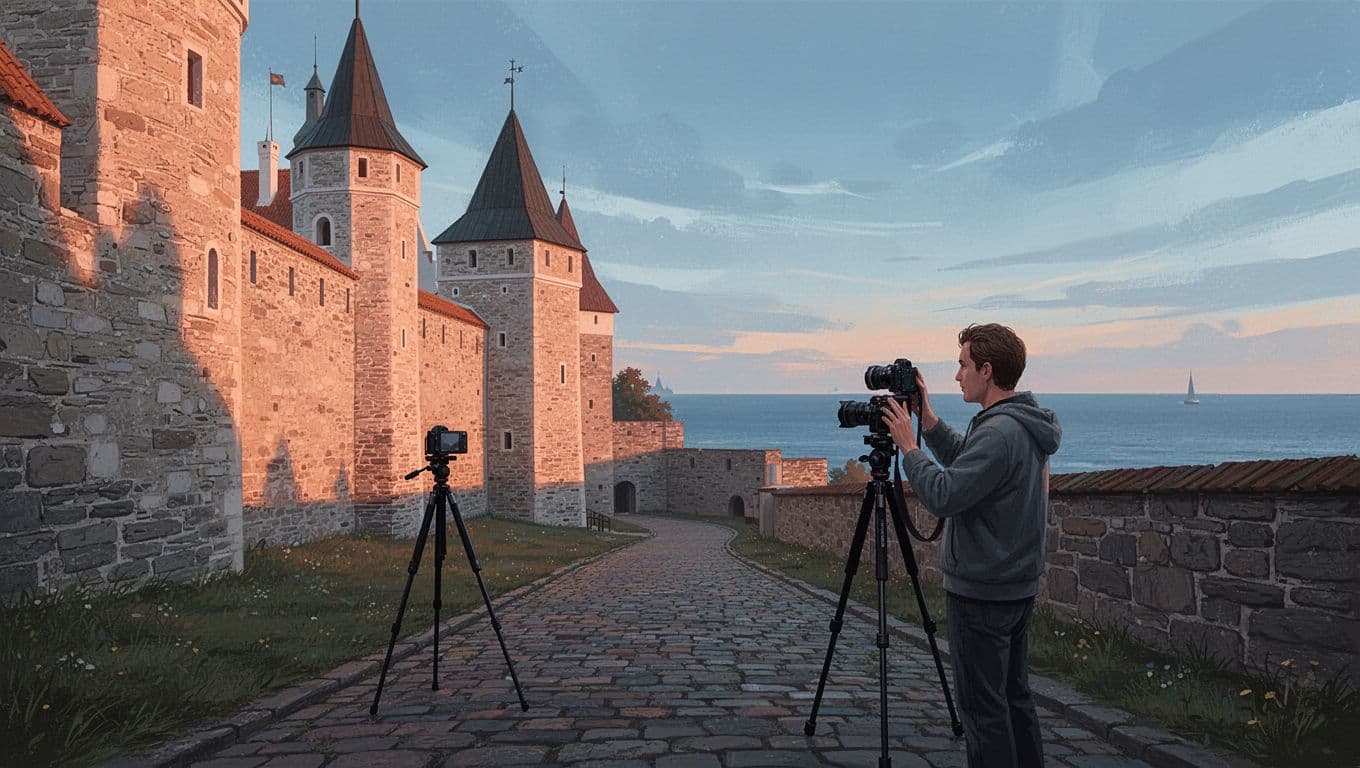
Tallinn at sunrise. Worth the alarm.
Kohtuotsa is the famous rooftop view, but Patkuli tells a different story. Patkuli viewing platform leans into the wall line, the lower city, and the slope that drops toward the harbor. Patkuli feels steeper, and that makes the frame feel deeper too.
On one May morning, I reached Patkuli before sunrise, heard a ferry horn drift up from the harbor, and watched the roofs turn pink for a few minutes before the color slipped back into gray. That brief shift made the whole city feel quiet and wide at once.
If you want a tighter wall detail, Hellemann Tower and the short wall walk are worth the small fee. You get height, stone texture, and a cleaner angle on the towers. The section between Nun’s, Sauna, and Golden Foot towers is especially useful because it gives you both the wall and the Old Town in one short walk.
Morning works.
Clouds help.
Go early.
Tallinn’s Coastline Works Best in Simple Frames
If you want water without leaving Tallinn, Pirita is the easiest answer. The promenade gives you a long line back toward the Old Town, and that clean distance helps when you want a city-to-sea shot instead of another narrow alley view.
For a wider route across the city, Tallinn photography spots has plenty of ideas, but the coast still rewards simple thinking. Noblessner gives you harbor shapes, boats, and hard lines. The area near the Seaplane Harbour adds more structure, so the sky and water do not overwhelm the frame.
The best Tallinn coast shots are usually the least crowded ones. One strong line is enough. A pier, a railing, or a single sail can carry the whole picture if the light is doing its job. That is why sunset works so well here. The water turns silver first, then blue, then nearly black.
Pack a polarizer. It helps.
Keep the frame open.
Leave space for the horizon.
Lahemaa and the Northern Coast Bring More Texture
Leave the city for a day and the coast changes fast. Lahemaa beaches and harbors gives you rocky shorelines, small ports, and quiet water that feels far from Tallinn, even though the drive is manageable.
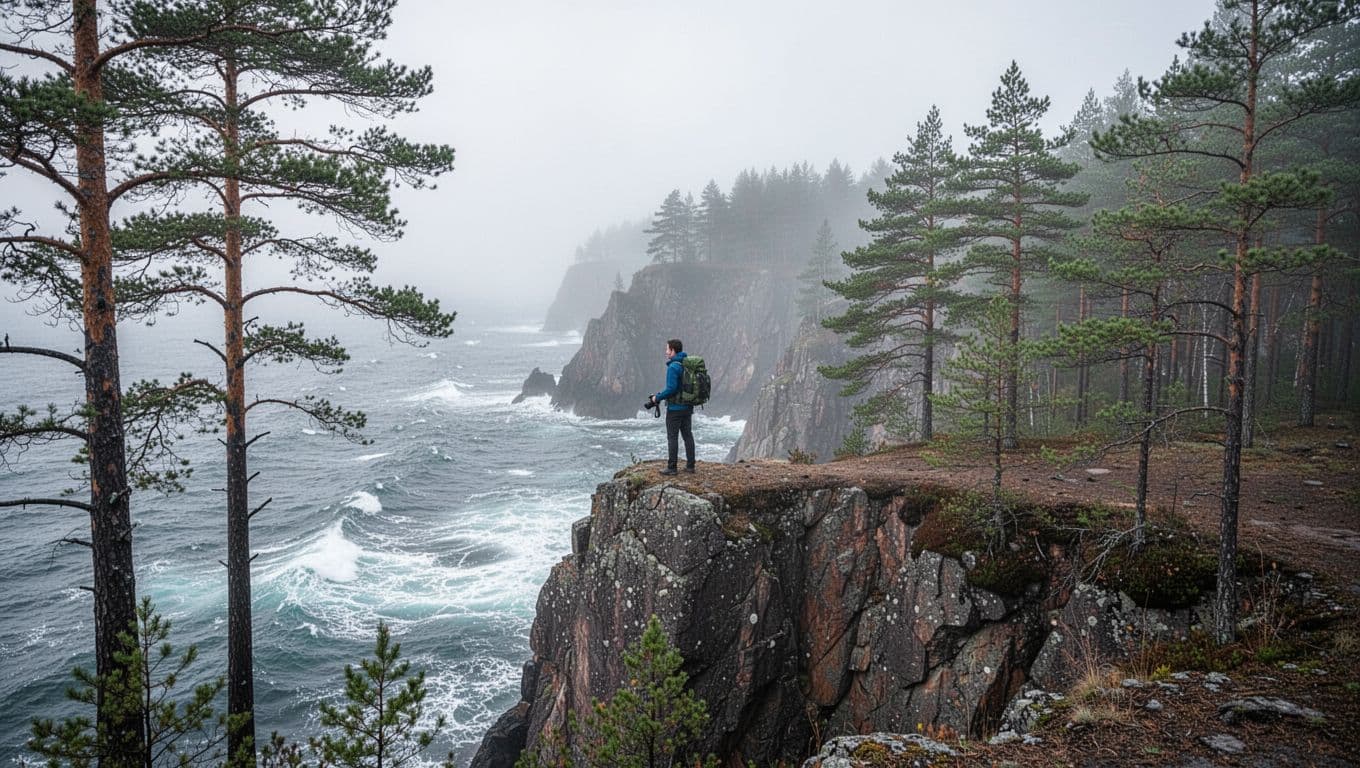
Wind in the pines.
Hara, Vergi, Käsmu, and Võsu each give you a different mood. Hara feels worn and open, with rough texture and a slightly forgotten edge. Vergi and Käsmu are calmer, better if you want small boats, masts, and a quieter harbor shape. Võsu is softer, with a real beach line and more room for people in the frame.
Purekkari Cape is good when you want rocks and a long horizon. The path there feels spare, which helps the scene breathe. If the sky is clear, the cape gives you a wide, flat sea. If clouds move in, the mood gets better, not worse.
The north coast also gives you stronger cliff work. Türisalu limestone cliff and platform is easy to reach and gives a direct sea view without much effort. Pakri Landscape Conservation Area is harsher, taller, and better if you want raw height and a sharper drop. Both spots work well on windy days, because the sea looks alive even when the rest of the frame stays still.
Hara’s old harbor ruins add rough texture.
Võsu gives you beach calm.
Wind matters more than rain.
Pärnu Gives You Softer Light and Longer Lines
Pärnu is the easier coastal stop if you want a relaxed frame. Pärnu Jetty gives you a long line into the water, and the beach nearby keeps the scene open enough for sunset shots without much clutter.
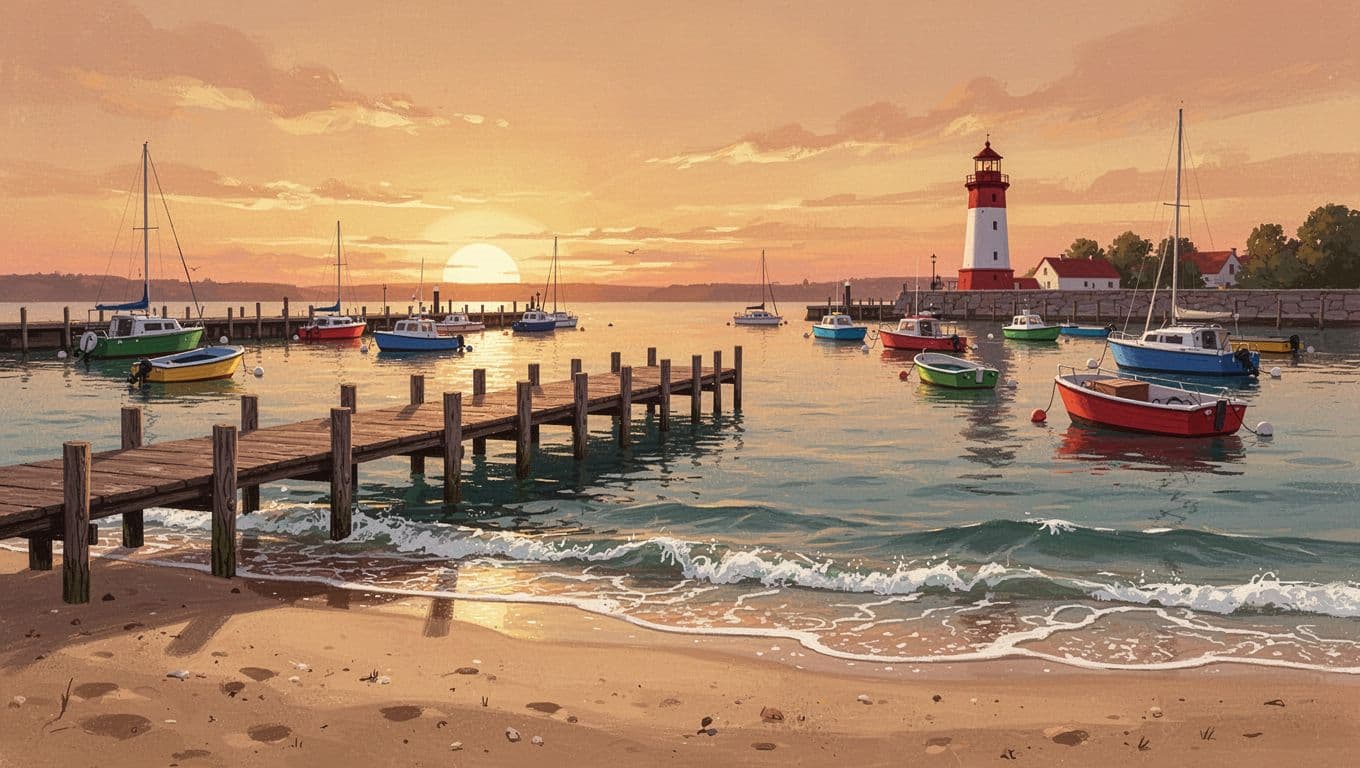
The harbor and the sand work well together because they do not fight for attention. A boat, a post, and the low edge of the sea are enough. The left-bank jetty is the one locals know best, and walking its length gives you a built-in leading line that almost does the composition for you.
May is a good month here. The evenings stretch out, and the light stays gentle longer than most first-time visitors expect. If your Tallinn wall shots feel tight, Pärnu gives you breathing room. It also gives you a slower pace, which helps when you want to wait for the sky to settle.
Come near sunset.
Then wait ten minutes.
The light changes.
How to Time the Light and Keep the Shot Clean
The best Estonia photos usually come from patience more than gear. Light changes fast near the sea, and walls look different once the sun drops behind a roofline or cloud bank. In May, the long evenings and softer shadows make both the old town and the coast easier to shoot. That small change matters a lot.
What to pack
- Bring a microfiber cloth, because sea spray reaches farther than it looks.
- Use a wider lens for walls, especially when towers and rooftops sit close together.
- Keep a longer lens handy for harbors, jetties, and cliff edges.
- Return to the same spot twice, because the frame can change in minutes.
A 24 to 35 mm lens covers most wall scenes, while a longer lens helps at harbors and cliff points. If you’re standing on a platform, take one wide frame first, then step closer and let the subject fill more of the image. That keeps the shot clean without making it feel cramped.
Clouds help.
Harsh sun can flatten stone.
Soft light gives Tallinn’s walls more shape, and it lets the coast keep its color without glare.
Conclusion
Estonia works because it gives you two strong moods in one trip. Tallinn brings the walls, towers, and rooflines. The coast brings space, wind, and a cleaner horizon.
That mix is what keeps the best Estonia photo spots useful after the first visit. You can return with a different lens, a different sky, or just a bit more patience, and the same place will give you another frame.
Wait at Pärnu Jetty until the left-bank boards catch the last gold.
