
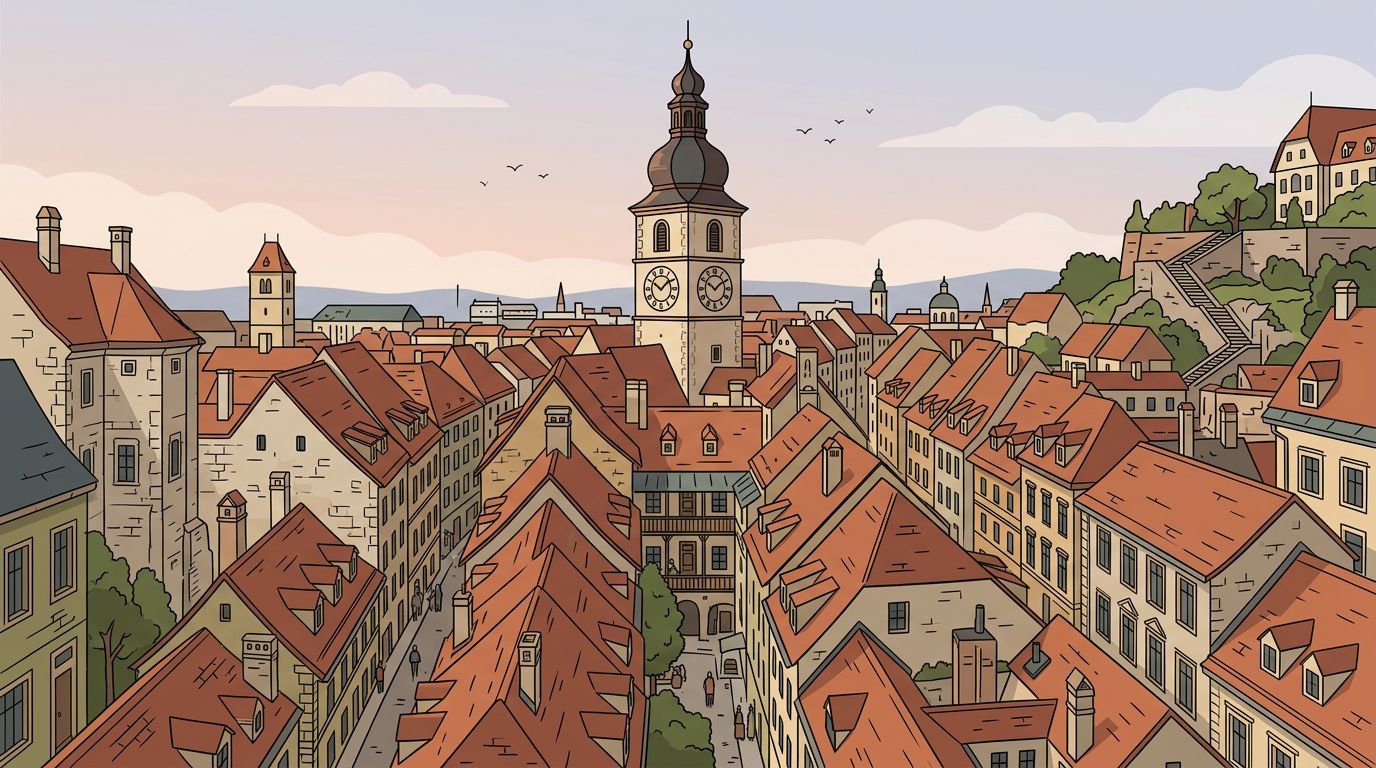
Most skylines blur into a pattern. Graz rooftops don’t. Their clay tiles, steep pitches, dormers, and tucked-away inner courts turn the Old Town into something you read layer by layer, with the Clock Tower high above it all.
If you’re heading to Graz with a camera, or simply a habit of looking up, the best moments aren’t limited to the main lookout. They happen on stair landings, under archways, and at the edge of a quiet square. Start with the skyline, then let the courtyards slow you down.
Why Graz Rooftops Feel So Distinct
The hill changes everything.
Graz has many handsome streets at ground level, but its real shape appears when you gain a little height. From Schlossberg, the city stops feeling flat and starts reading like a set of folded planes, with church spires, attic windows, chimney stacks, pale facades, and red roof pitches shifting against each other every few steps you take.
That layered look is what makes the roofs of Graz so memorable. They aren’t polished into a uniform postcard. Some tiles are darker with age, some ridgelines dip, and some courtyards open like pockets between the blocks. Because the Old Town is dense, the eye keeps finding small interruptions, a bell tower, a terrace, a patch of ivy, a modern curve in the distance.
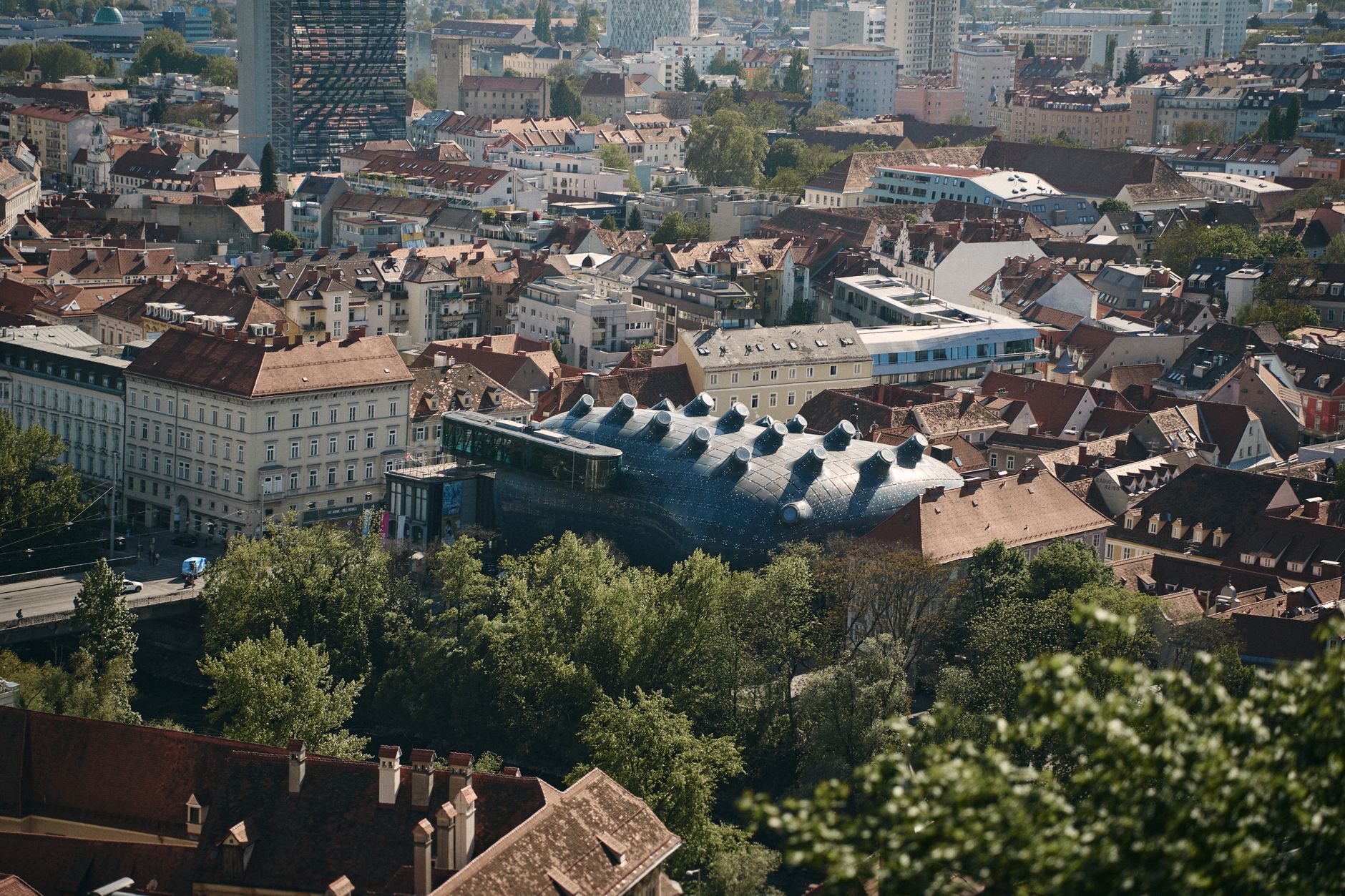
Photo by Lukas Kaufmann
That contrast shows up well in Austria’s official Graz guide, which points to the city’s design edge, cafe culture, hidden courtyards, and the Clocktower watching over everything. The view also explains why the Kunsthaus, with its smooth blue form, feels bold without feeling out of place. Seen among older roofs, it doesn’t erase the past. It sharpens it.
Morning light gives the rooftops a gentler look, with softer color and less glare. Late afternoon is stronger. Then the tiles warm up, shadows cut across the lanes, and the Clock Tower gains that crisp outline photographers want. If you only have one clear-weather visit to Schlossberg, save your best attention for the hour before sunset.
Courtyards Hide Behind the Facades
At street level, Graz can seem composed and almost formal. Then a doorway opens.
Some of the city’s best spaces sit behind heavy doors, arches, and passages that many visitors pass without noticing. A small surprise, tucked behind stone. One courtyard might have arcades and pale walls. Another might hold a few cafe tables, a planted corner, or windows with flower boxes. The shift is quick, but it changes your pace at once.
Last June, near a narrow arch off Herrengasse, a cafe worker carried a tray through a stone passage just as rain started, and within seconds five strangers had stepped into the same courtyard, all staring up at wet vines and cream walls as if they had crossed into a different city. That is the courtyard effect in Graz. The noise drops. Footsteps echo. You start noticing drains, door hinges, worn stairs, and the slice of sky above the walls.
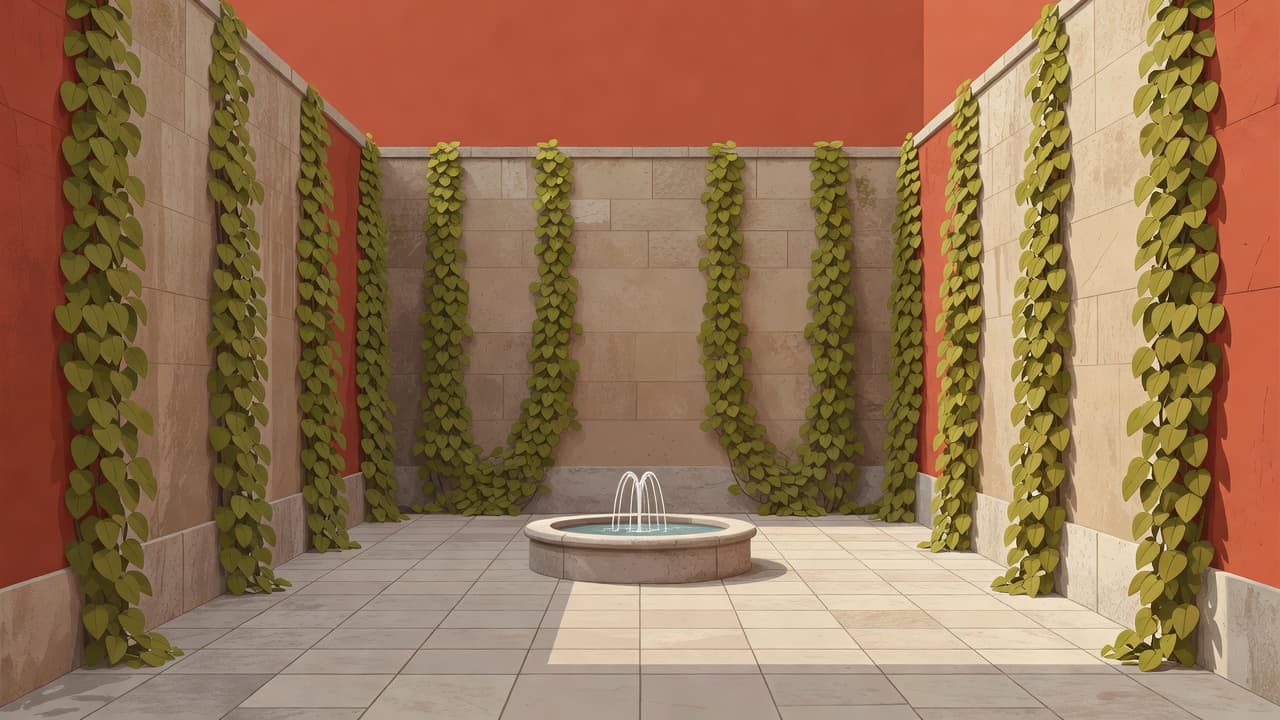
For architecture lovers, these inner spaces explain the city better than a rushed sweep down the main shopping streets. They show how Graz is built inward as much as upward. Many blocks have calm centers hidden behind active fronts, and that tension gives the Old Town its character.
The Landhaus courtyard is the most famous example, and it earns the stop. Its arcaded form feels balanced and cool, especially after the slope and movement of Schlossberg. Yet smaller, unnamed courtyards often stay with you longer because they arrive without warning.
If a courtyard feels lived-in, enter gently and keep your voice low.
That matters because some of these spaces are public passages, while others are still close to daily life. For photos, look for framing more than wide views. A doorway, stair rail, or arch can do more than a full sweep. After rain, even better. Wet stone adds shine, and the muted light keeps wall colors rich without harsh contrast.
Best Clock Tower Angles in Graz
Up close, the tower can look squat. Step back.
The Graz Clock Tower, or Uhrturm, reads best when you give it room. Its steep roof and strong silhouette need surrounding space, otherwise the structure loses some of the authority it has from across the city. That is why the best photos are rarely the ones taken right under it with a wide lens pointed upward.
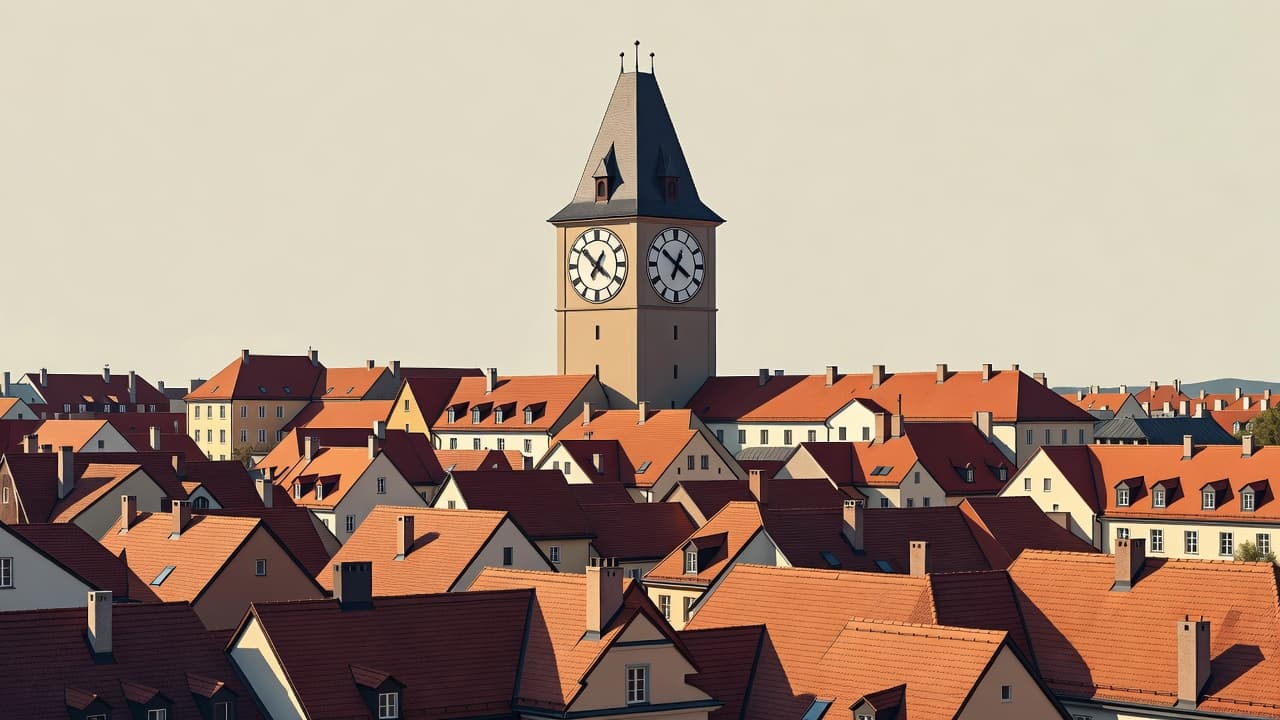
A useful rule is simple. Let the tower share the frame with roofs, stairs, trees, or stone walls. That extra context gives scale, and it also makes the image feel tied to Graz instead of any hilltop monument in Europe. If you want a quick visual reference before your trip, this public skyline photo of the Clock Tower over Graz shows the classic relationship between the tower and the sea of red tiles below. For angle ideas at different distances, a broad photo archive of Austria clock tower views is also handy.
These viewpoints produce different moods:
| Viewpoint | What you get | Best light |
|---|---|---|
| South side near the tower | The classic roof spread below the Uhrturm | Late afternoon |
| Path below the tower | Stone walls, trees, and a taller-looking silhouette | Morning |
| Schlossberg stairs | Strong leading lines and a more dramatic climb | Early evening |
| Across the Mur | The tower as a skyline marker above the whole city | Clear late day |
The takeaway is simple: distance improves shape.
Late-afternoon light gives the Clock Tower its clearest form.
If you’re using a phone, tap the sky and pull exposure down slightly so the roof tiles keep detail. With a camera, a normal lens often works better than an ultra-wide one. Vertical lines stay cleaner, and the tower keeps its proportions. Also, wait a minute longer than feels natural. Last light often hits one row of roofs first, then the tower top, then the clock face. Those small shifts matter more here than in cities with flatter skylines.
A Slow Route Through Roofs and Inner Courts
Start early.
Begin in Hauptplatz while the paving is still quiet, then head toward the Schlossberg climb before tour groups bunch up near the lifts and stairs. If your knees are fresh, walk up. The ascent helps because the city reveals itself in small pieces, not all at once, and each landing gives you a new relation between the roofs and the Clock Tower above.
Once you reach the upper paths, don’t stop at the first open panorama and move on. Circle a little. The south-facing side is the obvious classic, but the lower paths give better structure because branches, stone edges, and walls anchor the view. Then descend into the Old Town instead of rushing straight to lunch. The best order is height first, detail second.
From there, drift through side streets off Herrengasse and Sporgasse, then cut toward the Landhaus and any open passage that looks inviting. Some doors stay shut. Some don’t. Keep your pace loose enough to notice which archways are public and which ones lead to a small pocket of shade, a stair, or a quiet yard that most people miss because they’re still looking for the next square.
Then slow down.
By mid-afternoon, head back toward Schlossberg or a clear street opening for your final Clock Tower view. If the weather is bright, the last hour before sunset is your best friend. If clouds roll in, keep going anyway. Graz handles soft light well, and the roofs often look richer when the city isn’t blazing.
The View That Stays With You
Graz rewards patience more than speed. The first high view is memorable, but the city gets better when you pair that skyline with a doorway, a stair, a courtyard wall, and a few quiet minutes in between.
Stay out a little longer than planned. Wait until the light slips off the lower roofs and catches the copper top of the Uhrturm, then look toward the chimney line above Sporgasse, where one small white dormer often glows last.
