
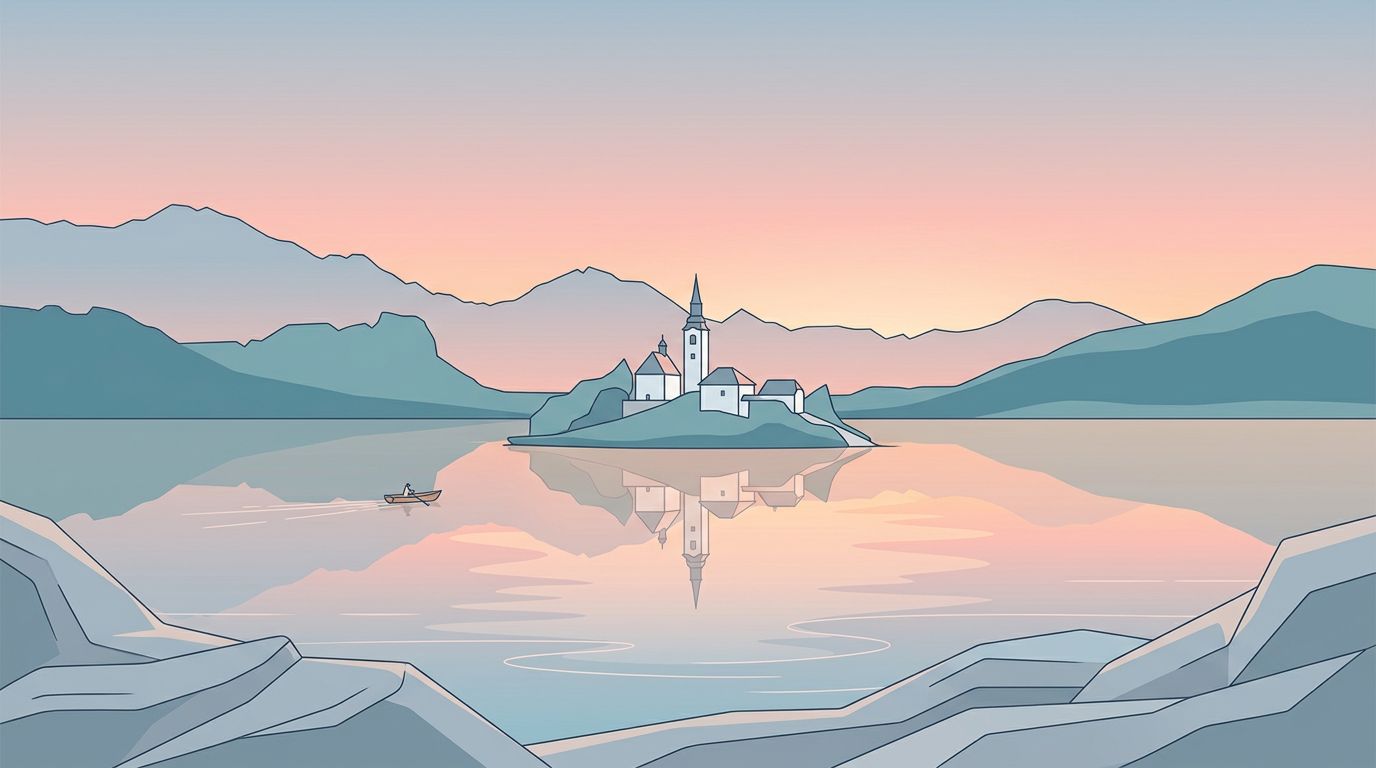
A clean Lake Bled sunrise frame looks simple, and that’s why it’s hard. One church, one island, one quiet lake, yet every branch, boat wake, and late arrival can spoil the shot.
You don’t fix most of those problems in editing. You solve them by standing in the right place before dawn, reading the light early, and composing with intent. Start with the viewpoint, because the frame begins there.
Choose the viewpoint before you think about lenses
“Clean” usually means the island reads fast. The eye lands on the church, the reflection, and the mountain line behind it. No clipped trees. No random railing. No half-boat creeping into the bottom edge.
For most photographers, that starts with Ojstrica. The viewpoint sits at about 611 meters and faces east, so sunrise lands right where you want it. The hike from the Velika Zaka side takes about 20 minutes, and the final stretch is steep enough that good shoes matter.
This quick comparison helps when you’re deciding how much hike, height, and crowd pressure you want.
| Viewpoint | Best for | Access | Main limitation | | | | | | | Ojstrica | Classic sunrise composition | 20-minute steep hike from Zaka | Crowded, tight shooting space | | Mala Osojnica | Higher, quieter island view | About 20 minutes above Ojstrica | Steeper trail, longer climb | | South-west shore near Zaka | Reflections and mist | Short walk from lakeside | More trees and shoreline clutter | | Bled Castle back viewpoints | Elevated alternative angle | 5 to 10 minutes behind castle | Better after sunrise than at first light |
If your goal is the classic centered island with mountain layering and no branches intruding from either side, Ojstrica still wins, but only when you reach the rock shelf early enough to choose a clean lane through the scene.
Arrive early. Space disappears fast.
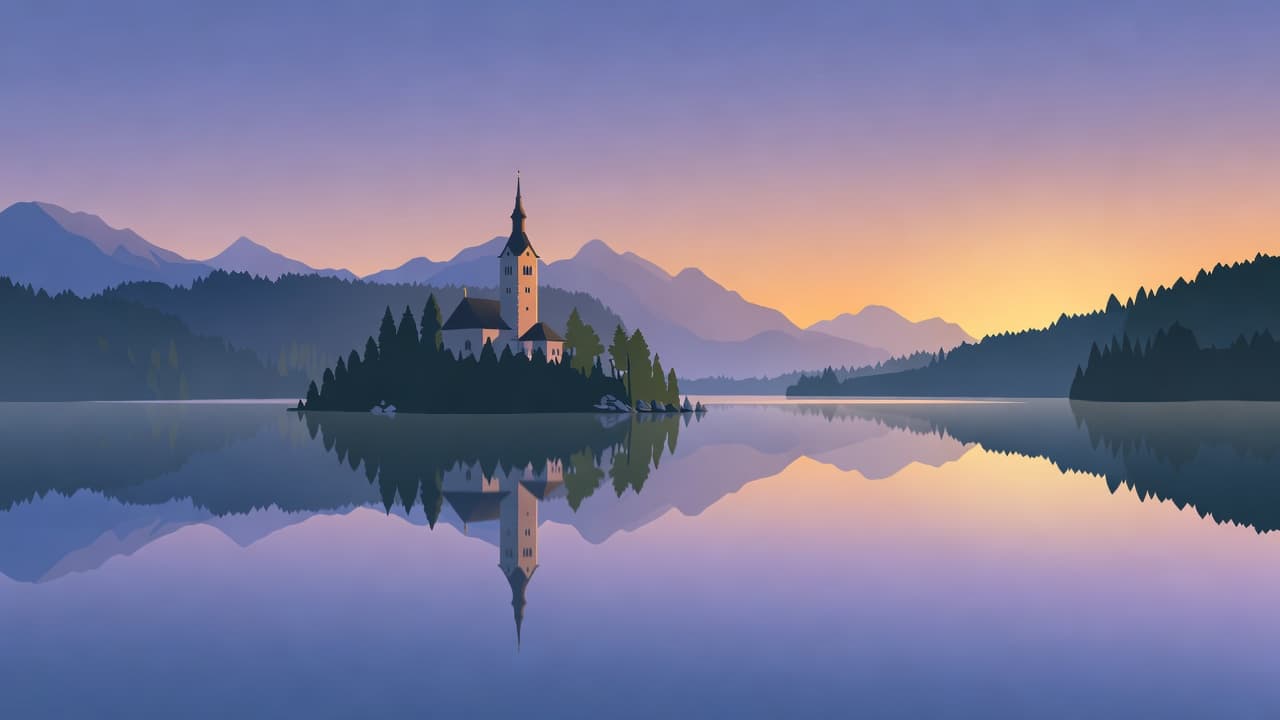
Mala Osojnica is the better choice if you want a little breathing room. It sits higher and usually feels calmer at blue hour. That extra height also helps when you want the lake shape, the island, and more of the mountain backdrop in one frame. For focal length ideas from that perch, a detailed Lake Bled photography guide shows how a 50 to 85mm range can stack the island, castle, and mountain line into a stronger vertical composition.
The south-west shore is different. You trade height for reflection. When mist hangs low, this is where the island can look soft and isolated, especially from the boardwalk area near Zaka. Meanwhile, the back viewpoints behind Bled Castle give you a practical backup when Ojstrica is packed or the sky never catches.
Read the light before the sun breaks the ridge
In June, sunrise around Lake Bled usually falls between 5:00 and 5:30 AM. That means a 4:00 AM alarm is normal, not dramatic. If you’re hiking to Ojstrica, aim to reach the trailhead about 30 minutes before sunrise, then give yourself another buffer if you want the cleanest spot.
The best color often arrives before the sun itself. Blue hour can smooth the lake, lower contrast, and make the church stand out without a blown sky. Because the sun rises over the mountains east of the lake, the best color often arrives before the disc appears, so photographers who pack up at first light miss the softer pink band and the calmest reflections.
A familiar June scene says a lot. By 4:40 AM, the front ledge at Ojstrica can already feel shoulder to shoulder, and late arrivals are threading tripod legs between backpacks while trying not to bump the person next to them.
That crowd pressure changes your timing. If you show up as the ridge starts glowing, you won’t build a clean composition, you’ll inherit whatever gap is left. For a current field breakdown of the main spots, this guide to photographing Lake Bled is useful because it pairs the viewpoints with practical light conditions, not postcard hype.
Mist helps, but only if you’re patient. If it drifts across the water at shore level, stay put and wait for separation between the church and the haze. If the lake goes still, shoot fast before the first pletna or rowboat cuts a wake across the reflection.
At Lake Bled, the cleanest frame often happens 10 minutes before the obvious one.
On cloudless mornings, the window can close quickly. Once the sun clears the ridge, contrast jumps, highlights harden, and the island loses that floating look that makes a Lake Bled sunrise feel special.
Compose the island so nothing steals the eye
A clean island frame is mostly subtraction. You aren’t trying to include more lake, more sky, or more foreground. You are deciding what the eye should ignore.
Start with focal length. From the higher viewpoints, a mid-range zoom or short telephoto often works better than an ultra-wide. Wide lenses can make the island too small, and then you start padding the frame with empty water or dead space. From Mala Osojnica, a vertical frame with moderate compression often looks stronger than a heroic wide shot because the church gains presence and the mountain backdrop sits closer to it.
Less sky. More island.
Symmetry works well here, especially when the water is flat. Center the church if the reflection is clean and complete. Shift it slightly off-center if a branch or shoreline shape balances the other side. Either way, watch the frame edges first. A tiny leaf cluster on the border can pull more attention than the bell tower.
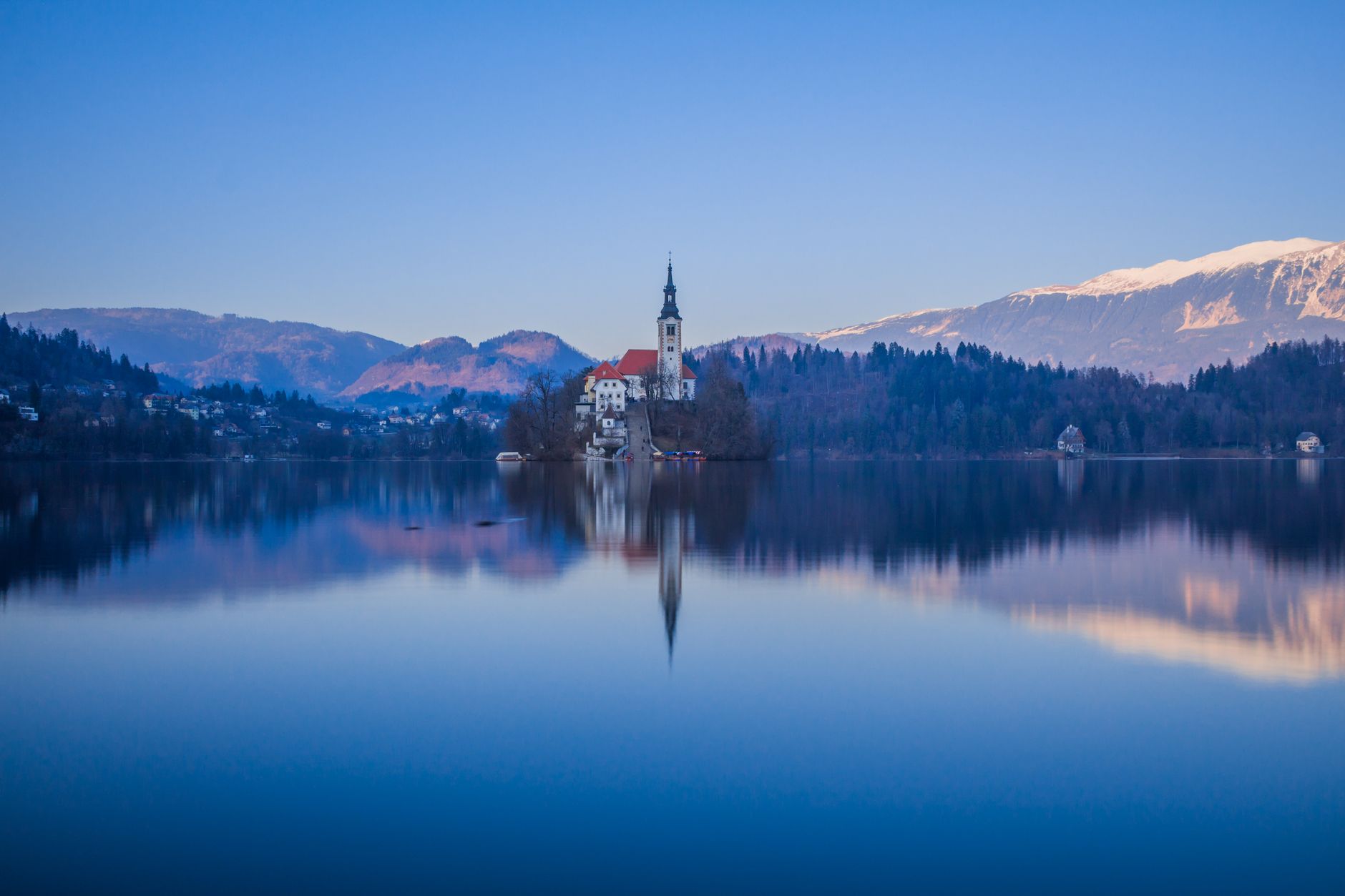
Photo by Krisztian Kormos
The shoreline compositions need even more discipline. Near Zaka, the boardwalk angle can help you open a clean channel toward the island, but only if you move a few steps at a time and check both bottom corners. One branch is manageable. Five scattered reeds are noise.
Watch the top of the church, too. If the steeple touches the dark mountain line or a tree crown behind it, the shape loses separation. A small change in camera height often fixes that faster than changing lenses. Crouch lower. Raise the tripod. Recheck the horizon.
Then wait for the water. Reflections do half the work in a strong Lake Bled sunrise photo, yet they disappear fast once boats begin moving. If a pletna enters the scene, decide early whether it belongs there. A single boat can add scale. A wake usually ruins the frame.
Small field decisions that protect the shot
Bring a headlamp. The Ojstrica trail is dark before dawn, and the upper section gets rocky. Near the top, fixed steel cable helps on the exposed section, but you still need stable footing and one free hand.
Packing light helps more than packing big. A body, two lenses, a tripod, water, and a layer usually beat a heavy bag that slows your climb and steals space on a narrow ledge. If you’re shooting from shore, keep a cloth handy because lakeside moisture can settle on the front element faster than you expect.
Parking matters, too. The Zaka Car Park near Camping Bled is the practical base for the Ojstrica trail, and early arrivals often get the best deal because parking is free until 8 AM. After that, the hourly charge kicks in, so slow mornings get expensive.
If Ojstrica feels too tight, don’t force it. Mala Osojnica is often the cleaner creative choice. If the weather never colors up, the back viewpoints behind Bled Castle can still rescue the morning with a different angle and easier access. Gače, farther west of the lake, is another quiet fallback if you have a car and want more distance from the usual crowd.
Courtesy also shapes the picture. Dim your headlamp near other photographers. Keep tripod legs compact. Don’t step onto the front rock for a phone clip when someone next to you is shooting a long exposure. Clean frames come from clean habits as much as clean scenery.
The frame starts before first light
The best Lake Bled sunrise photo rarely belongs to the fastest shutter finger. It belongs to the photographer who arrived early, left space around the island, and waited for the water to settle into a clean frame.
When the church, the stairway, and the reflection finally line up, stop chasing variety for a minute. Hold the composition, watch the edges, and take the shot when the first orange light touches the bell tower above a flat strip of water, or will you still be swapping lenses then?
