
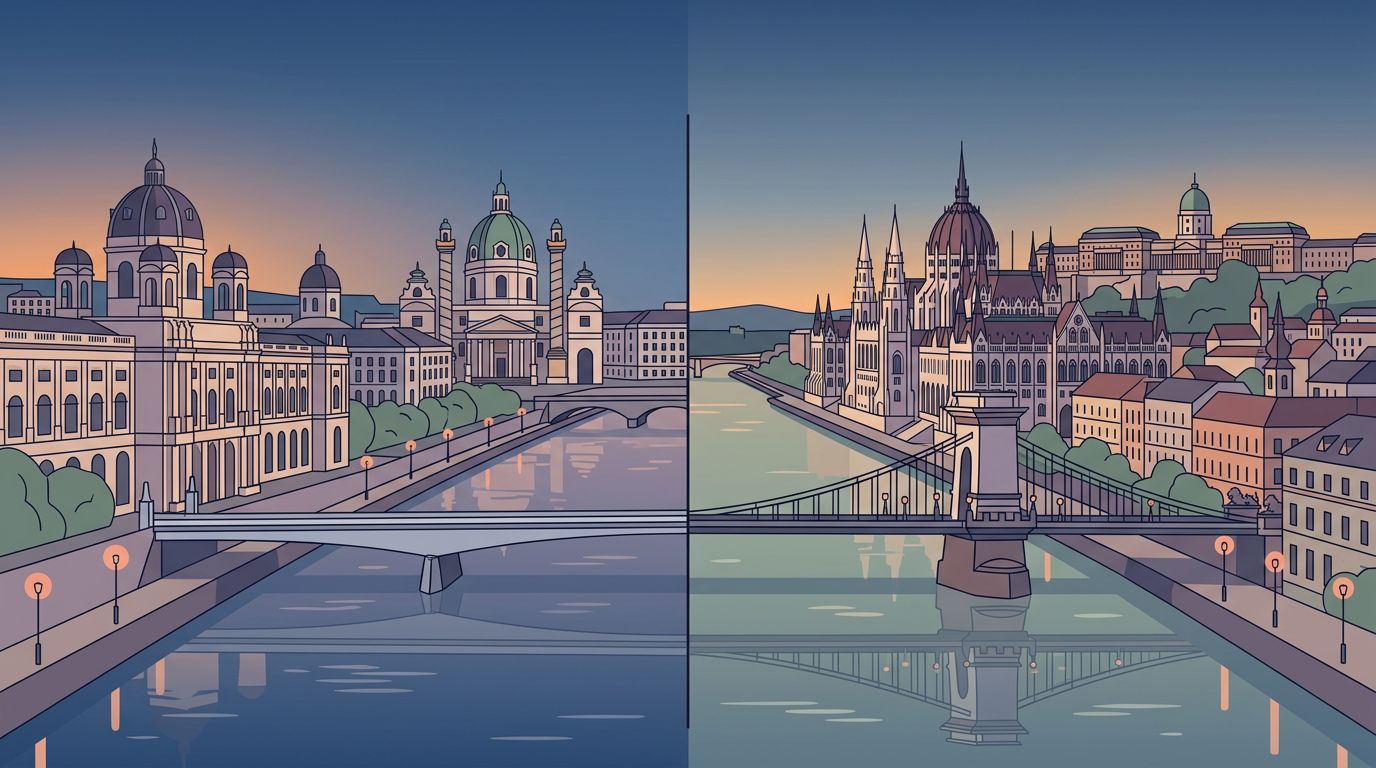
At blue hour, cities tell the truth. One gives you instant drama across a broad river, while the other asks for more patience and rewards tighter architectural framing.
If your trip hinges on blue hour images, the Vienna vs Budapest photography debate gets clearer after sunset than it does at noon. The winner for classic twilight cityscapes is usually Budapest, but Vienna still has a strong case if you prefer symmetry, facades, and cleaner urban detail. Start with what blue hour actually needs.
What makes a city good at blue hour
Blue hour is short, and the best cities make that short window feel generous. You need open sight lines, a bright focal point, enough distance to separate buildings from each other, and some reflective surface that keeps the frame alive after the sky loses color.
That is why river cities often do so well. Water buys you space. Bridges give you leading lines. Elevated viewpoints let streetlights, domes, and spires stack into something readable instead of messy. Crowds matter more than gear.
Here is the simplest side-by-side view.
| Factor | Budapest | Vienna |
|---|---|---|
| Big twilight focal point | Parliament across the Danube | No single skyline match in the center |
| River reflections | Strong, wide Danube reflections | More limited in central shooting zones |
| Elevated viewpoints | Fisherman’s Bastion, Castle Hill, Gellert Hill | Fewer top blue-hour viewpoints in the center |
| Fast route for one evening | Several major spots line the same river corridor | Good scenes, but more spread out |
| July 2026 crowd pressure | Busy, but open river views stay usable | Central events can complicate clean frames |
The takeaway is simple. Budapest gives you stronger blue-hour ingredients before you even pick a lens.
Budapest looks built for it. Vienna is harder to flatter.
That doesn’t mean Vienna is less photogenic. It means Vienna often peaks in a different slice of the day. Schonbrunn’s Gloriette works best about 90 minutes before sunset, Donaukanal shines in morning light, and St. Stephen’s South Tower gets its cleanest roof light around 8 to 9 AM. Those are strong reasons to visit with a camera, but they don’t help much if twilight cityscapes are the whole point of your trip.
Why Budapest wins more often after sunset
Budapest’s best blue-hour scenes line up along the Danube like a well-planned shot list. Fisherman’s Bastion looks over Parliament, Chain Bridge links both sides of the river, and Gellert Hill gives you height when you want the whole city glowing at once. Because the river is wide and the buildings are distinct, compositions stay readable even when traffic, tourists, and boats add motion.
Stand at Batthyany ter as the lamps come on, and you can frame the Parliament across the Danube with trams sliding through the foreground, a river-wide gap that keeps the composition clean even when the platform is busy. On a July evening at Batthyany ter, one tram cleared the platform for half a second, and Parliament appeared in the gap between two commuters like a scene timed for a 50mm lens.
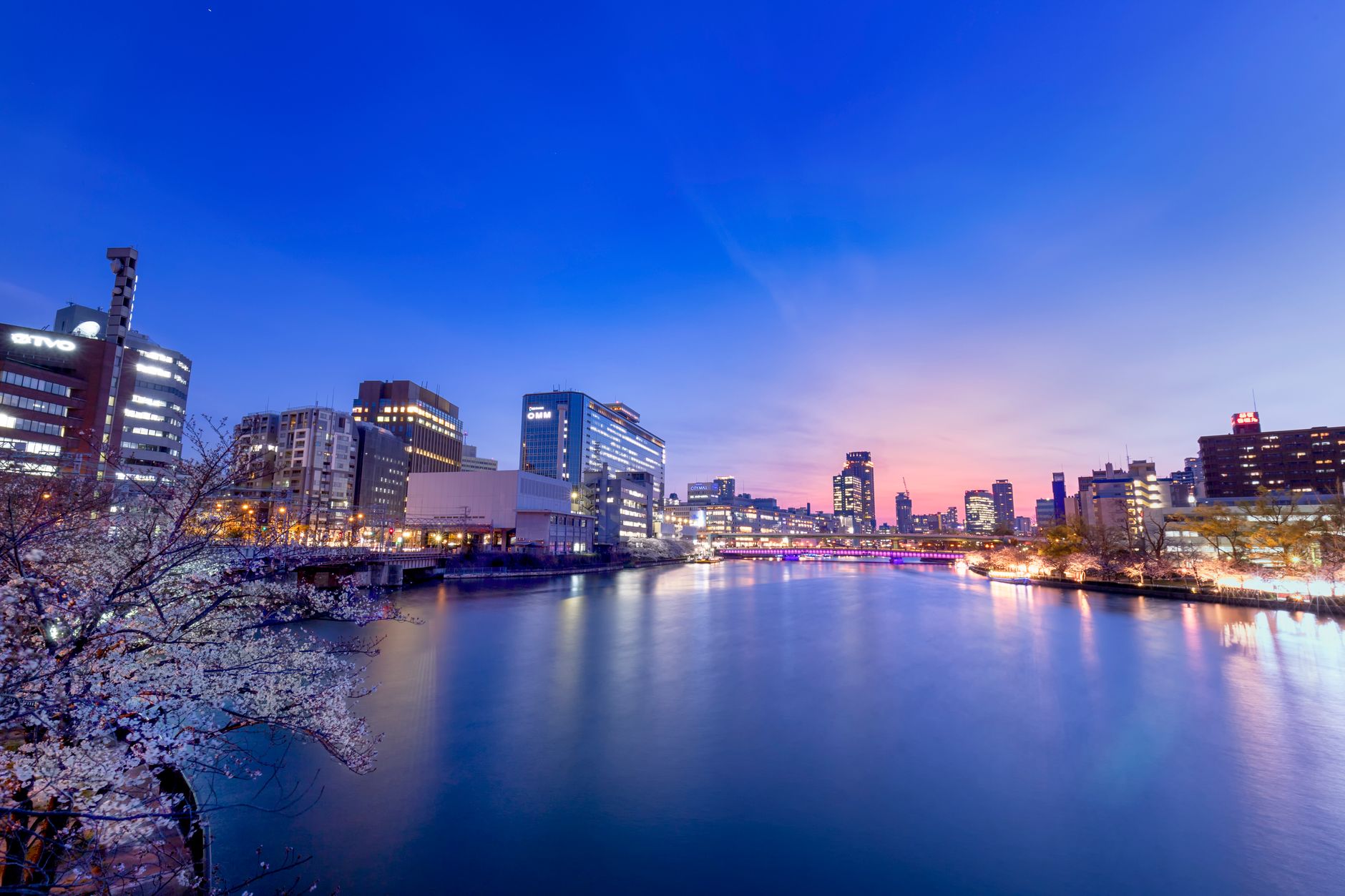
Photo by Nguyen Hung
Fisherman’s Bastion is the other obvious anchor. The lower terraces are free, while the upper terraces charge 1200 HUF during daytime fee hours. Several current spot guides, including Chasing Hippoz’s Budapest photography guide and Hungary Photo Tours’ 2026 spot list, point photographers toward evening and blue hour there for a reason. The view holds shape, light, and scale all at once.
If you only have one evening, keep the Danube in the frame.
Budapest also gives you backup options without forcing a total change of style. If Fisherman’s Bastion feels crowded, Castle Hill still works. If you want more altitude, Gellert Hill and the Liberty Statue area remain strong, even though the Citadel itself has been under renovation and fenced from one side since 2022. If you want motion, Chain Bridge and Liberty Bridge let you mix light trails with architecture. Less guesswork.
This is where Vienna vs Budapest photography usually tilts toward Budapest. The city offers more high-yield vantage points in one compact evening route, and the signature subjects, Parliament, bridges, basilicas, and river traffic, all light up in the same visual language instead of pulling you into separate neighborhoods with separate moods.
Where Vienna pulls ahead at twilight
Vienna’s strength is polish. Its buildings don’t shout across a river. They hold the frame with stone, rhythm, and order.
That matters if you like architectural photography more than postcard skylines. Michaelerplatz and the Hofburg are excellent after sunset, especially from the Kohlmarkt end, where a 70-135mm lens compresses the dome and facade into something stately and precise. The glass excavation in the center of Michaelerplatz also works well with a 16-24mm lens and a low angle, because the surface can catch the sky and nearby architecture in one controlled frame.
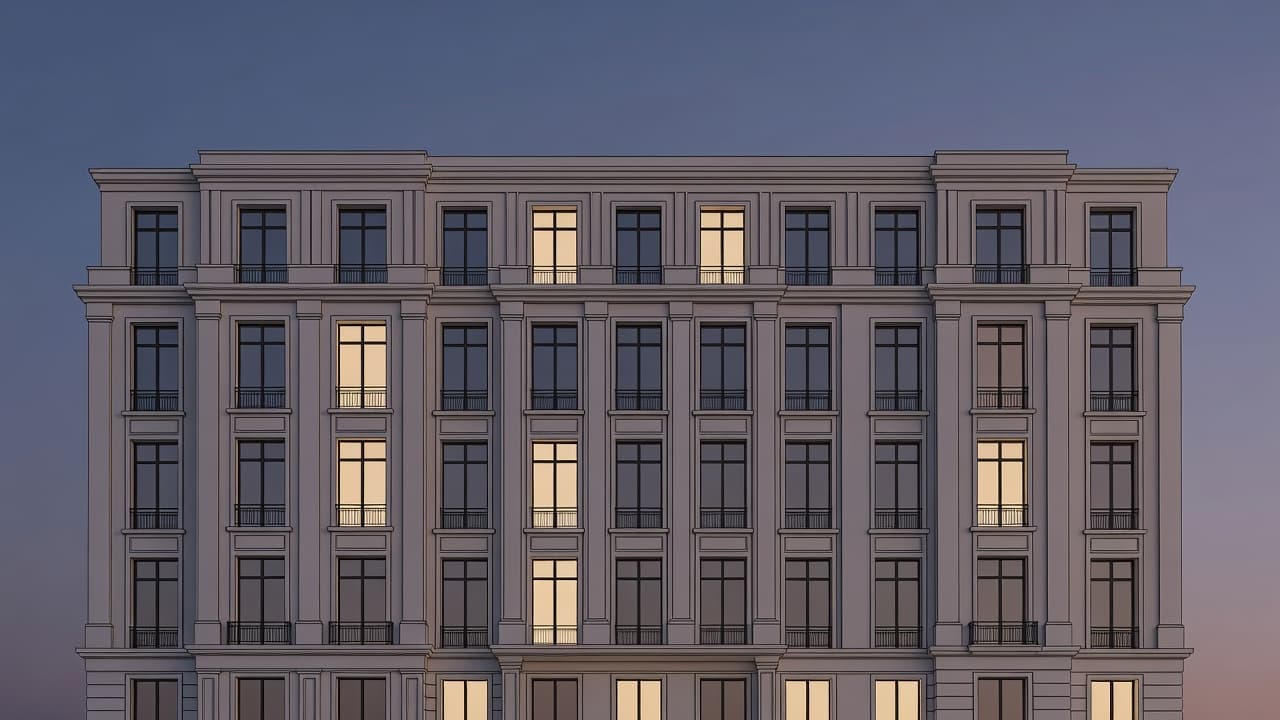
Vienna keeps rewarding photographers who like to move slowly and refine lines. Ringstrasse glows after dark, Karlskirche gives you a strong baroque subject on open ground, and Belvedere’s gardens stay useful into dusk with free access even if the museums require tickets. Around the Staatsoper, you can also work tighter street-level scenes where warm artificial light plays off pale facades and dark pavement.
Still, the city asks more from you during the actual blue-hour window. Because several of Vienna’s headline locations, including Schonbrunn’s Gloriette and parts of the Ringstrasse, peak either before sunset or after full darkness rather than during that narrow twilight band, you often work harder for a frame that feels immediately memorable.
July 2026 adds one more wrinkle. The Film Festival at Rathausplatz runs from July 4 to September 6, Donauinselfest lands on July 3 to 5, and Frameout Cinema returns to MuseumsQuartier on Fridays and Saturdays from July 10. Those events are great for atmosphere, but they also add temporary structures, denser foot traffic, and stray light where you might want a clean composition. Budapest gets crowds too, yet its river views usually give you more room to escape them.
Choose the city by your shooting style
If you want the fastest path to strong twilight keepers, pick Budapest. One evening can cover Batthyany ter, Fisherman’s Bastion, Chain Bridge, and a higher view from Castle Hill or Gellert Hill without changing your whole visual approach.
If you prefer measured, architectural work, Vienna starts to look better. The city suits photographers who like careful framing, vertical control, and facades that read well with a short telephoto. It also suits travelers who don’t mind that the very best scenes may happen before sunset, after dark, or the next morning.
Money and access barely change the answer. Budapest has a few small viewpoint fees, such as Fisherman’s Bastion’s upper terraces and Budatower at 1500 HUF, but the lower terraces and many of the strongest river views are free. Vienna also offers many free exteriors, including Hofburg, Belvedere gardens, Karlskirche grounds, and central street scenes. The real difference is efficiency.
For city-break travelers, that matters a lot. You may have one clear evening, one backup if the weather turns, and no patience for a 40-minute transit hop between unrelated compositions. In that situation, Suitcase and Wanderlust’s Budapest photo spots reads almost like a ready-made blue-hour route, while Vienna rewards more scouting and more selective timing.
Budapest gives you more keepers per hour. Vienna gives you more restraint per frame.
Final thoughts
Choose Budapest if blue hour is the reason for the trip. The river does half the compositional work, and the city lights cooperate with it.
Choose Vienna if you care more about elegant facades, quieter structure, and images that feel refined rather than expansive. It can outshoot Budapest in architectural detail, but it rarely beats it in classic twilight impact.
If the evening starts with one tripod spot and one lens, would you rather be at Batthyany ter facing Parliament across the Danube, or at Michaelerplatz with a 70-135mm lens pointed at the Hofburg dome?
