
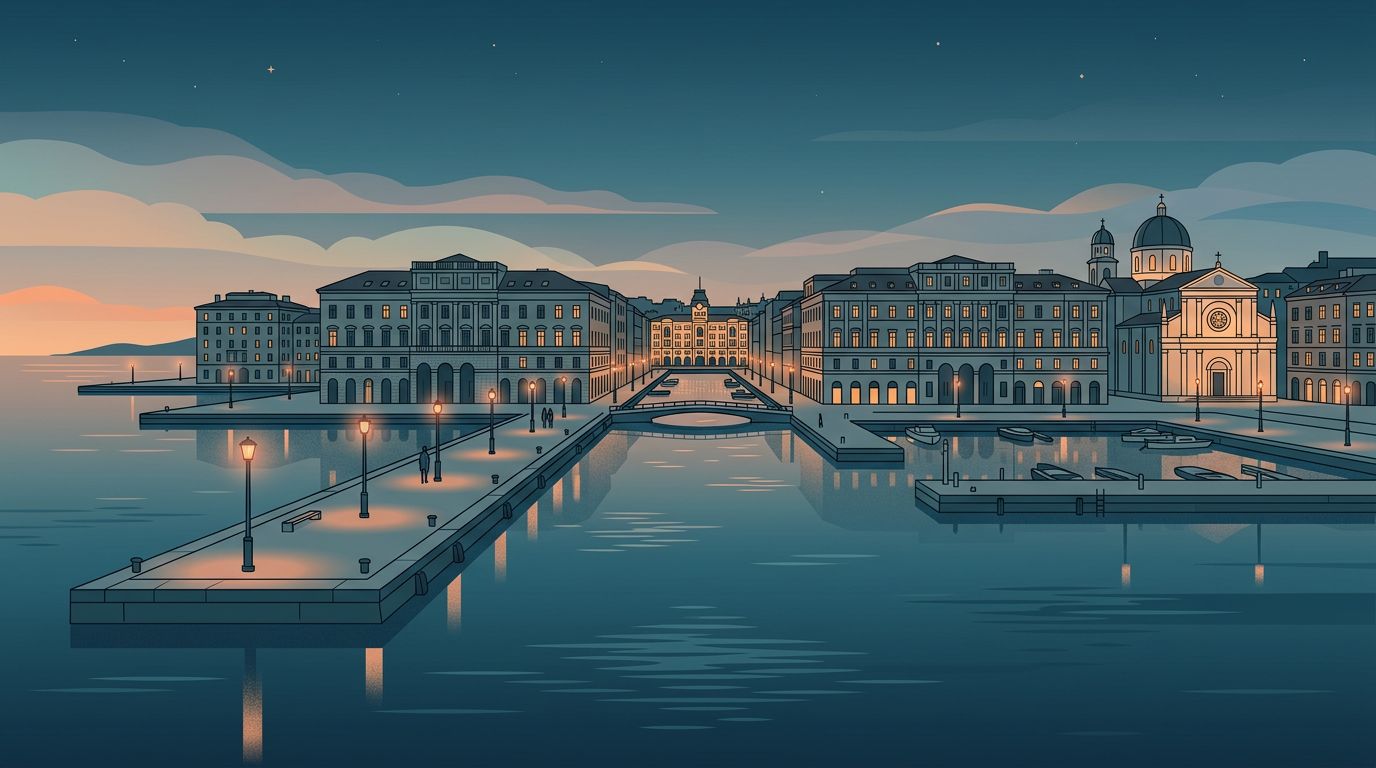
Blue hour in Trieste can feel unfairly brief. One minute the sky is a dull wash, and the next the Grand Canal holds blue glass, warm lamps, and enough contrast to make the whole waterfront look edited before you’ve touched a file.
That short window is why planning matters here more than in many cities. On clear evenings, the stretch from Molo Audace to the Grand Canal changes in less than half an hour, and if you reach the waterfront when the streetlights already look harsh, you’ve missed the soft part. Start with timing, then choose your spot.
When Trieste blue hour looks its best
The Trieste blue hour usually rewards evening shooters more than early risers. As sunset fades, the canal lights, shop windows, and waterfront lamps turn on while the sky still keeps color. That overlap is the whole point.
The window is short. Arrive early. For a few minutes only.
A good rule is simple: get to your first location 20 to 30 minutes before sunset, then stay at least 30 minutes after. If you use PhotoPills or The Photographer’s Ephemeris, check sunset, civil twilight, and the sun’s direction before you leave your hotel. Also check wind. A calm canal gives you mirror reflections; a breezy one gives you broken ribbons of light.
Clouds can help. Wind changes everything.
Here is the practical feel by season:
| Season | What the light feels like | What to expect on location |
|---|---|---|
| Winter | Cooler sky, stronger lamp contrast | Fewer people, earlier shooting times |
| Spring | Balanced color and softer air | Good mix of activity and workable light |
| Summer | Later sessions, brighter residue after sunset | More visitors, slower darkness |
| Autumn | Richer clouds and wet pavement after rain | Strong reflections if the wind stays low |
If the sky has already turned black, the best blue is gone.
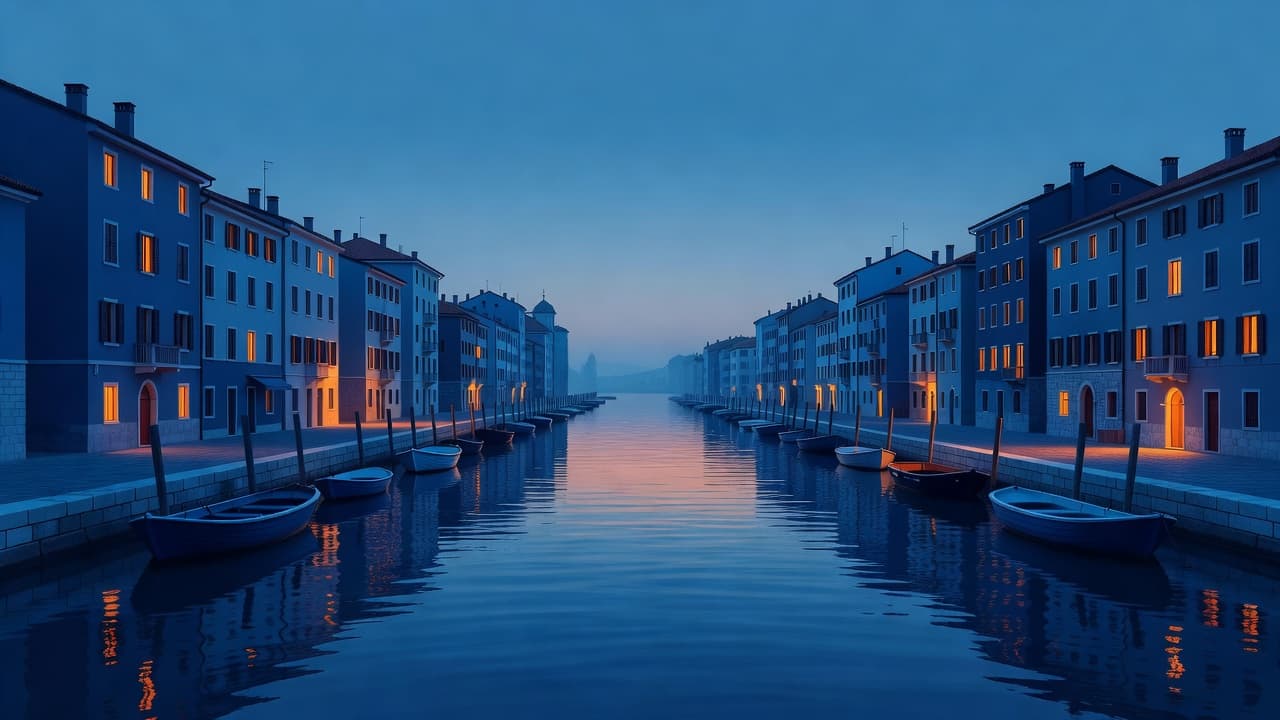
Trieste’s waterfront also reacts fast to weather. After rain, the stone pavement near Piazza Unita d’Italia catches amber reflections that can rescue a flat sky. Meanwhile, a clean bora can clear haze and sharpen the church facade at the head of the canal, though it may ruin long reflections in the water. Because of that trade-off, many photographers shoot one tight composition on the canal first, then move to the pier once the lights become dominant.
Where to stand for the best pier and canal views
Trieste’s Canal Grande, often called the Grand Canal in English, is narrower than first-time visitors expect. That’s good news, because you can work several angles in one short session without burning time on long walks.
Start near Ponte Rosso if you want the classic frame. From there, you can line up the canal, moored boats, and the church of Sant’Antonio Taumaturgo at the far end. If the water is still, center the church for symmetry. If boats are drifting or one side has better reflections, shift slightly off-center and let the boats carry the frame.

Photo by Mozzapics
A few meters away, the James Joyce statue gives you a ready-made foreground subject. That works best with a longer focal length, because you can compress Joyce, the canal, and the lighted facades into one tighter frame. On busy evenings, wait for a pause in foot traffic rather than fighting it. Patience usually beats constant repositioning.
Then head to Molo Audace for a different mood. The pier got its current name after the destroyer Audace docked there in 1918, and that bit of history fits the place, because the walk still feels like an arrival when the city lights start to glow behind you. From the tip, turn back toward Trieste and use the lamps as a gentle line leading to the skyline. If the sea is calm, leave more water in the frame. If it isn’t, crop tighter and make the buildings do the work.
The smaller waterfront landings between the canal mouth and Piazza Unita d’Italia are useful too. They aren’t as famous, yet they let you isolate bollards, ropes, and moored boats against the last blue in the sky. Those details help when the big postcard scene feels too obvious. A pier edge, one lamp, one boat. Enough.
Compositions that still work after sunset
Blue hour in Trieste isn’t only about wide shots. Some of the most convincing frames come from restraint, because the canal can turn messy once every lamp reflection starts competing for attention.
Begin with lines. The canal edges, bridge rails, and boat ropes all pull the eye, so use one dominant line and let the rest support it. When you stand on Ponte Rosso, keep the railing out of the bottom corners unless it has a clear purpose. On Molo Audace, check the horizon carefully. Even a slight tilt looks worse over open water at dusk.
Reflections need timing, not luck. Wait for small pauses in the surface movement, then take several frames rather than one. A two-second difference can change the whole water texture. Less is more.
Human figures can help, but only if they anchor scale or motion. A lone walker at the canal edge, a couple stopping at the bridge, or someone leaning on the pier rail can add life without turning the scene into street photography. If people are bunching up near the James Joyce statue, step back and use them as silhouettes instead of trying to keep the walkway empty.
Content creators should also think in verticals. The canal works well in portrait orientation when you stack foreground boat, mid-frame reflections, and church tower. Meanwhile, a vertical shot from Molo Audace can place a lamp or railing post near the edge and let the city rise behind it. That format is more useful for stories and reels later, so it’s worth shooting both versions while the light lasts.
One practical habit helps almost everyone: lock a composition for a few minutes instead of chasing every new angle. Blue hour is a moving target, and constant movement often costs the best five minutes.
Camera settings that help in low light
A tripod makes life easier here, especially on the canal. The water, boats, and lamps all look better when you can keep ISO low and let the shutter breathe. If you carry only one support, bring a travel tripod with a stable ball head, because the stone along the canal and the exposed tip of Molo Audace both punish flimsy legs the moment wind starts pushing across the water.
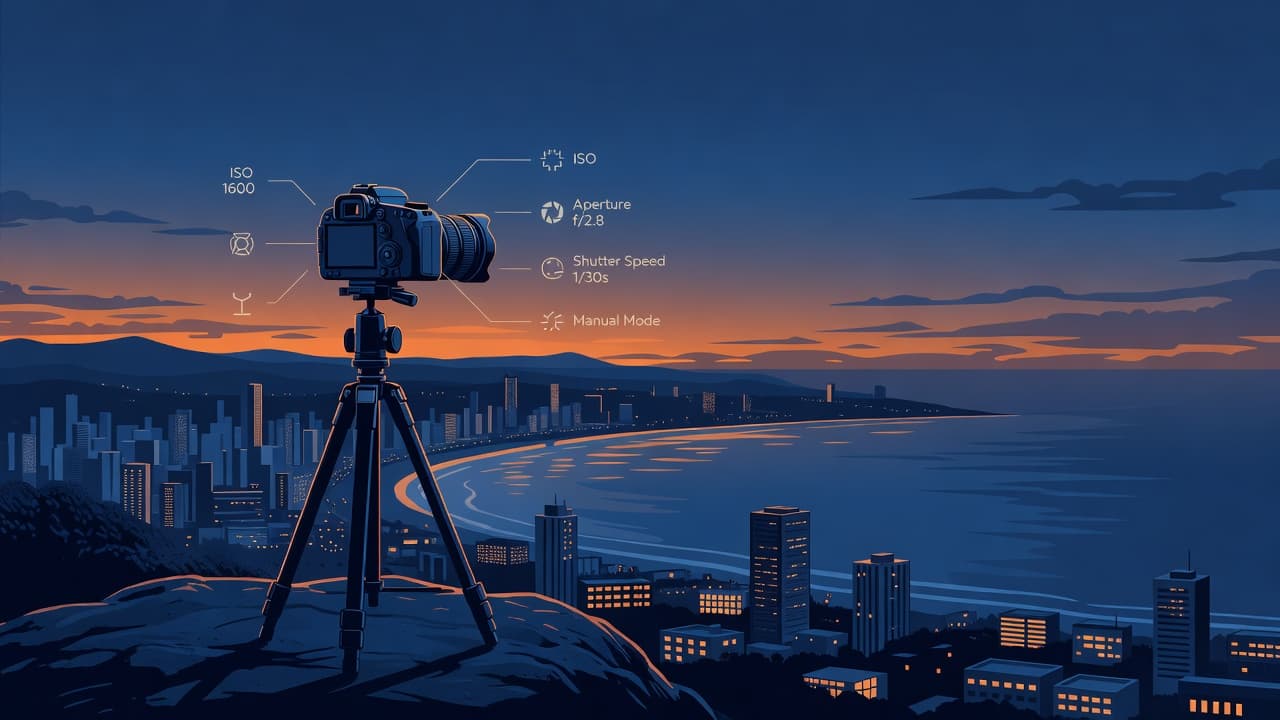
For tripod shots, start around ISO 100 to 400, aperture f/5.6 to f/8, and adjust shutter speed to taste. Shorter exposures keep texture in the water. Longer ones smooth the surface and stretch reflections. On the Grand Canal, both can work, so take a few versions before the light slips away.
Handheld shooting is still possible. Modern full-frame cameras with stabilization can manage blue hour well if you open up the lens and accept a higher ISO. For people moving on the bridges, try to keep shutter speed high enough to avoid ghosted bodies unless that blur is part of the idea. Phones can do good work too, especially if you brace them on a railing, tap to lock exposure, and use a two-second timer.
White balance matters more than many travelers expect. Auto white balance often cools the scene too much and strips the warmth from lamps and windows. A daylight or cloudy preset usually keeps the balance more honest, and RAW files give you room later if the church facade turns too orange or the sky shifts too cyan.
One small field note matters in Trieste: metal railings vibrate when people lean on them. If you rest a camera on a bridge or pier edge, wait a beat after anyone passes. That tiny shake is easy to miss on the screen and painful to find later at 100 percent.
When the canal finally turns cobalt
The strongest frame often comes after most people start walking away. Stay in one spot a little longer, watch how the lamps settle into the water, and let Trieste slow down in front of you.
If you only have time for one pass, make it Ponte Rosso first and Molo Audace second, then keep shooting until the reflections along the canal look like thin gold wires under a darkening blue sky. Will you leave when the church lights switch on, or wait for the boats below James Joyce to stop moving?
