
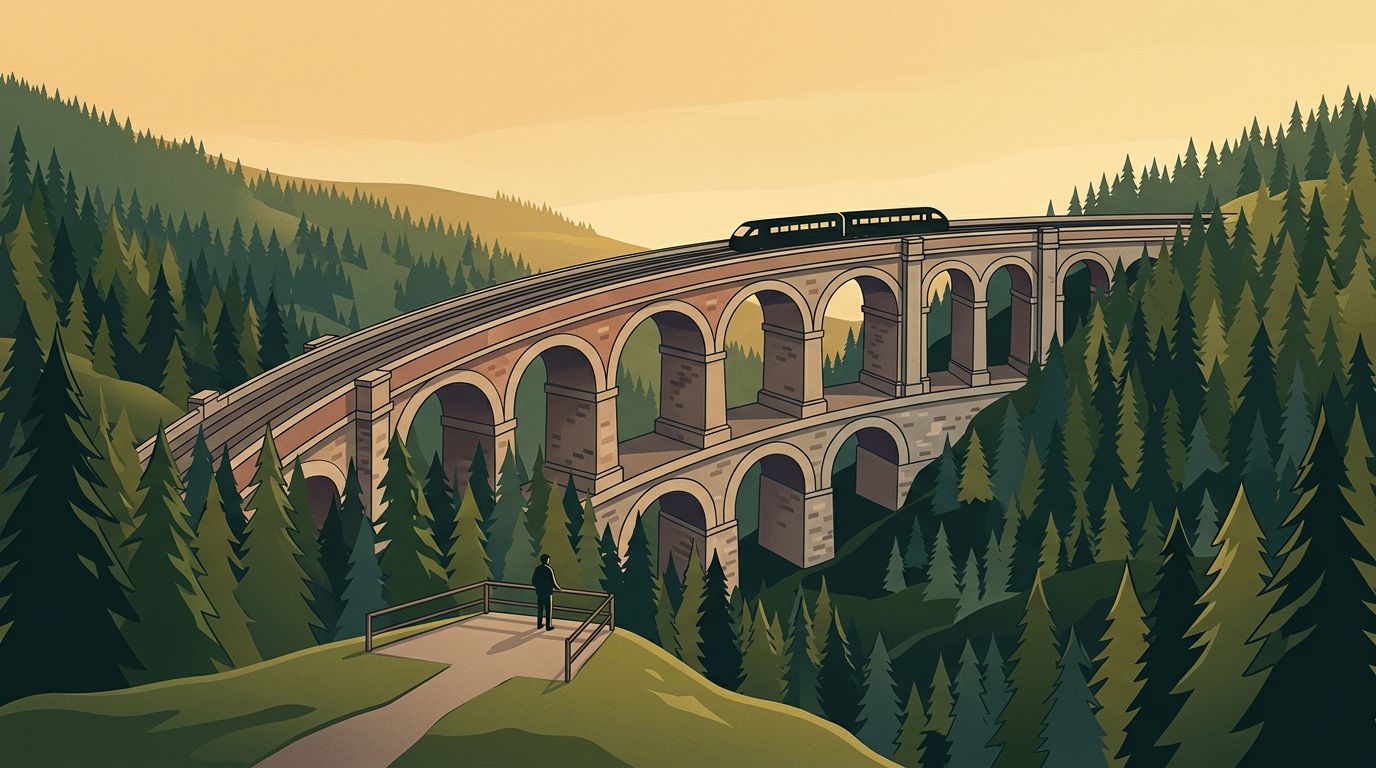
Some railways ask for a ticket, then ask for your camera. The Semmering Railway does both, because its stone arches and dark spruce slopes keep changing with every bend and patch of weather.
If you’re chasing strong Semmering Railway photo spots, your position matters more than owning exotic gear. A few viewpoints give you the wide viaduct frame everyone wants, while others turn the line into a red thread inside dense forest. Start with the places that let both elements work together.
Key Takeaways
- “20 Schilling Blick” is the most reliable wide view for trains, viaducts, and forest in one frame.
- Krausel Viaduct gives the strongest classic bridge composition, especially in softer light.
- Breitenstein and Payerbach work well when you want quieter frames and tighter forest context.
- Early arrival helps, because good pull-offs and public viewpoints fill fast.
- The most memorable photos often show scale, not just the whole bridge.
Why the Semmering line photographs so well
The Semmering Railway isn’t a single bridge with a gift shop beside it. It’s a 41-kilometer mountain line between Gloggnitz and Mürzzuschlag, built from 1848 to 1854, with 14 viaducts, 14 tunnels, 118 stone bridges, and 11 steel bridges, which is why UNESCO’s Semmering Railway entry still reads like an engineering milestone rather than a local curiosity.
That history matters, yet the real photographic pull is visual rhythm. Trains appear, vanish into trees, re-emerge on masonry, then disappear again behind rock and fir. Because of that pattern, you can shoot the same section in several ways without repeating yourself.
The route through Semmering Pass also helps. According to Byway’s route overview, the line cuts through thick forest, deep valleys, and cliff faces, so every viewpoint has a natural frame already built into it. You don’t need to force drama here.
Mist matters.
Even on a bright day, the forest adds depth and contrast, especially when a red train crosses pale stone. After rain, trunks go darker, foliage turns richer, and the viaducts separate more cleanly from the background. Especially after rain.
Soft side light reveals the stonework. Flat noon light usually flattens it.
The classic viaduct viewpoints
Before choosing a lens, choose the kind of frame you want.
| Spot | Best for | What you see |
|---|---|---|
| 20 Schilling Blick | Wide signature view | Train, viaduct, valley, forest layers |
| Krausel Viaduct | Classic stone-arch shot | Strong bridge shape with train crossing |
| Payerbach and Breitenstein | Quieter compositions | Long bridge lines or intimate forest scenes |
That simple split helps. One stop gives the postcard, another gives structure, and the quieter locations often give the photo you keep.
“20 Schilling Blick” for the broad view
This is the headline location for many photographers, and for good reason. Real-time travel references regularly point to “20 Schilling Blick” as the prime panoramic viewpoint, because it lets you show the railway moving through forest rather than isolating a single bridge.
From here, the scene feels balanced. You get curvature, height, trees, and enough breathing room around the train that it doesn’t look pasted onto the bridge. A mid-range zoom works well, although a short telephoto can tighten the arches against the wooded slope.
Arrive early. Patience pays here.
One reason this spot works so well is that it preserves the sense of distance, which matters on the Semmering more than on many other rail lines, because the train often looks small until it reaches the exact point where masonry, forest, and motion finally click into place.
Krausel Viaduct for the signature bridge shot
If you want the classic Semmering image, head for Krausel Viaduct. Realtime travel notes describe it as the favorite among photographers, and that tracks with how often its arches appear in published and enthusiast imagery.
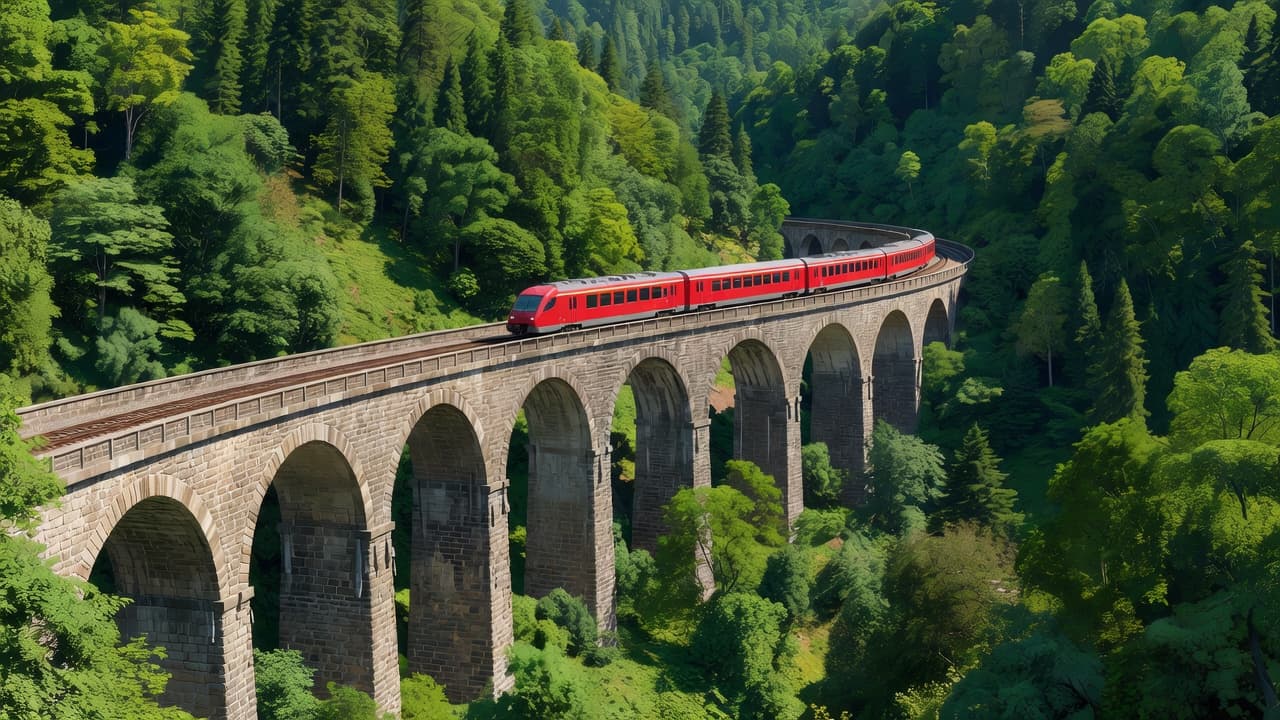
Here, the bridge is the subject. Forest still matters, but it plays support. Soft light brings out texture in the stone, while broken cloud can give you alternating strips of light and shadow across the valley.
Because the arches have such a clear geometry, this is one of the easiest places to ruin a frame with sloppy edges. Watch for clipped trees, poles, or bright patches at the corners. A slightly tighter crop usually looks stronger than a loose one.
Payerbach and Breitenstein for quieter frames
Payerbach offers another useful option, with a viaduct about 228 meters long on the UNESCO route. It doesn’t always get the same attention as the more famous viewpoints, yet that can work in your favor when you want a longer bridge line or more room to experiment with timing.
Breitenstein shifts the mood again. Archival imagery and current references both point to a smaller viaduct near the village, where the railway feels tucked into woodland rather than announced from across a valley. That’s where you can move away from the obvious bridge portrait and start making tighter, more atmospheric photographs.
Smaller scene. Bigger mood.
Forest views that still feel like railway photographs
A good Semmering frame doesn’t always need the whole viaduct. Sometimes the stronger image is a partial reveal through fir branches, a train slipping between trunks, or a short section of bridge half-hidden above a ravine.
This is where Breitenstein and the less celebrated roadside clearings earn their place. Instead of chasing total visibility, use the forest as a filter. Let dark trunks frame the subject. Keep a gap for the train to enter. Wait until the leading car reaches the cleanest opening.
Longer lenses help because they compress layers of trees and stone. Meanwhile, wider lenses work when foreground needles or wet grass add scale without turning into clutter. If the valley is full of haze, expose for the pale stone and let the trees fall a little darker.
A small, specific example captures the point. In Harald Weinkum’s Milky Way viaduct image, the structure glows under the night sky and commenters immediately ask about the light-painting technique, yet what makes the picture stick isn’t only the lighting, it’s the way the bridge sits inside a mass of darkness, with the forest holding the whole scene together.
That same idea works in daylight. Forest isn’t filler here. It’s the frame.
Timing, access, and the field choices that matter
Most people obsess over lenses first. Light is the real decider.
Early morning usually gives you calmer air, fewer people, and a better chance of low cloud hanging in the trees. Later in the day can still work, but hard overhead sun strips detail from the stone and makes the forest look flat. Stay longer than planned.
Weather shifts quickly.
If you’re planning a focused outing, use Semmering-Kurort as your base for scouting, then branch toward the better-known viewpoints and the smaller roadside stops. Public photography is generally fine along the route and at public viewpoints, although Airial’s guide to the railway also reminds visitors to respect private land and marked access boundaries, which matters because many of the tempting angles sit near roads, embankments, and fields that are not open invitation.
On the practical side, a 24-70mm and a 70-200mm cover almost everything most visitors need. The wider range handles the big valley view at 20 Schilling Blick, while the longer lens cleans up tighter forest compositions and bridge details around Krausel or Breitenstein. Bring a tripod only if you know you’ll stay for low light. On narrow paths, it becomes one more thing to manage.
Safety is simple, yet worth saying plainly. Don’t step onto tracks. Don’t stand on ballast. Don’t chase a better angle across a live line, because no frame is worth treating an active mountain railway like an empty stage set.
The frame you’ll remember
The strongest Semmering Railway photo spots aren’t always the most famous pull-offs. They’re the places where pale stone, dark trees, and a passing train line up for two or three seconds, then vanish again.
Go for the well-known views first, because they work. Then give yourself time for the quieter edges near Breitenstein or Payerbach, where the railway feels less like a monument and more like part of the forest.
You may come home with the classic arch shot, yet the image that stays with you could be smaller: one red carriage entering the curve below Krausel Viaduct while wet spruce needles catch light in the lower-left corner.
