
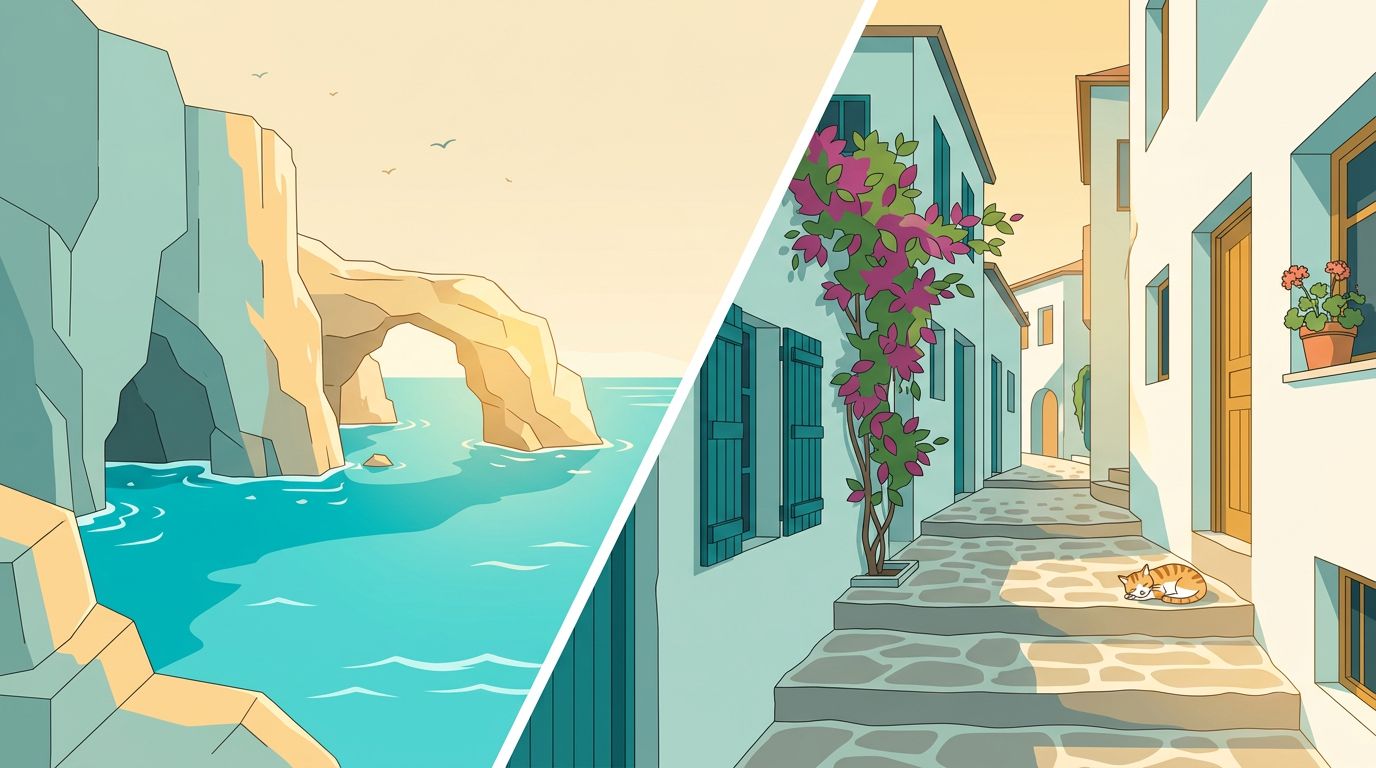
Cyprus can give you two different photo days before lunch. One hour you’re above bright sea caves, the next you’re in a stone lane with shutters, vines, and cats asleep on warm steps.
That’s why photo spots in Cyprus feel so satisfying for road-trippers and photographers. You don’t need to choose between coast and village scenes. The strongest frames come when you pair rough limestone with old stone walls and let the light change the mood.
Sea caves that do half the work for you
Cape Greco and the Ayia Napa coast
Cape Greco is the coast’s big show-off. It earns the hype. The cliffs are broken, steep, and full of clean lines, so even a quick phone shot can look strong.
Pure limestone drama.
At Cape Greco, the best viewpoint isn’t a single pin on a map but the whole broken edge of limestone, where every few steps the coast opens into another arch, notch, or drop into bright water. Walk a little farther than the first busy ledge, and the compositions get better fast.

Late afternoon works best here. As the sun lowers, the rock picks up warm color while the water stays intensely blue. That contrast makes the coast look almost edited, even when it isn’t.
Keep your horizon simple. Use the cliff edge as a line, not the whole story. If swimmers or cliff-jumpers are around, they can help with scale.
Stay back from edges.
Sunset is the headline at Ayia Napa’s sea caves, but scouting before the light peaks helps more than rushing in at the last minute. Look for one clean foreground shape, then wait for the color to settle.
Peyia’s sea caves in softer morning light
Peyia feels different. The west coast is broader, lower, and often calmer in mood. That makes it one of the most useful Cyprus photo spots if you like more space in the frame.
Go early.
The sea caves near Peyia work best in the morning, when the low sun gives the rock texture and the shoreline is still quiet. By midday, the light can flatten the stone and wash out the detail.
Wind matters here.
Use one anchor in the frame, maybe a carved opening, a path line, or a single bush near the cliff. Then let the water fill the rest. If the sea is calm, slow shutter work can look great, but even a regular handheld shot can work if the composition is clean.
Among the island’s coastal views, Peyia rewards patience more than drama. It gives you room to breathe, which is often better than another crowded sunset ledge.
Stone villages with texture in every frame
After the coast, the villages reset your eye. You stop chasing scale and start noticing worn steps, faded shutters, uneven walls, and shadows sliding across narrow lanes.
Omodos and Lefkara
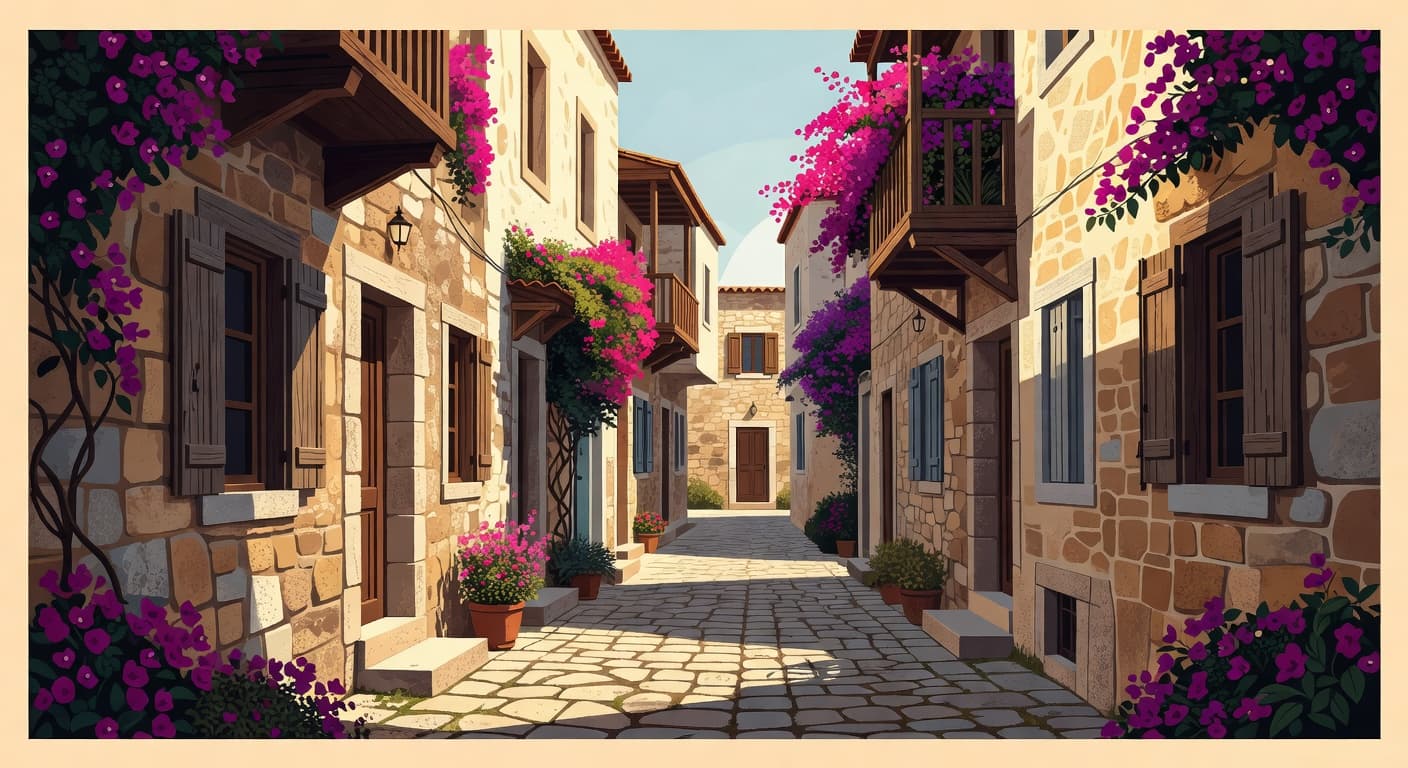
Omodos is one of the easiest stone villages to photograph well. The lanes turn often, the surfaces catch warm light, and the square gives you a wider scene without losing character. Early morning is best, especially before day-trippers fill the center.
Lefkara is different. It feels tighter and more intimate, with stone houses pressed close and small details everywhere. Door knockers, lace displays, painted frames, chipped plaster. Small things matter more here.
One September morning in Lefkara, a shop owner set a tray of lace by a doorway just as a ginger cat stretched across the threshold, and for twenty seconds the whole lane looked staged even though nothing about it was. That’s the village at its best. You don’t force the frame, you wait for it.
Crowds come later.
Both villages handle soft morning light beautifully. Midday can still work if you’re inside the narrow streets, because patchy shade adds shape to stone and wood. Look for repetition, one window after another, or a bright plant against a pale wall.
Bellapais, if your route heads north
Bellapais gives you a hilltop feel and pale stone views that photograph well in slanting light. If your plans already include northern Cyprus, it’s a smart stop because you can combine village textures with wider views over the slope below.
The side streets matter as much as the main viewpoint. Step away from the busiest stretch and look for stairs, terraces, and walls with age on them. Bellapais suits slower shooting, especially in late afternoon when the light softens the hard edges.
Different mood, same island.
Light, lenses, and small choices that matter
Cyprus is forgiving, but timing still decides whether a scene looks flat or alive. Sea caves want low sun. Stone villages can survive harsher light if the streets are narrow enough.
If you only get one golden hour, use it on the coast.
Start before sunrise. Villages wake slowly. Midday light bites hard.
A Cyprus photography guide makes the same practical point many travelers learn on day one: bring a wide lens for coastline views, then switch to a mid-range lens for doors, windows, and small village details.
A few simple choices help more than packing extra gear:
- A wide lens works best at Cape Greco, where the cliff edge and open water need space.
- A 50mm or short telephoto is better in Lefkara and Omodos, because it cleans up busy lanes.
- A polarizer can deepen water color, but use it lightly on very wide coastal scenes.
- Good shoes matter more than another lens.
Also, watch your white balance near stone. Cyprus has a lot of pale surfaces, and auto settings can drift cooler than you want. If the village starts looking grey instead of warm, fix it on the spot.
People can help, too. A figure on a stair, someone opening shutters, or a couple walking through a square can turn a pretty frame into a memorable one. Don’t wait for every place to empty out.
How to pair the coast and villages on one road trip
The best route is the one that leaves room for pauses. Don’t stack too many big photo stops into one day, because each place gets better when you can wait ten extra minutes.
If you’re staying around Paphos, start at Peyia early, then drive inland later for Omodos. That pairing works because the sea caves want morning light, while the village still looks good once the sun climbs higher and the lanes hold some shade.
If your base is around Larnaca or Ayia Napa, use the day the other way around. Spend the morning in Lefkara, have a slow lunch, then head to Cape Greco for late light. The shift from stone alleys to a blazing coast feels dramatic without being rushed.
A short Cyprus sunset reel captures that contrast well, with sea caves glowing one minute and old village stone the next. That’s the real charm of these Cyprus photo spots. The scenery changes fast, but it doesn’t feel disconnected.
Leave meals and driving for the harshest light. Save your patient time for the hour after sunrise or before sunset. And if a village pulls you in longer than planned, let it. The best frame often comes after the schedule slips a little.
The frame gets better when you slow down
Cyprus rewards patience more than speed. Wait for the glare to lift off the water at Peyia, or for one doorway in Lefkara to catch warm side light while the rest of the lane stays cool.
Leave ten unplanned minutes at every stop. That’s often enough for a cat to cross a stone stair, for church bells to break the still air in Omodos, or for one blue shutter to swing open above the square. When that happens, will you still be walking back to the car?
