
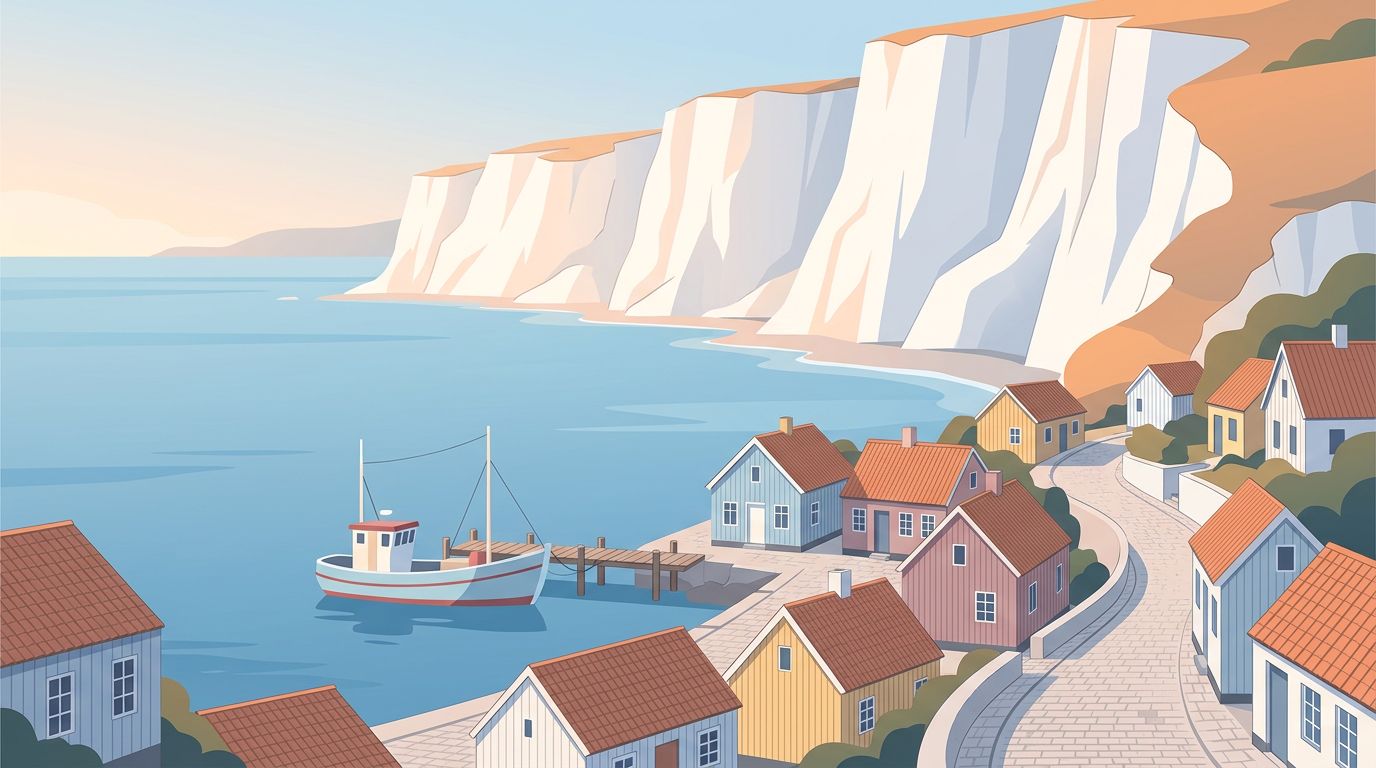
Denmark’s best photo spots don’t always announce themselves. Some are chalk-white cliffs that catch the first light. Others are harbor towns where a single boat can change the whole frame. If you want the strongest mix of sea views, old streets, and easy day-trip stops, Denmark photo spots like Møns Klint and Ærøskøbing belong near the top of your list.
This route works because the scenery keeps shifting. One hour feels wild and open, the next feels calm and close. The best frames come from timing, patience, and a willingness to shoot the same place twice.
White Cliffs That Demand Early Light
White cliffs are hard to photograph when the sun is high. The chalk loses shape, the sea flattens, and every shot starts to look the same. VisitDenmark’s guide to Denmark’s most beautiful places puts the white cliffs of Møn in good company, because they reward early starts and clear skies.

Møns Klint for scale and color
Møns Klint is the headline act. The cliffs rise so sharply that the scene feels almost cut from paper, and that clean edge makes composition easier than you might expect. When the light is low, the chalk reads as almost white paper against the sea, and the cliff edge becomes easy to shape in a frame if you keep the horizon clean and let the slope lead the eye downward.
Sunrise wins here.
At dawn, the color stays soft for longer. The sea often looks darker than it does later in the day, and that contrast makes the cliffs pop. If clouds hang low, stay patient, because the light can shift in minutes and give you a better frame than the one you planned.
One dawn on the top path, a photographer waited beside a fence post while fog lifted in slow strips, and the first clear view lasted less than five minutes. He still came away with the cleanest image on the trail because he was ready before the sun hit the cliff face.
Bring a wide lens. A 24mm or 28mm view lets the edge breathe, but a tighter lens helps if you want the sea to swallow more of the frame. Stay on marked paths, because the slopes erode fast and the safest view is usually the best one anyway.
Stevns Klint for quieter frames
Stevns Klint feels calmer, which makes it useful when you want texture rather than drama. The cliff line is less famous, so you get more room to work, fewer people in the frame, and a chance to build a shot around lines instead of scale alone.
Midday flattens everything.
That matters here more than you might think. On a cloudy morning, the chalk still shows detail, and the rough surface gets a soft gray cast that suits black-and-white work or muted color edits. If you like simple compositions, Stevns gives you those in a cleaner way than a busier cliff walk does.
For more coast-heavy ideas, this roundup of Denmark’s picturesque spots is a solid way to widen your route without adding much driving.
Harbor Towns With Reflections and Old Stone
The best harbor photos in Denmark usually start one block away from the water. That angle gives you a wall, a window, a mast, and a strip of reflection, so the picture feels full without feeling crowded. In a harbor town, the scene changes fast: bare masts, pale water, and quiet piers.
Harbor towns feel best with room around them. Especially in shoulder season.
Ærøskøbing for pastel houses and still water
Ærøskøbing is one of those places where every corner seems ready for a postcard, which sounds simple until you try to photograph it well. The trick is to slow down and look for gaps between the obvious views. Blue hour is kind to the harbor, and the soft color gives the painted houses a deeper tone without making them look overdone.
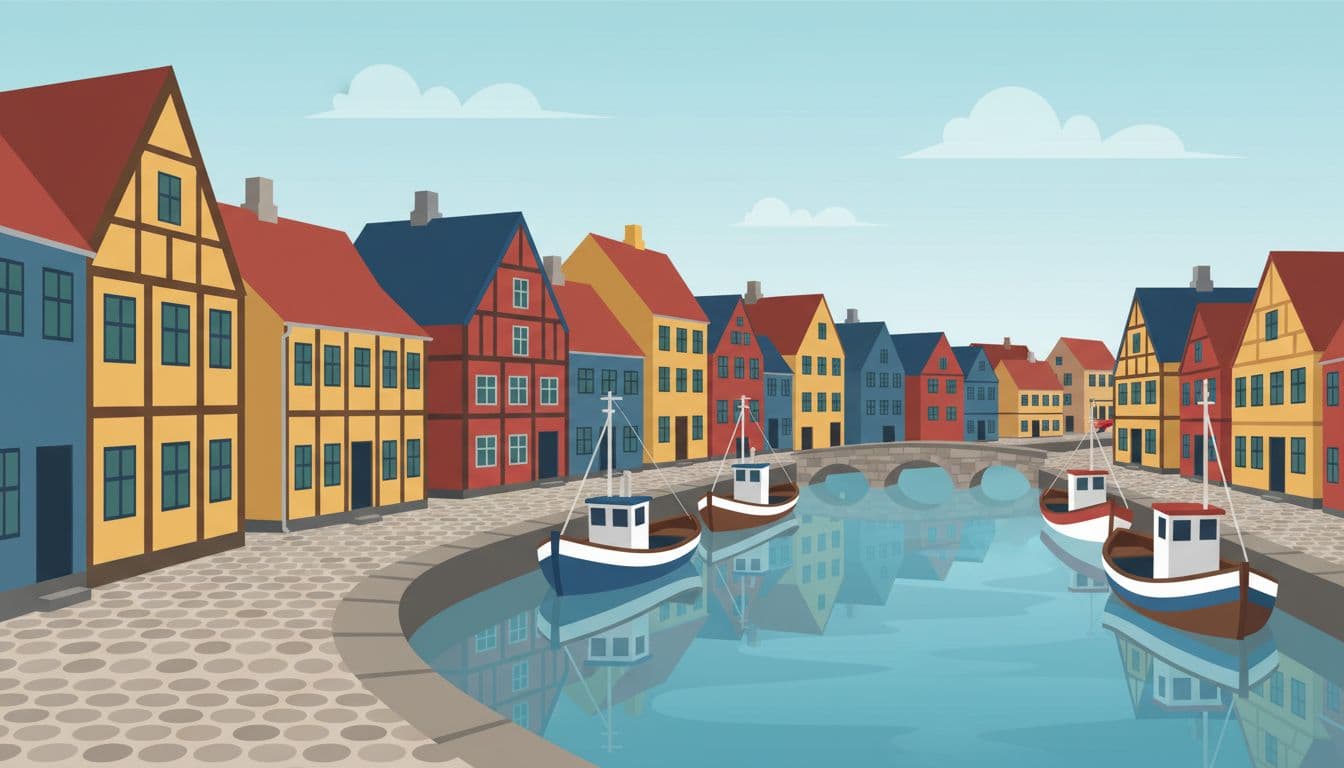
One traveler at Ærøskøbing waited ten minutes for a ferry to move out of frame, then shot the same quay three times from the same stone wall. The first frame had a bit of wake. The second had a gull crossing the sky. The third had glassy water and a cleaner line of roofs.
Go early.
That advice matters more here than in many towns. By late morning, foot traffic grows, and the harbor can feel busy in a way that weakens the old-world calm. At sunrise, the streets are almost empty, which lets you shoot the harbor from a low angle and keep the picture free of clutter.
Look for the small things too. A rope draped over a post, a weathered boat cover, or a single open window can give the image a stronger sense of place than a wide harbor view alone.
Dragør and Sæby for everyday harbor scenes
Dragør works well when you want a tighter, more lived-in feel. The yellow houses, narrow streets, and compact waterline create frames that feel close and intimate, which is useful if the weather is dull and you need shape more than color. Sæby gives you a similar ease, but with a smaller scale and a softer pace.
Bring a cloth.
That sounds minor, but salt spray and damp air can blur a lens faster than you expect. A clean front element matters even more when you are shooting water, masts, and light reflections together.
In both towns, side streets often work better than the main harbor front. A turn of perspective can pull a red roof, a blue door, and a line of boats into the same shot without making the frame feel crowded. If the wind picks up, lean into a sheltered corner and wait, because the harbor often settles for a minute after a gust passes.
Timing, Weather, and Small Gear Choices
The best Denmark photo spots depend on light more than gear. A simple camera and a patient schedule will usually beat a fancy setup at the wrong hour. Weather changes fast.
Still, a few choices make life easier. A small tripod helps at dawn, a microfiber cloth saves time near the water, and a polarizer can tame glare when the sea turns bright. If you carry only one extra item, make it a cloth. Wet salt on a lens ruins a frame fast.
| Place | Best time | What to shoot |
|---|---|---|
| Møns Klint | Sunrise | Wide cliff lines, sea layers, bright chalk |
| Stevns Klint | Cloudy morning | Texture, edge detail, clean horizon shots |
| Ærøskøbing | Sunrise or blue hour | Reflections, pastel houses, quiet quay scenes |
| Dragør or Sæby | Late afternoon | Boats, ropes, windows, working harbor details |
The table is simple, but the pattern matters. Cliffs need soft light and space. Harbor towns need calm water, low sun, and a little patience. If the forecast looks mixed, that can still work in your favor, because clouds often improve both chalk and water.
One more thing helps a lot. Arrive before breakfast crowds, and leave after the light changes. That gives you the quiet moments most travelers miss. It also gives you a second chance when the first frame falls flat.
Conclusion
The strongest photos in Denmark usually come from contrast. White chalk against deep water. Painted harbor walls against gray skies. Empty early streets against a still quay.
If you want the most dependable route, start with Møns Klint at sunrise, then end the day in a harbor town with calm water and narrow streets. That mix gives you both scale and detail, which is where these places work hardest for the camera.
Which frame would you chase first, the chalk edge above the sea or the still water beside a blue boat at Ærøskøbing?
