
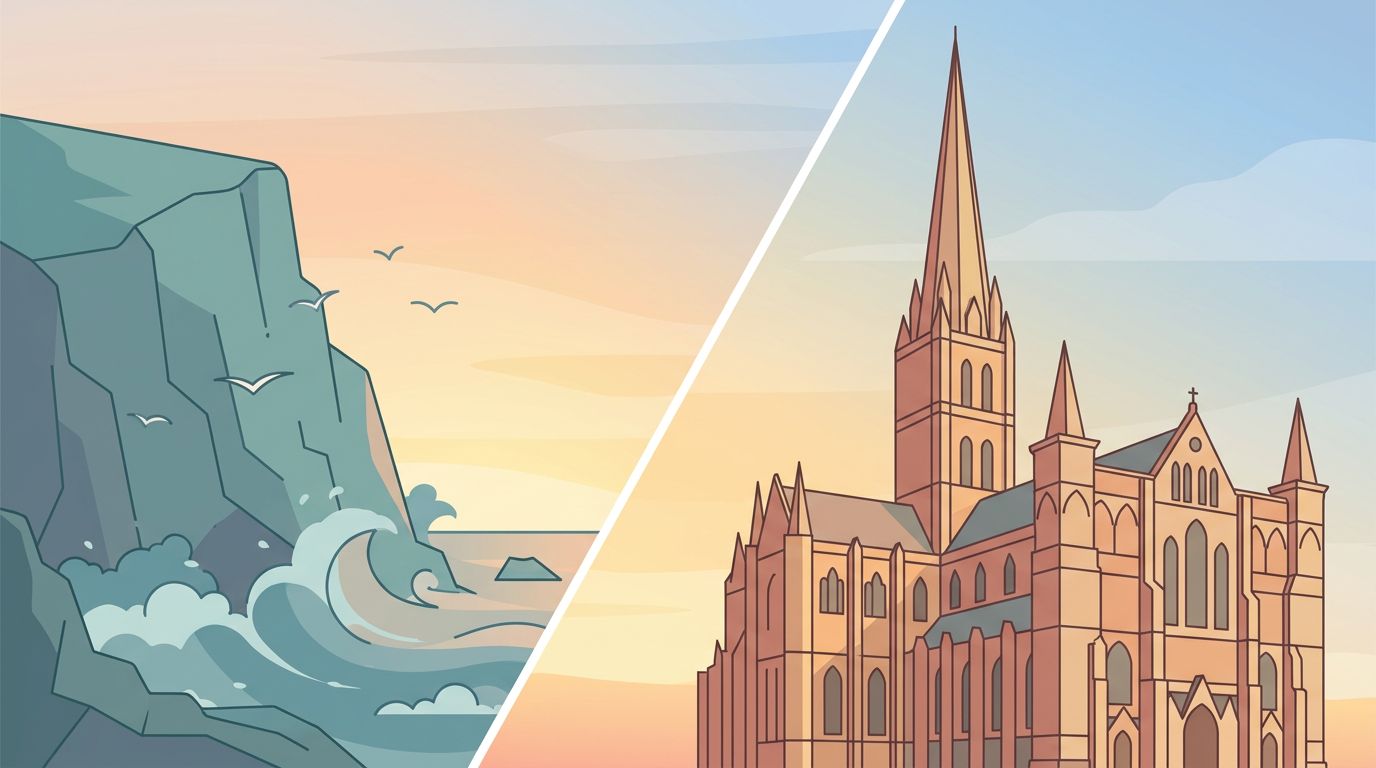
Some of the best England photo spots sit at the edges, where sea spray meets old stone. Coastlines give you movement and space, while cathedral cities give you height, texture, and clear lines.
That mix works because the light behaves differently in each place. On the coast, weather can turn a simple headland into a stage set. In a cathedral city, a narrow street can suddenly frame a tower like a picture within a picture.
If you’re planning a short break or a longer route, these places give you more than postcard views. They give you angles, layers, and enough variety to keep the camera busy all day.
Why coastlines and cathedral cities photograph so well together
England’s coastlines and cathedral cities make a good pair because they balance each other. One gives you motion, the other gives you structure. One changes by the minute, the other stays steady while clouds move across it.
Weather matters. Light matters more. A windy headland can look flat at noon, then turn sharp and full of shape an hour later. A cathedral tower can feel heavy in harsh sun, then glow when cloud cover softens the stone.
That is why these England photo spots work best as a mix. You come home with surf, sky, roofs, arches, and streets. The variety keeps your gallery from feeling repetitive.
If you want a wider shortlist before you plan a route, The Most Beautiful Places in England You Must Visit in 2026 is a useful companion. It helps you see how coast and city stops can sit inside a longer trip.
Weather does half the work. Stone holds the frame. A good day is often a cloudy day, because the light stays soft and the edges stay readable. That matters when you want to show both place and mood without blowing out the sky.
Best coastlines in England for strong frames
Cornwall’s cliffs and coves
Cornwall gives you a lot in one county. You get steep cliffs, small coves, harbor walls, sand, and sea that can shift from blue to slate in a single afternoon.
The north coast is usually stronger for drama. Look around St Ives Bay, Sennen, Tintagel, and the stretch near Land’s End if you want bigger forms and rougher water. The south coast feels gentler, which suits sunrise and softer color.
At Marazion, St Michael’s Mount makes a clean subject because the causeway changes with the tide. Low water gives you leading lines. High water turns the mount into a simple island shape against the sky.
A wide lens helps here, but don’t ignore longer views. A headland with a single walker on it can carry more weight than a crowded beach. For a lot of coastal work, less is more.
The Jurassic Coast and its big shapes
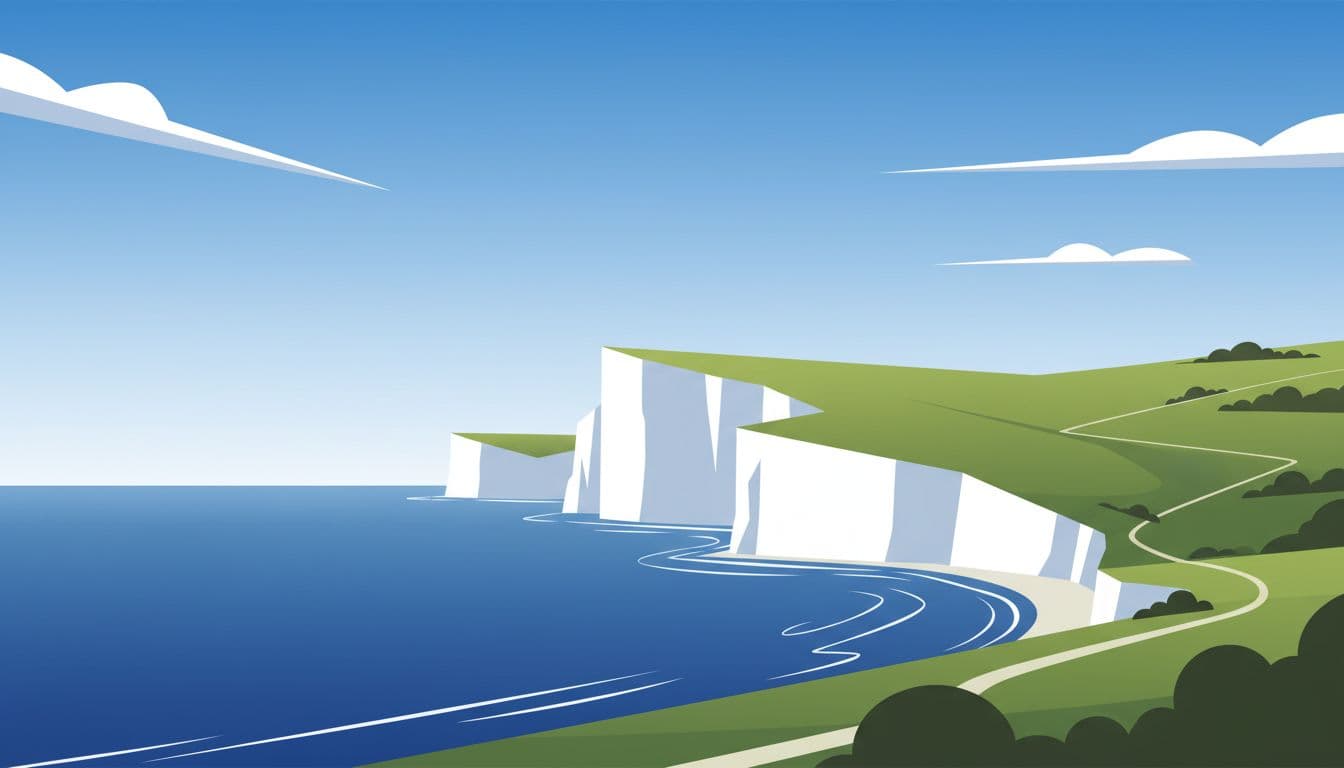
The Jurassic Coast rewards patience because every curve in the cliff line changes the balance of the frame, and a small shift in angle can turn a crowded scene into one with clean space and a single strong shape. That makes it one of the most reliable coastal photography regions in England.
Durdle Door is best when the sun sits low. Side light pulls out the shape of the arch, while the cliff path gives you a natural lead-in. At Lulworth Cove, a higher viewpoint shows the full curve of the bay. Old Harry Rocks works well when you want strong verticals against a wide sky.
If you’re comparing locations, UK landscape photography locations is a useful reference point. It gives you a broader sense of how the Jurassic Coast sits among other UK landscape favorites.
Chesil Beach is different again. It is less about a famous landmark and more about line and scale. That long shingle ridge can look almost abstract from the right angle.
Seven Sisters and the white cliff line
Seven Sisters is simple to read, which is part of its appeal. The chalk cliffs pull your eye across the frame, and the open sky keeps the composition clean.
Beachy Head gives you height and drama. Seaford Head often feels calmer, which helps when you want the cliff line without too much visual clutter. Cuckmere Haven adds a river curve that softens the scene and gives you a foreground.
Timing matters here. Sunrise can give the chalk a pale glow, while late afternoon brings warmer tones across the grass. If the weather turns moody, keep shooting. Gray skies can make the white cliffs stand out more.
Wide views work best. A frame that includes cliff, sea, and sky often feels stronger than a tight crop. The scene already has enough going on.
Whitby and Saltwick Bay at their moody best

Whitby gives you a different kind of coast. It feels darker, older, and more layered than the chalk cliffs of the south. Whitby Abbey, the harbor, the lighthouse, and the rocky shore all work together in a small area.
A common scene in Whitby goes like this: a photographer climbs the path by Whitby Abbey with one eye on the sky and one on the tide, then waits for a gap in the cloud before the North Sea flattens into silver. The result is usually one strong frame and a better sense of place than a dozen quick snaps.
Low tide only. Saltwick Bay needs it. The rock shelves and tide pools give you texture that looks flat at high water.
Keep an eye on the cliff paths too. A few steps left or right can change the whole balance of the shot. The best Whitby images often feel quiet, even when the town is busy.
Cathedral cities with the cleanest lines
Cathedral cities work because they give you a fixed center. The cathedral is the anchor, and the streets pull your eye toward it. That makes them ideal when the coast is flat or the weather is too still.
Stone behaves well in soft light. So do towers. A cloudy day can make a cathedral look more defined than a bright one, because the shadows stay gentle and the detail stays visible.
Canterbury’s tight streets and open views
Canterbury is a good place for layered frames. The cathedral sits inside a historic street plan, so you can shoot it from close corners, open squares, and quiet lanes.
Early morning is the best time to work here. The precincts feel calmer, and the pale stone catches soft light before the city wakes up. Try one shot that includes the tower over the rooftops, then another that narrows in on arches or tracery.
The city works well because it gives you both scale and intimacy. You can stand back and show the full mass of the cathedral, or move in and let the details do the work.
York and the power of a strong skyline
York Minster dominates the city in the best way. It rises above the streets without needing much help, and the mix of medieval lanes and open green space gives you several ways to frame it.
Dean’s Park gives you a calmer view. The Shambles gives you a tighter one. Lendal Bridge and the river area can add reflection, which is useful when the sky is flat but not boring.
York is especially good after rain. The stone darkens a little, the streets shine, and the whole place takes on more depth. That’s when the cathedral feels less like a landmark and more like the center of a living city.
Lincoln’s hilltop drama
Lincoln Cathedral is one of the strongest skyline subjects in England because of where it sits. The hill lifts it above the city, so the building feels separated from the streets below.
Steep Hill and Bailgate are the obvious places to start. They give you a natural rise into the frame, which helps the eye move toward the cathedral. Late afternoon works well, especially when the stone picks up warmer color.
Lincoln also gives you good side views. Don’t only chase the full front. Side angles can show more of the flying buttresses and give the image more depth.
Wells and the calm of a small cathedral city
Wells feels different from the larger cathedral cities. It is compact, neat, and easy to read, which makes it great for clean compositions.
The cathedral green gives you space. The nearby Bishop’s Palace adds a second layer, and Vicar’s Close gives you one of the most ordered streets in the country. That mix works well when you want a quieter set of images.
Overcast days suit Wells. The stone stays even, and the city keeps its soft edges. You don’t need dramatic weather here. You need time to walk slowly.
Salisbury and Exeter, two useful contrasts
Salisbury is one of the easiest cathedral cities to photograph well. The spire rises cleanly above the low skyline, and the water meadows give you breathing room that many cathedral towns lack. For a quick look at possible angles before you go, Salisbury Cathedral landscape photography locations is a handy starting point.
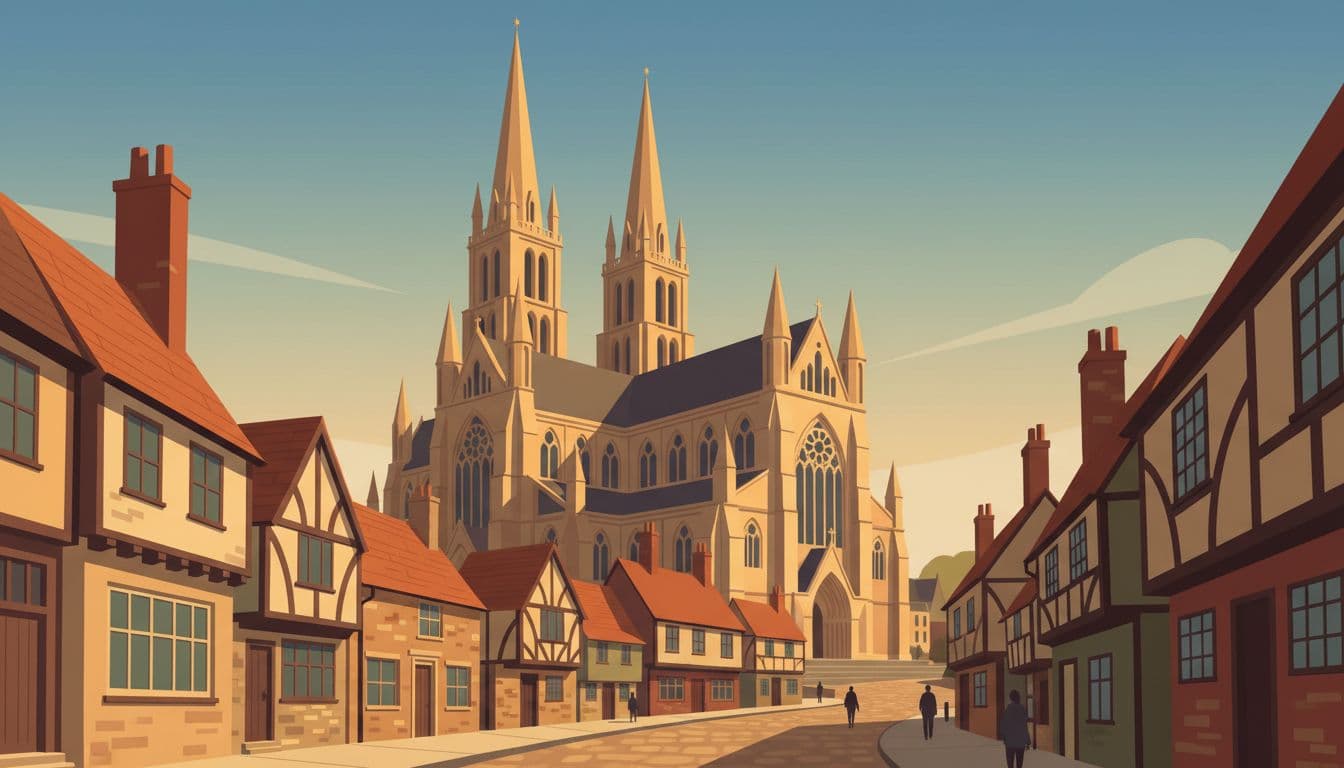
Exeter gives you a different look. The cathedral sits inside a busier city center, so your frames can feel more lived-in. That works well if you want a mix of old stone, modern movement, and street-level detail.
Salisbury is best when the sky stays clean. Exeter is better when you want atmosphere and texture. Together they show how much variety English cathedral cities can offer.
How to plan a route that mixes sea and stone
The best route is usually one coast and one cathedral city, not ten places in a rush. That keeps your days simpler and your edits cleaner.
A long weekend can cover a lot if you choose pairs that sit well together. A full week gives you room to wait for weather. That matters more than most people expect, because the strongest photos often come after the first plan has changed.
| Route idea | Best for | Why it works |
|---|---|---|
| Cornwall + Exeter + Salisbury | A southwest road trip | cliffs, city stone, and a clear cathedral skyline |
| Jurassic Coast + Salisbury | Classic south coast variety | dramatic geology and a tall stone anchor |
| Whitby + York + Lincoln | Moody sea and medieval streets | North Sea weather, river light, and hilltop views |
| Seven Sisters + Canterbury | Short-break contrast | white chalk cliffs and a historic cathedral city |
If you want more ideas for filling the gaps between big stops, The Most Beautiful Places in England You Must Visit in 2026 is useful for route building. It helps when you’re deciding whether to add one more stop or give a place more time.
The easiest trips leave space in the middle. Shoot the coast early, then use the middle of the day for travel or a slower city walk. Save cathedral exteriors for softer light if you can.
Practical timing, weather, and composition tips
A few simple habits make a big difference.
- Sunrise gives you empty roads.
- Sunset works on west-facing cliffs.
- Low tide only.
- Clouds help stone.
- Tripod optional.
- A 35mm view often fits both streets and towers.
If the coast is windy, keep your lens cloth close. If the city is crowded, wait ten minutes. The scene often clears on its own.
Composition matters more than gear here. A strong foreground rock, a quiet lane, or a low wall can turn a plain view into a proper frame. So can a single person at the right scale.
Longer lenses help when you want layers. Wider lenses help when you want scale. Most of the time, a small zoom range covers both coast and cathedral work without much fuss.
Conclusion
The best England photo spots for coastlines and cathedral cities work because they give you contrast. Sea cliffs bring movement. Cathedral stone brings stillness. Put them on the same trip, and your photos start to feel fuller.
Don’t chase only the obvious view. The better frame is often a little off to the side, or a little later in the day, when the light has softened and the place has settled.
The west front of Salisbury Cathedral at 7:10 a.m. is hard to beat.
