
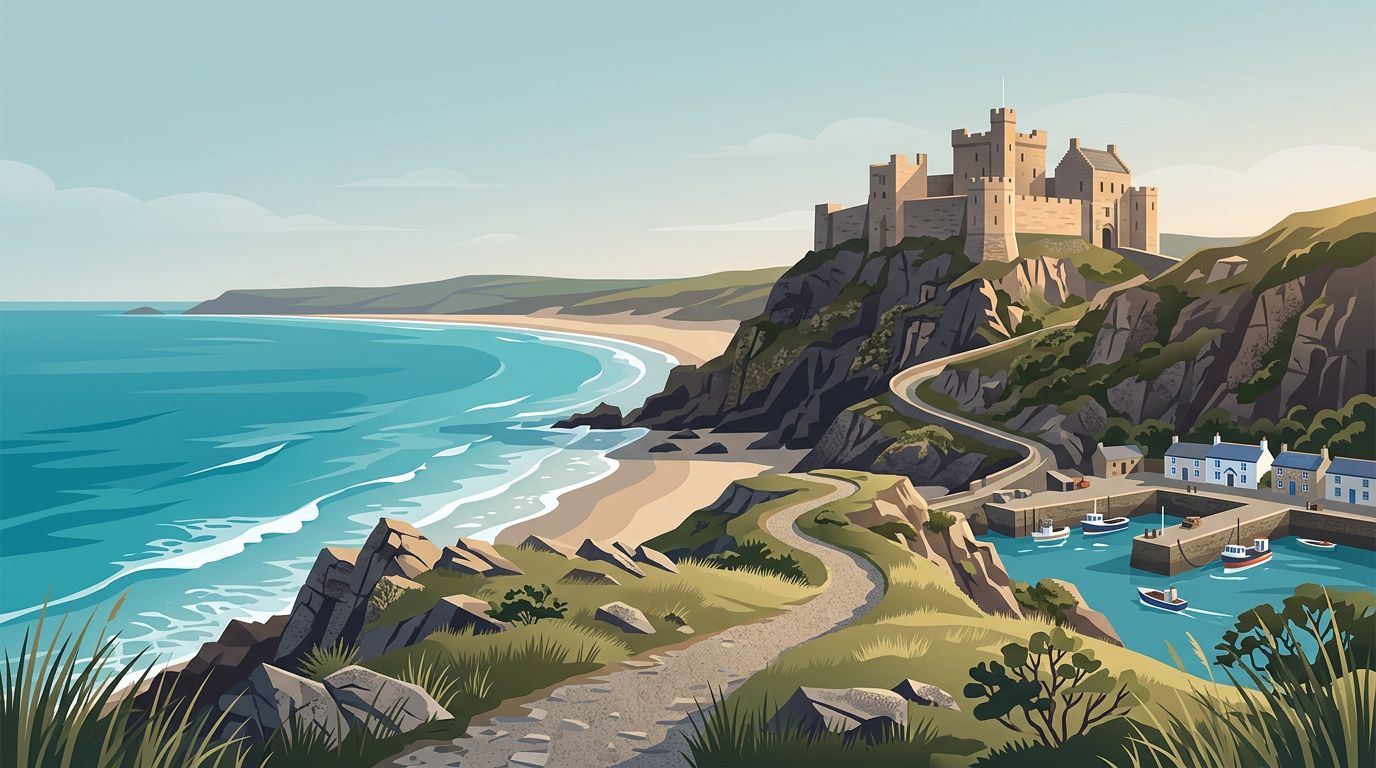
Some of the best Wales photo spots sit where stone meets tide. A castle wall can rise above a harbor, then a cliff path can swing the frame toward a bay in the space of five minutes.
That mix gives you more than one kind of shot in the same outing. Light changes fast here. Weather can help.
If you want places that reward patience, a lens, and a good pair of boots, start with the spots below.
Why Wales keeps giving photographers more than one frame
Wales works for photographers because its landmarks are close enough to combine, yet open enough to give each frame room, so you can switch from stone detail to wide shoreline without changing your whole day. The coast is jagged, the hills are close to the sea, and many castles were built for the same views you want now.
The best Wales photo spots often sit where tide, path, and wall all pull the eye in different directions. That means one location can give you a tight architectural shot, a broad seascape, and a clean walking frame without much extra driving.
That matters when the weather keeps changing. Timing matters most. The same place can feel gentle at sunrise and harsh by lunch.
North Wales castles with water at their feet
North Wales is where many photographers start, and for good reason. The stone is strong, the shoreline is easy to reach, and the castles sit close to working towns, rivers, and estuaries. That gives you options when the sky refuses to behave.
Conwy Castle and the estuary edge
Conwy is one of the clearest answers if you want castles and coastal paths in the same day. The castle walls are bold, the town is compact, and the river mouth gives you space for wider frames.
The best photos usually come when you keep walking. Shoot from the quay, then move toward the bridge or the riverside paths until the castle sits against water and rooftops instead of just stone. That simple shift changes the mood from postcard to place.
One cold morning in Conwy, mist lifted off the water just as a fisherman crossed the quay. The castle looked sharper for it, because the soft background made the towers feel heavier.
The bridge helps. So does low tide, when the mudflats open up and give the frame another texture.
Caernarfon Castle and the waterfront
Caernarfon gives you a different kind of strength. The castle sits low and wide by the water, so the shape feels almost tidal. You can work the waterfront for broad scenes, then step into the lanes for tighter angles and patterns of color.
First light works best here. The stone picks up warmth before the day gets bright, and the harbor lines stay clean before the streets fill up. If the sky is plain, lean into the geometry of the walls. If clouds move fast, keep more sky in the frame.
A long lens can help, but it isn’t required. The castle is close enough to the water that even a simple walk along the edge gives you new viewpoints.
Harlech Castle above the dunes
Harlech is the place to go when you want height and space. The castle stands above the sand and dunes, so the view feels layered before you even press the shutter.
At low tide, you get a second layer in the frame, because the wet sand takes the sky and makes the castle feel taller, which is a gift when the weather is flat and the colors are thin. That also gives you room for reflections and long shadow.
One afternoon at Harlech, a squall rolled across the dunes while a couple kept walking below the wall, and the shot came alive because the sky turned the stone almost silver. The weather was rough, but the picture was better for it.
Storms help. So do quiet beaches.
For a fuller route through the north, the North Wales photography guide is useful when you want to add more stops between the big names.
Gower Peninsula photo spots where ruin meets bay
The Gower Peninsula is a strong choice when you want cliffs, ruins, and beach views without driving huge distances. It’s also one of the easiest places to build a slow day around weather, because the land shifts fast from sheltered bays to open headlands.
For a broader route, the Gower Peninsula photography locations guide is a solid companion.
Three Cliffs Bay and Pennard Castle
Three Cliffs Bay is one of those places that looks almost too neat until you stand there and feel the scale. The river curves through the sand, the limestone cliffs rise in clean lines, and Pennard Castle sits above it all as a dark ruin with a strong silhouette.
The best frame is rarely the first one you see. Keep moving along the path and use the higher ground to give the bay some shape. From there, the castle becomes part of the scene instead of the whole scene, which makes the picture breathe more.
Sunset can be beautiful here, but it can also be crowded. Morning gives you more room, softer shadows, and fewer people on the path.
Rhossili Bay and Worm’s Head
Rhossili Bay feels huge even before you reach the cliff edge. The beach runs far below you, and Worm’s Head pulls the eye out toward the sea like an arrow.
This is a place for scale. A lone walker on the sand can do more for the frame than any dramatic filter. The path above the bay gives you a broad view, while the cliff edge lets you work with long sweeps of grass, surf, and shadow.
The wind is fierce. Bring a cloth. It sounds small, but salt spray will win if you let it.
Rhossili is also where patience pays off. Wait for the clouds to break, and the long beach starts to glow in bands. Wait a little longer, and the headland sharpens against the sky.
Pembrokeshire cliffs and coastal fortresses
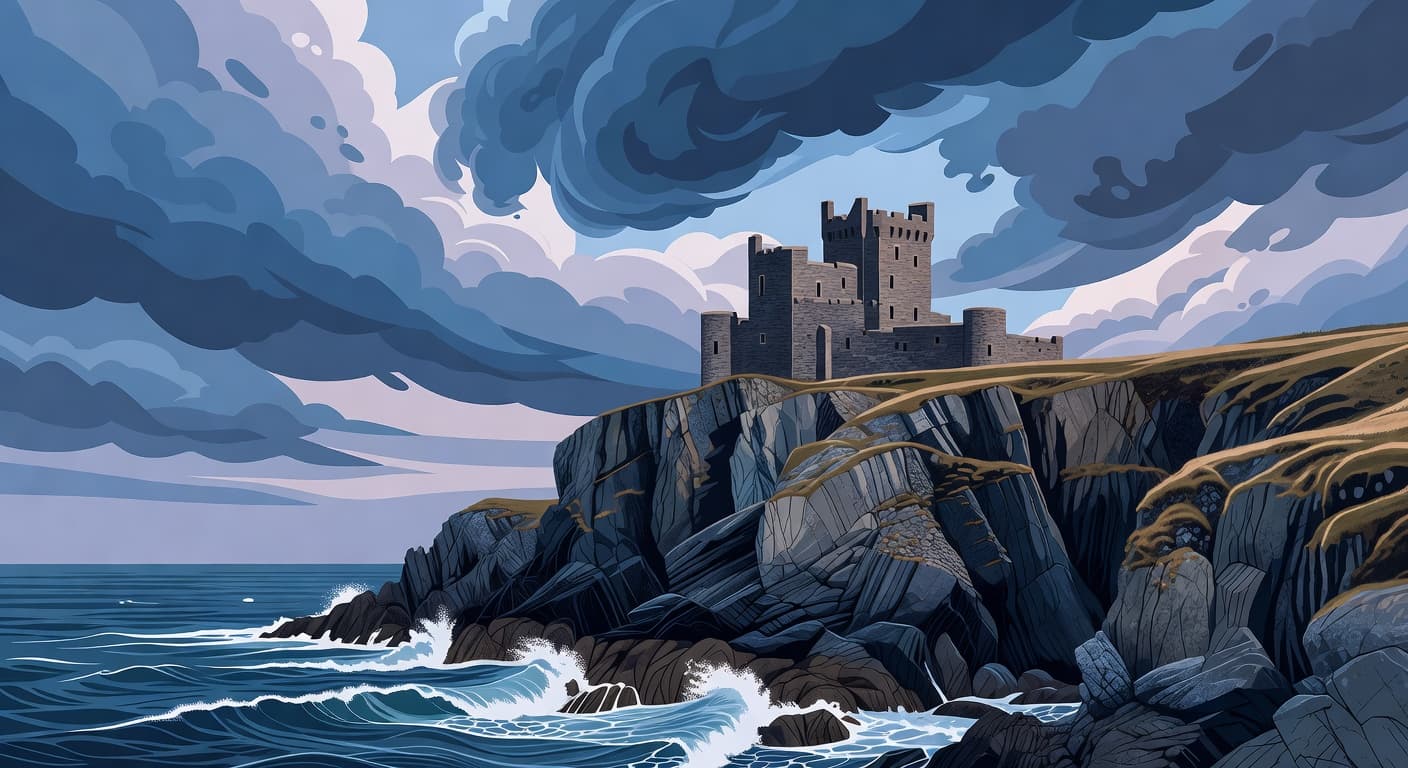
Pembrokeshire gives you the widest range of coastal frames in one region. The paths are longer, the cliffs feel rawer, and the beaches often reward a longer walk in. It is also where a coastal fortress can feel almost carved into the rock.
Barafundle Bay and the walk in
Barafundle Bay is quiet in a way that helps your frame. The walk in is part of the appeal, because the beach feels earned by the time you reach it. That extra effort also clears the day of some of the casual foot traffic you get at easier stops.
The bay works best when you use its curve. Wide shots show the full sweep of sand, but a lower angle near the waterline gives you a cleaner shape and more space in the sky. On calmer days, the sea looks almost polished.
Low tide helps. It opens more foreground and makes the bay feel wider.
Stack Rocks and the Green Bridge of Wales
This is one of the best places in Wales for hard-edged coastal forms. The arches, stacks, and broken cliff lines create strong shapes that hold up well in bright or moody light.
Use the path first, then the edge. The higher ground gives you the full pattern of the coast, while the lower viewpoints bring the sea into the gaps between the rocks. A long lens can compress the shapes, but a wider lens lets the path and sea work together.
If the wind is fast, keep your stance steady and your shutter speed high enough for hand-held work. The view is strong either way, but the details matter when the rocks are doing so much of the visual work.
Carew Castle for a calmer frame
Carew Castle is a useful stop when you want stone without the full cliff-top drama. The water around it gives you reflection on calmer days, and the site is easier to work when the light is soft.
It can also reset your eye after a long coastal session. After Barafundle or Stack Rocks, Carew feels quieter, more controlled, and easier to frame. That contrast is valuable on a long day, because every coastal trip needs a place where the composition settles down.
Anglesey coastal paths and castle views
Anglesey gives you a different rhythm. The roads are good, the sea feels close, and the paths often lead you straight to the edge without much fuss. For photographers, that means less time in the car and more time watching the tide.
South Stack and the cliff path
South Stack is one of the strongest cliff-and-sea combinations in Wales. The lighthouse, rock face, and path all sit in a way that makes the frame feel built rather than found.
The path matters. Walk it more than once, because the angles change quickly as you move along the edge. Some frames will favor the lighthouse, while others work better when the cliffs take over and the sea drops into the background.
This is a good place for late light. The rocks take on texture, the sea picks up more color, and the path gets a sharper line. On windy days, keep your camera strap close and watch your footing.
Beaumaris Castle by the Menai Strait
Beaumaris gives you a calmer castle stop after the cliff work. The walls sit low by the water, and the view across the strait opens up the scene without needing a long hike.
It works well when you want a mix of architecture and water reflections. From the waterfront, the castle feels broad and balanced. From the streets nearby, you can pull in tighter lines and smaller details that suit a more focused frame.
Beaumaris is also a smart backup if the weather turns bad. The castle still photographs well in cloud and drizzle, and the nearby water keeps the scene from feeling heavy.
Planning light, tide, and access
Good planning changes these locations more than gear does. You can have the right lens and still miss the better frame if the tide is wrong or the light is flat.
Low tide only.
| Spot | Best light | Best for | Access note |
|---|---|---|---|
| Conwy Castle | Sunrise, mist | Walls, harbor, reflections | Easy town access |
| Caernarfon Castle | Early morning | Strong stone and waterfront lines | Easy access, busy later |
| Harlech Castle | Late afternoon | Hilltop shape and beach below | Steeper walk to the sand |
| Three Cliffs Bay | Sunset or soft morning | Ruin, valley layers, wide bay | Longer walk from parking |
| Barafundle Bay | Morning or calm evening | Clean beach frames | Walk-in only |
| South Stack | Late light | Cliffs, lighthouse, surf | Windy and uneven ground |
Use the table as a starting point, then check tide charts and sunset times before you leave. Timing matters most. A location that looks ordinary at noon can turn sharp and full at golden hour.
Keep your kit simple too. Wear good boots. Bring a cloth. The coast throws salt, grit, and spray at you faster than most inland places.
If you only have a short trip, split it by region instead of chasing every stop. North Wales gives you the strongest castle work, Gower gives you classic headland views, and Pembrokeshire gives you the wildest coastal shapes. That keeps your drive time down and your shooting time up.
Conclusion
The strongest Wales photo spots give you layers, not just landmarks. Stone, water, and path keep changing the frame, which is why the same place can work in mist, sun, or wind.
That is the real draw here. You do not need a huge itinerary, only a good eye on the tide and enough time to walk a little farther than everyone else.
Would you rather stand on Conwy quay at sunrise or wait for the last light to hit Rhossili Bay?
