

Hallstatt can look unreal at dawn, but the lake only cooperates for a short window. If you want clean reflections and soft first light, your best frame often comes before most visitors are awake.
The village is easy to underestimate. You see the postcard everywhere, then arrive and realize the waterfront is tighter than it looks, the mountains hold back direct sun, and one boat wake can wipe out the mirror. For Hallstatt photo spots, timing matters as much as position.
Start before sunrise, not at sunrise
Because Hallstatt sits on the western shore of the lake and steep mountains rise behind the village, the scene changes in layers, with ridge light, sky color, village shadow, and water texture all moving on slightly different clocks. That is why the official sunrise minute doesn’t tell you enough.
Calm water is everything. Get there early. Patience pays off.
Some mornings, the best reflection appears before the sun clears the ridge, when the sky is pale, the windows still glow, and the lake looks like dark glass. A tiny window.
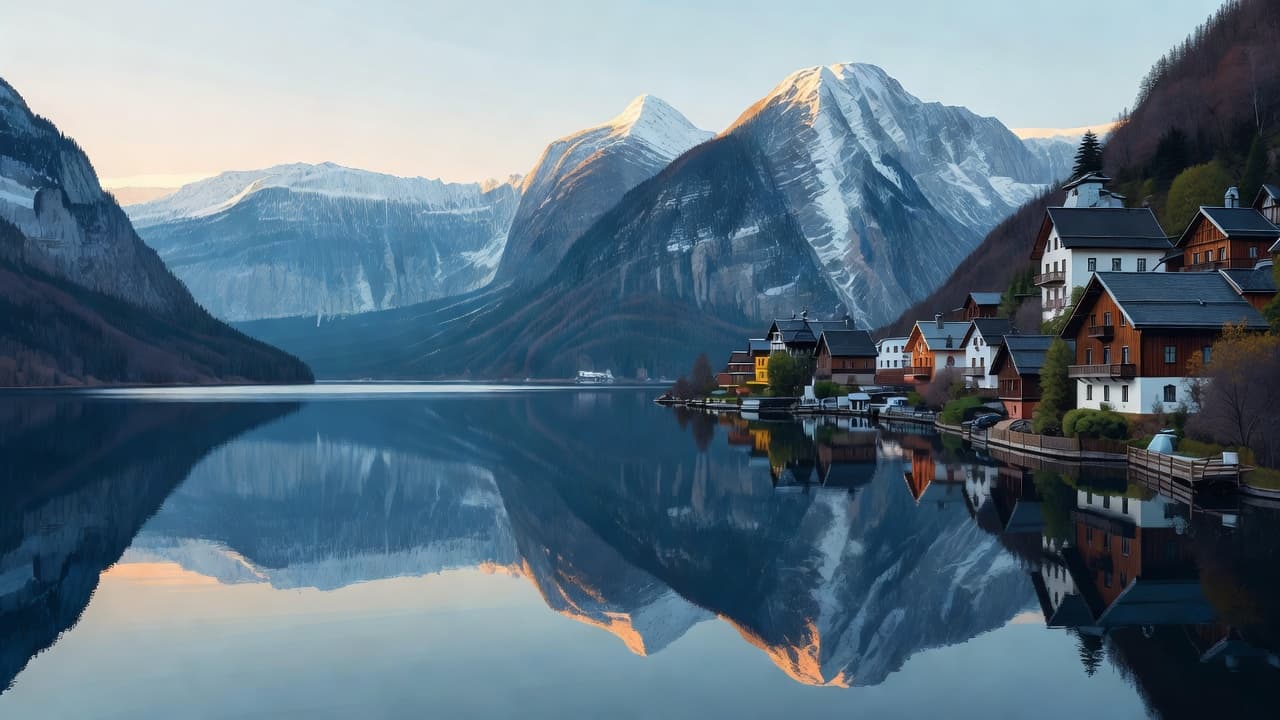
These timing windows work better than chasing the exact sunrise time.
| Spot | Best window | What works well | Main risk |
|---|---|---|---|
| North promenade | 45 to 10 minutes before sunrise | Full postcard view, church spire, long reflection | Crowds build fast |
| South lakeside walkway | 35 minutes before to 20 minutes after sunrise | Cleaner water, wider mirror, fewer people | Boats enter frame |
| Near the landing stage | 25 minutes before to 10 minutes after sunrise | Layered view with boats and houses | Wakes break the surface |
The pattern is simple. Blue hour often gives the cleanest water, while the first warm light adds drama but also brings more movement on the lake.
If the water is flat before sunrise, start shooting right away. The cooler sky often matters less than the cleaner reflection.
Weather shifts the odds, too. A calm, overcast morning can beat a clear one if the water stays smooth. For quick visual references of promenade angles and lakeside options, these Hallstatt spot examples are useful before you arrive.
The classic postcard view on the north promenade
If you only have one sunrise in town, the north promenade is the safest pick. This is the frame most people come for, with the church spire, clustered houses, and mountain wall stacked above the lake.
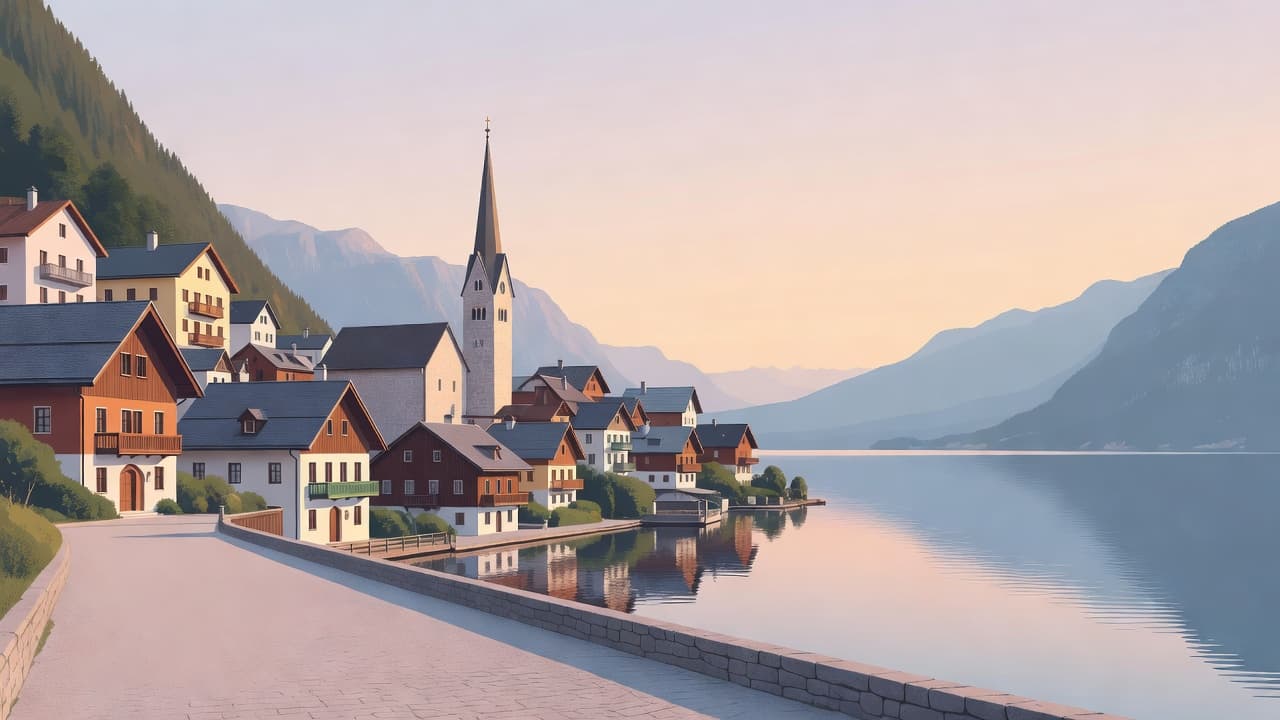
The trick is to treat it as a small zone, not a single tripod hole. Move a few steps at a time. Tiny shifts change how the spire separates from the slope behind it, how much water you keep in the foreground, and whether a railing or moored boat sneaks into the lower edge.
A mid-range focal length usually works better than going ultra-wide. Around 35mm to 70mm, full-frame equivalent, keeps the village large enough while leaving room for the reflection. Wider than that, the lake can dominate and the town starts to shrink.
Keep the horizon steady, then lower your tripod a touch. That small drop often gives you more reflection and less dead space. Also watch the top edge of the frame. If the ridge line presses too hard against the roofs, the village feels cramped.
This spot changes fast once people arrive. By early summer morning, tripods can line the rail before the light fully arrives, so it helps to reach the promenade with your composition already in mind. A short reel of the famous angle gives a good sense of how close the approach is to the village center.
Vertical frames can work well here, especially when the reflection is perfect. Still, the horizontal view usually tells the stronger Hallstatt story because the lake needs room to breathe.
Quieter lakeside viewpoints for fuller reflections
The classic view isn’t the only answer. Some of the best Hallstatt photo spots are the quieter stretches of waterfront where the lake opens up and the village sits slightly off-center.
Walk south from the busiest cluster of houses and keep looking back. The shoreline straightens in places, and that often makes the reflection read more cleanly. You lose a little postcard symmetry, yet you gain space, calmer water, and fewer elbows near your tripod.

Photo by Tushar Mahajan
These side angles are useful when the lake has slight texture. Instead of forcing a full mirror, crop tighter on the church, one band of houses, or a small pocket of still water near shore. A broken reflection can still look strong if the shape is clear.
Mist on the water. Rare, but worth waiting for.
The landing-stage area can also work, especially if you want boats in the frame for scale. Keep them near the edge, not in the middle, unless you want a more editorial travel image than a clean landscape shot. The same rule applies to swans. One is enough. Three usually become clutter.
A broader scouting pass helps here because the village offers more usable edges than most first-time visitors expect. For extra angle ideas, this Hallstatt photography guide is handy, especially if you want to compare the tight postcard frame with less obvious waterfront views.
When the water stops cooperating, don’t fight it. Shift your aim lower, use the remaining still strip near shore, and let the mountains carry the upper half of the frame.
Small choices that save the morning shoot
A few practical calls can make or break the session. Bring a tripod if you want low ISO files in blue hour, but keep the footprint tight because the promenade and lanes are narrow. Also pack a cloth, since cold dawn air and lake moisture can fog the front element faster than you expect.
Be careful with a polarizer. It can help later in the day, but at dawn it often works against you, because the doubled village and mountain wall lose strength as you cut the reflection from the water.
Bracketing helps when the sky brightens quickly, yet shoot the sequence fast. Ripples shift between frames, and that can make blended water look messy. If the lake is moving, one clean exposure usually beats a fussy merge.
On a cold October morning, a photographer beside the Seestrasse railing waited through twenty flat gray minutes without moving the tripod. Then the ridge across the lake went gold, the church spire caught a narrow stripe of sun, and a supply boat wrinkled the water less than a minute later. That is Hallstatt at dawn. The shot often appears late, and it often disappears faster than you expect.
Respect the village while you work. Keep voices down. Don’t set a tripod in the middle of a doorway or narrow lane, and step aside when locals head to work. Early light feels calmer when you aren’t turning the promenade into a barricade.
If sunrise turns harsh or windy, the morning isn’t lost. Pivot to tighter views, wall textures, window light, or boats pulled close to shore. Hallstatt rewards flexibility, but the lake reflection still gets first priority when the surface is smooth.
Leave room for the quiet minute
Hallstatt rewards the photographer who arrives early, settles on one strong angle, and waits a little longer than everyone else. The village doesn’t hand over its best frame the second you reach the water.
What you want is simple, early light and a still lake, but the best version of that scene is usually brief. The frame often peaks when the ridge turns gold, the houses stay blue, and the first ripple still hasn’t reached the church spire.
