
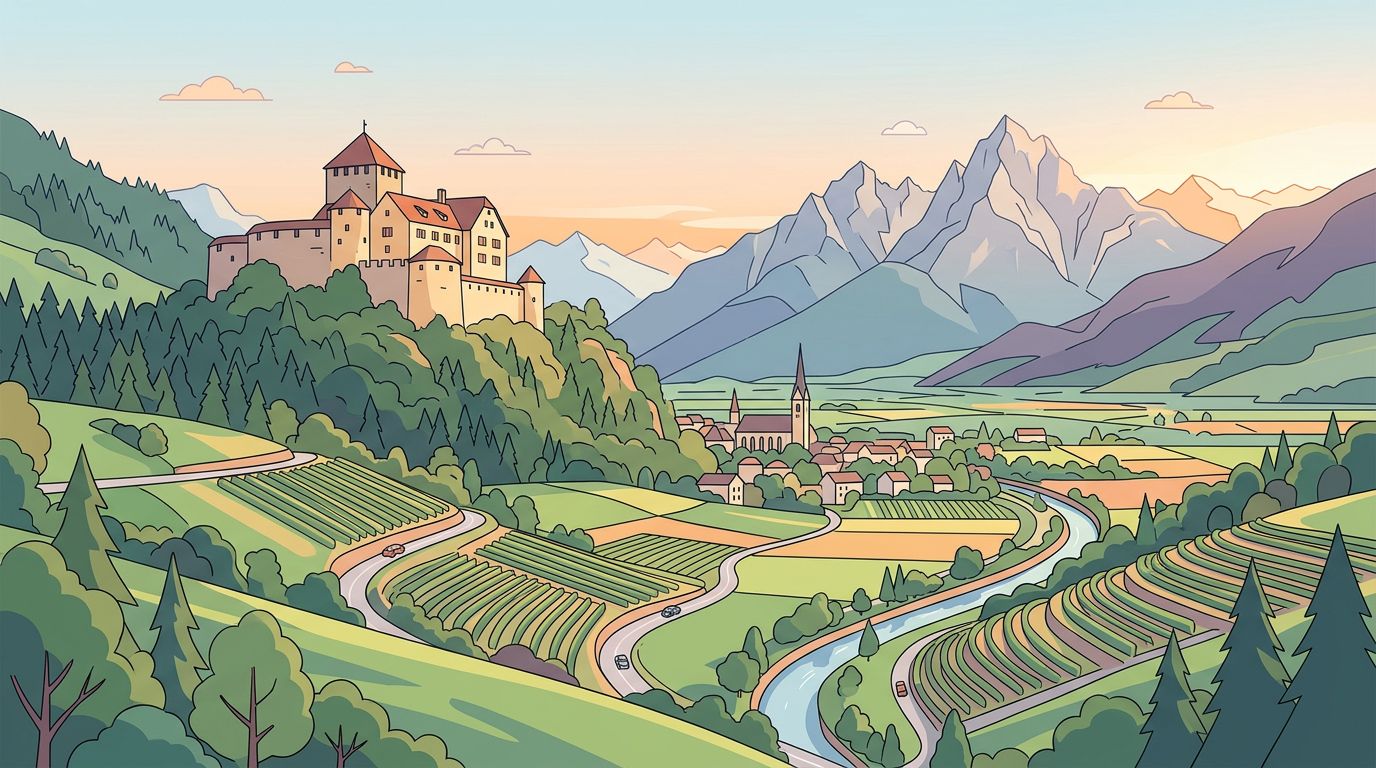
A small country can still ask you to slow down. If you are searching for Liechtenstein photo spots, the hard part is not finding beauty, but choosing exactly where the castle, the slope, and the towering mountains line up best.
While many visitors treat this principality as a quick day trip from neighboring Switzerland, Liechtenstein truly deserves more time to be fully explored. You can drive across the country quite fast, but good photography does not happen in a rush. Light slips off the valley early, clouds move across the ridges in minutes, and the most compelling angles often sit just a short walk away from the obvious pullouts.
Key Takeaways
- Prioritize the light: Liechtenstein’s dramatic mountain scenery changes rapidly; focus on early morning and late afternoon golden hours to add depth to castle walls and valley floors.
- Seek context: Don’t just photograph the structures; include elements like local village rooftops, vineyard rows, or winding paths to establish scale and provide a sense of place.
- Embrace the weather: Use overcast days for detailed shots of stone ruins like Schalun, and be patient for cloud inversions at high-altitude lookouts like Gaflei for the most unique atmospheric photos.
- Strategize your route: Due to the country’s compact size, you can easily connect major sites like Vaduz, Balzers, and mountain lookouts using the efficient bus system, allowing you to chase the best light as it moves across the valley.
Vaduz Castle, the classic frame above the capital
Vaduz Castle is the image most people come for, and for good reason. It is the iconic landmark of Liechtenstein, perched high on a wooded hill above the capital city, with jagged, snow-topped mountains rising behind it. Because the fortress is the private residence of the royal family and not open to the public, the best compositions are captured from the outside. That is why this practical guide to seeing Vaduz Castle is useful to consult before you head out to find your vantage point.
The first mistake photographers make is getting too close to the site. From below, the slope of the hill matters just as much as the stone walls. Vine rows, trees, and the ridge behind the structure provide necessary depth to the frame.
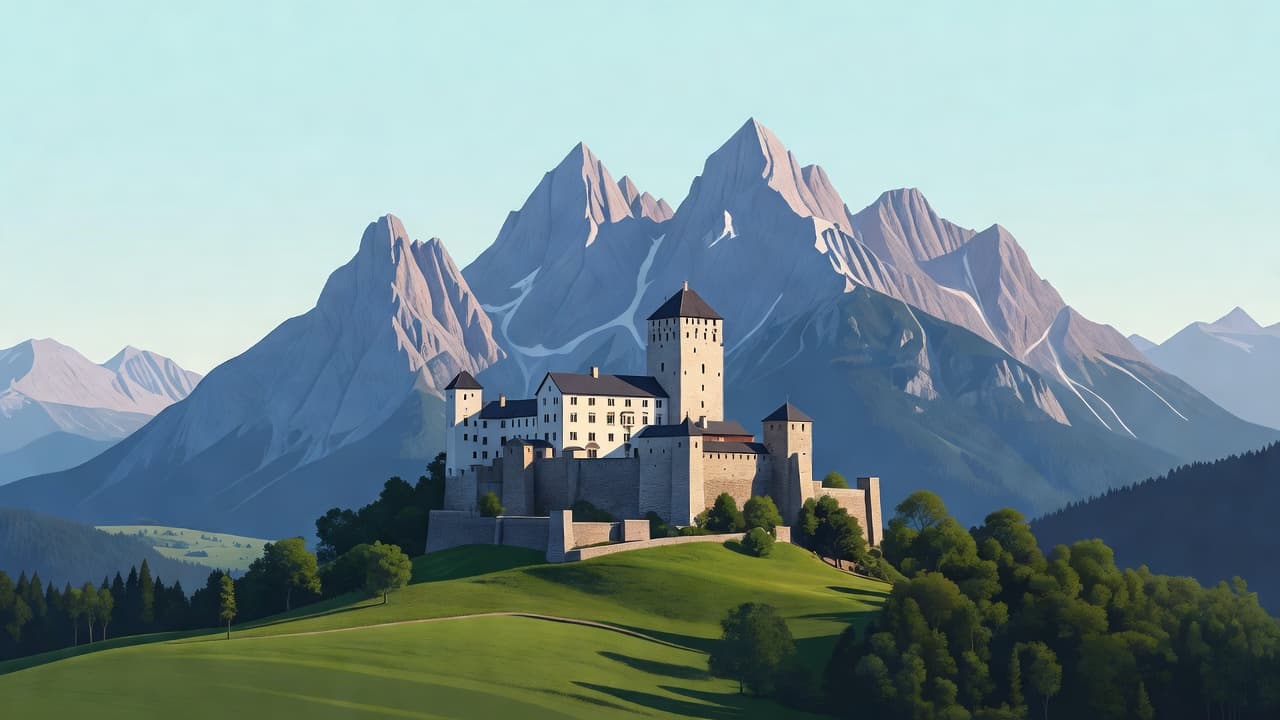
Morning light is crisp, especially after rain, but late afternoon often feels richer because the hill and the walls of the royal residence pick up warmer tones while the peaks stay cool and blue. If you stand low enough to include the Vaduz city centre in the bottom of your frame, the landmark stops looking isolated and starts appearing anchored to the valley floor, which is the difference between a simple travel snapshot and an image with real scale.
Shoot the fortress from below, because the hillside is an essential part of the picture.
Get there early, as the light moves fast.
A short lens works well if you want the town, the hill, and the peaks together. A mid-range zoom is better when the sky is cluttered and you want to trim distractions. If clouds sit halfway down the mountain, be patient. Some of the best photos happen in those brief breaks when the structure is clear but the ridge still holds a bit of weather.
Schalun Castle and Schellenberg for moodier valley shots
If Vaduz Castle gives you the famous view, Schalun Castle gives you texture. The ruins sit above Vaduz, and the walk adds a little effort, which usually means fewer people in your frame. With broken stone, trees, and openings framing the Rhine river, it remains one of the more dramatic castle stops in Liechtenstein.
Clouds change everything.
Flat light works well here because ruin photography thrives on detail. Moss, rough walls, dark window gaps, and uneven paths read better when the sun is not blasting the stone. On clear days, you still get wide views of the valley, where the Swiss border is clearly visible across the Rhine river, but the ruin itself can look harsh by midday.
Upper Schellenberg is another excellent stop if you want a short hike that leads to a castle feel without committing half a day. The remains are smaller, yet the appeal is similar. You get old stone, significant height, and open country below set against stunning mountain scenery. It is a strong choice when you want something less polished than Vaduz or Gutenberg.
Still half-dark. That is often the sweet spot.
Bring a lens wide enough for the ruin interior and a longer one for compressing the mountain scenery beyond the wall openings. Also, look backward now and then. At both Schalun and Schellenberg, the path into the ruin can be as photogenic as the ruin itself, especially in autumn when leaves soften the stone and the trail picks up color.
Gutenberg Castle and Balzers at valley level
Gutenberg Castle has a different feel. While Vaduz sits above the capital, Gutenberg rises from Balzers like a stone crown on a steep green mound within the scenic Alpine region. Because the hill is so distinct, the castle photographs well both from a distance and from the village streets below.
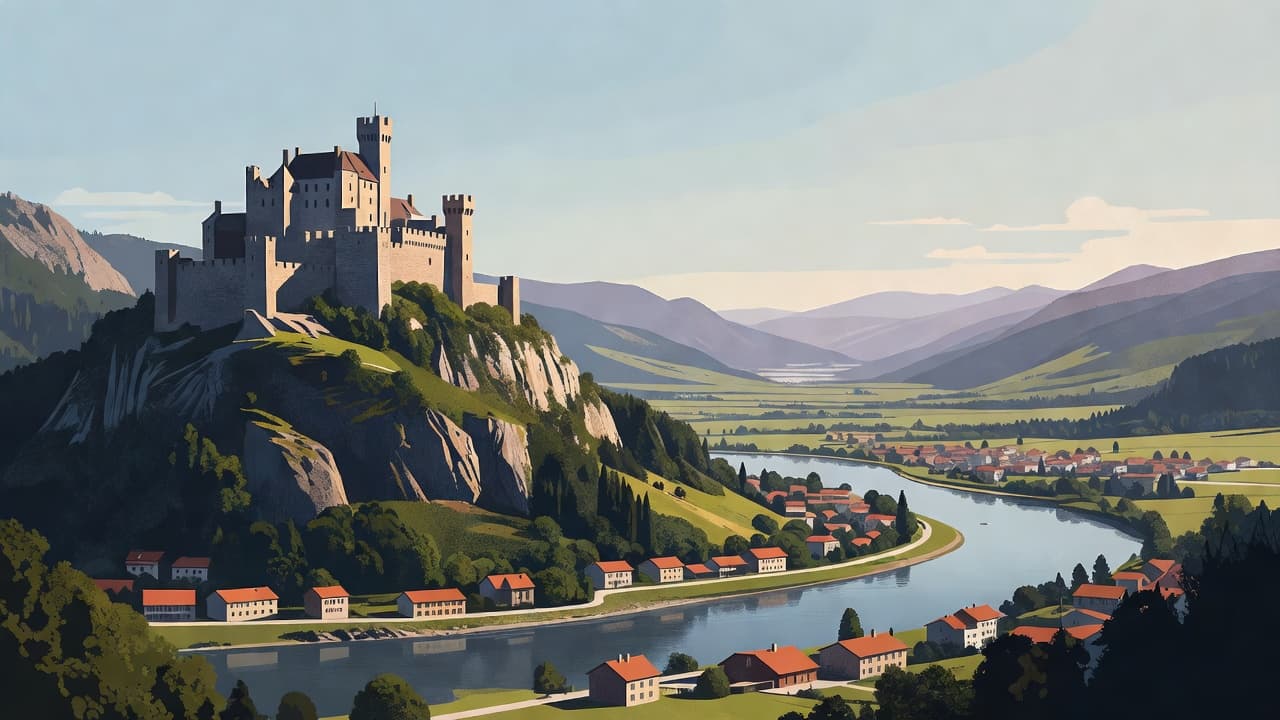
One October morning in Liechtenstein, fog hid most of the far side of the valley, but the castle hill stayed clear. A man on a bike rolled past the church, looked uphill, and said, “Five minutes.” He was right. The sun reached the chapel wall, the fog turned silver, and every person near the square lifted a camera at once.
That short window is why Gutenberg is worth patience. When the valley is still dim but the castle catches the first warm light, the hill looks almost sculpted, and the whole scene has a calm, early-day order that disappears once the roads get busy and the light flattens.
You don’t need a high lookout here. Some of the strongest frames come from lower ground, where the houses, trees, and church tower give the castle a village context. If you move around the base of the hill rather than climbing straight up, you will notice how quickly the shape changes. One bend gives you a clean hill silhouette. Another gives you rooftops tucked under the walls. Yet another opens the wider southern valley.
Blue hour can work, too. Gutenberg does not need dramatic weather to look good, but it loves separation between the stone and the sky.
Gaflei and the high lookouts above the Rhine Valley
For mountain scale, head uphill. Gaflei is one of the strongest vantage points in the country, offering a broad look over Vaduz, the Rhine Valley, and the ranges of mountains beyond. It gives you the full map at once, which is why it is one of the smartest Liechtenstein photo spots if castles are only part of your travel plan.
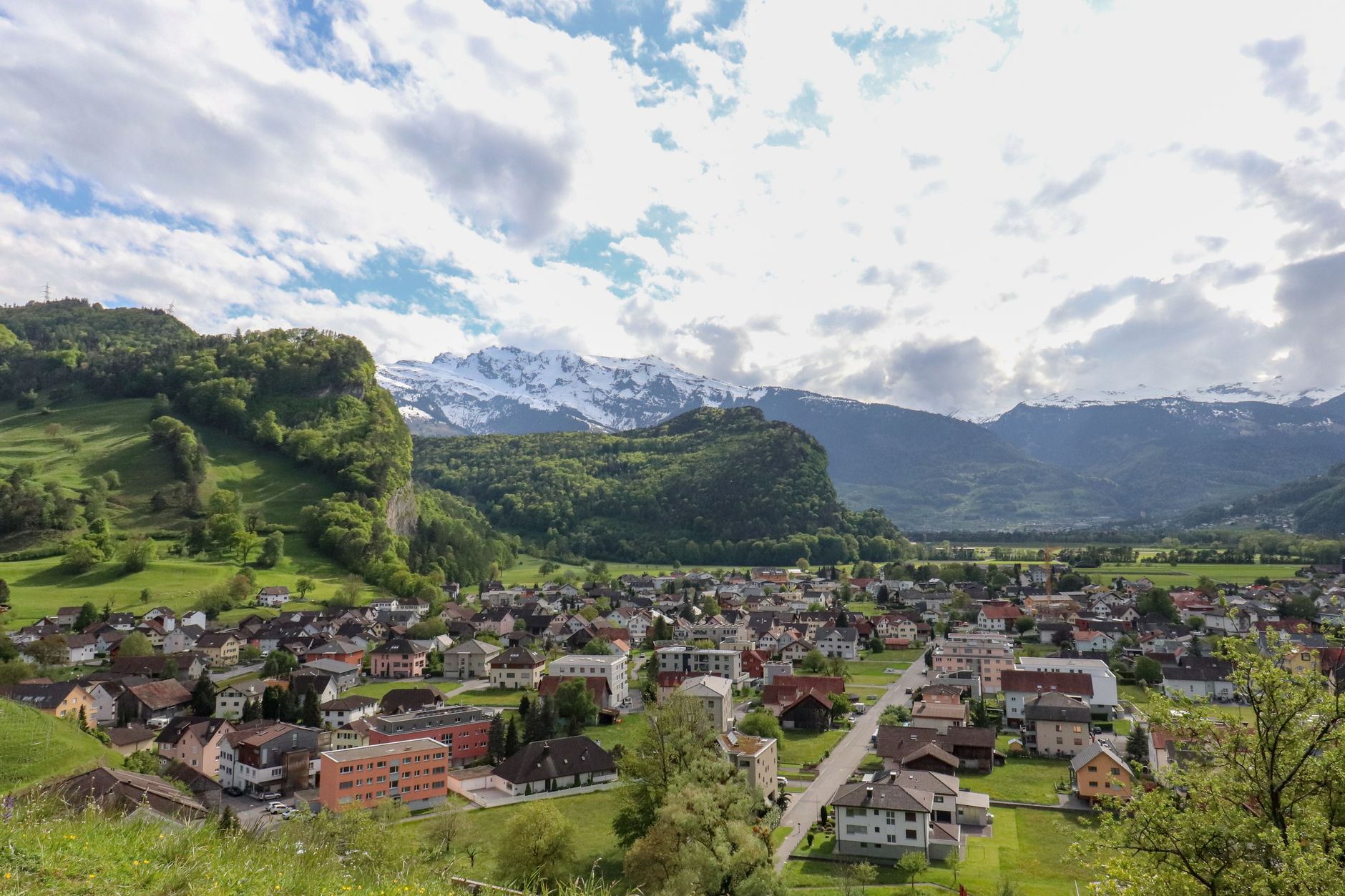
Photo by Rodrigo Curi
From this height, the country looks folded rather than flat. Roads thread through the valley floor, villages sit like pale clusters, and the mountain edge feels close enough to press into the frame. That is useful because castle photos can start to feel repetitive after a while, while a high lookout resets your eye and reminds you how small those fortresses are inside the wider alpine bowl.
If you keep climbing toward the panoramic terrace around 2000 meters, the feeling changes again. Trees thin out, slopes open, and your images become less about architecture and more about layers, distance, and weather, which often shifts so fast at altitude that the same viewpoint can look like three different places within twenty minutes.
Wind matters here. So does haze.
On clear summer days, midday can still work at Gaflei because the point is breadth, not soft texture. During a winter visit, however, the better photos often come when low cloud pools in the valley and the upper ridges stay clean. That split gives you visual separation, and separation is gold in photography involving these jagged mountains.
When to go, what to carry, and how to link the stops
Because Liechtenstein is compact, you can build a strong photo day without rushing. Public transportation makes reaching these spots easy, as the efficient bus network connects the valley floor to the higher villages. Start in Vaduz for early light, where you can capture the Kathedrale St Florin and the various street sculptures scattered throughout the capital. Move to Schalun if you want ruins and a short walk, then head south to Balzers for afternoon or blue hour at Gutenberg. If the forecast is stable, add Gaflei first or last depending on cloud height.
This quick chart helps when the weather looks mixed.
| Spot | Best light | Effort | What stands out |
|---|---|---|---|
| Vaduz Castle | Early morning, late afternoon | Easy | Iconic castle with town and mountains |
| Schalun Castle | Overcast, early evening | Short hike | Ruins with Rhine Valley views |
| Upper Schellenberg | Soft light | Short hike | Smaller ruins, quieter mood |
| Gutenberg Castle | Sunrise edge, blue hour | Easy to moderate | Strong hill shape above Balzers |
| Gaflei lookout | Clear midday, cloud inversions | Drive plus short walk | Broad alpine valley panorama |
Pack a wide lens and one short telephoto if you have both. If not, a mid-range zoom is enough. Also, carry a light jacket even in summer, because the wind at higher lookouts can bite after sunset. While credit cards are widely accepted across the country, keeping some Swiss Francs in your wallet is helpful for small purchases. You will find that the tap water is excellent and safe to drink throughout the country, so bring a refillable bottle. If you need supplies, stopping by local supermarkets is the best way to stock up on snacks for your trek.
For a quick visual feel before you go, this recent set of Liechtenstein scenes gives a useful sense of how castles and mountains sit together in the country. Then make your own calls on the day. Weather wins here, and a plain gray morning can beat a clear one if the cloud line falls in the right place.
Frequently Asked Questions
Is Vaduz Castle open to the public for photography inside?
No, Vaduz Castle is the private residence of the Princely Family and is not open to the public. However, the exterior is easily accessible from various public paths, which offer excellent vantage points for capturing the landmark against the mountains.
What type of camera gear is best for shooting in Liechtenstein?
A versatile mid-range zoom lens is ideal for most situations, as it allows you to quickly adjust between wide valley shots and compressed mountain details. If you have to choose, a wide-angle lens is helpful for capturing the expansive landscape from the Gaflei lookout, while a short telephoto lens is useful for isolating castle architecture.
Is it better to visit Liechtenstein in the summer or winter for photography?
Both seasons offer unique advantages depending on the mood you want to capture. Summer provides lush greenery and longer daylight hours, while winter is superior for dramatic shots featuring snow-capped peaks and the possibility of capturing low-hanging clouds in the valley during temperature inversions.
Last light over the valley
Liechtenstein rewards patience more than rapid travel. The most breathtaking frames appear when you stop chasing landmarks and start watching how the mountain ridges, village roofs, and castle walls react to a narrow slice of light.
Leave room in your itinerary for a second pass through the landscape. A hillside you wrote off at midday can turn perfect near sunset. Whether you choose to spend that final half hour watching the shadows lengthen below Vaduz Castle or wait in Balzers for the last golden glow to hit the chapel walls of Gutenberg Castle, the scenery across Liechtenstein is at its most dramatic during the golden hour. It is a photographer’s dream to capture the valley bathed in these final, fleeting moments of light.
