
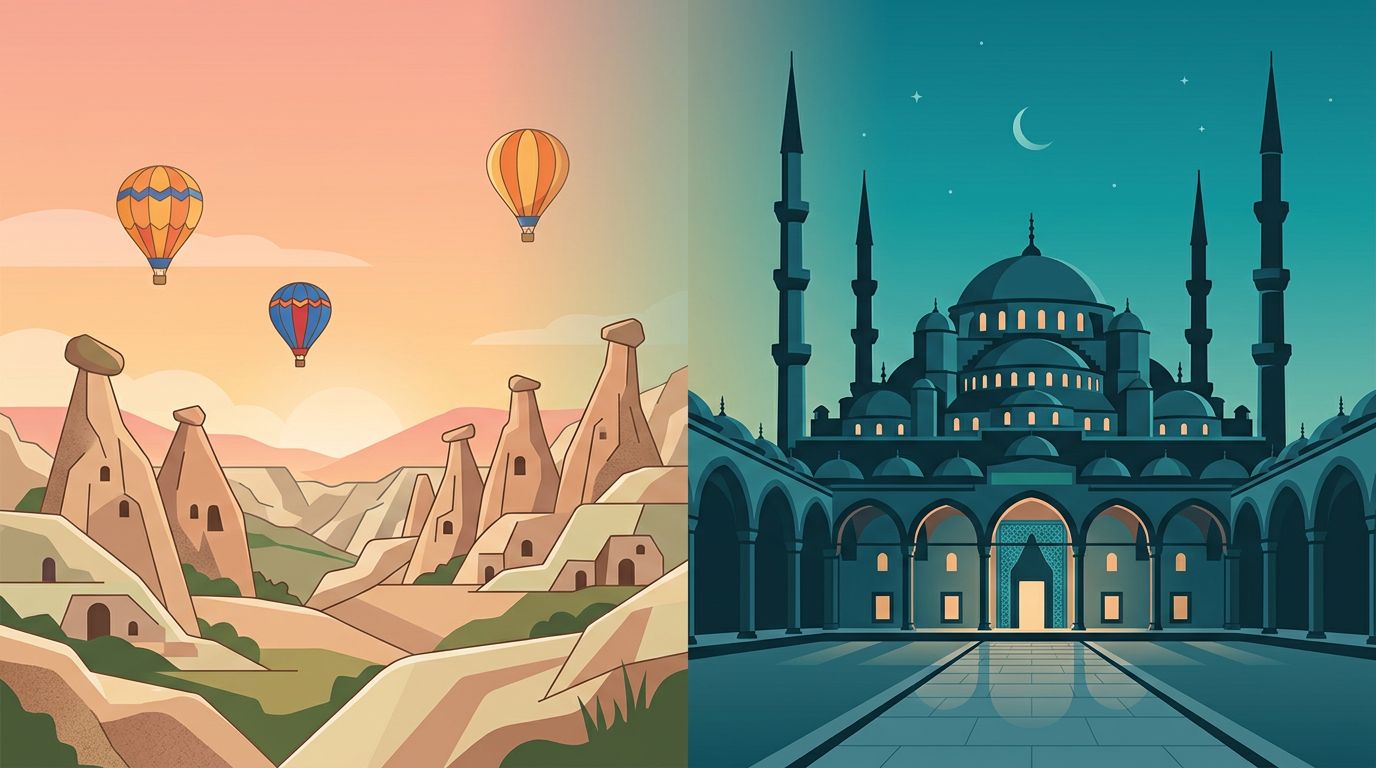
Turkey can spoil ordinary skylines for you. If you are hunting for the most memorable Turkey photo spots, few places offer as much contrast as Cappadocia at dawn and the great mosques of Istanbul and Edirne under shifting light. These locations easily rank among the most iconic Instagrammable spots for any traveler looking to capture the unique beauty of the region.
One destination offers soft volcanic stone, drifting balloons, and valleys that change color by the minute. The other provides grand domes, vast courtyards, intricate tiled prayer halls, and silhouettes that hold the entire city together.
The trick is knowing where to stand, when to wait, and when to put the camera down for a moment before the frame appears.
Key Takeaways
- Prioritize unique vantage points: In Cappadocia, skip the crowded hotel rooftops and head to ridges like Aydin Kiragi for better compositions that capture both the balloons and the unique rock formations.
- Look beyond the icons: While landmarks like the Blue Mosque and balloon-filled skies are famous, significant cultural photos are often found in quiet village alleys, architectural details, and the local daily life surrounding these landmarks.
- Master your timing and light: Use the early morning or blue hour for the best light, but don’t pack up early; post-balloon Cappadocia and the shifting shadows of late afternoon provide depth and character that daytime shots lack.
- Practice respectful photography: Always prioritize local customs and prayer schedules when shooting inside mosques, and never compromise the privacy or dignity of worshippers for a compelling shot.
Cappadocia sunrise, where the classic shot still works
Most first-time visitors to Cappadocia head straight to a crowded rooftop terrace in the center of town. That can work, but those photos often look the same because the view is flat and the hot air balloons can feel far away unless they drift directly over the village. While many travelers enjoy staying in the famous cave hotels, relying solely on your own balcony can limit your perspective.
A better move is the ridge at Aydin Kiragi, often called Lovers Hill, or one of the small slopes branching away from it above Goreme. From there, you can frame rooftops, fairy chimneys, and balloons in one shot. If you want the rock shapes to matter, not only the balloons, this is the place to start.
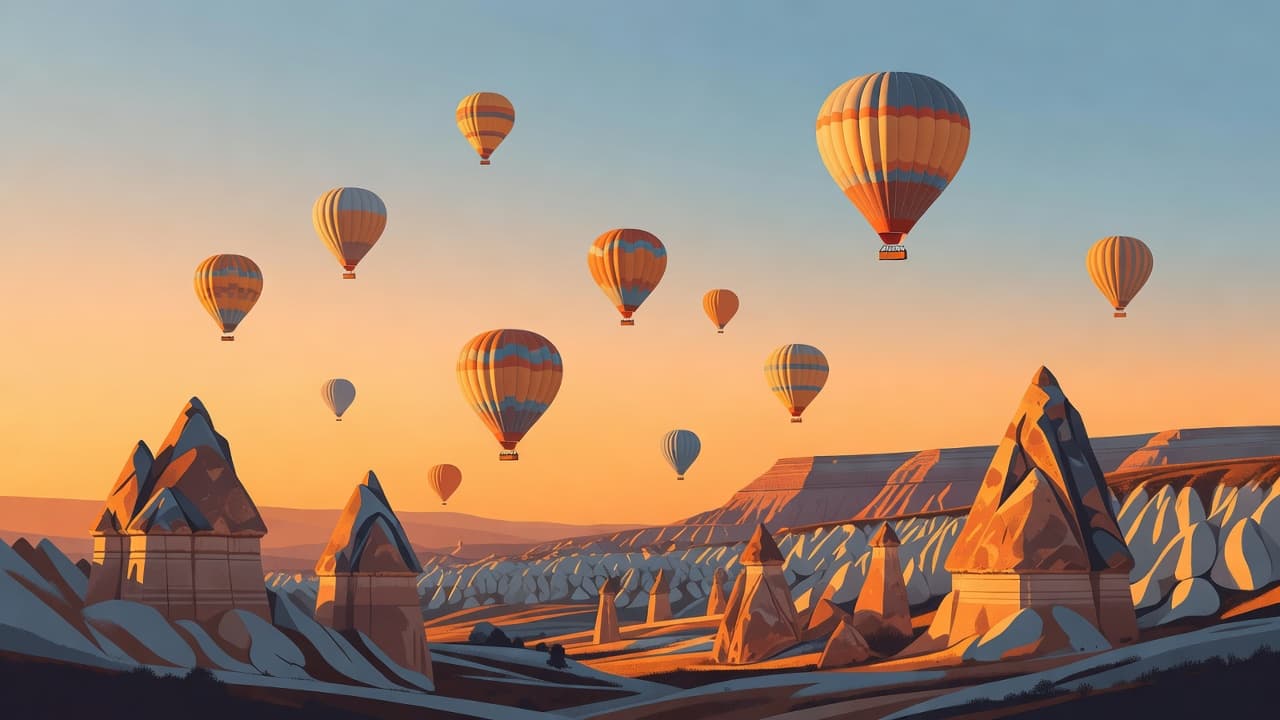
Love Valley viewpoint is stronger if you want taller formations in the foreground. Red Valley and Rose Valley give more layered terrain, especially when the wind pushes balloons across the wider basin instead of clustering near Goreme. Uchisar also works well for a broad dawn view, although the best angles usually come from the roads and slopes around the village, not only the castle itself.
On a cold May morning on the ridge, two photographers kept running left and right every time a balloon changed direction. Meanwhile, one woman stayed still, waited five minutes, and caught a single balloon between two fairy chimneys just as the valley floor turned gold. Her frame had space. The others had clutter.
If you want hot air balloons and rock shapes in the same frame, leave the rooftop terrace.
Get there early, at least 45 minutes before sunrise, because first light starts before the sun clears the ridge. Crowds build fast. Shoes matter here. Blue hour is brief and slippery.
A mid-range zoom is enough for most shots. If you carry a longer lens, use it for compression when the balloons bunch together above a narrow gap in the valley. For vertical video, step off the main lookout and use a side slope so the rock spires rise through the full frame.
The Cappadocia angles most visitors miss after the balloons rise
Sunrise gets the attention, but Cappadocia still photographs well after the balloons land. In fact, some of the most original pictures come later, when the air is clear and people stop pointing their cameras at the sky.
Pasabag gives you some of the strangest rock forms in the region, with tall mushroom-like chimneys that look almost staged. Devrent Valley has a softer, more abstract feel. Pigeon Valley works when you want a long walking trail pulling the eye through the scene. Ortahisar gives you textured stone streets and a dramatic rock citadel rising above daily life.
If you like details, head into village lanes instead of only wide viewpoints. Doorways cut into rock, worn stone steps, rugs drying in courtyards, and morning tea on a window ledge can say more about a place than a hundred balloon photos. Content creators often miss this because they chase only the postcard frame. The quieter images hold up better.
When balloons do not fly, many travelers pack up too soon, even though the valleys often look better then, because low cloud, damp stone, and empty ridges give the scene shape without the usual postcard clutter.
Respect matters here too. Do not climb onto fragile formations for a better angle. Stay on marked paths where possible, and do not wander onto hotel roofs or private terraces without permission. If residents are part of your frame, ask first. A smile goes a long way, and so does patience.
For late afternoon, Red Valley is hard to beat. The stone warms up, shadows stretch across the folds, and as the sunset hits the terrain, the place finally looks like the moon-colored dream people imagined before they booked the flight.
Istanbul mosque views that frame the skyline
Among the strongest Turkey photo spots for skyline work, Istanbul stands near the top because the city gives you layers, water, hills, ferries, domes, and minarets in the same sweep of light. You do not always need a secret rooftop to get the perfect shot. In fact, street level often works better for capturing the soul of Istanbul.
The Blue Mosque is easiest to frame from Sultanahmet Square and the open space near the fountain, especially early, before tour groups thicken. Nearby, the Hagia Sophia provides a massive architectural presence that pairs perfectly with its neighbors. If you want a high-angle skyline view, the Seven Hills Restaurant is a popular choice for photographers. For Suleymaniye Mosque, the streets falling away toward the Golden Horn are more useful than the front courtyard, because they let the dome rise above shops, cobbles, and daily traffic. Yeni Cami looks great from Galata Bridge at blue hour, when the ferries and birds add motion. From this spot, the Galata Tower often appears as a striking silhouette against the evening sky. For a unique maritime perspective, taking a Bosphorus Cruise offers water-level angles of the city that are hard to replicate from land. While in the area, do not miss the intricate gates of Topkapi Palace or the bustling textures inside the Grand Bazaar, which provide a nice contrast to the wide-angle mosque shots. If you want to move beyond the mosques, the Balat neighborhood offers vibrant, colorful streets that are perfect for a change of pace. Ortakoy Mosque remains the classic Bosphorus shot, but timing matters because the square fills quickly.
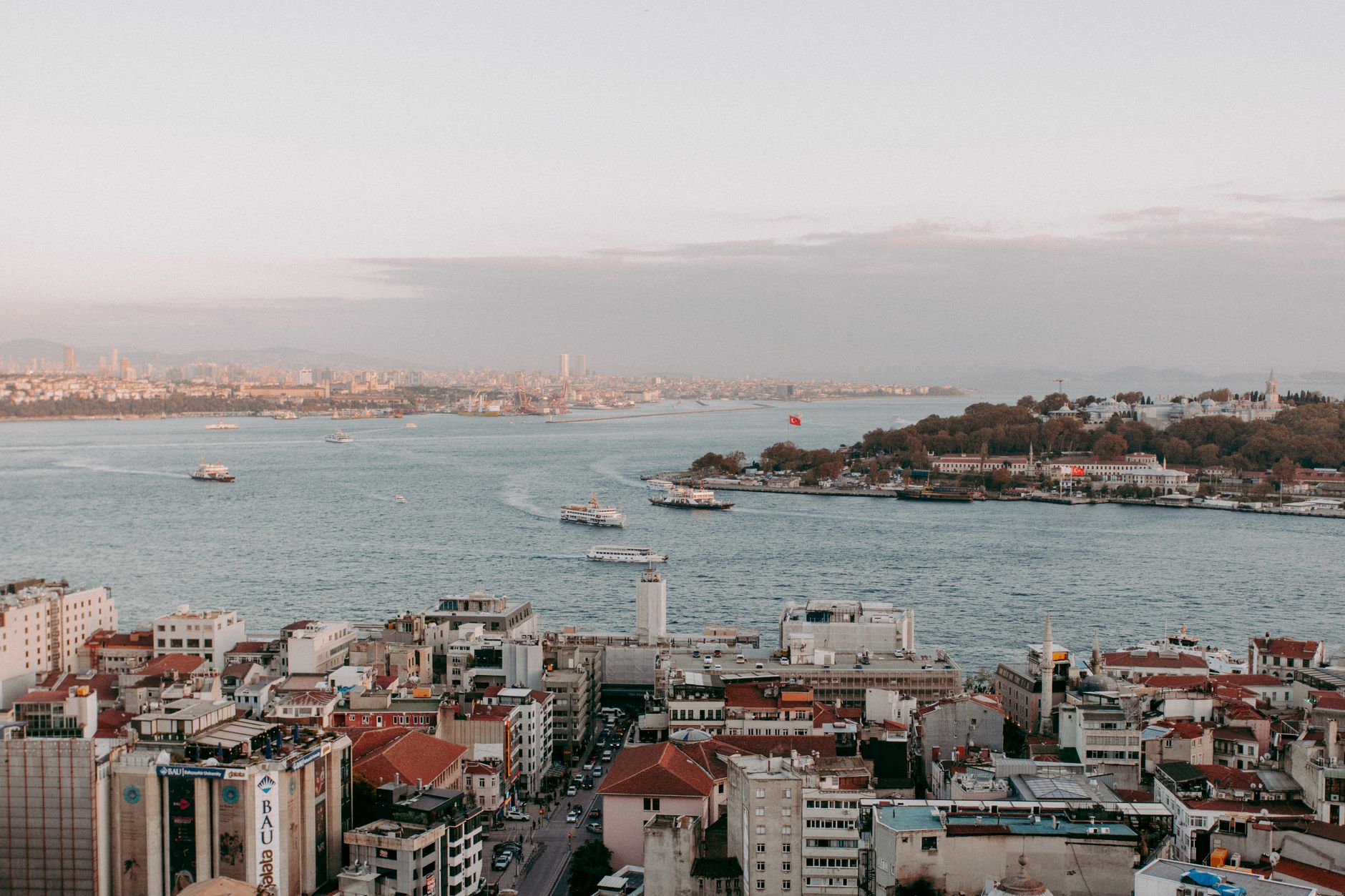
Photo by ROMAN ODINTSOV
This quick reference helps when you are deciding where to spend your best light.
| Spot | Best light | Best frame | Watch for |
|---|---|---|---|
| Blue Mosque, Sultanahmet Square | Early morning | Dome and minarets over the square | Heavy foot traffic after breakfast |
| Suleymaniye area | Late afternoon | Mosque above descending old streets | Steep walks and parked cars |
| Yeni Cami, Galata Bridge | Blue hour | Mosque with bridge movement and ferries | Busy edges and tight space |
| Ortakoy Mosque | Sunset | Mosque with Bosphorus water and bridge | Crowds in the plaza |
The pattern is simple: wide public spaces help at Sultanahmet, while layered streets help at Suleymaniye.
If Istanbul feels too packed, Selimiye Mosque in Edirne is worth the trip. The mosque has room to breathe, and the clean sight lines around it make composition easier. That matters when you are tired of dodging umbrellas and selfie sticks.
Inside the mosques, light matters less than respect
The best mosque interiors in Turkey do not reward speed. They reward quiet feet, slow eyes, and the good sense to wait until the room settles. Before you even raise the camera, check whether visitors are allowed inside at that moment, dress modestly, remove your shoes when required, and keep a scarf with you if you may need one.
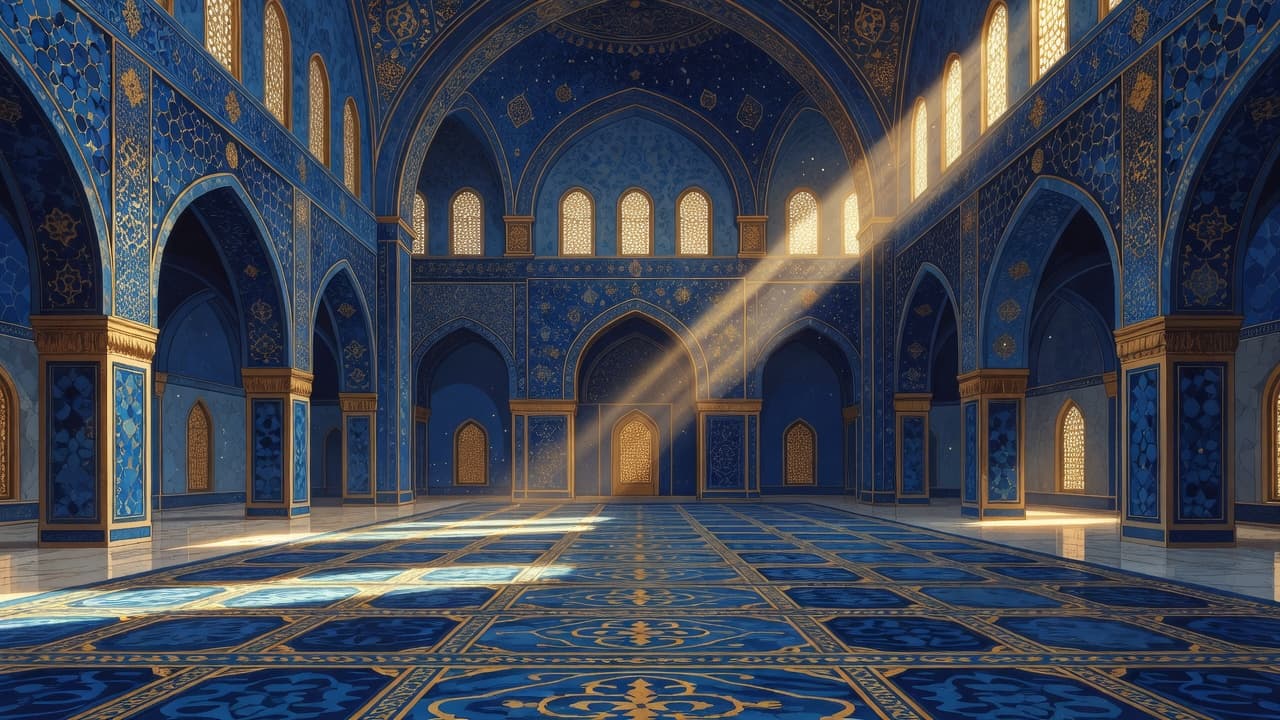
Because many mosque interiors close or shift visitor access during prayer, the smartest plan is to scout the courtyard first, watch how the light falls through the doors, and then step inside only when the space feels calm.
Flash almost never helps. It flattens detail and pulls attention to you. Instead, use the available light, raise your ISO if needed, and brace yourself against a column or doorway if your shutter speed drops. A wide lens is useful, but symmetry matters more than width. Step back, center the arches, and let the carpet lines pull the eye inward.
A strong mosque photo starts with patience, not a wide lens.
Each mosque gives you a different visual language. The Blue Mosque has scale and rhythm. Rustem Pasha has dense tile detail and richer color at close range. Suleymaniye feels calmer and more spacious, with softer light and less visual noise compared to the massive, soaring dome of the Hagia Sophia. Selimiye, if you make the trip to Edirne, feels balanced from almost every angle.
Never push close to someone in prayer for a dramatic human shot. Give people room. If staff wave you away from an area, move at once. You will often find a better frame a few steps back anyway, because the doorway, hanging lamps, or a patch of side light adds context that a close crop would lose. Capturing these historic spaces is one of the most rewarding parts of exploring the beautiful city of Istanbul.
Frequently Asked Questions
What is the best time of day to photograph Cappadocia’s hot air balloons?
The best time is approximately 45 minutes before sunrise to capture the early morning light as the balloons begin to lift. Positioning yourself on a ridge like Aydin Kiragi allows for the best framing before the valley floor gets crowded.
Is it acceptable to photograph inside Turkish mosques?
Yes, photography is generally allowed, but you must be deeply respectful of those praying and the sanctity of the space. Always check for signs regarding photography, avoid using flash, and ensure you are dressed modestly with your shoes removed before entering.
Do I need a specialized camera lens to get good photos in Turkey?
Not necessarily, as a mid-range zoom lens is usually sufficient for most landscapes and architectural shots. While a longer lens can help compress scenes like clustered balloons, patience and framing are far more important to a successful image than expensive equipment.
Are there any restrictions I should know about when scouting photo spots?
Yes, always respect local property and environmental boundaries. Do not climb on fragile rock formations, avoid entering private hotel terraces without permission, and always ask before taking portraits of local residents.
The frame worth waiting for
The most memorable Turkey photo spots rarely come from rushing between pins on a map. They come when you pick one ridge in Cappadocia, one courtyard in Istanbul, or the gleaming white terraces of Pamukkale, and give the light time to do its work. Even amidst the ancient marble streets of Ephesus, you will find that the best images are found when you slow down.
That is the real advantage in these places. Patience beats a bigger lens, and respect gets you closer than forcing the shot ever will.
Save your last battery bar for the moment when evening light slides across the Istanbul mosque courtyards and the stone turns the color of tea. Whether you are capturing the soft morning glow of Cappadocia or the golden hour against historic ruins, the perfect photograph is always worth the wait.
