
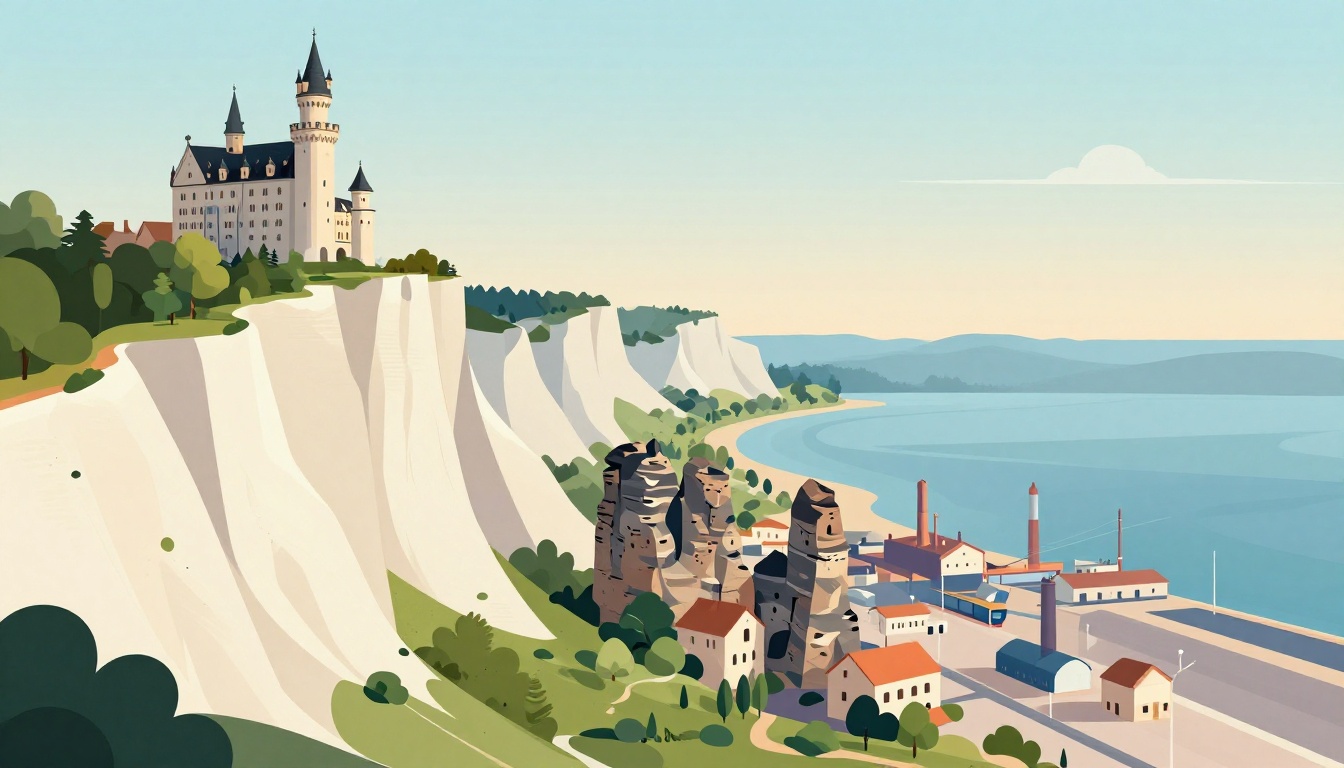
Germany compresses an unusual amount of visual range into one country. In a matter of hours, the frame can shift from turreted castles and medieval streets to chalk cliffs, industrial harbors, alpine lakes, and the jagged sandstone peaks of Saxon Switzerland. That compact variety is what makes the best photo spots in Germany so strong on camera, because the country doesn’t offer one signature look, it offers a series of distinct moods.
This guide keeps a narrow focus. It isn’t a giant inventory of viewpoints, but a selective run of places that produce memorable images, whether through scale, texture, weather, or the way light settles into stone and water. Some are famous for good reason; others ask for patience, the right hour, and a better angle than the first one most visitors take.
April through early fall often gives photographers the broadest window. Recent travel reporting on April 2026 points to fresh spring greens, cleaner air, softer light, and lighter crowds outside the Easter peak, conditions that can sharpen cliff lines, calm lake scenes, and soften city streets at the same time. What follows balances headline landmarks with locations where timing matters as much as place.
The landmark shots that still earn their reputation
Some locations stay famous because they keep producing strong pictures, even after decades of postcards, guidebooks, and social feeds. In Germany, the best-known landmarks still work for a simple reason: they have structure, depth, and a clear sense of place. Towers rise against mountains, bridges cut through stone, and white cliffs break against dark forest and cold sea. Fame has made them crowded, but it hasn’t made them empty.
Neuschwanstein Castle gives Bavaria its classic fairytale frame
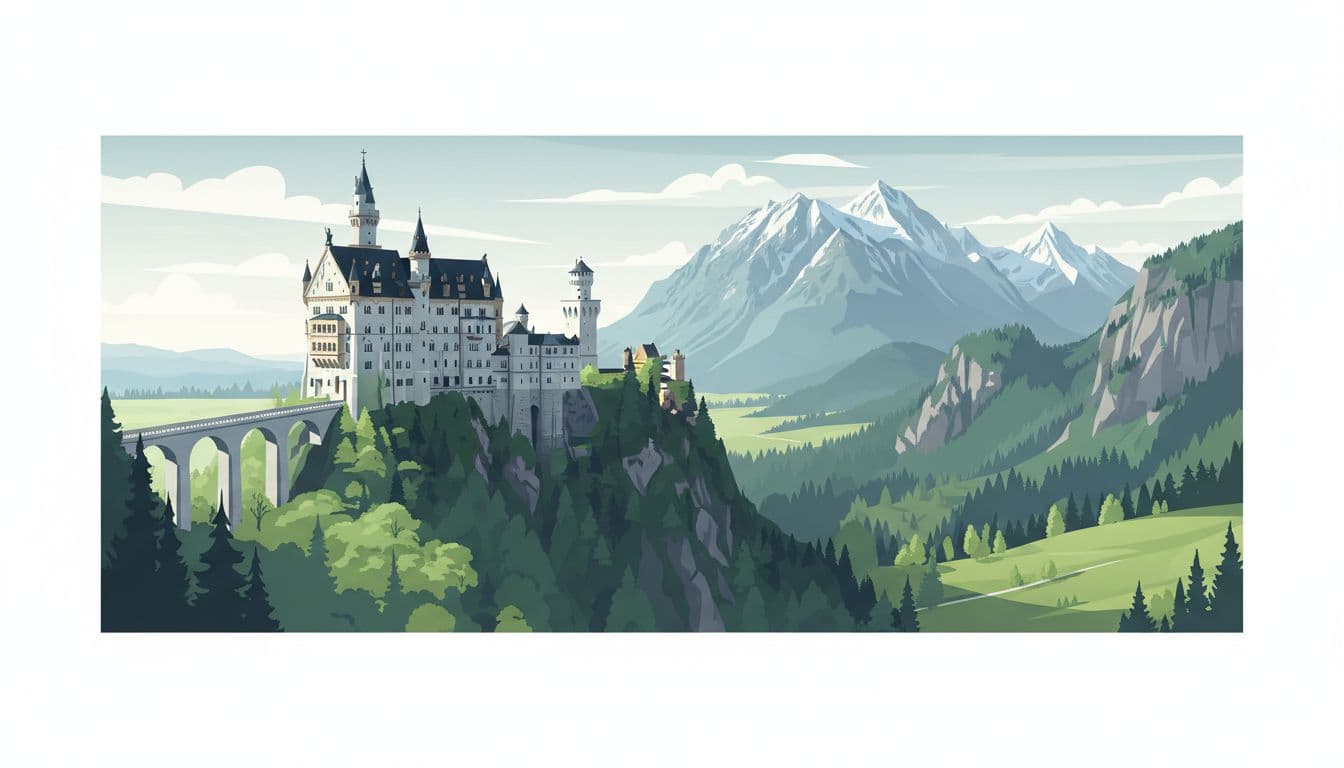
Neuschwanstein remains one of the defining photo spots in Germany because the scene holds together from almost every distance. The castle’s narrow towers, pale walls, and cliffside perch create a shape that reads fast on camera. Behind it, the Alpine backdrop gives the frame scale, while the gorge below adds drop and drama.
The best-known angle is still Marienbrucke, the bridge above the Pollat Gorge. From there, the castle sits in full profile, with ridges and foothills stacked behind it. For access details and the familiar viewpoint, Marienbrucke viewpoint guidance is a useful reference. Early light is usually kinder here because it softens the white stone and keeps contrast under control. In spring, fresh green slopes help separate the castle from the darker forest, and a longer lens can compress those background layers into a denser, more cinematic frame.
Practical limits matter here. Buses run up from Fussen toward Hohenschwangau, but the last stretch still demands planning, whether by shuttle and short walk or by a steady uphill climb. The bridge and nearby paths fill fast, especially once tour groups arrive, so timing matters as much as composition. April 2026 conditions point to cooler mornings, strong spring runoff, and lower crowds than summer, though Easter periods still spike.
At Neuschwanstein, the famous view is still the right view, but only for those who reach it before the path turns into a queue.
Bastei Bridge turns Saxon Switzerland into a landscape on a grand scale
Bastei photographs so well because it combines architecture and terrain in one frame. The stone bridge links jagged sandstone towers, while the Elbe valley drops away behind them. That change in depth gives images weight. When weather shifts and mist moves through the rocks, the whole site starts to look less like a viewpoint and more like a stage set.
Access is one reason Bastei keeps its broad appeal. Some trails are short, and several viewpoints are easier to reach than at many mountain sites. The regional tourism board outlines the main overlooks and barrier-reduced options at the official Bastei Bridge page. That doesn’t mean the area is empty, only that it is more reachable than its scale suggests.
Shoulder-season mornings are often the best trade-off. Spring and fall cut the rush, and cooler air can hold mist in the valley a bit longer. Meanwhile, the rock platforms around the bridge offer more than one standard shot, which helps photographers move past the obvious postcard frame.
Konigsstuhl on Rugen offers Germany’s sharpest coastal contrast
Konigsstuhl works because the contrast is so clean. The chalk cliffs are stark white, the Baltic often falls into bands of blue and steel, and the forest edge adds a dark border that keeps the image from washing out. Few German coastal scenes look this graphic.
The area rewards both wide frames and tighter studies. A broad shot can hold cliff, sea, and treeline in one sweep. A longer crop can isolate cracked chalk faces, shadow lines, or the hard edge where beech forest meets open water. For route context toward one of the classic outlooks, the Victoria viewpoint trail gives a useful sense of distance and terrain.
Spring has a clear advantage here because crowds are lighter and the fresh beech canopy frames the cliffs without full summer congestion. Still, this is not a pull-up-and-shoot stop. Stairs, uneven trails, and viewpoint spacing make route planning part of the visit. That practical friction helps preserve the place’s visual force. The scene still feels earned, which is part of why the photographs keep their edge.
Where Germany’s rivers and lakes create the strongest reflections
Germany’s water-based photo scenes work by compression. A lake can pull mountain walls into a single plane; a river can hold a castle, a hillside, and a town in one stable frame. In these places, weather matters as much as geography. Calm surfaces sharpen edges, light mist softens hard lines, and the height of a bridge or riverbank often decides whether the picture feels flat or complete.
Konigssee pairs mountain drama with mirror-calm water
Konigssee is one of the clearest cases where the water does half the work. The lake’s emerald tone, the near-vertical slopes, and the hard drop of the shoreline create a scene that already feels severe. When the surface settles, that severity turns symmetrical, and the image starts to look almost doubled.
The focal point is usually the St. Bartholoma area, where the onion domes sit low against steep rock and dark forest. That contrast matters because it gives the reflection a precise anchor, not just a wash of color. For seasonal timing and light patterns, this Konigssee reflection guide tracks why early spring and first light tend to produce the cleanest conditions.
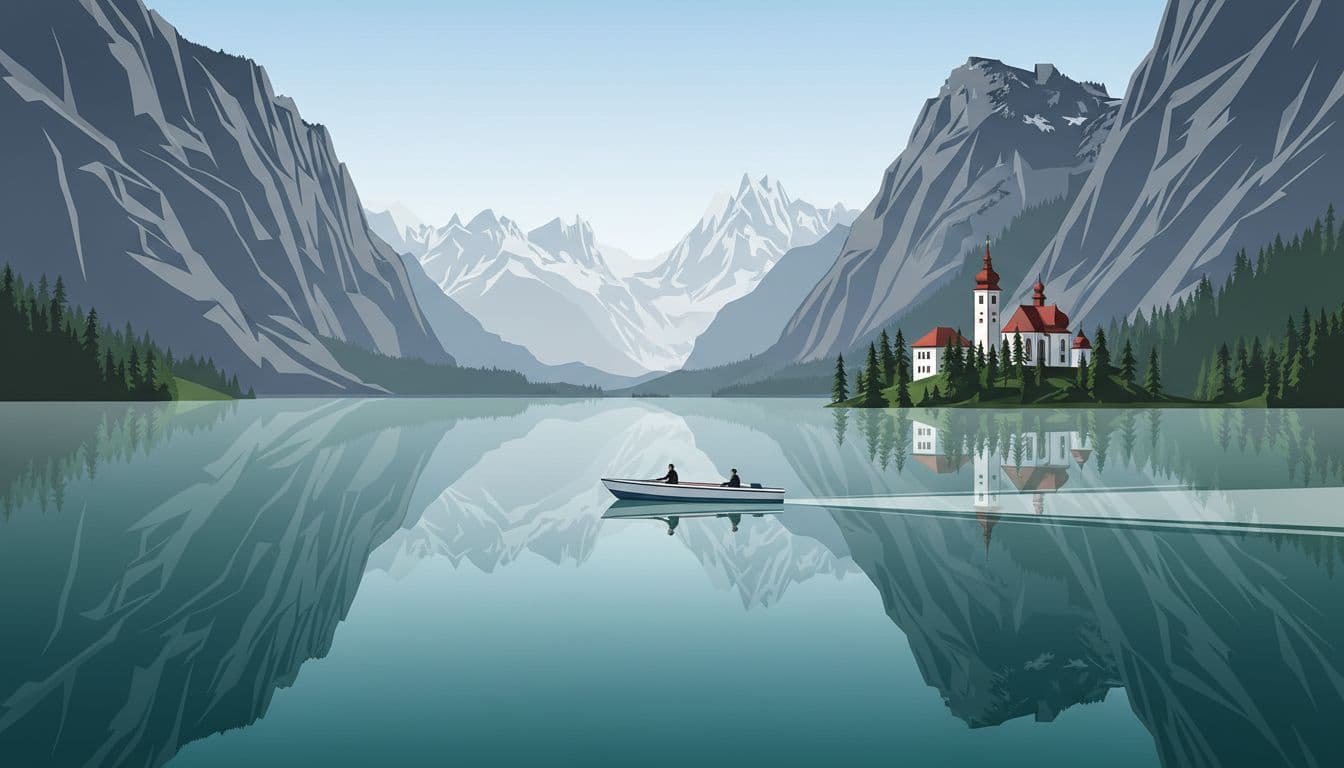
The electric boats are part of the visual logic of the place. They move quietly, they don’t churn the lake into noise, and they keep heavy boat traffic out of the frame. As a result, the crossing itself becomes part of the shot rather than a distraction. In April’s cool, clear conditions, early departures often have the best light, with crisp air, thinner crowds, and enough softness in the sky to keep the rock faces from turning harsh.
At Konigssee, the cleanest frame often depends less on finding a secret angle than on catching the lake before traffic and wind disturb the surface.
Cochem and the Mosel show how a river valley can hold a whole scene together
Cochem works because the Mosel doesn’t isolate a single subject. It ties several together. Reichsburg Cochem rises above the town, vineyard slopes run down the valley sides, and the river carries their shapes through the middle of the frame. That combination gives the image structure from top to bottom.
From riverside paths and overlooks above town, the scene rarely needs much editing in the field. The castle sets the high point, the facades fill the center, and the water supplies the final layer through soft reflections. A practical guide to vantage points appears in this Cochem Castle photography guide, which shows why the valley reads so well from more than one elevation.
Timing changes the tone. Misty mornings can simplify the background and pull more attention toward the river surface. In mild spring weather, fresh vine growth softens the slopes; in early fall, vine color adds a warmer band above the town. Either way, Cochem is strongest when the river is calm enough to mirror parts of the old town without losing the castle’s outline above it.
Bamberg is one of the rare city photo spots that feels balanced from every bridge
Bamberg has a different strength. It doesn’t depend on a skyline or a distant overlook. Instead, the old town keeps presenting layered scenes at walking height, with water doing the work that elevation often does elsewhere. Altes Rathaus sits over the river with unusual confidence, while Klein Venedig extends the view into rows of facades, moored boats, and repeated rooflines.
That balance is why so many bridges in the center produce usable frames. The old town doesn’t scatter its best elements too far apart, so reflections, architecture, and street life stay connected. The Obere Brucke overview gives a sense of why this crossing remains one of the most reliable points for looking back across the water.
Light shifts the city without breaking it. Golden hour warms plaster, stone, and timber, while blue hour often strengthens the scene even more because lamps and windows start to register on the water. In Bamberg, the river doesn’t just reflect the city. It edits it, smoothing the busy edges and carrying the whole frame from bridge to bridge.
Mountain and forest viewpoints that reward weather, patience, and timing
Higher ground changes the terms of the photograph. At these locations, Germany’s strongest images often come from air and light as much as from the subject itself. Clouds can erase depth in minutes, haze can flatten a distant ridge, and a late break in the sky can turn an ordinary frame into one with scale and tension.
That is why these viewpoints reward waiting more than rushing. Their best pictures depend on narrow weather windows, seasonal contrast, and careful framing, not just arrival.
Zugspitze delivers the high-alpine view, if the sky cooperates
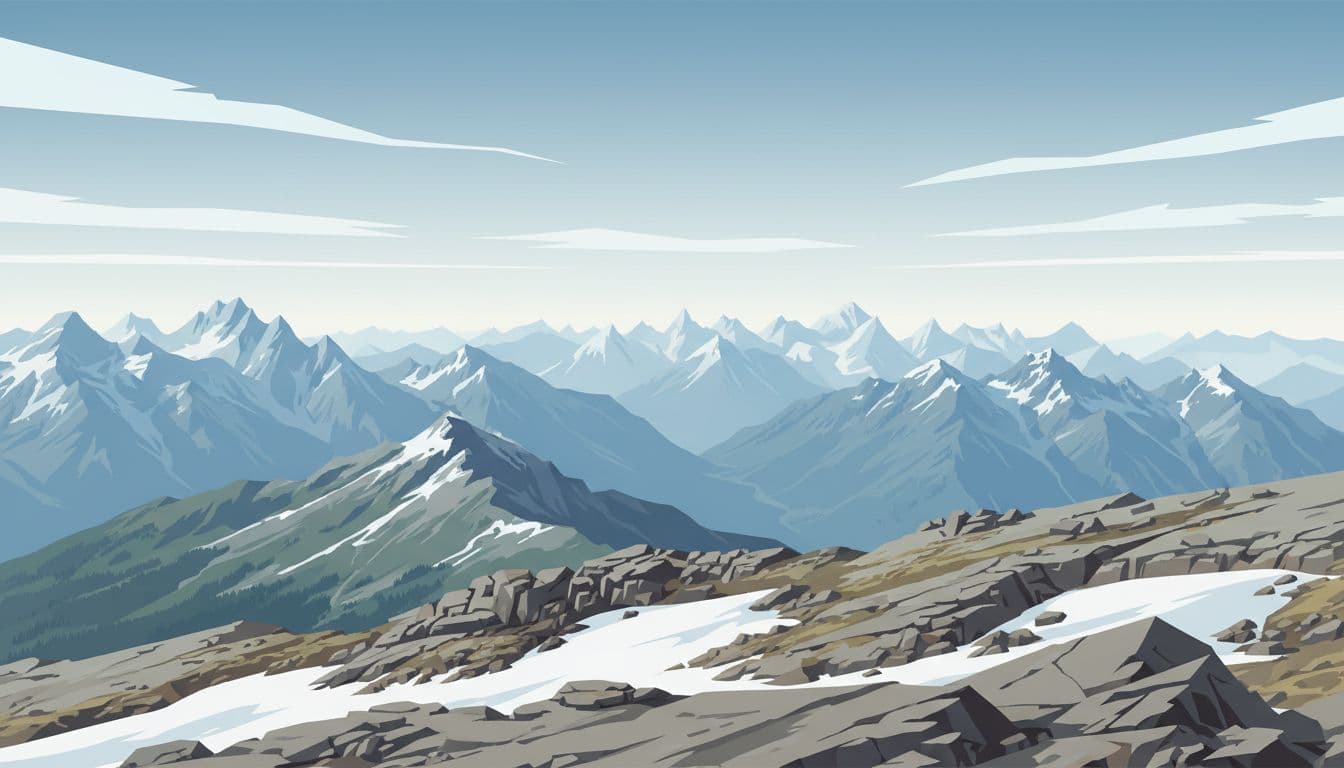
Zugspitze has the widest sense of space in the country. At 9,843 feet, Germany’s highest peak opens the Alps into layered distance, with ridges fading toward Austria and beyond. When the air is clear, the scene feels less like a summit portrait and more like a map made of stone and snow.
April often helps the picture. Snow patches usually still hold across the plateau and higher slopes, and that white contrast gives the frame structure against dark rock and a cold spring sky. Without that contrast, the summit can look harsher and more monochrome.
The caution is simple, and important. Visibility changes fast here. A clear valley can sit below a clouded summit, or the reverse, and a strong view can close within minutes. Before any ascent, the live Zugspitze weather updates and current operating times and timetables matter, especially in spring maintenance periods when access can shift. Cable car timing also shapes the crowd pattern, so the first workable departure often gives the cleanest platform and the best chance at stable light.
At Zugspitze, the photograph is never guaranteed by the ticket. The sky still decides.
Zirkelstein is a smaller name with a wilder Saxon Switzerland look
Zirkelstein offers a useful correction to the usual Saxon Switzerland shortlist. It lacks Bastei’s scale and fame, yet that is part of its value. The view feels rougher, less arranged, with forested slopes, isolated rock forms, and the table-mountain shapes of the region spread out in a way that still looks untamed.
The hike is moderate and short enough to keep the outing practical, but it asks for a little effort, which helps thin the crowd. The regional Saxon Switzerland photo spot guide notes Zirkelstein among the area’s recommended viewpoints, and that placement makes sense. It works best when light turns soft and the sandstone loses its midday glare.
A wide lens earns its place here because the scene is about relationship, not one object. Forest, crag, and distant ridge need to stay connected. Smaller viewpoints often produce stronger work for the same reason smaller theaters can feel more intimate: there is less spectacle to hide behind, so composition has to carry the image.
Wernigerode Castle works best when the town below stays in the frame
Wernigerode Castle is easy to isolate, but that usually weakens the result. The stronger picture keeps the hilltop castle tied to the half-timbered town below, because the contrast between the elevated seat of power and the dense old streets gives the scene its full shape.
Golden hour is especially useful here. Warm, low light settles well on the castle walls and the facades beneath, while spring leaf-out softens the hillside without hiding the architecture. That mix helps the image read as place rather than postcard detail.
Composition matters more than lens length. A frame that includes the market streets and rooflines below gives context and scale, and it also connects this view to the town scenes that make Wernigerode worth photographing at street level. In the Harz, the castle is the headline, but the town is the evidence.
Germany’s most photogenic cities work because texture matters more than skyline
Germany’s strongest city pictures rarely depend on sheer height. More often, they hold because facades, paving, roof pitch, river edges, and street rhythm give the frame weight. A medieval town and a port city may share almost nothing in age or style, yet both photograph well for the same reason: the surface of the place tells the story before any skyline does.
Rothenburg ob der Tauber still holds one of the country’s most complete medieval street scenes
Rothenburg ob der Tauber is one of the most photographed towns in Germany, and that popularity can flatten it into a cliche. Still, the camera keeps returning for good reason. Around Plonlein, the half-timbered houses, forked street, leaning walls, and steep rooflines create a scene with depth at every distance. The view is famous, but it isn’t empty. Timing decides whether it feels lived-in or overrun.
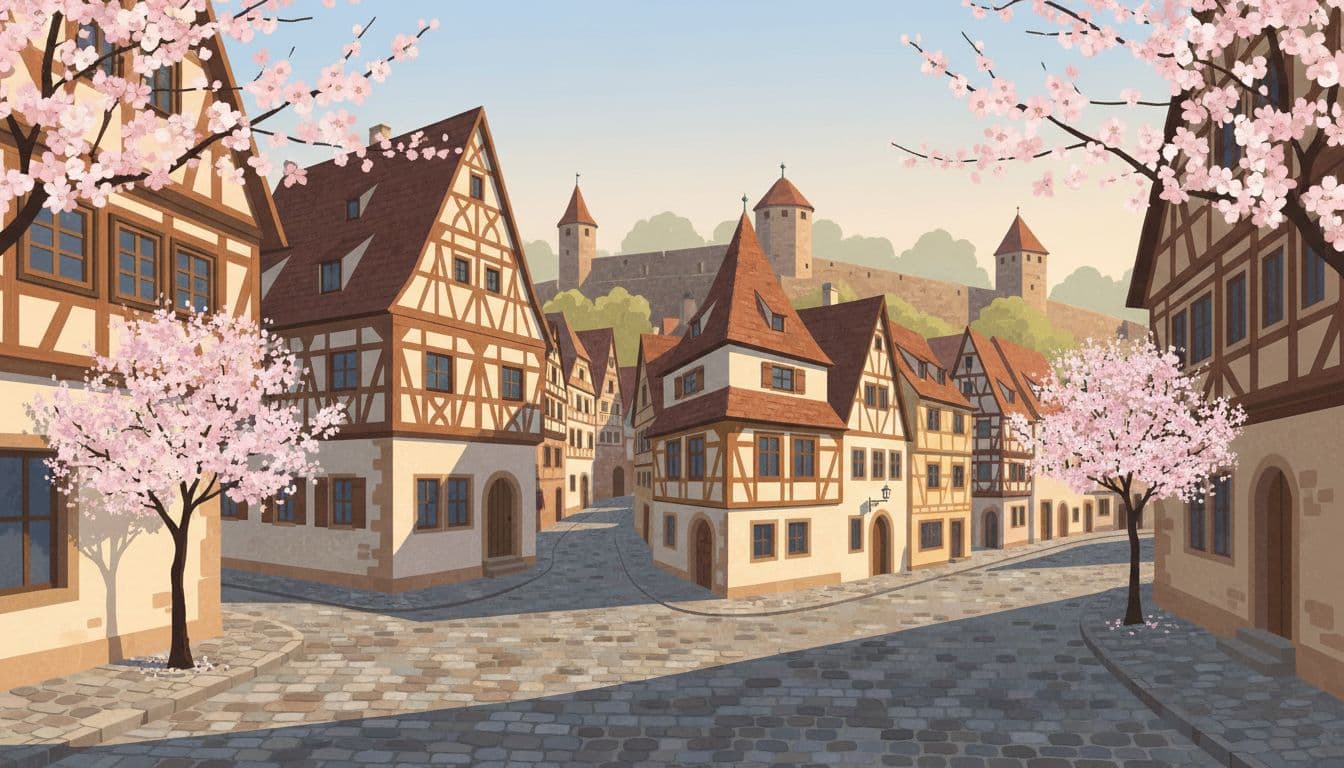
Dawn is usually the cleanest answer. Evening also works, especially when house lights warm the stone and the tour groups thin out. Recent seasonal guidance on Plonlein photo timing tracks the same pattern, and spring adds a bonus, because blossom and fresh green soften the hard geometry without hiding it.
The town walls matter almost as much as the postcard corner. From the ramparts and nearby lanes, Rothenburg reads as a pattern of tile, plaster, timber, and tower tops. That is where the town becomes more than one shot. Side streets, small courtyards, and quieter roofline views often produce the better picture, because they recover the texture that the main viewpoint can lose at midday.
Hamburg’s Elbphilharmonie proves a modern landmark can photograph like a landscape
Hamburg makes a very different argument. The Elbphilharmonie is modern, polished, and unmistakably designed, yet it photographs best when treated less as an object and more as part of the harbor’s weather. Its curved glass changes with the sky, the river, and the passing light. A flat gray afternoon can make it severe. Dusk gives it motion, color, and reflection.
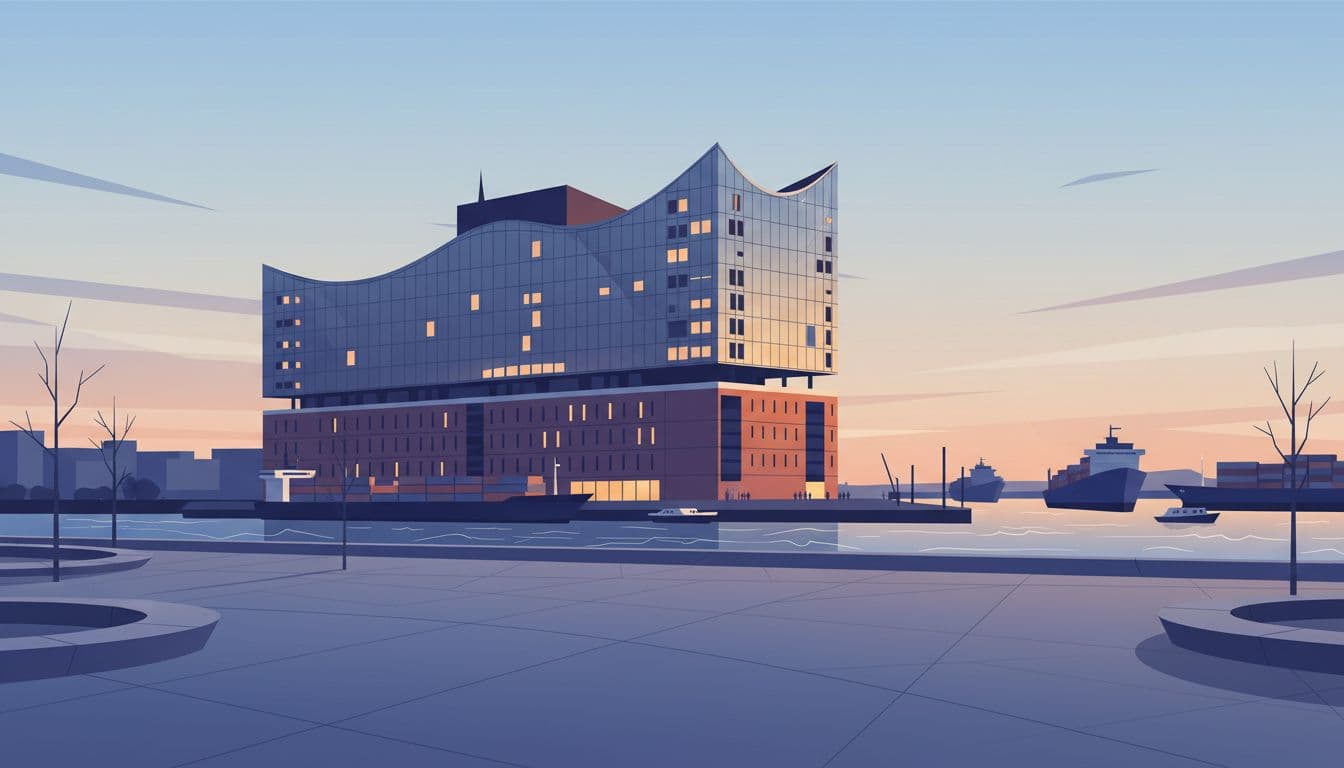
The public Elbphilharmonie Plaza helps because it places the photographer between brick warehouse mass and the glass crown above. That contrast gives Hamburg a different visual language from the timber and stone elsewhere in this article. Nearby water finishes the frame, with broken reflections and harbor light turning the building into part architecture, part horizon line.
Berlin works best when height and street rhythm appear in the same image
Berlin’s TV Tower is the anchor, but the city’s photographs improve when the tower shares space with the ground. Broad views from Alexanderplatz and nearby streets work because tram wires, rail lines, old facades, and postwar blocks keep the image from becoming a generic skyline. Berlin is strongest when several eras occupy the same frame.
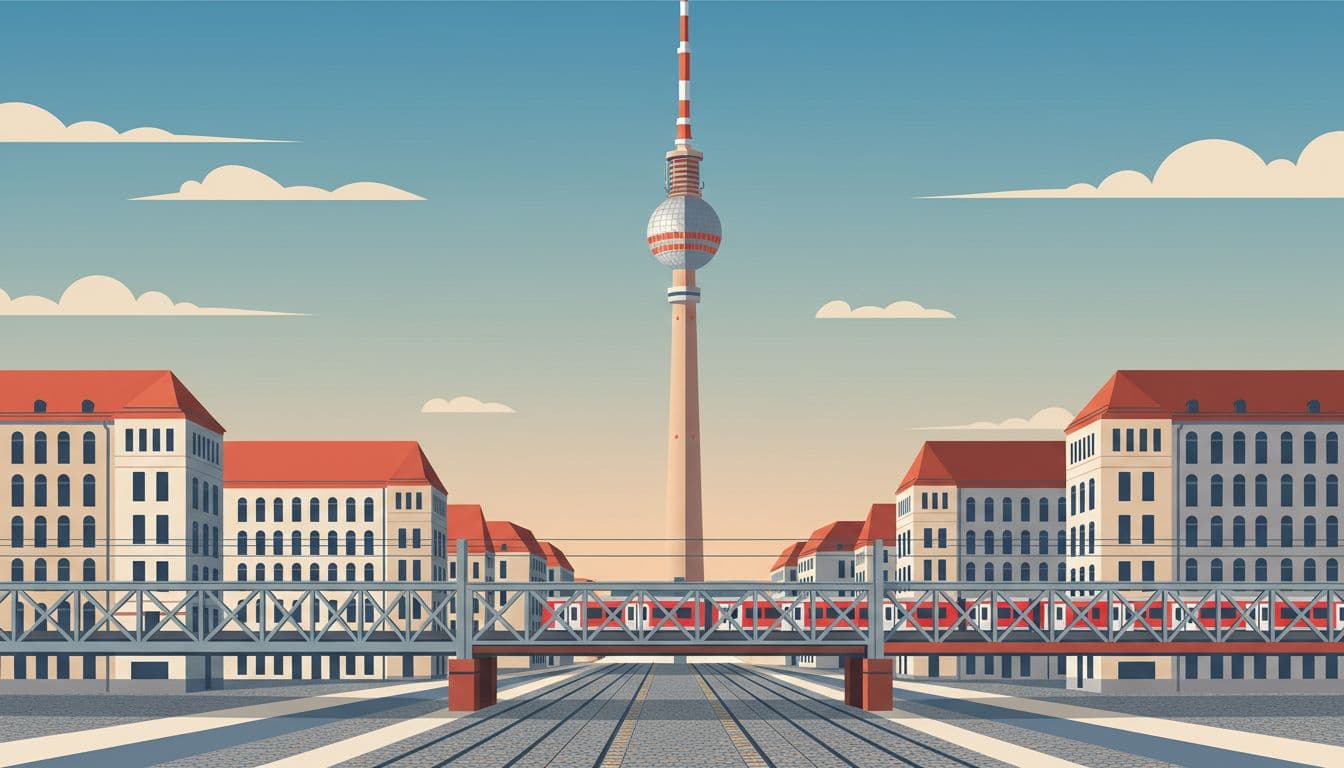
A selective ground-level approach often says more than the observation deck. The TV Tower photo spot guide shows how often the structure slips into larger city scenes rather than dominating them. That is the point. In Berlin, height matters, but rhythm matters more. The best image usually holds both.
How to choose the right season, light, and angle at Germany’s best photo spots
Place matters, but timing usually decides whether a scene feels flat or full. Across Germany’s best photo spots, the difference often comes down to season, first light, and how long a photographer is willing to wait after arrival. Castles, lakes, cliffs, and old towns all respond to the same basic forces: crowd pressure, sun angle, wind, and cloud cover.
That is why the most useful planning is often simple. A spring morning can improve both color and access. A ten-minute delay can turn blank sky into texture. And a small shift in position can bring a town, river, or hillside back into balance.
Spring often gives the cleanest mix of color, light, and breathing room
April and May are often the most forgiving months for photography in Germany. Hills turn green, wildflowers start to break up the darker ground, and trees fill out without yet becoming a dense summer wall. Temperatures are also easier to work in, especially on exposed bridges, lake shores, and cliff paths.
Recent travel reporting points in the same direction. At major sights such as Neuschwanstein and Konigssee, spring often brings 20 to 50 percent fewer crowds than peak summer, with April often the quieter of the two months outside school breaks and holiday weekends. The April 2026 outlook is especially favorable, with strong spring color and lower crowd pressure outside holiday peaks. Easter is the main exception, because it can briefly push popular routes, shuttles, and viewpoints back toward summer conditions. A broad April planning overview at Nomad Epicureans’ Germany spring guide captures that mix of bloom, mild weather, and holiday spikes.
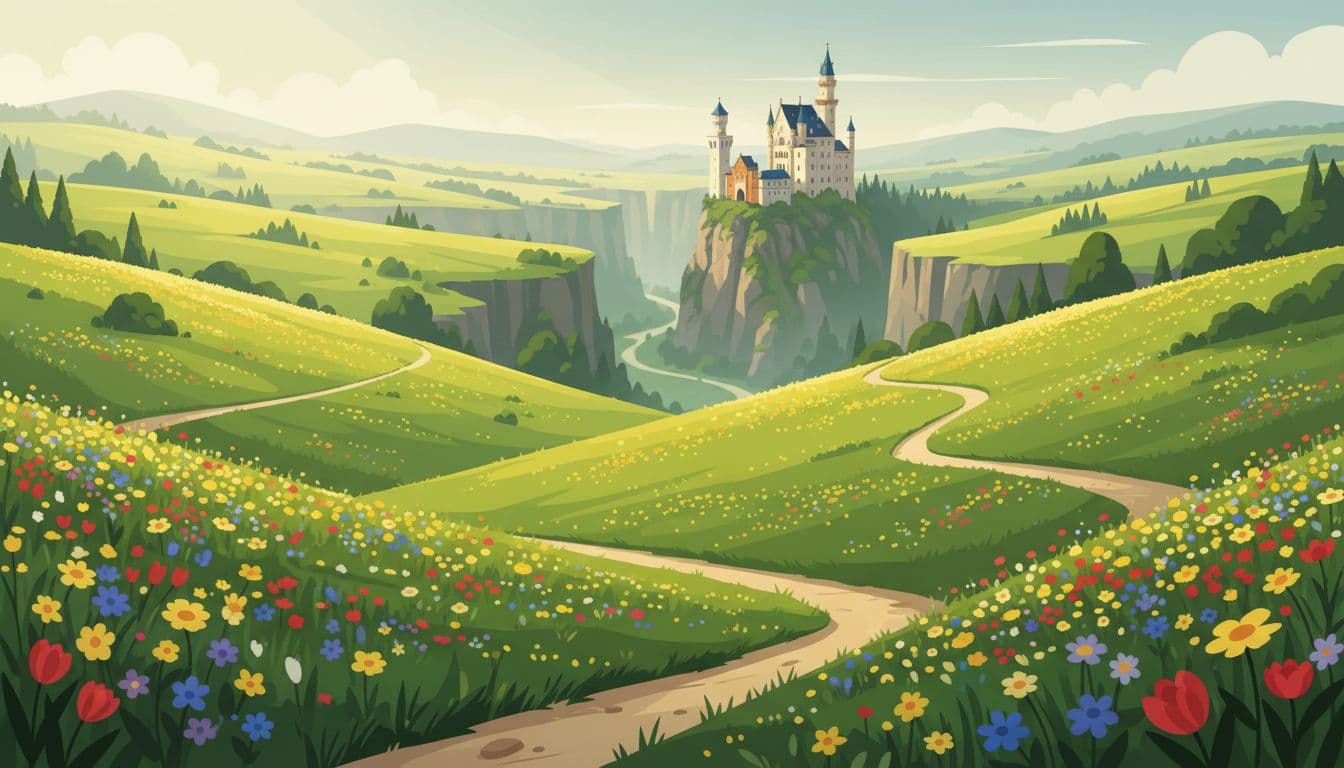
Spring also flatters the country itself. Waterfalls run fuller near alpine sites, beech woods along the Baltic look fresh rather than heavy, and river valleys gain a soft green edge that helps stone towns and castles stand out. Summer has longer days, but it often brings harder light, more haze, and less room to work.
The strongest images usually come from early starts and patient framing
The best light in Germany’s headline locations usually arrives before the crowds do. Sunrise and the first stretch of golden hour tend to give castles softer stone, calmer water, and cleaner paths. Blue hour has its own use, especially in cities such as Bamberg or Hamburg, where lamps, windows, and river reflections start to carry the frame after sunset.
Mist and changing cloud are often part of the picture, not a problem to edit out. At Konigssee or along the Mosel, a still morning can hold reflections for only a short window. In Saxon Switzerland, low cloud can soften the sandstone and add depth to the valley. Fast-moving weather matters because a blank sky rarely helps, while broken cloud can shape a scene without darkening it.
A restrained kit is usually enough:
- A weather app to track wind, low cloud, and rain bands
- A sun-position planner such as LightPlan for sunrise angle and shadow direction
- A tripod for blue hour, mist, and slow water
Access also shapes the result. First trains, early ferries, and opening cable cars usually offer the cleanest approach to a scene, while some of the strongest frames still require a final uphill walk. That practical fact runs through the places above. Germany’s best photo spots reward planning less for comfort than for calm, because the clearest pictures usually come before the day fills up.
Conclusion
Germany photographs so well because distance compresses contrast. Within a short span, the frame can move from Alpine height to river stillness, from medieval street density to harbor glass, and each setting keeps a clear visual identity.
That range, however, is only part of the story. The strongest images usually come when a landmark is treated as one element in a larger scene, with weather, season, and the ground around it given equal weight. A castle gains force from the gorge below it. A city sharpens when water, bridge lines, or roof patterns stay in the frame. Timing is what turns a famous place into a memorable photograph.
That is why the best photo spots in Germany resist a simple checklist. Their real strength lies in how often scale, texture, and light meet at once, and how a small shift in hour, cloud, or position can reveal a fuller picture than the standard view.
