
Some countries ask for a checklist. Moldova photo spots ask for patience.
If you’re chasing monastery domes, cave shrines, and vineyard hills that fold into the evening light, Moldova gives you strong subjects without the usual crowds. The best frames come when stone, slope, and sky meet in one quiet place. Start with the stops below, then leave room to linger.
Old Orhei and Curchi for classic monastery views
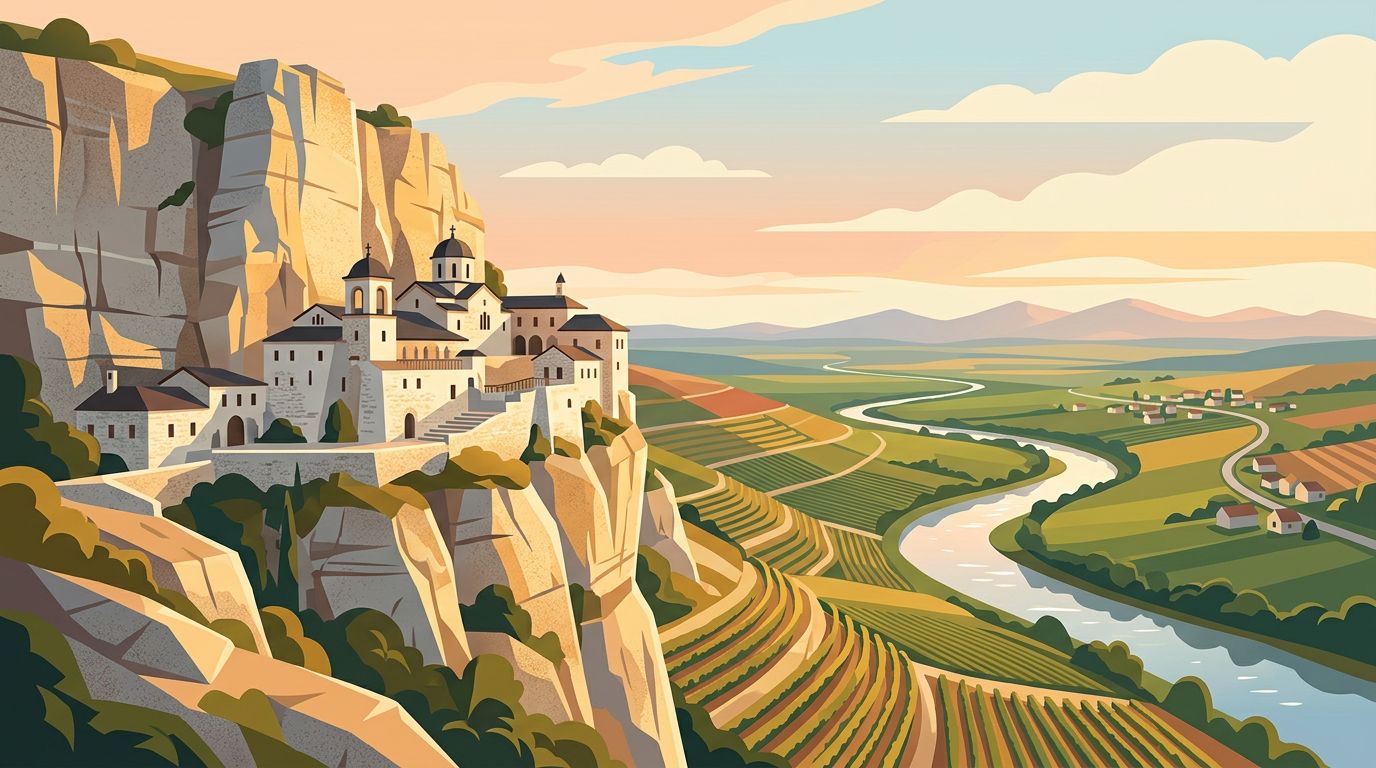
If you want one frame that explains why Moldova photo spots feel so different from their better-known neighbors, stand above Old Orhei at first light, when the Raut River bends below the cliffs and the monastery walls catch the sun before the valley floor does. The setting has scale, but it also has detail, which is why it works for both wide shots and tighter compositions.
Old Orhei, or Orheiul Vechi, is the obvious first stop, and that’s fine. Some places are famous because they earn it. The cave monastery tucked into the limestone cliff is only part of the appeal. The bigger win is the full scene: the ridge line, the river loop, the worn paths, the layers of grass and rock. The UNESCO page for Old Orhei helps with context, and Big 7 Travel’s Moldova list shows how often photographers circle back here.
Go early. Mist helps.
By mid-morning, the cliff face flattens out, and the tourist path becomes part of the frame whether you want it or not. A mid-range zoom is enough here. You don’t need exotic gear. What you need is time to walk the ridge and look back more than once, because the best angle isn’t always the first viewpoint.
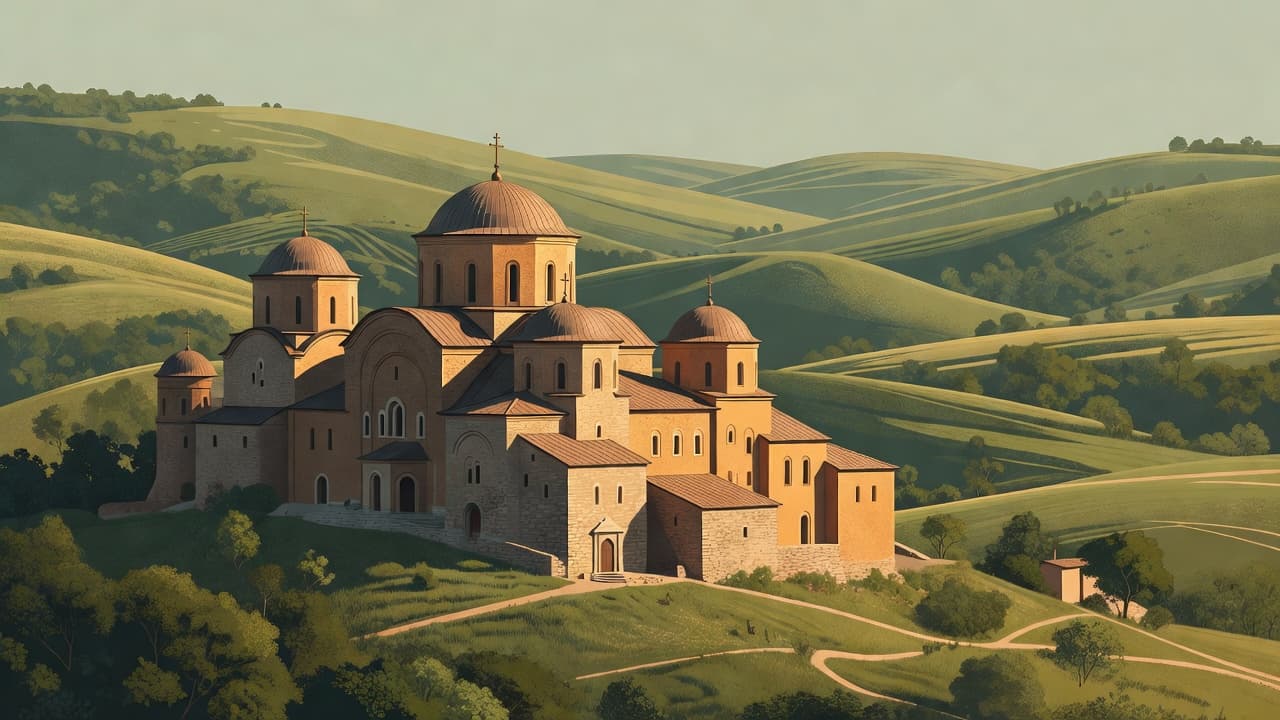
Curchi Monastery gives you a different mood. Instead of rugged drama, you get symmetry, pale facades, and clean lines against trees and sky. The complex is one of the most photogenic in the country, and Moldova Live’s monastery guide captures why so many visitors single it out.
One October evening at Curchi, after a brief rain, the paving stones held thin mirrors of water, and the shot finally worked when a patch of sunlight slid across the main dome while a caretaker swept yellow leaves from the gate. Five minutes earlier, it was flat. Five minutes later, the light was gone.
That happens often in Moldova. Wait it out.
Tipova and Rudi for cliffs, river bends, and silence
Tipova is where the country turns dramatic. The monastery complex is tied to cliffs above the Dniester, and the whole area feels built for wide frames, layered horizons, and pictures that still carry a sense of sound when you look at them later.
Tipova works best if you give it an extra hour and wait for the river haze to lift.
The cave monastery itself is compelling, but the larger setting matters more for photography. You’re dealing with stone cut into the hillside, steep paths, open sky, and a river valley that adds distance behind every foreground element. That mix lets you shoot several kinds of images in one stop. You can make a quiet detail photo of chapel stone and candle soot, then turn and shoot a broad view that looks almost cinematic.
Start before sunrise. Midday is harsh.
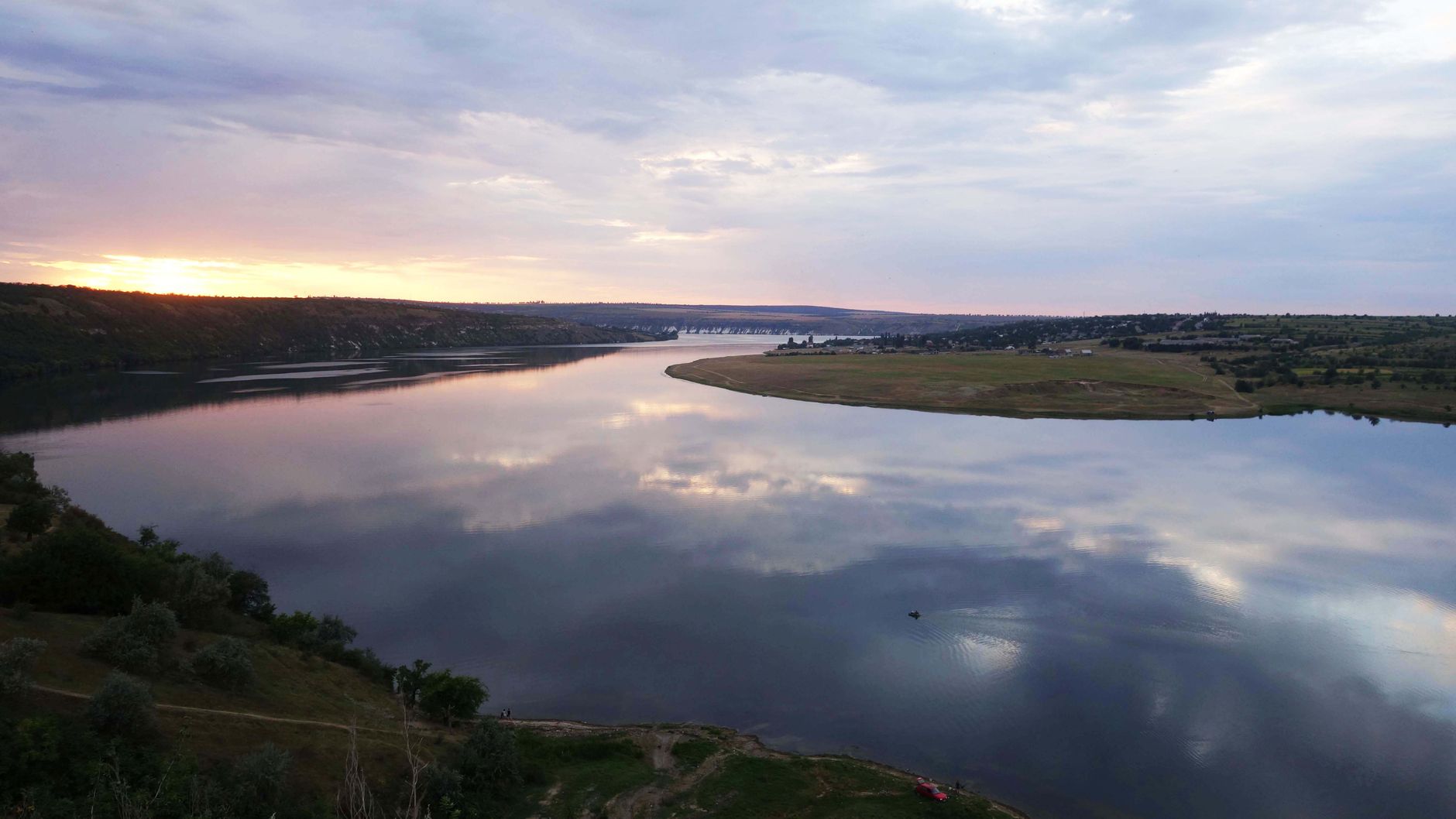
Photo by Natalya Cotenko
The Dniester bend nearby is worth its own stop, even if you never raise the camera at the monastery. Soft fog, calm water, and dark ridges give you a cleaner composition than the busier paths around the caves. If you like reflections, go when the wind drops. If you prefer texture, go later, when the grass on the slopes throws longer shadows.
Rudi Monastery is quieter, and that’s the appeal. You won’t get the same cliff drama, but you will get old church forms set inside a greener, softer valley. The Bulboana River area adds shape without stealing attention from the buildings. Because fewer people rush here, the place feels easier to read with a camera. No crowds yet.
That quiet changes the pace of your shoot. You can test small shifts in angle, move from the church to the tree line, and wait for a person to enter the frame without feeling boxed in. For photographers who like atmosphere more than spectacle, Rudi is one of the strongest monastery stops in Moldova.
Căpriana and Frumoasa when forest light matters
Some monastery photos depend on scale. Căpriana depends on light.
Set in a forested area not far from Chisinau, Căpriana feels softer than Old Orhei and less formal than Curchi. Trees shape the scene, and that matters because the buildings rarely sit alone. Branches frame the roofs, shade changes across the walls, and the path in becomes part of the composition. The official Moldova Travel guide to monasteries is useful here because it places Căpriana within a wider religious route that also works well for a road trip.
Morning tends to work better than late afternoon, especially in warmer months, because the light slips through the trees instead of hitting the facades all at once. Bring a longer lens. It helps isolate domes through leaves and makes the grounds feel more intimate. A wide lens still has a place, but it can turn the space messy if you’re not careful with the edges.
Frumoasa Monastery adds color contrast that many Moldovan religious sites don’t have. Its white and dark-blue exterior stands out against meadow grass and oak forest, so you can build images around color as much as form. That’s rare enough to matter.
There’s also a practical benefit. Because both monasteries sit in greener settings, they’re forgiving on bright days when open vineyard hills might look washed out. If the weather turns flat, these places still give you shape, texture, and enough tonal separation to keep your images alive.
For planning, this traveler guide to Moldovan churches and monasteries helps show how easily these sites fit into a loop from the capital. That matters if you’re mixing cultural stops with wine country and only have a day or two.
Vineyard hills in Codru, Cricova, and Călărași
Moldova’s monastery scenes pull you in with age. Its vineyard hills do the opposite. They open outward.
The best vineyard photography usually happens in the central wine belt, around Codru and the rolling roads near Călărași, where vine rows follow the slopes instead of fighting them. In clear weather, the lines stay clean deep into the frame. In softer weather, the hills stack into faded bands, which is great for moodier edits.
In the central wine belt, especially around Codru and Călărași, the hills rise and fall in long soft waves, so even a small road shoulder can give you layered vine rows, village roofs, and church domes in the same wide frame if the air is clear. That mix is hard to fake somewhere else.
Golden hour is the sweet spot. The rows glow, tractor paths pick up contrast, and the gentle hills finally look as sculpted as they feel in person. Sunset also helps if you want to pair a vineyard stop with a monastery nearby, since you can spend the morning on architecture and the evening on open terrain.
Cricova is better known for wine than for hillside panoramas, but it’s still worth pairing with nearby religious sites if you want a full-day route. A recent Instagram travel post linking Cricova and Curchi shows why the combination works so well for a compact itinerary. You get polished wine culture, then move to a monastery with visual weight.
Patience matters here, too. Vineyard frames can look repetitive if you stand at eye level and shoot straight across the rows. Climb a little. Use the road curve. Wait for side light. Even a modest hill can turn into a strong composition once the rows start bending across the frame instead of stopping it.
Among all Moldova photo spots, these wine hills may be the easiest place to make a simple image feel expensive.
A slower way to photograph Moldova
Moldova rewards photographers who don’t rush. The strongest frames usually come after the obvious one, when the light shifts, the shadows lengthen, or a road bends enough to reveal one more layer of hillside.
If your trip is short, pick one monastery with strong architecture and one vineyard zone with open slopes, then leave space to wait instead of cramming in extra stops. The image you remember may be the pale dome at Curchi after rain, or the last stripe of sun resting on vine rows above Calarasi at 8:37 pm.
