
Few cities make good composition this easy. In Innsbruck photo spots, painted facades and steep peaks often share the same frame, so you can walk a few blocks and come back with shots that look far bigger than the map suggests.
The trick is timing, not distance. Stay near the river for the wide skyline, then move into the old center for arcades, church squares, and long street views that pull the mountains into the background.
The river view every photographer wants
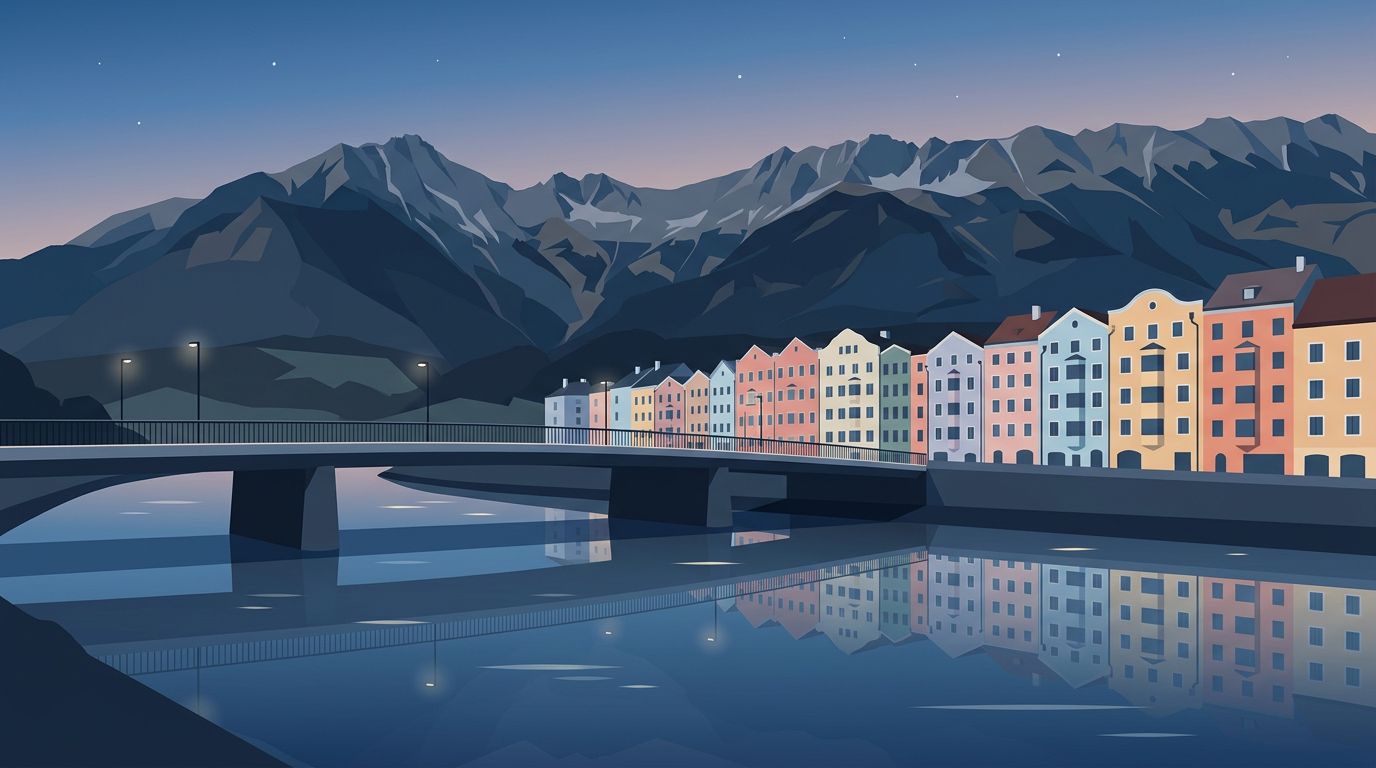
Marktplatz and the main bridge over the Inn give you the classic Innsbruck frame. Across the water, Mariahilfstrasse lines up in a bright row of pastel houses, and behind it the Nordkette rises like a stone wall.
Go early. Blue hour wins.
From the bridge, you can place the Inn in the foreground, line up the Mariahilf row houses across the water, and let the Nordkette rise behind them, which gives even a quick phone shot the layered depth many city photos never get. Marktplatz works well if you want more breathing room in the frame, while the bridge is better when you want the river to lead the eye.
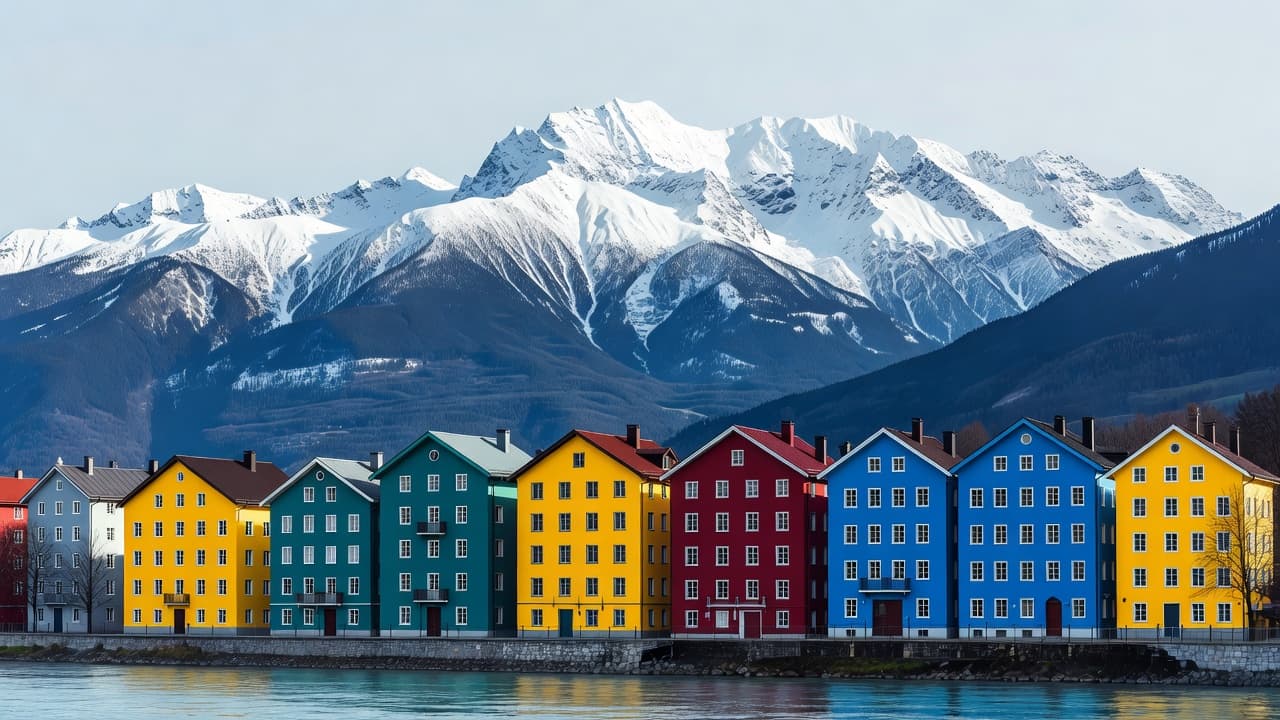
Midday can flatten the scene, because the mountain contrast gets harsh and the houses lose some of their glow. Early morning is cleaner. Evening works too, especially when the lamps begin to warm up and the sky stays cool.
The best frame often comes ten minutes before the obvious one.
For phone photographers, tap the brightest part of the sky and pull exposure down a touch. Snow and pale clouds can trick your camera into blowing out the peaks. If you have a 2x lens, use it for a tighter crop of facades and ridgeline. If you want a quick preview of the angle, this saved look at the riverfront view shows why so many people stop here first.
Wind matters more than you think. A still river adds soft reflections. A rough one strips them away. Either way, keep shooting, because Innsbruck’s strongest skyline doesn’t depend on mirror water. It works because the city and the Alps sit so close together.
Old Town lanes with color and texture
The old center rewards slow walking. Herzog-Friedrich-Strasse, Hofgasse, Domplatz, and the lanes near the Hofkirche give you warm facades, painted details, cobbles, and clean slices of mountain sky between roofs.
Goldenes Dachl gets the crowds, so work the side streets instead of planting yourself in front of the landmark. Hofgasse is better for texture. Its facades are close together, which helps vertical compositions, and the narrow street catches reflected light that stays soft even when the sun is high.
Wet stone helps. Small details matter.
A casual phone shot can look polished here if you keep your vertical lines straight. Step back, hold the phone at chest height, and avoid the ultra-wide lens unless you want the buildings to bow at the edges. With a camera, a 35mm or 50mm view feels natural in these streets.
One rainy April evening near Domplatz, a family waited under an arcade while the bells finished ringing. Two minutes later, the crowd thinned, a child in a red coat skipped past a shallow puddle, and the church facade doubled in the water for one clean frame. That is how Innsbruck often works. The scene gets better when you pause.
If you want a loose, everyday reference for how the city color reads on a phone, this traveler post from Innsbruck’s streets captures that casual mix of pastel walls and Alpine air. Arrive before breakfast if you want emptier lanes. Later in the day, use people well. A cyclist, umbrella, or bright coat can give old stone a little life.
Maria-Theresien-Strasse and its mountain frame
Maria-Theresien-Strasse is broad, bright, and built for long leading lines. It also gives you one of the cleanest ways to pull the Nordkette into a street scene without losing the feeling of being in a real city.
Start near the Triumphpforte and look north. The arch can frame the mountains when you line it up carefully, and the open street lets you layer facades, tram tracks, and distant peaks in the same shot. St. Anne’s Column helps too, especially if you want a firm center point.
If you stand south of the column and keep the camera low, the street pulls your eye straight toward the mountains, while the facades, arcades, tram lines, and passing cyclists give the frame enough city life to stop it from feeling staged. Sunset can be lovely here, but blue hour often looks better because the sky holds color and the shopfront light turns warm.
Patience matters on this street. Trams, delivery vans, and foot traffic can break your composition. Instead of fighting that movement, wait for one clean subject to cross. A single bike or one person with a bright jacket usually looks better than an empty street.
For a quick visual reference, this travel reel of central Innsbruck views shows how strong the street reads on video as well as stills. If you create content for social, shoot both vertical and horizontal here. Vertical works for the arch and column. Horizontal works when the mountains are the main event.
Bergisel when you want the whole city
Bergisel Ski Jump changes the scale of your photos. Street-level Innsbruck feels intimate. From Bergisel, the city looks tucked into the valley, with mountain walls wrapping around it on all sides.
The ski jump itself is worth shooting, not only the lookout. Its curves cut hard against the sky, so even in flat weather you can make graphic, simple images. If clouds sit low over the mountains, turn away from the panorama and photograph the structure.
The most useful frame is often not from the top deck. On the walk up, or from points lower on the site, you can hold part of the jump in the foreground and still show the city grid beyond it, which gives the image more shape than a plain overlook shot. Late afternoon works well if the city is clear. After rain can be even better, because haze drops and roofs pick up more color.
Cold air. Big view.
For phone shooters, use the main lens first. Tiny buildings and ridges can look muddy with heavy digital zoom. For hobby photographers, a short telephoto helps compress the city against the mountains, especially if fresh snow sits on the higher slopes. This is also the best place in town to see how compact Innsbruck really is, which helps when planning the rest of your route on foot.
An easy photo walk through central Innsbruck
If you have one good light window, keep the route simple. Central Innsbruck is small enough that you can cover the strongest colorful streets and river views without turning the outing into a march.
This order works well for late afternoon into blue hour:
| Stop | Best light | What to shoot |
|---|---|---|
| Triumphpforte | Late afternoon | Arch with mountains |
| Maria-Theresien-Strasse | Sunset | Long street lines |
| Hofgasse and Domplatz | Early evening | Color, texture, details |
| Marktplatz | Blue hour | Mariahilf houses and peaks |
| Main Inn Bridge | Blue hour | River, facades, skyline |
Start at the south end of Maria-Theresien-Strasse, then walk north into the old center. Give yourself time to wander a block off the obvious route, because some of the best frames come from side lanes with less signage and fewer people. After that, cut west toward Marktplatz and finish on the bridge when the sky cools down.
For sunrise, reverse the logic. Go to the river first, then work inward once the mountain light sharpens. The facades across the Inn often glow before the streets in the center feel awake, so the riverfront gives you the first strong shot of the day.
Tripods can wait. A clean lens matters more.
If you’re shooting on a phone, wipe the lens, turn on grid lines, and use burst mode when trams or cyclists pass through your frame. If you’re filming short-form video, capture five-second clips at each stop and keep the camera still for a beat before moving again. Innsbruck doesn’t need much styling. It already has painted houses, church stone, cold river light, and a mountain backdrop that does half the work for you.
Final frame
Innsbruck rewards patience more than gear. You can make strong photos here with a phone, a small camera, or nothing more than good timing and a slow walk between the river and the old center.
Pick one light window and commit to it. When the lamps along the Inn start to glow and the Mariahilf facades turn soft peach under a pale blue Nordkette, stay for one more frame on the bridge railing.
