
Venice can look almost unreal before breakfast. The best Venice photo spots don’t peak at noon, they peak when the city is still quiet and the water hasn’t been chopped up by morning traffic.
If you want clean canal reflections, empty bridges, and softer color, sunrise is your friend. A few minutes can change everything, so timing matters as much as location.
The short morning window that changes everything
In June, sunrise is around 5:21 AM, and the strongest light often starts earlier, during blue hour, when the sky is pale, shadows are gentle, and the canals can look like glass. Show up late and Venice still looks beautiful, but the mirror effect weakens once boats start moving and more people hit the bridges.
Go early. Blue hour matters. Crowds change everything.
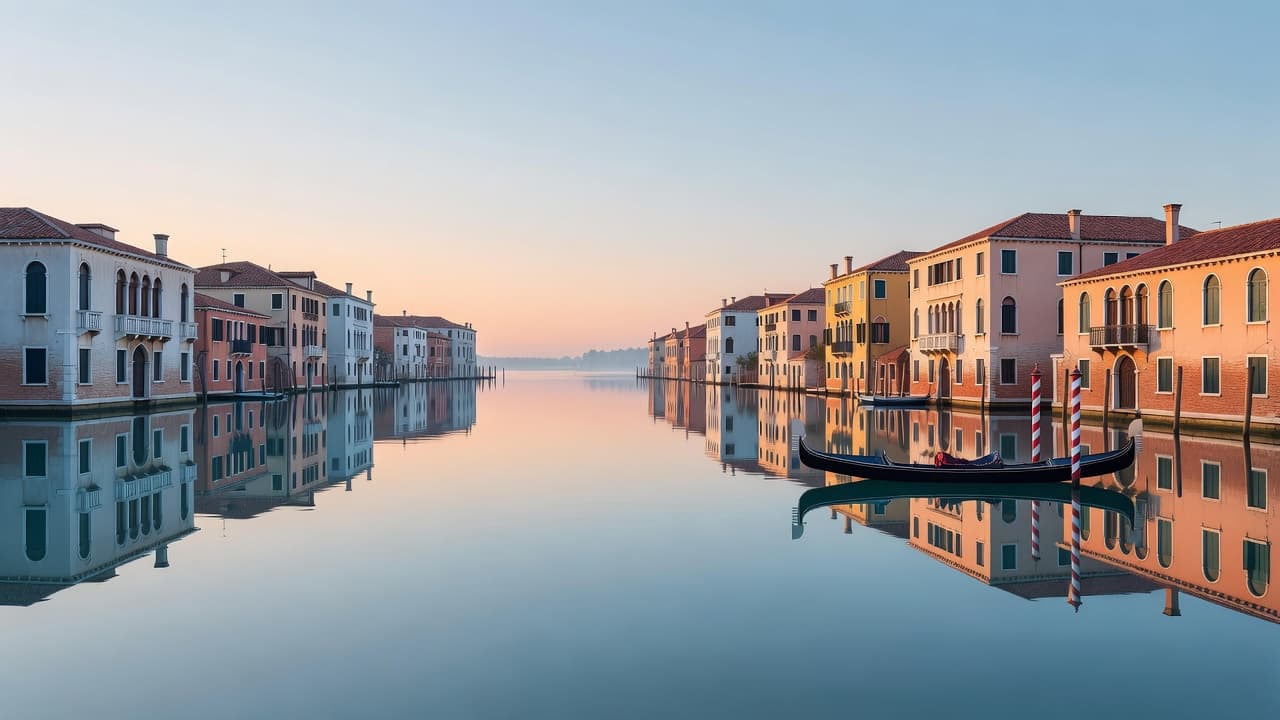
The calm water is half the picture. The other half is angle. If you hold your camera lower than feels natural, reflections stretch and fill more of the frame, which makes narrow canals look larger and grand views look cleaner.
Hold the lens low when the water is still. A small shift in height can double the strength of a reflection.
This quick guide helps when you need a first stop.
| Spot | Best moment | What to shoot |
|---|---|---|
| Accademia Bridge | Blue hour to sunrise | Grand Canal reflections, Salute dome |
| Piazza San Marco | Right at dawn | Empty square, soft stone color |
| The Molo | Sunrise | San Giorgio silhouettes, lagoon glow |
| Riva degli Schiavoni | Sunrise to early morning | Leading lines, piers, wide water |
| Punta della Dogana or Zattere | Early sunrise | City skyline across still water |
Start with one classic view and one quieter canal. That pairing usually gives you a strong set.
One more thing helps: patience. Venice changes by the minute because the water changes by the minute, and a wake that ruins one frame can flatten out fast if you stay put. For a few minutes only.
Accademia Bridge gives you Venice in one frame
If you only have one sunrise session, go to Accademia Bridge. It gives you the Grand Canal sweeping into the distance, layered palazzi on both sides, and the dome of Santa Maria della Salute anchoring the far end of the view. Few Venice photo spots deliver that much shape in a single frame.
The bridge works best before the city wakes. Arrive 15 to 20 minutes before sunrise, pick your side, and watch the water before you raise the camera. When the canal is calm, the buildings echo downward and the scene feels balanced. When a vaporetto passes, wait.
A medium focal length often works better than going ultra-wide here. Around 35mm to 70mm lets you keep the canal broad while giving the Salute enough presence. If you’re shooting on a phone, don’t zoom too far. Keep the curve of the canal, because that’s what pulls the eye through the image.
One June morning, I reached the bridge at 5:08 AM and thought I’d missed the clean water because a delivery boat had already pushed a rough wake down the canal, but five minutes later the surface settled, the dome caught a warm band of light, and the whole view doubled in the water.
That tiny reset is classic Venice. Wait for it.
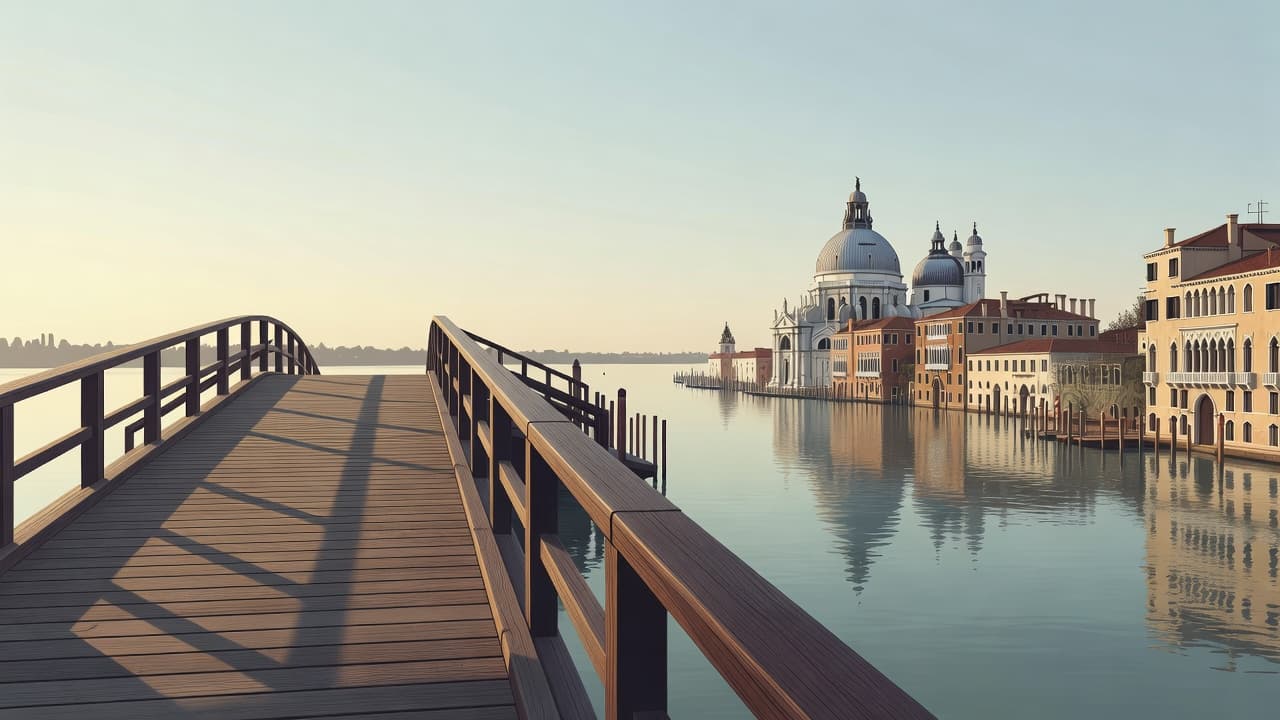
Keep your gear tight on the bridge because people still cross, even early. A compact tripod is fine if it’s not blocking the walkway, but many photographers do better handheld or with a small support on the railing. The frame is strong enough that you don’t need much equipment, only decent timing and a steady hand.
San Marco, the Molo, and Riva for open-water glow
The San Marco area is less about narrow canal mirrors and more about space, sky, and first light touching stone. That change matters. If Accademia is your layered city postcard, Piazza San Marco and the waterfront are your wide, airy sunrise set.
Piazza San Marco feels completely different at dawn. The square is often sparse, the paving catches soft color, and the Campanile can stand alone without a crowd at its base. If there was overnight rain or leftover water on the paving, you may get extra reflections at ground level. Those frames disappear fast as foot traffic builds.
The Molo, the waterfront edge by St. Mark’s, is one of the cleanest places to point your camera toward San Giorgio Maggiore at sunrise, because the open basin gives the sky room to glow and the island church can sit in silhouette while the lagoon picks up bands of pink, silver, and pale gold.
A little farther east, Riva degli Schiavoni gives you more room to play with leading lines, docks, lamp posts, moored boats, and longer stretches of water, so your sunrise set doesn’t become a string of the same frame repeated from one viewpoint. If you like a travel photo that still feels calm, this is where it happens.
For timing, the rule is simple: be there before the city is fully awake. This Venice photography and travel guide makes the same point about San Marco filling quickly, and it’s easy to see why once the first tour groups arrive.
These waterfront views also suit social-first shooting. Vertical frames work well here because you can stack foreground posts, a bright horizon, and a church or tower in the top third without cramming the scene.
Quieter canal viewpoints in Dorsoduro and Cannaregio
Some of the most useful Venice photo spots aren’t famous at all. They’re the bridges and canal bends you notice while walking to somewhere else.
Dorsoduro is full of them. Around Punta della Dogana and the Zattere, you get more breathing room, long edges of water, and clean views back toward the historic skyline. The reflections here are broader and looser than what you get on a narrow canal, but the mood can be better because the light reaches the facades slowly.
If you want more color and a local feel, head toward the canal area near Cantinone gia Schiavi after first light. The scene has boats, textured walls, and everyday Venice instead of a landmark dominating the shot. Small details matter more there, so look for mooring poles, window shutters, and soft color bouncing off the water.
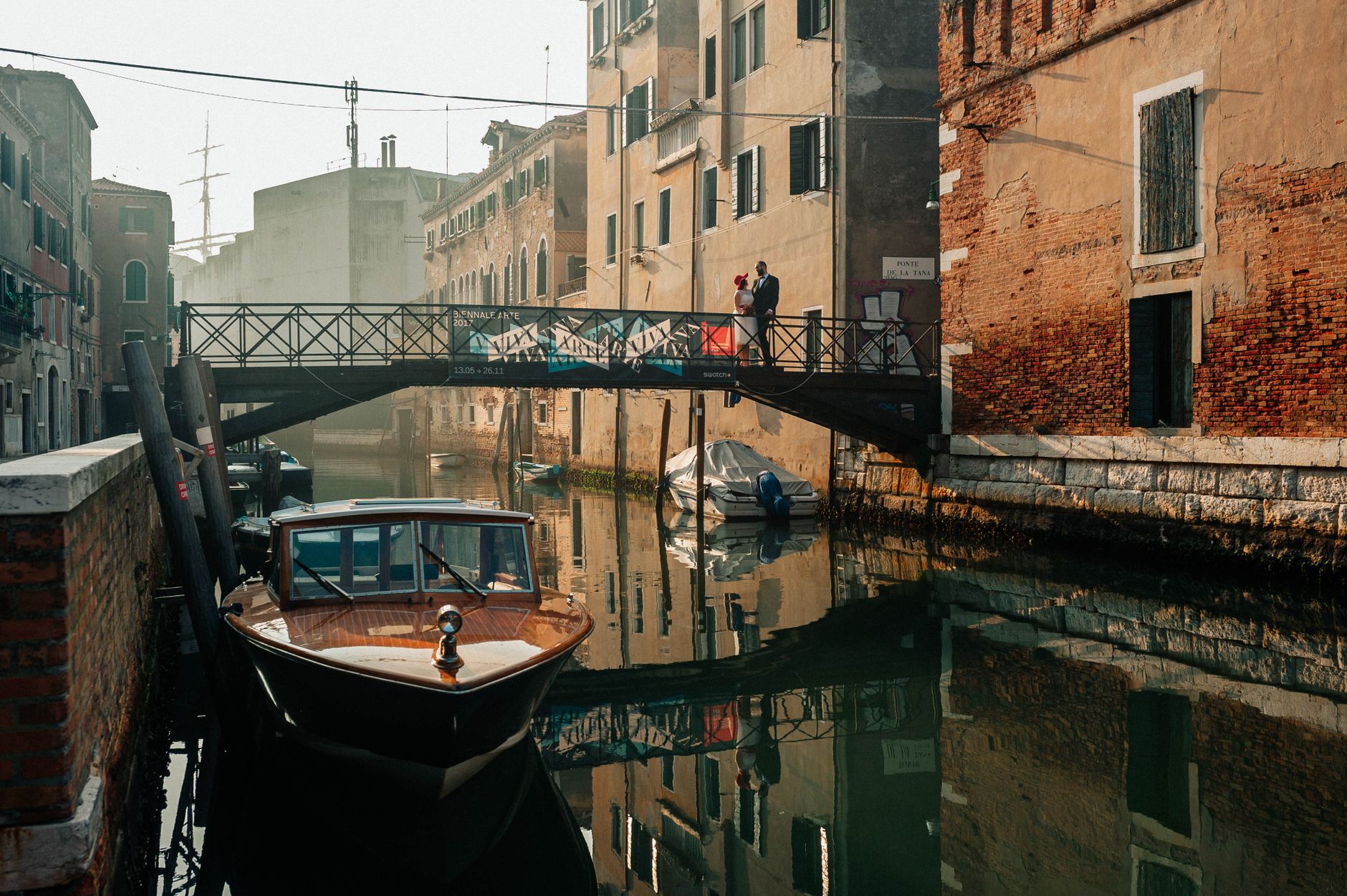
Photo by Helena Jankovicova Kovacova
Bridges in quieter neighborhoods also give you a chance to add one human figure without losing the calm. A single person paused at the top of a bridge can give scale, shape, and a sense of morning without turning the frame into a street scene. Keep it simple. One person is enough.
Libreria Acqua Alta has a back canal view that many visitors miss because they’re focused on the book displays inside. Meanwhile, Rialto Bridge is still worth shooting if you get there early enough to beat the heavy flow of people and boats. You won’t get the same hush as Accademia, but you will get energy and a classic canal line.
For more on side angles beyond the usual postcard circuit, Ugo Cei’s Venice location guide is useful, especially if you want ideas around Bacino Orseolo and other less-obvious stops near the center.
Wherever you shoot, respect the city at dawn. Keep voices low, don’t spread gear across bridges, and step aside when residents pass. Venice is most photogenic when it still feels lived in.
When the water turns to glass
The magic of Venice at sunrise doesn’t last long, and that’s exactly why the photos feel special. You get a softer city, cleaner reflections, and brief stillness that disappears once the first busy hour begins.
Pick one grand view, one quiet canal, and give each spot a little time. The frame often arrives after the first boat has passed, when the wake fades and the stone picks up a thin line of gold.
At 5:28 AM, when the Grand Canal turns peach and one vaporetto ripple starts to break the reflection, will you already be on the bridge?
