
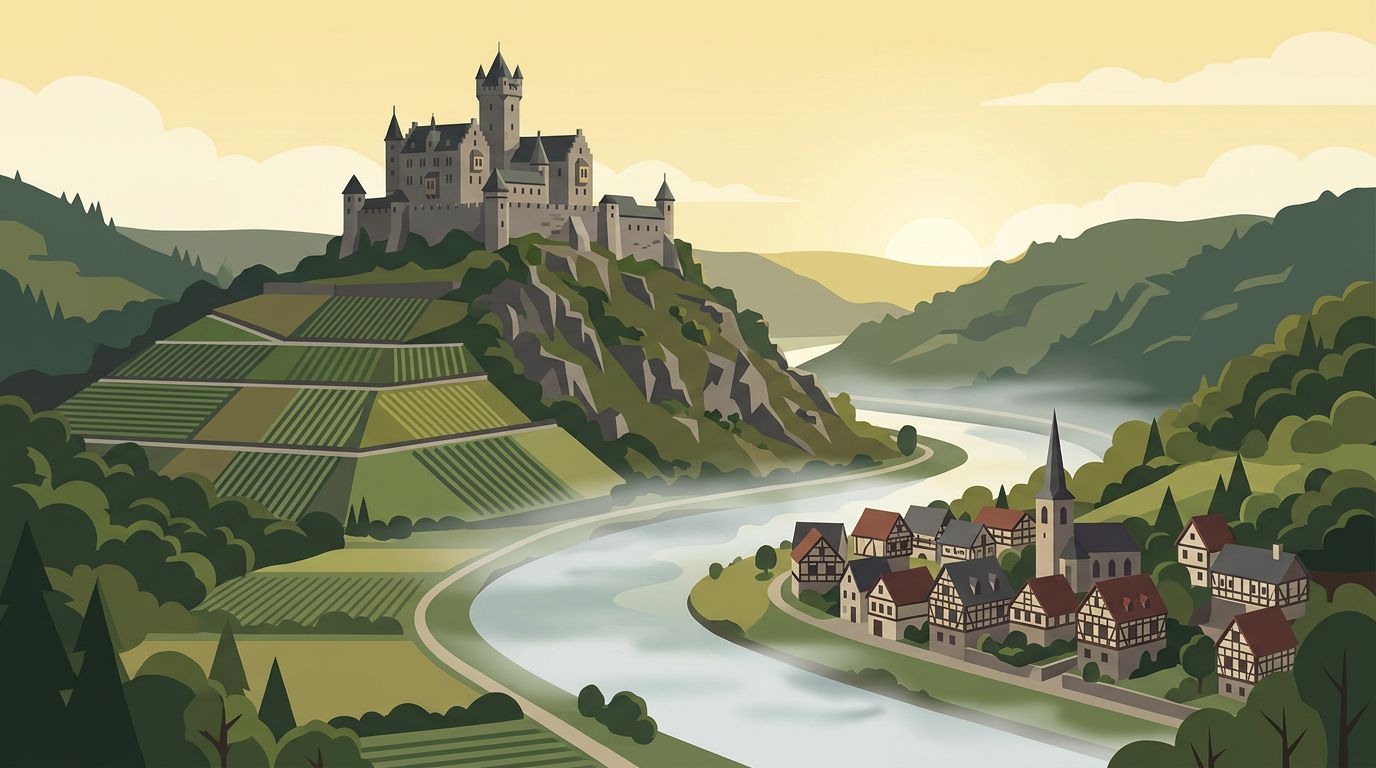
Some of Germany’s most memorable castle photos aren’t taken at the gate. They’re taken from a vineyard road, a hill path, or a riverbank where the whole valley opens at once.
If you’re planning a road trip or a rail-heavy photo run, location matters more than fame. The strongest castle photo spots in Germany give you height, distance, water, and a clean line through the frame.
Start with the valleys that do the hard work for you.
What makes a castle and valley photo work
A castle alone can look flat. Add a river bend, layered hills, and a village below, and the scene starts to breathe.
In Germany, the images that stay with you usually come from places where a steep slope lifts the castle above the river, vineyards step down the hillside, and a church tower or ferry adds one small human note to the frame. Early light wins. Fog changes everything. Crowds arrive fast.
That is why river valleys beat many courtyard shots. You get depth, scale, and movement in one frame. Boats leave wakes, trains trace the waterline, and shifting cloud cover changes the stone from pale gray to bronze within minutes.
Neuschwanstein gets the headlines, and for good reason, but the Rhine and Moselle often produce better travel photos because the landscape is already composed. You don’t need a drone. You don’t need perfect weather either. Soft overcast skies can pull detail out of dark forests and pale stone.
Most of all, choose viewpoints with a little distance. A castle photographed from too close can feel bulky and hard to read. From across a river or above a town, the shapes make sense. Towers separate. Walls step down the slope. The valley leads the eye.
The Rhine Gorge has Germany’s richest castle views
For many travelers, the strongest castle photo spots in Germany sit in the Upper Middle Rhine Valley. The reason is simple: one river, steep banks, clustered towns, and castle after castle on the ridges.
Bacharach is a smart place to start. Burg Stahleck rises above half-timbered streets, and the best frame comes from lower vineyard paths or across the river rather than from the castle grounds. Kaub is even more photogenic. Pfalzgrafenstein sits on an island in the Rhine like a stone ship, while Gutenfels Castle watches from above.
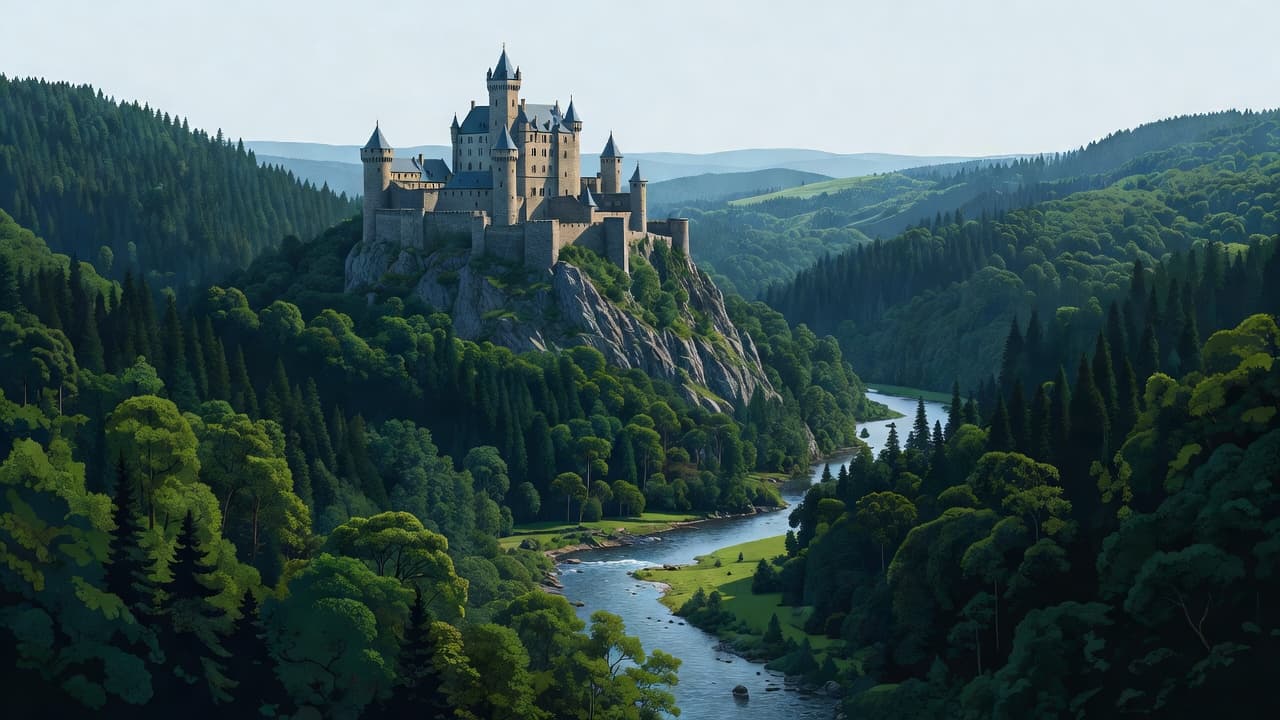
A classic river-valley composition works because the castle, forest, and river each get room in the frame.
Then head toward St. Goar and St. Goarshausen. This stretch packs in Rheinfels, Katz, Maus, and the famous Loreley cliffs. You won’t always get all of them cleanly in one photo, so work in pairs. Shoot one castle tight, then step back for the river curve and the broader valley.
On a cold October morning above Bacharach, I watched the fog lift in strips while the first cargo barge pushed north through silver water; by 8:15, Burg Stahleck had gone from a dark block to a castle with windows, edges, and warm stone. No rush, just mist and church bells from town.
On the Rhine, backing up usually improves the photo.
Boppard also deserves time. The chairlift above town opens up one of the widest Rhine bends, and while it isn’t a castle-only view, it gives you the landscape context that many tighter shots miss. If you want extra route ideas, this roundup of must-see castles in Germany can help fill gaps between Rhine stops.
The Moselle rewards patience and longer lenses
The Moselle feels softer than the Rhine. The river bends more. Vineyards press closer to the water. Villages often look as if they were tucked into the valley with a careful hand.
Cochem is the headline stop, and it earns it. Reichsburg Cochem crowns the hill above town, while the river curves below in a way that suits both wide shots and tight crops. If you want one place that rewards a broad valley frame and a long-lens castle portrait in the same session, the ridge above Cochem gives you river, town roofs, vines, and moving boats without much visual clutter.
Beilstein is smaller and often more atmospheric. The ruins of Burg Metternich rise above one of the prettiest villages on the Moselle, and the slopes around town make it easy to build layers into a photo. Meanwhile, the Bremm area gives you sweeping valley views if you don’t mind a steep walk. Those meanders look almost drawn by hand at sunset.
Burg Eltz belongs in the conversation, even though it sits in a wooded side valley rather than on a big river bend. It photographs best as a hidden castle, not a grand panorama. Go early, before tour groups stack up on the bridge and the path. Moist air in the trees helps. So does a little patience.
The Moselle is also where telephoto lenses start to shine. A 70 to 200mm range lets you compress vineyards, towers, and river curves into dense, elegant frames. If you’re adding more castle stops to a larger route, this guide to German castles beyond Neuschwanstein is a useful source of ideas.
Neckar and Danube viewpoints with lighter crowds
The Rhine and Moselle get most of the attention, yet the Neckar and upper Danube offer calmer days and easier logistics. That matters when you want time to wait for light instead of jostling for space.
Heidelberg is the obvious Neckar stop, but it still delivers. The castle is best from across the river and above the old town, not from its busiest terraces. Philosophenweg is the classic angle for good reason. You get the river, the bridge, the old town roofline, and the castle stacked on the hillside in one clean composition.
Farther east, Neckarsteinach gives you a more rugged mood. The four castles around town aren’t always simple to photograph together, but the riverbank and slopes nearby let you pick strong pairings. Dilsberg, near the Neckar valley, is another good detour. Its hilltop position works well in low sun when the walls catch warm light above darker woods.
On the Danube, Sigmaringen Castle is one of the best overlooked choices in southern Germany. The castle rises directly above the river, and the town below adds shape without getting messy. Blue hour works well here because the river reflects light back into the stone. No castle ticket required. The best frames come from town bridges and the opposite bank.
These places may lack the Rhine’s castle density, but they make up for it with space, calm, and cleaner shooting conditions.
Timing, access, and gear that matter most
A little planning saves a lot of disappointment. Many of the best overlooks are outside town centers, and some castle grounds close long before the sky looks best.
This quick guide helps when you’re building a route:
| Area | Light that works best | Lens range | Access note |
|---|---|---|---|
| Rhine Gorge | Sunrise, late afternoon, blue hour | 24-70mm and short telephoto | Ferries, trains, and hillside paths link towns well |
| Cochem and central Moselle | Early morning, soft sunset | 24-70mm plus 70-200mm | Short uphill walks improve angles fast |
| Heidelberg | Late afternoon to dusk | 24-70mm | Easy rail access, strong city viewpoints |
| Sigmaringen | Overcast light, sunset, blue hour | 35-85mm | Compact center and easy riverside walking |
If you’re driving, keep your days short. Two valleys in one day sounds efficient and usually isn’t. Trains work well on the Rhine, while a car helps more on smaller Moselle and Danube detours. Also, leave room for weather. Low cloud can ruin a high viewpoint, then turn the next stop into your favorite frame of the trip.
Bring a tripod if you want dusk shots in town, but don’t overpack. A wide zoom, a short telephoto, and a rain shell cover most situations. Above all, stay longer than you think you need. River valleys change by the minute.
Final light over the river
Pick fewer places and give them time. The best castle photos in Germany usually come after the first rush, when day trippers move on and the valley starts to settle.
If you want drama, start on the Rhine. If you want gentler lines, start on the Moselle. Either way, the shot you keep may come from a footpath above town rather than from the castle itself.
Stay for the last light if you can. In Bacharach, the riverfront lamps begin to glow after dusk, and Burg Stahleck hangs above the roofs while one late train slides north along the water.
