
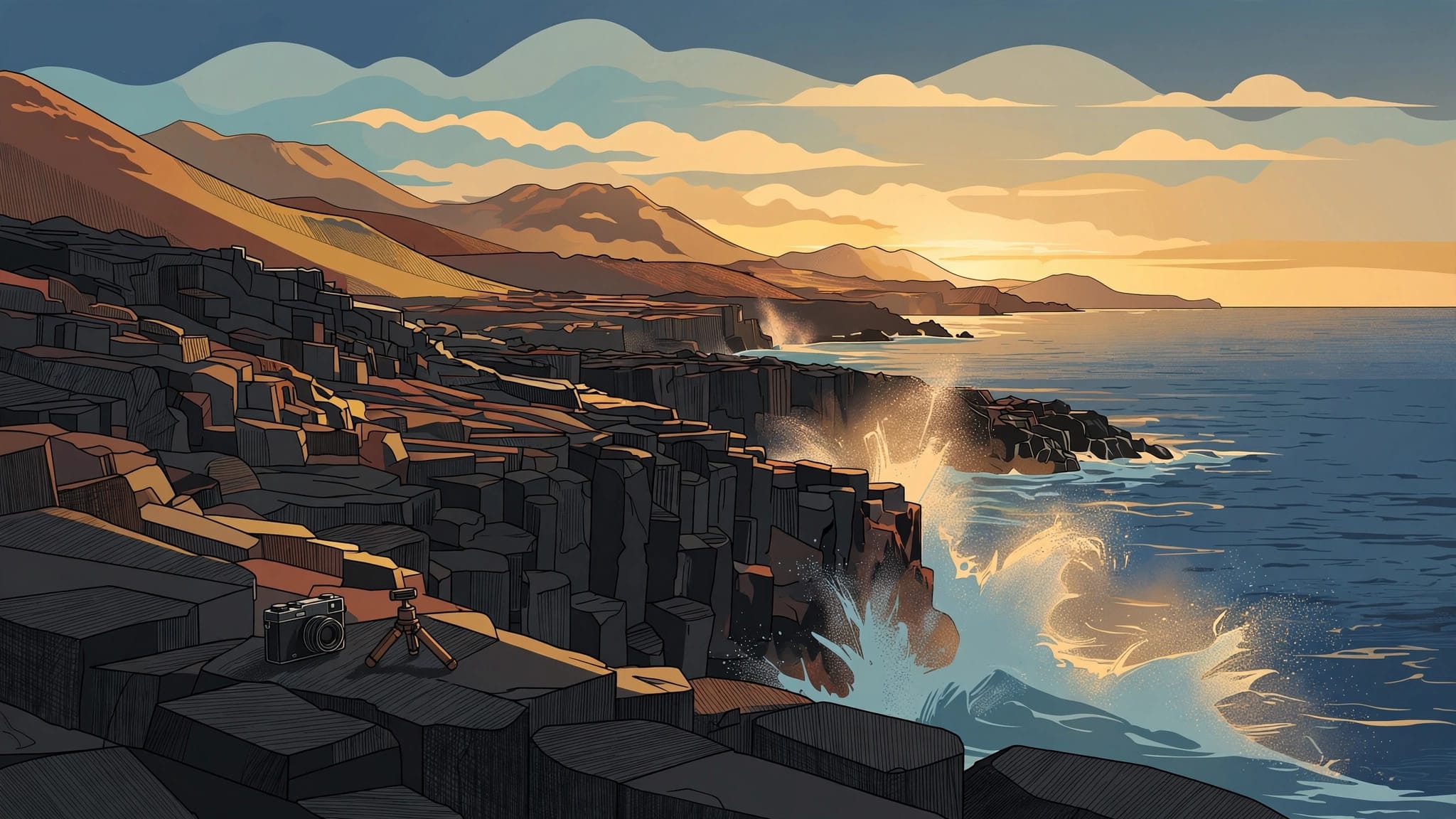
The Canary Islands can change a photograph in minutes. A hard blue sky may turn into a cloud inversion, while Atlantic spray and black lava give even a simple composition real weight.
Canary Islands photography rewards patience more than a packed itinerary. If you plan around the direction of light, wind, and access rules, you’ll return with stronger images and fewer rushed roadside stops.
Start with the island that suits the work you want to make.
Key Takeaways for Better Fieldwork
Volcanic terrain needs low, directional light. Arrive early when you want crater texture, long shadows, and fewer people on the trail.
Carry less gear. A wide zoom, short telephoto, compact tripod, spare battery, and microfiber cloth handle most days well.
Use weather as a subject. Cloud on La Palma can add depth to forested ravines, while a clear afternoon may suit the angular lava fields of Tenerife or Lanzarote.
Stay flexible. The most productive location can change after one bank of cloud moves offshore.
A sharp handheld image at 1/250 second is better than a blurred long exposure made in a coastal gust.
Protected landscapes need extra care. The archipelago has four National Parks, and access conditions can affect where, when, and how you photograph.
Canary Islands Photography: Choose an Island by Subject
Each island offers distinct scenic views and different photography opportunities. For landscape photography, build your trip around one or two islands rather than treating the archipelago as a checklist.
Tenerife for Mount Teide and high-altitude lava
Tenerife offers the broadest range of volcanic landscapes. Teide National Park holds Mount Teide, Spain’s highest peak, with its elevation commonly listed between 3,715 and 3,718 metres. Lava fields, pale pumice slopes, twisted tajinaste plants, and distant cloud layers give you foreground options at nearly every pull-off.
Work low to the ground with a 16-35mm or 20-40mm lens. A dark lava slab near the frame edge can lead the eye toward the cone without making the mountain feel distant.
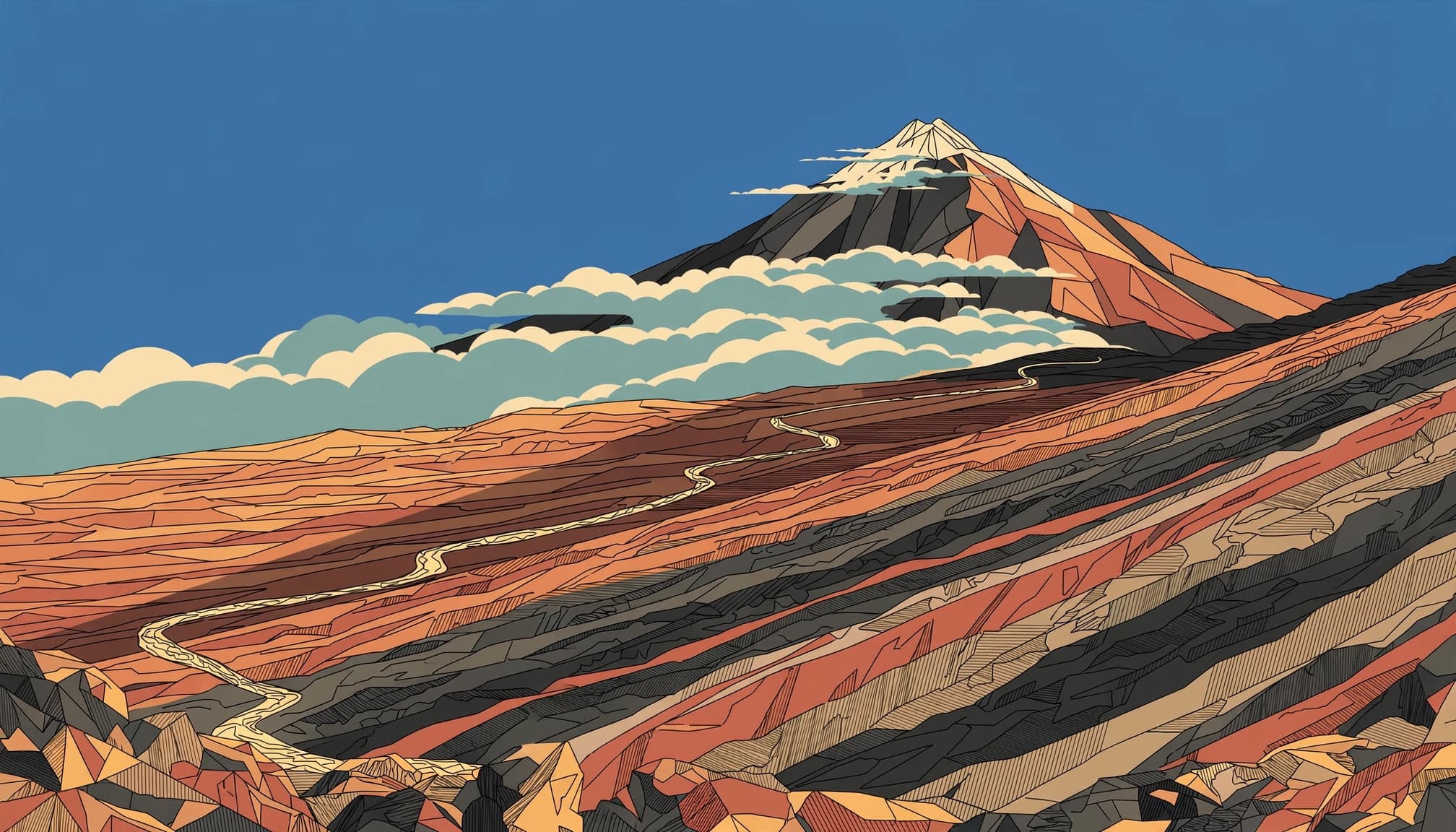
At La Rambleta, the upper cable-car station sits at 3,555 metres. The final PNT-10 Telesforo Bravo path to the summit needs prior authorisation, so check the restricted trail requirements before making a summit photograph central to your plan.
Lanzarote, La Palma, and the quieter islands
Lanzarote’s volcanic terrain is graphic and spare. Timanfaya’s rust, charcoal, and ochre surfaces often work best with a restrained composition. Use one ridge, one shadow line, and a small portion of sky. Black rock, white surf.
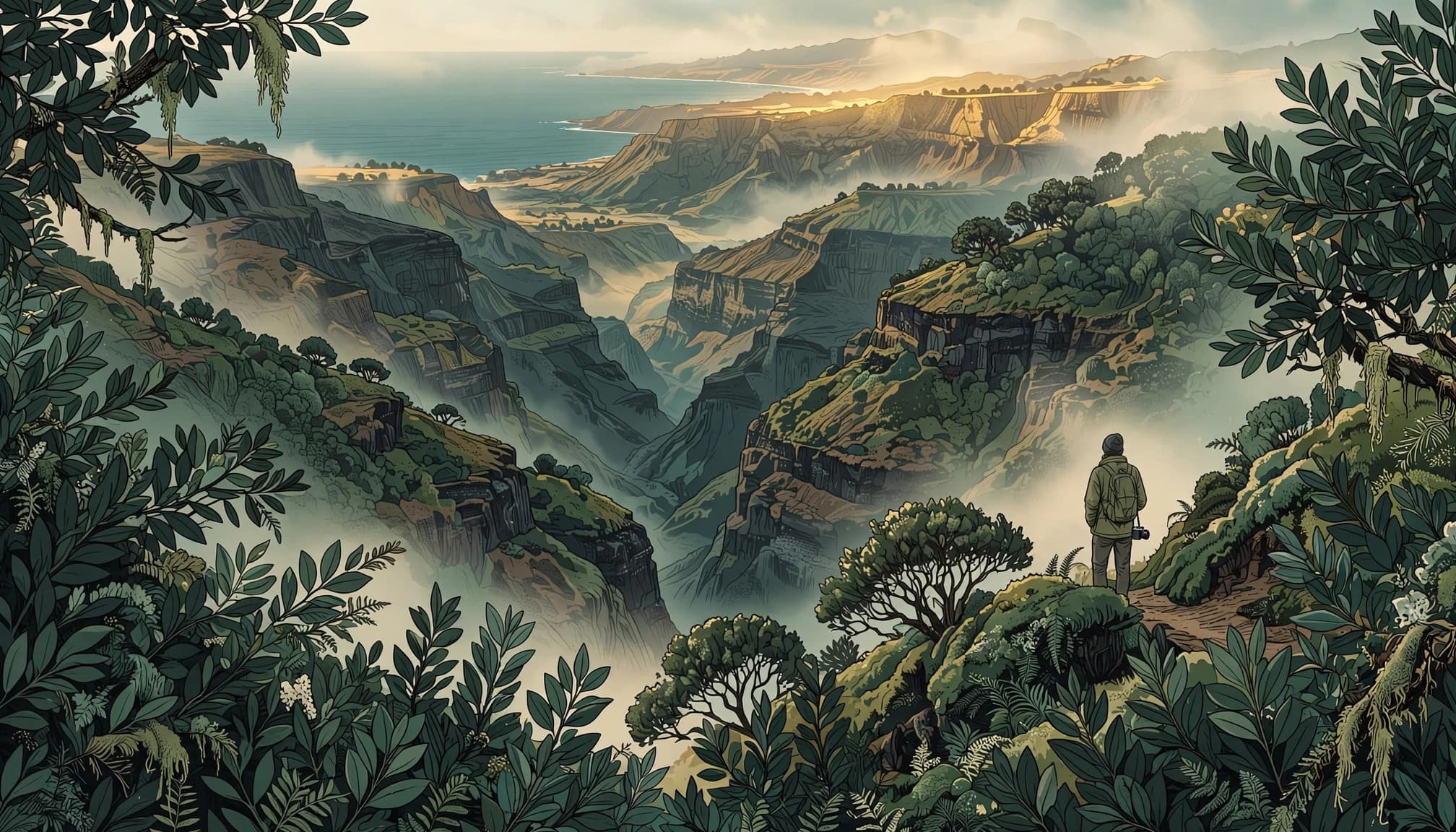
La Palma has a different mood. Caldera de Taburiente pairs deep ravines with Canary Island pine and laurel forest, so mist and low cloud can become useful layers instead of an obstacle. A 70-200mm lens can tighten successive ridges until the scene feels larger than a wide view.
Gran Canaria and Fuerteventura suit photographers seeking dunes, pristine beaches, or exposed coast, with distinct subjects on each island. Try Maspalomas late in the day, when side light defines the sand, or Corralejo early, before footprints clutter the foreground. La Gomera and El Hierro need more driving and walking. La Gomera’s cliffs, El Hierro’s picturesque villages, and La Graciosa’s empty roads and smaller volcanic forms often make cleaner frames.
Use Coastal Light Instead of Chasing Color
Coastal scenes rarely depend on a pink sky. Air clarity, tide, wind, and cliff direction usually matter more when photographing dramatic seascapes.
Match sunrise and sunset to the coast
East-facing viewpoints tend to work best around sunrise. The first direct light can skim across headlands while the Atlantic remains cool and dark. West-facing shores often gain shape later, when warm side light during golden hour separates cliff layers from the water.
For cliff photographs, avoid placing the sun directly behind a dark headland unless you want a silhouette. Move along the path until side light catches the rock face at an angle. That small shift often reveals lava bands, gullies, and wave-cut shelves that disappear in front light.
A photographer once waited beside a trail fence as fog peeled away in narrow strips. The clear view lasted less than five minutes, but the camera was already set before the sun reached the cliff.
Let cloud and haze guide the day
Midday can flatten a wide ocean view. When you can’t avoid it, photograph details: lava textures, tide pools, fishing boats against dark walls, or foam patterns beneath a cliff. A longer focal length removes empty bright water and makes distant headlands overlap.
Summer haze can hide distant islands and soften Teide’s outline. On El Hierro, wind-cleared air can sharpen views across its rugged, exposed coast. Keep a dry cloth in a jacket pocket because salt spray quickly dulls a front element.
Camera Settings for Lava, Surf, and Night Skies
Good technique keeps volcanic blacks from turning into featureless shadows. It also protects the bright Atlantic highlights that can fool a camera’s meter.
Protect highlights on dark terrain
Shoot RAW when possible. Start at ISO 100, f/8, and adjust shutter speed after checking the histogram. Bright clouds and pale pumice clip quickly, while shadow detail in lava often remains recoverable.
Bracketing helps when a scene includes sunlit ocean and a shaded crater wall. Make three exposures one stop apart, then blend only if the result still looks natural. Heavy HDR makes volcanic rock look plastic.
| Scene | Starting point | Watch for |
|---|---|---|
| Lava field at sunrise | ISO 100, f/8, 1/30 to 1/125 sec | Clipped clouds |
| Handheld cliff view | ISO 100 to 400, f/5.6 to f/8, 1/250 sec | Wind shake |
| Surf with a tripod | ISO 100, f/8, 1/4 to 2 sec | Moving vegetation |
| Teide after dark | ISO 1600 to 3200, wide open, 10 to 20 sec | Star trails and focus |
Expose for the brightest part of the frame. The darker rock can come up later, but a blown cloud has no texture to recover.
Bring lenses that change the composition
A wide lens captures a lava field’s scale, although it can leave too much empty foreground. A 24-70mm zoom often produces a more focused crater image because it trims distractions and holds rim lines together.
Telephoto work matters along the coast. At 70-200mm, distant cliffs, foam bands, and sea stacks compress into distinct layers. Wind changes the math, so keep tripod legs low and skip the centre column when gusts build.
For astrophotography, scout in daylight and mark safe paths back to the car. Focus manually on a bright star, turn off image stabilisation on a tripod, and make a test frame before the sky is fully dark.
Permits, Drones, and Crowds Need Planning
The best photograph isn’t worth a damaged landscape or a closed trail. Check restrictions before you leave accommodation, especially if your plan involves a summit, drone, tripod-heavy shoot, or commercial work.
Teide and Timanfaya have separate rules
Teide has more than one regulated route. The Teide permit guidance distinguishes the summit route from other controlled trails, so don’t assume a cable-car booking covers every path.
Timanfaya has tighter limits for professional work. Photography, film, television, and video projects generally need advance authorisation, and approval may depend on whether the project supports the park’s natural or cultural values. Review the park’s official authorisation conditions before arranging clients, models, or commercial equipment.
Treat drone access as location-specific
Don’t assume an empty landscape means you can fly. Recreational drones and other remote-controlled devices aren’t allowed in Caldera de Taburiente National Park under its visitor rules.
Check current rules for each site, including protected coasts and populated areas. Also stay on marked paths, avoid stepping onto fragile ash slopes, and never move rocks or plants to improve a foreground.
Crowds thin quickly at dawn. However, an early start only helps if you photograph beyond the first viewing platform. Walk farther where permitted, turn away from the famous view, and use telephoto layers to keep parked cars and people outside the frame.
Build a Route That Leaves Room for Weather
A rental car makes dawn starts and return visits far easier for outdoor photography. Still, don’t try to cross several major islands in a few rushed days.
Give Tenerife at least three shooting sessions: one sunrise in Teide National Park, one high-altitude sunset, and one coastal morning. If the summit is part of the plan, make the required reservation early through the Teide route booking system.
On Lanzarote, pair one Timanfaya session with a coastal evening. The island’s volcanic terrain and Atlantic shoreline are close enough to let you react to changing cloud without spending the day driving.
La Palma benefits from a slower pace. Use an overcast morning for forest trails and ravines, then save a clearer break for ridgelines or the coast. One extra hour at a promising viewpoint is usually more useful than another pin on a map.
Hiring a Vacation Photographer for Portraits
A local vacation photographer can help couples, families, and solo travellers get themselves into the landscape without handing a stranger a phone at a busy viewpoint. Ask for a written quote rather than relying on a headline rate.
Confirm the session length, number of edited images, delivery timeline, transport, location permits, and weather backup plan. A professional photographer should clarify whether the intended beach, park, or volcanic site permits commercial shoots.
Keep the portrait concept simple. Wind, loose volcanic ground, and changing light can make elaborate wardrobe changes and props impractical. A neutral outfit and one location with strong lines often produce better photographs than a rushed multi-stop session.
Frequently Asked Questions
What is the best time of year for landscape photography?
Spring and autumn usually offer comfortable hiking temperatures and softer travel demand. Winter can bring lower sun angles and dramatic cloud, while summer provides long, bright days but can also bring haze. Pick dates for the type of light you prefer, then allow spare days for weather.
Which island has the strongest volcanic landscapes?
Tenerife has the greatest range, with Mount Teide and extensive high-altitude lava fields. Lanzarote is better for austere crater forms and dark, minimalist scenes. La Palma suits photographers who want volcanic terrain with greener forests and deep ravines. El Hierro is a quieter option for compact lava forms and rugged coast.
How can I avoid crowds at popular photo spots?
Arrive before sunrise, park early, and photograph away from obvious platforms. Use longer focal lengths to simplify a busy scene. Weekdays outside peak holiday periods also make popular places such as Maspalomas, Teide, and Corralejo easier to work.
Let the Islands Set the Pace
The strongest images come from returning to a scene when the light improves, not forcing every landmark into one day. Let cloud, wind, and the surface of the lava decide where you spend the next hour.
Leave the tripod low in gusts, protect your highlights, and keep a dry microfiber cloth in your jacket pocket.
