
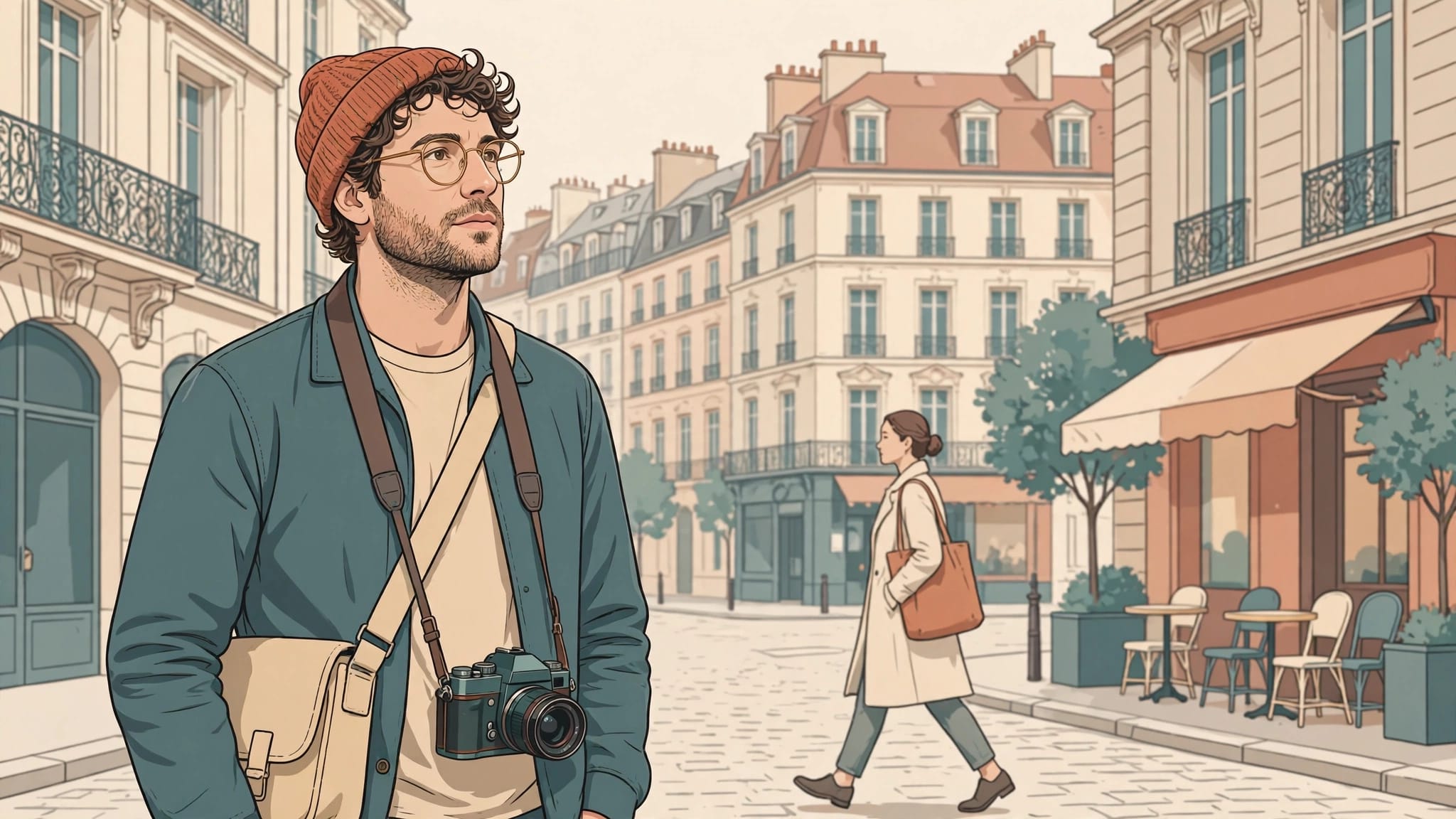
The person in your frame didn’t agree to join your holiday album. In Paris, London, or Lisbon, street photography ethics begin before you lift your camera.
You can photograph the life of a city without making strangers feel watched or cornered. Respect changes where you stand, when you ask, and what you choose to share. Start by deciding whether the moment needs a person at its center.
Street photography ethics start before the shutter
Notice what the moment means to its subject
A commuter laughing at a bus stop may look like a lively street scene. Someone crying on the same bench is having a private moment in public. If a photograph depends on another person’s distress, leave it alone.
Henri Cartier-Bresson’s 1954 photograph of a boy carrying two wine bottles on Rue Mouffetard in Paris captures a proud stride through an ordinary street. It’s an example of how a person’s gesture can make a photograph memorable. Today, a traveler seeing a child in a similarly appealing scene would still need to weigh the child’s privacy before taking or sharing a recognizable picture.
Look beyond facial expressions. A person receiving medical help, sleeping rough, or dealing with police may have little room to refuse attention. You don’t need a camera to see that.
Give people a way out
Watch for a glance at the lens, a turned shoulder, or a change of route. Those small reactions matter more than your intention. Lower the camera if someone looks uncomfortable.
Don’t follow a stranger to recover a missed shot. Don’t wait outside a doorway for the person who stepped away from view. A photograph lasts a fraction of a second; feeling pursued can last much longer.
Keep a respectful distance without losing the scene
Build a frame around the street
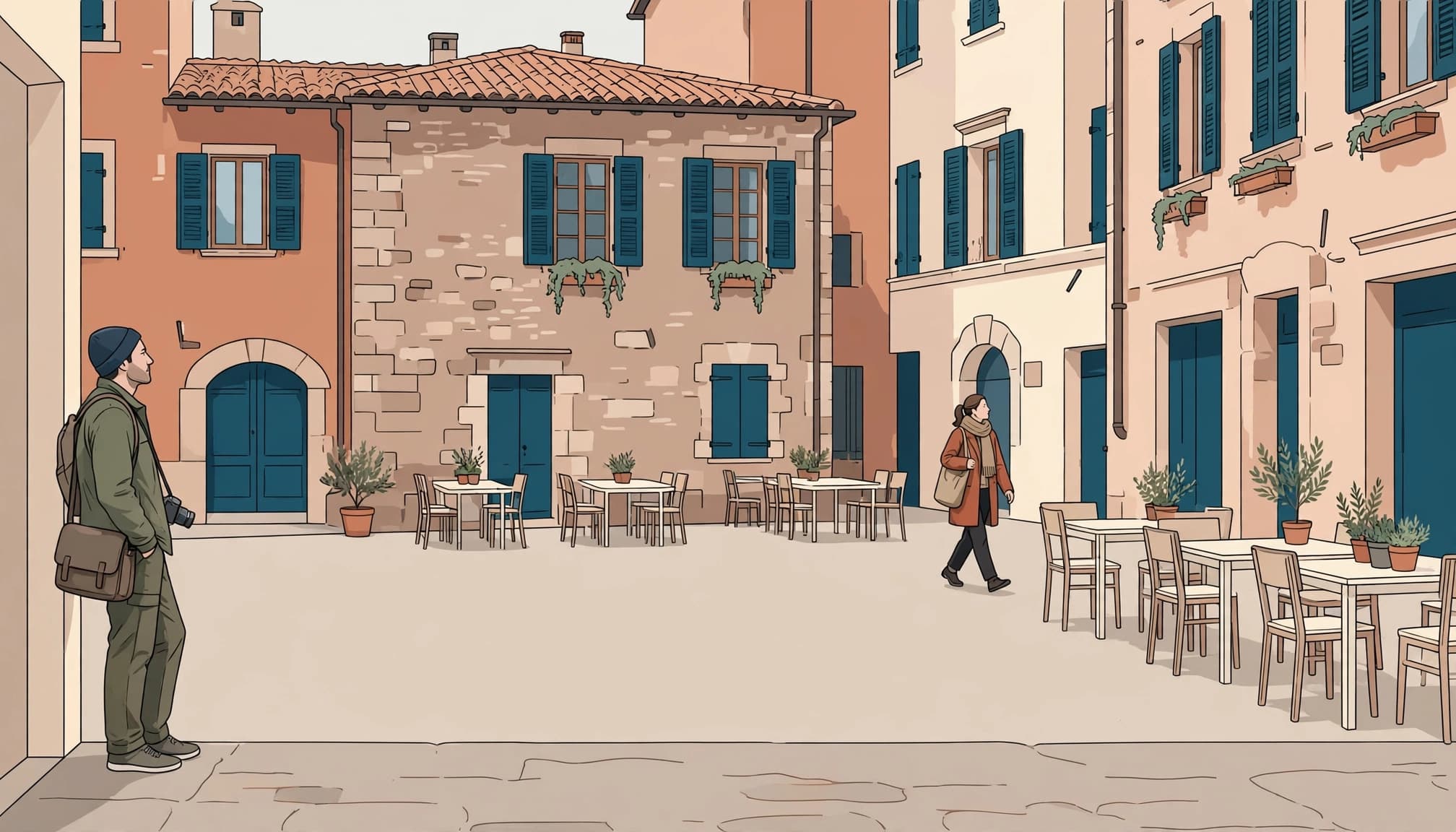
At a Paris crossing or beside a Lisbon tram stop, you can wait for movement to pass through an interesting background. Photograph the pavement, light, and architecture as part of the scene rather than treating one passerby as a target. A wider view often tells more about the place.
That doesn’t make every wide photograph anonymous. Check whether one face remains sharp and central. Shop windows and reflective glass can reveal people you barely noticed while shooting.
A 35mm lens can include enough surroundings without forcing you into someone’s personal space. The lens isn’t an ethical shortcut, though. Your position matters more than the number printed on it.
Keep shared routes clear
Choose a place where you won’t obstruct a pavement, station entrance, bridge crossing, or queue. If you need to stand still, leave room for wheelchairs, prams, and people carrying bags.
A camera held inches from a stranger’s face can feel confrontational even when the pavement is public. Step back. Let the person continue without changing course for you.
For another perspective on how customs and privacy rules differ by location, see this overview of street photography privacy rules. Treat it as background reading, then check the rules for the place you’re visiting.
Ask before making someone the subject
Make your request easy to decline
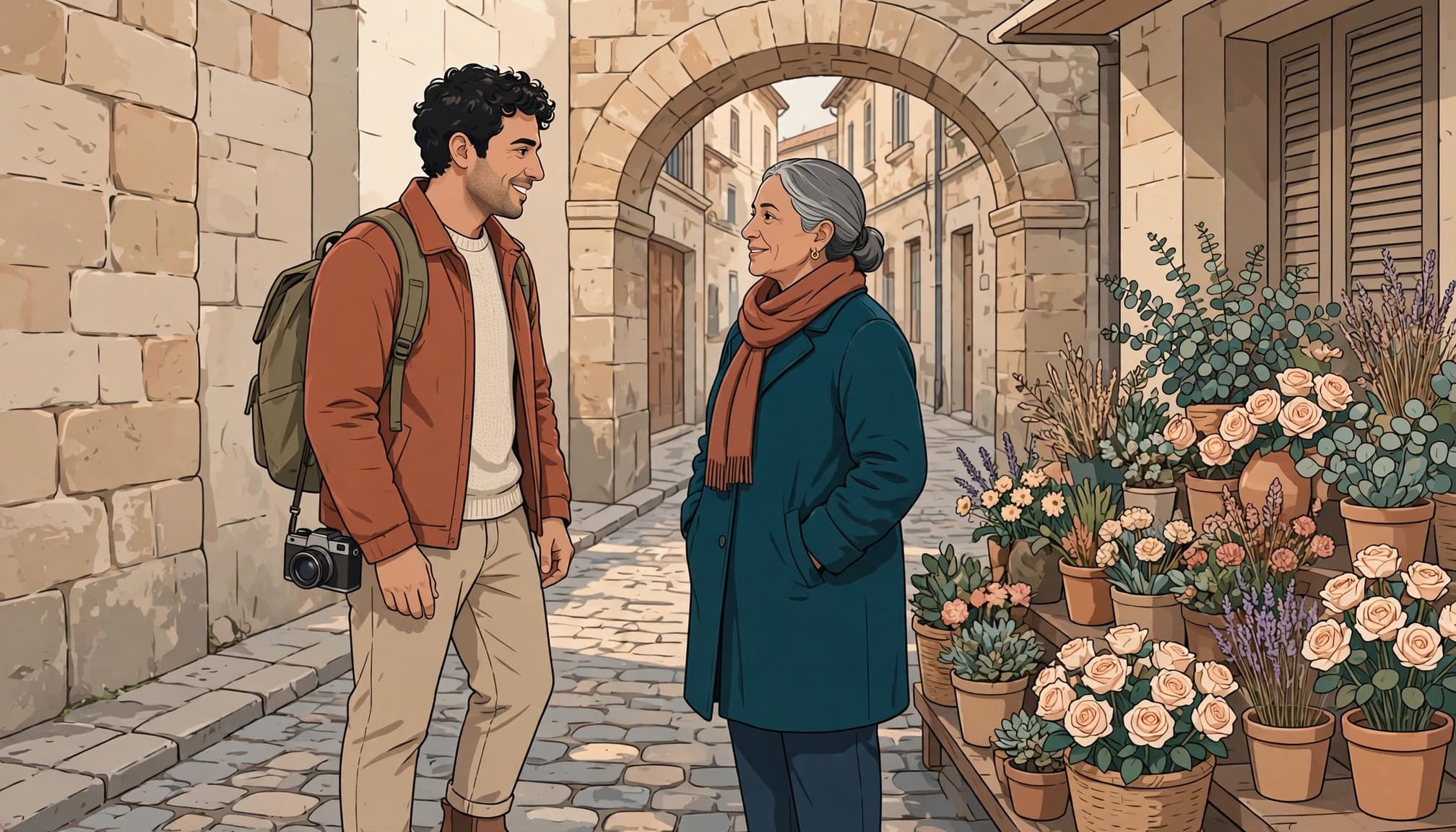
If someone’s face or work is the reason for the picture, ask first when you can. Keep your camera lowered and give them space. A simple request works better than a speech: “May I take your portrait? I won’t post it without asking you.”
Use a few words of the local language if you know them, but don’t rely on a smile as permission. In a noisy market, show the camera and wait for an unmistakable response. If they seem unsure, move on.
Ask separately about sharing. Agreement to take a photograph doesn’t automatically mean agreement to put it on Instagram, send it to a magazine, or use it in an advertisement.
Treat refusal as the end of the exchange
“No” needs no explanation. Neither does a shake of the head or a hand covering a face. Thank the person and put the camera down.
If someone agrees, keep the session brief. Show them the image afterward if they’d like to see it, and delete an unflattering frame if they ask. When someone wants a copy, agree on a practical way to send it; don’t ask for contact details they seem reluctant to give.
Permission works best when the person can refuse without having to walk away, argue, or explain themselves.
Respect work, worship, and private spaces
A market seller may be visible from the street but busy serving customers. Don’t stand in front of a stall and photograph their face while blocking a sale. Ask during a lull, and step aside when the next customer arrives. Buying something doesn’t purchase permission for a portrait.
Likewise, a church doorway is a poor place to photograph people at prayer or leaving a service. Give worshippers room, and check the site’s photography rules before shooting inside. Museums, stations, and ticketed monuments may set their own conditions, regardless of what you can photograph on the pavement outside.
Public visibility doesn’t erase the boundary of a home. Avoid pointing a long lens through an apartment window or toward someone on a private balcony. The same care applies when people appear in hotel windows above an otherwise appealing street scene.
Some neighborhoods call for particular restraint. In Amsterdam’s De Wallen, don’t make workers, clients, or windows into travel-photo subjects. Put the camera away there and find another street if you want to photograph canal architecture.
Know the difference between taking and publishing
Check the country, not a supposed European rule
There is no single permission rule for every street in Europe. Laws and venue policies can differ, and taking a photograph isn’t always treated the same way as publishing or commercially using it.
The Irish Data Protection Commission’s public-photography guidance says the GDPR doesn’t prohibit people from taking photographs in public, provided they aren’t harassing others. That’s guidance for Ireland, not a guarantee that the same answer applies in France or elsewhere.
France’s Service-Public guidance takes particular care with the use or publication of an identifiable person’s image. For a recognizable person isolated in a public-place photograph, written consent is generally required to use or publish it. A broad, unindividualized street scene raises different questions. If a Paris portrait will appear on a public account or in paid work, don’t assume that being on a public street settles permission.
Separate personal memories from public use
The GDPR has an exemption for purely personal or household activity, but a public upload to an indefinite audience may fall outside it. Professional and commercial projects need more planning than a private holiday album. Privacy, image rights, freedom of expression, and the purpose of publication can all matter.
Malta’s Information and Data Protection Commissioner addresses the balance between privacy and expression in its guidance on data protection and street photography. Before a planned project, look for guidance from the relevant country’s authorities, especially if you’ll sell photographs or feature identifiable people.
Edit and share with the subject in mind
Inspect more than the main face
Open the photograph at full size before posting. Check faces in the background, mirrors, vehicle windows, and reflections. A scene that seemed anonymous on a camera screen may identify someone on a large monitor.
Cropping can remove an unintended subject. So can choosing another frame. Silhouettes and motion blur may help preserve a scene’s atmosphere, but don’t assume a blurred face makes someone unrecognizable if their clothing, location, or circumstances identify them.
Captions need care too. Avoid guessing a stranger’s occupation, relationship, or emotional state. A photograph of two people talking on a London pavement doesn’t tell you why they’re together.
Match the post to what you agreed
If a person said you could take a portrait but you never discussed publication, ask before sharing it. Explain where the picture will appear, particularly if your account is public. Keep a record of permission for an organized or commercial project.
If someone later contacts you about an image, respond without defensiveness. Take the post down while you sort out the concern if you can. A courteous exchange is easier than turning an unwanted photograph into an argument.
Before publishing identifiable portraits across borders, check country-specific requirements rather than assuming a rule you’ve heard applies everywhere. The Wikimedia Commons country-by-country consent guide can help you identify questions to investigate, but local official guidance should settle your plans.
Key takeaways for the walk
- Leave vulnerable moments unphotographed, even when the setting is public.
- Frame people within a wider scene when the city, rather than an individual, is your subject.
- Ask before making a close portrait, and ask again before posting it.
- Keep pavements clear and follow the rules of churches, museums, and other managed spaces.
- Review every image at full size before sharing, including its reflections and background faces.
FAQ
Can I photograph a street performer?
Ask if you want a close portrait rather than a wider view of the performance and its setting. A tip supports the performer’s work; it doesn’t automatically give you permission to use their image in an advertisement or publish a recognizable portrait. Watch the crowd, too, so you don’t block the performance while photographing it.
Should I photograph children in a public square?
Use extra restraint. A child can’t assess the reach of a public post as an adult might, and a parent or guardian may not welcome a stranger’s camera. If the child is central to the image, speak with the responsible adult before taking a portrait and discuss sharing separately. When that’s impractical, photograph a different part of the scene.
What if someone asks me to delete a picture?
Stop photographing and listen. You don’t need to debate local law on a pavement. If deleting the image resolves their concern, do it and move on. If the image is part of professional work and you’re uncertain about your obligations, stop using it while you seek advice relevant to that country.
Conclusion
A city offers more photographs than you could take in a week. You don’t lose the street by letting one person pass unphotographed.
Keep the camera low when someone hesitates. Ask when a portrait depends on their face. Before sharing, look again at the people reflected in the shop window behind them.
