
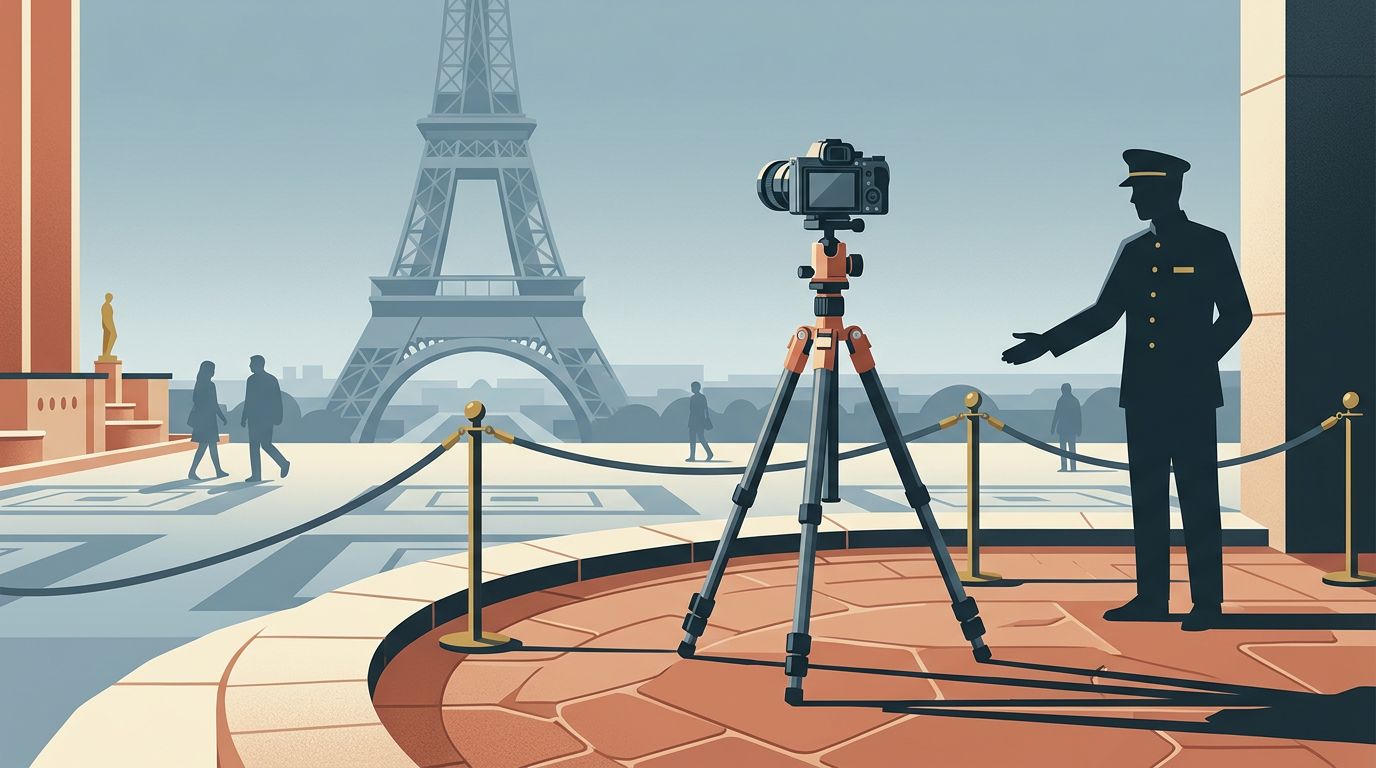
A tripod can turn a calm sunrise photo into a security conversation in seconds. Tripod rules in Europe change between public squares, ticketed monuments, churches, museums, and even different areas of the same landmark.
Rules change at the gate. A lightweight travel tripod doesn’t automatically count as casual gear once its legs touch a busy walkway.
Knowing where to set up, when to ask, and when to shoot handheld protects both your plans and everyone sharing the space.
Key Takeaways
- Most museums, churches, and ticketed historic interiors prohibit tripods, even for personal travel photography.
- A public viewpoint may allow one small tripod, but staff can stop use if it blocks movement or looks like a commercial shoot.
- The Eiffel Tower allows tripods in many surrounding public areas, but not inside the tower itself.
- Rome’s major monuments often treat tripods as professional equipment, so permits and guard discretion matter.
- Pack a handheld low-light option for any landmark where a tripod may be refused.
Why European Tripod Rules Depend on the Place
European landmark photography rules rarely follow one national standard. A city park, a cathedral, a palace museum, and a protected archaeological site each have their own managers, safety duties, and permit systems.
The first distinction is simple: public space versus controlled space. A pavement or park may allow personal photography, provided you don’t obstruct anyone. Once you pass ticket barriers or security screening, the venue’s visitor rules take over. A tripod often becomes prohibited equipment.
Space is the issue.
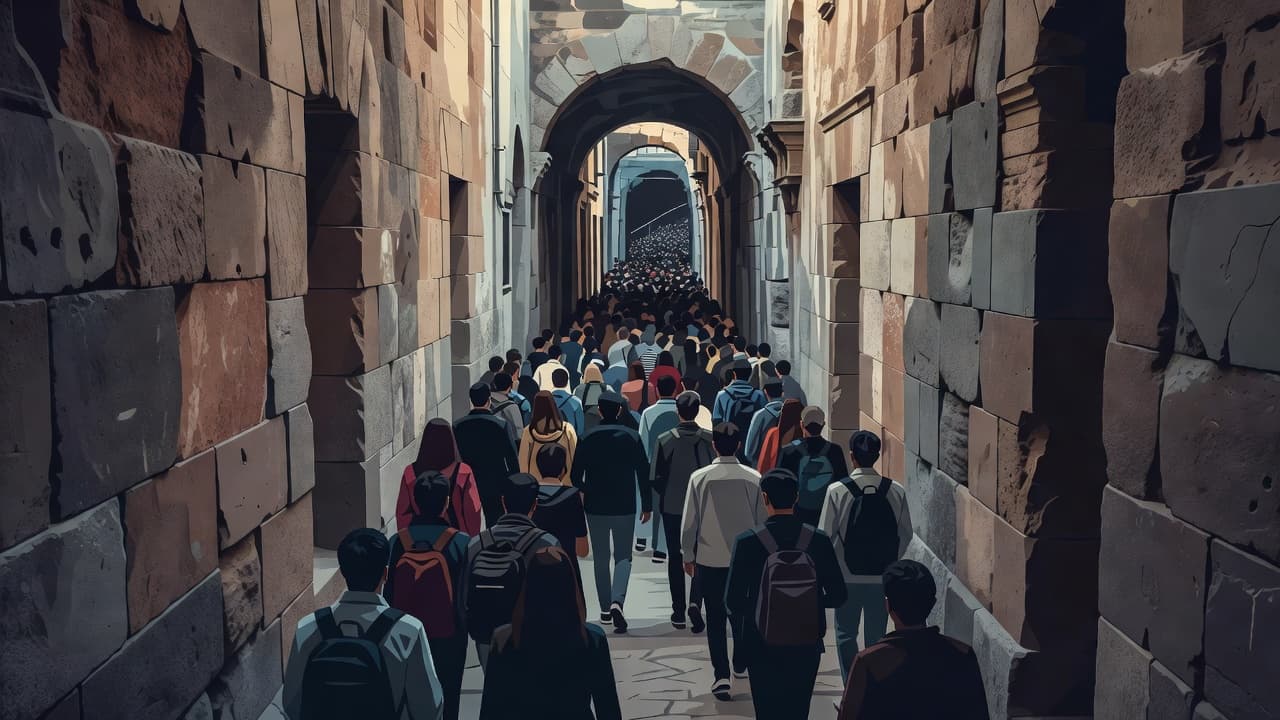
A tripod creates a fixed obstacle. In a crowded stairwell, narrow gallery, or viewing deck, its legs can catch shoes, block escape routes, and interrupt staff movement. Guards don’t need to decide whether your photo is artistic. They only need to see that the setup affects other visitors.
Commercial intent creates another layer. A single traveler with a camera and compact tripod may look harmless outdoors. However, light stands, assistants, wardrobe changes, wireless microphones, or repeated takes can make the activity look like a production. That can trigger a location permit requirement, even if the images are for a personal portfolio or social media account.
A recent overview of travel photography restrictions also points to tighter enforcement around French heritage sites and landmark areas. Rules can shift after an event, a security concern, or a seasonal surge in visitors. Check close to your travel date.
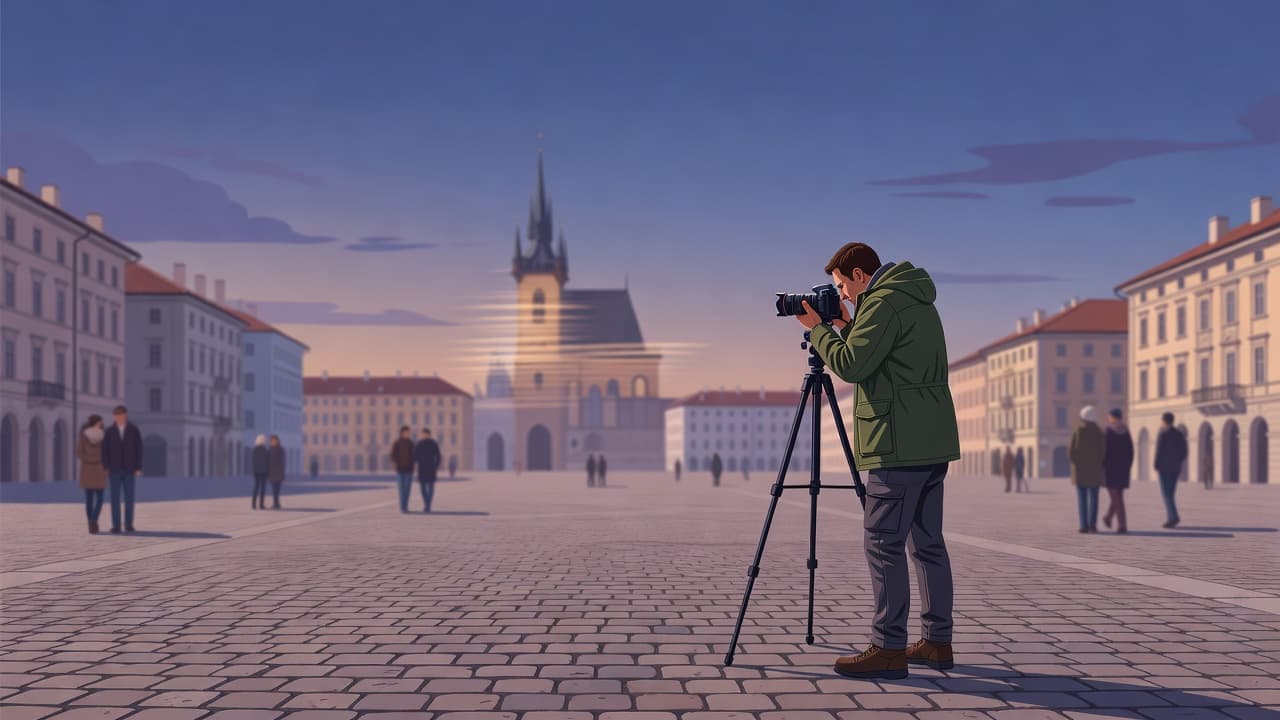
The practical question isn’t only, “Can I bring it?” Ask whether you can open it, use it, and stay put at that location. Those are separate permissions.
A tripod that stays folded in your bag is luggage. A tripod with three legs across a pathway is a site-management problem.
Interior Landmark Rules Are Usually Strict
Assume a tripod won’t be allowed inside a major European monument unless the official visitor information says otherwise. This is the safest working rule for the Colosseum, St. Peter’s Basilica, the Louvre, Westminster Abbey, Sagrada Familia, and many historic houses.
Churches and museums often classify a tripod as professional equipment. The policy may also include monopods, selfie sticks, gimbals with extended handles, or any support that reaches into a shared walkway. Staff may make an exception for accredited press or a pre-approved production, but ordinary visitors should not expect one.
Security lines add another issue. Some venues allow the tripod through screening but ban its use indoors. Others refuse entry with it, or ask you to store it in a locker if lockers are available. Don’t assume bag acceptance equals shooting permission.
Low light often tempts photographers to press the issue. Yet modern cameras can handle more than older bodies could. Use a fast prime lens, image stabilization, a higher ISO, and a careful stance. A sharp handheld image is better than losing time in a discussion with security.
Flash can face restrictions, too. Even where flash isn’t expressly banned, it can disturb visitors in sacred spaces and distract staff. Work with available light whenever possible.
The gray area: compact tabletop tripods.
A palm-sized support may pass unnoticed in a quiet outdoor corner. Inside a landmark, it can still violate the same rule as a full-size tripod. Treat staff approval as the deciding factor, not the size of the accessory.
Photographing the Eiffel Tower With a Tripod
Paris offers one of the clearest examples of how location changes the answer. Tripods are prohibited inside the Eiffel Tower, including its decks and summit. The restriction makes sense in elevators, narrow viewing areas, and crowded circulation routes.
Outside the tower, the situation is much friendlier. Trocadero, Champ de Mars, bridges, riverbanks, and many public viewpoints can work for personal tripod photography when you stay clear of pedestrians and keep the setup modest. Evening exposures of the tower’s lights often need a stable support, especially at low ISO.
The best spots come with trade-offs. Trocadero gives a strong frontal view, yet it can be crowded at sunset and after dark. Champ de Mars offers more room, although trees and foot traffic affect compositions. A Seine-side viewpoint can add reflections, but you must watch cyclists and keep equipment inside the edge of the pavement.
One traveler’s post in the Rick Steves photography forum captures a familiar reality: many popular public places tolerate tripods only after prior arrangements, especially when the setup is larger than a simple personal camera. Paris is more workable than that blanket statement suggests, but courtesy and scale still matter.
For personal work, arrive before the crowd builds. Extend the legs only after you choose your frame. Keep your camera bag tight to your body or beside one tripod leg, never loose behind you. If a police officer, park worker, or security guard asks you to move, do so without debate.
Commercial shoots are different. Paris may require authorization from the Mairie de Paris when a crew, lights, multiple tripods, or a substantial setup occupies public space. A single photographer usually attracts less attention, but the purpose and footprint of the shoot matter more than the camera’s price.
The tower’s evening sparkle is another wrinkle. The Eiffel Tower’s illuminated appearance is subject to copyright claims for commercial use, so a stock agency, client campaign, or paid publication needs more care than a personal post. Keep records of any permissions you obtain.
Rome: The Colosseum, Trevi Fountain, and Vatican Areas
The Colosseum takes a harder line. Tripods, monopods, and selfie sticks are generally prohibited inside the monument, including seating areas, corridors, the arena floor, and underground areas. Security staff manage dense visitor flow, so they have little reason to allow a support that occupies floor space.
Handheld photography is still possible. Bring a wide lens for the interior curves and use stabilization where available. A 24mm or 35mm-equivalent lens can work well for general scenes, while a short telephoto can isolate arches and fragments across the arena.
Don’t count on a tabletop tripod. Some visitors report that a small support has passed without comment, while others have been stopped. That inconsistency isn’t permission. Guards may tighten enforcement when the site is busy, and a device that appears harmless during a quiet hour can be refused later.
The same caution applies around the Roman Forum and Trevi Fountain. Early morning feels spacious, but these are still high-profile places with staff, police, residents, tour groups, and delivery traffic. At Trevi, a tripod near the fountain can quickly block a narrow section of pavement.
A short social-media account of how European cities view tripods makes the useful point that a tripod can be treated as commercial occupation of public space. That interpretation isn’t automatic everywhere, but it explains why a person shooting alone may still be questioned.
St. Peter’s Basilica calls for a conservative approach. Visitors should assume a tripod is not permitted inside. This is an active religious site with security screening, large crowds, worshippers, and strict visitor conduct. Keep the tripod packed and shoot handheld.
Outside, St. Peter’s Square has more physical room, but it isn’t an empty studio. A small tripod may be tolerated when pedestrian flow is light and you don’t block access. Large legs, long exposures in a busy lane, or gear spread across the colonnade can draw attention from security.
For commercial photography at the Colosseum or Vatican locations, contact the relevant venue administration far in advance. A professional permit can involve a planned date, crew details, insurance, intended equipment, and a fee. Approval is not a same-day request.
Know When You Need a Permit
The word “professional” creates confusion because it can mean different things. Your camera body doesn’t decide the issue. A hobbyist with a medium-format camera may work freely, while a phone filmmaker with lights and assistants may need permission.
Authorities usually care about your impact on the site. A long lens held by hand has little effect on visitors. A tripod, light stand, reflector, wired microphone, and production assistant take up space and change the nature of the activity.
Contact the landmark or local film office before travel if your shoot includes any of these conditions:
- You are being paid by a client, tourism board, publication, or brand.
- You need a model, stylist, assistant, or sound recordist on location.
- Your plan includes lights, reflectors, multiple camera supports, or a long setup time.
- You want exclusive access, a cordoned area, or photography during closed hours.
Permit requests need time. Some locations ask for weeks of notice, while others require proof of liability insurance or a detailed shot list. A last-minute email on the evening before sunrise rarely solves the problem.
Keep your request plain and accurate. State the location, date, duration, number of people, equipment list, intended use, and whether the work is paid. Mention that you will preserve public access and follow staff directions. Don’t describe a commercial project as “personal” to avoid a fee. If staff discover the mismatch, the shoot can end immediately.
Also separate access rights from image rights. A permit to place a tripod may not grant unrestricted rights to sell or advertise the resulting image. This matters around landmark lighting, private estates, artworks, and recognizable people. Read the permit conditions before you accept a client’s brief.
Pack for Flexibility, Not Arguments
The most useful travel tripod is one you can leave packed without ruining the shoot. Build a lightweight backup plan for every landmark day.
A compact carbon-fiber tripod is easier to carry and less intrusive than a tall aluminum model. Still, compact doesn’t mean universally allowed. Its real advantage is speed: you can set it up and pack it down before foot traffic changes.
For interiors, a fast lens often earns its place more than extra support gear. A 24mm f/1.8, 35mm f/1.8, or 50mm f/1.8 can handle dim spaces without carrying a bulky tripod. Image-stabilized zooms are useful outside, where you can accept a slightly slower shutter speed for architectural frames.
A small remote shutter release helps when a tripod is allowed outdoors. So does a spare battery, because cold dawns and long exposures drain power quickly. Carry a lens cloth as well. Mist near the Seine, rain in London, and sea spray in Venice can spoil an otherwise clean frame.
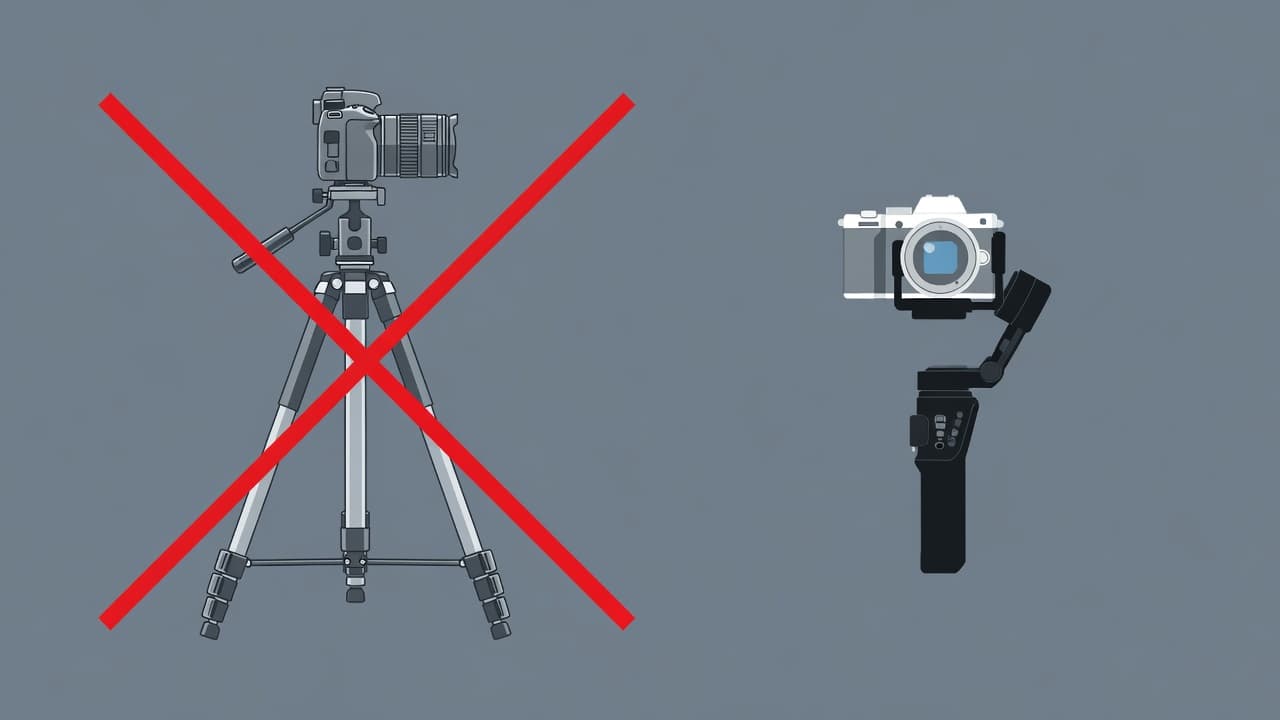
Use a monopod carefully. Some rooftop viewpoints and open public areas permit it, but many museums and landmark interiors ban it alongside tripods. A handheld gimbal can also cause problems in sensitive venues, especially if it looks like production gear.
Before leaving your hotel, check the landmark’s official visitor rules, current bag policy, and opening time. Screenshot the relevant page in case mobile service fails. Then choose a nearby outdoor viewpoint as your fallback.
Use Good On-Site Etiquette
Tripod etiquette is part of the rulebook, even when no sign mentions it. Staff are more likely to tolerate a photographer who makes room, works quickly, and responds politely.
Set up at the outer edge of a plaza, not in its center. Keep all three feet inside your personal space. Avoid entrances, steps, bridge crossings, queue lanes, and the narrow paths where people naturally stop for photos.
Morning light gives you an advantage because crowds are thinner. However, sunrise doesn’t cancel local restrictions. A closed gate, a cleaning crew, or a security patrol still has the final word.
If someone walks into your frame, wait. Public landmarks belong to everyone. Don’t ask tourists to move unless you have authorized control of the area, and don’t let a long exposure turn into a claim over shared space.
Be ready to show that you are a solo traveler. Keep the setup small, avoid spreading lenses across benches, and pack away quickly when asked. Respectful behavior can’t override a ban, but it can prevent an uncertain situation from becoming a difficult one.
Final Thoughts
Europe’s tripod rules reward preparation more than persistence. A public view of a landmark may support a careful long exposure, while the same tripod becomes prohibited the moment you enter the building.
Plan each shoot around the precise ground beneath your feet, not the landmark’s name. Keep the tripod legs folded until you’re standing on the gravel of Champ de Mars, well clear of the walking path.
