
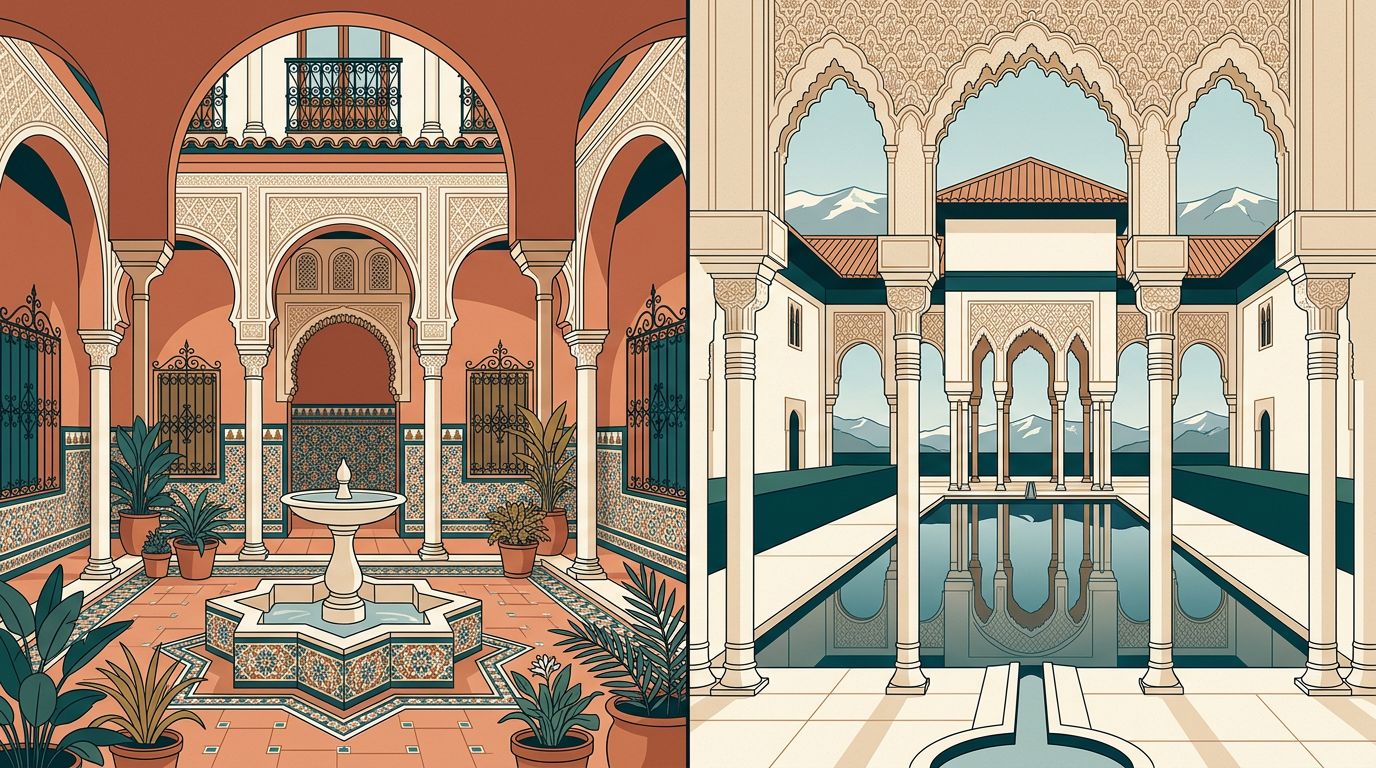
A patterned plaster wall can hold your attention longer than a famous skyline. Yet choosing between Seville and Granada changes the kind of images you bring home.
For Seville vs Granada photography, Granada gives you the great Nasrid palace complex and mountain-backed views. Seville offers a denser, more intimate study of Mudéjar craft, tiled courtyards, and layered royal rooms.
Your choice should follow your visual instincts, not a checklist of landmarks.
Key Takeaways
- Granada is the stronger choice for sweeping Nasrid palace scenes and the Alhambra’s formal courtyards.
- Seville suits photographers who enjoy close details, repeated arches, ceramic tiles, and controlled compositions.
- The Alhambra demands more advance planning because timed entry shapes your shooting window.
- Real Alcazar and Casa de Pilatos give Seville more flexible options for a detail-focused photo day.
- Both cities reward early starts, a wide-to-standard zoom, and patience around people.
Two Related Traditions, Two Different Visual Stories
Granada’s Alhambra is the clearer choice if you want architecture that feels like a complete visual world. Its Nasrid Palaces, built under the last Muslim dynasty to rule Iberia, combine water, carved stucco, wood ceilings, gardens, and distant hills within one hilltop complex.
Seville’s most photogenic “Moorish” work is often Mudéjar rather than Nasrid. After Seville fell to Castilian forces in 1248, Muslim craftspeople continued to shape buildings for Christian patrons. The result borrows Islamic decorative language while placing it inside Christian royal and aristocratic settings.
That difference matters through a viewfinder.
Granada has the wider stage. The Court of the Myrtles gives you a long reflecting pool and a framed palace facade. The Court of the Lions compresses columns, light, and the famous fountain into a smaller square. Beyond the palaces, the Generalife gardens add water channels and hillside geometry.
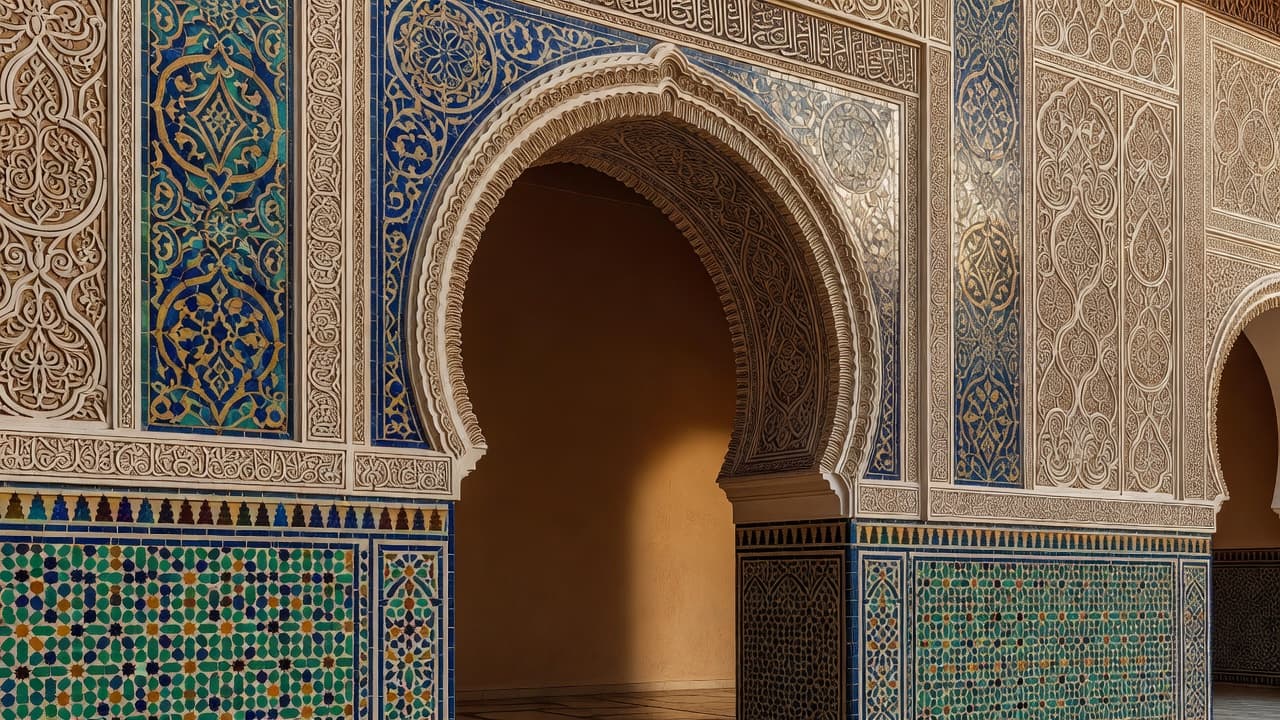
Seville rewards patience. In the Real Alcazar, the Palacio del Rey Don Pedro has decorated doorways, muqarnas vaulting, tiled dados, and richly patterned rooms that ask for tighter framing. Casa de Pilatos adds a different rhythm, with Renaissance proportions wrapped around Andalusian tilework and patios.
For a broader sense of how the cities differ in pace and atmosphere, this Seville or Granada comparison is useful before you lock in hotels and train tickets.
Granada gives you a monumental setting. Seville gives you a more tactile one.
Granada Photography: Big Frames at the Alhambra
The Alhambra is hard to beat for a photographer who wants a single, substantial subject. You can shoot there for hours without repeating the same visual problem. One courtyard asks for symmetry, another for a layered frame through an arch, while a dim hall may call for a close study of script and plaster.
The Palace of Comares is particularly rewarding. In the Hall of the Ambassadors, carved surfaces rise toward a complex wooden ceiling. A wide lens can describe the room, but a 50mm or short telephoto often makes a stronger image by isolating a niche, a window, or a section of calligraphy.
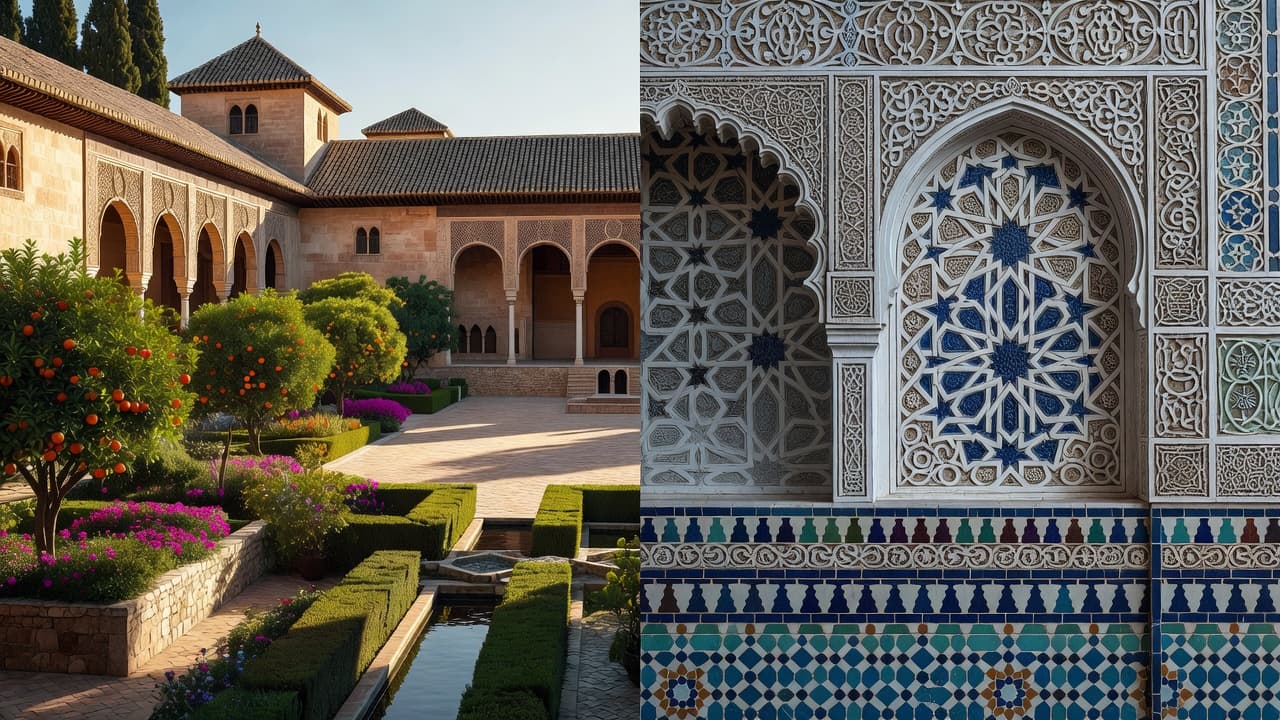
Granada gives you the larger single subject, where water, tiled geometry, pale plaster, clipped hedges, and the Sierra Nevada can occupy different layers of one carefully timed frame.
Still, the Alhambra’s scale creates problems. Visitors fill narrow passages, bright courtyards can overpower shaded interiors, and popular viewpoints become crowded fast. Work each location twice if your timed visit allows it. First, make a safe record shot. Then wait for gaps in the flow and look for fragments.
Early entry, if available.
Outside the complex, the Albaicin offers distant views across the valley. The Mirador de San Nicolas is the best-known place to photograph the Alhambra with the mountains behind it, though it rarely feels quiet near sunset. Walk the nearby lanes instead. A partial view through a whitewashed wall or tree branch can feel more personal than the standard wide panorama.
In 1829, American writer Washington Irving stayed at the Alhambra and later wrote Tales of the Alhambra. That history explains part of the site’s pull. The place has drawn storytellers for almost two centuries, and its details still work best when treated as parts of a lived palace rather than trophies.
Before your visit, a short visual look at the Alhambra can help you recognize the major spaces and plan lens choices.
Camera approach for the Alhambra
Carry a 16-35mm or similar wide zoom for courtyards and full arches. Pair it with a 50mm or 70-200mm lens if you have room. The longer lens helps remove crowds and pull decorative repetition into a flat, graphic composition.
Watch your highlights around water and white plaster. Bracket exposures when scenes mix deep interiors with sunlit courtyards. A circular polarizer can help with some glare, but don’t use it blindly around reflective pools, since uneven polarization can make water look patchy.
Seville Photography: Mudéjar Detail and Human Scale
Seville’s architecture asks you to slow down. The Real Alcazar has famous rooms, yet its strongest photographs often come from edges of the scene: a tiled bench under a pointed arch, light on a carved doorway, or a reflection disturbed by a passing breeze.
The Palacio del Rey Don Pedro is the essential stop. Its facade looks almost like embroidery in stone and plaster. Stand back for the full portal, then move closer. Repeating motifs, Arabic inscriptions, glazed tiles, and shadowed doorways give you a long sequence of usable studies.

Photo by Audrey B
Seville, by contrast, rewards a photographer willing to work slowly through dense rooms and courtyards, where the real subject may be a reflected arch, a ceramic border, or a cedar ceiling rather than an entire facade.
Casa de Pilatos deserves time after the Alcazar. Its central courtyard has marble, orange trees, azulejos, and a more relaxed spatial order. You can photograph the arcades as clean architectural lines, then turn toward the walls for fragmented color studies. The building’s mix of Mudéjar and Renaissance elements also gives a fuller account of how styles overlapped in Andalusia.
The city is flatter than Granada, which makes it easier to link locations on foot. You can shoot the Alcazar in the morning, wander through Santa Cruz, then reach Casa de Pilatos without spending half the day on transport or steep lanes.
How Seville changes your compositions
A wide lens remains useful, especially in the Patio de las Doncellas and larger Alcazar gardens. However, Seville is where a standard zoom often earns its space. A 24-70mm lens lets you move quickly between full courtyards, medium views of arcades, and close tile patterns.
Use doorways as natural frames. Shoot through an arch toward a second arch, but leave enough negative space to avoid a cluttered image. In courtyards, wait for a single person in a contrasting color to provide scale. The building should remain the subject.
Timing beats gear. Harsh Andalusian sun can make mid-afternoon courtyard shots difficult, so use that time for rooms, shaded arcades, or lunch. Later light often adds warmth to exterior tilework without flattening every carved surface.
Planning the Better Moorish Architecture Photo Trip
Choose Granada if the Alhambra is the image that brought you to Andalusia. Give it at least one dedicated visit, and buy entry through the official ticket channel as soon as your dates are settled. Timed access is part of the experience, so arrive early enough to pass through entry procedures without rushing your first frames.
Choose Seville if you prefer photographic variety across several manageable stops. The Alcazar may be the headline, but Casa de Pilatos and the city’s Mudéjar churches help you build a more varied portfolio. You can also revisit the Alcazar on a separate day if your schedule allows.
This quick comparison clarifies the decision:
| Photography priority | Better city | Why |
|---|---|---|
| Grand palace courtyards | Granada | The Alhambra offers larger Nasrid settings |
| Architectural details | Seville | Tiles, plasterwork, wood, and intimate rooms are everywhere |
| Mountain-backed views | Granada | Albaicin viewpoints face the Alhambra and Sierra Nevada |
| Easy multi-site walking day | Seville | Major Mudéjar locations sit within a compact central area |
| Minimal advance planning | Seville | More secondary subjects reduce reliance on one timed monument |
If your itinerary includes both cities, start in Seville and finish in Granada. Seville trains your eye on pattern and framing. Granada then gives those skills a larger canvas.
Conditions also change by season. Summer heat pushes many visitors toward early mornings and late afternoons. Winter can bring softer light and fewer people, though Granada’s higher elevation feels much colder. Check current opening times before leaving your hotel, because seasonal schedules and special access rules can change.
A Spain travel photography discussion may also reveal recent reports about crowd levels and practical shooting conditions, but treat individual posts as local tips rather than fixed rules.
The City to Put First
Granada is the stronger pick for photographers chasing monumental Nasrid architecture, water reflections, and a palace set against the hills. Seville is more rewarding when you want to study ornament at close range and build images from repeating detail.
The most memorable photographs usually come after the obvious frame. In Seville, that may be a blue-and-white tile panel beneath the Patio de las Doncellas arcade.
