
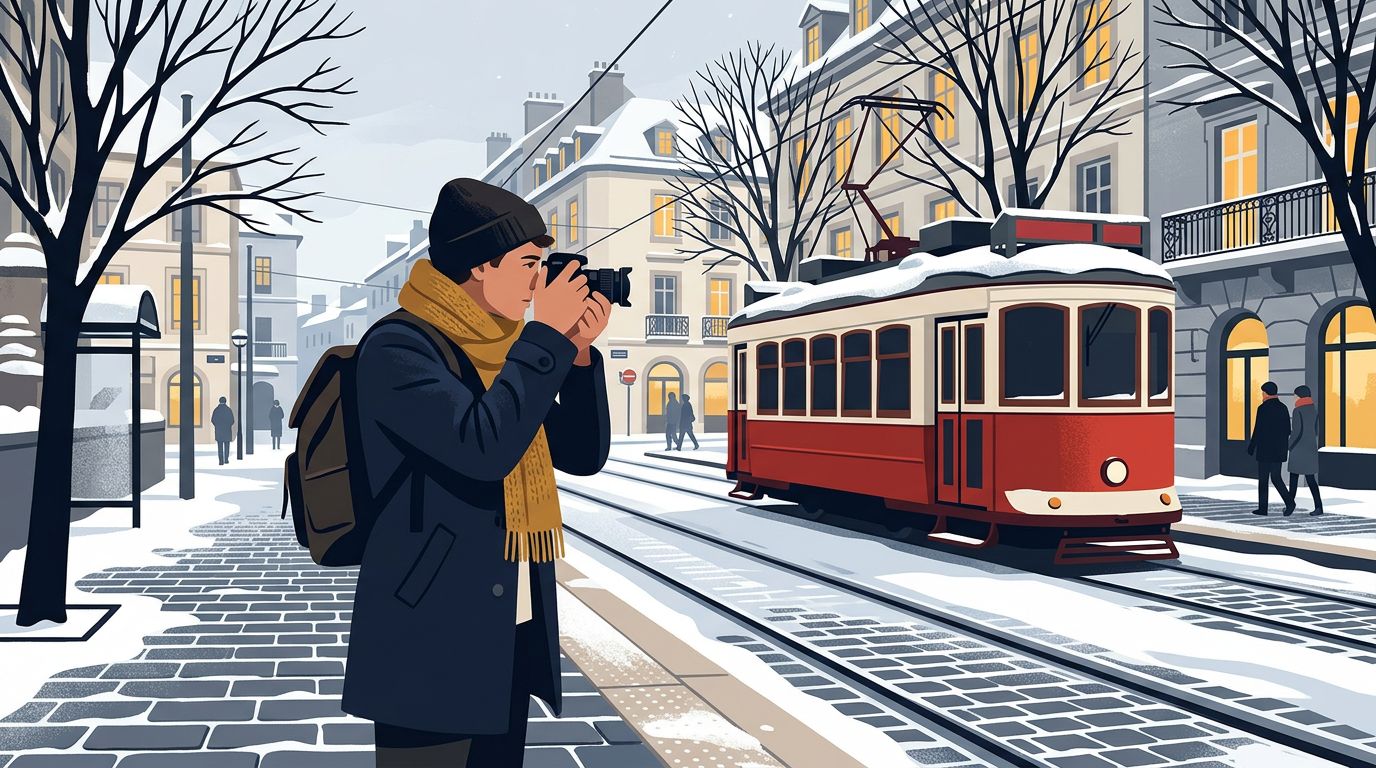
Winter edits a city with a sharp hand. Snow hides visual clutter, low sun drags shadows across stone, and people reveal themselves through gestures of warmth, hurry, and patience.
The best European cities for street photography in winter don’t depend on perfect snow. They offer strong geometry, reliable public transport, and enough street life to make a frame feel lived in. For winter street photography, short daylight is a constraint worth planning around.
Choose the city that fits the pictures you want to make, then let the weather set the mood.
Why winter street photography looks different
Winter gives familiar streets a new visual logic. Pale pavements bounce light upward, bare branches expose building lines, and dark coats separate people from bright facades.
Snow simplifies a street. A grey afternoon can still work when a tram, umbrella, or window glow gives the scene one clear point of interest.
Low light creates better direction
In summer, hard overhead light can flatten a square by noon. Winter’s lower sun is more useful because it hits doorways, faces, and wet cobbles from the side.
Unlike a June itinerary, when high sun can flatten pale facades and leave tourists scattered across every pavement, a winter walk gives you directional light, black coats against stone, and a credible reason for people to pause.
Shoot the hour after sunrise when possible. The streets are quieter, while cafés begin to fill and deliveries arrive.
Weather adds human stories
Don’t wait for a blizzard. Fog, sleet, breath in cold air, and reflections on pavement give you more believable photographs than untouched snow alone.
Look for small acts rather than grand scenes: someone folding an umbrella beside a tram stop, a cyclist coasting past a bakery window, or a couple checking a map under one hood. Those moments make a location feel less like a postcard.
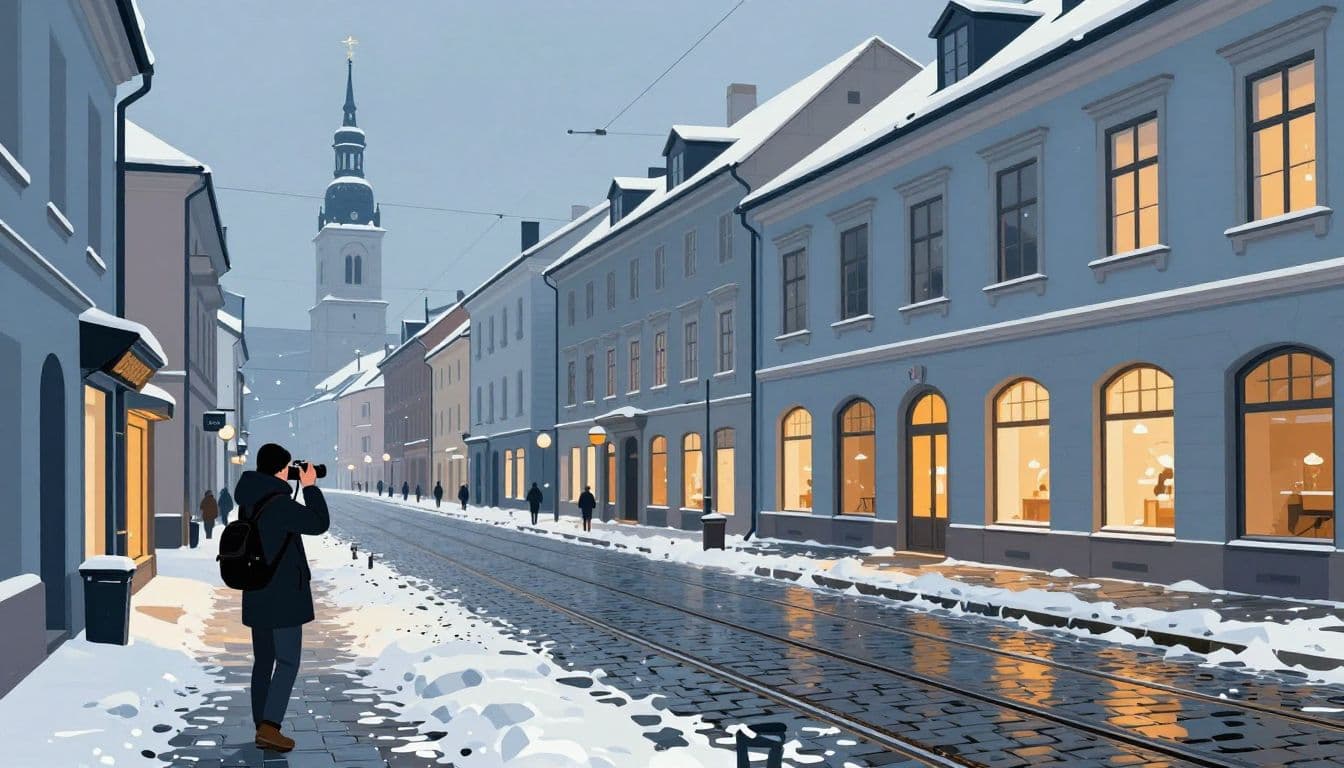
Tallinn offers intimate medieval winter frames
Among the best European cities for street photography in winter, Tallinn is the easiest choice for photographers who prefer close, layered compositions. Its Old Town packs towers, archways, steep lanes, and textured walls into a walkable area.
Start on Toompea Hill, then work downhill through the lanes toward Town Hall Square. Kohtuotsa and Patkuli viewpoints give you a wider view before you return to narrow streets such as St. Catherine’s Passage.
Work the edges of the Old Town
Tallinn looks strongest when you avoid making every frame a landmark. Stand near a lane junction and wait for a person to cross through the space between two old walls. Use a 35mm or 50mm-equivalent lens to keep the scene dense without turning it into an architectural record shot.
Morning brings breathing room. Later, warm window light can balance blue daylight against cobbles and snow.
Winter can offer a concentrated scene (early December in Tallinn: snow-softened cobbles and a market-square crowd), but January often feels calmer. Tallinn’s official Christmas guide is useful if you want the seasonal activity around Town Hall Square without arriving after it has ended.
Keep moving when you photograph. Don’t block a narrow lane, and ask before making a close portrait in a shop or café.
Prague gives you layers, trams, and river mist
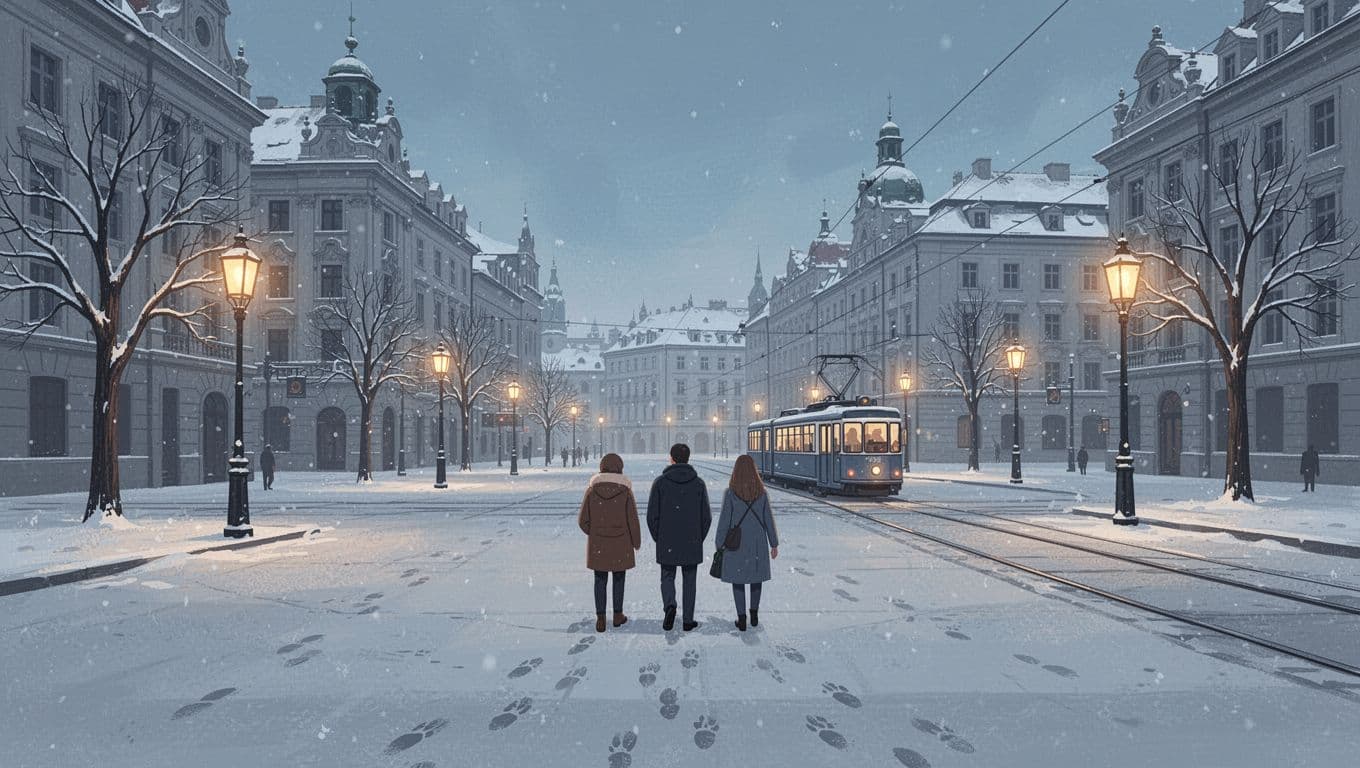
Prague rewards photographers who like visual density. Gothic towers, Baroque facades, river views, and red-and-cream trams can all appear within one short walk, even when the sky stays flat.
The city doesn’t need fresh snow to work. Damp stones along Malá Strana and mist beside the Vltava can be more compelling than a bright, crowded afternoon.
Begin before Charles Bridge fills up
Charles Bridge is popular for a reason, but its best winter use is as a route rather than a destination. Arrive at first light, photograph silhouettes moving between statues, then walk into Malá Strana before tour groups fill the lanes.
Prague’s compact central districts let you begin near the castle in cold morning light, descend through Malá Strana, and reach the river before the short daylight window loses its direction. That sequence gives you wide city views, compressed streets, and water reflections without wasting time on long transfers.
A longer lens helps isolate walkers against the bridge arches. Meanwhile, a 28mm or 35mm is better for placing a figure beneath the larger streetscape.
Use trams as both subject and transport
Trams add color, motion, and a dependable compositional line. They also solve the practical problem of cold feet. Prague’s public transport guidance lists frequent daytime tram service and night connections, so you can shift locations after dark without relying on long walks.
For holiday crowds and warm light, the Old Town Square Christmas Market listing helps you confirm seasonal dates. Avoid shooting every stall head-on. Instead, frame the market through an archway or use steam and reflections near its perimeter.
Budapest is built for winter blue hour
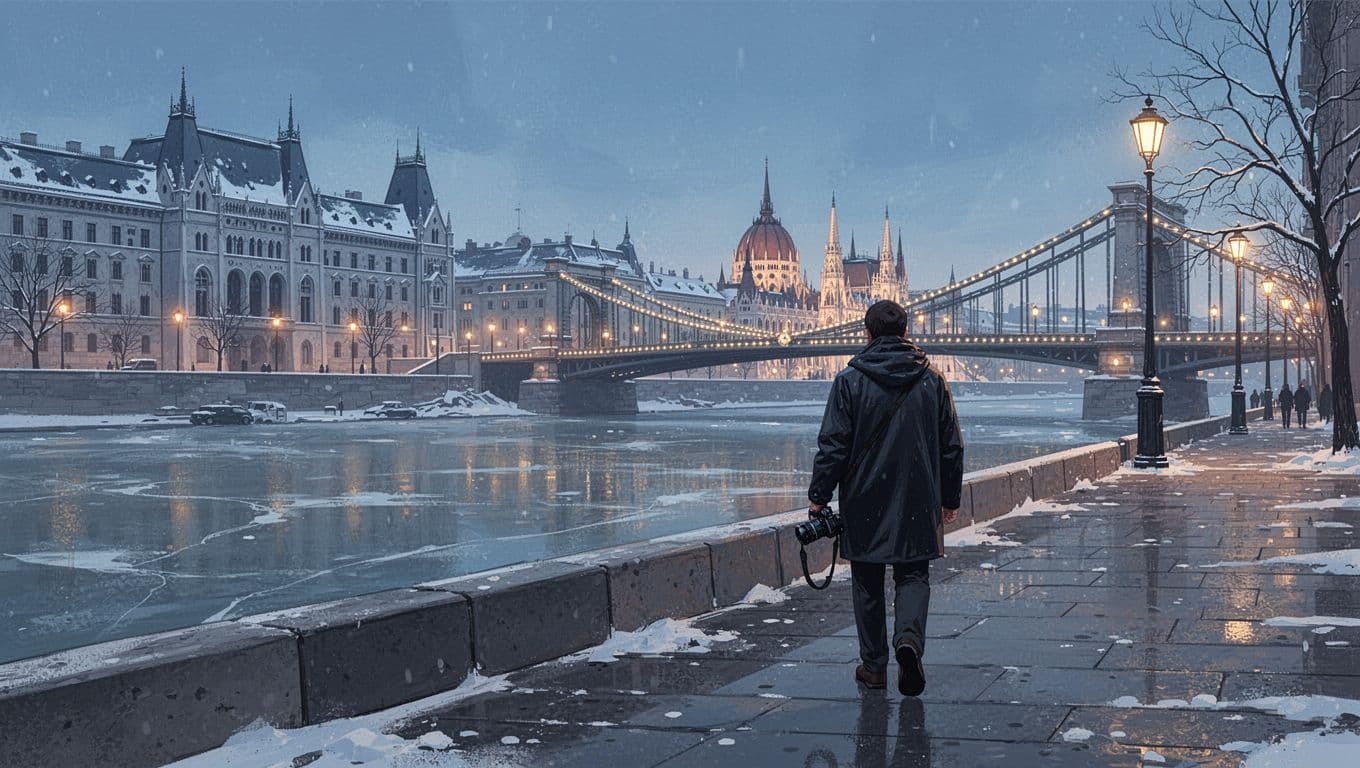
Budapest makes the strongest case for photographers who prefer dusk. The Danube separates the city into two distinct visual zones, while bridges and monumental facades give blue-hour scenes a clear structure.
Blue hour arrives early. Use that fact instead of fighting it.
Begin near Parliament on the Pest side for long riverside perspectives. Then cross toward Castle Hill or Fisherman’s Bastion, where you can look back across the water as lights come on. Wet pavement after rain or thaw often gives the city its most useful reflections.
Make the river part of the story
Don’t photograph the skyline as a static strip of buildings. Put something closer to the lens, such as a railing, lone passerby, or departing tram, so the river becomes a distance rather than a blank foreground.
Budapest-native photographer Krisztian Bodis has described losing potential frames when cold fingers slowed him down. He also warns about condensation when a cold camera enters a warm interior. That experience is familiar to anyone who has rushed into a café after dark with a camera hanging outside their coat.
Carry a small dry cloth. Let the camera warm gradually inside a closed bag before you turn it on indoors.
Copenhagen suits a cleaner, quieter visual style
Copenhagen’s winter weather is often wet and windy rather than snowy. That works well for photographers who enjoy restrained color, bicycles, canals, and modern city rhythm instead of ornate old-world scenes.
Nyhavn’s painted facades are an obvious stop, yet the strongest shots often sit one street away. The official Nyhavn guide confirms why the canal is iconic, but early light and side streets will give your images more space.
Follow cyclists and canal reflections
Stay alert around cycle lanes. Don’t step backward into one while framing a canal, and don’t hold a position that forces riders to detour around you.
Christianshavn offers a better pace for observing daily life. Its canals and colored houses work especially well with rain-darkened pavement and low-contrast skies.
Try a 50mm lens for passing cyclists and layered windows. A wider lens can turn bridge rails and canal edges into useful leading lines, though wide angles quickly exaggerate leaning buildings.
Choose your city by the pictures you chase
The best European cities for street photography in winter aren’t interchangeable. Pick the setting that matches your natural way of seeing.
| City | Best for | Start your first shoot | Watch for |
|---|---|---|---|
| Tallinn | Medieval lanes and quiet detail | Toompea viewpoints, then Old Town lanes | Icy cobbles and very short daylight |
| Prague | Architecture with human movement | Charles Bridge, Malá Strana, tram routes | Crowds around famous landmarks |
| Budapest | Blue hour and illuminated facades | Parliament riverfront or Castle Hill | Wind near the Danube |
| Copenhagen | Graphic color and everyday rhythm | Nyhavn, then Christianshavn | Rain, wind, and busy cycle lanes |
Tallinn suits photographers who work slowly and close to their subjects. Prague gives you the most variety in a compact centre. Budapest favors evening shooters, while Copenhagen is better for clean compositions and daily life.
If you have only a weekend, resist the urge to collect every landmark. A single neighborhood in changing weather will give you a more coherent body of work.
Keep your camera ready in the cold
Cold hands create more missed frames than cold cameras. Wear thin liner gloves under larger mittens, so you can adjust settings without exposing your fingers for long.
Meter for snow, lights, and dark coats
Automatic metering often turns snow grey. Start by protecting the brightest snow or sign light, then check your histogram before people enter the frame.
Because the scene contains pale pavement, reflective water, and dark clothing, meter for the highlight detail you want to keep, then make a small exposure adjustment rather than trusting a single automatic reading. Use a shutter speed around 1/250 second when people or trams provide the action.
If a subject crosses a bright background, let the silhouette go dark. A clean silhouette often feels more intentional than a badly lifted shadow.
Warm the photographer, not the lens
Keep spare batteries in an inner pocket. Cold drains them quickly, while a warm spare can rescue an evening shoot.
Use a weather-resistant bag with a simple flap. When you enter a heated museum or café, seal the camera inside before it warms. That reduces condensation on the lens and sensor area.
Street photography also asks for judgment. If someone clearly objects, lower the camera and move on. Winter streets can feel more intimate, which makes respectful distance matter even more.
The frame worth waiting for
Winter street photography rewards patience more than endurance. The strongest pictures usually appear after you have stopped chasing landmarks and started noticing the people adapting to the cold.
Choose a city with the light and pace you enjoy, then give yourself enough time to wait in one good location. Leave one battery in your inner pocket, and wait for the next tram to cut across the wet cobbles.
