
Spring gives European scenery a brief, unruly burst of color. Meltwater fills the rivers, woodland floors wake up, and mountain meadows begin to flower before summer crowds claim the paths.
For European spring photography, timing matters more than a famous location. Arrive a week too early and snow still buries the flowers. Arrive late and the waterfall is thinner, the meadow has faded, or the footpath is full.
A flexible route, a weather app, and dry socks will take you far.
Time the overlap between meltwater and bloom
The strongest photographs happen when two short seasons overlap: water levels are high after rain or snowmelt, while fresh flowers still cover the foreground. That overlap shifts every year.
Low valleys often look good from April. Alpine meadows may not peak until June. Atlantic islands run on a different calendar because winter rain keeps vegetation bright well into spring.
Watch elevation, not the calendar
A flowering season climbs uphill as temperatures rise. In Slovenia or the Swiss Alps, a valley can be green and full of narcissus while a nearby pass remains snowbound.
Use recent trail photographs, local forecast stations, and webcams to judge conditions. A long-term climate average helps, but it can’t tell you whether a cold April delayed the bloom.
A short, wet window.
Rain can make the frame
Photographers often cancel when rain appears. However, a damp morning can be ideal near waterfalls because clouds soften contrast, moss becomes richer, and fewer people are on the trail.
Bring a rain cover and several microfiber cloths. Water spray settles on the front element faster than you expect, especially when a waterfall sits below an overhang.
The best waterfall light is often not golden light. A bright, even cloud layer lets white water hold detail while the surrounding greens stay saturated.
European spring photography at Plitvice Lakes, Croatia
Plitvice Lakes National Park is built for photographers who want water in nearly every frame. Sixteen terraced lakes feed countless cascades through pale limestone and beech forest, creating strong layers even when the sky is flat.
May and early June usually bring the most energetic flow. Spring rain also deepens the greens around Veliki Slap, Sastavci Slap, and the smaller falls near the wooden walkways. For a visual orientation before choosing routes, this guide to Plitvice’s lakes and waterfalls shows the scale of the lake system.
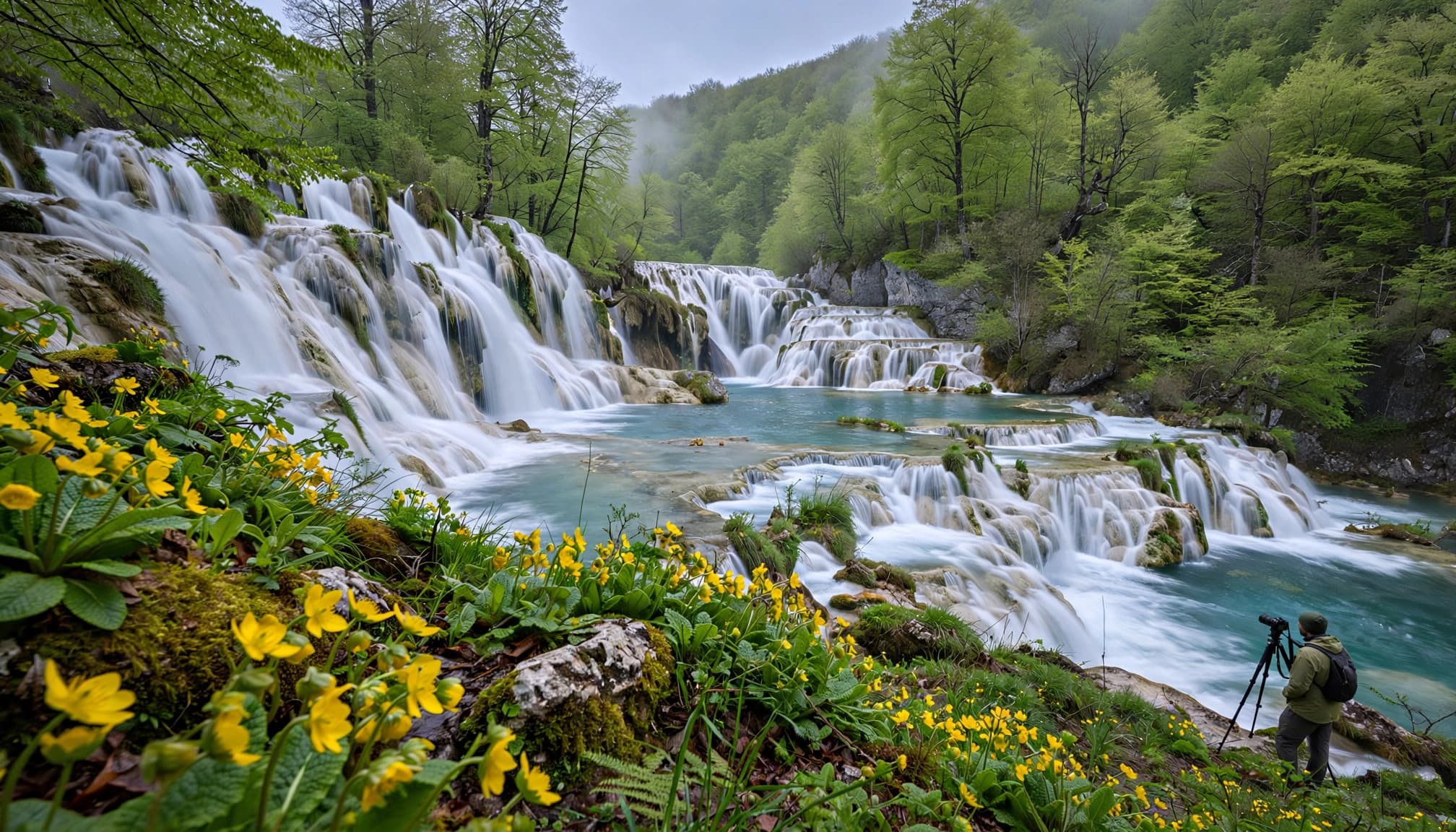
Work the boardwalk angles early
The boardwalks limit where you can place a tripod, yet they give you clean leading lines. Start at opening time, when still water can reflect forest color and boat traffic is lighter.
Keep your composition simple. A curved boardwalk, one waterfall, and a patch of fresh leaves can carry the image better than a wide scene packed with every cascade.
Respect the water’s edge
Plitvice is fragile terrain, not an outdoor studio. Stay on the marked paths and never step beyond barriers for a lower angle. Swimming is prohibited in the lakes.
The park’s popularity also means tickets can sell out in busy periods. Book ahead, select an early entry where possible, and check current opening hours before traveling. A broader Croatian national park overview can help when you want to pair Plitvice with another nature stop.
Slovenia’s Julian Alps and Triglav National Park
The Julian Alps offer a more varied spring trip than a single waterfall location. Around Lake Bohinj, woodland streams, open pasture, and sharp limestone ridges sit within short driving distances.
Late April through June works best at lower elevations, although snow can linger higher up. White narcissus meadows near Bohinj are a seasonal draw, while waterfalls such as Savica give the day a stronger focal point.
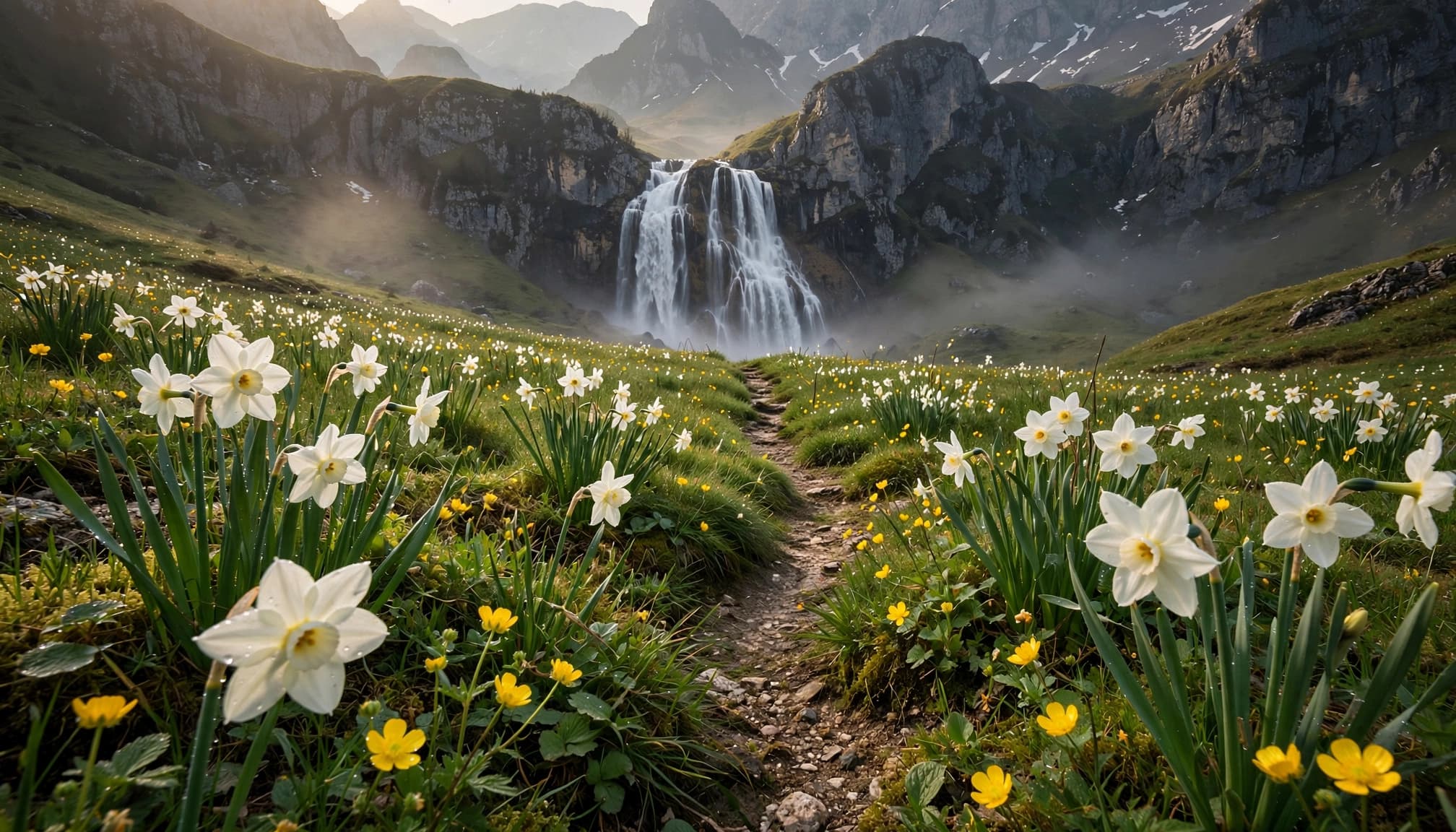
Build depth with a low viewpoint
Get low enough for the flowers to fill the nearest edge of the frame, but don’t crush them with a wide lens placed inches away. A 24mm to 35mm focal length often gives flowers scale without turning distant peaks into tiny background shapes.
Then use a waterfall or pale trail as a visual route through the image. Morning is useful because wind often stays calmer before the valley warms.
Triglav National Park asks visitors to stay on marked trails, keep dogs leashed, and obtain authorization before flying a drone. Its visitor guidance for Triglav National Park is worth reading before you pack.
Lauterbrunnen Valley, Switzerland, after the thaw
Lauterbrunnen Valley looks almost theatrical in late spring. Sheer cliffs rise above farm fields, and waterfalls spill from hanging valleys after snow begins to melt.
Staubbach Falls is the obvious starting point, but don’t stop there. The valley’s quieter scenes often sit along the walking routes between Lauterbrunnen and Stechelberg, where long grass and small flowers soften the base of the cliffs.
Wait for cloud movement
A clear blue sky can flatten this valley. Broken cloud creates moving patches of light across the meadow and separates the white falls from gray rock.
On a late-May morning near Staubbach, a photographer can face a common dilemma: the fall is bright, the cliff is dark, and a sunbreak changes the exposure every minute. Bracket conservatively, then wait for cloud cover to return rather than forcing a high-contrast frame.
The Staubbach Falls footpath advice is a useful reminder that the classic view isn’t confined to the station area.
Madeira’s levadas, waterfalls, and steep green valleys
Madeira is a strong option when mainland Europe still feels uncertain. Spring rain feeds the island’s levadas and waterfalls, while the temperate climate keeps slopes green and flowers appearing across many elevations.
Levada das 25 Fontes and Levada do Risco are famous for a reason. They combine wet forest, narrow paths, plunging water, and small clearings that work well for intimate compositions. Still, popular routes can become congested.
Treat trail status as part of planning
Madeira trail conditions can change after storms, maintenance, or rockfall. Check official trail information shortly before departure, and don’t assume a route shown in an older guide is fully open.
Some popular hikes use a timed or pre-booked entry system. Arrive within the required window, carry offline maps, and bring a headlamp where a levada route includes tunnels.
Photograph details between the big views
Wide scenes are compelling, but Madeira rewards a tighter approach. Use an 85mm or 70-200mm lens to isolate wet fern fronds, a single cascade, or flowers against dark volcanic rock.
Slow shutter speeds work well under forest cover. Start around one-quarter second, then adjust for the water’s speed and wind in the vegetation.
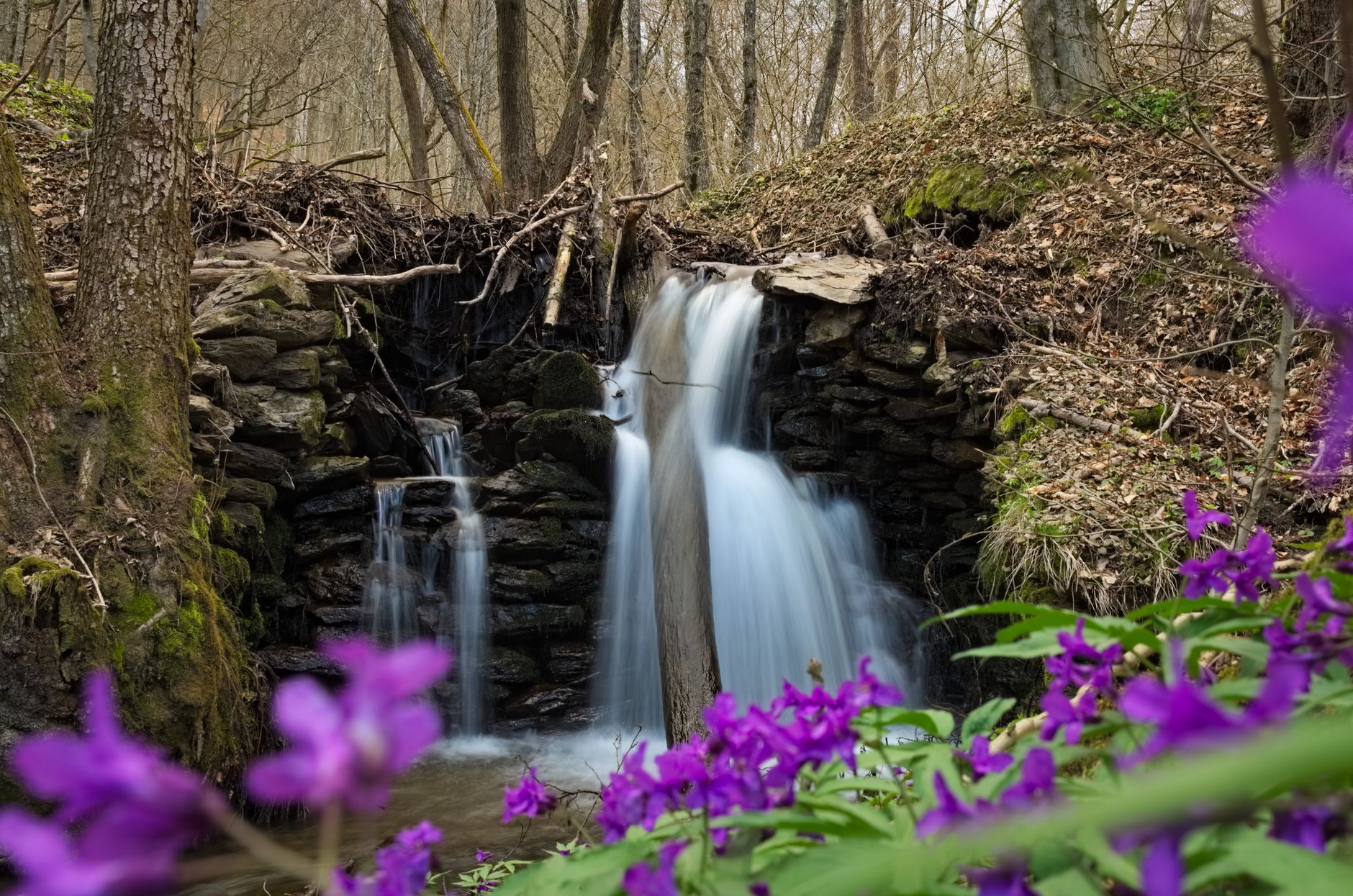
Photo by Miroslav Kaclik
Northern Iceland near Akureyri
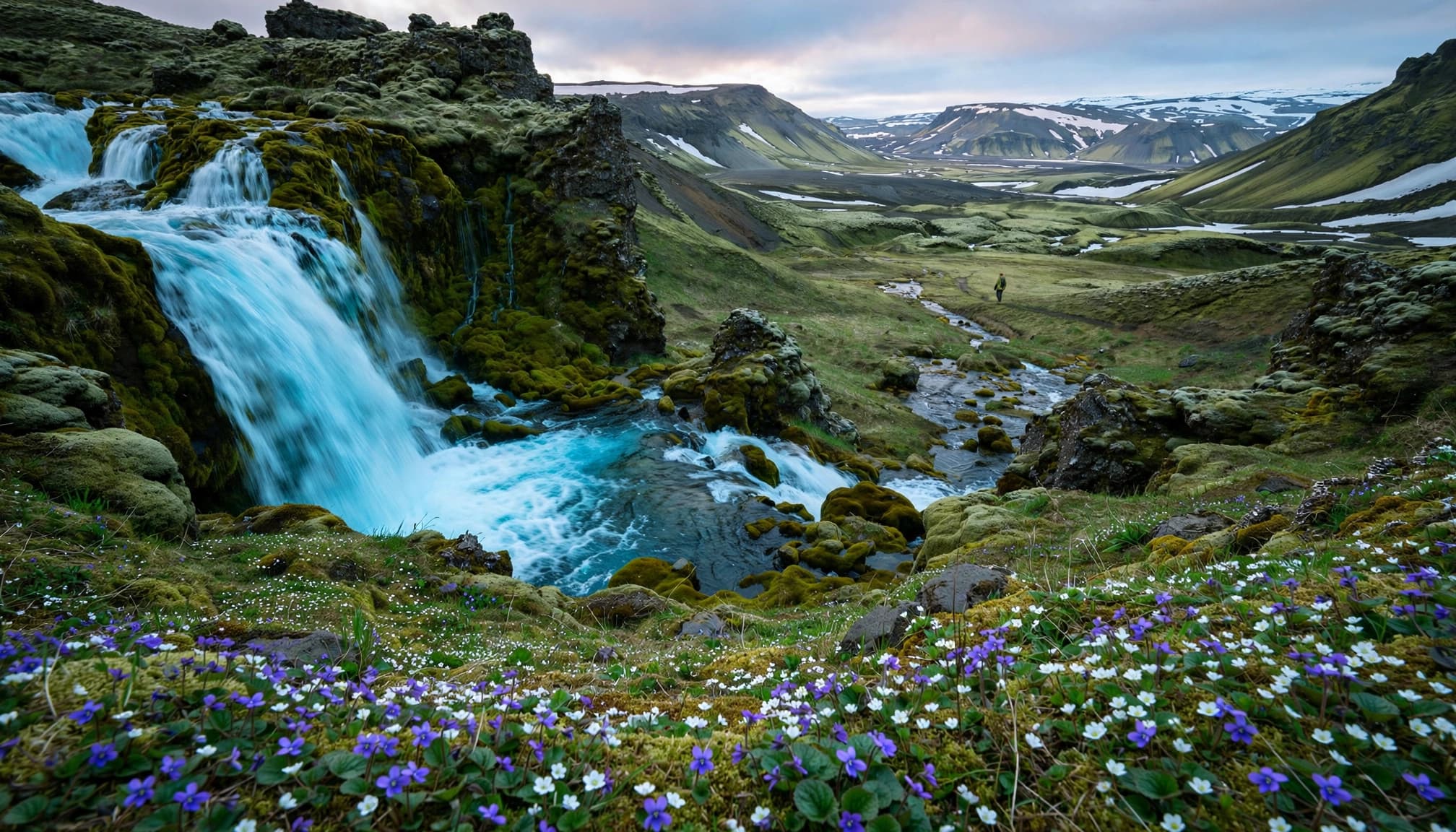
Northern Iceland’s true wildflower season often reaches into early summer, yet late May and June can still feel like spring. Snow patches remain on the high ground, meltwater runs hard, and the long daylight gives you room to wait out changeable weather.
Waterfalls around Eyjafjordur and the inland valleys can feel less enclosed than those in central Europe. The visual language is broader: dark basalt, low vegetation, distant snow, and water moving through open space.
Let the weather stay visible
Don’t remove every cloud in post-processing. A low ceiling, passing rain, or fog line can give a sparse Icelandic scene the structure it needs.
Wind is the harder problem. Use a faster shutter when flowers are moving, even if the water loses its silky look. A sharp foreground carries more weight than blurred petals beside a perfectly smooth fall.
Ordesa y Monte Perdido, Spain
Spain’s Ordesa y Monte Perdido National Park deserves attention when you want limestone walls, beech forest, and a more Mediterranean version of spring. The Ordesa Valley gathers water from high Pyrenean slopes, and several cascades sit along established walking routes.
May and June are the most dependable months for green woodland and active water. At higher elevations, snow may remain well after flowers appear lower in the valley.
Use forest shade to your advantage
Ordesa’s canopy can make midday productive. The forest cuts harsh sunlight, while damp rock and flowing streams give you close-up subjects long after a wide mountain view has lost its light.
A polarizer can reduce glare on wet leaves, but turn it gently. Full polarization may remove useful reflections from pools and make water look strangely dark.
For more ideas while building a multi-country route, this collection of European waterfall locations helps compare the region’s better-known falls.
Choose locations by shooting conditions, not fame
The best European spring photography destinations are not interchangeable. Each one asks for a different approach, so choose the place that suits the kind of frame you want to make.
| Destination | Best spring strength | Main photographic challenge |
|---|---|---|
| Plitvice Lakes | Layered turquoise cascades | Crowds and restricted viewpoints |
| Julian Alps | Flowers with limestone peaks | Changing elevation conditions |
| Lauterbrunnen | Tall falls above meadows | Extreme contrast after sunbreaks |
| Madeira | Lush forest waterfalls | Wet, narrow, busy trails |
| Northern Iceland | Open terrain and long days | Strong wind and fickle weather |
| Ordesa | Forest texture and Pyrenean water | Shade and variable snowmelt |
The table points to one useful rule: match your destination to your preferred composition before booking flights.
A photographer who loves close forest studies may get more usable frames in Madeira than on Iceland’s open slopes. Someone seeking huge vertical scale will likely prefer Lauterbrunnen or Ordesa.
Carry a practical spring waterfall kit
A heavy bag makes wet trails miserable. Pack only what helps you control light, motion, and moisture.
- Bring a sturdy tripod, a remote release, and a lens cloth in an accessible pocket.
- Carry a circular polarizer and a two- or three-stop neutral-density filter for slower water without excessive aperture narrowing.
- Use waterproof boots with real grip, because mossy stone and boardwalks become slick after rain.
- Keep a small dry bag for batteries, memory cards, and a spare base layer.
Photographing waterfalls and wildflowers in the same frame often demands a compromise. Stopping down to f/11 can hold nearby blooms and distant water, but diffraction may soften a high-resolution file. Focus stacking can help when the wind is still; otherwise, choose one sharp priority.
Also protect the plants. Avoid placing tripod legs in a flower patch, and never move flowers, stones, or branches to clean a composition.
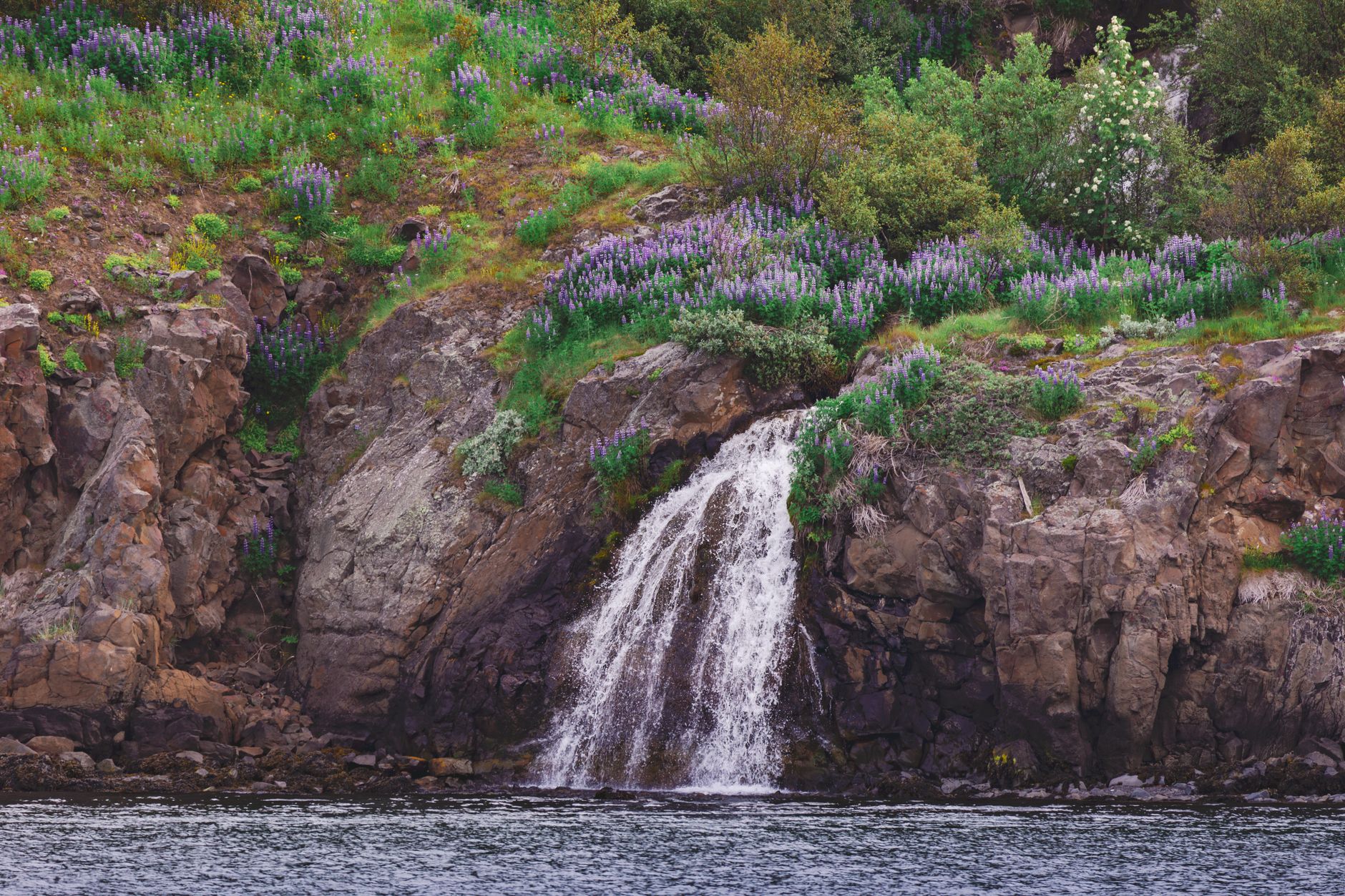
Photo by Aliaksei Semirski
Make room for weather days
Spring trips fail when every sunrise has a fixed destination. Give yourself at least one unplanned day in each area, especially where access roads, mountain paths, or ferry links can change after heavy rain.
Book accommodation close to the trailhead when possible. An early start removes parking stress and gives you time to revisit a scene after conditions improve.
European spring photography rewards return visits within the same day. Shoot a broad view in morning cloud, then come back after rain for close water studies and richer color.
Closing frame
The strongest spring photographs don’t depend on one famous waterfall or a meadow at peak bloom. They come from noticing how fresh water, new growth, weather, and terrain meet in one brief window.
Plan for that window, but don’t over-script it. Leave room for cloud, rain, and a slower walk when the first composition doesn’t work.
Pack a microfiber cloth in your jacket pocket before stepping onto the wet boardwalk at Plitvice.
