
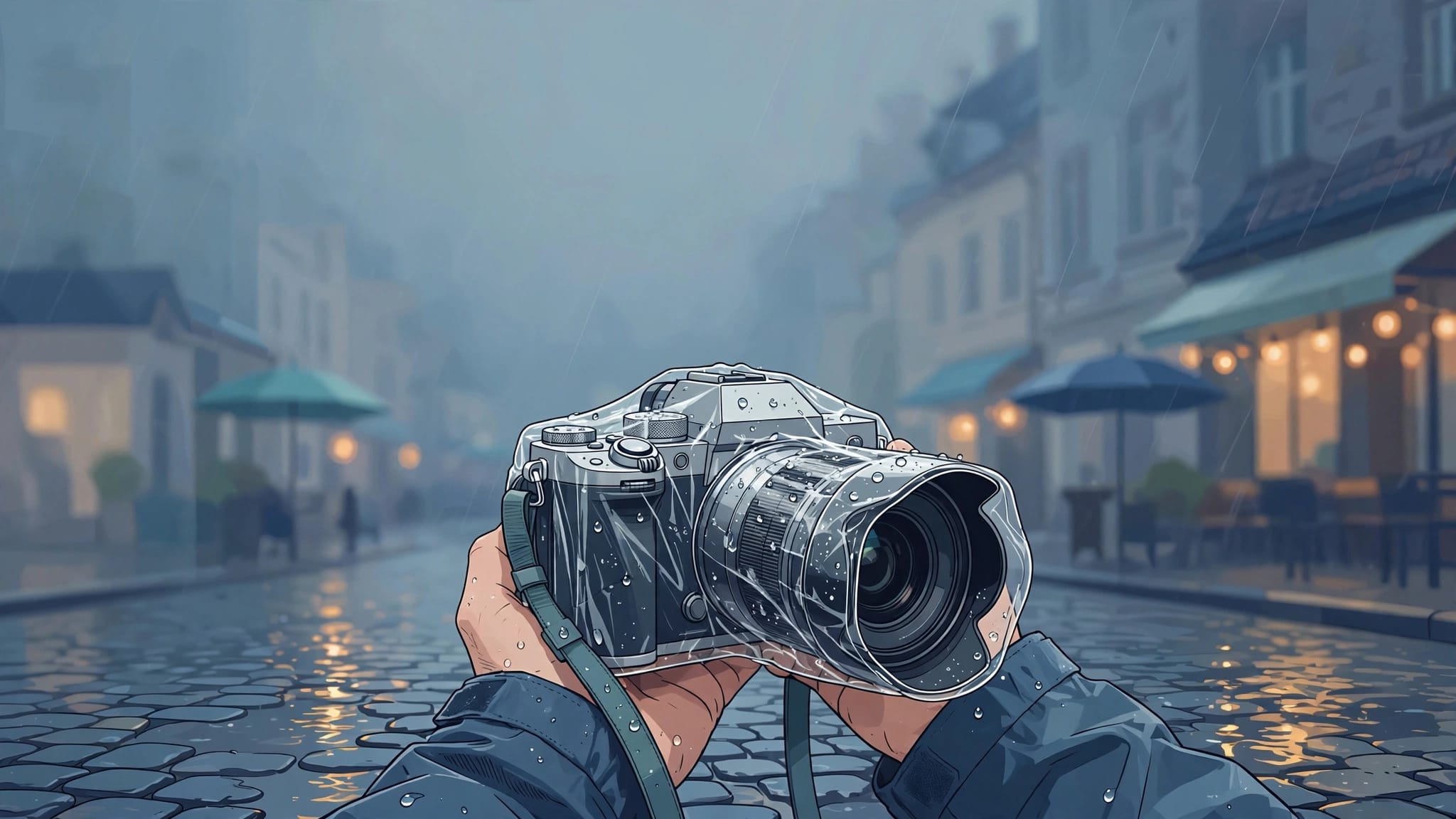
Rain can turn a familiar European street into a better photograph. Wet cobbles hold reflections, shop lights stretch across puddles, and umbrellas add movement, but exposed controls and a soaked lens can end the session early.
The best camera rain covers let you keep shooting through drizzle without carrying expedition-grade gear across train platforms and steep old-town steps. For most trips, a compact cover, a lens hood, and a dry cloth are enough.
Pack for the likely weather.
Key Takeaways for Rainy Travel Days
- Choose a close-fitting cover when you carry a mirrorless camera and standard zoom all day, because loose material can catch on straps and make controls harder to reach.
- Keep a larger, seam-sealed option for a 70-200mm lens, tripod work, coastal spray, or long waits at viewpoints.
- An inexpensive plastic sleeve works well as an emergency backup for surprise showers, damp benches, and leaks inside a daypack.
- Protect the front element often. One large droplet can soften an otherwise sharp frame.
Rain covers protect against direct moisture. They don’t stop condensation when cold equipment enters a warm room or train.
Best Camera Rain Covers for European Travel Photography
The right cover depends less on your camera brand than on lens length, shooting position, and how quickly weather can change. A street photographer in Vienna needs something different from a hiker waiting for cloud breaks in the Alps.
| Cover | Best fit | Useful detail | Price reference |
|---|---|---|---|
| Think Tank Emergency Rain Cover Medium | Standard zooms and 70-200mm lenses | Seam-sealed, tripod opening, 4 oz | Varies by retailer |
| Peak Design Shell | Compact mirrorless travel kits | Close-fitting, three sizes | £54 for Large at Park Cameras |
| OP/TECH USA Rainsleeve | Emergency backup | Lightweight sleeve, several lengths | From $10.49 |
| LensCoat RainCoat Pro | Large telephoto setups | Built for serious lens coverage | $76.50 to $109.25 listings |
Most travelers only need one dependable cover plus a low-cost backup sleeve.
Best for standard zooms: Think Tank Emergency Rain Cover Medium
The Think Tank Emergency Rain Cover Medium is a strong all-purpose choice for a DSLR or mirrorless body with a 24-70mm f/2.8 or 70-200mm f/2.8 lens. It weighs 4 ounces, measures 18.9 inches long, and adjusts from 3.1 to 5.5 inches in diameter.
Its seam-sealed rip-stop nylon construction suits persistent drizzle and wet trail conditions better than a thin disposable sleeve. The clear window keeps the rear screen visible, while a zippered bottom allows tripod or monopod use. Think Tank’s Emergency Rain Cover range also includes a Large size for bigger lenses.
Best close-fitting option: Peak Design Shell
Peak Design Shell is the neatest option for photographers who dislike a loose cover flapping around a small camera. It comes in Small, Medium, and Large, and Peak Design rates it for water, snow, dust, and abrasion.
It works handheld, on a tripod, attached to a backpack, or packed inside a bag. That flexibility is handy when a clear morning in Copenhagen becomes a wet afternoon. A European rain-cover price comparison lists the Large Shell at £54, while regional pricing changes by country.
Best low-cost backup: OP/TECH USA Rainsleeve
The OP/TECH USA Rainsleeve is the practical answer for travelers who want almost no added weight. It is a clear plastic sleeve with versions in 8-inch, 14-inch, 18-inch, and 25-inch lengths. Official pricing starts at $10.49, depending on the version.
It won’t feel as robust as a shaped fabric cover. However, it is ideal for the rain shower you didn’t expect while crossing a square, boarding a ferry, or pausing beside a waterfall.
Match the Cover to Your Camera and Lens
A cover that fits badly creates its own problems. It can block the zoom ring, press against the viewfinder, or leave the lens barrel exposed.
Standard zooms and smaller mirrorless bodies
A 16-50mm, 18-55mm, 24-70mm, or compact prime lens pairs well with the Peak Design Shell or a short Rainsleeve. These kits are easy to hold one-handed under a jacket between shots.
Leave the lens hood attached. It keeps some rain from landing directly on the front glass and gives the cover a little structure around the lens.
For city breaks, avoid carrying a cover made for a super-telephoto lens. Excess material slows you down when you are raising the camera, changing exposure, or moving through a crowd.
Long lenses, tripods, and exposed viewpoints
A 70-200mm f/2.8 needs more space, especially when the zoom barrel extends. The Think Tank Medium accommodates that class of lens, while the Large version is intended for systems as large as a 150-600mm zoom or 600mm f/4.
On a February morning above Lake Bled, a photographer waiting at a stone wall for the church and island to emerge through mist would benefit from the Medium’s tripod opening, rather than trying to balance a damp camera under an umbrella for twenty minutes.
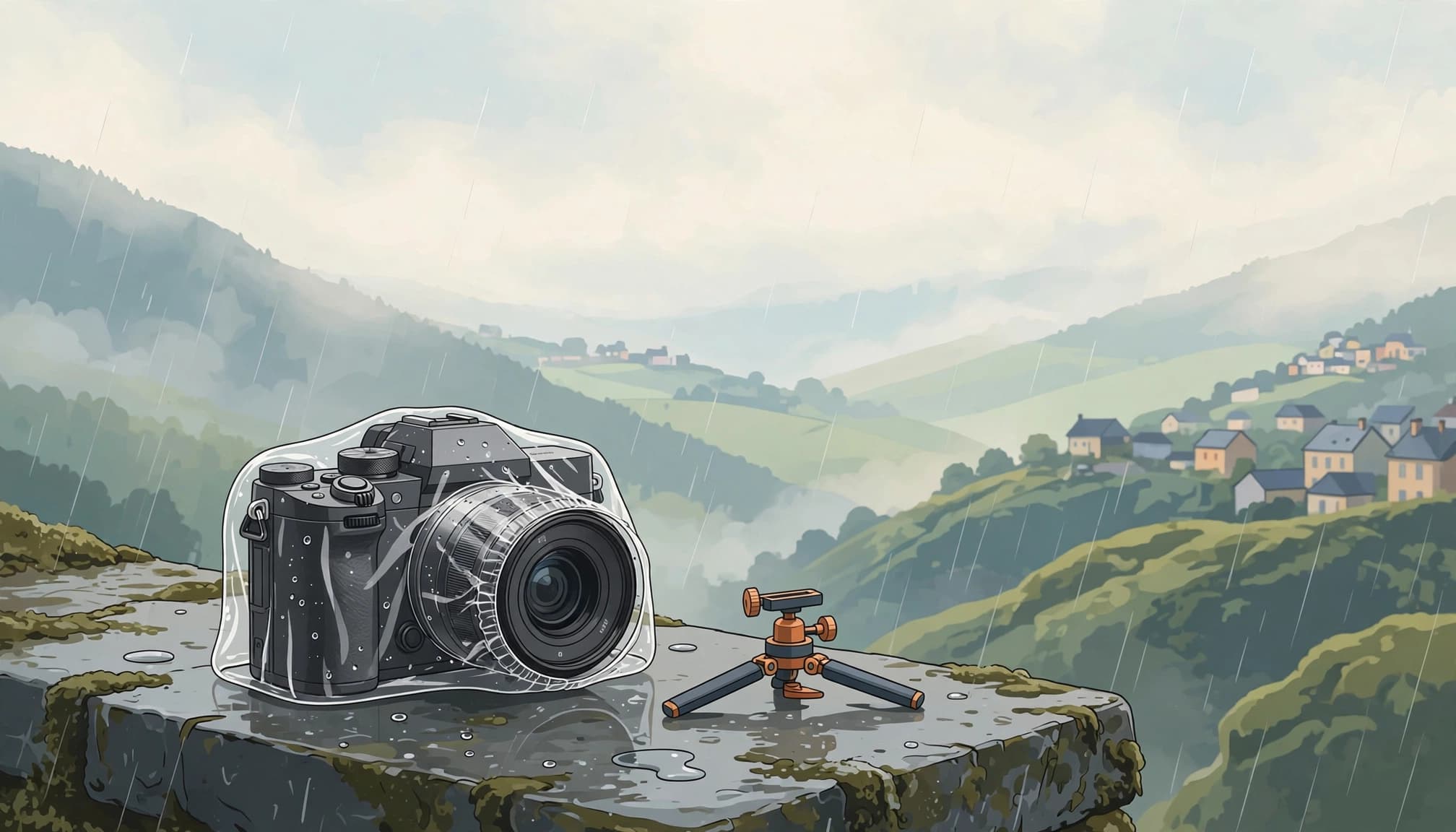
A tripod earns its space when rain gives way to blue hour, waterfalls, or city lights. Still, check local rules before opening one around busy landmarks or narrow pavements.
Shoot the Rain, Not Only Through It
Rain changes surfaces and light. The strongest frames often come after the shower, when the pavement still shines but drops no longer strike the lens.
Wait for the reflective window
Arrive before rain stops if you want umbrellas and hurried pedestrians. Wait ten minutes afterward if you want glowing stones, long reflections, and clearer air.
Wet stone, reflected light.
Look down as often as you look ahead. Paris, Prague, Lisbon, Amsterdam, and Copenhagen all have paving, tram tracks, canals, or glassy plazas that can carry color through a composition. Use a low viewpoint and keep one strong light source in the frame.
Keep exposure and footing under control
Rainy scenes can fool a camera meter because bright reflections sit beside dark pavement. Check your highlights after the first few frames, then add exposure only if the lights still hold detail.
A circular polarizer can reduce glare on wet stone, although it also cuts incoming light. That may force a higher ISO in dim weather. More importantly, watch your step around polished tram platforms, metal drain covers, and slick limestone stairs.
Pack Camera Protection Without Building a Heavy Kit
A travel cover is useful only if you can reach it before the camera gets wet. Store it in an outer pocket, not under spare clothing and cables.
Build a small weather pouch
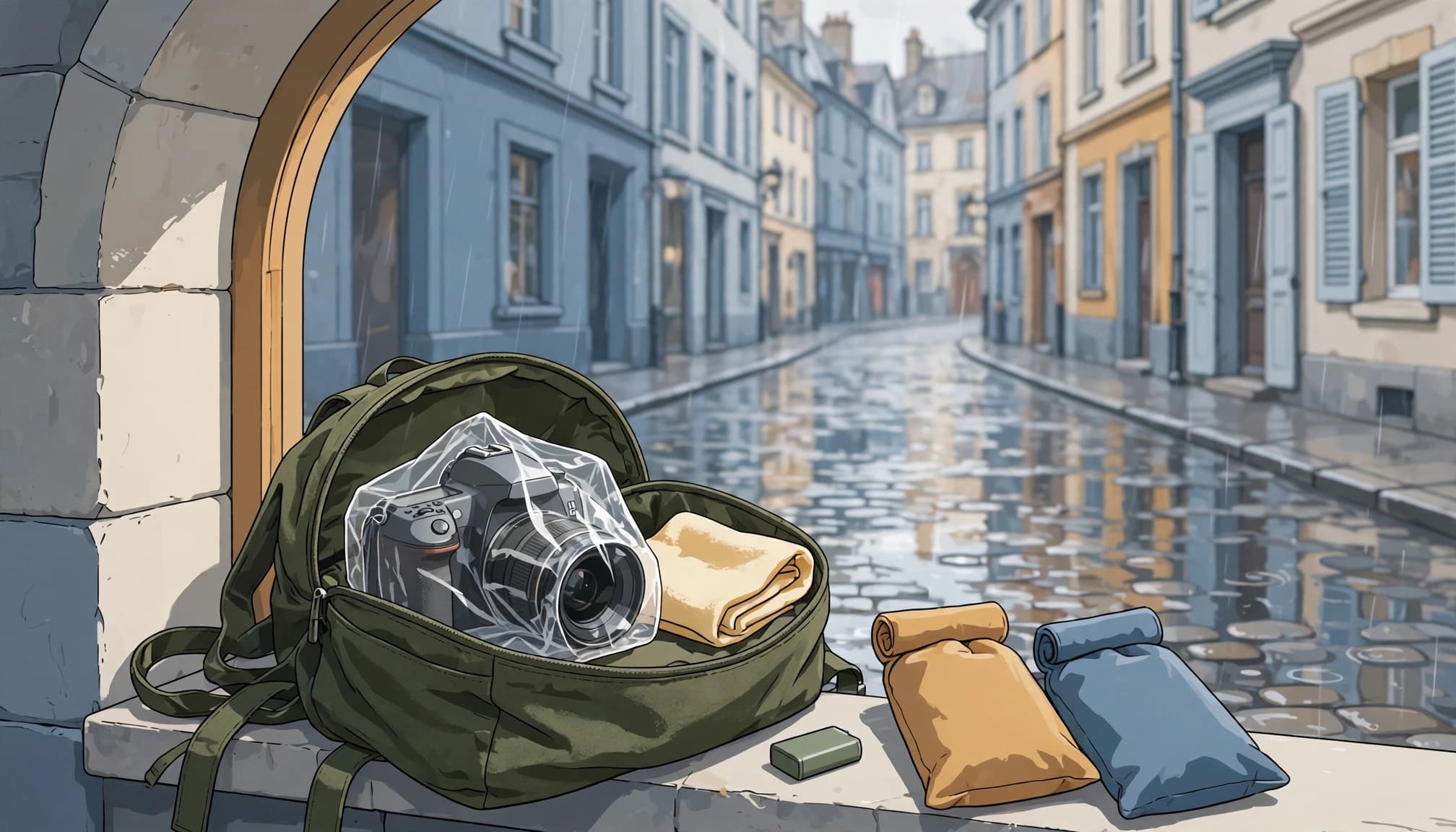
Keep your rain cover, two microfiber cloths, and a small dry bag together. One cloth can handle the lens, while the other stays dry for the camera body and rear screen.
A weather pouch also protects batteries and memory cards from a wet jacket or bottle leak. Keep your camera bag close to your body in crowded areas, and choose one that opens without spilling its contents onto the pavement.
Reduce lens changes in damp weather
Pick a lens for the location and stay with it. Swapping lenses on a windy bridge or foggy ridge lets damp air enter the body, and cold fingers make every small task slower.
A 24-70mm is often enough for lanes, markets, and overlooks. Bring the longer lens when your plan calls for distant peaks, wildlife, or compressed city views. The point is access, not a bag full of options.
Put the cover on before rain becomes heavy. Fitting one over a wet camera is slower, and water may already be sitting around buttons and seams.
Use Camera Rain Covers Without Missing the Frame
A rain cover should not make you hesitate. Practice fitting it at home with the lens hood, strap, and tripod plate already attached.
Set controls before the weather turns
Choose aperture priority or manual exposure before heading into rain. Set autofocus mode, image stabilization, and a sensible ISO range while your hands are dry.
Then pull the cover’s access sleeve snug around your wrist. The Think Tank design uses a cinchable sleeve, which gives you better control access than reaching through a fully loose plastic bag. A PPA field review of the Emergency Rain Cover describes why its compact format suits rain and snow shooting.
Dry gear gradually after shooting
When you return indoors, leave the cover on for a few minutes if the temperature change is dramatic. Put the camera into a dry bag or a closed backpack only after wiping visible moisture away.
Avoid sealing a wet camera with a wet cloth. Instead, hang the cover to dry, remove the battery if the body is damp, and check the lens mount before packing for the next train.
Frequently Asked Questions
Are camera rain covers necessary for weather-sealed cameras?
Yes, they are still useful. Weather sealing offers extra resistance, but rainwater can remain on buttons, zoom rings, and the rear screen. A cover also helps protect non-sealed lenses and keeps you shooting more comfortably.
Can I use a plastic bag as a camera rain cover?
A plastic bag with a lens opening can protect equipment during a brief surprise shower. Use it as a temporary solution, keep the opening loose around the lens, and remove it once you reach shelter. Avoid trapping moisture against the camera for long periods.
Which rain cover works for a 70-200mm lens?
The Think Tank Emergency Rain Cover Medium is designed for a 70-200mm f/2.8 setup. Confirm the fit with your camera body, lens hood, and tripod plate before the trip, because those parts change the overall shape.
How do I keep raindrops off my lens?
Use a lens hood, carry a clean microfiber cloth in an easy pocket, and gently dab the front element. Do not rub grit across wet glass. Check the lens regularly, especially in fog and wind-blown rain.
A Cover That Lets You Stay Outside Longer
Good travel photography often happens when the weather sends everyone else under cover. The best camera rain covers are the ones that fit your lens, stay within reach, and leave you free to watch the scene.
Keep the setup modest, protect the front element, and wait for the rain to leave a reflection on the cobblestones.
