
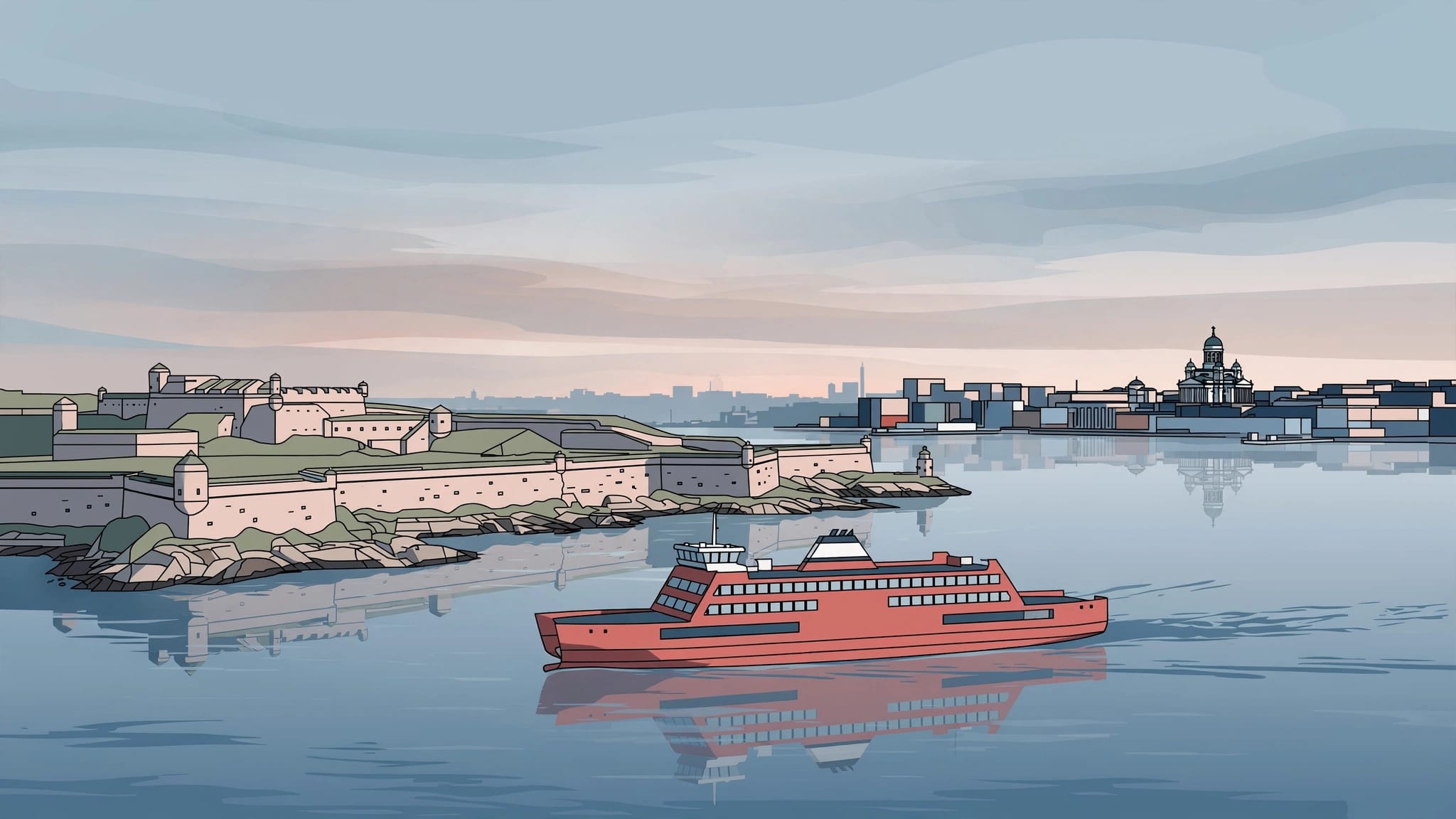
Water changes Helsinki’s angles by the minute. The city is at its strongest when a ferry wake, pale stone facade, or low northern light gives a quiet scene some movement.
This Helsinki photography guide is built for photographers who want more than landmark records. You can pair harbor islands with bold public buildings in one day, then use weather and water to give each frame a sense of place.
Travel light. The sea sets the pace.
Key Takeaways
- Start island work early, when calmer water can hold reflections and ferry decks are less crowded.
- Use Suomenlinna for fortress walls, open sea, and regular public-ferry access throughout the year.
- Treat Vallisaari as a seasonal destination, and confirm its ferry timetable before you build a route around it.
- Keep architecture compositions simple by correcting verticals and letting one person, bicycle, or shadow provide scale.
Read Helsinki’s Light Before Choosing a Route
Helsinki’s waterfront can look bright even under clouds, because water bounces pale light into the lower part of the frame. Meanwhile, dark granite, red-painted details, and weathered fortifications hold texture better than they do under harsh midday sun.
Because the harbor remains open to wind and broad skies, a thin break in cloud can light one island while the water stays slate-colored, giving a photograph depth without heavy editing.
Use morning for calm water and clean geometry
In midsummer, dawn comes early, but a first ferry can reward you with a quieter deck and a lower sun angle. Look across the water rather than only toward the destination. A ferry rail at the edge of the frame, a buoy, or the curve of the wake gives an island view a clear foreground.
A 24mm or 28mm lens works well when several islands overlap toward the horizon. Switch to a modest telephoto when you want to isolate a single roofline or a patch of red wall against sea and sky.
Let bad weather simplify the frame
Rain and low cloud can make Helsinki more graphic. Pale facades retain detail, while wet paving and dark water reduce the distraction of bright color.
No rush.
Use a faster shutter speed when wind roughens the harbor and you want individual waves to remain sharp. If you prefer a softer surface, stabilize the camera and make a longer exposure only where local conditions allow safe tripod use.
In bright harbor scenes, protect the highlights on water first. Shadow detail is easier to recover than a featureless white reflection.
Helsinki Photography Guide to Harbor Islands
Helsinki has around 330 islands, according to Visit Finland’s overview of Helsinki’s island nature. You won’t photograph all of them, and you don’t need to. Two islands give a strong contrast between accessible history and quieter seasonal terrain.
Suomenlinna: work the ferry approach first
Suomenlinna is the reliable choice when you want a fortress setting without depending on the summer season. The HSL public ferry leaves from Market Square, near the Presidential Palace, and reaches the main pier on Iso Mustasaari. There is no entrance fee to the sea fortress, although you need a valid ferry or water-bus ticket.
Photograph the crossing as part of the visit. Stand where you can use the wake as a diagonal, then watch for the first low walls and shoreline structures to separate from one another. A wide frame can hold ferry rail, water, and fortress. A longer lens can compress the layers.
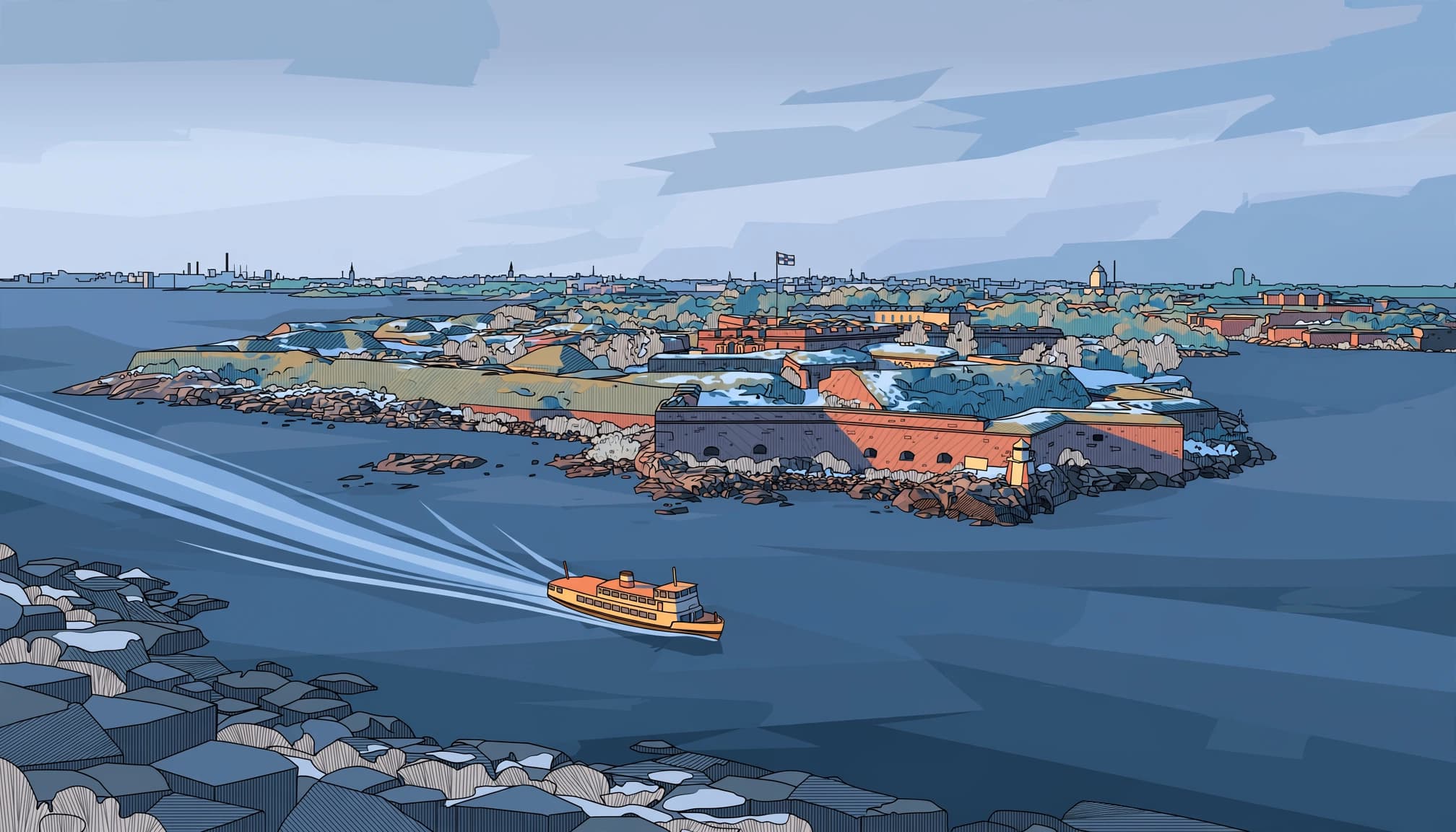
A small harbor anecdote captures the approach: a passenger frames the far wall, then lowers the phone as the wake bends into view. The second frame has a leading line and a scale reference. The first only has a wall.
Vallisaari: choose a quieter, seasonal subject
Vallisaari offers more open paths, rocky ground, and views back toward the city. However, ferry access follows a seasonal schedule. The published 2026 service ran from 20 May through 12 September, so it has ended for the year. Check Vallisaari visitor information before making plans for a future season.
When service is running, JT-Line ferries depart Market Square’s Kolera Basin, pier 10. The crossing takes about 20 minutes, and an adult return ticket costs €9.80, while HSL travel cards aren’t valid. Confirm current departures through the Vallisaari ferry service page.
On the island, avoid making every view a distant panorama. Let a granite edge fill one lower corner, or use a path to draw the eye toward open water. A small human figure can show scale without making the scene feel busy.
Plan Ferries Around the Photograph
A ferry is more than transport. It changes your distance from the shoreline every few minutes, which means light, foreground, and framing keep shifting.
Build in time for the crossing
Suomenlinna ferries operate from early morning until late at night, with approximate service hours from 6 a.m. to 2 a.m. Yet departure patterns vary, so check the latest Helsinki island ferry guidance before heading to Kauppatori.
Arrive early enough to photograph one sailing before boarding the next. This gives you time to test whether the sun is skimming across the water or disappearing behind cloud. On the return journey, face the city for a different set of layers.
Keep a lens cloth accessible. Sea spray and mist can soften contrast faster than you notice on a rear screen.
Account for access changes on Suomenlinna
In summer 2026, the bridge to Susisaari is closed for repairs, although a temporary replacement bridge is in use. Don’t rely on a map route alone when you have limited time or mobility needs. Check current access information before you leave the pier.
Travel with a smaller setup if you can. A camera body, one wide zoom, and one short telephoto cover most island situations without turning uneven paths into a burden.
Photograph Nordic Architecture as Part of the Street
Helsinki’s architecture works best when it stays connected to pavement, weather, and public life. Buildings are not isolated sculptures here. Reflections, cyclists, and long winter shadows can give a formal facade a more believable scale.
Pair Oodi with Finlandia Hall
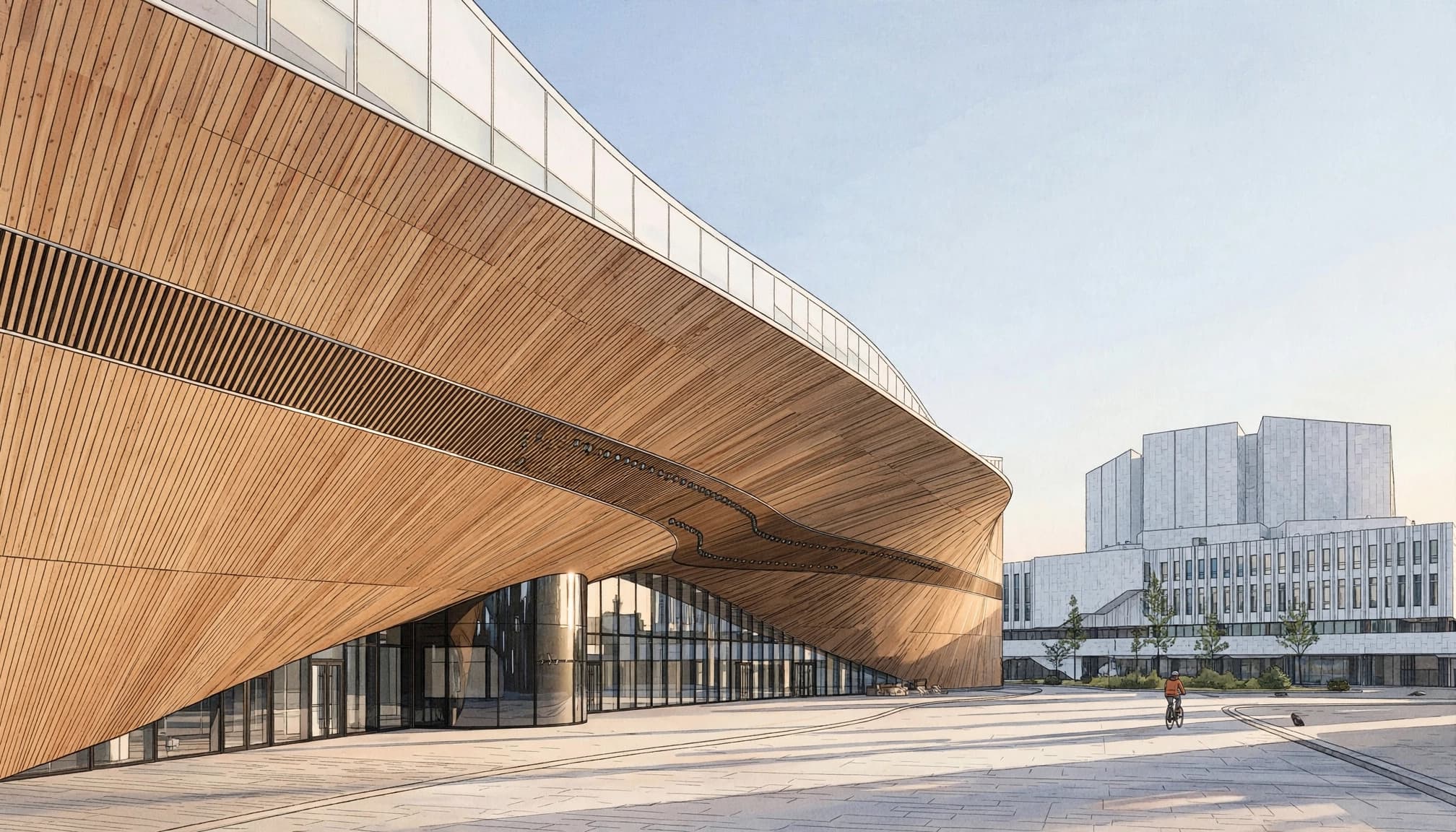
Helsinki Central Library Oodi sits near Finlandia Hall, and their contrast makes a rewarding short walk. Oodi’s official site calls it a central meeting place in the heart of the city, which is useful for photography because activity gives its broad exterior some measure and rhythm.
Start with a low angle that uses Oodi’s sweeping facade as a leading line. Then step back and make a wider frame that leaves room for the plaza and Finlandia Hall beyond it. Keep the camera level where possible, especially when both buildings appear in one image.
Add interiors and waterfront contrast
Temppeliaukio Church, Amos Rex, and Löyly can expand a photo day without repeating the same visual language. Check visitor rules and opening times before planning interiors around them. Handheld photography may be welcome while flash, tripods, or large bags may not be.
For exterior work, don’t try to include every design detail. A cropped roof plane, a reflection in wet paving, or one dark doorway can communicate more than a full facade crowded with street furniture.
Soft cloud is helpful here. It keeps highlights under control on pale stone, glass, and wood.
Keep Lines Straight and Frames Purposeful
Architecture photography rewards slow positioning more than rapid shooting. A small shift to the left can separate a lamp post from a roofline or keep a cyclist from merging with a dark doorway.
Raise the lens instead of tilting upward
Tilting the camera up makes vertical walls lean toward the center. Keep the camera as level as you can, include a little extra pavement and sky, then correct the perspective during editing.
A tilt-shift lens helps frequent architectural photographers, but it isn’t required for a city break. With a 24mm to 35mm equivalent lens, standing farther back and keeping the body level often gives you a cleaner file.
Give the foreground a job
Waterfront frames need an anchor. Use a quay edge as a diagonal, a mooring rope as a narrow border, or a ferry wake that cuts across an otherwise strict reflection.
For buildings, wait for one small interruption in the geometry. A bicycle crossing open paving can show height and distance. A person under an overhang can make a large facade feel less static.
Avoid stuffing the edge of the frame. Helsinki’s spare spaces often need room.
Frequently Asked Questions
Is Suomenlinna worth photographing in winter?
Yes, if you want quieter paths, low light, and a more severe Baltic mood. The public ferry operates year-round, but weather affects comfort, footing, and visibility. Bring spare battery power because cold drains phones and mirrorless cameras faster.
Can a phone camera handle Helsinki’s harbor light?
A phone with exposure control is enough for strong harbor images. Tap the brightest part of the sky, lower exposure slightly, and keep the horizon level. Water highlights need protection, especially near sunset.
When should you use a tripod?
Bring one for intentional long exposures at blue hour, not for every stop. On ferries, handheld shooting is more practical. Indoors and on crowded public routes, check site rules first and avoid blocking paths.
Let the City Stay Unfinished
The strongest Helsinki photographs don’t need every landmark in one frame. Leave space around a fortress wall, use the ferry’s motion, and let changing weather decide part of the picture.
At blue hour, leave a narrow strip of water below Oodi’s glass and wait for one bicycle to cross the plaza.
