
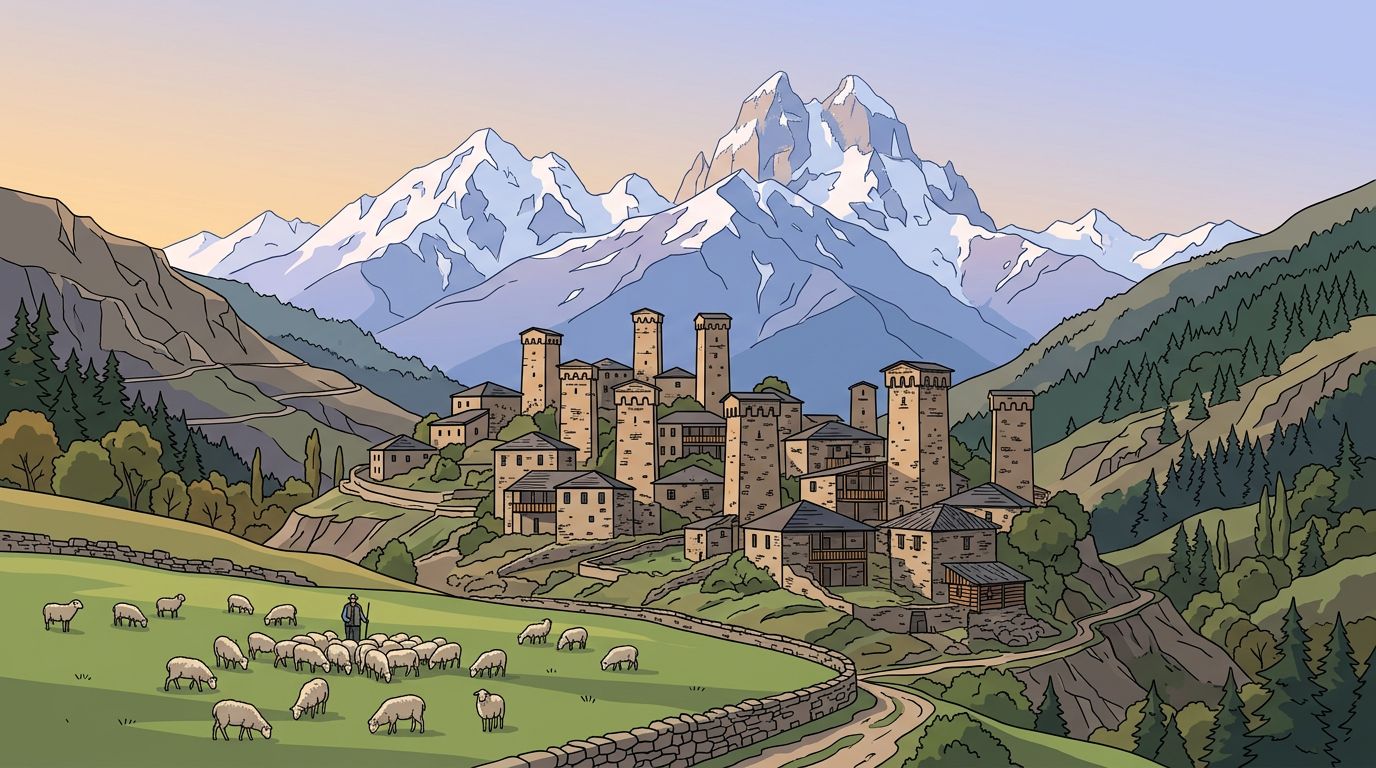
Some mountain regions look unreal at first light, and Svaneti is one of them. You can frame stone towers, grazing fields, and glacier-fed peaks in the same morning.
If you’re hunting for Georgia photo spots with real altitude and real history, this corner of the Caucasus is hard to beat. Distances look short on a map, but weather, roads, and light decide everything. Start with the places that give you both the village story and the mountain wall behind it.
Why Svaneti is the right region for tower villages and peaks
Svaneti is where Georgia’s mountain photography feels most complete. The towers are not isolated monuments. They sit inside working villages, beside homes, tracks, and pastures, so your frames can hold human detail without losing the scale of the mountains.
Upper Svaneti appears on the UNESCO World Heritage List, and that recognition makes sense when you see how the architecture and terrain still read as one landscape. Few regions let you place a medieval defense tower, a low stone fence, a wandering cow, and a snow line in the same wide composition without it looking forced.
The towers also help when the weather turns tricky. They act as strong vertical anchors, while the ridges and cloud layers build depth behind them. Wet stone often looks better than dry stone in harsh sun, and low cloud can add mood instead of ruin the shot.
Many Georgian mountain regions give you peak views. Svaneti also gives you texture at ground level. That’s why photographers keep coming back.
At sunrise, smoke, mist, and frost can soften the villages without hiding them. Later, when the sun reaches the valley floor, the towers still hold shape because their narrow sides catch side light well. Even on mixed-weather days, you can come home with frames that feel layered instead of flat.
This quick comparison helps when you’re deciding where to spend your best light.
| Spot | Best subject | Best light | Access |
|---|---|---|---|
| Mestia | Town towers with snowy backdrop | Sunrise, blue hour | Easy base |
| Ushguli | Tower village with Mt. Shkhara | Sunrise, late afternoon | Day trip or overnight |
| Koruldi Lakes | Reflections and wide peak views | Dawn, calm evening | 4×4 or long hike |
| Latpari Pass | Huge panoramas and layered ridges | Clear morning, late sun | 4×4 preferred |
Use it as a guide, not a rigid plan. Valley fog, wind on the lakes, or a clear break over one pass can change the order in a single day.
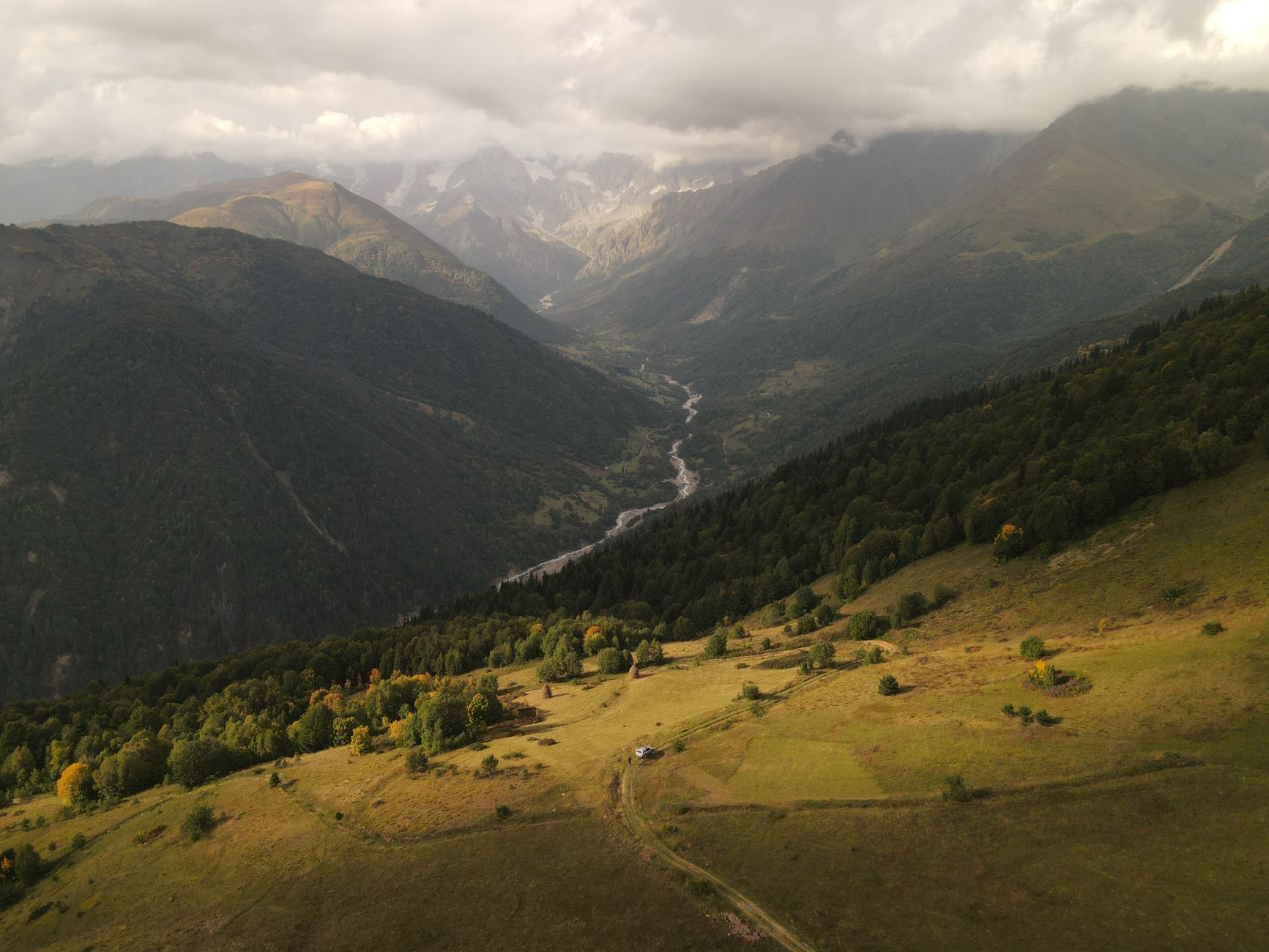
Photo by Lloyd Alozie
If you want a feel for the road into the region and the first sight of towers in the valley, Julian Elliott’s field notes from Svaneti catch that mood well. Use Mestia as your base if you want to react to forecast shifts, but don’t assume the best image is the one closest to your guesthouse.
Mestia and Ushguli for the classic tower photographs
If tower villages are your main goal, start with Mestia and Ushguli. These are the Georgia photo spots most people picture first, and for good reason: both places let the towers carry the foreground while the Caucasus does the heavy lifting behind them.
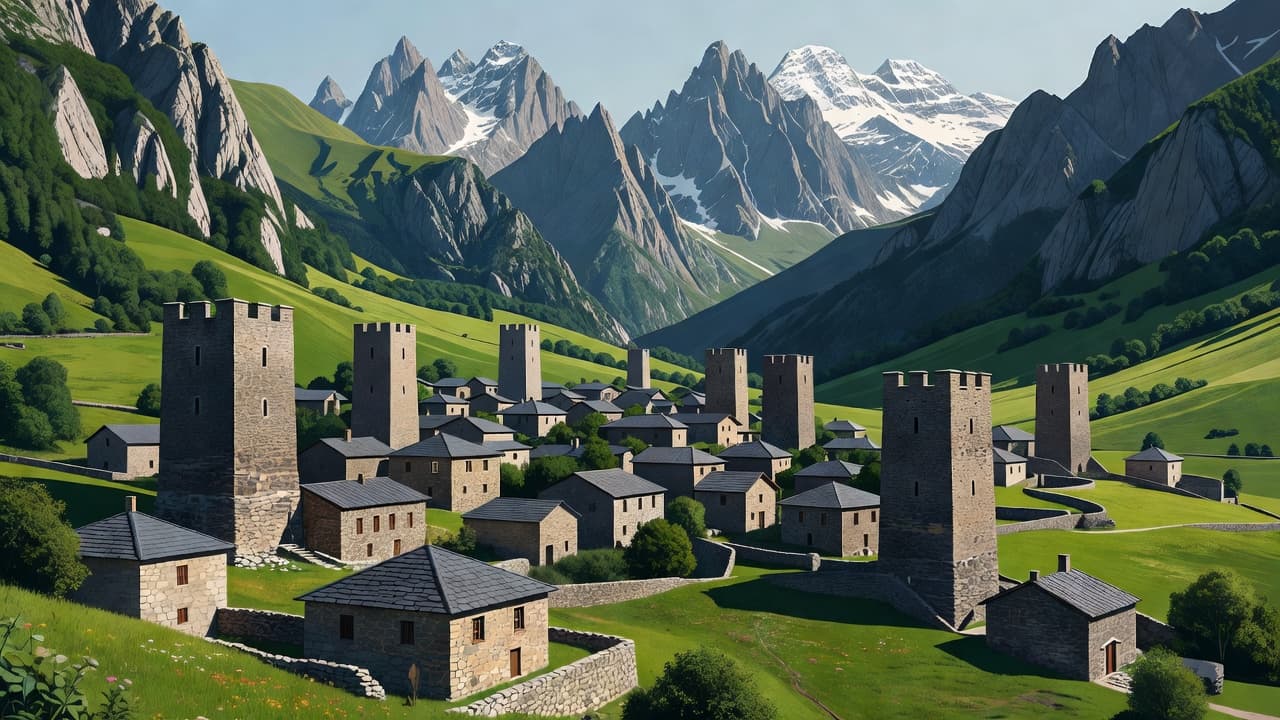
Mestia at first light
Mestia is the easier place to work carefully. You can check the skyline from town, walk a few minutes to change your angle, then return in the evening if the morning did not land. Because the towers sit among houses and lanes, composition matters more here than raw scenery.
A small rise above town or an open edge near the fields usually cleans up the frame. Don’t shoot only from the center. The cleaner images often come from just outside town, where field edges simplify the foreground and the towers separate from newer buildings.
Sunrise is best. Blue hour is close behind. Early light keeps the stone cool and lets the higher peaks catch color before the valley brightens. A mid-range zoom works for layered rooftops, while a short telephoto helps isolate one tower against snow and cloud.
Mestia is also strong after sunset. A few warm window lights can lift the village without making the frame busy, and the towers still read as clear shapes against the dim mountains.
Ushguli with Shkhara behind it
Ushguli has a different feel. The village is more open, and Mount Shkhara gives the background far more weight. Because the main peak sits right behind the settlement, even a narrow gap in the cloud can transform the frame, while a flat gray wall can make the same scene look lifeless.
One October morning outside Ushguli, a photographer from Kutaisi set up beside a low stone wall well before sunrise. Clouds hid Shkhara, he started packing, and then a gap opened for less than two minutes. For ten seconds, pure gold. The peak flashed pink, the towers stayed cool gray, and the whole village looked cut from the hillside.
That is Ushguli at its best. Walk the village edge, shoot from slightly above the roofs, and leave room for a meadow, track, or riverbank in front. Morning works because the mountain catches light early, but late day can be better if you want the stone to show texture and the village to feel less backlit. If Ushguli is your priority, sleeping there is usually worth it.
Koruldi Lakes and Latpari Pass when you want more mountain
Koruldi Lakes and Latpari Pass shift the balance away from architecture and toward the peaks. After you have the tower shots, these two viewpoints give the wider Caucasus frame that makes a Svaneti photo trip feel complete.
Koruldi Lakes for reflection shots
Above Mestia, Koruldi is all about shape and stillness. The lakes give you a simple foreground, and the peaks rise in a long, clean wall behind them. When the air is calm, the water doubles the scene and turns a big landscape into something more graphic.
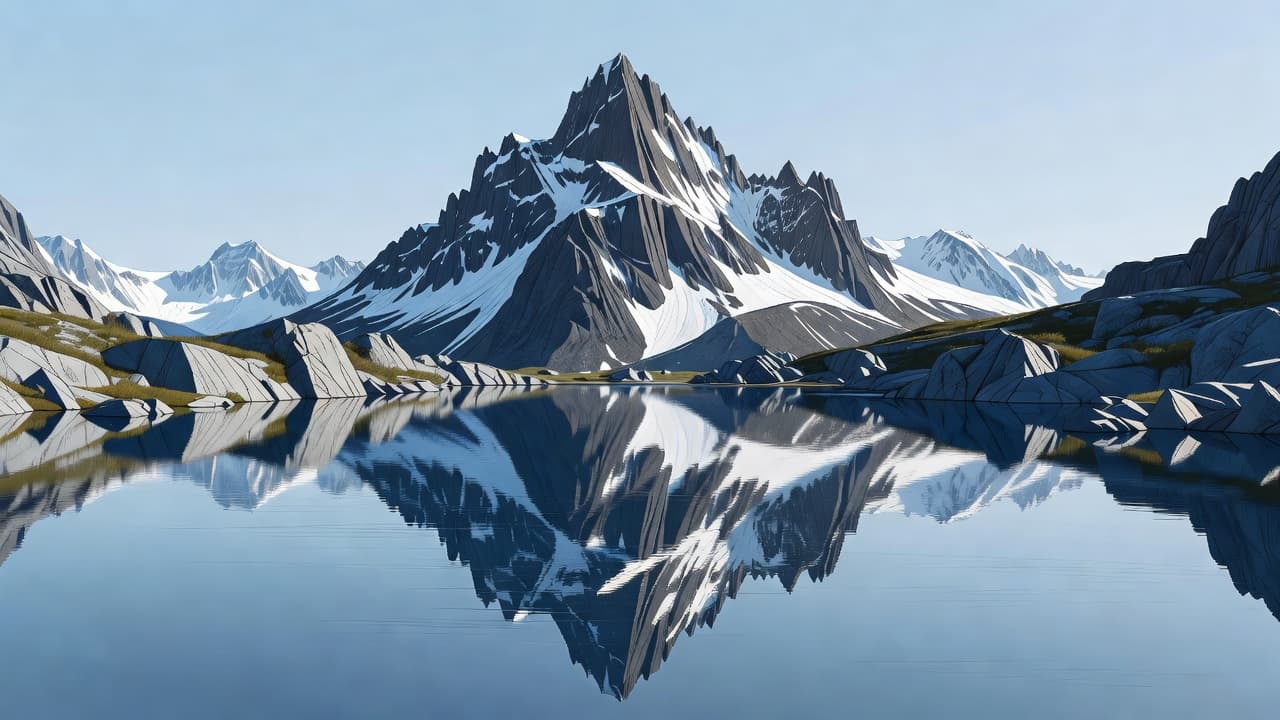
To get that reflection, you need low wind. Start early. By late morning, ripples can wipe out the mirror effect. Keep a little shoreline, rock, or grass in the bottom of the frame so the picture has weight. Otherwise the symmetry can feel empty.
A wide lens works best when you can get low near the water. Meanwhile, a short telephoto is great when mist breaks around one peak and you want a tighter, cleaner composition. Conditions can change quickly between Mestia and the lakes, so do not trust the town weather alone.
Both spots are easier with a 4×4, though strong hikers often walk to Koruldi from Mestia. The climb helps because you can stop along the way and test different foreground lines before you reach the lakes.
Latpari Pass for panoramic depth
Latpari is less delicate. It is a place for scale. Ridges stack deep into the distance, the road snakes through the foreground, and the peaks feel sharper because there is more empty air around them. Clouds build fast here.
Bring warm gloves. The pass can feel cold even on a fair day. A 70-200mm helps compress the layers, but a wider lens works when grass, road lines, or late-summer flowers give the scene structure. At Latpari, watch the road itself. A curve in the foreground can turn a huge view into a readable photograph.
After rain, the road can be slow, and reaching the pass later than planned may push you into harsh overhead light or cloud that has already swallowed the farthest summits. If one of these viewpoints gets your cleanest forecast, give it time. Koruldi is better for reflections and quiet geometry. Latpari is better for raw scale.
Timing, weather, and route choices that save the day
Svaneti punishes lazy timing. A spot that looks ordinary at 11 a.m. can turn perfect 40 minutes after sunrise.
Start with peak visibility, not valley sunshine. Wind matters at Koruldi. Cloud gaps matter at Ushguli. Meanwhile, Mestia is forgiving because you can reshoot without much travel. Trip planners often lose their best light to transit. The road to Ushguli feels longer than the map suggests, and even short delays for livestock or road works can shift your window.
Clear weather helps, but clear peaks with angled light are what matter.
If you only have a short trip, base yourself in Mestia, shoot the town at dawn, move to Ushguli on the clearest morning, and leave Koruldi or Latpari for the cleanest forecast window because high cloud can erase the mountain wall in minutes. That order saves time and gives you another chance if the first location does not work.
Summer and early autumn are easiest for access. Spring mud can slow you down, while winter turns a casual photo stop into a more serious outing. Winter changes everything.
Pack a mid-range zoom, a short telephoto, spare batteries, and a light rain cover. Cold drains batteries fast at altitude, so keep one spare in an inside pocket. Roads are slower than they look, so leave extra time between locations. If you stop on roadside pull-offs, stay clear of blind bends and give local drivers room.
These villages are lived-in places, not open-air sets. Step lightly around homes, barns, and animals, and move sideways for a cleaner frame instead of pushing closer. For route ideas and spot names, Tripify’s Svaneti photo guide is a helpful last check before you go.
Final light
The best Svaneti photographs happen when old stone and high snow share the same patch of light. That mix is why this region still rises above so many other Georgia photo spots.
Give yourself extra mornings. Patience is often the difference between a gray backdrop and a frame you remember for years.
Would you spend your last sunrise in Ushguli, waiting for the first pink line on Shkhara, or beside Koruldi when the lake finally turns to glass?
