
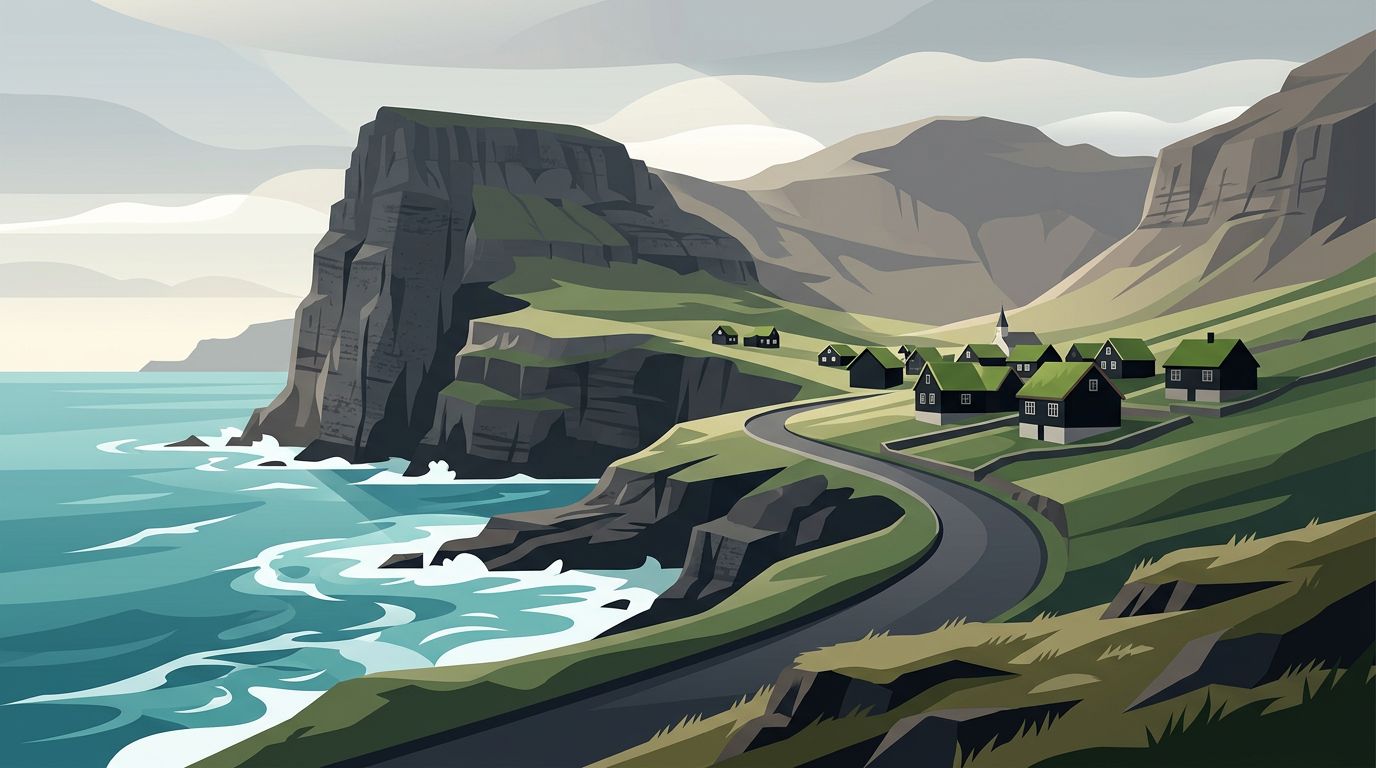
The Faroes can make a photographer greedy fast. One bend opens to a cliff that drops into surf, then the next village shows black timber houses with thick grass roofs tucked under green walls of rock.
That contrast is why these islands stay in your head. If you’re hunting the best Faroe Islands photo spots, focus on places where scale and shelter meet, because the strongest frames here often hold both. Start with light, then pick your stops.
What makes a strong photo stop in the Faroes
A good location here does more than look dramatic. It gives you shape, depth, and one clear subject, even when cloud cover turns the world flat.
Because roads wrap around fjords and mountains, you can move from a dead gray sky in one bay to a sharp patch of sun in the next, so the best stops are the ones that still give you clean lines and strong layers when the weather won’t play along. Cliffs need a path, ridge, or lake edge to guide the eye. Turf-roof villages need spacing between buildings, a slope behind them, and room to show how small they are against the land.
Mist changes everything. Wind decides a lot. Go early.
Morning often works best for turf roofs because soft light holds the greens together and keeps black walls from turning into featureless blocks. Cliffs usually look stronger with side light, or after rain when wet rock picks up tone and the sea turns darker. Midday can still work, but only if the scene has bold geometry.
If you want a short shortlist, start here.
| Spot | Best for | Light that helps most |
|---|---|---|
| Trælanipa | Lake, cliff edge, huge scale | Early or late side light |
| Kallur | Ridge lines and ocean drop | Broken cloud near sunset |
| Saksun | Church, lagoon, turf roofs | Soft morning light |
| Bøur | Village roofs with sea beyond | Late afternoon |
| Kirkjubøur | Close roof detail and old buildings | Overcast or post-rain |
The pattern is simple: pick one place for height and one for human scale, then give each more time than you planned.
Cliff photo spots that give you real scale
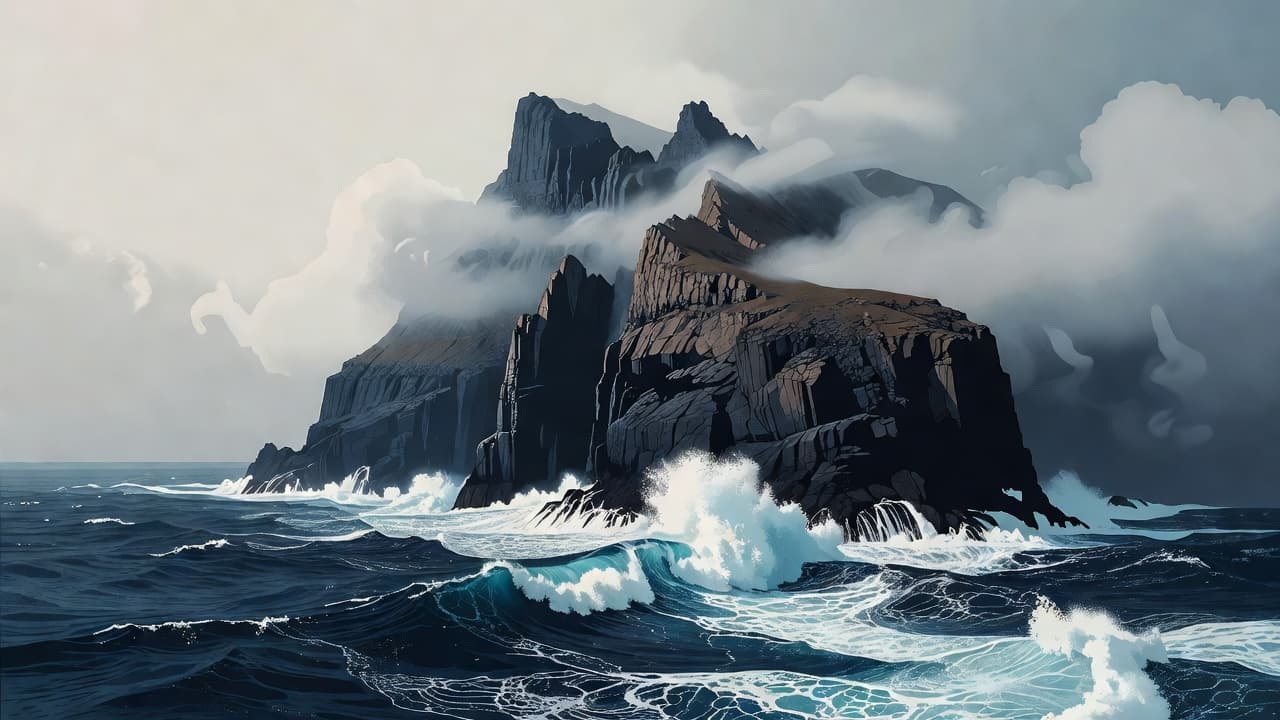
Cliff photos in the Faroes work when the frame has a route through it. A path, a shoreline, or a sloping headland keeps the scene from becoming one dark wall.
Trælanipa and Bøsdalafossur
Trælanipa is popular for a reason. At the right angle, Lake Sørvágsvatn seems to hover above the ocean, and that visual trick gives you layered water, broken cliff lines, and a huge sense of height in one frame.
The key is restraint. Don’t crowd the edge of the composition with too much foreground. Leave room for the lake shape to read clearly, then wait for moving cloud to carve light across the grass. If you continue to Bøsdalafossur, the scene shifts from illusion to force, with the lake spilling out toward the Atlantic and waves pushing white foam against dark rock.
Kallur Lighthouse on Kalsoy
Kallur is rawer. The ridge narrows, the sea opens on both sides, and the lighthouse gives the frame a small human anchor. Wide lenses work if you want the ridge to feel exposed. A short telephoto often works better because it compresses the stacked cliffs and makes the drop look heavier.
This is a place to slow down. The parking area can feel calm while the ridge ahead gets hit by a much harder gust. Keep your tripod low, and don’t back up without looking.
Viðareiði and the northern cliffs
Viðareiði doesn’t always get the same attention, yet it gives you one of the cleanest mixes of village and cliff country. From the slopes and roads near the village, you can build wide frames with pointed mountains, grass fields, and the vast northern wall toward Enniberg in the distance.
Fog can erase everything. Then it clears.
That stop-start mood is part of the appeal. Instead of chasing a postcard, work with what appears. For more classic locations beyond these cliff scenes, this Faroe Islands photography guide is a useful companion.
Turf-roof villages with the strongest compositions
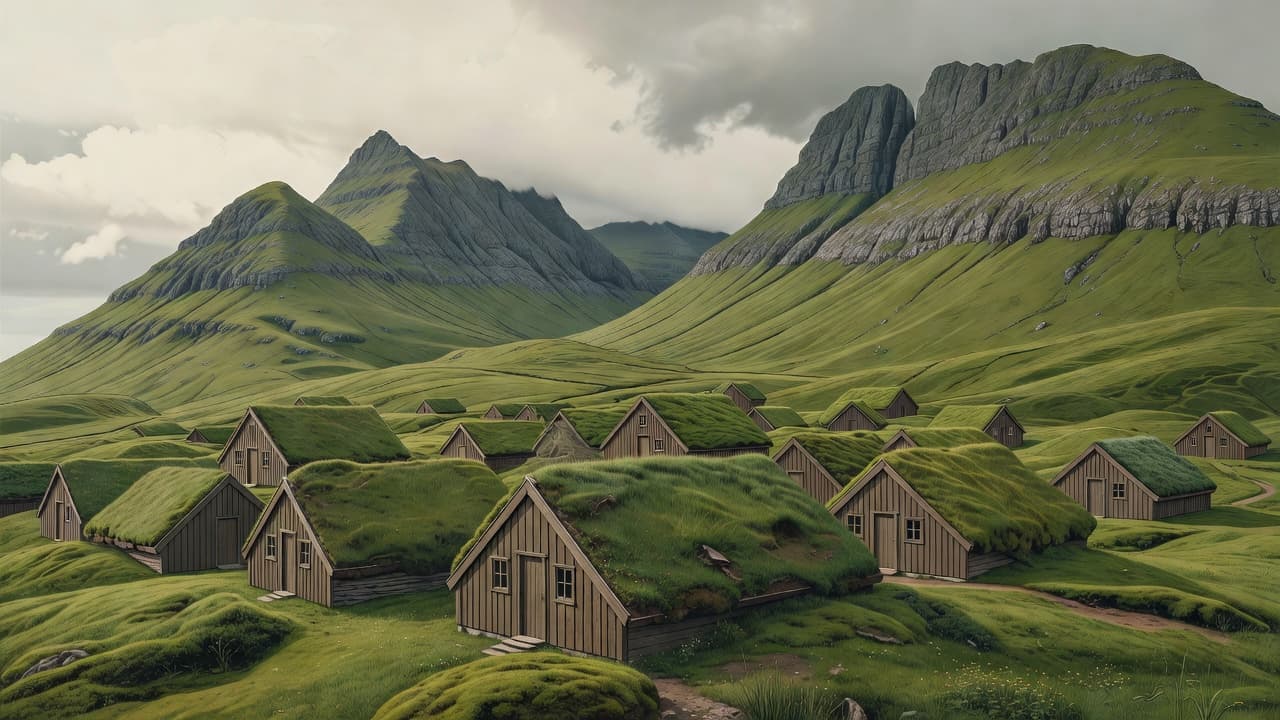
Turf roofs photograph best when they feel lived in, not staged. You want irregular roof lines, a bit of weather on the wood, and enough landscape around the houses to show why people built this way in the first place.
Saksun
Saksun is the village many people picture first, and with good reason. The church, the turf roofs, the bowl of steep mountains, and the tidal lagoon give you a scene that feels complete from several angles. Soft light helps here, but low cloud can be even better because it trims the mountain tops and keeps your eye down in the village.
On a wet June morning, a couple from Hamburg waited beside the church path while mist sat low over the valley. They stood there for almost forty minutes, chatting under one silver umbrella, and then the cloud lifted for less than a minute, the wet grass flashed bright green, and every shutter nearby fired at once. Patience pays here.
If you shoot from slightly uphill, keep the church off-center and use the roofs to lead toward the water. If sheep wander into the frame, let them stay. They belong there.
Bøur
Bøur gives you a different mood. The houses are tighter together, the lanes are narrower, and the sea view behind the village adds distance without stealing the scene. A longer lens helps because you can stack dark rooftops against pale water and the island shapes beyond.
Late afternoon is often the sweet spot, especially when the clouds break in strips and light falls on only one roof at a time. That patchy light is gold here. Especially after rain.
The village also works well if you’re building a wider photo trip around Vágar. This Faroe photography guide from Northern Mists includes Bøur and other strong stops nearby.
Kirkjubøur
Kirkjubøur is quieter in the frame. It trades giant backdrop drama for age, texture, and closeness. Turf-roof farm buildings, dark timber, stone walls, and open sea make simple compositions that don’t need much decoration.
Work close first. Look for the curve where roof grass meets wood, or a line of stones leading toward the water. Then step back and place one building against the open coast. Only sea, grass, and stone.
Overcast weather suits this village well because it softens contrast and holds detail in the roofs. If a little sun appears, use it sparingly. One bright strip on one roof is enough.
Timing, weather, and access matter more than gear
The Faroes punish rigid plans. A cliff can vanish into cloud for an hour, while a village ten minutes away glows under a clean break in the sky. So keep your daily route loose and leave time to return to the same spot.
A simple zoom pair covers most needs. A 24-70mm handles villages, lanes, and broad cliff scenes. A 70-200mm is better for isolating rooftops, compressing headlands, and keeping your distance from dangerous edges. Bring a cloth for spray. Bring another one.
Wind at the parking area can feel mild while the cliff edge ahead gets hit much harder.
That one shift can turn a calm setup into a risky one. Stay back from unstable ground, watch for wet grass on slopes, and don’t rush because the sun finally broke through.
If you fly a drone, read the current drone rules for the Faroe Islands before launch. Current guidance says you must keep the drone in sight, stay clear of Vágar Airport, and avoid places such as Mykines, while some guides list different height limits, so it pays to check the latest rule page before every flight. Local access also matters, because some popular viewpoints cross private land or sensitive terrain.
Final thoughts
The best shots here don’t come from racing between map pins. They come from waiting longer than feels sensible, then noticing when one patch of light lands on one roof or one band of mist slips off a cliff face.
Pick fewer places. Give them time. Then trust patience more than gear.
When the cloud lifts above Saksun’s church for ten seconds, will you still be standing there?
