
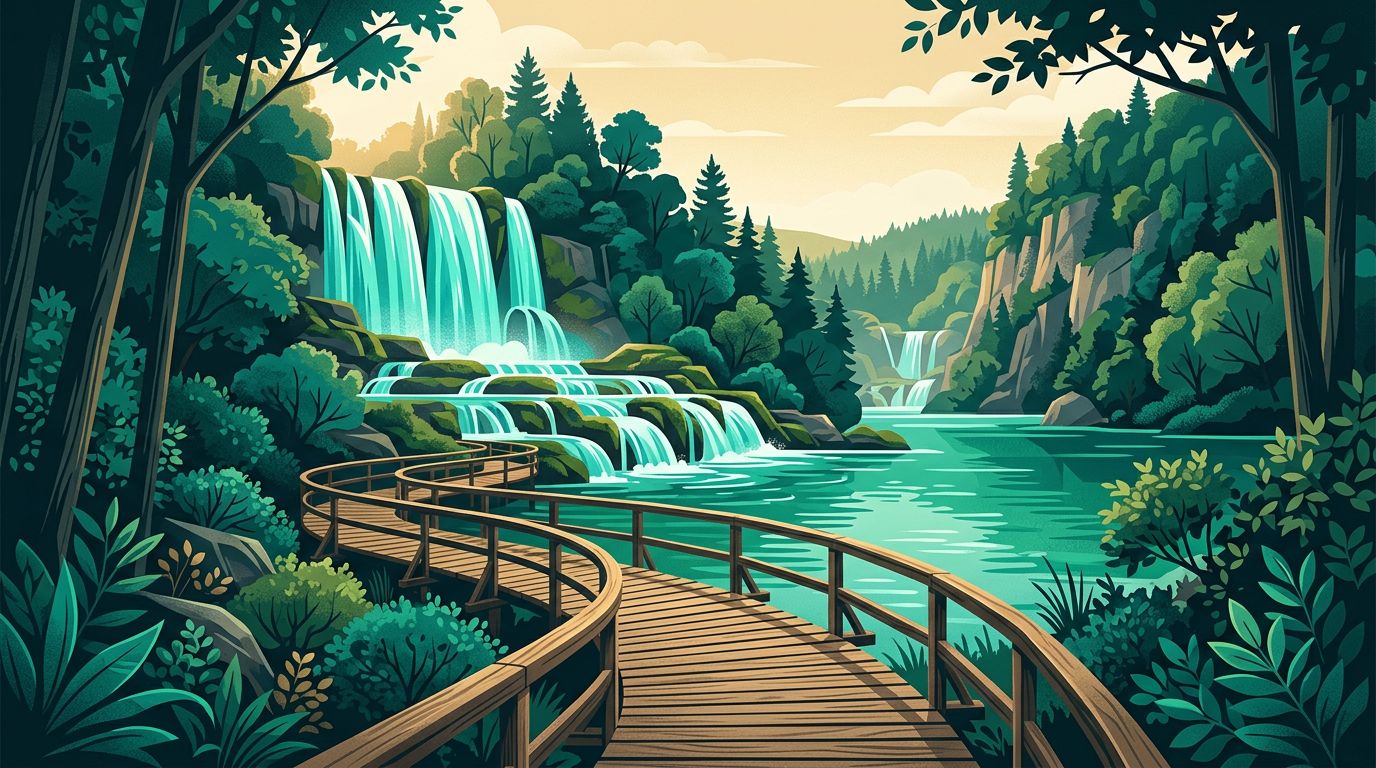
Plitvice doesn’t give you one grand view and let you walk away. It keeps changing under your feet, with teal water, layered cascades, and boardwalks that pull your eye into the frame.
Strong Plitvice Lakes photography depends less on owning expensive gear than arriving at the right time, moving patiently, and knowing when the scene needs a wide view or a tighter detail. The park can feel crowded, bright, wet, and visually overwhelming within the same hour.
A little planning makes those shifting conditions work in your favor.
Key Takeaways
- Get to the park early or photograph later in the day for softer light and calmer boardwalks.
- Use a circular polarizer carefully to control glare on water and wet foliage.
- Keep boardwalks clear, because footsteps can shake a tripod during long exposures.
- Photograph the route as a sequence, mixing wide scenes, waterfall details, and human-scale boardwalk frames.
- Stay on marked paths, and leave any drone outside the park.
Plitvice Lakes Photography Starts With Good Timing
The park’s lakes and falls are beautiful in almost any weather, yet light changes the final image more than a new lens ever will. Midday sun creates sharp shadows under dense trees while bright patches strike the water. It also makes the blue-green colors look harsher than they do in person.
Arrive before the light hardens.
Early morning gives you quieter paths and more room to pause. It also brings soft shade across the boardwalks, which helps a camera retain detail in both the pale water and dark forest. If the sky is overcast, don’t treat it as a lost day. Clouds act like a giant diffuser and make waterfall exposures far easier.
Late afternoon can work well, too. The sun lowers behind the surrounding hills, foot traffic eases, and the wet wood picks up a warm tone. During high season, starting early matters more than any lens choice.
A long exposure on a busy boardwalk often fails because people walking nearby create vibration, even if no one enters the frame.
The season changes what you should seek. Spring brings fast water and intensely green foliage, although rain can leave paths slick. Summer has long days and fuller crowds. Autumn offers yellow and russet leaves around the upper lakes, with mid-October often highlighted for peak color. Winter can reduce access, yet snow and ice add a stark look to the waterfalls.
Before entering, check the park’s daily route and weather information. Boat services, trains, trail access, and seasonal opening times can affect where you can photograph. Don’t build a whole shoot around one viewpoint unless you have a backup.
A helpful approach is to divide the day into two parts. Use the first quiet hour for your most important wide frames. Then spend the brighter period looking for close details, such as bubbles in a pool, water threading through moss, or a boardwalk curve against the lake.
Build Waterfall Compositions That Have Depth
Plitvice’s waterfalls are not isolated objects against a clean cliff. They run through trees, rocks, lakes, and paths. A successful frame needs an anchor.
At Veliki Slap, also known as the Great Waterfall, start by looking at the relationship between the falling water and the dark rock around it. A wide-angle lens can show its scale, but a slightly longer focal length may remove distracting crowds and bright patches of sky. Move a few steps instead of immediately changing lenses.
The boardwalk is the foreground. Use it.
A walkway entering from a lower corner gives the image a clear direction. It can lead a viewer toward a cascade or split the scene into layers. Keep the railings straight when possible. If you tilt the camera down for the water, watch for curved-looking tree trunks at the edges of a wide lens frame.
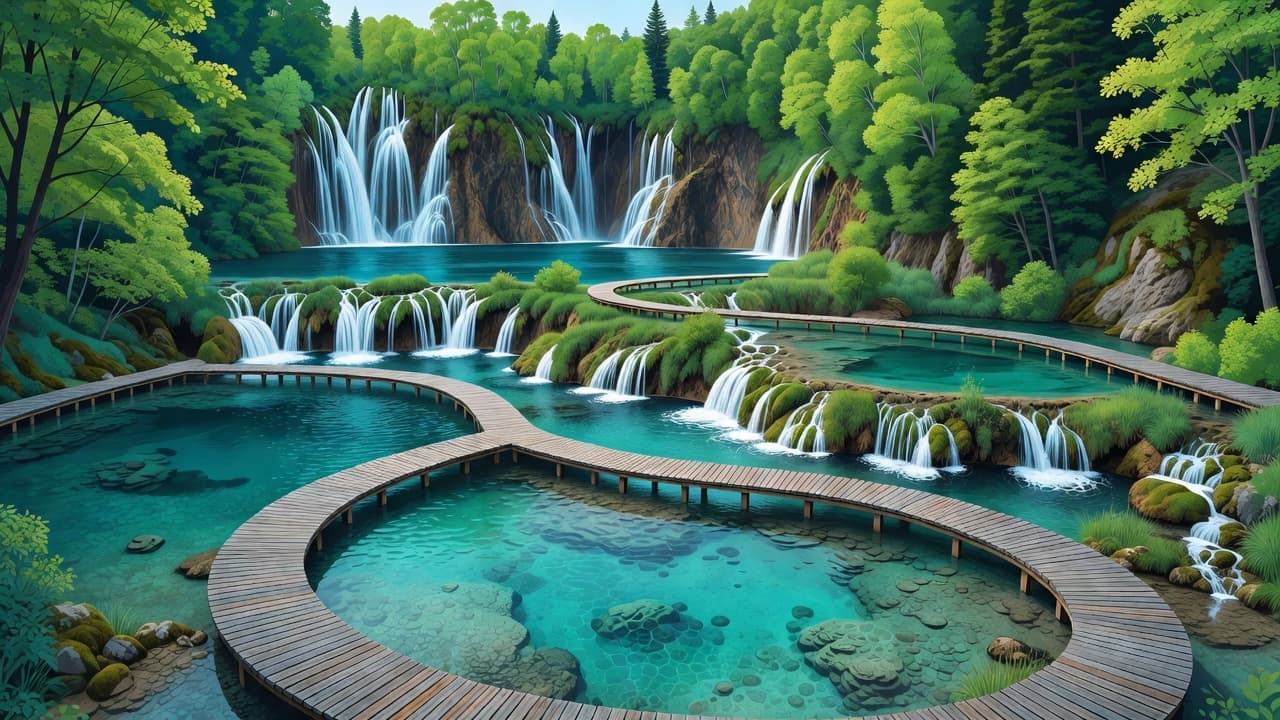
For the classic turquoise-water view, photograph across the surface rather than straight down. This angle reveals depth, submerged branches, and pale limestone under the water. However, reflected white sky can flatten everything. Shift your position until a darker bank or forest fills the reflection.
The narrow boardwalks between Galovac and Gradinsko give you many opportunities to work in several directions, rather than waiting for a single famous overlook. This guide to boardwalk photo locations is useful when planning which sections deserve extra time.
Try three frame types at each waterfall, but don’t force all three:
- Start with a broad scene that shows the lake, forest, and falling water.
- Next, isolate one textured section of water with a medium focal length.
- Finish with a vertical composition that uses the boardwalk or a tree trunk as a leading line.
A short, frustrating lesson occurs when you photograph every cascade at the same focal length. The images start to look interchangeable, no matter how striking the location felt.
For a specific example, stand near a low cascade where the boardwalk passes close to the water. First, place the walkway in the bottom third. Then turn 90 degrees and compress the scene with a telephoto lens, leaving only water, moss, and a small dark section of rock. These frames come from the same spot, but they tell different visual stories.
Don’t crowd the frame with every waterfall you can see. The most memorable Plitvice images often leave space around one subject.

Photo by Lukas Lussi
Camera Settings for Water, Forest, and Bright Reflections
Waterfall settings depend on the look you want. A slow shutter speed turns fast water into a soft veil. A faster one keeps individual drops and rivulets visible. Neither style is more correct, because each changes the feeling of the scene.
Start with aperture priority or manual exposure. For a wide waterfall scene, use ISO 100 and an aperture around f/8 to f/11. This range often gives enough depth of field without pushing the shutter speed too low. Review the histogram rather than trusting the rear screen, especially in shade.
For a silky water effect, aim for about 1/4 second to 2 seconds. You will probably need a tripod, a small aperture, lower ISO, or an ND filter to reach that range in daylight. A 2-second exposure can look dreamlike, while 1/4 second keeps more texture.
A circular polarizer is usually the most useful filter at Plitvice. It cuts glare from wet leaves and shallow water, which makes the lake bed more visible. Rotate it gradually while looking through the viewfinder or at the screen. Too much polarization can make parts of a wide-angle sky unevenly dark.
An ND filter helps in stronger light, but it slows the whole process. On crowded boardwalks, that added setup time can cost you a clear frame. Carry it for open viewpoints and calmer conditions, rather than attaching it permanently.
If you shoot raw files, protect the highlights in white water. Slightly underexpose if the brightest areas blink on your display. You can lift shadow detail later, but a clipped waterfall rarely recovers gracefully.
Handheld Settings When a Tripod Isn’t Practical
A tripod isn’t always the polite choice. The planks are narrow, people need to pass, and vibration may ruin the shot anyway. In that situation, increase shutter speed and embrace crisp water.
Set ISO 400 to 800 if needed, then use 1/125 second or faster for a sharp handheld image. Image stabilization helps, although it cannot freeze moving water. Brace your elbows against your body and shoot short bursts as the path clears.
For an intentional blur without a tripod, stabilize the camera against a railing only if you can do so without blocking anyone. A compact support such as a GorillaPod may help at low angles, though it should never create a trip hazard.
The best Plitvice Lakes photography often comes from adapting to the path, not trying to control it.
Photograph Boardwalks Without Photographing Crowds
People are part of Plitvice. Trying to erase every visitor can make you impatient and limit your route. Instead, decide whether people support the scale of your image or distract from it.
A lone figure in a bright jacket can show how small the boardwalk is against a broad lake. Wait until that person reaches a natural bend in the path. If several people bunch together, hold your position for a few seconds. The groups often separate enough to create clean gaps.
Use a longer focal length when foot traffic is constant. It narrows the field of view, hides busy sections of walkway, and lets you frame waterfalls through leaves. On the other hand, a wide lens works when the path becomes part of the subject.
A recent visitor guide notes that the upper lakes are often less busy later in the day, a useful reason to save certain boardwalk frames for the afternoon. Read its practical crowd-timing advice alongside the official daily route plan.
One morning, a photographer may wait twenty minutes for a quiet boardwalk only to find the best image when two hikers in rain jackets cross a distant curve. That small human element can give the scene scale without stealing attention from the water.
Avoid turning strangers into the main subject without their awareness. If someone dominates the image, ask first or wait for a different frame. Children and close portraits deserve extra care.
Choose an Entrance to Match Your Photo Priorities
Entrance 1 suits photographers who want the iconic elevated view toward Veliki Slap. It can also put you near one of the park’s most popular areas, so get there early. Strong contrast is common at the viewpoint, especially once the sun rises higher.
Entrance 2 gives more direct access to the upper lakes and many close boardwalk scenes. It can feel better for slow, observational work because you encounter a repeating pattern of pools, cascades, and timber paths. Choose it when you prefer intimate water details over the widest landmark view.
Either route can produce excellent images. The route is not a checklist. If light turns beautiful around one smaller waterfall, stay there.
Smartphone Photography at Plitvice Lakes
A phone can make strong pictures here, especially when you work with its strengths. Modern phones handle close scenes, bright color, and quick moments well. They struggle more with extreme highlights, deep shade, and smooth long exposures.
Keep the lens clean. Spray from waterfalls and fingerprints quickly soften every image. Wipe it with a microfiber cloth, then check the corners of the frame for smears before you photograph a major view.
Use the phone’s exposure control to darken the image slightly when white water looks blown out. Tap the brightest waterfall area, reduce exposure, and let the surrounding trees become a little darker. Those shadows usually look better than blank white streaks.
Portrait mode rarely helps with a large waterfall. Use the standard camera mode or a wide lens, then place a nearby leaf, rail, or bend in the boardwalk near the edge of the frame for depth. If your phone offers raw capture, save raw files for difficult scenes, not every casual shot.
Avoid aggressive HDR edits afterward. Plitvice water has color, but oversaturated turquoise and lifted black shadows can make it look artificial. A restrained edit keeps the pale limestone, green reflections, and changing water tones believable.
Protect the Park While You Photograph
The cascades exist because of delicate travertine barriers, formed by mineral-rich water and biological processes over long periods. That is why access rules are strict. Never step off marked paths, climb onto barriers, or reach into the water for a lower angle.
Leave the drone at home.
The park bans recreational drone flights and aerial filming. A compact drone under 250 grams does not give you a practical exception inside the protected area. For commercial still photography or filming, request written permission from park administration well ahead of your visit.
Tripods are generally acceptable for personal still photography, yet courtesy matters. Set up only where people can pass freely. If a group approaches, move aside before they have to ask. The image isn’t worth holding up a boardwalk.
Keep food, loose gear, and camera straps contained. A dropped lens cap can end up in the water, while a dangling tripod leg catches other visitors’ feet. Waterproof shoes also help after rain, when slick timber and uneven stone deserve your full attention.
For more field-based ideas on filters, viewpoints, and weather, this Plitvice visitor photography account offers a useful companion perspective. Still, treat the trail beneath you as part of the photograph’s subject, not a platform to rearrange.
Final Frames at Plitvice
The strongest frames at Plitvice come from patience, not speed. Let soft light, a clear foreground, and a momentary gap on the boardwalk guide the image.
Bring the camera you can carry comfortably, protect the highlights, and leave room for the park’s movement. Your final photograph may be a wide view of Veliki Slap or a single ripple passing under wet wooden planks.
