
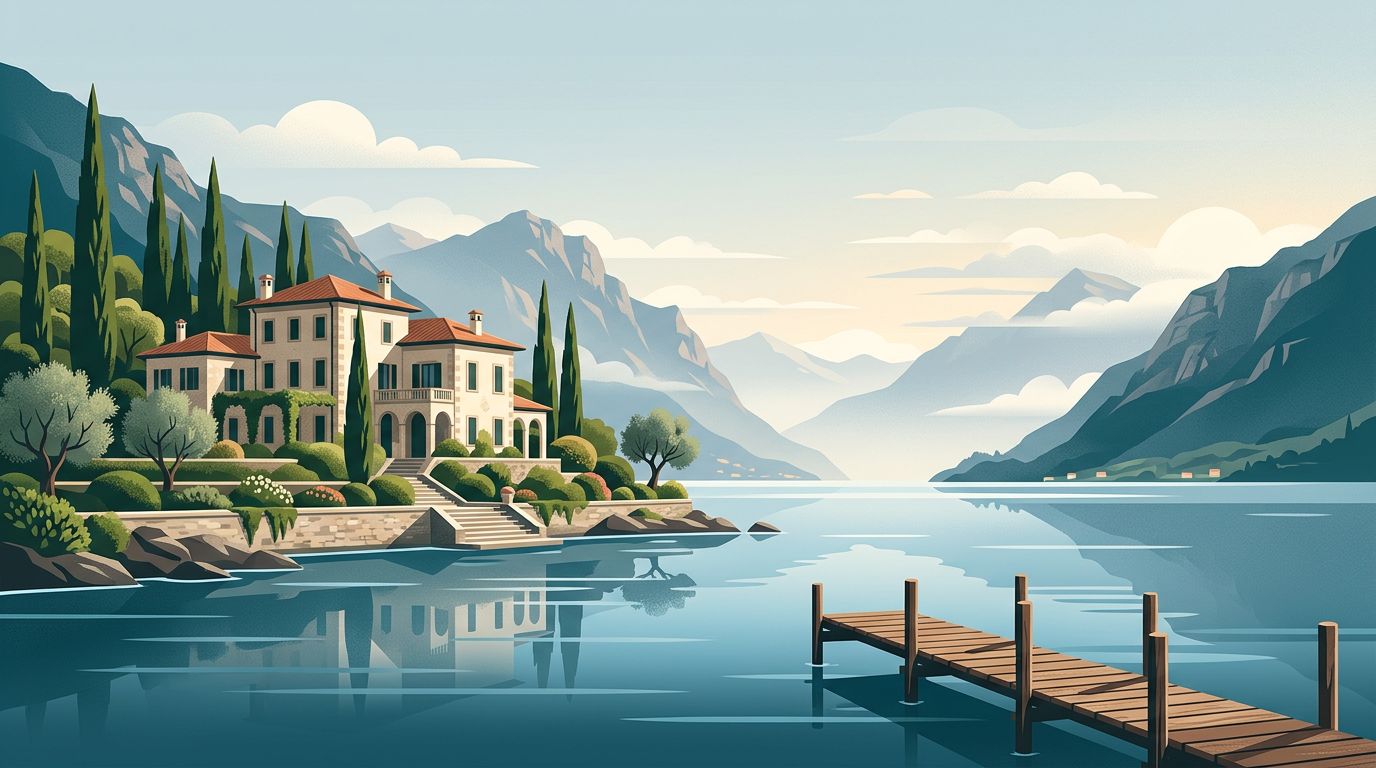
Lake Como rewards photographers who arrive before the waterfront wakes up. The strongest Lake Como photo spots pair stone villas and calm water with the high ridges that narrow the horizon.
You don’t need to chase every famous staircase or hotel gate. A well-timed stop at a garden, ferry pier, or headland gives you photographs with real depth and a sense of place.
Key Takeaways
- Bellagio gives you Villa Melzi, Punta Spartivento, and wide views across two lake branches.
- Villa del Balbianello works best when you frame its terraces against open water.
- Varenna combines Villa Monastero with textured lanes and eastern-shore mountain light.
- Early ferries offer clean water-level angles.
- Clouds change everything here.
Lake Como Photo Spots for Grand Villas
The classic Lake Como photo spots are not all open-access landmarks. Many sit behind garden gates or along narrow roads, so a little planning keeps the day relaxed.
Villa del Balbianello in Lenno is the headline location. Its clipped trees, pale stucco, and terraced gardens extend toward the water on a wooded promontory. Walk in from Lenno for a gradual approach through the trees, or arrive by boat to photograph the villa from the lake before entering.
The famous loggia faces the broad western side of the lake. Use a medium telephoto lens from the boat to compress the building and mountains behind it. Inside the grounds, a wider lens captures the formal garden lines, although you should keep people away from the terrace edges when crowds build.
A small piece of film history adds context: the villa’s terrace appeared as Naboo in Star Wars: Episode II – Attack of the Clones. The location also appeared in Casino Royale, which explains why the most familiar angles attract steady traffic.
At Balbianello, the boat approach often gives a more complete villa-and-mountain frame than the gardens themselves, where tall trees can close off the horizon.
In Tremezzo, Villa Carlotta gives you a different visual language. Its botanical gardens soften the architecture with azaleas, camellias, palms, and old cedars. Late spring has the richest color, yet the building’s long facade photographs well throughout the open season.
For a quieter alternative, head to Villa Olmo on Como’s western lakefront. The neoclassical facade is easier to frame with a human figure because the promenade gives you more distance. It also fits well into a Como and Brunate day rather than a ferry-heavy itinerary.
Villa Melzi in Bellagio deserves time early or late in the day. Its gardens run beside the lake, where stone paths, water, and distant slopes fit into one horizontal composition. The local Lake Como travel guide is useful when you are fitting Bellagio into a wider route.
Bellagio and Varenna for Water-Level Views
Bellagio is busy for good reason, but its best photographs rarely come from its central crowds. Walk east toward Punta Spartivento, the slim northern tip of the peninsula where the lake divides into its Como, Lecco, and Colico directions. The water opens wide, and the mountain layers finally have space around them.
Arrive before the ferries. The early light comes across the water and catches the villas along the opposite shore without harsh shadows. A person in a light-colored outfit can give the frame scale, but let the shoreline remain the main subject.
Salita Serbelloni, Bellagio’s steep cobbled lane, works for an intimate scene rather than a grand panorama. Shoot uphill if you want shuttered facades and stone walls. Shoot downhill only when you can see a clean wedge of blue lake beyond the steps. Midday crowds make both angles difficult.
Across the water, Varenna has a more weathered feel. The Walk of Lovers begins near the ferry landing and follows the lake on a red railing-lined path. It is useful for couples because it offers leading lines without requiring a long walk.
Then continue to Villa Monastero, where the lakeside botanical garden stretches along the eastern shore. Its slender paths and balustrades give you foreground detail while the western mountains fill the far distance. In the late afternoon, Varenna often receives softer side light than the western shore.
For couples who want portraits without managing a tripod and ferry timetable, Lake Como photographer packages can be a practical option, especially for proposals or anniversary sessions.
Alpine Backdrops Beyond the Villa Gates
The lake’s mountain views need more than a wide lens. You need separation between water, shore, and ridges. On hazy summer afternoons, every layer can flatten into the same blue-gray tone.
Punta Spartivento is the simplest answer near Bellagio. Face north for the broadest water and strongest mountain arrangement. A 24mm or 28mm lens lets you include the stone edge in the foreground, while a 50mm lens isolates passing boats beneath the slopes.
For height, take the Como-Brunate funicular and walk around Brunate’s overlooks. The view looks south toward Como city and north along the lake’s long, bent shape. Morning fog can soften the lower town while the ridges remain clear above it.
Although Monte San Primo requires more effort and suitable footwear, its elevated views show Bellagio dividing the two principal southern branches of Lake Como, with ridges enclosing water that appears almost fjord-like from above. Check weather conditions before setting out, because low cloud can erase the very mountains you came to photograph.
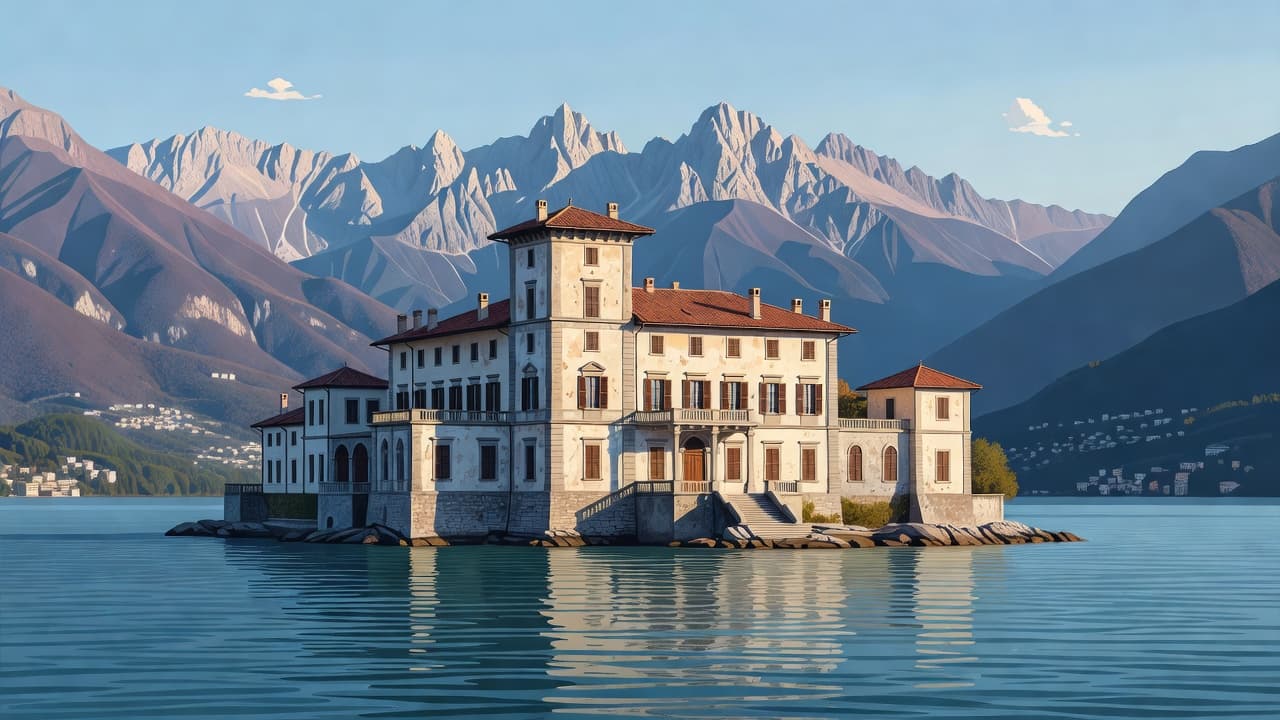
Don’t assume every alpine backdrop needs snow. Summer slopes often look greener and more believable behind pale villas, while autumn can bring sharper air and richer contrast. A recent villa-and-mountain composition shows how warm shore colors can hold their own against cool distant peaks.
Light, Ferries, and Respectful Shooting
Light decides whether a famous view looks like a postcard or a flat travel snapshot. Sunrise is strongest around Bellagio and Varenna when the lake surface has fewer wakes. Meanwhile, Tremezzo and Lenno often suit late afternoon, when sunlight reaches the western-shore facades more directly.
First ferry, least traffic.
Use the ferry as part of the shoot, not only transport. Stand near an open side with a secure wrist strap and watch for an angle where Varenna’s waterfront stacks up beneath the slopes. Don’t lean equipment over rails, and keep clear of boarding areas.
A polarizing filter can reduce glare, but rotate it carefully. At very wide focal lengths, it can darken one patch of sky more than another. A lens hood and microfiber cloth matter more than extra accessories on a boat ride.
Villa grounds are living cultural sites, not private sets. Stay on marked paths, keep tripods out of narrow walkways, and ask before using a dress, bouquet, drone, or large reflector. Drone restrictions around villas, villages, and boat traffic can be strict, so check local rules rather than assuming open water means open airspace.
Pack a microfiber cloth. Lake spray and sunscreen smudges are obvious against a bright alpine sky.
Nesso is worth adding if your route follows the eastern shore. Its stone bridge and waterfall offer a cooler, shaded counterpoint to bright waterfront villas. Shoot the cascade with a faster shutter speed for texture, or slow it down only if you have stable footing and enough space.

Photo by Alejandro Aznar
A Frame Worth Waiting For
The most memorable Lake Como photo spots don’t require a packed itinerary. Choose one villa, one waterside town, and one elevated viewpoint, then leave room for changing light and ferry delays.
A calm morning at Punta Spartivento or a late window at Villa Monastero will often give you more than a rushed loop around the lake. Watch the water, wait for one boat to cross the frame, and press the shutter when the ridges separate behind it.
