
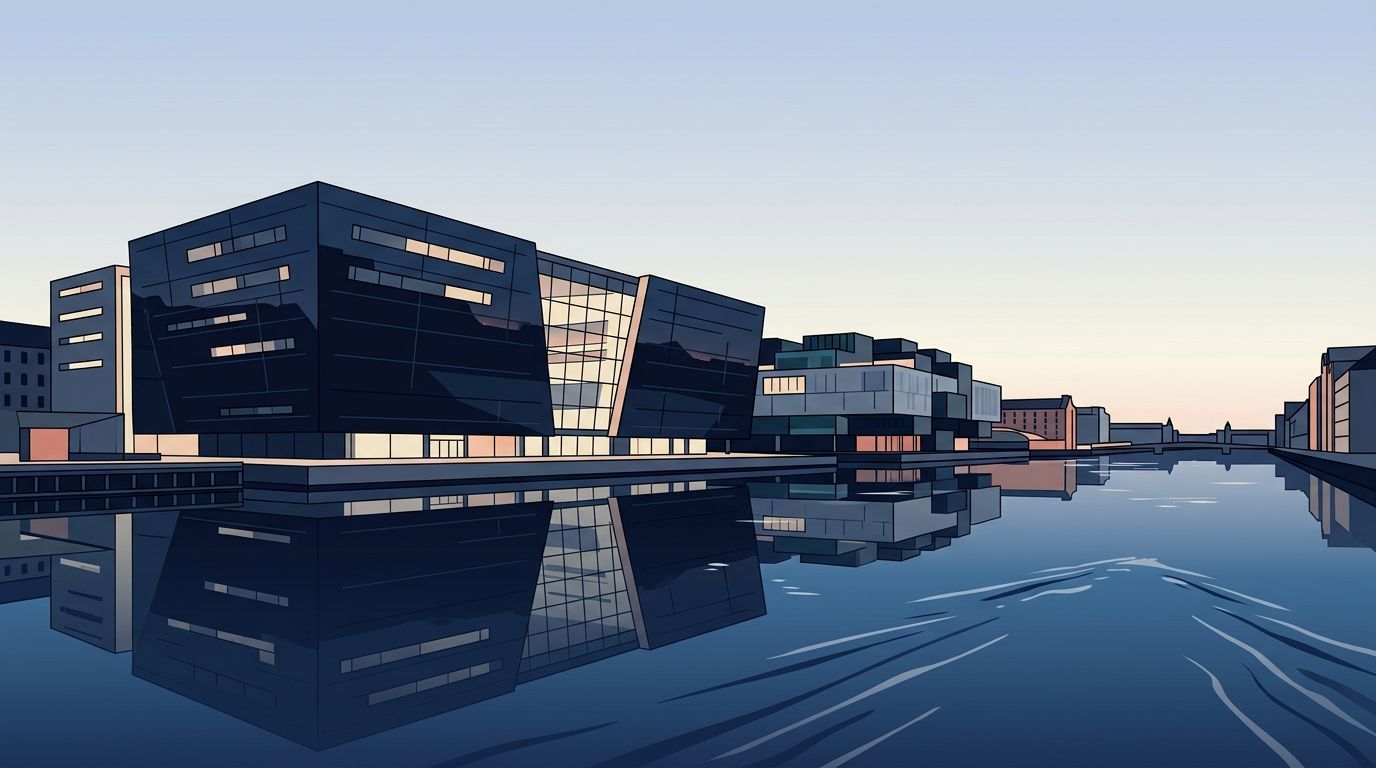
Water gives Copenhagen’s buildings a second facade, and it changes with every gust. In Copenhagen architecture photography, dark glass and pale stone become more expressive when the harbor supplies a reflection or a passing wake.
A location pin alone won’t produce a memorable frame. You need a viewpoint that puts water to work, then enough time to return when cloud cover changes the scene. Start at the harbor’s edge, where the city gives you both structure and movement.
Copenhagen Architecture Photography at the Waterline
Copenhagen’s inner harbor gathers landmark buildings close enough for a focused walking route. The Black Diamond, BLOX, the Royal Danish Playhouse, and the Opera House each handle the water differently. That difference gives your images a visual argument before a person enters the frame.
Nyhavn has the color and recognizable canal perspective that many visitors want. Yet its crowded quays can flatten a photograph. Shift toward the outer end of the canal, lower your camera height, and let boat hulls overlap the facades. A Copenhagen photography guide can help you locate the classic view, but your final angle should react to the light and activity that day.
The newer harbor projects reward patience more than speed. The Black Diamond’s black granite skin can appear opaque under low cloud, then turn into a dark mirror when the sky brightens. BLOX breaks into stacked volumes, so one simple facade shot rarely explains it. Move along the promenade until the water gives its hard geometry some breathing room.
Before deciding which buildings matter most, consult ArchDaily’s Copenhagen project guide. It places the waterfront work within a wider collection of buildings, bridges, and public spaces that shape the city.
Let the foreground earn its space
A harbor foreground should guide the eye toward the building. A mooring line can create a diagonal. A ferry wake can soften a strict reflection. The edge of a quay can hold the frame together when the sky is blank.
At the Black Diamond, avoid placing the horizon through the middle of the facade. Instead, give the building room above the waterline and wait for subtle ripples below. Across the harbor, use a longer focal length when you want the water and glass to feel compressed.
For wider frames, include one clear architectural gesture. A bridge curve, a roof plane, or a row of windows is enough. Extra objects create visual noise.
Let Harbor Light Control the Exposure
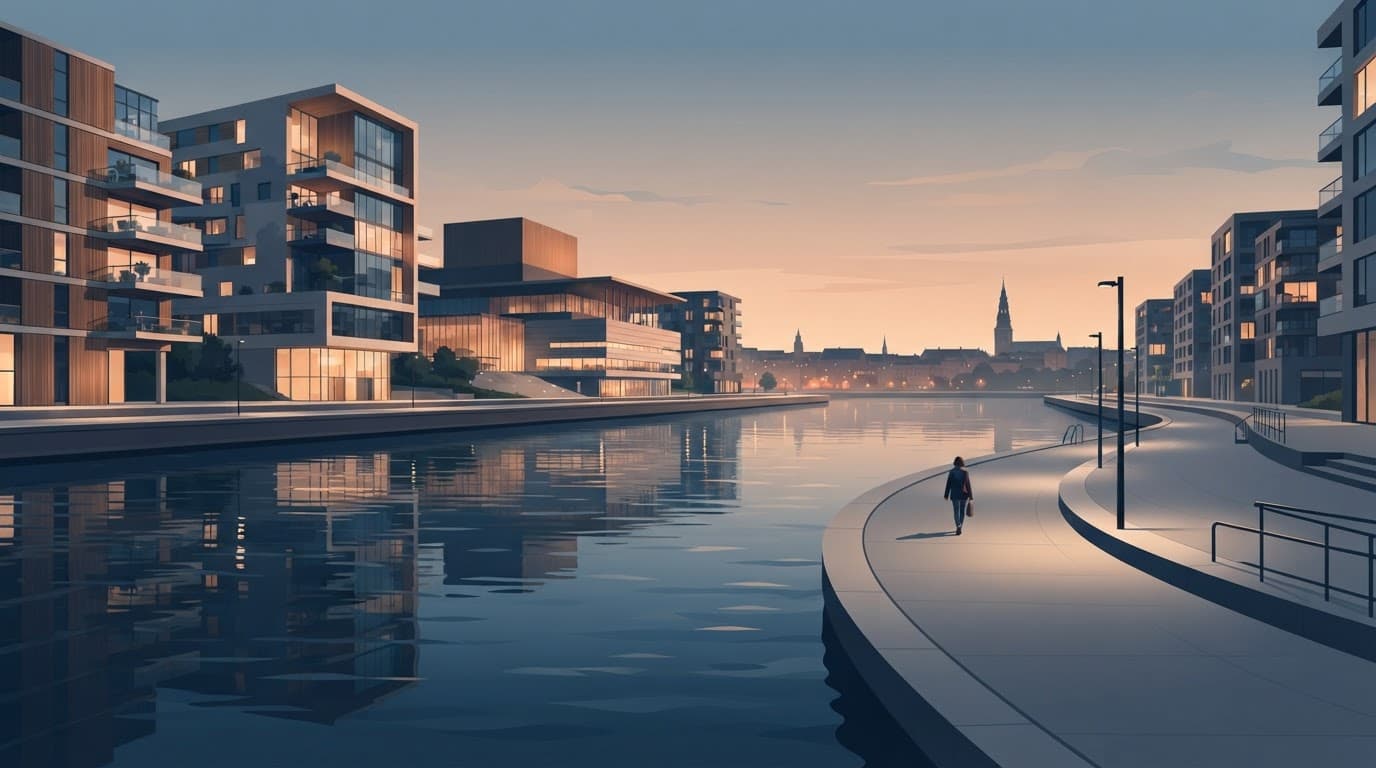
Copenhagen architecture photography gets stronger when you treat weather as part of the design. The harbor has broad, open light, while surrounding streets can throw deep shadows across a facade. Because of that contrast, a bright sky can fool a camera’s meter.
In summer, early daylight lasts long enough to work slowly before the quays become busy. Winter offers fewer hours, yet overcast conditions can reveal surface detail without harsh contrast. Blue hour arrives fast.
Protect highlights in pale clouds or window reflections. Then lift darker areas later if you shoot RAW. A small exposure bracket helps with the Black Diamond and the Opera House, where bright water often sits beside dense shadow.
No postcard calm required
Clouds are useful. Bring a lens cloth. Harbor spray and mist settle on front elements faster than many photographers expect.
On a bright afternoon, a circular polarizer can make the sky richer, although it may erase the water sheen that connects the building to its setting. When a weather front crosses the harbor, wait through the uneven light because a thin break in the cloud layer can light one facade while the water stays darker, giving the frame more depth without artificial edits.
A polarizer can remove the reflection that ties a building to the harbor, so rotate it slowly and decide whether the water needs sheen rather than clarity.
For Nyhavn, use early light or a dull afternoon when color stays saturated without harsh glare. The Copenhagen architectural photography guide is useful for pairing familiar waterfront stops with less obvious modern buildings.
Photograph Design Landmarks as Connected Places
A landmark portrait becomes more convincing when it includes evidence of how people use the harbor. Water traffic, a cyclist on a bridge, or a solitary figure near a large wall gives scale without turning the building into background decoration.
At the Black Diamond, keep the composition spare. Its angled black facade already carries enough visual weight. Work with the harbor surface or a fragment of the opposite bank, then let the building dominate.
BLOX needs a different approach. Step back toward the bridges or work from a lower position along the waterfront. Its layered boxes become clearer when the lines of the quay and water separate them. The Royal Danish Playhouse also benefits from a lateral angle, where its long glazed waterfront elevation stretches across the frame.
The Opera House and the harbor bridges
The Royal Danish Opera House, designed by Henning Larsen and inaugurated in 2005, is best approached as a distant waterfront composition. Its enormous horizontal roof wants space around it. At the Opera House, a moderate telephoto from the Christianshavn side can compress low water traffic beneath the roof while leaving room for sky over the pale stone planes.
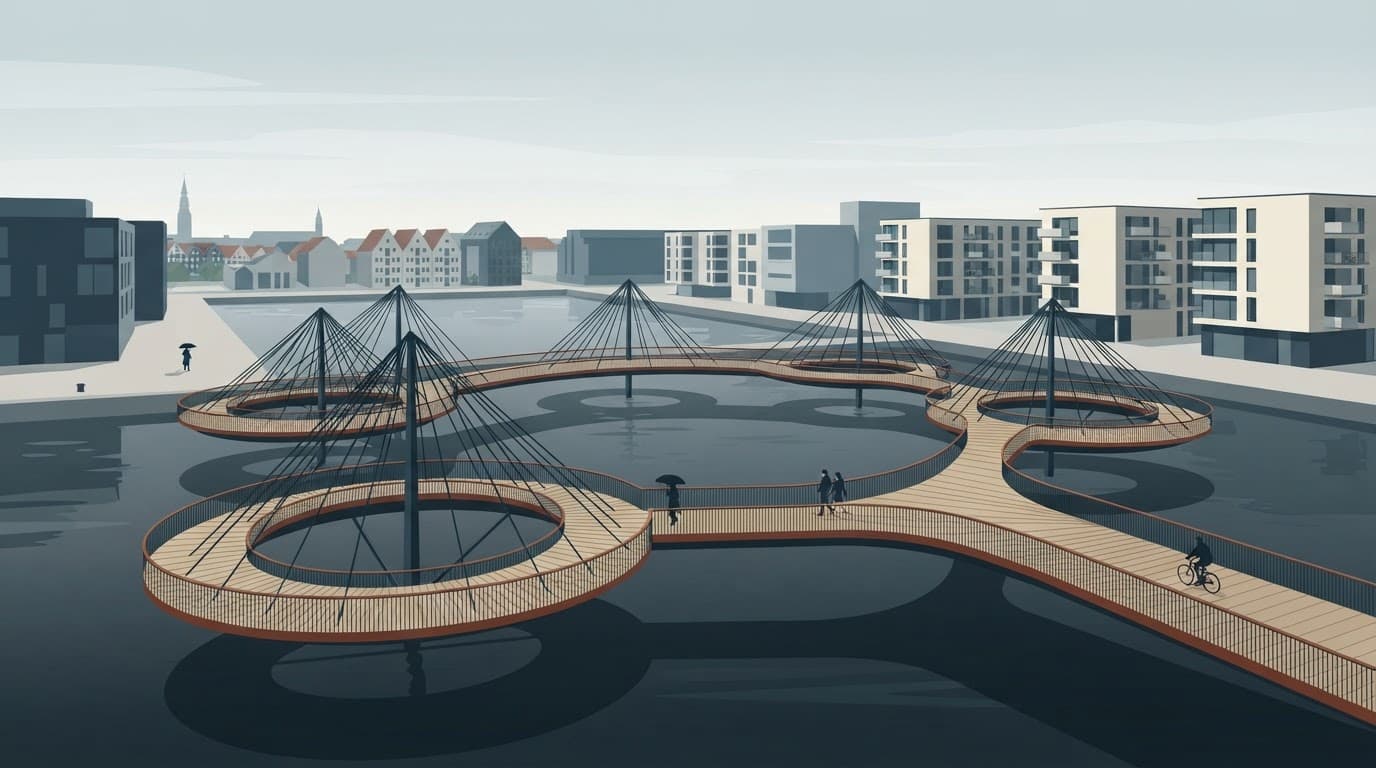
Cirkelbroen carries a small design story. When Studio Olafur Eliasson designed the 2015 bridge, he looked to nearby sailing boats, then set five circular platforms under mast-like forms. A side-on composition catches its geometry without losing the harbor behind it.
Keep an eye on pedestrian flow. The bridge looks strongest when people occupy only a small part of the frame. Lille Langebro offers another useful crossing, with clean lines that suit long exposures when boats leave faint streaks across the water.
For further ideas beyond the harbor, this Copenhagen photo-spots guide includes locations such as Axel Towers. Its rounded forms provide a useful change after a morning of waterfront geometry.
Plan a Harbor Route That Stays Flexible
Begin with one anchor building, then follow the light instead of forcing a fixed itinerary. A half-day walk can connect the Black Diamond, BLOX, Lille Langebro, Islands Brygge, and the Opera House across the harbor. Ferry movement and weather may change the order.
These locations respond differently to the same conditions:
| Location | Strong visual element | Useful conditions |
|---|---|---|
| Black Diamond | Dark facade and harbor reflection | Soft cloud or broken light |
| BLOX and Lille Langebro | Stacked forms and clean lines | Side light with active water |
| Opera House | Broad roof and open water | Blue hour or pale overcast |
| Nyhavn | Color, boats, and canal depth | Early morning or still water |
Carry only what supports the route. A weather-sealed camera body and a modest lens pair are easier to manage than a heavy bag on crowded quays. Keep paths clear when using a tripod, especially near bridges and waterfront entrances.
Copenhagen’s weather can change within a single walk. If rain starts, look for wet paving, darker water, and the warmer glow of interior lights. Those conditions often suit the harbor better than bright sun.
A Last Pass Along the Harbor
The most satisfying harbor photographs feel anchored to a real place, not a checklist. Keep the waterline in the frame when it adds scale, reflection, or a counterweight to a large facade.
Return to one building when the conditions shift. At the Black Diamond, wait until a harbor boat sends a broken stripe of silver beneath the lowest plane of black glass.
