
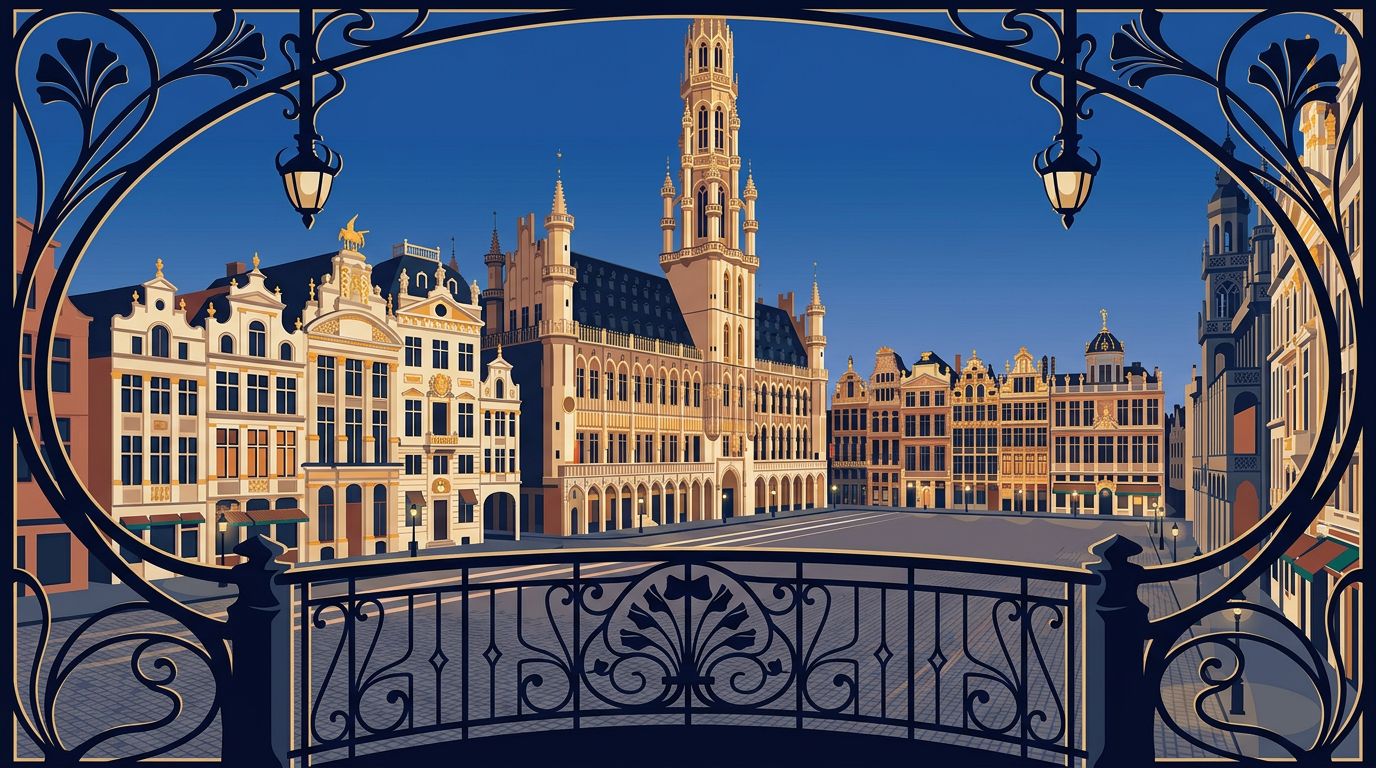
Brussels makes a photographer choose between a narrow pavement and an enormous square. That tension is part of the appeal.
The best Brussels photography spots reward a patient eye, especially when a curving iron balcony competes with a passing tram or a blue sky fades above a crowded guildhall. Give the facades daylight, then save the Grand Place for dusk.
A good photo day here has two rhythms: slow observation in residential streets, followed by fast decisions as evening light changes.
Brussels photography spots for Art Nouveau facades
Brussels spreads its Art Nouveau landmarks across ordinary neighborhoods, so you need a route rather than a single viewpoint. Saint-Gilles, Ixelles, and the area around Avenue Palmerston offer the strongest concentration of exterior subjects.
Start with Hôtel Tassel and Hôtel Solvay
Hôtel Tassel began with a professor’s commission. In 1893, Victor Horta completed it for Emile Tassel, a professor at the Universite libre de Bruxelles, and the address became the building Brussels tourism identifies as the founding work of local Art Nouveau.
At Rue Paul-Emile Janson 6, shoot the facade square-on before trying a more angled frame. The building is a private residence, so work from the public pavement and avoid an ultra-wide lens that bends the tall windows.
Hôtel Solvay, at Avenue Louise 224, gives you a richer, more formal frontage with stone, ironwork, and carefully placed ornament. Its interior access is limited and requires advance planning, but the exterior alone earns time in your schedule. The Art Nouveau house guide is useful for checking addresses and finding nearby houses.
Use Avenue Palmerston for dense detail
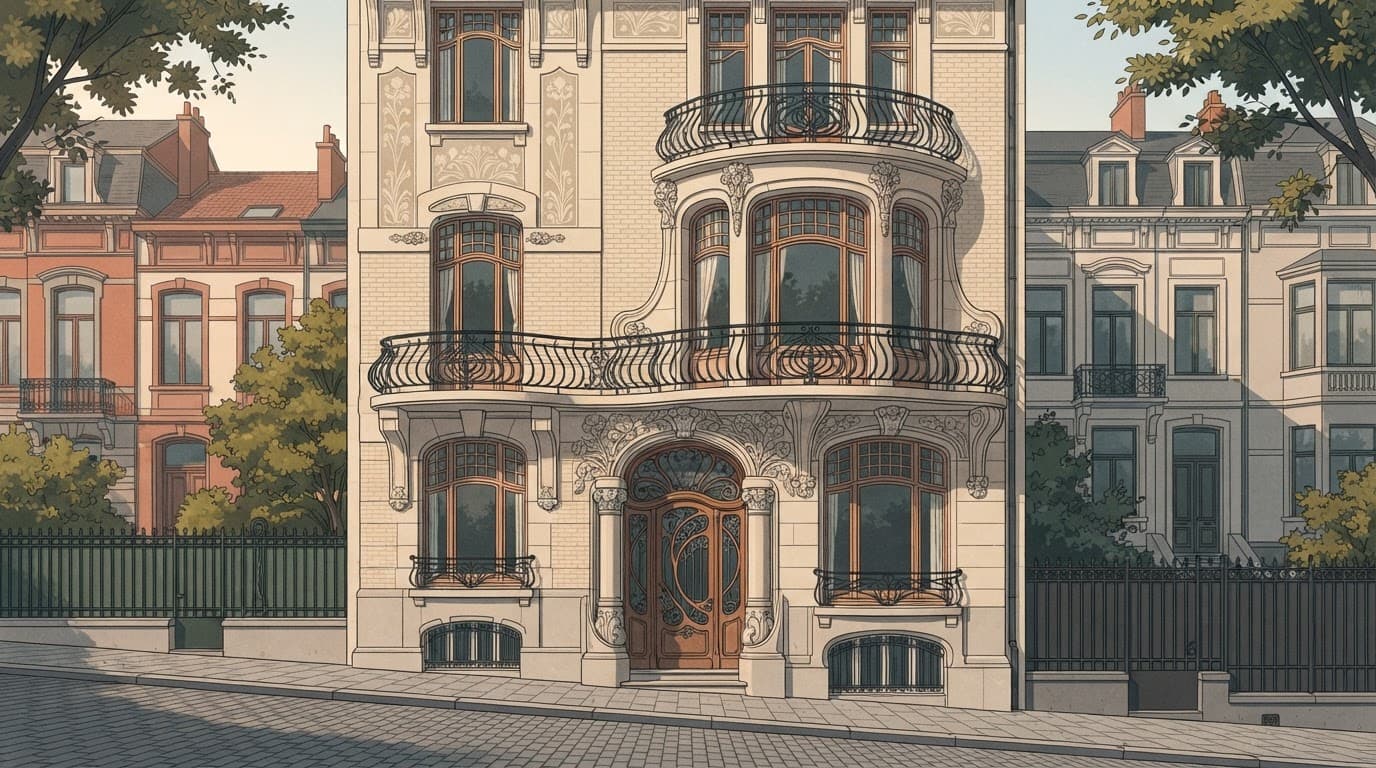
Near the European Quarter, Hôtel van Eetvelde at Avenue Palmerston 2-4 gives you pale stone, slender ironwork, and an elegant rhythm of windows. A 50 mm lens lets you isolate its vertical details without making the building lean.
A few doors away, Maison Saint-Cyr at number 11 is dense with metal curls and patterned surfaces. Photograph it straight first, then move across the street for a frame that lets the facade rise against a plain patch of sky.
Maison Cauchie, at Rue des Francs 5, adds painted sgraffito panels to the day’s visual vocabulary. These Brussels photography spots work best when you linger long enough to see how shadows divide the surface.
Keep Art Nouveau facades graceful in the frame
Art Nouveau may favor movement and asymmetry, yet your camera needs discipline. Bent verticals make even a beautiful facade look hurried.
Choose focal length before chasing detail
Because the houses are tall and streets can be narrow, standing across the road with a 50 mm lens, or a phone’s 2x camera, often gives a calmer result than stretching an ultra-wide frame.
Keep the camera sensor parallel to the facade when possible. Then leave breathing room above the roofline so you can correct any remaining perspective later. The first priority is simple: clean geometry before color.
For a full facade, a 35 mm field of view often feels natural. Switch to 70 mm or 85 mm for balcony brackets, door hardware, and the leaf-like patterns in iron railings.
Let the weather shape your approach
Soft cloud cover helps with sgraffito, stained glass, and pale stone because it reduces harsh contrast. However, early or late sunshine can create useful side light on carved details when the street is open to it.
A little restraint pays. Don’t step into a doorway, press a lens through a gate, or hold a tripod where pedestrians need to pass. These are homes as well as landmarks.
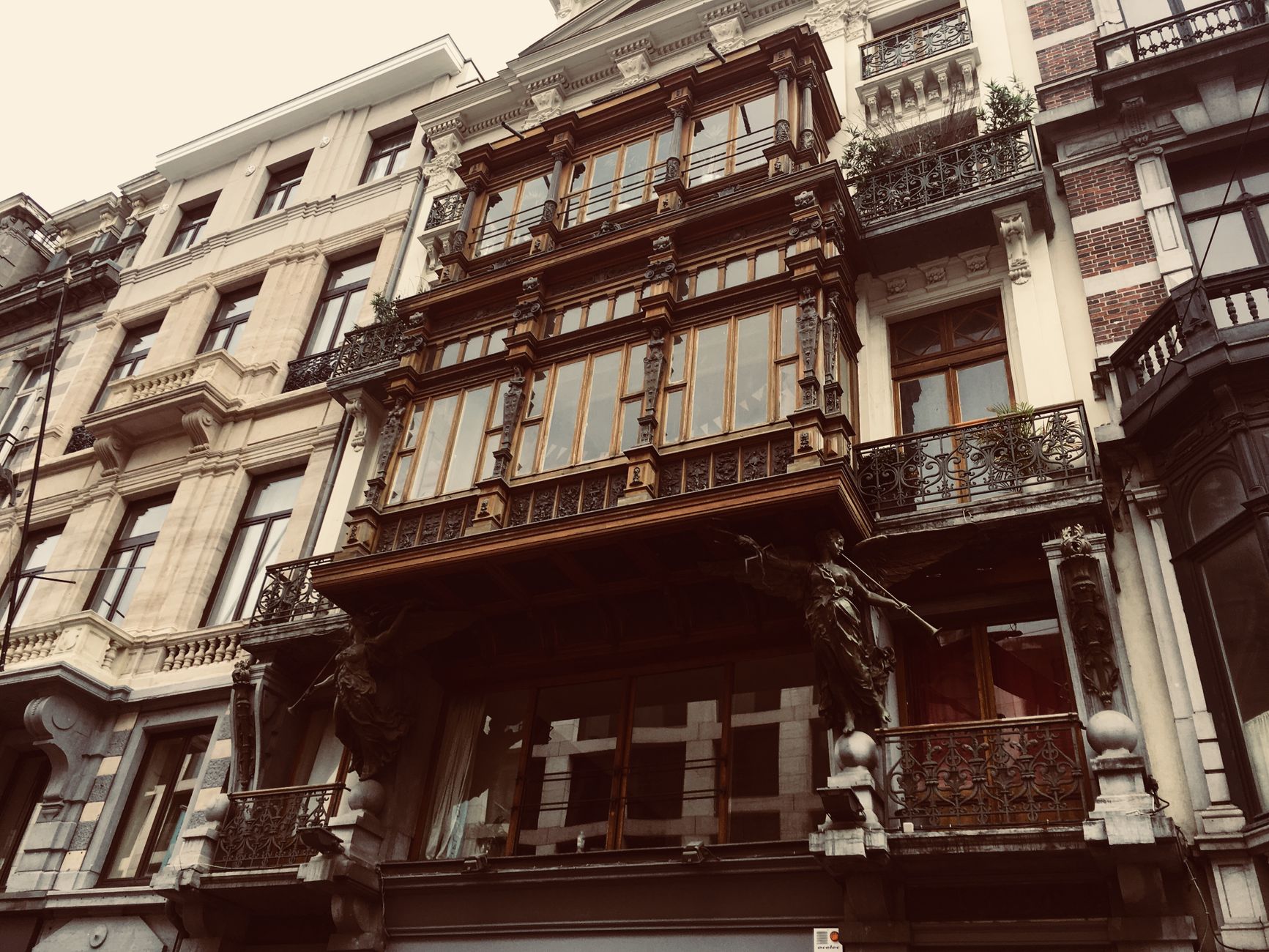
Photo by Roma Dik
Photograph Grand Place as the light turns
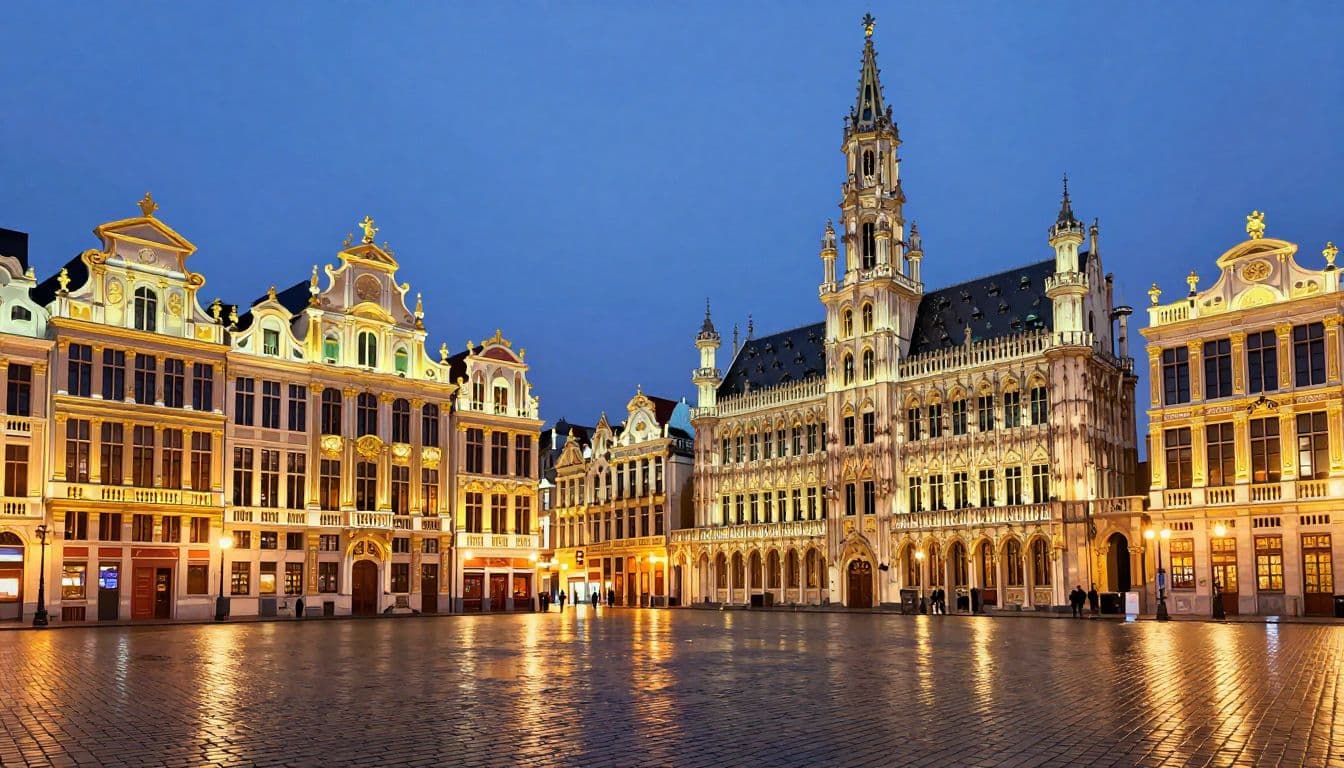
Grand Place, also called Grote Markt, asks for a different approach. The open square gives you room to frame the City Hall tower and the richly decorated guildhalls, while the public space stays accessible around the clock.
The square has held UNESCO status since 1998, and most of the surrounding facades date to the 17th century. Their gold accents can look flat at midday, so plan your main shoot near sunset.
Arrive before blue hour starts
Reach the square about 35 minutes before sunset. Use that time to test exposure, find a clean sightline, and decide whether the City Hall tower or a guildhall roofline will anchor your frame.
As the sky shifts toward cobalt, warm building lights gain separation and the square looks less crowded in a long exposure. The balance lasts briefly.
Rain can help here. A shallow sheen on the cobbles gives you reflections without requiring a puddle large enough to dominate the foreground.
Find space at the edges
The center of Grand Place can feel busy, especially after dinner. Instead, work along the edges and use the open cobblestones as negative space below the architecture.
A wide view benefits from a 24 mm to 35 mm equivalent lens, but keep the camera level. If you want the tower to look imposing, take a second vertical composition rather than forcing every building into one distorted frame.
Patience beats constant repositioning. Wait for a gap in the foot traffic, then take several frames from the same spot.
Watch the City Hall tower on show nights
Grand Place occasionally changes character after dark. The City of Brussels describes “Echoes of Colors” as a five-minute video-mapping show projected onto the City Hall tower, with dates and times published on the official City Hall show schedule.
Photograph the fixed evening illumination first. Once the projection begins, use a shorter shutter speed to keep the mapped shapes clear rather than turning them into a soft wash of color.
Crowds usually thicken before a scheduled show, so claim your composition early and keep your bag close. A position near the edge of the square also makes it easier to leave when the show ends.
Camera and phone settings for Brussels light
You don’t need a large kit for these scenes. A compact camera with a normal lens works well, and modern phones can produce strong files when you avoid their widest lens.
Give both systems a stable starting point
Use these settings as a practical baseline, then adjust for the street and weather.
| Scene | Camera starting point | Smartphone starting point |
|---|---|---|
| Tall facade | 35-50 mm, f/5.6 or f/8, ISO 100 | Use the 2x lens and turn on the grid |
| Blue hour square | 24-35 mm, f/8, braced or tripod-supported | Use the main camera and brace your elbows |
| Wet cobblestones | Meter for the lit facade, then check highlights | Lower exposure slightly to protect bright lamps |
Your phone can do this. Avoid digital zoom, tap the bright facade to set exposure, and lower it a touch if lamps turn into white blobs.
If your camera records RAW files, use them for blue-hour scenes with mixed light. They give you more room to recover highlight detail in the gold facades without making the sky look gray.
Respect private doors and book interiors early
Street photography of the major Art Nouveau houses is straightforward because the facades face public roads. Interior photography is different, and each venue can set its own rules.
The Horta Museum, at Rue Americaine 25, occupies Horta’s former home and studio. Its reservation details state that online booking is the only way to secure entry, so don’t build your day around a walk-in visit.
Check photography rules before taking a camera inside. Even when interior shooting isn’t allowed, the exterior, entrance details, and nearby streets can fill a useful hour.
Build a photo day around changing light
Begin in Saint-Gilles with Hôtel Tassel and the Horta Museum exterior while the streets are quiet. Then move north toward Avenue Louise for Hôtel Solvay, keeping your lens focused on close details if the light turns hard.
Later, take on Avenue Palmerston and Maison Saint-Cyr, where a longer lens helps separate ornament from surrounding buildings. Finish at Grand Place with enough time to walk its perimeter before sunset.
For Brussels photography spots, a smaller route beats an overstuffed map. Two excellent facade studies and one well-timed Grand Place frame will feel more complete than dozens of rushed files.
A Final Frame at Grand Place
Work first for straight verticals, then let Brussels supply the decoration. The city rewards photographers who slow down around private facades and stay alert once evening begins.
At Grand Place, wait until the blue sky clears the City Hall tower and a thin pool of rainwater holds its illuminated reflection upside down.
