
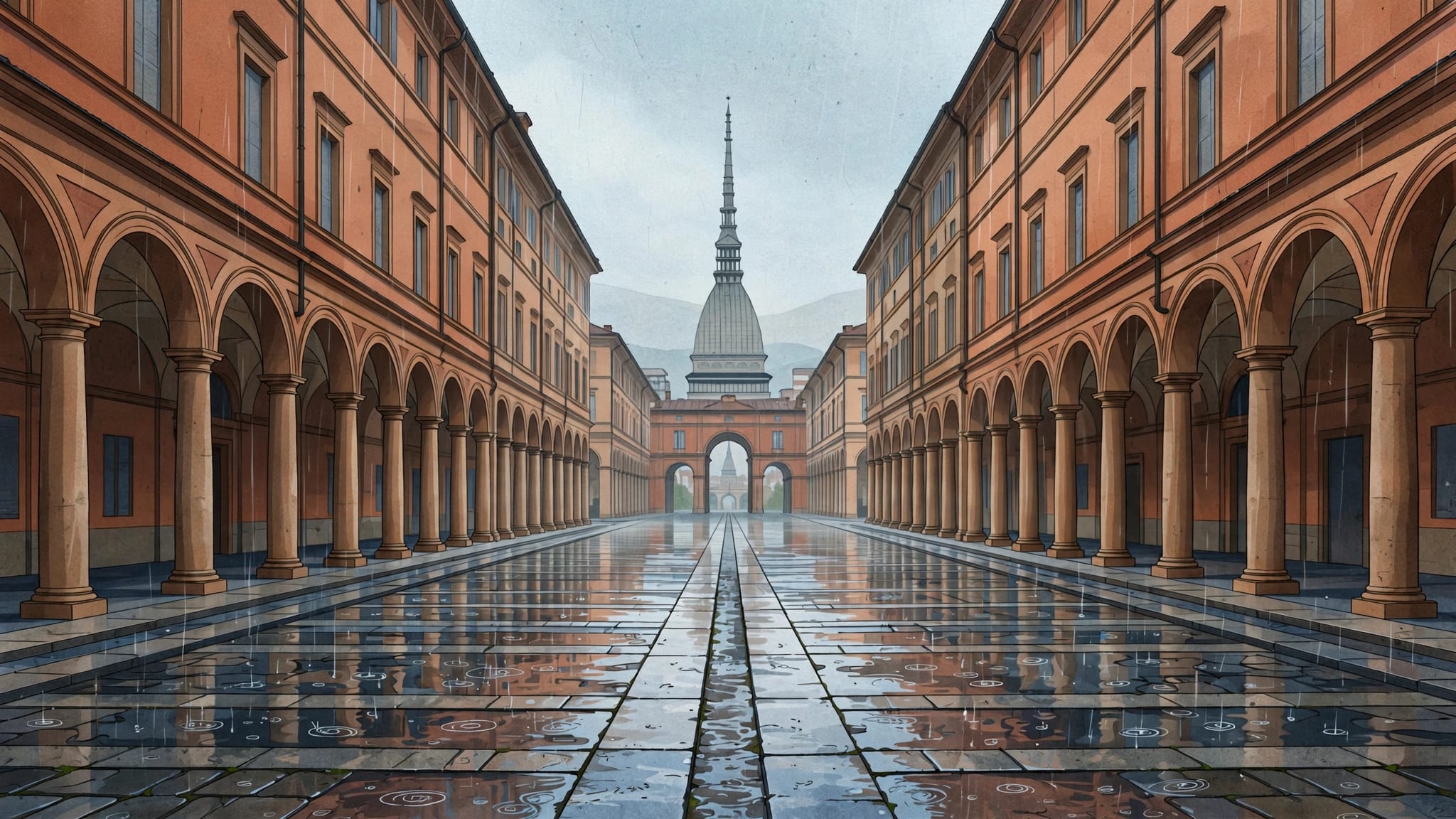
Turin makes strong photographs when you slow down. This Turin photography guide helps you use its covered walkways, long sightlines, and famous skyline without chasing the same postcard frame as everyone else.
The city gives you structure for free, yet it asks for timing. Stone columns, wet paving, and the sharp spire of the Mole Antonelliana can change character within an hour. Start with the lines beneath the porticoes.
A Turin Photography Guide to the Arcades
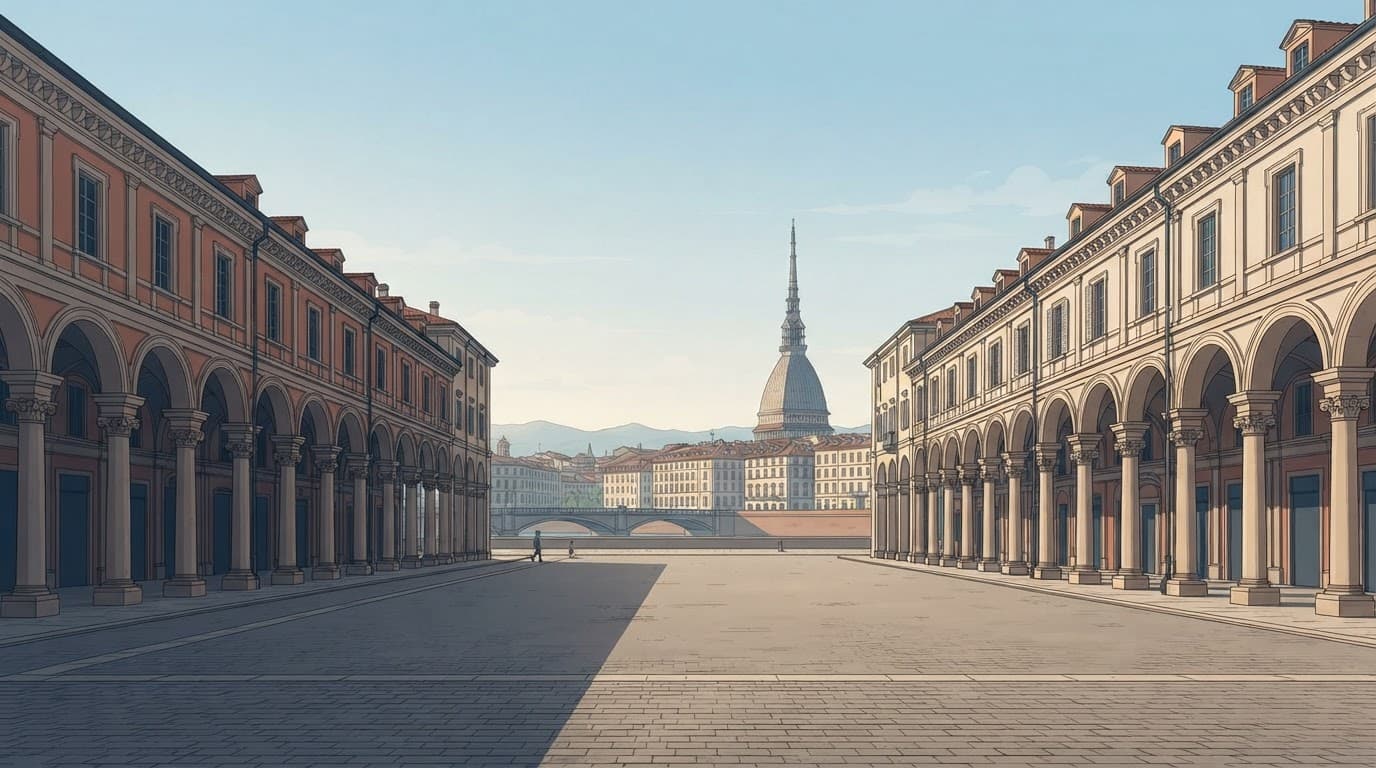
Turin’s arcades are practical shelter, but they also form one of Europe’s most accommodating urban studios. Repeating columns control the frame, while the pavement pulls the eye into the distance. You can work in rain, harsh sun, or weak winter light.
Let repetition do the work
Begin with a simple, centered composition. Stand on the middle seam of the paving, hold the camera level, and let the columns converge toward a vanishing point. A 24mm to 35mm full-frame equivalent often gives enough width without bending every vertical line.
Via Roma offers polished symmetry and formal facades. Via Po feels more lived-in, with deeper shade and changing street life. Galleria Subalpina gives you glass, iron, and decorative detail when rain makes open squares less appealing.
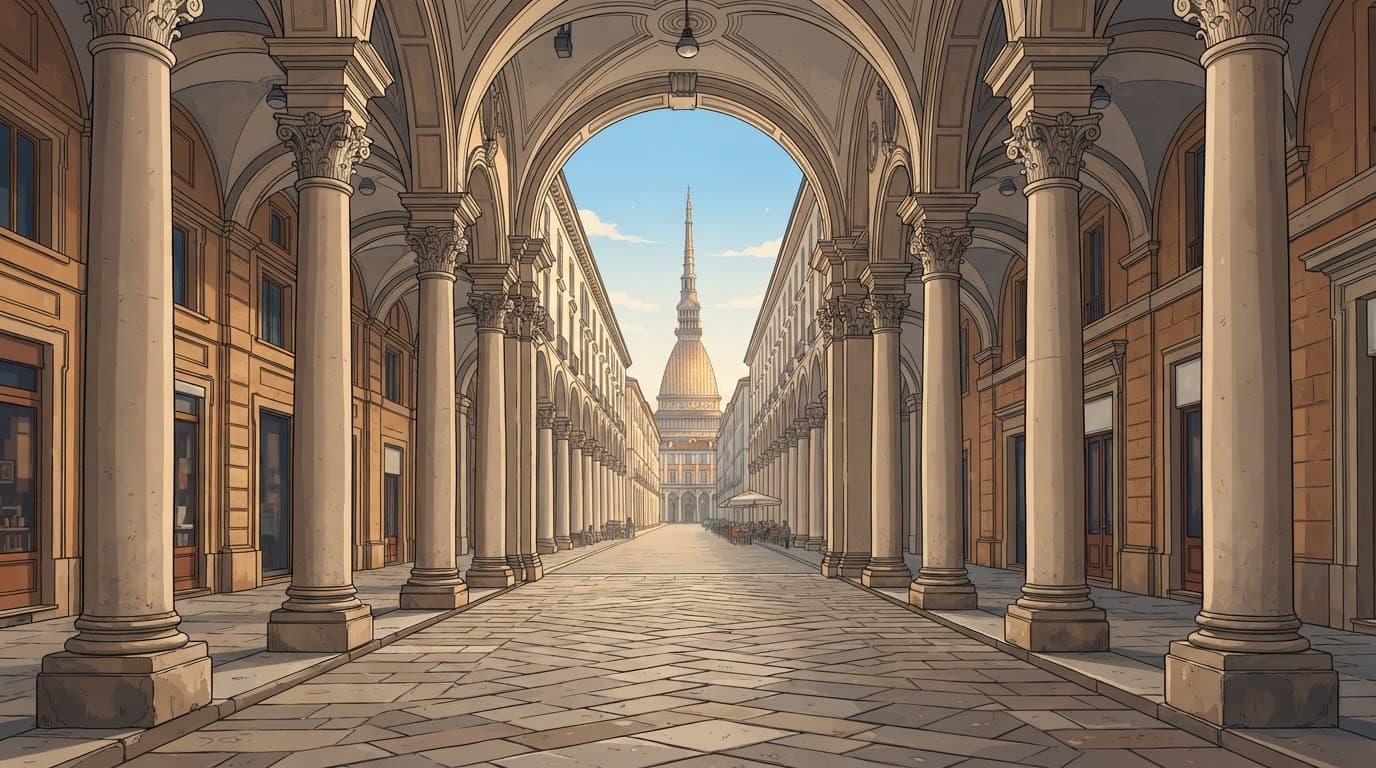
Move a few steps at a time. Small shifts change whether a column blocks a doorway or whether the ceiling pattern locks into place. If the scene feels flat, lower your viewpoint and place the nearest column close to one edge.
Work with the ceiling and pavement
Arcades have two exposure zones: a dim ceiling and bright pavement beyond. Metering for the light outside can leave the vaults empty. Metering for the shadows can burn out the street.
Under a portico, protect the highlights on the sunlit paving first, then lift the shadow detail later if your file allows it.
Shoot RAW. Bracket a difficult scene by one or two stops if people aren’t moving through it. A subtle underexposure often preserves the pale stone and cloud detail far better than a bright preview screen suggests.
For local event closures and transport changes, check Turismo Torino’s visitor information before heading out.
Choose Light That Suits Turin’s Stone
The city does not need blazing midday sun. Its pale facades and colonnades respond better to angled light, overcast skies, and reflected glow.
Rain can help.
Photograph before the shops open
Early morning reduces foot traffic beneath Via Po and Piazza San Carlo. It also gives you time to compose without someone stopping in the exact center of the frame.
In summer, arrive close to sunrise. The low sun reaches the outer edge of the porticoes, while interiors retain blue-grey shadow. That contrast can make one cyclist or a lone commuter feel deliberate rather than accidental.
A useful historical anecdote sits inside Turin’s most photographed tower. Alessandro Antonelli began the Mole in 1863 as a synagogue commission, but the project’s expanding scale and cost led Turin’s Jewish community to abandon it; the city later took ownership, and the building carried Antonelli’s name.
Use wet pavement after a shower
After rain, look for shallow puddles near the arcade entrances and along Piazza Castello. A low angle can catch an upside-down spire, illuminated arch, or a row of columns.
Keep the reflection secondary. The real subject should remain legible above it.
Cloudy weather also softens contrast on ornate facades. Instead of waiting for a blue sky, use the broad light to record plaster texture, iron lamps, and the subtle cream colors around the central squares.
Compose Arcades Without Making Them Feel Empty
Symmetry is useful, though a photograph can become stiff when every line sits dead center. Break order with one human figure, a bicycle, or a band of light crossing the pavement.
Find a foreground anchor
At Piazza Castello, use an arcade column as a dark vertical edge. In Galleria Subalpina, look for a lamp or a reflected arch near the bottom of the frame. These details give wide scenes a place to start.
A person is often more effective at the far end of an arcade than in the foreground. Wait until they enter a pool of light, then take one frame. Their scale shows the height of the vault without making the image feel crowded.
For street work, a 50mm lens gives a tighter view of gestures and architectural fragments. However, the Turin photography guide approach works best when you alternate wide geometric frames with those smaller observations.
Correct verticals with restraint
Pointing upward makes columns lean inward. Sometimes that drama suits the Mole, but it can make a careful arcade frame look unstable. Keep the sensor parallel to the facade when possible, then correct modestly in Lightroom, Capture One, or your preferred editor.
Don’t erase every imperfection. Slight perspective is part of standing on the street rather than hovering above it.
Where to Photograph the Mole Antonelliana
The Mole Antonelliana rises 167.5 metres above Turin, yet the most memorable pictures rarely come from standing directly below it. Its spire needs room around it, along with a foreground that belongs to Turin.
Use Via Montebello for close architectural frames
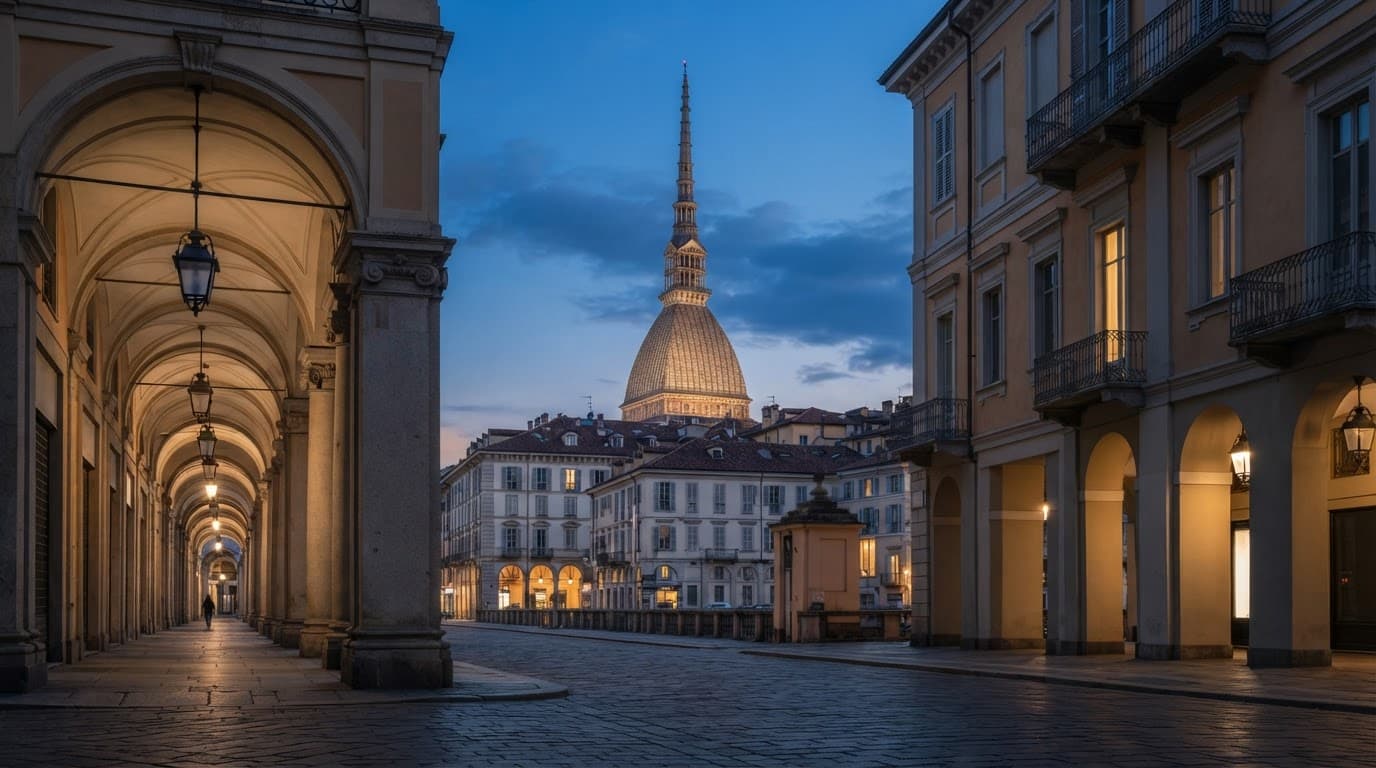
Around Via Montebello, the tower fills more of the frame and its brick base becomes visible. A 35mm lens works well for keeping the building prominent while retaining surrounding facades. Look upward from the quieter side streets, where cars and delivery vans are less likely to interrupt the base.
The Mole houses the National Museum of Cinema. Its official Mole Antonelliana visitor page confirms that the panoramic terrace sits 85 metres high, with views across the city and toward the Alps.
The terrace is better for broad city patterns than for a classic external portrait of the tower. Book ahead when you want the lift, especially on weekends, and check the latest opening details before leaving your hotel.
Cross the river for scale
Monte dei Cappuccini gives you the strongest wide view of Turin with the Mole rising through the city fabric. Go near sunset when the west-facing facades begin to warm, then stay for blue hour. A 70mm to 100mm focal length can compress the rooftops around the spire.
Piazza Vittorio Veneto offers a lower, street-level alternative. Its wide open space makes the Mole feel distant, so include the arcade roofs or a passing tram line to avoid a large, empty foreground.
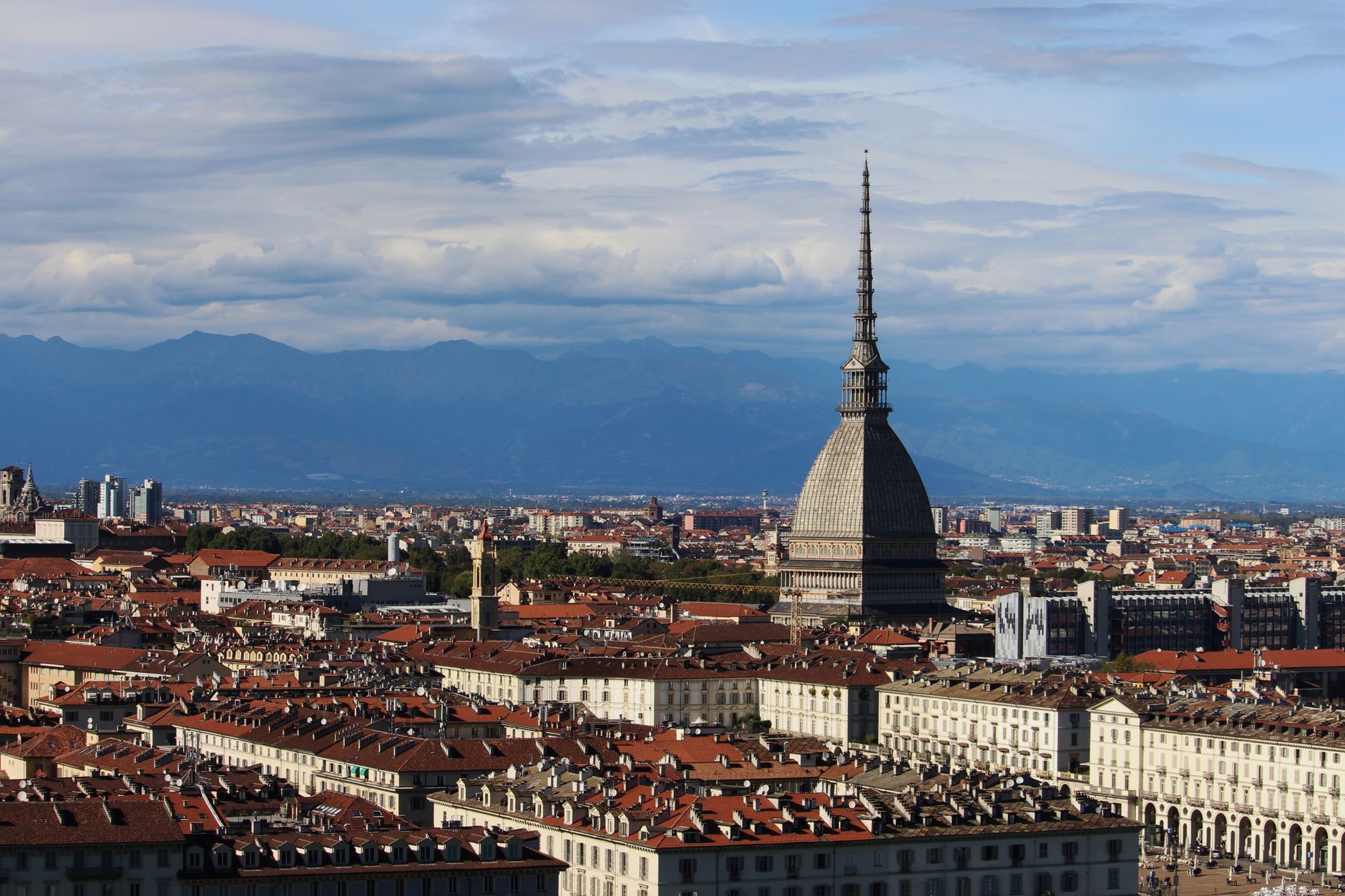
Photo by Serinus
A Walking Route for Arcade and Mole Photos
Start at Piazza San Carlo, where the twin churches and formal arcade rhythm set a calm pace. Then walk north to Piazza Castello and cut through Galleria Subalpina before continuing along Via Po.
This route works because each stop changes the geometry. Piazza San Carlo is symmetrical and open. Galleria Subalpina is decorative and enclosed. Via Po gives you long, dark corridors that lead toward brighter street intersections.
Time the route around the sky
Start an hour after sunrise for quieter porticoes. By mid-morning, shift to detail work under cover. Later, walk Via Po toward Piazza Vittorio Veneto and cross the river for the Monte dei Cappuccini viewpoint.
A summer evening can produce a long wait at popular overlooks. Bring water, a light layer, and enough battery for blue hour. The city is compact enough that you can return to Via Montebello after dusk for a different treatment of the Mole.
For broader ideas on museums, palaces, and neighborhoods near your route, browse Italy’s official Turin travel overview. A separate Mole visit guide can also help you plan a museum-and-viewpoint stop around a photo walk.
Camera Settings and Field Habits
Turin rewards careful files more than extreme gear. A weather-sealed camera helps in rain, but a phone, compact, or mirrorless body can all produce strong work when you control exposure and position.
Carry a small, flexible kit
Pack light. You will walk farther when your shoulders aren’t aching under the arcades.
- Use a 24mm to 35mm lens for full arcade scenes and close views of the Mole.
- Carry a 50mm or short telephoto for rooftop layers and architectural details.
- Bring a microfiber cloth because rain and fountain spray show quickly against dark stone.
- Keep a compact tripod for blue-hour city views, where permitted and out of pedestrian paths.
For handheld shots beneath covered walkways, begin around f/5.6 or f/8. Raise ISO before letting shutter speed fall below what your hands can hold. With moving pedestrians, 1/250 second is a safer starting point.
Edit for texture, not spectacle
Turin’s best tones are often restrained: stone cream, brick red, slate shadow, and a soft blue evening sky. Heavy saturation can make them look artificial.
Correct the white balance before adding contrast. Then use local adjustments to brighten a face or reveal ceiling detail. If the Mole sits against a pale sky, darken the sky gently rather than over-sharpening the tower’s outline.
Final Frames Worth Waiting For
The strongest Turin images come from patience at the edge of a scene. Wait for the light to move across a column, for the pavement to clear, or for a single figure to enter the far arch.
Your Turin photography guide is less about collecting landmarks than seeing how the city joins shelter, shadow, and skyline. Return to the same stretch of Via Po at blue hour, when the Mole’s spire appears between two dark columns.
