
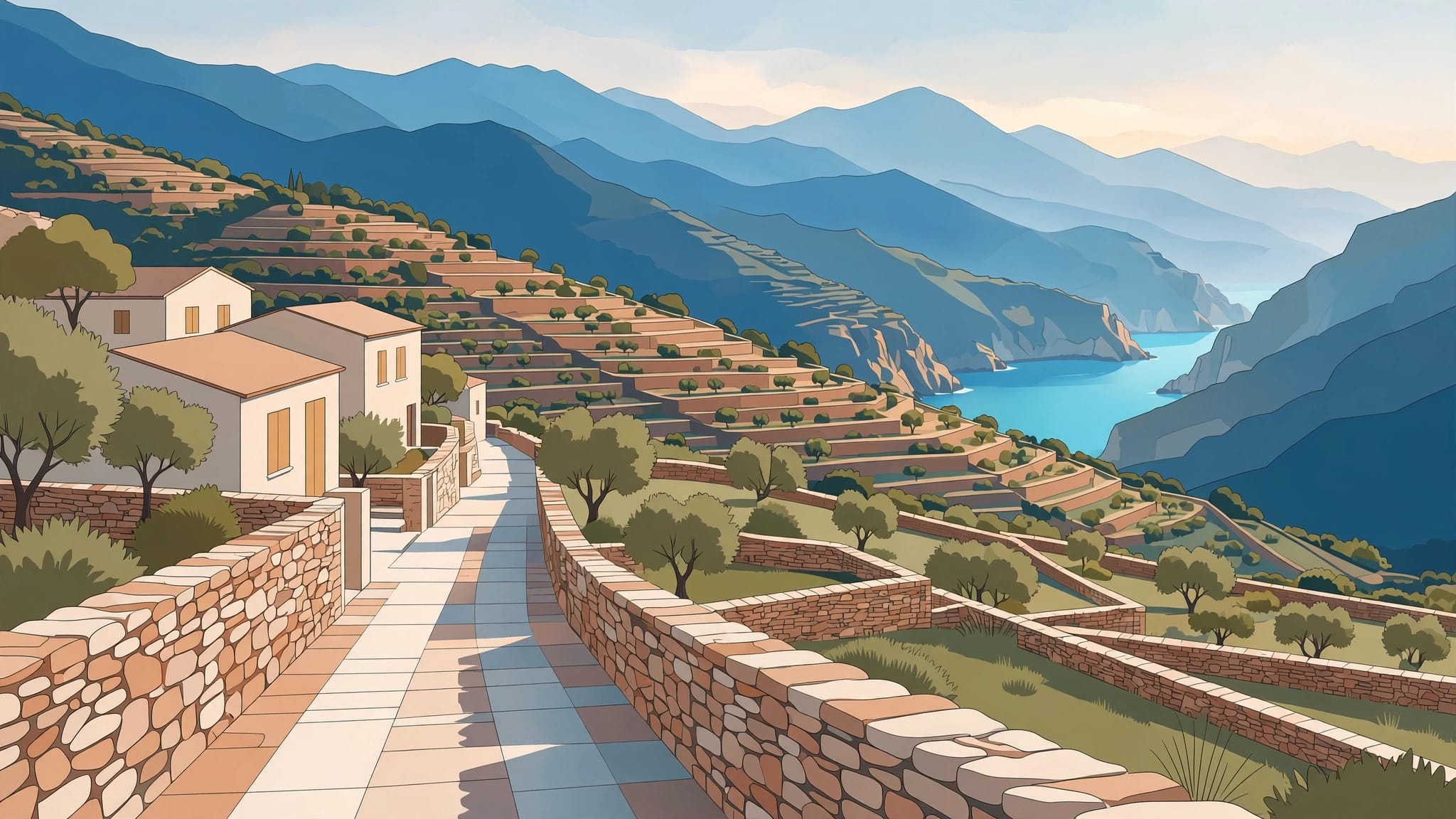
Mallorca rewards photographers who arrive before the traffic, not after breakfast. The strongest Mallorca photography often happens in the narrow hour when village shutters are closed, cove water is still, and the mountains hold onto the last blue shadows.
The Serra de Tramuntana gives you stone lanes, folded ridges, old terraces, and bright Mediterranean water within a short drive. However, its roads and parking areas demand patience. Start with the light, then build each day around access.
Why the Tramuntana needs a slower approach
The northwest coast isn’t a place for rushed location-hopping. Villages sit above steep valleys, while coves often lie at the end of single-lane roads with limited places to turn around.
The Serra de Tramuntana’s UNESCO listing describes a mountain range running alongside Mallorca’s northwest coast. Its scenery is shaped by people as much as geology. Dry-stone terraces, irrigation channels, olive groves, and old farm buildings give wide views a human scale.
Let the roads set your schedule
Plan one main village and one nearby coastal stop each day. That leaves room for a missed turn, a full car park, or an unplanned pull-off that catches the right cloud shadow.
Arrive before the coaches. Summer roads around Deià, Sa Calobra, and Formentor become difficult when two larger vehicles meet on a tight bend.
Use your first visit to scout. Notice where walls block the view, which alley receives light, and whether a foreground works better with a 24mm lens or a longer focal length.
Work the layers, not just the view
The obvious view usually shows blue sea below a high ridge. A better frame often adds a foreground element, such as a stone wall, an olive branch, or the curve of a road.
Look for visual separation between mountain layers. Haze can soften distant ridges, while a darker near slope anchors the image. In late afternoon, side light also reveals the texture of terraced hillsides without flattening every surface.
Plan Mallorca photography around the light
The western coast gets harsh quickly in summer. Therefore, dawn and the last two hours before sunset are usually your most productive windows, even when the exact location isn’t directly lit.
For Mallorca photography, shade isn’t a failure. Deep valley shade can suit village doors, weathered stone, and quiet street scenes. Save broad seascapes for when the sun clears the ridge or drops toward the water.
Use the season to shape your subjects
Spring brings greener terraces, wildflowers, and cleaner air after rain. Autumn can offer dramatic cloud cover and rougher seas, although storms may close paths or make rocks unsafe.
Summer delivers reliable dry weather and long evenings. Yet it also brings dense crowds, pale midday skies, and stronger heat shimmer. Winter light is low and soft, but some restaurants, accommodation, and services reduce their hours.
Check wind as well as cloud. A calm morning helps at Port de Sóller and Cala Tuent, where reflective water can carry the shape of mountains into the foreground.
Time your blue hour carefully
Blue hour works best in the villages, where warm lamps and cool stone create contrast. Bring a compact tripod, but set it up where pedestrians and delivery vehicles can pass.
PhotoPills is useful for checking sun direction around the cove walls. Windy and Meteoblue can help with cloud and gust forecasts. Conditions shift fast around high ridges, so treat forecasts as a guide rather than a promise.
Valldemossa: stone texture and quiet streets
Valldemossa photographs well before its cafes fill. Begin around the upper lanes, where honey-colored stone, green shutters, and flowerpots create intimate frames without needing a sweeping viewpoint.
The tower of the Royal Charterhouse is an easy visual anchor. Instead of centering it every time, place it near an edge and let a lane lead toward it. A vertical frame often works better than a wide shot here.
Build a frame around small details
Look for door knockers, ceramic plaques, stair rails, and laundry lines. They give the place a lived-in quality that a distant telephoto view can miss.
Composer Frédéric Chopin and writer George Sand spent the winter of 1838 to 1839 at the Valldemossa Charterhouse. That detail can guide a quieter set of images: worn thresholds, courtyard arches, and rain-darkened stone feel more connected to the village than a busy street scene.
The official Valldemossa visitor information distinguishes visitor parking from residents-only areas. Respect those markings, even if an empty space looks tempting.
In a compact village, a parked rental car can ruin the frame and the residents’ morning at the same time.
Late afternoon warms the facades, while early morning gives cleaner lanes and softer contrast. Stay off doorsteps, and don’t point a tripod into someone’s entrance.
Deià and Cala Deià after the crowds thin
Deià sits high above the coast, with houses tucked into folds of the mountain. The cemetery above the village offers a broad view toward terraced slopes and the sea, but the strongest compositions usually include nearby stone walls or trees.
Late afternoon works well on the upper village. Sun catches roofs and terraces, while the valley falls into soft shadow. Use a medium telephoto lens to compress clusters of homes against the mountainside.
Photograph Cala Deià with restraint
Cala Deià is small, rocky, and busy in warm months. Get there early if you want clean water and space to work, because access can tighten once parking fills.
A polarizer can reduce glare on the shallows, but don’t turn it until the sea becomes unnaturally dark. Leave some reflection on the water so it still looks like water.
The cove faces northwest, so late light can catch the cliff edges. However, high walls cast shadow early in parts of the inlet. Work with that contrast by exposing for bright rock and allowing the deeper recesses to stay dark.
Avoid setting up around restaurant tables or narrow access points. Swimmers, staff, and emergency vehicles need room.
Sóller and Port de Sóller for movement and color
Sóller gives you a different rhythm. Its central square has palms, facades, cafe life, and the historic tram, which creates movement in scenes that might otherwise feel static.
A low angle along the rail line can lead the eye toward the church and square. Early light also helps you avoid crowds and umbrellas in every frame. Use a shutter speed around 1/30 second for a slight tram blur, then take a sharper version for safety.
Follow the tram to the harbor
The tram connecting Sóller and Port de Sóller dates to 1912. Check the current train and tram timetable before building your shoot around a passing carriage, because services and seasonal schedules can change.
At Port de Sóller, sunset becomes the main event. The bay curves around the harbor, which gives you layers of boats, water, hillside buildings, and sky.
A 70-200mm lens can isolate boats against the slope. Meanwhile, a wide lens works from the promenade when you want the harbor curve to pull the viewer into the frame.
Mallorca photography here benefits from staying after the sun disappears. The tram’s lamps and boat lights add points of warmth during blue hour.
Fornalutx, Pollença, and the north-facing views
Fornalutx is compact enough to photograph on foot. Its stone stairways, tiled details, and citrus trees reward a slow pass with a normal lens. Avoid trying to capture every lane. Pick one repeated element, such as shutters or stair treads, and build a small series.
Morning is the practical choice because the streets are quieter and parking is easier. Shade arrives early here.
Use steps and ridgelines as leading lines
Pollença’s 365 Calvari steps provide a strong upward composition. Shoot upward with people spaced along the staircase, or turn around and use the town rooftops as a patterned foreground.
For broader north-coast views, Port de Pollença is a useful base before heading toward Formentor. Mirador d’Es Colomer offers dramatic cliffs and open water, but roadside space is limited. Keep your body and tripod well away from traffic.
The official Formentor access rules restrict private vehicle movement on key road sections from 15 May to 18 October, between 10:00 a.m. and 10:00 p.m. Check the current requirements before you go, especially if you plan a lighthouse shoot.
Early entry doesn’t remove the need for a timely exit. Roads can close or traffic controls can change with weather and major events.
Sa Calobra and Cala Tuent: photograph the scale
The MA-2141 road to Sa Calobra is part of the experience, with tight hairpins and sheer drops. Drive it slowly and only stop in marked areas. A stopped car around a blind bend creates a real hazard.
At Sa Calobra, the Torrent de Pareis gorge narrows the sky into a pale strip above towering rock. That scale can look flat in a wide frame, so include a person near the beach or a distant walker on the path.
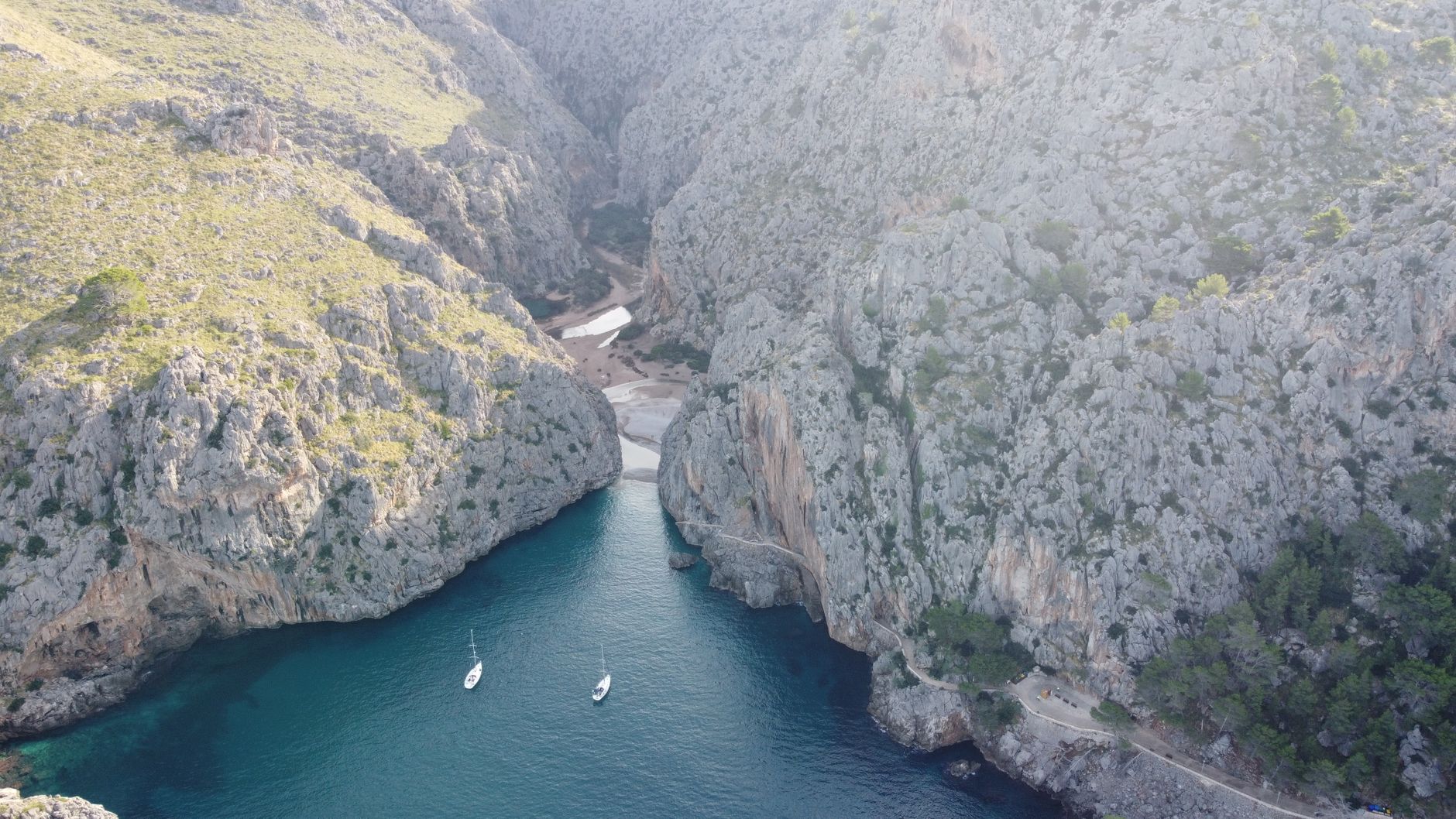
Photo by Andreas Geissler
Arrive before the traffic builds
The paid parking area near Sa Calobra fills as day-trippers arrive. Get there early, then walk through the tunnels toward the gorge before the beach gets busy.
Cala Tuent, nearby on the same coastal route, feels more isolated. A small unpaved parking area means you should arrive with a backup plan. The mountain backdrop is its strength, especially when calm water holds a faint reflection.
Use an ND filter for a longer exposure if wind is low. Keep an eye on incoming weather, because rain higher in the mountains can affect gorges and paths even when the coast looks dry.
Make coves work in difficult midday light
Sometimes you have no choice but to photograph in the middle of the day. In that case, stop chasing wide views of bright water and focus on details that tolerate contrast.
Black rock, weathered boats, rope coils, steps, and limestone patterns work well in direct light. A longer lens can also pull distant headlands together and remove bright empty water from the frame.
Control glare without draining the scene
Use your hand or a lens hood to block flare when the sun sits just outside the frame. Check the corners of every image, because strong side light can create hazy patches that aren’t obvious on a bright screen.
Expose for pale limestone rather than the deepest shadow. Recovering a dark foreground is often easier than repairing clipped white rock.
A polarizer helps when the sun is at an angle to the water. Still, it can create uneven color across a very wide sky. Take a second image without it. That comparison takes seconds and can save an otherwise difficult file.
Parking, road rules, and access checks
Parking is the logistics issue that shapes most Tramuntana photo days. Small coastal roads weren’t built for a steady stream of rental cars, vans, and coaches.
Don’t leave a car partly on the road because other drivers did. It blocks passing space, damages roadside vegetation, and can turn a beautiful afternoon into a stressful one.
Check restrictions before leaving your hotel
Formentor has the clearest recurring access controls, but other areas can also face temporary restrictions during events, severe weather, or periods of heavy demand. In August 2026, traffic controls linked to the solar eclipse affected several Tramuntana routes, including access around Valldemossa, Deià, Sóller, Fornalutx, Pollença, and Formentor.
That example is a useful warning for every trip. Check official notices on the morning of a long drive, not only when you make your itinerary.
If a cove car park is full, move on. Cala Tuent, Port de Sóller, the Sóller valley, and inland villages all offer worthwhile alternatives without adding pressure to a crowded road.
For a broad overview before planning routes, this Serra de Tramuntana guide can help place villages and viewpoints in context.
Pack light and photograph with care
A two-lens kit is enough for most days: a wide zoom for coves and narrow lanes, plus a short telephoto for rooftops, ridges, and distant boats. Add a polarizer, a small tripod, spare battery, water, and shoes with grip.
Salt spray reaches cameras quickly near the water. Keep a microfiber cloth in a sealed pouch, and don’t change lenses in wind if you can avoid it.
- Ask before making a close portrait of a resident, shopkeeper, or swimmer.
- Keep off dry-stone walls and planted terraces, even when they offer a higher viewpoint.
- Drone rules demand separate permission checks, especially near protected areas and populated places.
- Pack out every bit of tape, food packaging, and lens-cleaning tissue.
The best Mallorca photography feels observant rather than intrusive. A person walking through a frame can add scale, but people deserve more consideration than a convenient foreground.
Final frames worth waiting for
The strongest images here come from patience with weather, road access, and changing light. Give yourself enough time to return to a village after scouting it, because the second visit often produces the more personal frame.
Carry a small tripod, respect the narrow roads, and let shadows stay in the image when they belong there. At Port de Sóller after sunset, leave room for the tram’s single headlamp crossing the rails.
