
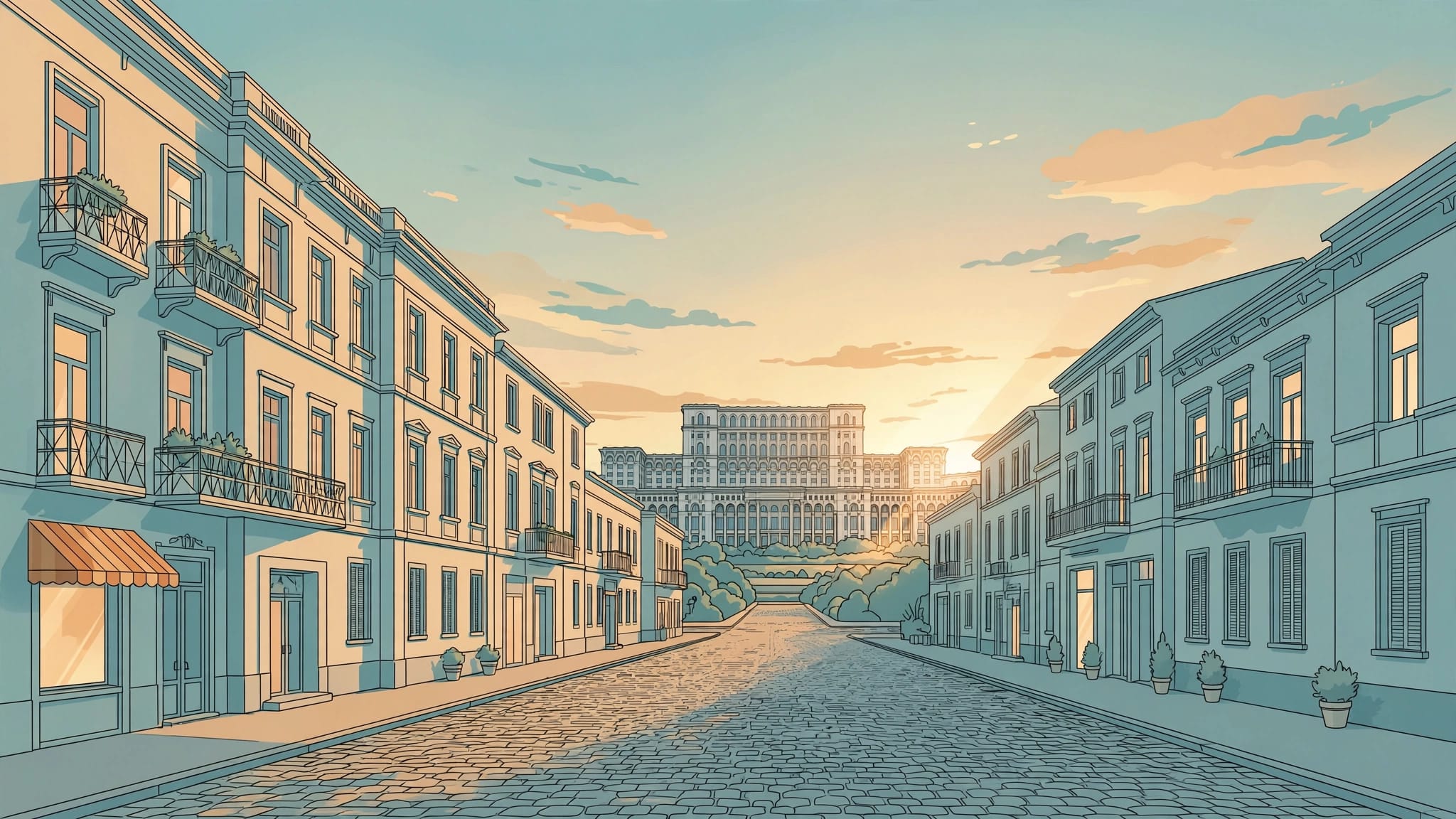
Bucharest rewards photographers who look past the postcard angle. The city’s grand boulevards and compact historic lanes sit close together, yet they ask for completely different choices of light, focal length, and pace.
The best Bucharest photo spots pair Old Town texture with the immense geometry of the Palace of Parliament. Start early, walk lightly, and give each area the time it needs.
Plan Bucharest Photo Spots Around the Light
The historic center and Parliament sit within a walkable core, but they demand opposite approaches, so a strong photo day pairs close, textured frames at dawn with wider architectural compositions after the heat and traffic ease.
Morning changes the streets. By late afternoon, the limestone facade of the Palace of Parliament gains more shape and color. Check the forecast the night before, because rain can turn Old Town paving into a useful mirror.
Begin around Piata Unirii
Piata Unirii is a practical hinge between the Old Town and the palace district. Arrive by metro, then walk north into Centrul Vechi for tight street scenes or west toward the Parliament.
The Bucharest public transportation guide is useful when you need to combine the metro with buses, trams, or trolleybuses. Keep a map saved offline anyway, since street names in the center can be easy to miss.
Work with the city’s mixed scale
Bucharest doesn’t present a neat visual theme. Belle Epoque facades, Orthodox details, Communist-era boulevards, patched pavement, and café terraces can all enter one frame.
That contrast is the point. Rather than trying to remove every modern object, use a parked car, tram cable, or delivery cyclist to show the scale of the architecture.
Old Town Streets That Reward Slow Walking
Centrul Vechi, also called Lipscani, is compact enough to explore on foot. It becomes noisy after dark, but early hours reveal details that disappear behind terrace tables and visitors.
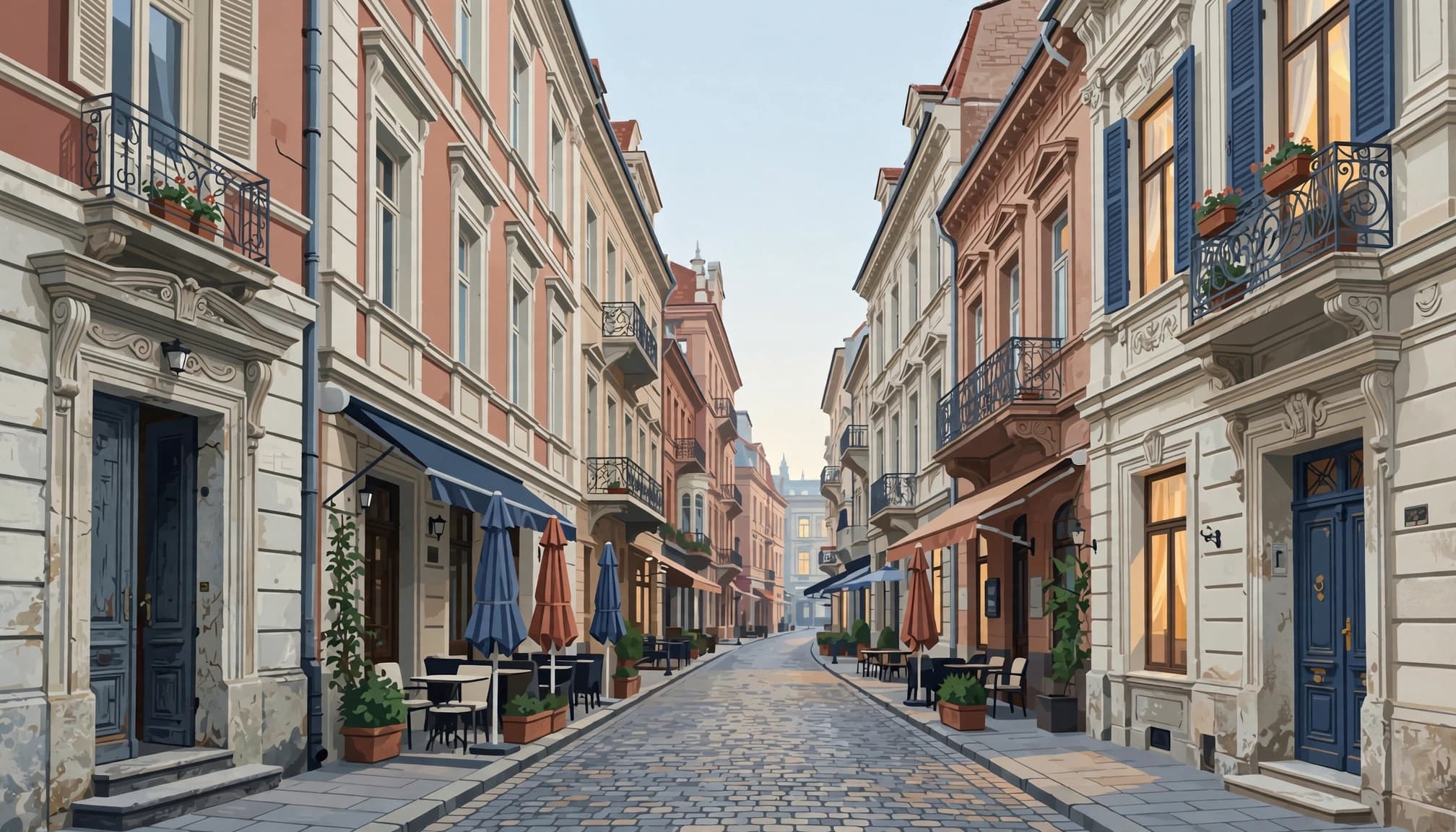
For a broader orientation before you set out, this Bucharest visitor guide places the Old Town among the city’s central landmarks and museums.
Stavropoleos Street and the church courtyard
Strada Stavropoleos gives you a quieter counterpoint to Lipscani’s commercial stretch. The street is narrow, with textured walls and small details that suit a 35mm or 50mm field of view.
Stavropoleos Church sits close by, and its carved stonework rewards close framing. Respect worshippers and keep your camera discreet. Photograph the exterior and courtyard patiently rather than treating the space as a backdrop.
Lipscani, Smardan, and Macca-Vilacrosse Passage
Lipscani works best when you look upward. Iron balconies, decorative pediments, and worn facades create layers above the crowded ground level. On Strada Smardan, stand near a building corner and wait for a single walker to separate from the background.
Macca-Vilacrosse Passage has a yellow-tinted glass roof and an arcade shape that pulls the eye inward. Arrive soon after cafés open, before tables fill the center. A wider lens exaggerates its curve, while a longer lens flattens the repeating lamps and arches.
In Old Town, the cleanest compositions often come from aiming above eye level, where modern branding and crowded patios drop out of the frame.
Palace of Parliament Views With Real Presence
The Palace of Parliament is too large for one perfect angle. Each viewpoint makes a different decision about scale: Izvor Park shows its broad northern facade, while the boulevards turn it into a distant endpoint.
Use Izvor Park for wide frames
Izvor Park is the most straightforward public foreground for the Parliament’s northern side. Walk the paths, but don’t stop at the first open lawn. Moving a few meters changes whether trees hide the facade or give your image depth.
A 24mm to 35mm lens includes the building’s width without making it look like it is falling backward. Shoot later in the day when shadows bring out the repeating columns and window recesses.
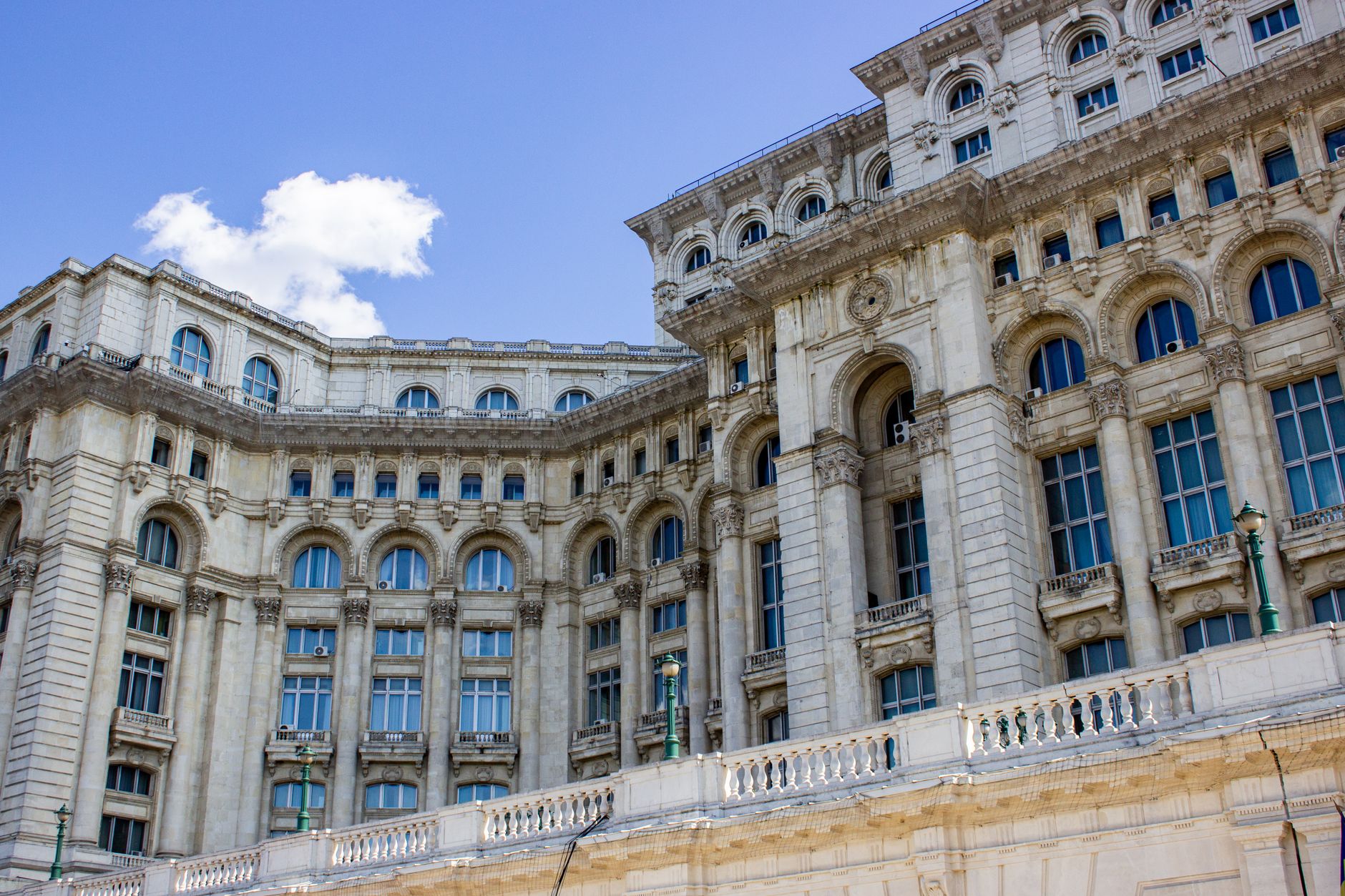
Photo by Natalia Sevruk
Stretch the view along Bulevardul Unirii
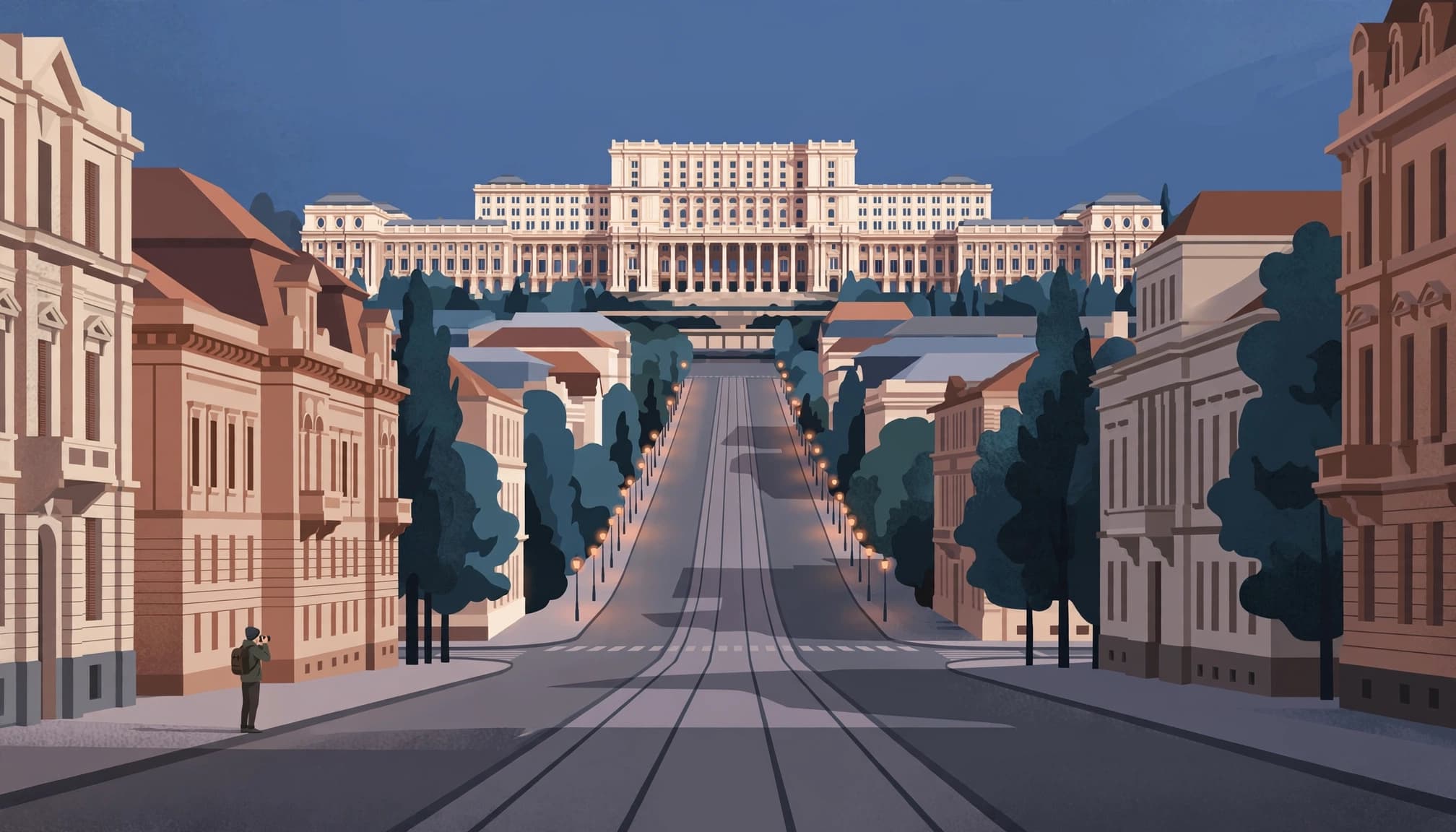
At the far end of Bulevardul Unirii, stepping back toward Piata Unirii lets the boulevard’s lamp posts and planted median compress toward the palace, although a long lens works best when the air is clear and traffic is thin.
Piața Constituției, on the building’s southern side, can also produce dramatic low-angle work. However, event infrastructure, barriers, and parked vehicles sometimes dominate the foreground. Treat these elements as part of the current city rather than waiting for an empty civic square that may never appear.
The Palace tour entrance details place visitor access on the northern side facing Izvor Park, reached via Bulevardul Națiunile Unite. That route makes an easy link between a visit and exterior frames.
Choose Lenses for Architecture and Street Life
Your equipment matters less than where you stand. Still, a small two-lens setup covers nearly every useful situation in Bucharest.
Carry one wide lens and one short telephoto
A 24mm or 28mm lens suits the Parliament, passageways, and full-height Old Town facades. Use it carefully near the edge of tall buildings, since tilting the camera upward can make walls lean dramatically.
A 50mm, 85mm, or compact 70-200mm helps isolate decorative balconies, church domes, and the Parliament’s facade from Bulevardul Unirii. Bring a longer lens. It can turn distant traffic into a soft, compressed layer.
If you only have a phone, use the standard camera first. Ultra-wide modes can distort columns and corners, especially when you shoot near the Parliament’s edges.
Give foregrounds a job
A palace frame needs something close to the camera. Use a park path, a bench, a person crossing at a safe distance, or a tree branch to stop the building from sitting flat against the sky.
In Old Town, look for doorways and shadows that frame the brighter street beyond. Shoot through an arch, but keep the opening clean. A partial intrusion from a passerby usually looks accidental.
Time Your Walk for Crowds and Weather
Late evenings in Centrul Vechi are energetic, but they rarely suit quiet architectural work. Mornings give you room to line up verticals, wait for a clear street, and catch shop shutters before the visual noise builds.
Before the crowds arrive
Aim to enter Old Town shortly after sunrise. The square wakes slowly. Warm light reaches upper facades first, so compose vertically if the street itself remains in shade.
In 2019, street photographer f.d. walker made Bucharest the 57th stop in his Major City project and found the Old Town’s dense activity gave the city a distinctly different mood. His Bucharest street-photography notes are a useful reminder that crowds can become the subject when you stop fighting them.
Save blue hour for the Parliament
The Parliament’s pale stone holds light well near sunset. Set up at Izvor Park before the sky turns blue, then make a sequence as the building’s lights come on.
Use a tripod only where it doesn’t block paths or attract unwanted attention. If you shoot handheld, brace against a railing or tree and keep your shutter speed high enough for the focal length.
Photograph Respectfully and Travel Light
Public streets invite observation, but people deserve consideration. A small camera or phone draws less attention than a large tripod, and it keeps you quicker on narrow sidewalks.
Know the Palace visit requirements
The Palace is an active government building, so treat access as separate from public exterior photography. The official Palace of Parliament visitor information says visits run daily from 09:00 to 17:00, and visitors need a valid physical identity document.
For groups of one to nine people, the visitor center asks for a phone reservation at least 24 hours ahead. Arrive 15 minutes early, bring the same physical ID used for entry, and expect security screening. Ask before photographing inside, especially near security points or during a guided tour.
Let street scenes stay human
Don’t photograph people in distress or push a lens close to someone eating at a terrace. If a portrait is your goal, make eye contact and ask.
Meanwhile, candid images work better when you photograph gestures within a larger scene. A cyclist passing a weathered facade or a server opening a terrace tells a fuller story than a stranger’s face alone.
A Walkable Photo Route for One Day
Start near Universitate or Piata Unirii, then follow the light instead of racing between pins. This route keeps the walking manageable and leaves room for returns when the scene changes.
- Photograph Stavropoleos Street and nearby lanes in the early morning.
- Move through Lipscani and Macca-Vilacrosse Passage before café seating fills the arcade.
- Pause near Piata Unirii, then walk west toward Izvor Park for afternoon Parliament frames.
- Finish on Bulevardul Unirii or at Piata Constituției as dusk settles.
Bring water, a microfiber cloth, and a spare battery. Summer pavement can be punishing at midday, while a sudden shower can make the cobblestones shine.
Leave With More Than a Landmark Shot
The strongest Bucharest photo spots don’t depend on perfect weather or empty streets. They ask you to notice the tension between a tiny carved doorway in Lipscani and the Parliament’s enormous facade across town.
Return to one location if the first frame feels obvious. The last light on the palace’s pale stone disappears first along its deep window recesses.
